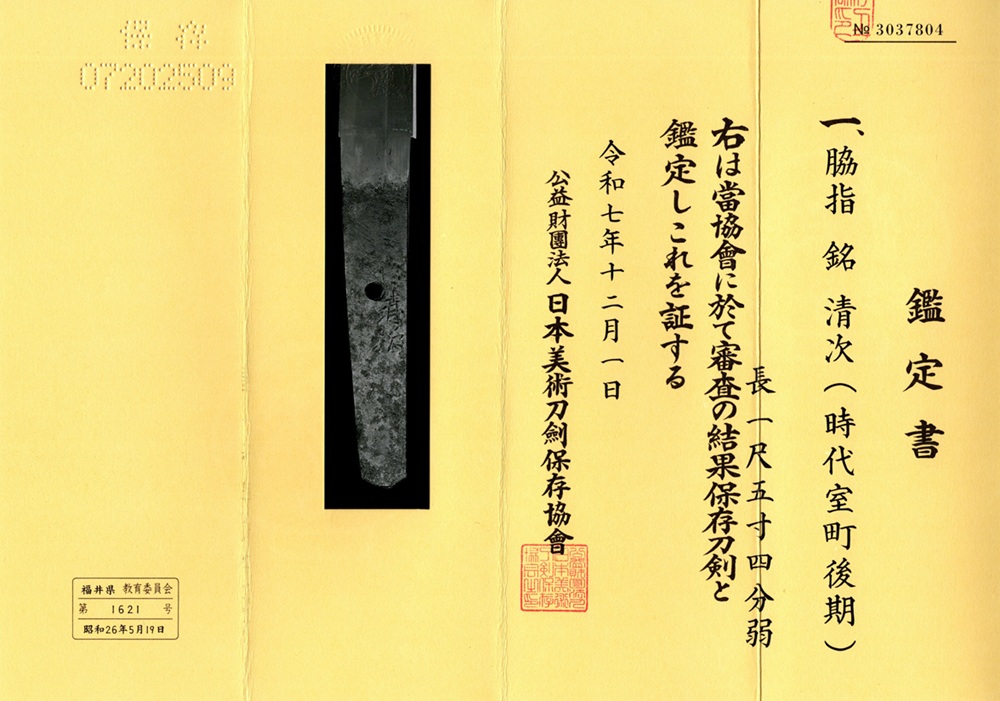
| Product No. WA-0908 清次 | |
|---|---|
| Mei |
Kiyotsugu Back: -- |
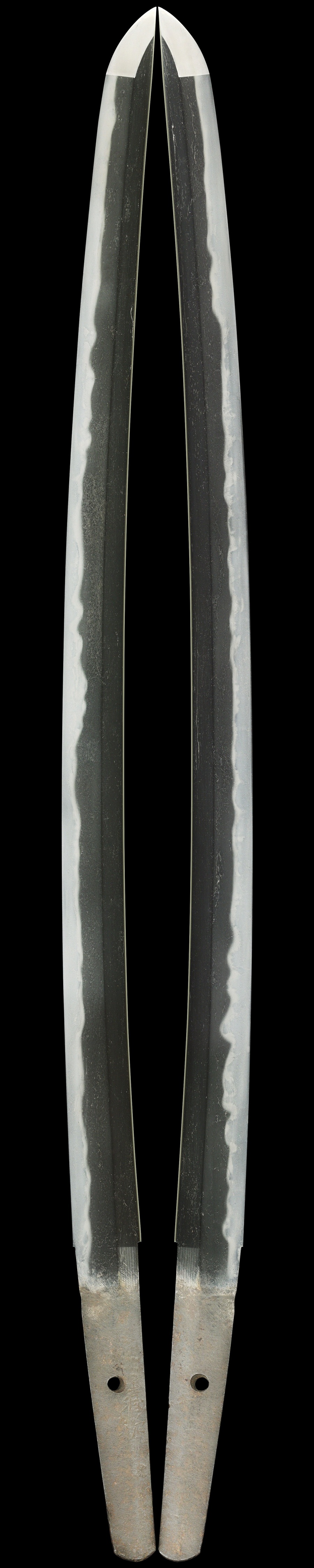
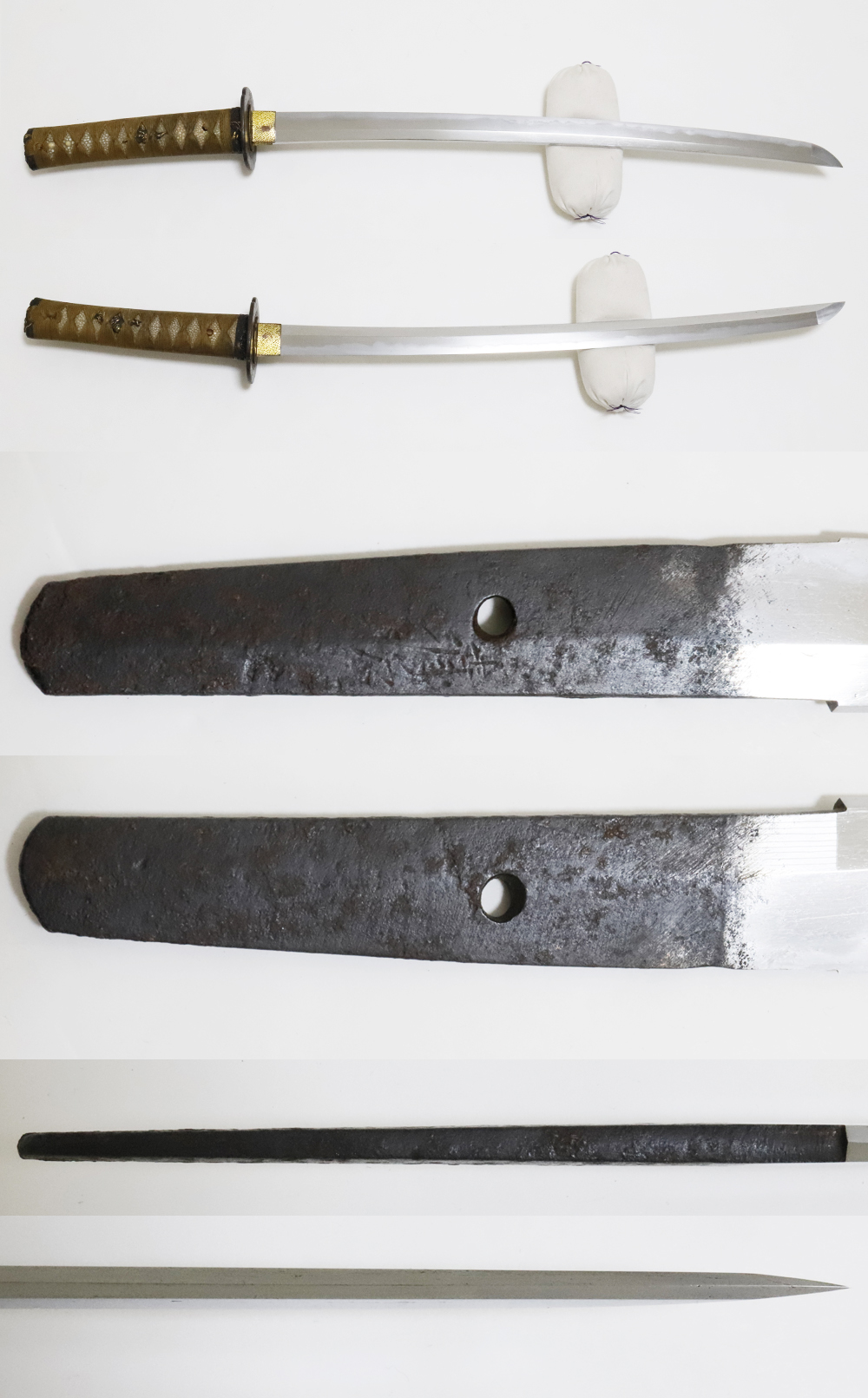
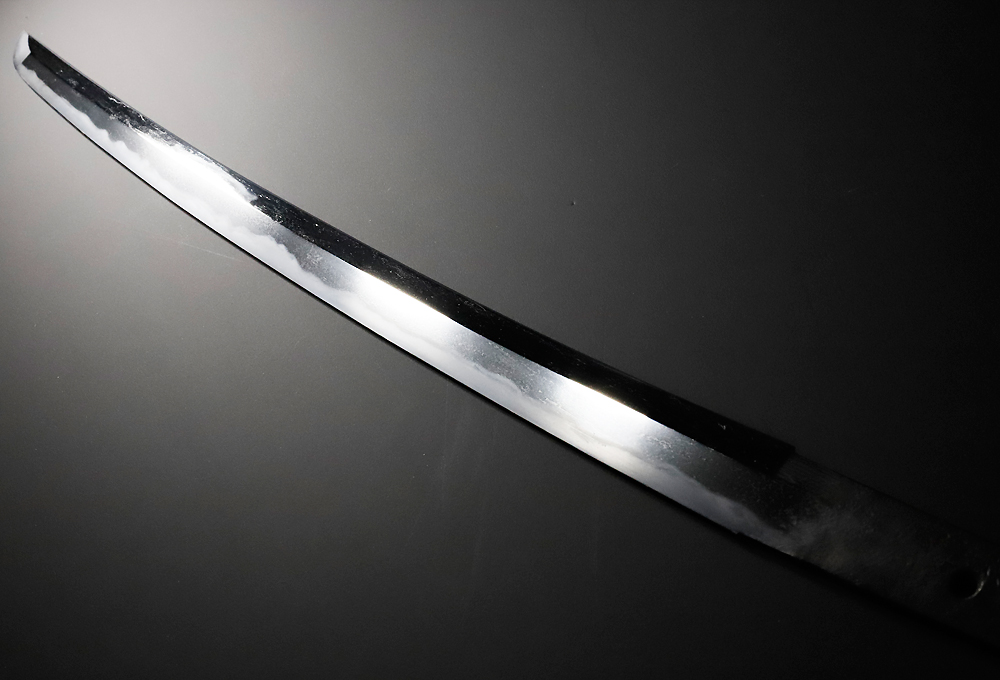
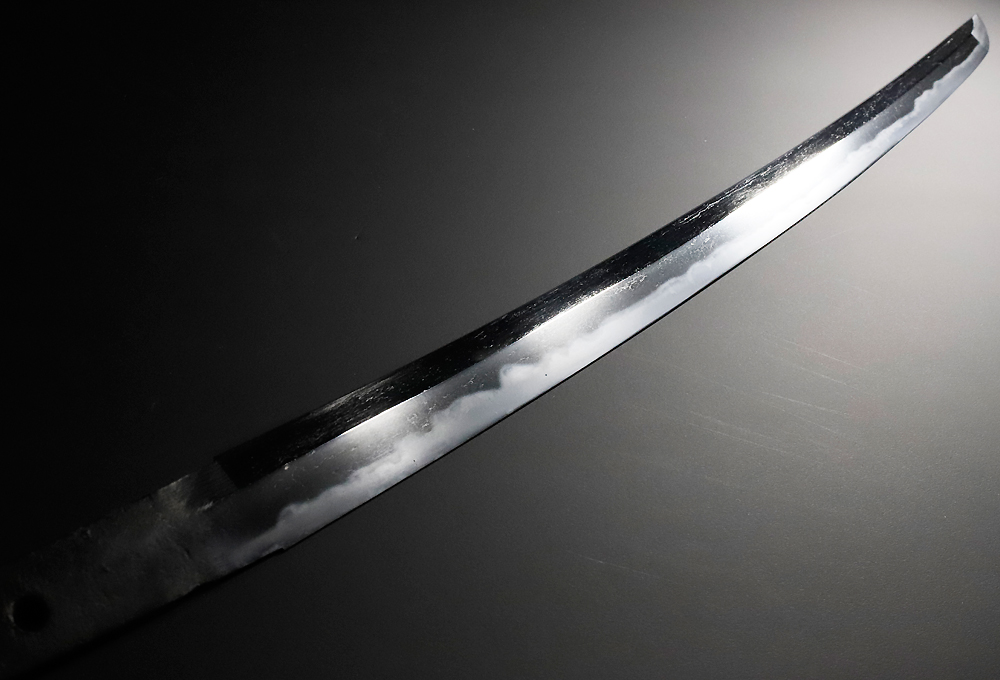
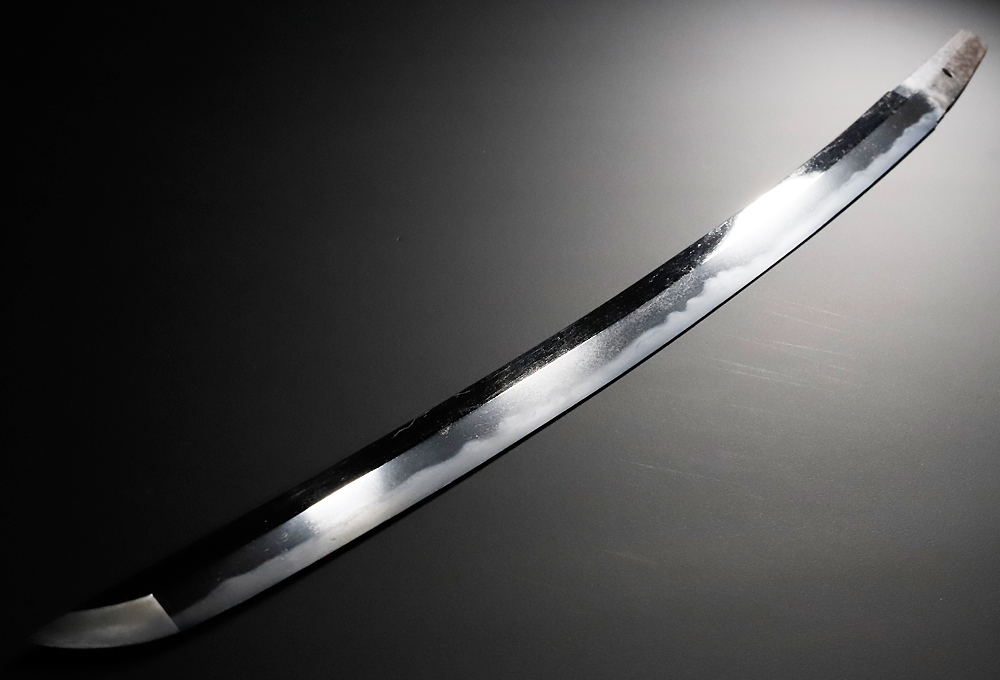
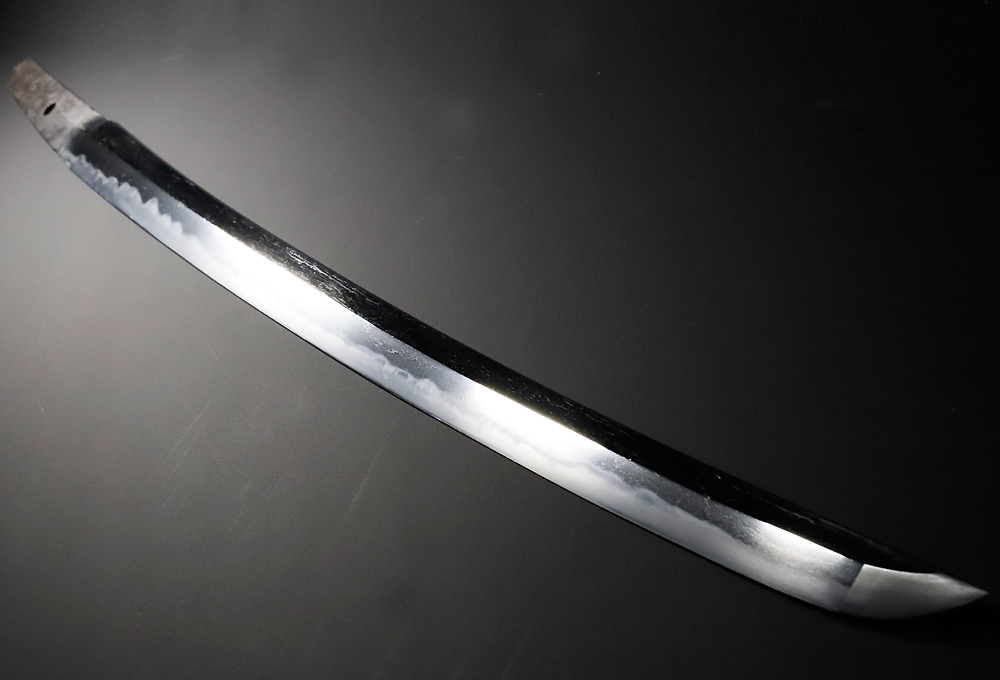
| Shape | Shinogi-zukuri, iori-mune, chu-kissaki. Standard width and thickness, with shallow sori and a slight tendency toward saki-zori. A practical sugata characteristic of the late Muromachi period. |
| Era | Late Muromachi Period |
| Length |
46.4 cm 18.3 in |
| Sori (curvature) |
1 cm 0.4 in |
| Motohaba |
2.6 cm 1.0 in |
| Sakihaba |
1.8 cm 0.7 in |
| Munekasane |
0.6 cm 0.2 in |
| Status | Hozon Token |
| Certification Date | December 01, 2025 |
| Registration Authority | Fukui Prefecture |
| Registration Date | May 19, 1951 |
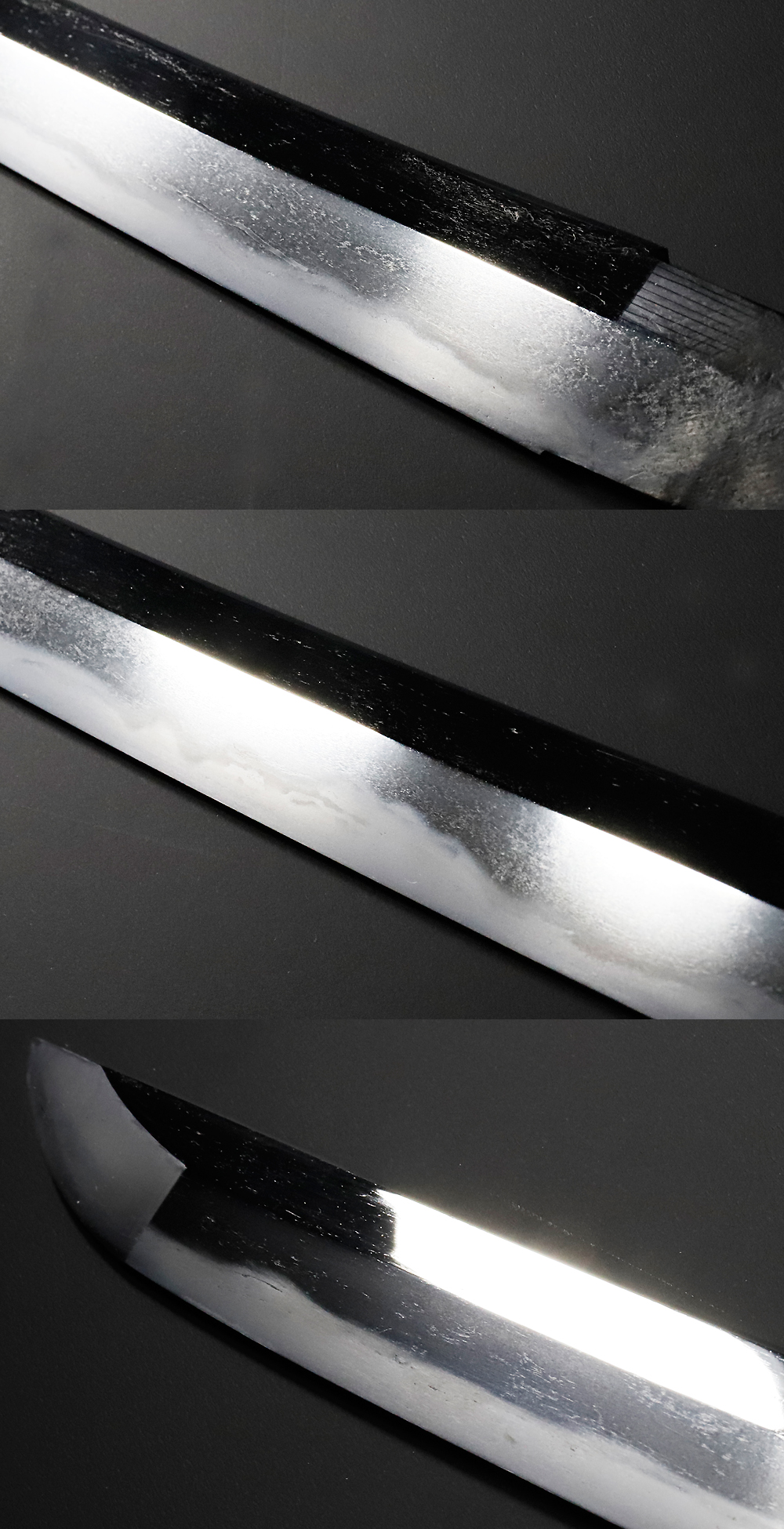
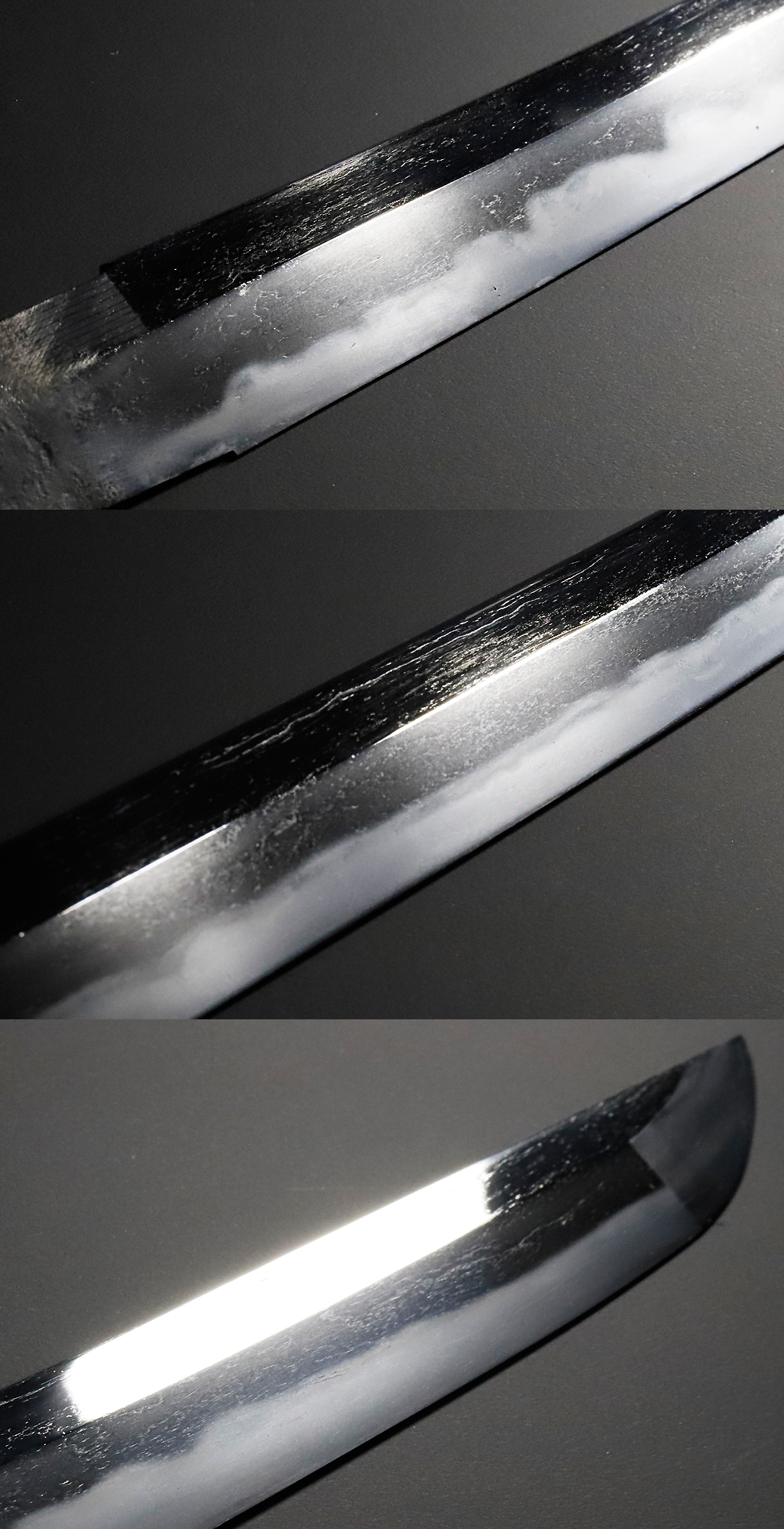
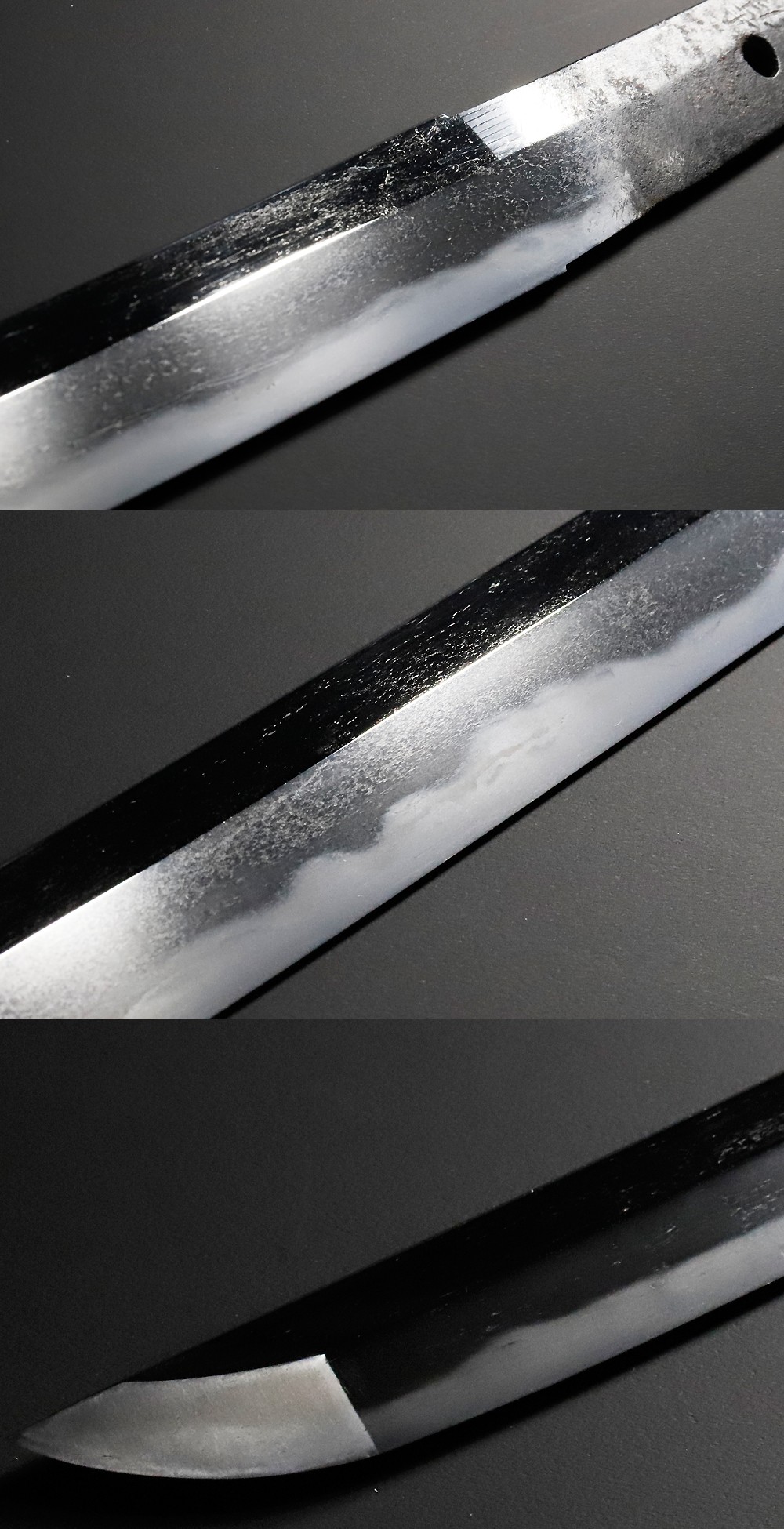
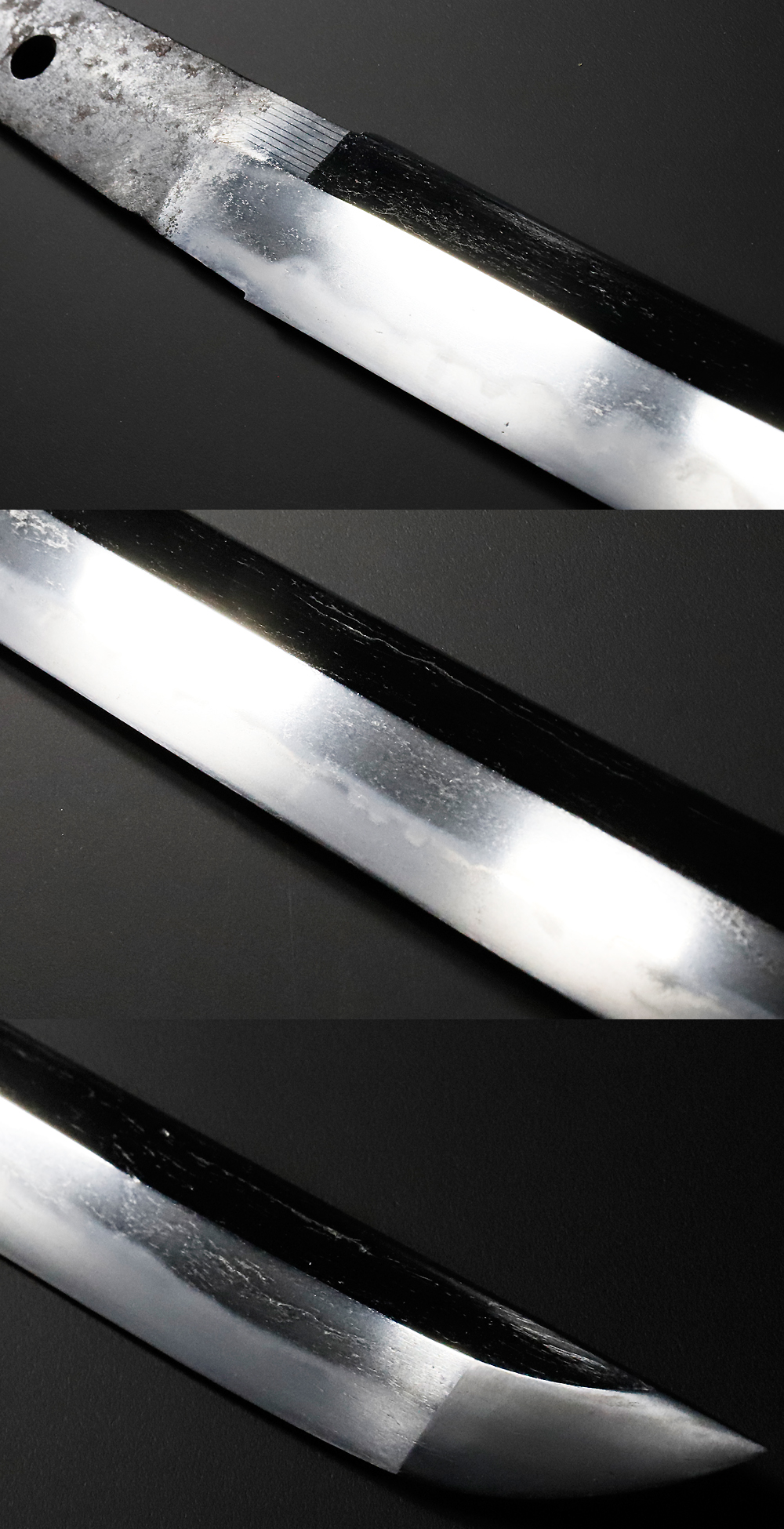
| Jihada (Metal pattern) | Tightly forged itame-hada with flowing grain, becoming somewhat prominent in places. The shinogi-ji shows masame-hada. |
| Hamon (Temper line) | Gunome-midare based on suguha with shallow notare, mixed with ko-gunome and angular elements. Ashi enter the hamon, with yo visible. |
| Bōshi (Point / Tip) | Sugu-based, tending toward hakikake. |
| Nakago (Tang) | Ubu, katte-sagari file-marks, kuri-jiri. |
| Mekugiana (Rivet holes) | 1 |
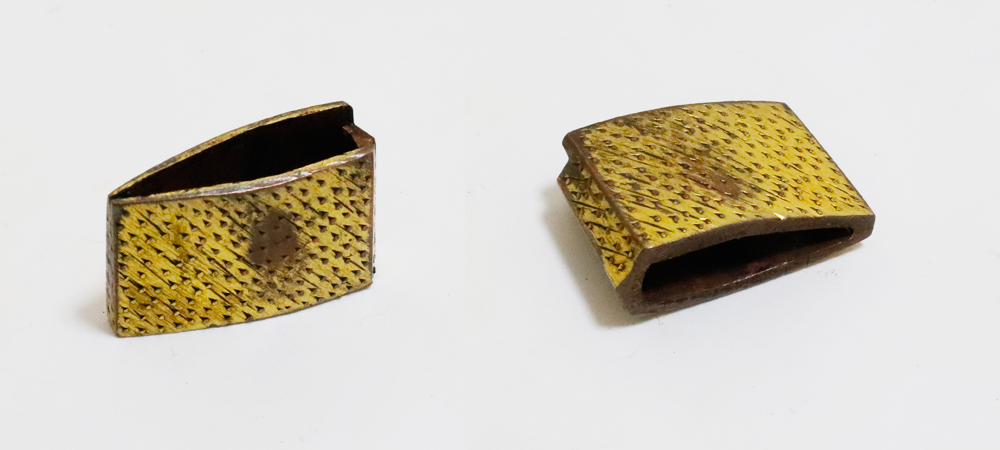
| Habaki | Gold-plated copper habaki with a Yujo-style file pattern. |
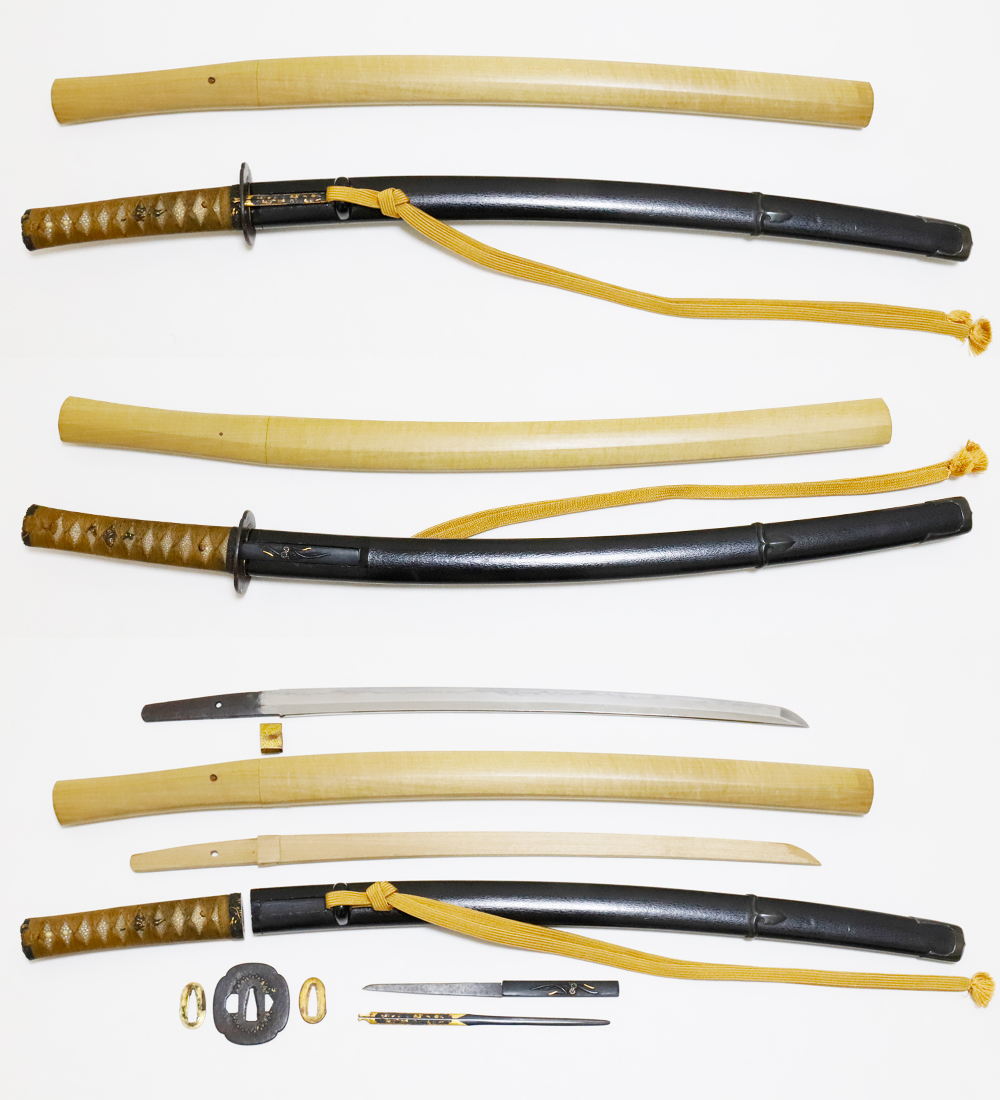
| Mountings | Koshirae-tsuki |
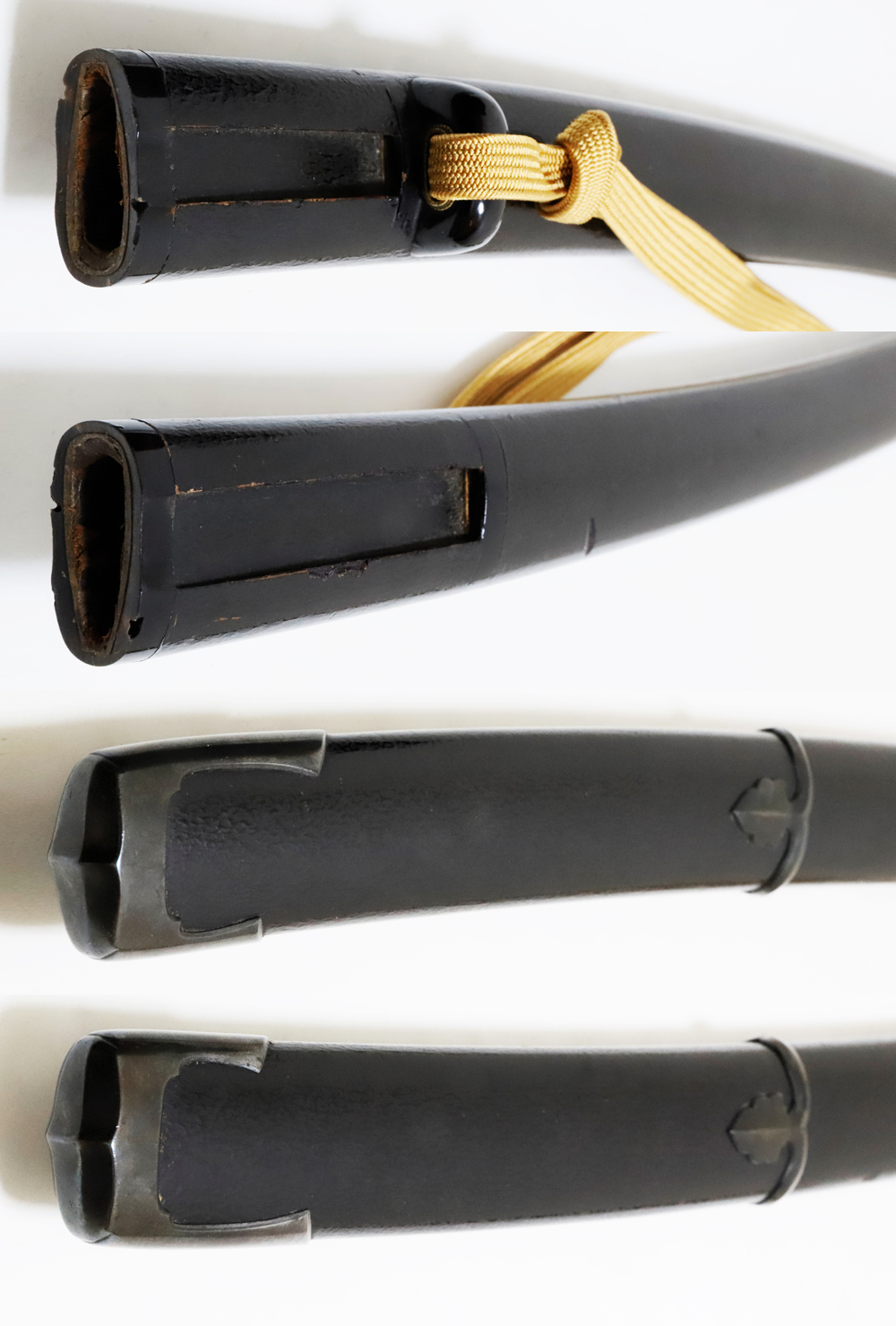
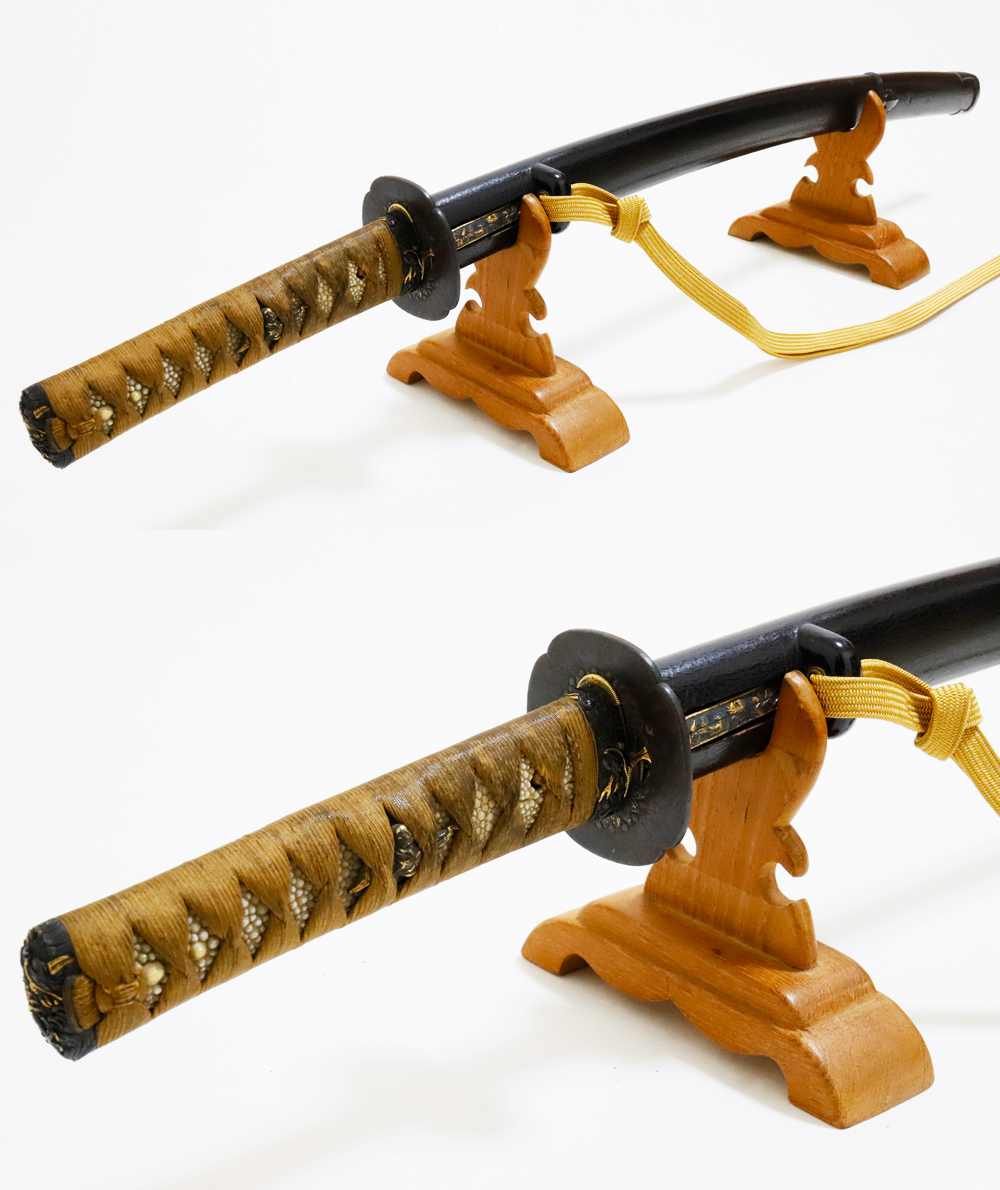
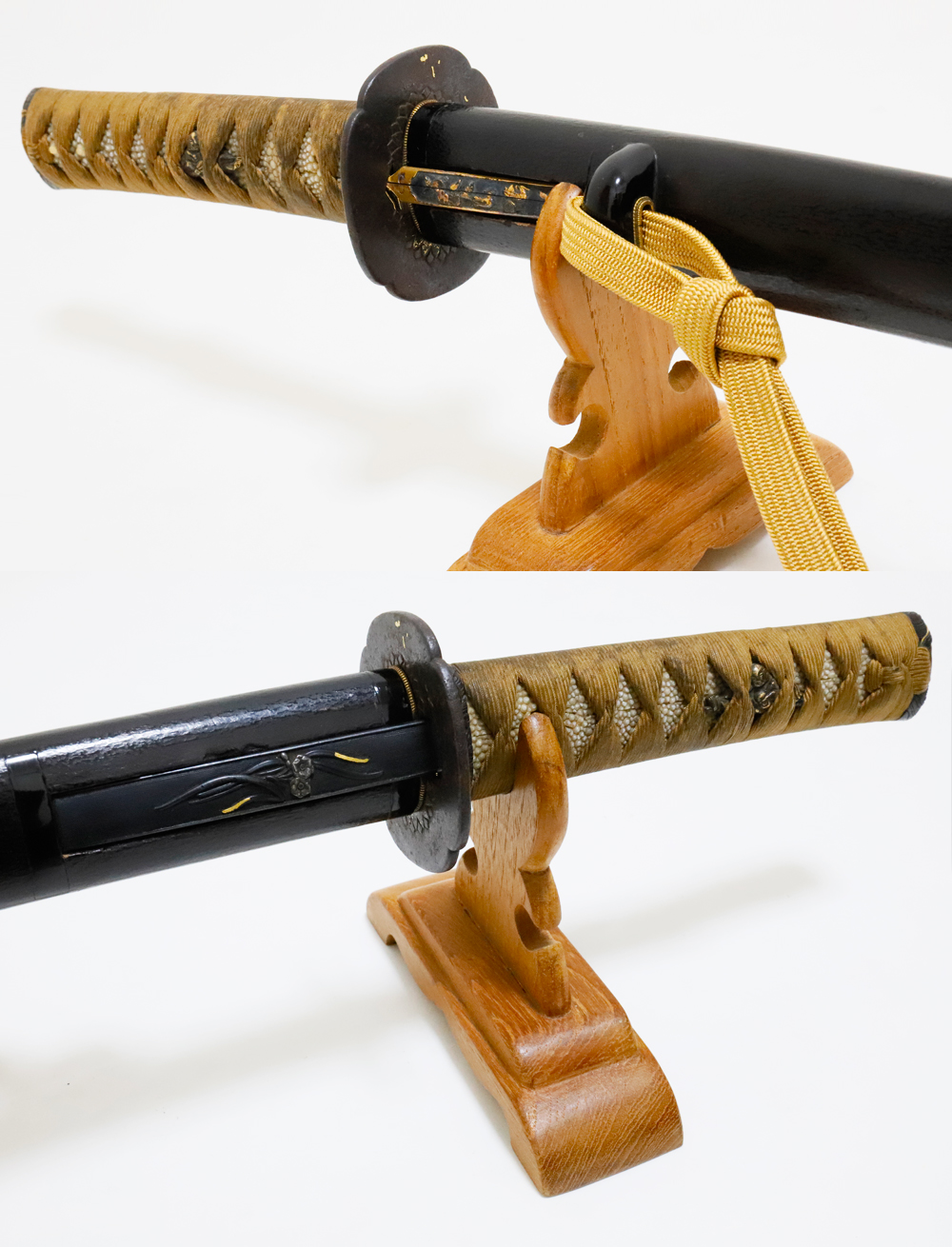
| Koshirae | Black roiro-lacquered saya with wood-bark pattern, wakizashi koshirae |
| Koshirae Length |
77.6 cm 30.6 in |
| Tsuka Length |
17.6 cm 6.9 in |
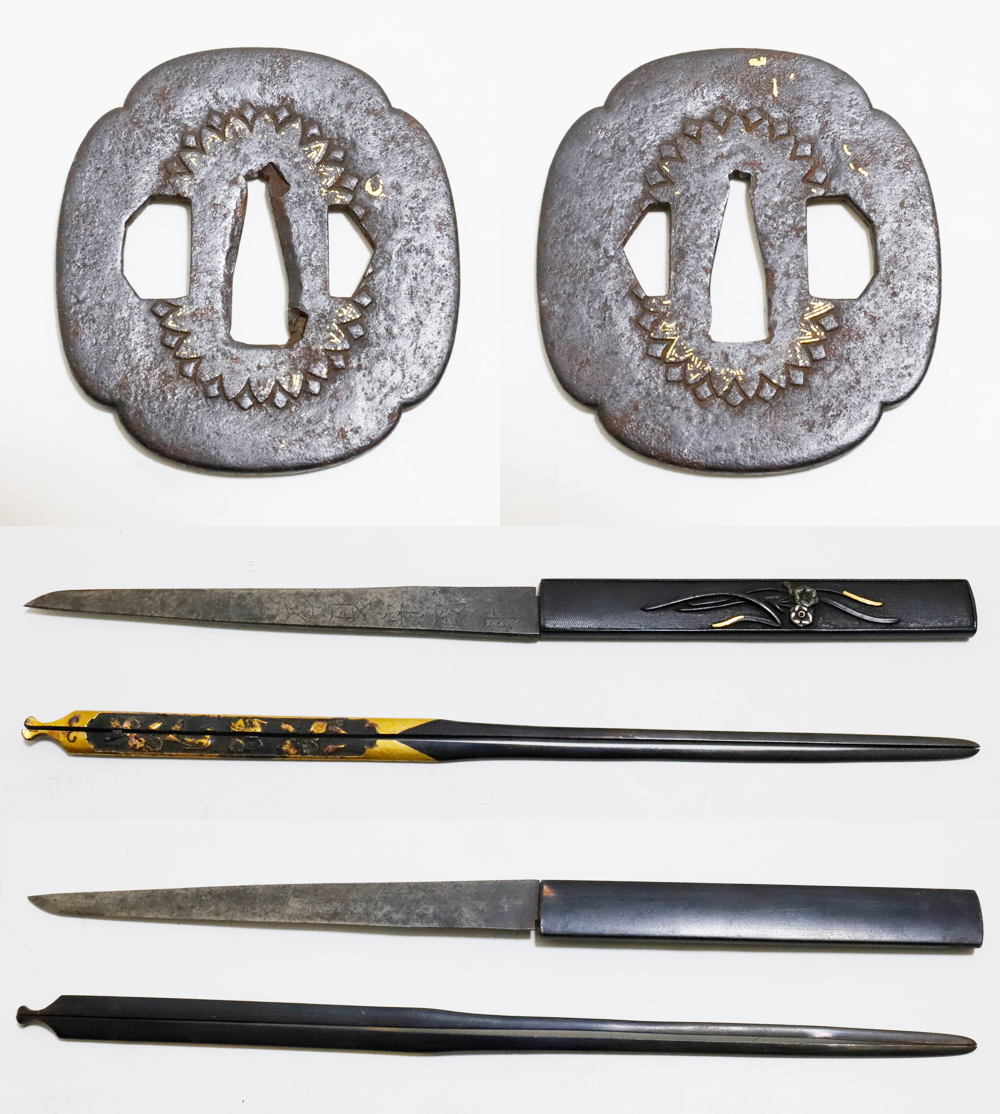
| Tsuba | Design of Chrysanthemums / Iron ground, mokko-gata, sukibori, gold nunome-zogan, two hitsu-ana |
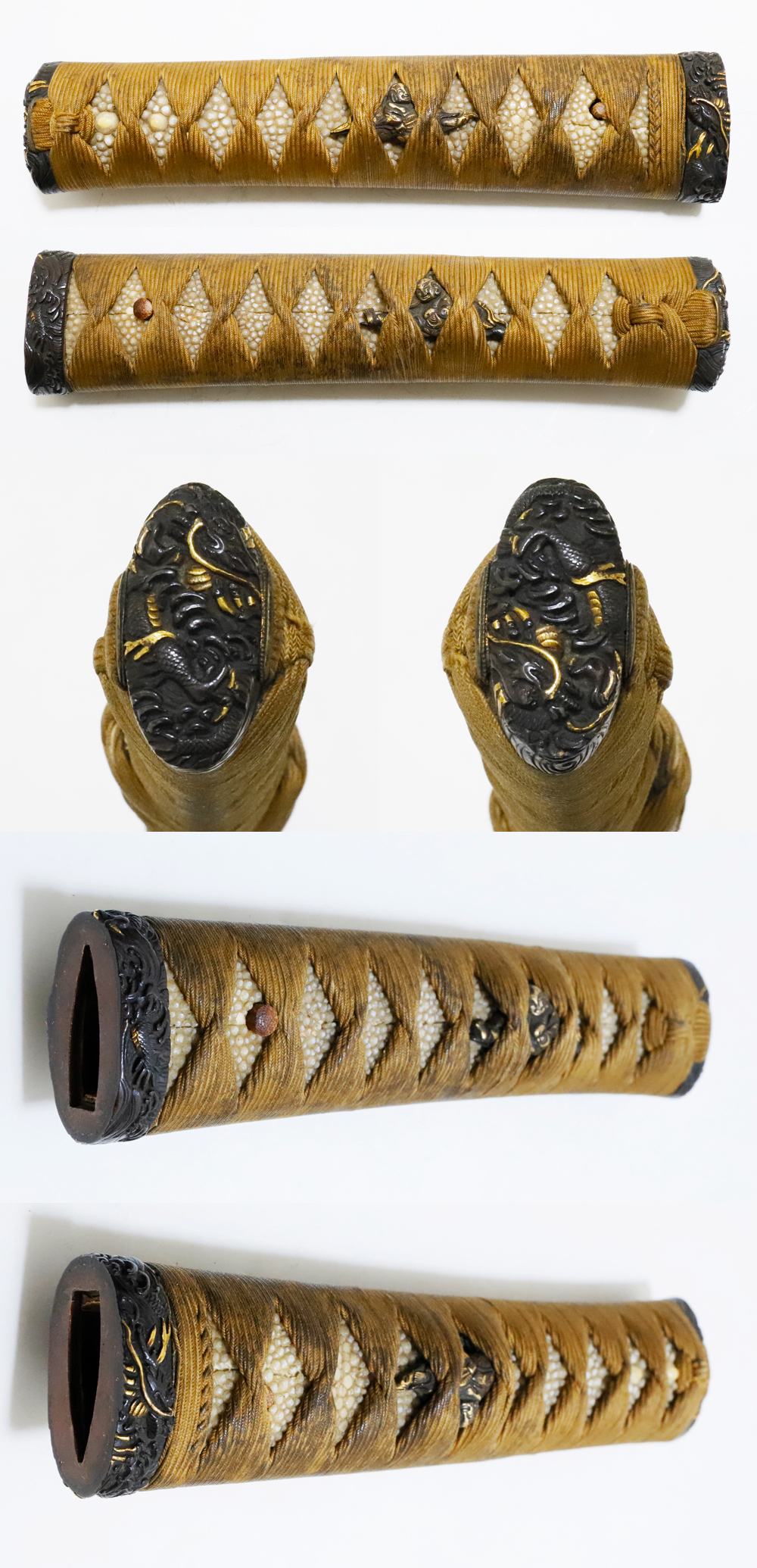
| Menuki | Design of Hotei / Katachibori with gold iroe |
| Fuchigashira | Design of a Dragon and Waves / Yamagane ground, takabori and gold iroe |
| Kozuka | Design of Narcissus / Shakudo nanako ground, takabori with gold and silver iroe |
| Kogai | Split kogai, Design of Aoi / Shakudo ground, takabori-zogan and gold iroe |
| Other details | Tsuka: White samegawa with mulberry-brown silk hineri-maki・Other fittings: Shibuichi kuwagata-shaped kojiri and semegane |
Price |
SOLD |
| This Kiyotsugu wakizashi dates from the late Muromachi period. It is shinogi-zukuri with an iori-mune, shallow sori, and a slight tendency toward saki-zori, presenting a practical and functional sugata. The nakago is ubu, with one mekugi-ana, and bears a simply executed two-character signature, “Kiyotsugu,” on the sashi-omote side. Swordsmiths using the name Kiyotsugu are recorded in various provinces, making it difficult to identify the smith of this unsigned-by-location, two-character signature. However, judging from the distinctive form of the character “清” (kiyo) and the workmanship, this blade may be attributed to Kiyotsugu of Seki in Mino Province, who was active around the Eisho era (1504–1521). Further research is needed to establish its attribution. The blade is accompanied by an elaborately appointed black roiro-lacquered saya wakizashi koshirae with a wood-bark pattern. It passed the Hozon Token shinsa in December 2025. |

 Search