| Product No. WA-0852 肥州河内守藤原正廣 | |
|---|---|
| Mei |
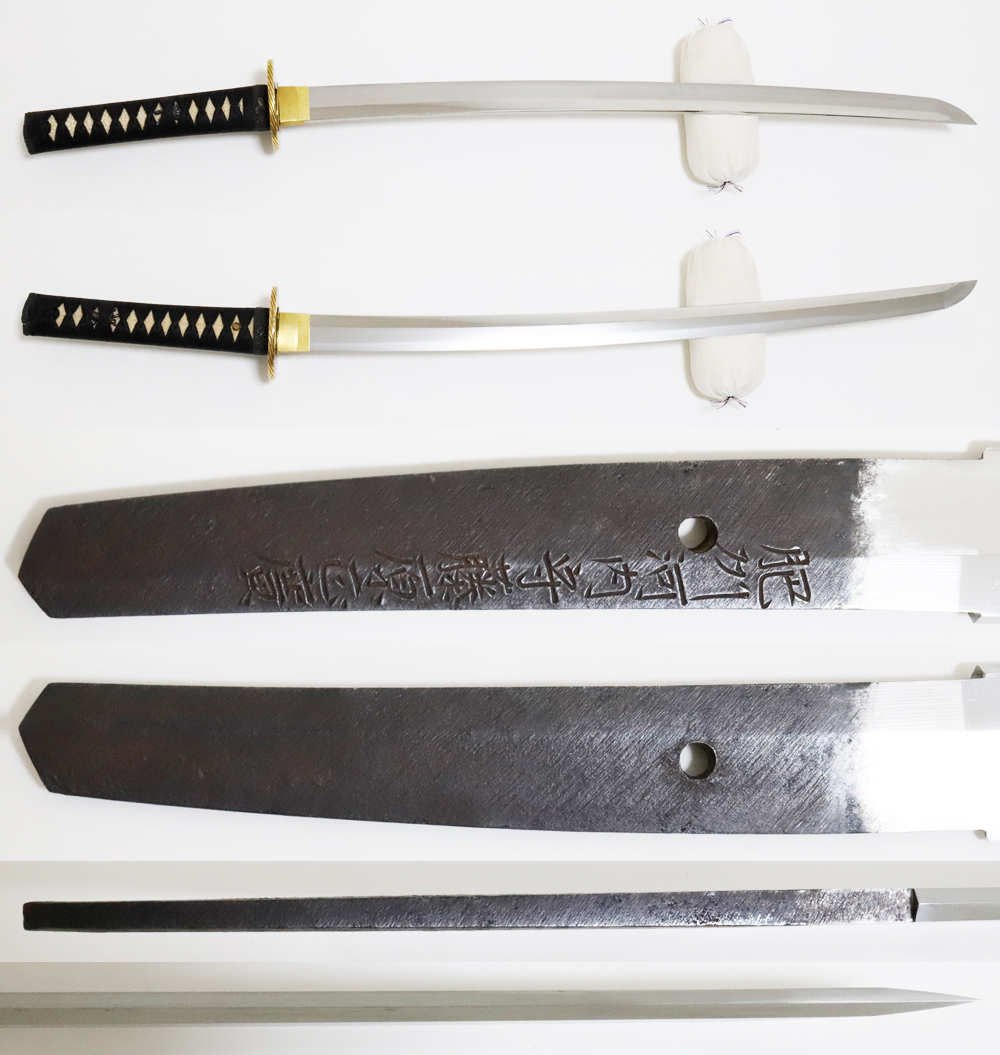
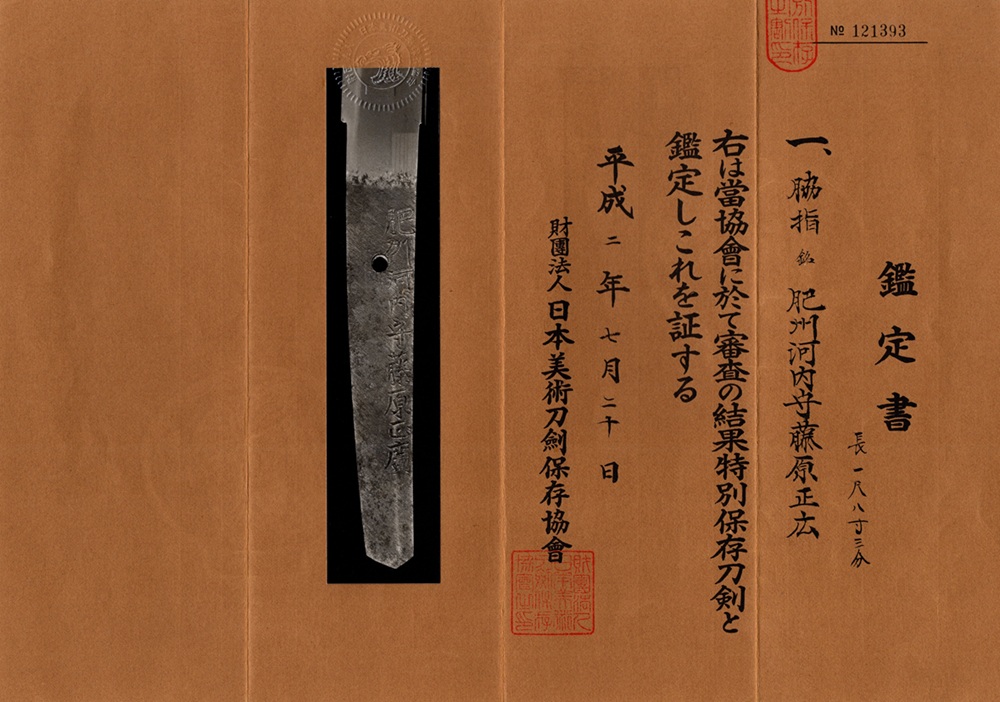
Hishū Kawachi no Kami Fujiwara Masahiro Back: -- |
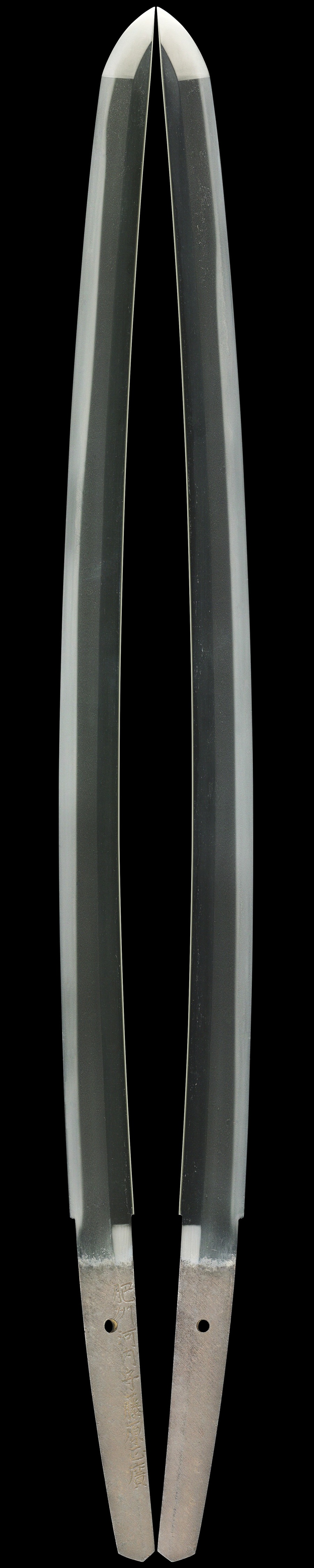
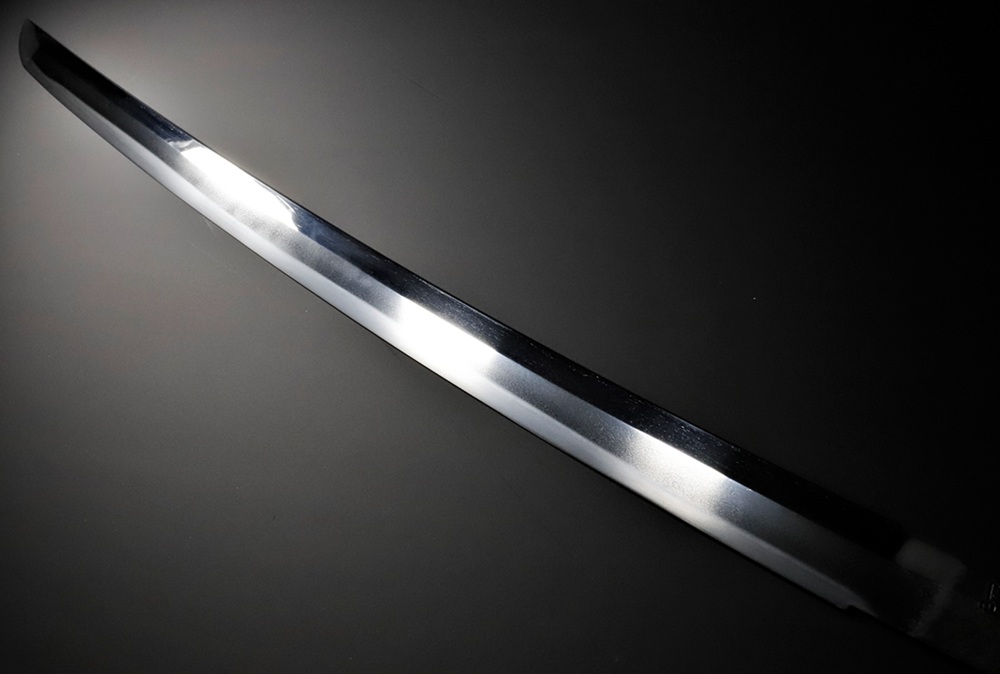
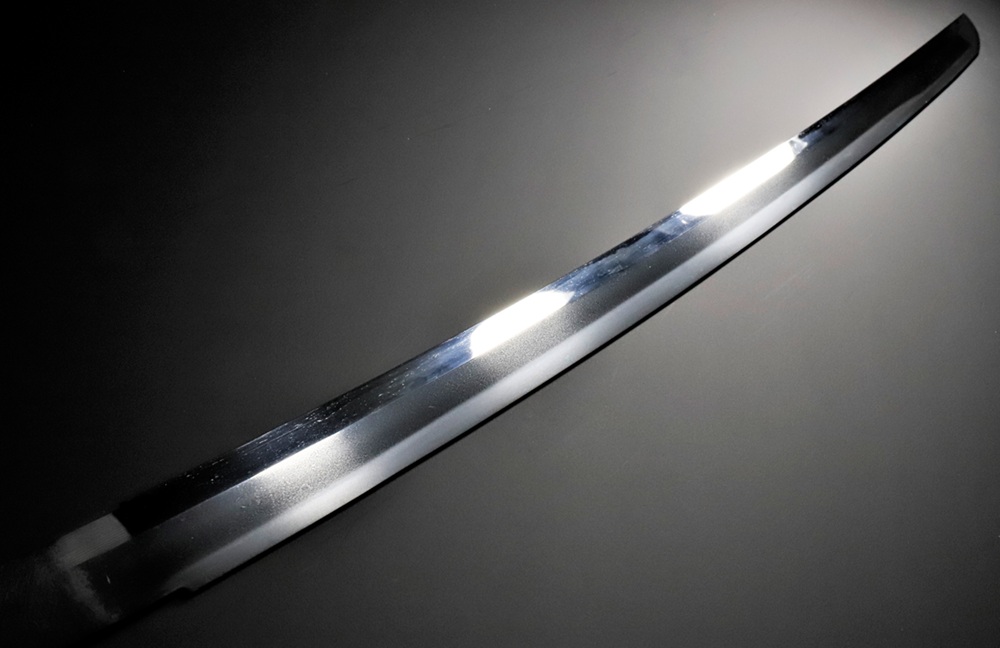
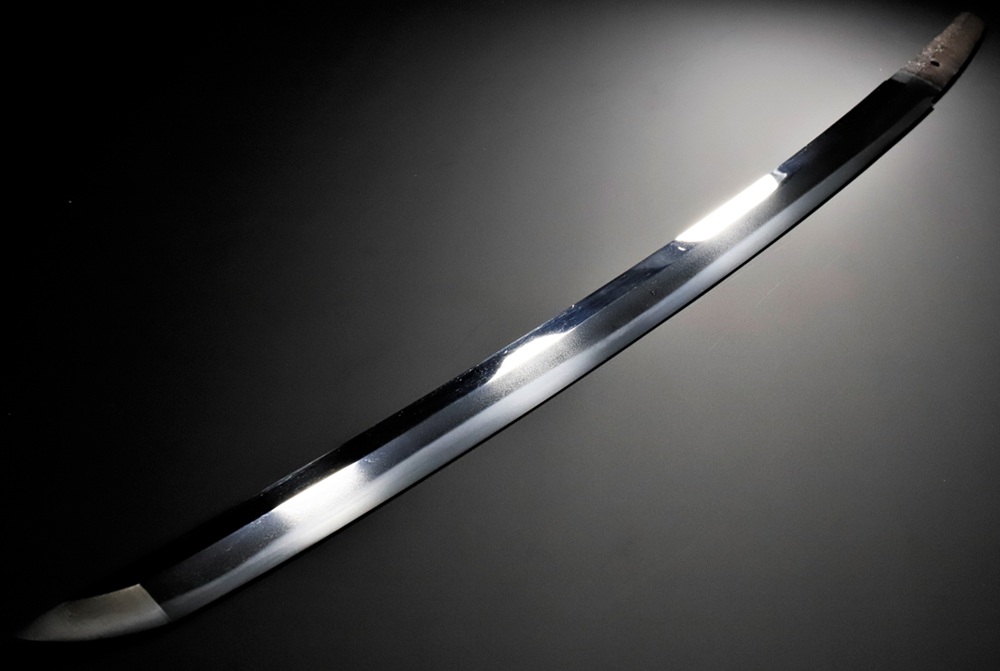
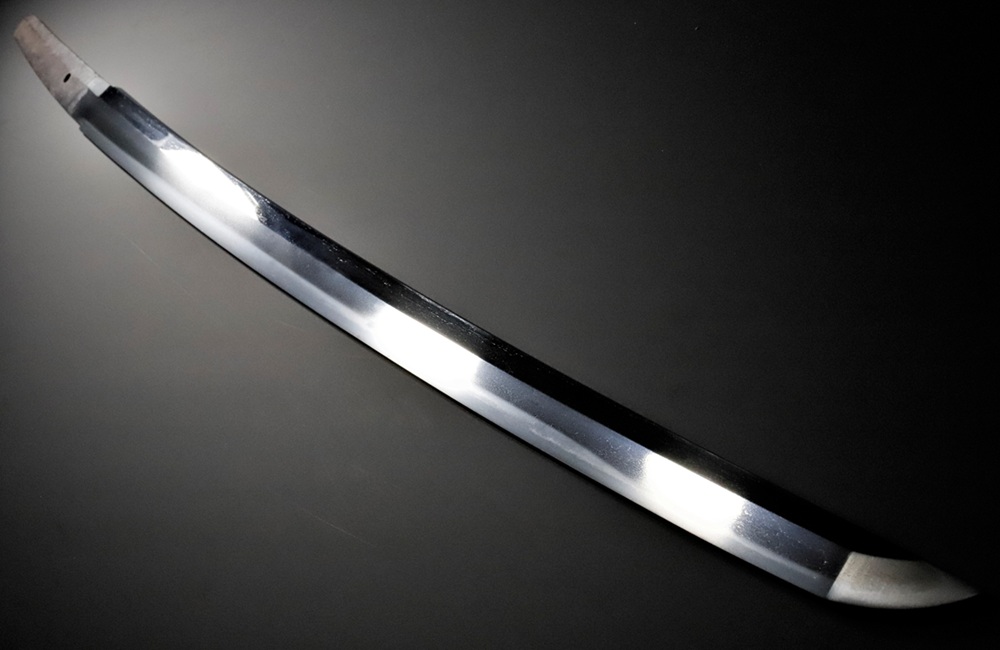
| Shape | Shinogi-zukuri, iori-mune, chū-kissaki; wide mihaba with shallow sori, in Kanbun-shintō sugata |
| Region | Hizen Province |
| Era | Early Edo Period(around Kanbun Era 1661-1673) |
| Length |
55.4 cm 21.8 in |
| Sori (curvature) |
1 cm 0.4 in |
| Motohaba |
3 cm 1.2 in |
| Sakihaba |
2.2 cm 0.9 in |
| Munekasane |
0.6 cm 0.2 in |
| Status | Tokubetsu Hozon Token |
| Certification Date | July 20, 1990 |
| Registration Authority | Fukuoka Prefecture |
| Registration Date | September 08, 1961 |
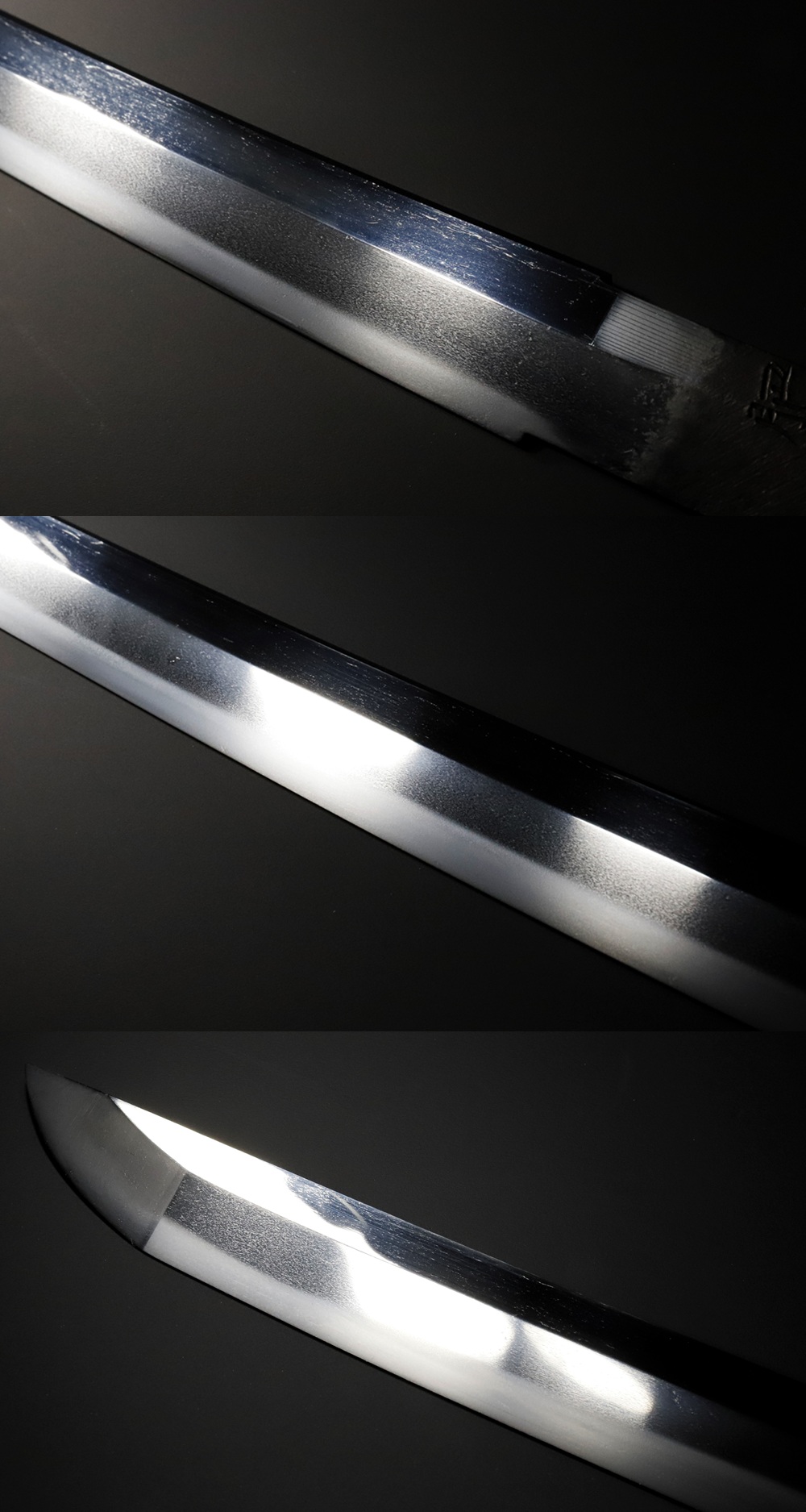
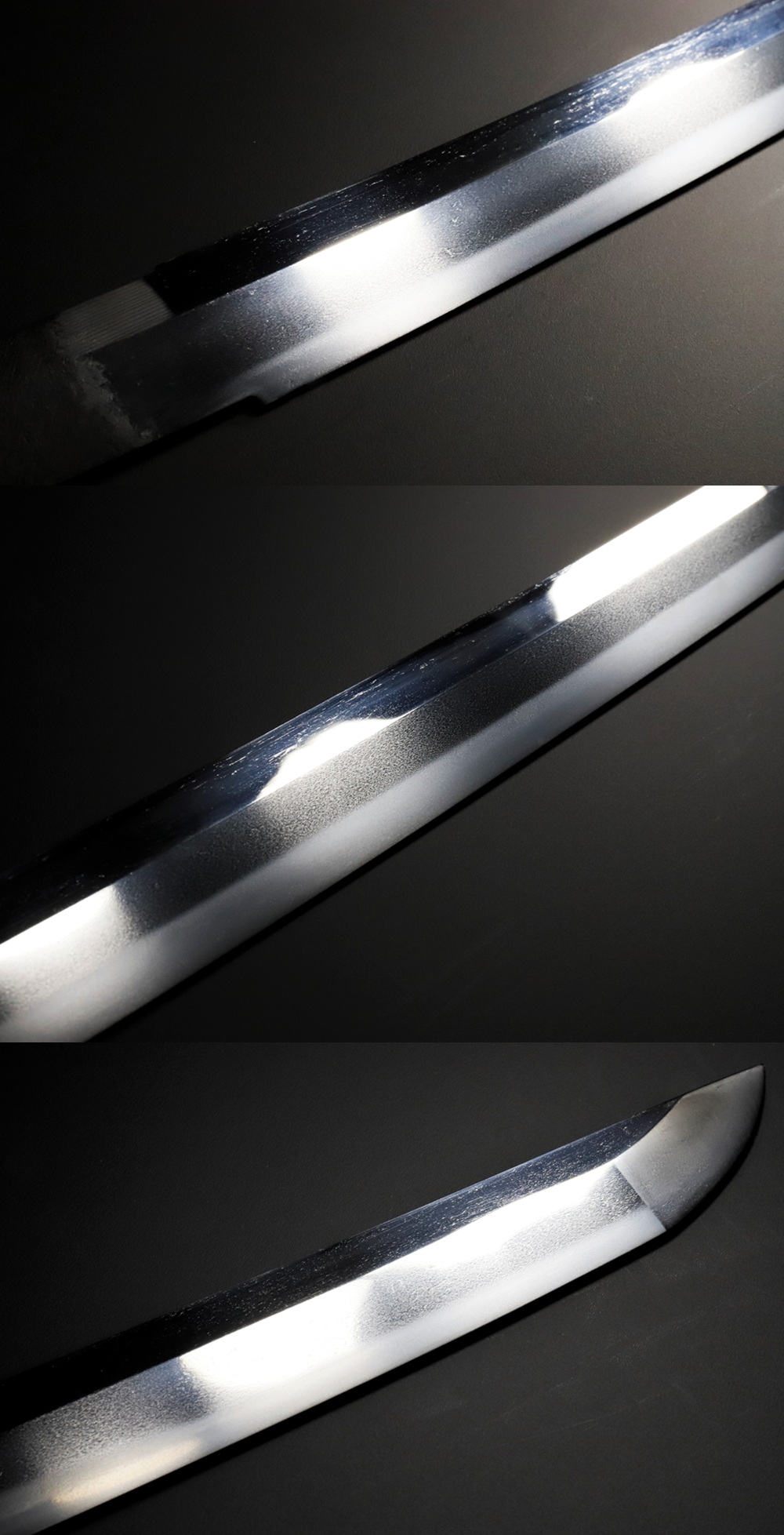
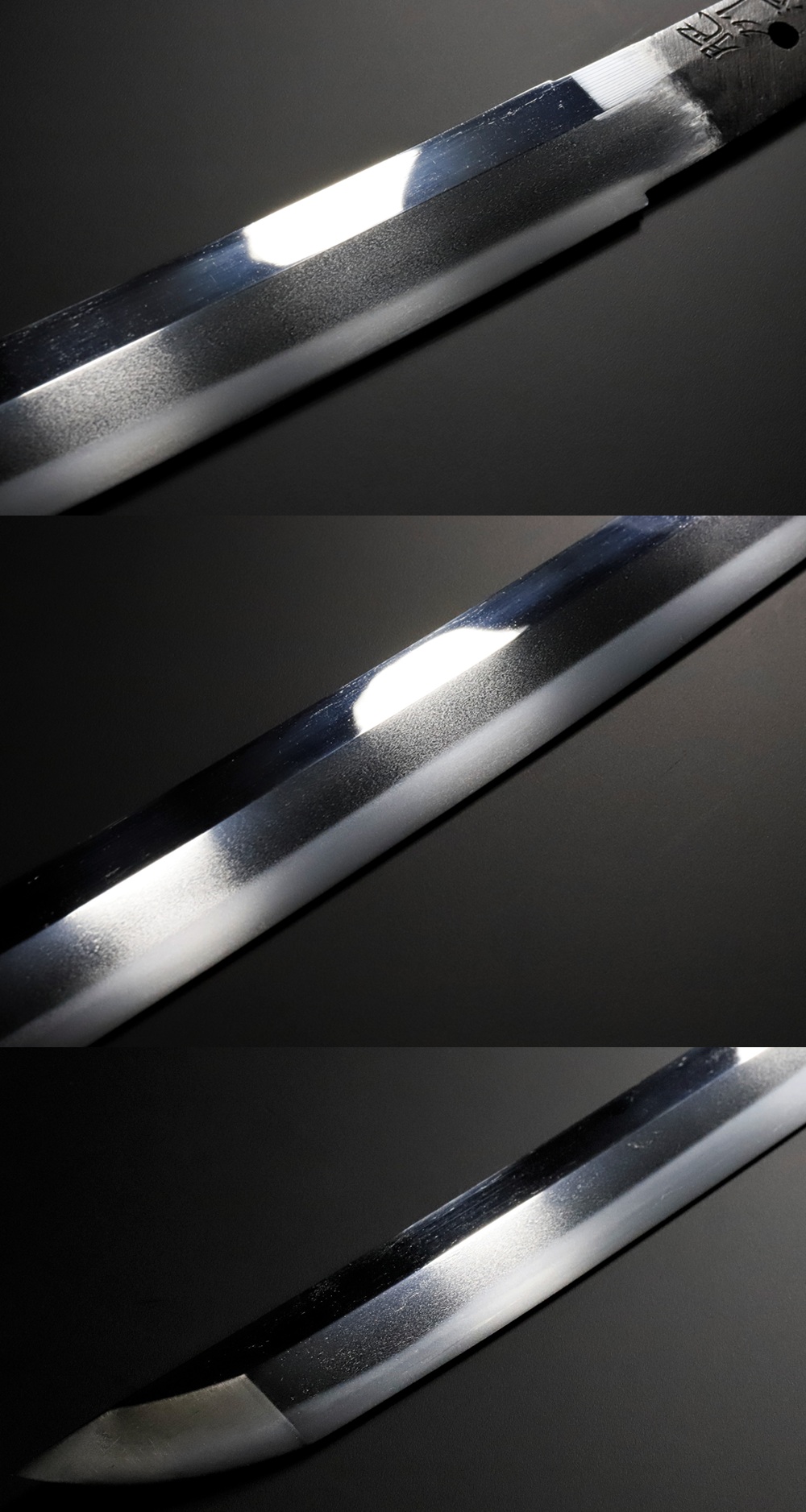
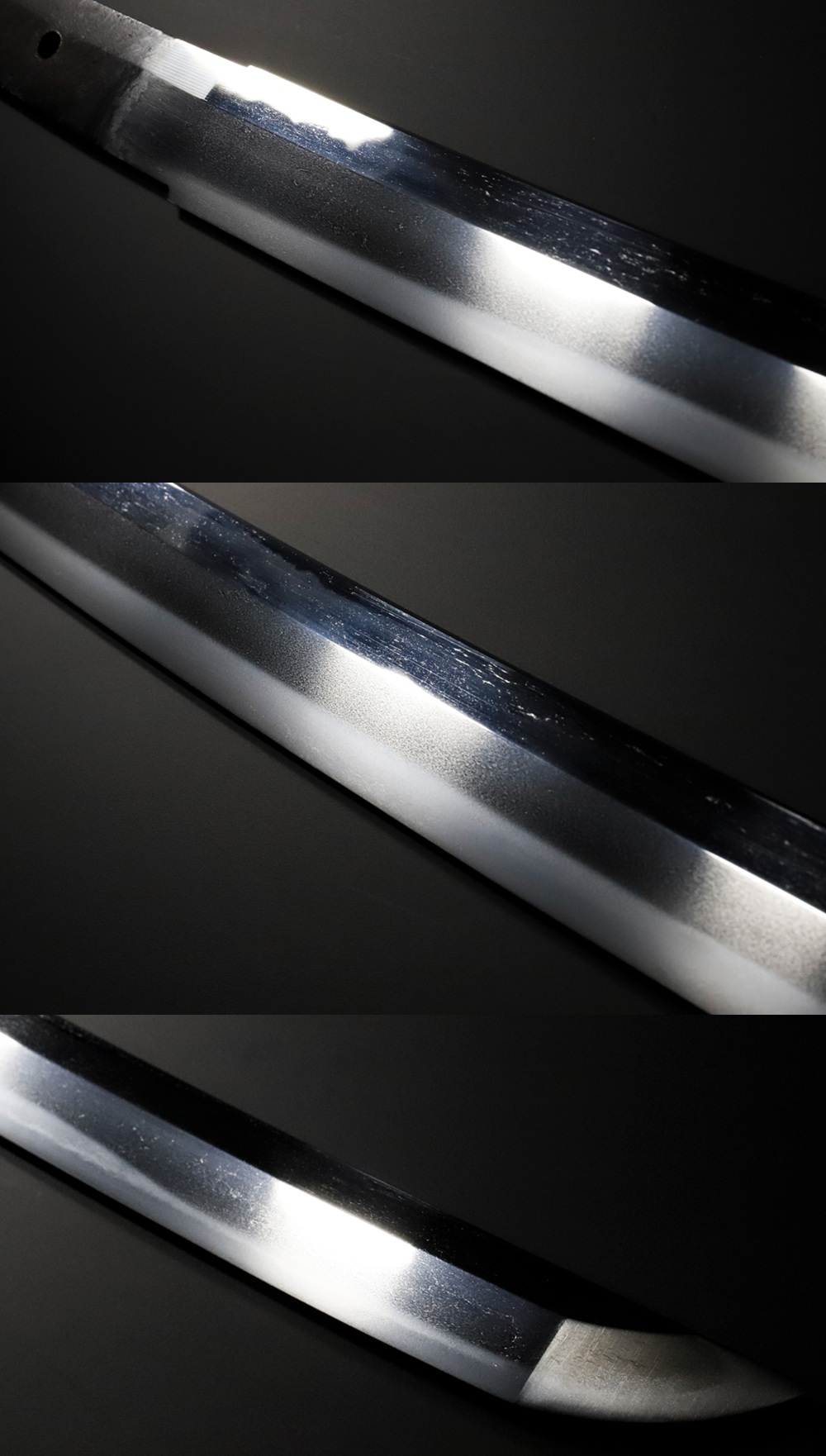
| Jihada (Metal pattern) | Konuka-hada, moist in appearance, with ji-nie and chikei |
| Hamon (Temper line) | Straight suguha hamon with a wide, band-like nioiguchi, with tama-yaki (round hardened spots) appearing along the temper line |
| Bōshi (Point / Tip) | Sugu komaru short turn |
| Nakago (Tang) | Ubu, Sujikai file with an iriyama end |
| Mekugiana (Rivet holes) | 1 |
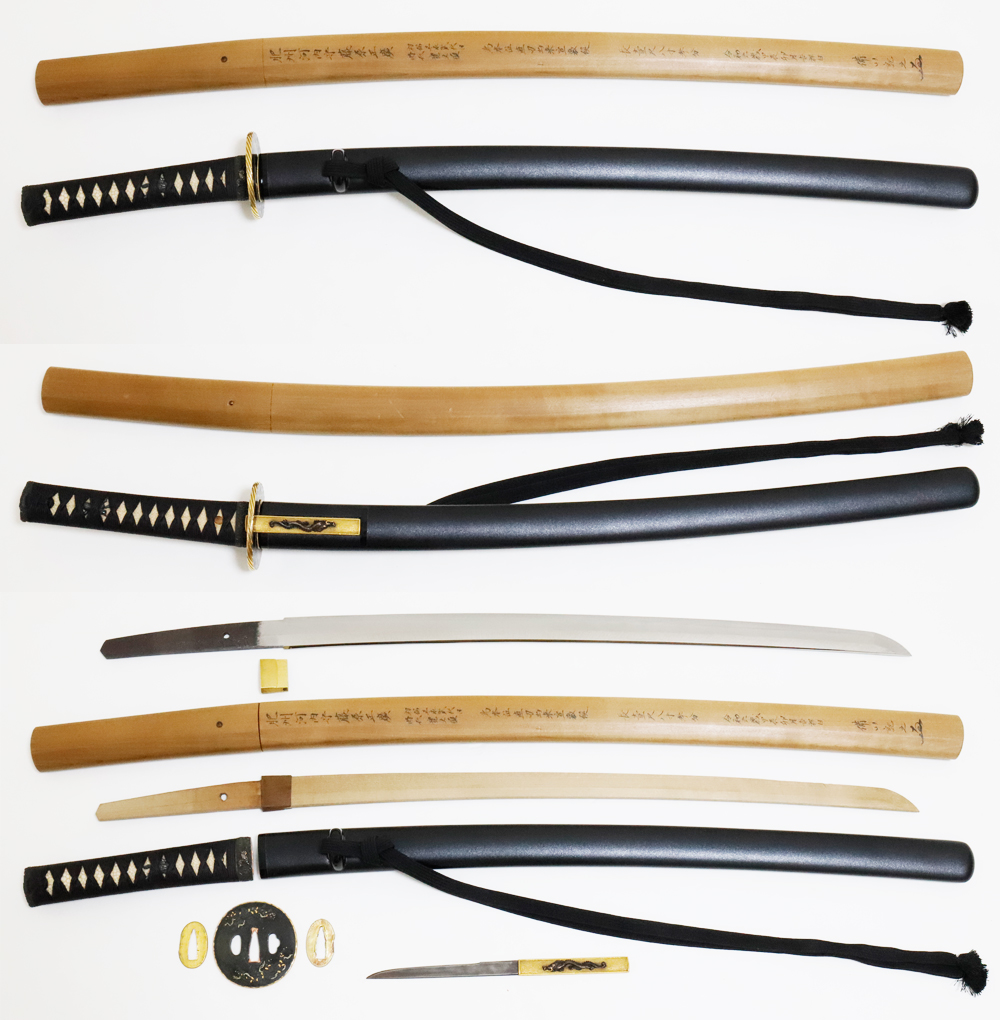
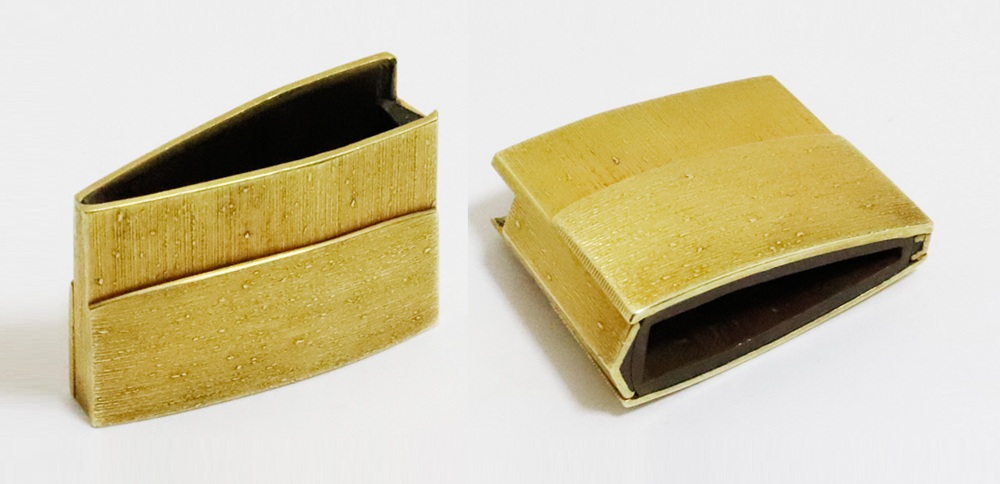
| Habaki | Double-layered habaki of suaka (refined copper) base with gold overlay (kin-kise), finished with overall yasurime file marks |
| Mountings | Koshirae-tsuki |
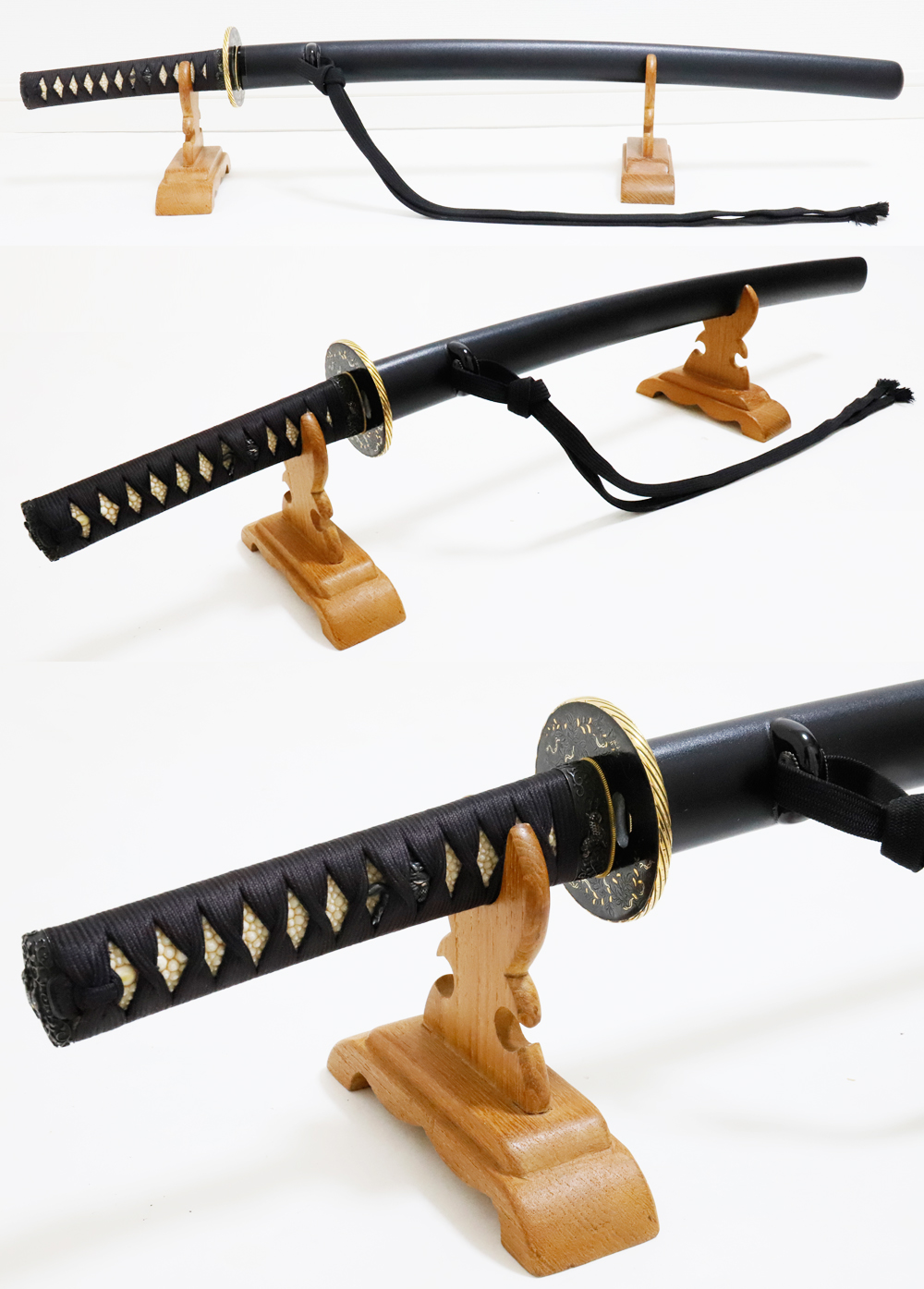
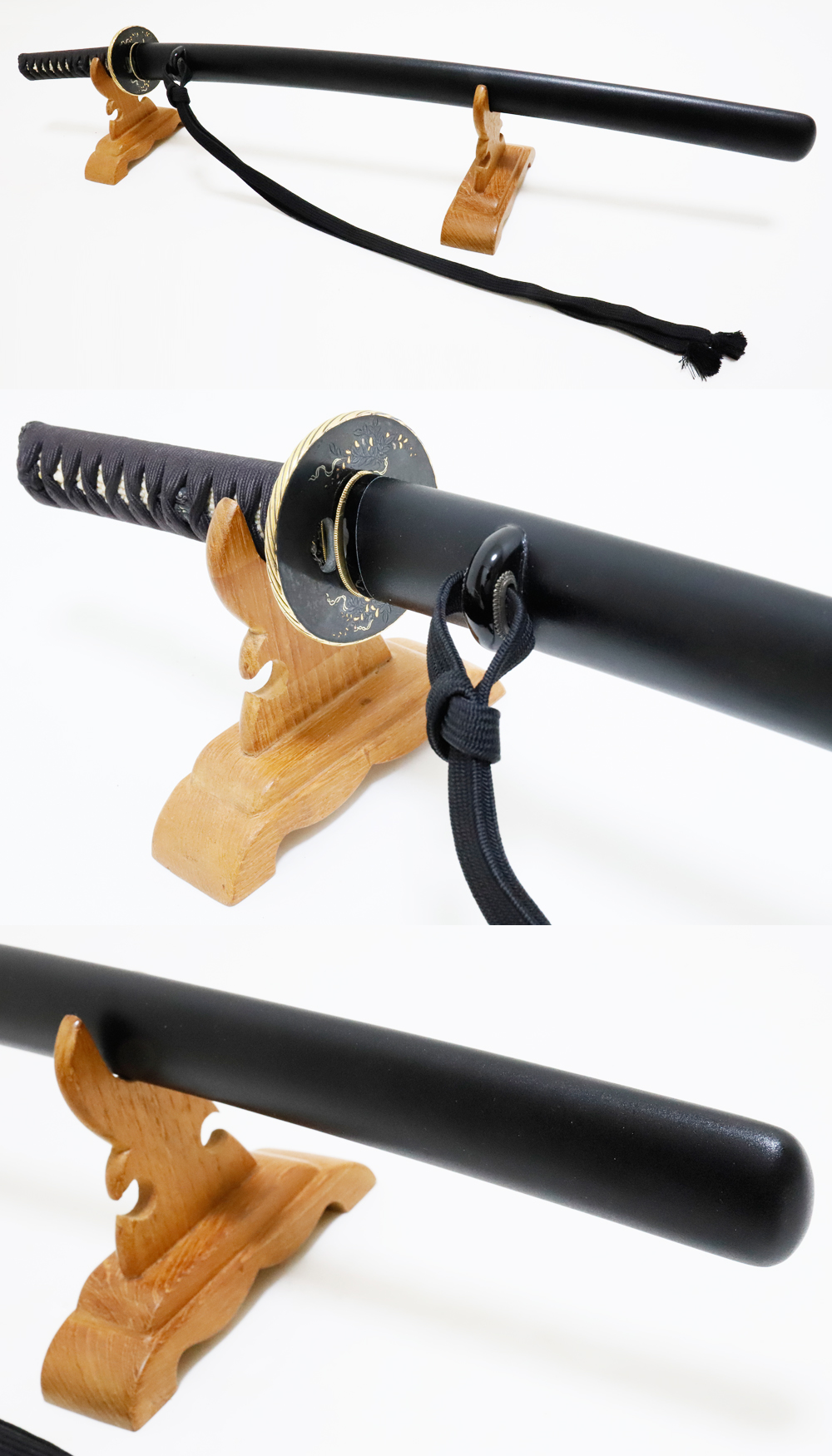
| Koshirae | Wakizashi koshirae, black ishimeji-nuri lacquered saya |
| Koshirae Length |
79.5 cm 31.3 in |
| Tsuka Length |
18.5 cm 7.3 in |
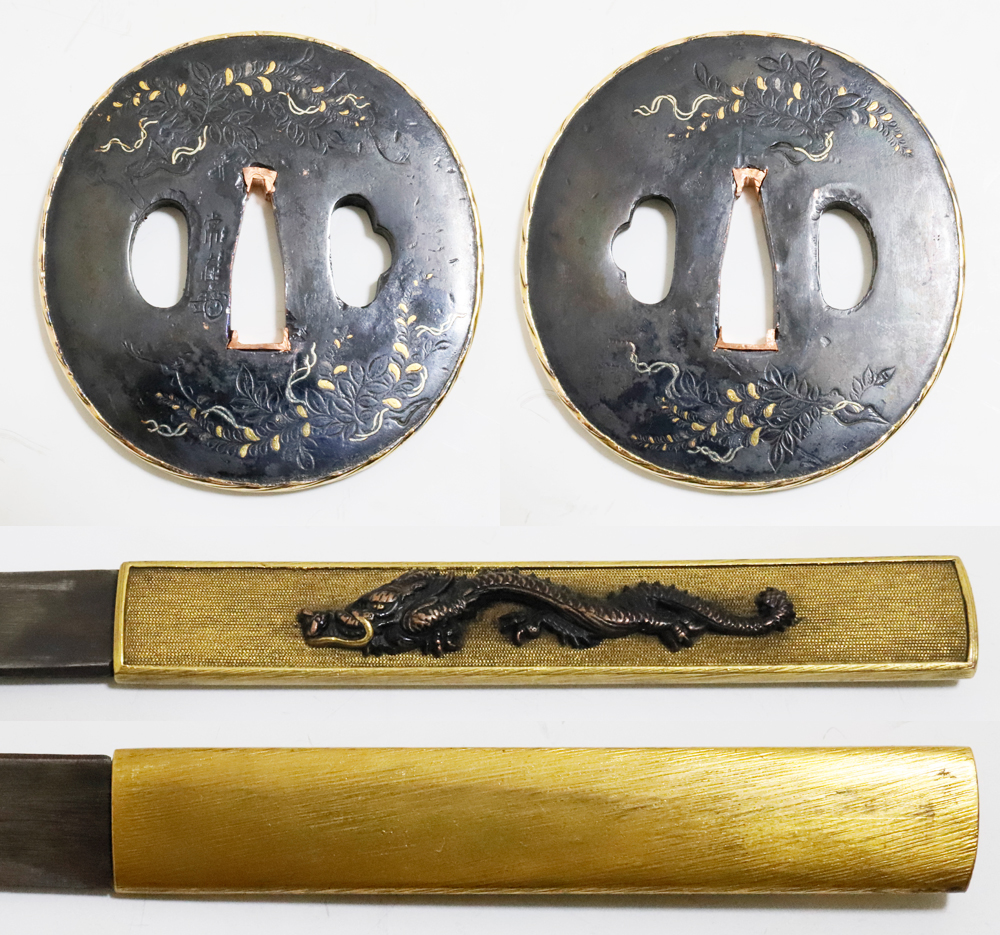
| Tsuba | Bush Clover, Mei: Naotsune(with kao), Shakudō migaki-ji ground with hira-zōgan inlay and kin-nawa fukurin rim |
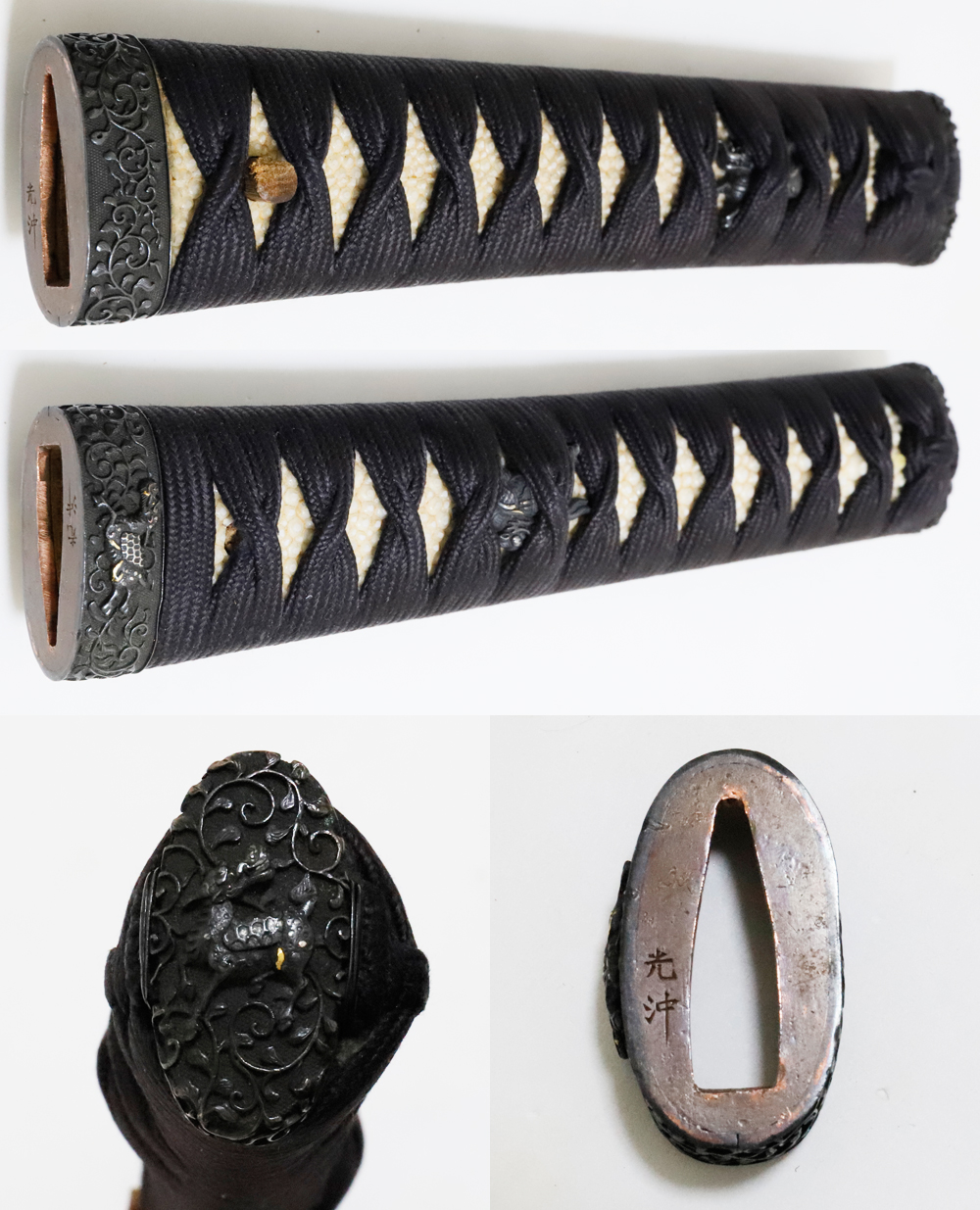
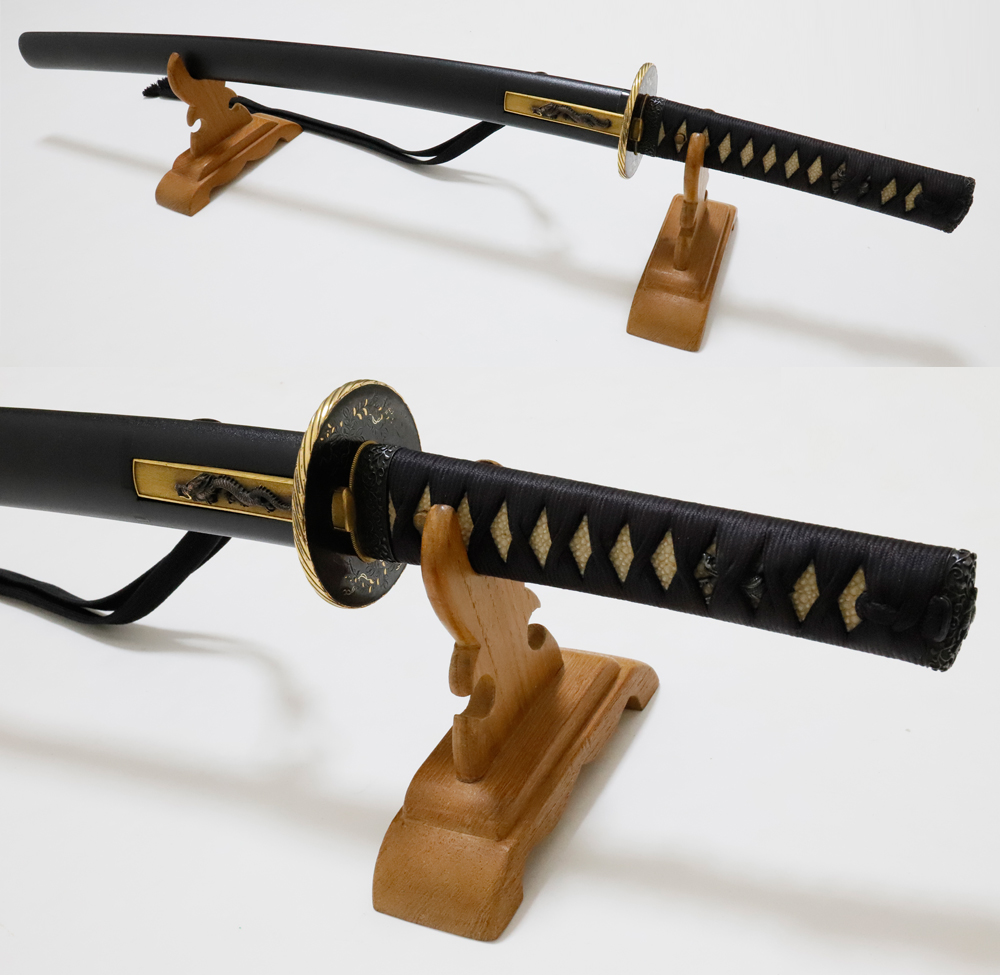
| Menuki | Kirin design, executed in shakudō with katachibori engraving |
| Fuchigashira | Kirin and karakusa (arabesque) design, Mei: Mitsuoki, Shakudō nanako-ji ground, executed in takabori with zōgan inlay and iroe |
| Kozuka | Crawling dragon design on a nanako-ji ground, gold plated (gilt finish) |
| Other details | Tsuka covered in white samegawa (ray skin), wrapped in dark brown silk ito in tsumami-maki style |
Price |
800,000 JPY |
| This work is by the second generation Masahiro.Kawachi no Kami Masahiro whose character “Hiro” (廣) includes the horizontal stroke in the seventh stroke is identified as the second generation Masahiro of the Kanbun era. He can be distinguished from the first generation Kawachi Daijō Masahiro, who used the informal variant of the character without the horizontal stroke.In workmanship, like the first generation Masahiro, he produced Hizen-style fine ko-mokume mixed with konuka-hada, a distinctive tight “rice-bran” jihada. The hamon is a suguha displaying a beautiful, band-like nioiguchi with fine ko-nie.After the death of his father, the first generation Masahiro, in Kanbun 5 (1665), he changed his title to Kawachi no Kami and succeeded to the name Masahiro (formerly Masanaga). He died in Genroku 13 (1700) at the age of 73. Both the first and second generations are rated as jō-saku (superior smiths).This blade shows a healthy Kanbun-shintō sugata with wide mihaba. The konuka-hada jihada and the band-like suguha hamon represent a superior and典型的 example of high-quality Hizen workmanship.It passed NBTHK Tokubetsu Hozon Token certification in 1990.The sword is accompanied by a wakizashi koshirae with a black ishimeji-nuri lacquered saya. |

 Search