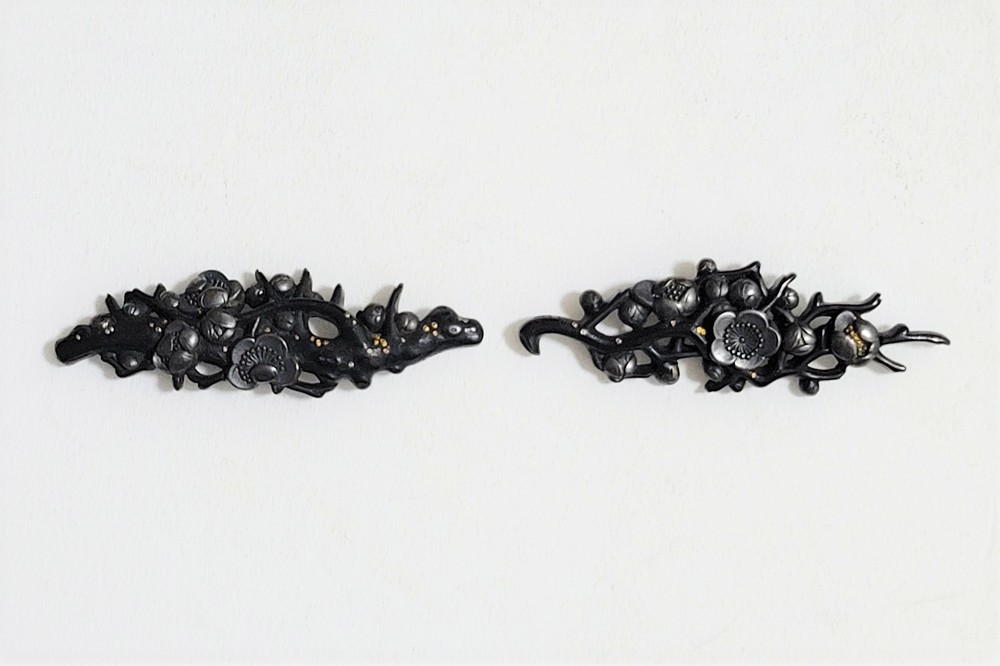
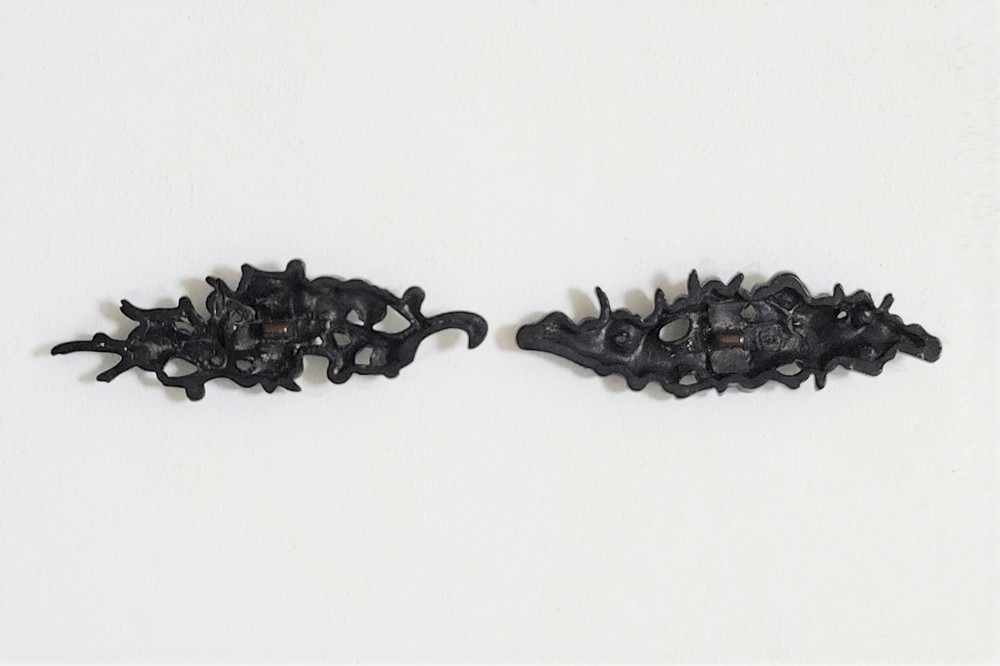
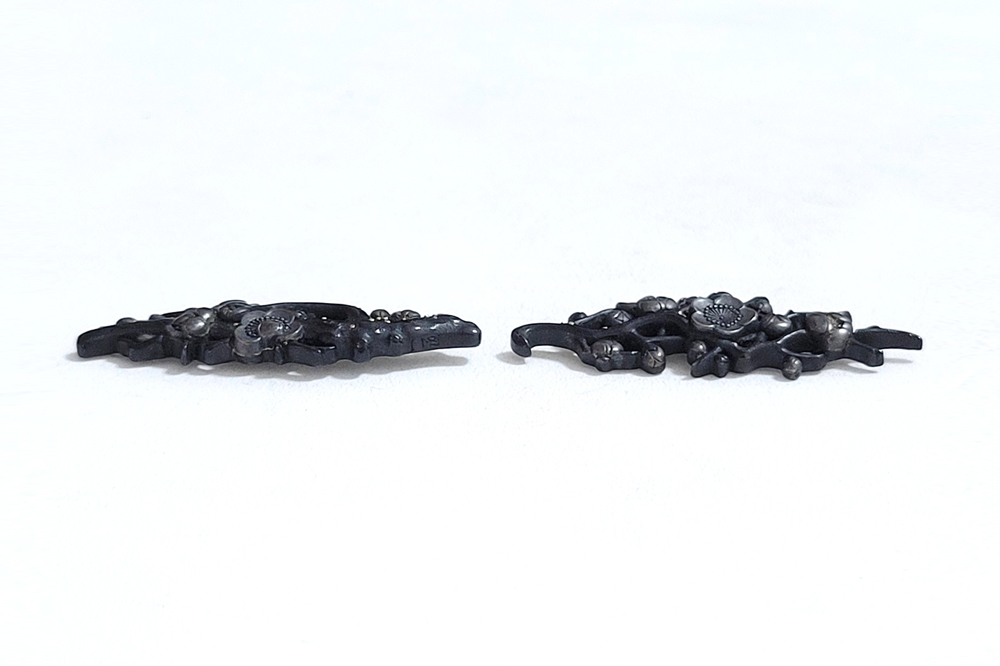
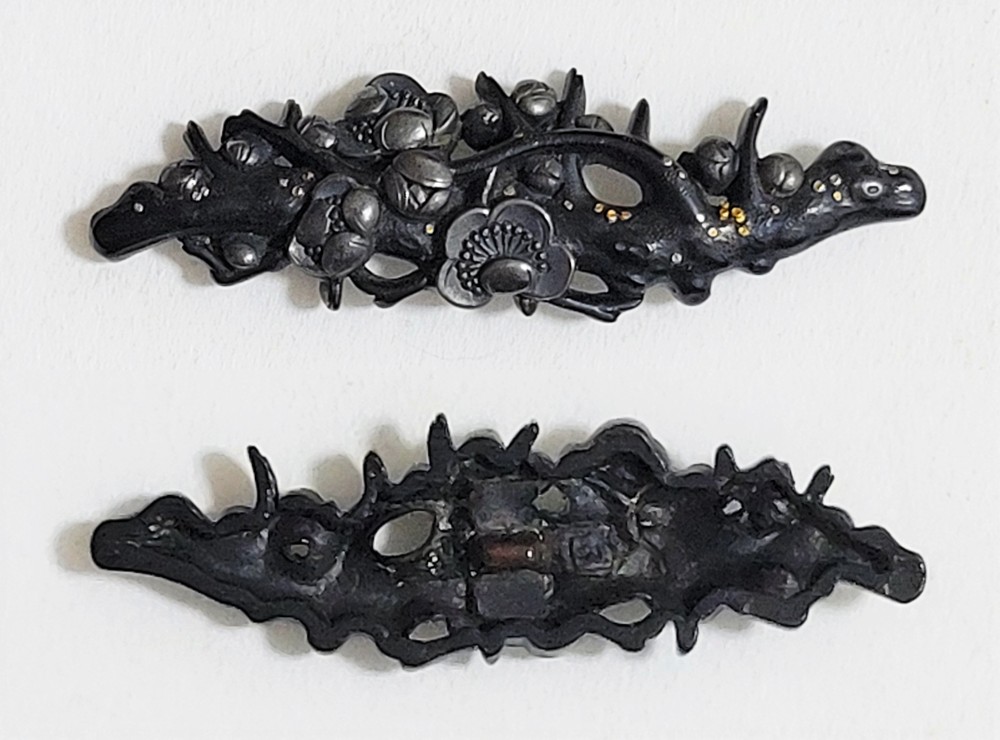
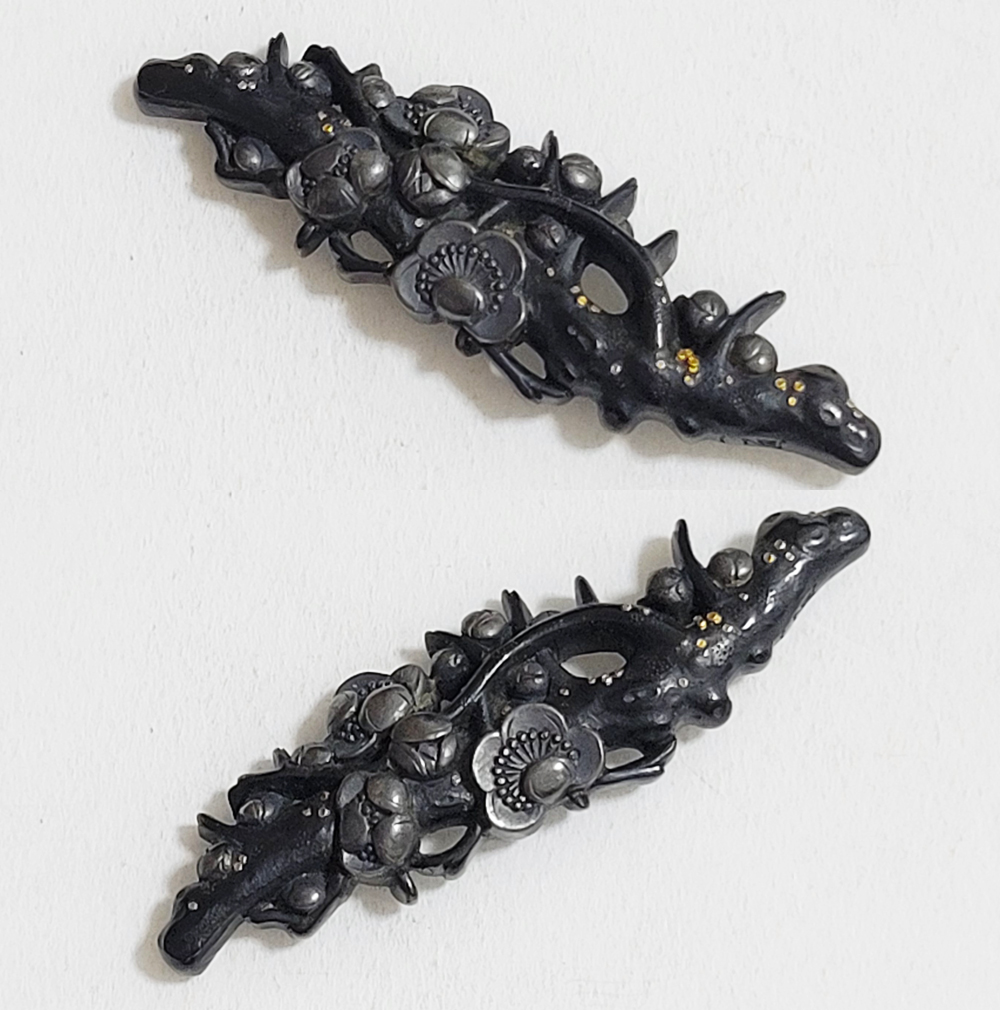
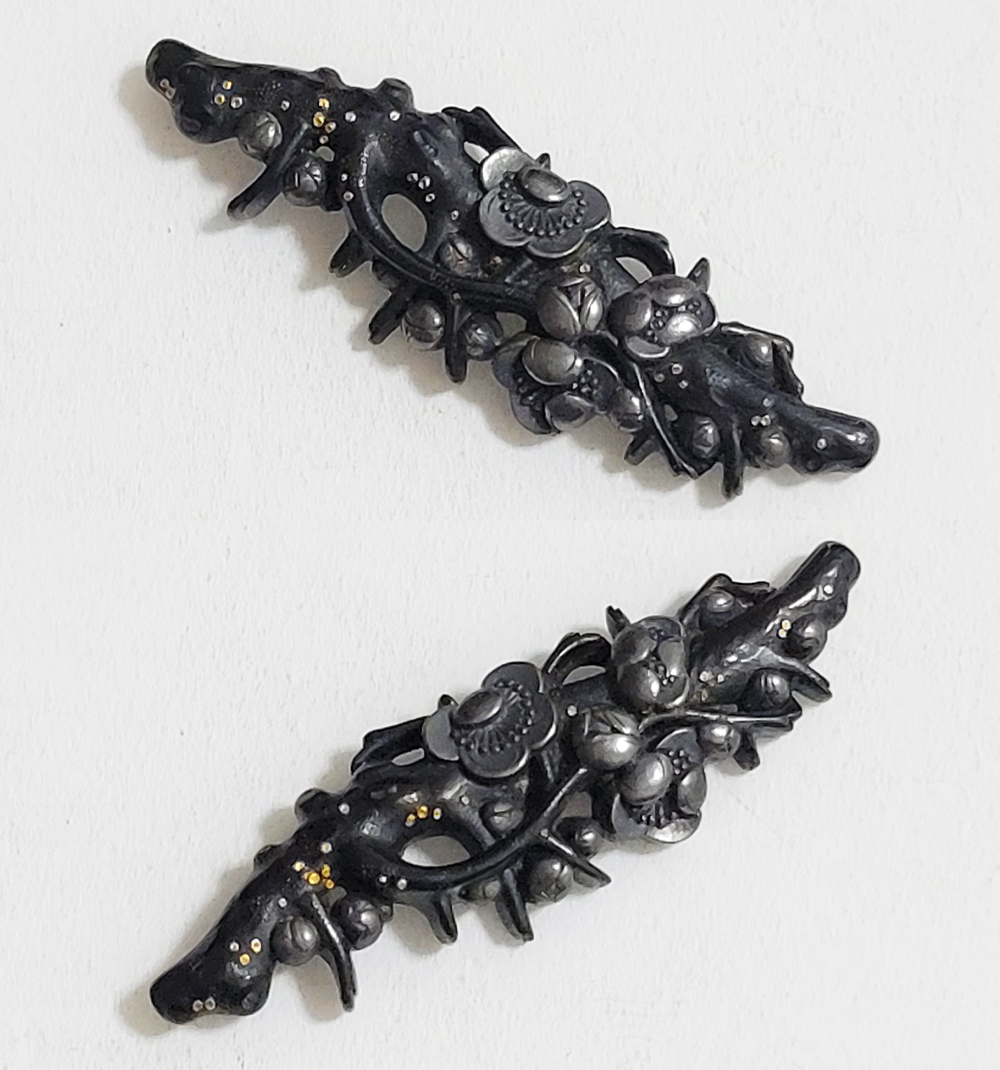
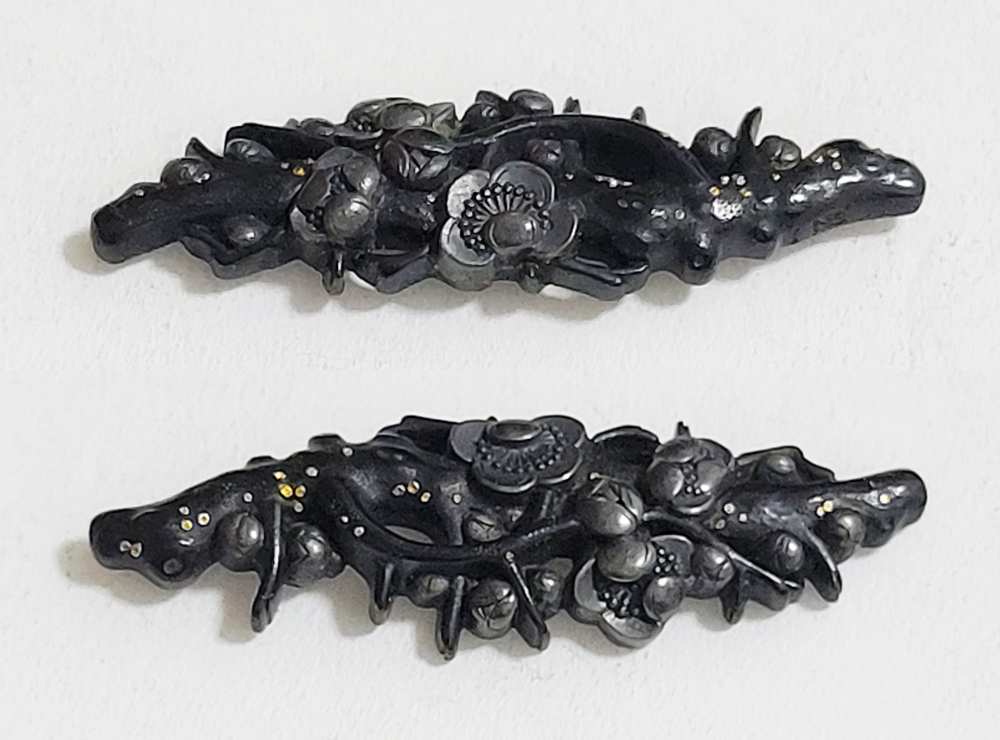
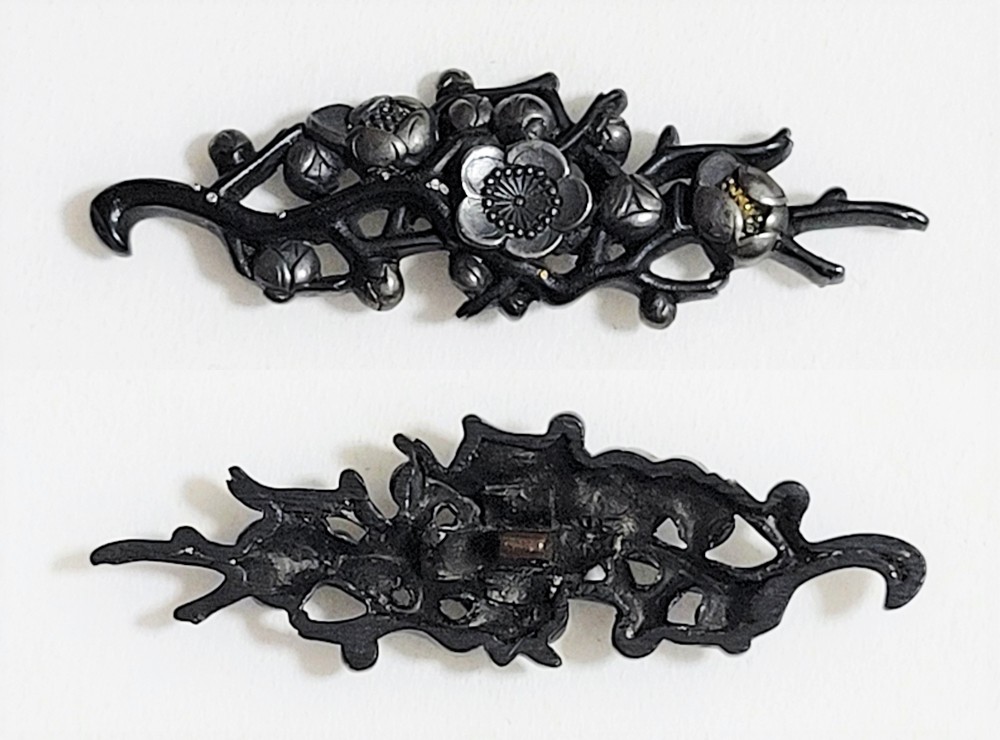
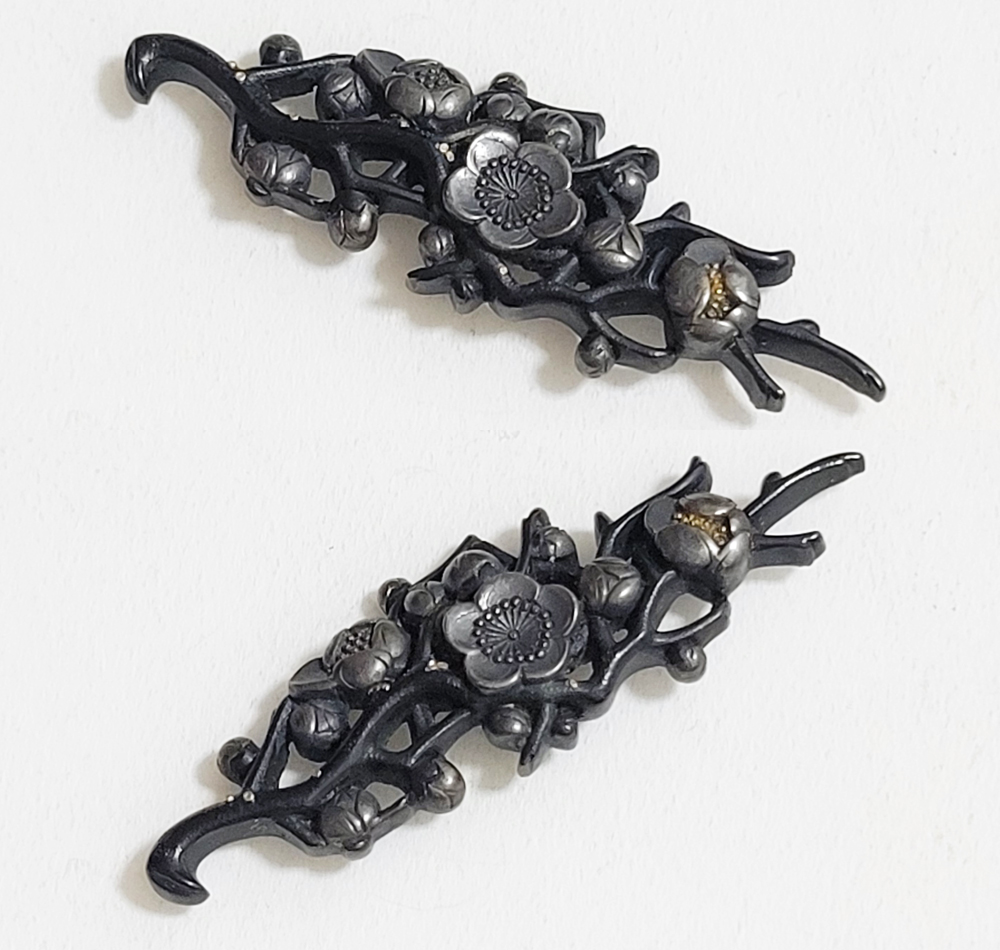
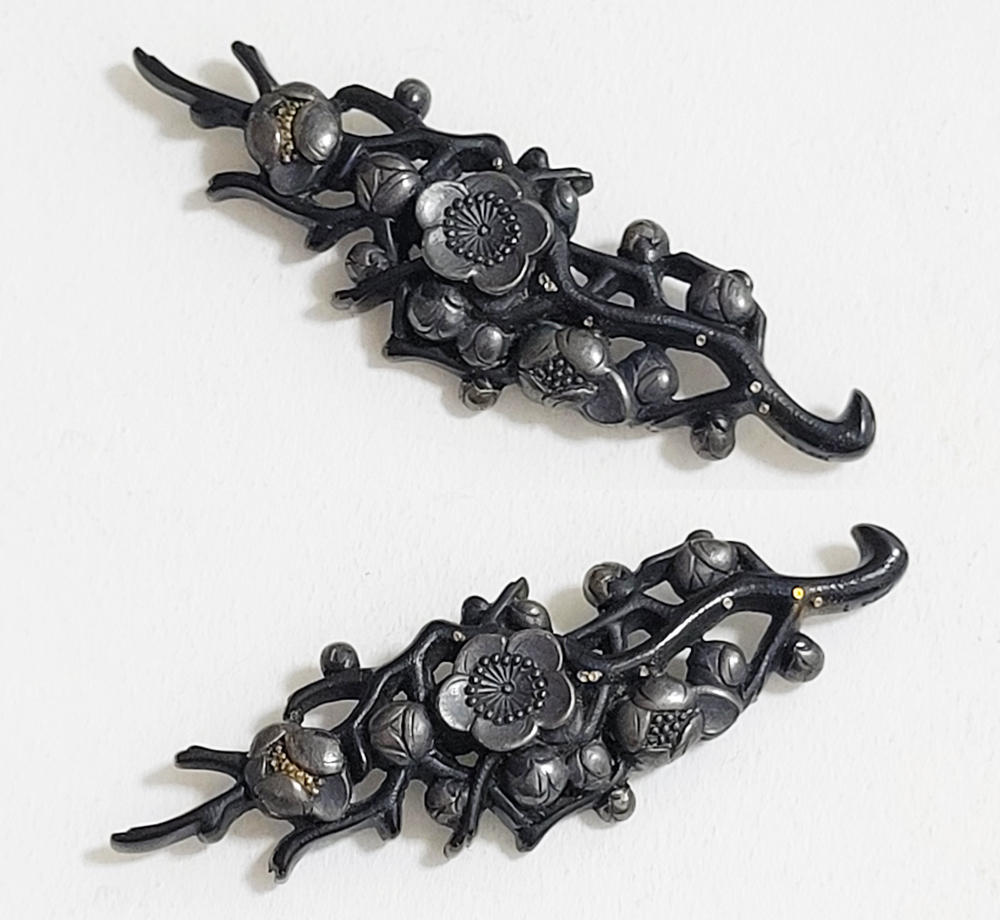
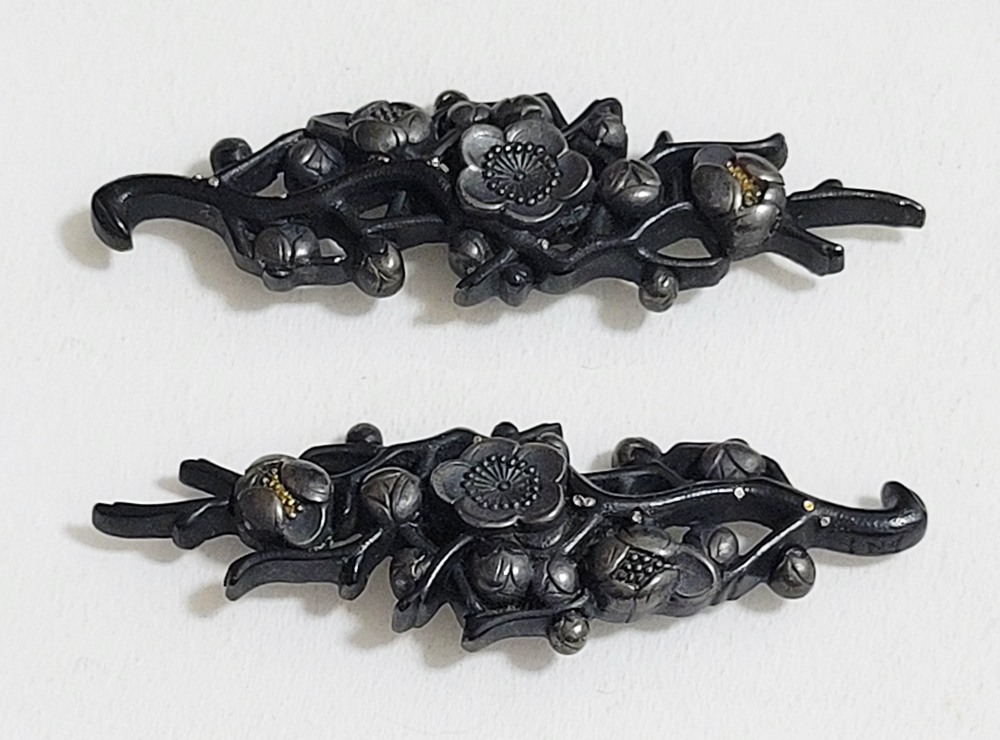
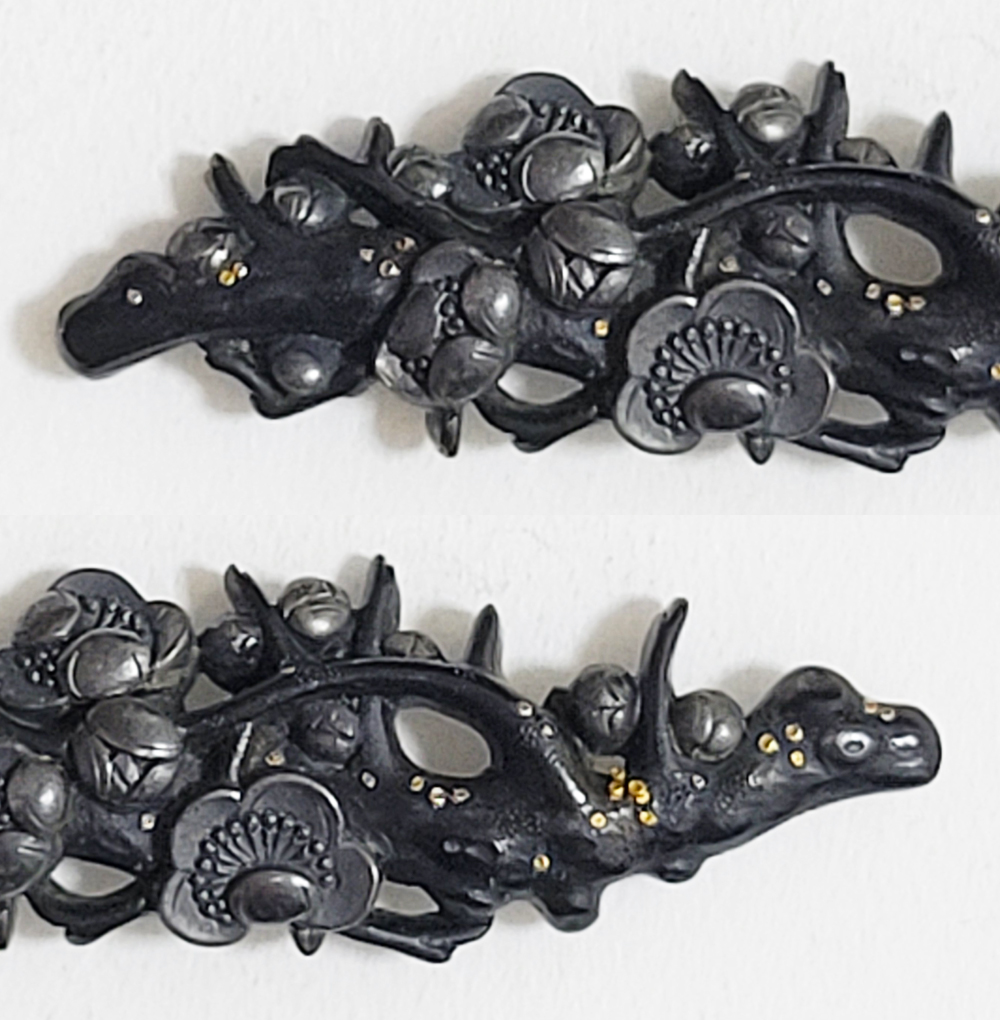
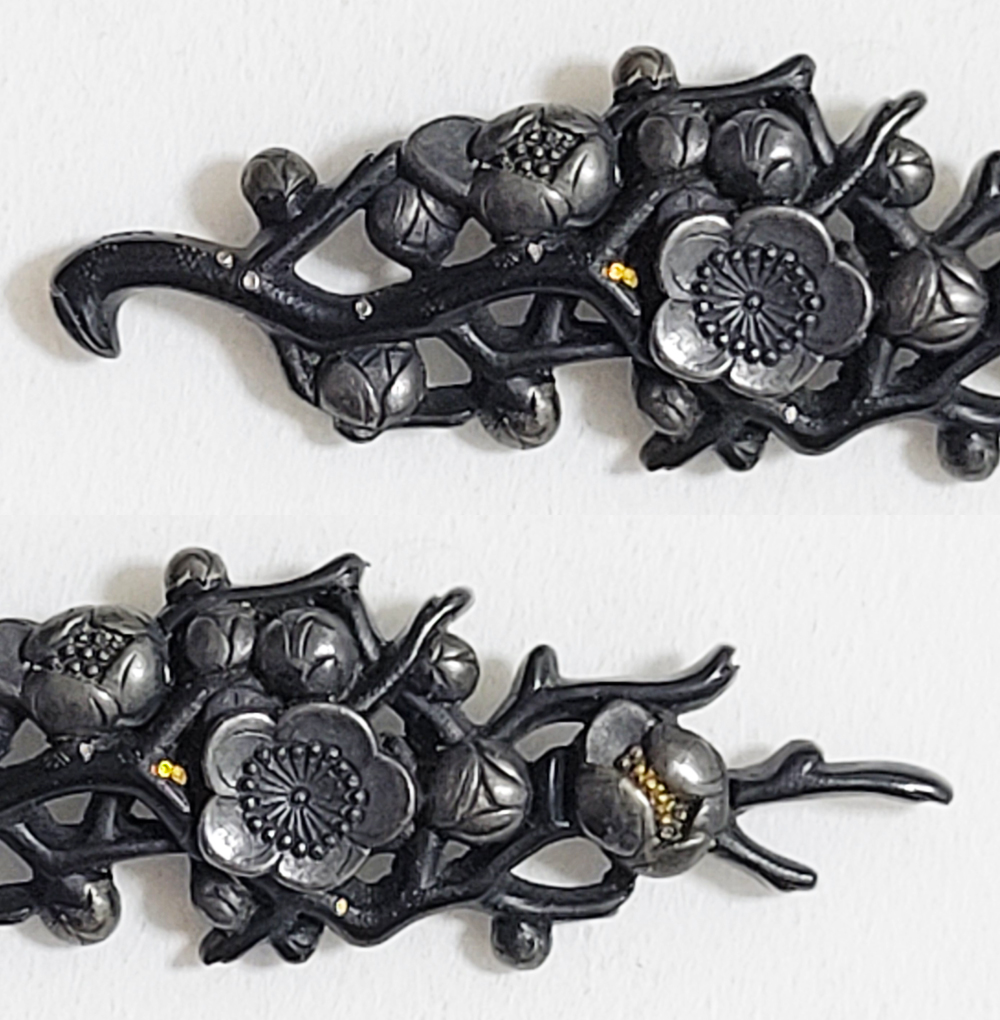
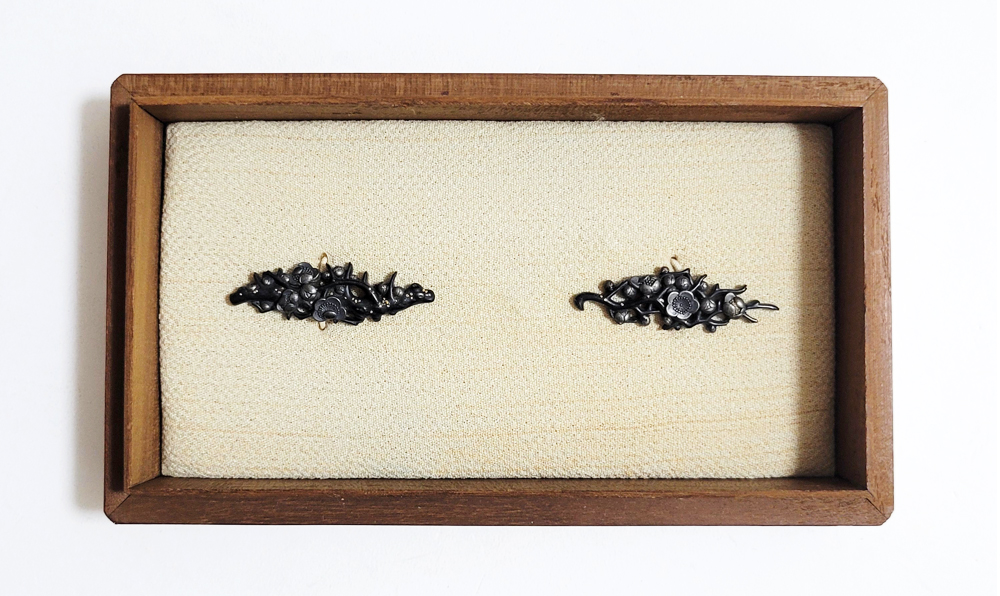
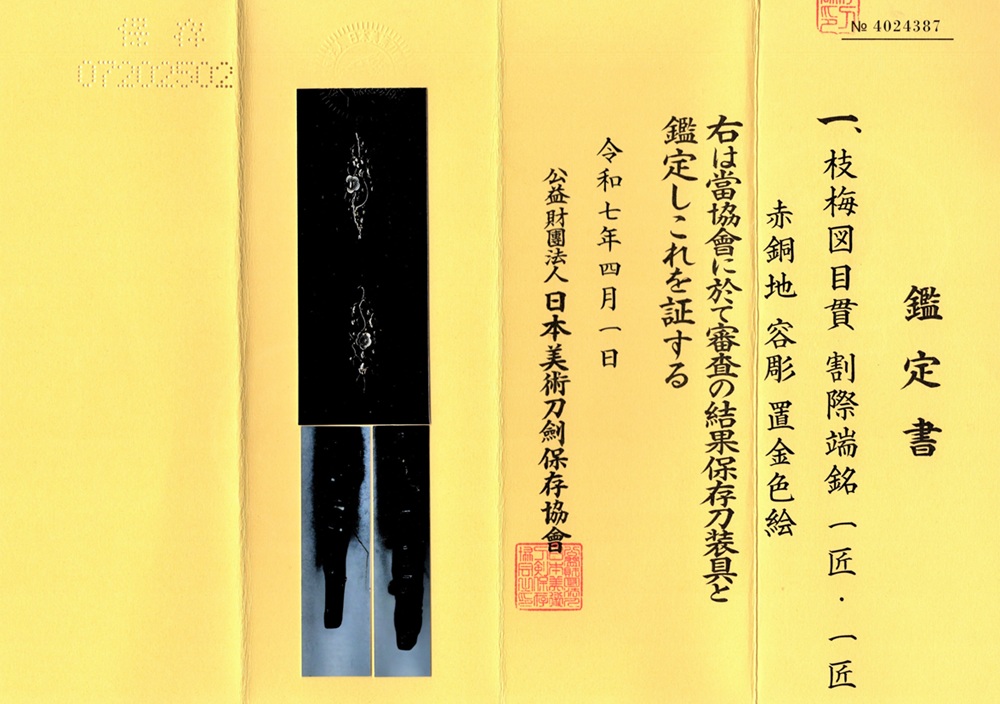
| This pair of Plum Branch menuki is signed "Isshō" (Nakagawa Isshō) on the warikibata edge. Since ancient times, the plum blossom has been cherished by the samurai class as an auspicious motif, symbolizing perseverance, nobility, and good fortune, as it is among the first flowers to bloom in the severe cold of winter. Nakagawa Isshō was born in Tsuyama, Mimasaka Province, in 1829. At the age of twenty-one, he became a pupil of Gotō Ichijō, the foremost master metalworker of the late Edo period. At the age of twenty-nine, he was granted permission to use the signature 「一勝」 (both pronounced "Isshō"). In 1862, at the age of thirty-four, he changed the characters of his signature to 「一匠」, which is pronounced the same way, and used this signature thereafter. This pair of menuki is an elegant work executed with the refined chiseling techniques inherited from his master. The plum blossoms and buds are rendered in silver oki-gane on a high-quality shakudō branch with a deep black patina, while gold iroe further enhances their beauty. The composition creates a remarkable sense of depth and vitality within the limited space of the menuki. It passed the NBTHK Hozon Tosogu shinsa in 2025. |

 Search