| Product No. KO-0100 |
|---|
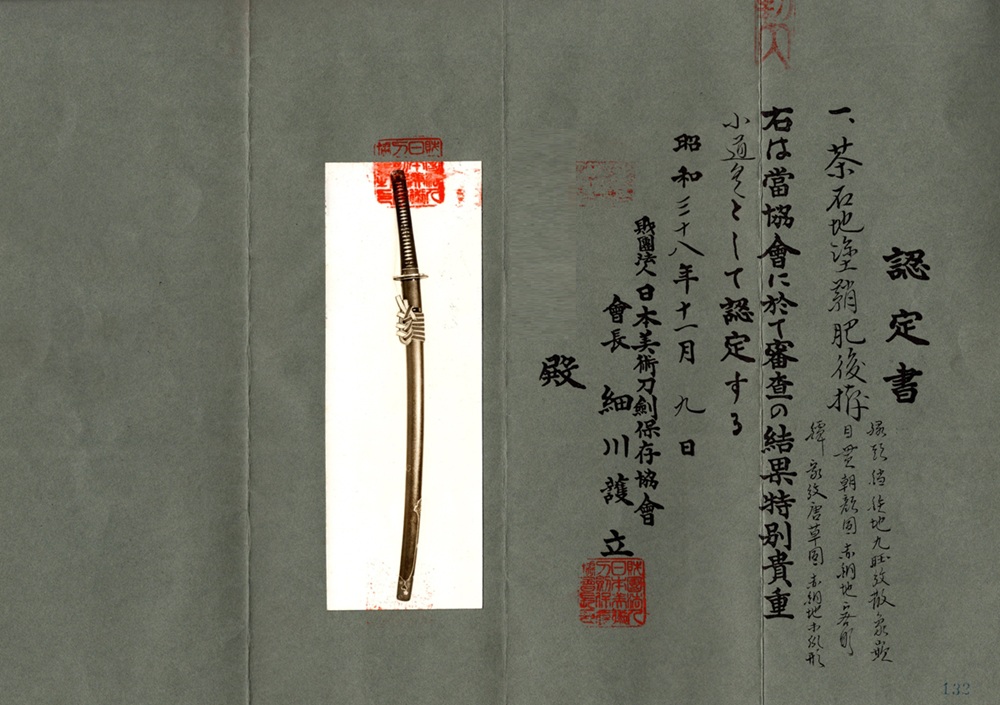
| Status | Tokubetsu Kicho Kodogu |
| Certification Date | November 09, 1963 |
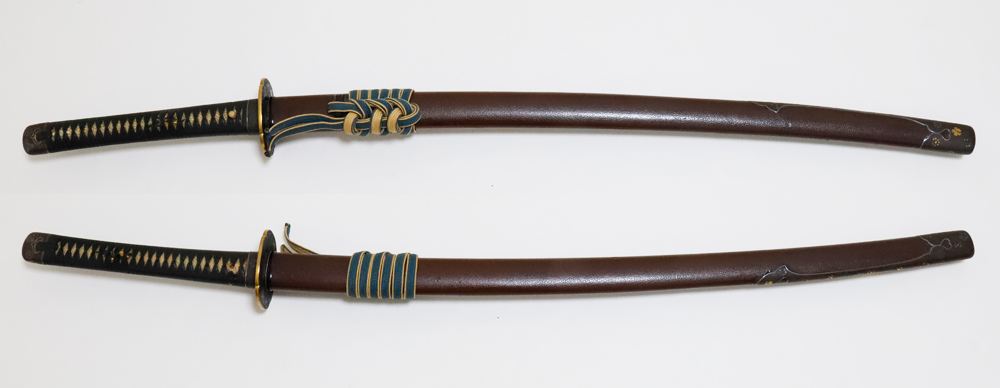
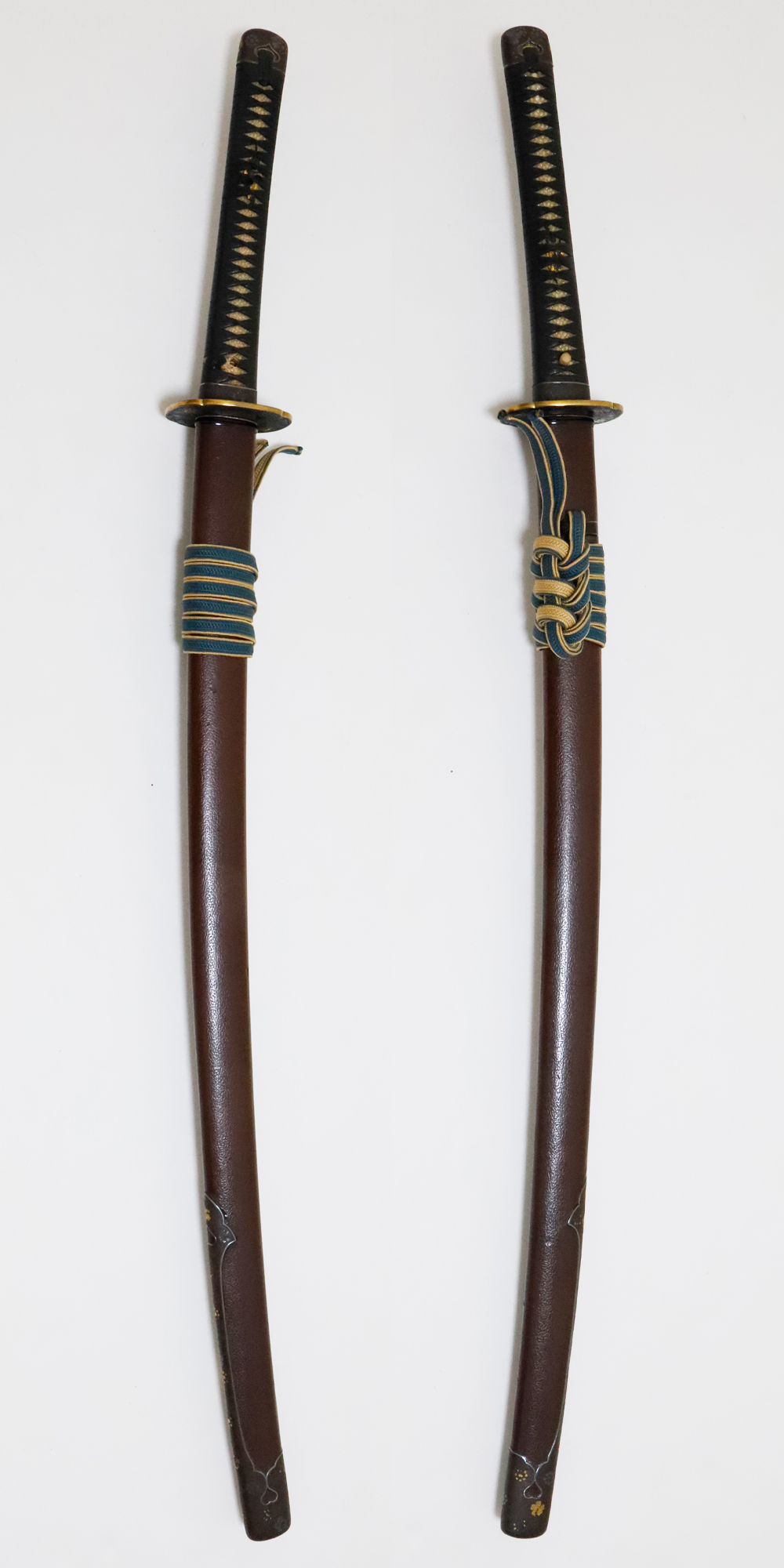
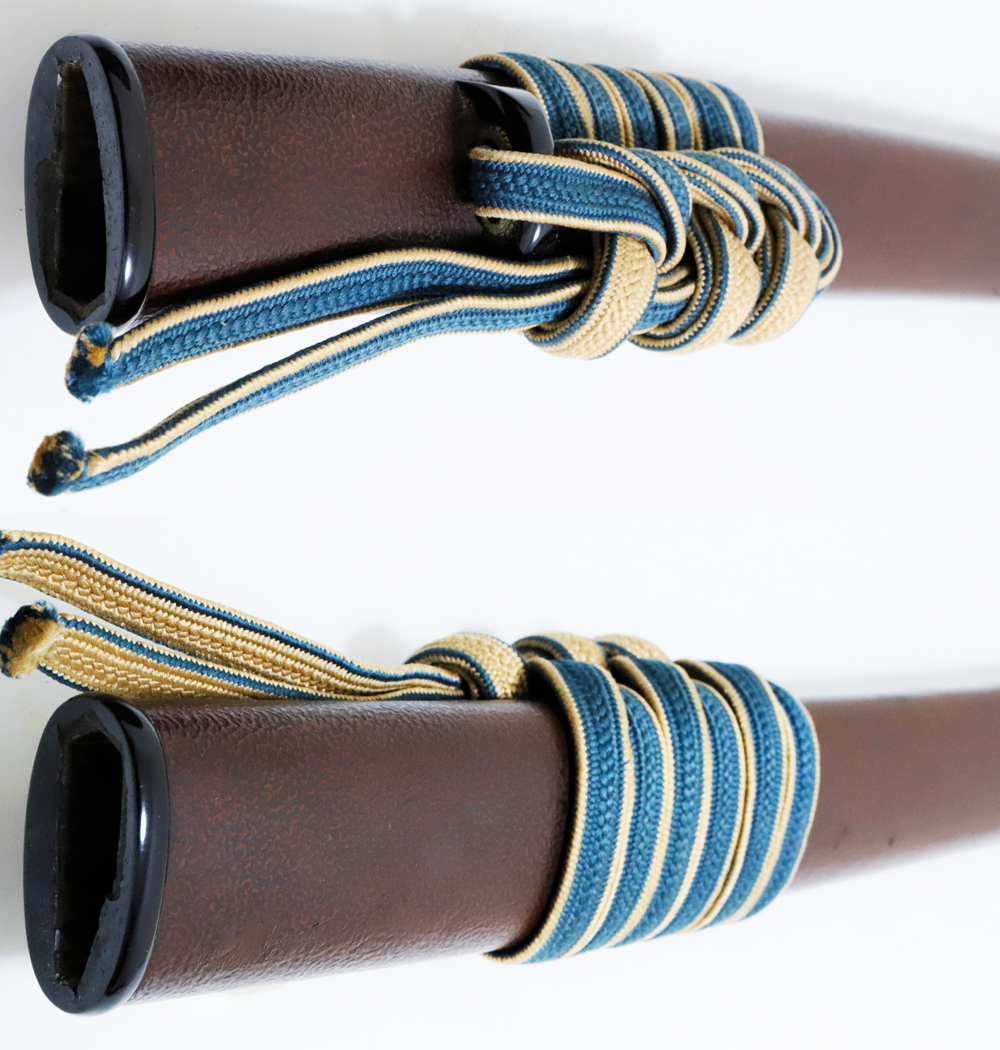
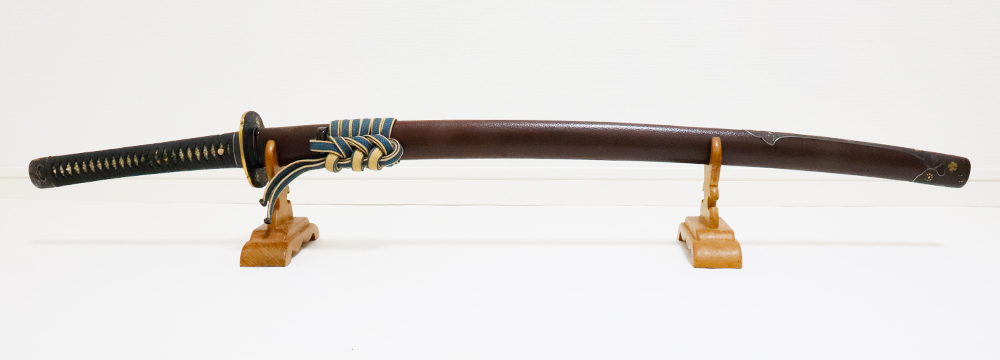
| Koshirae | Brown ishimeji-lacquered saya Higo koshirae |
| Koshirae Length |
100 cm 39.4 in |
| Tsuka Length |
25.0 cm 9.8 in |
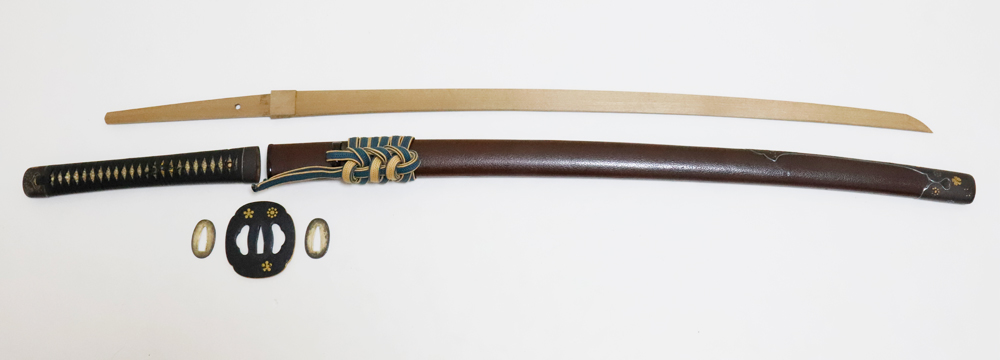
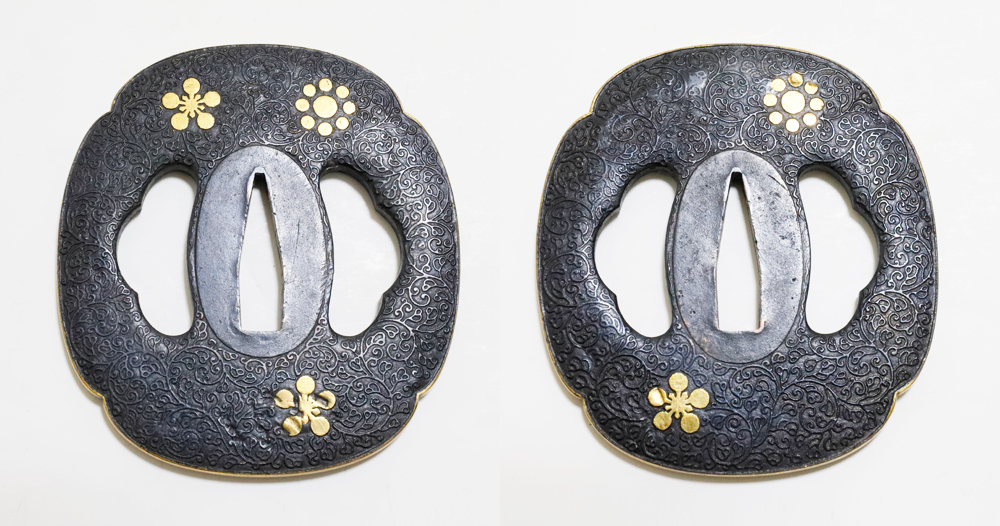
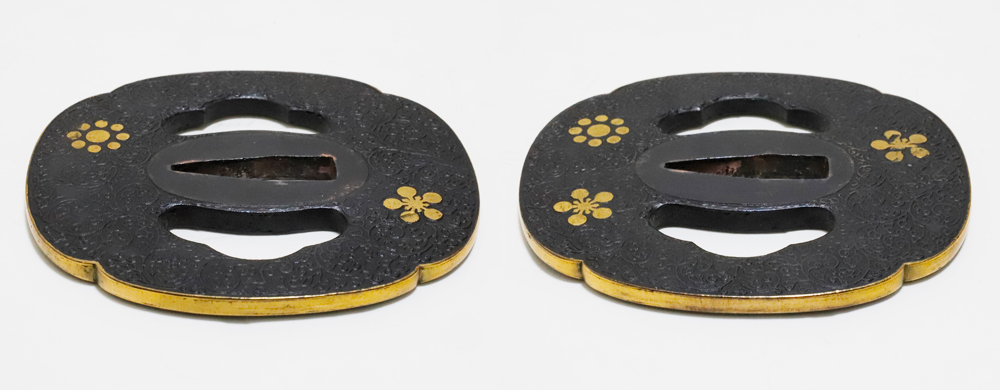
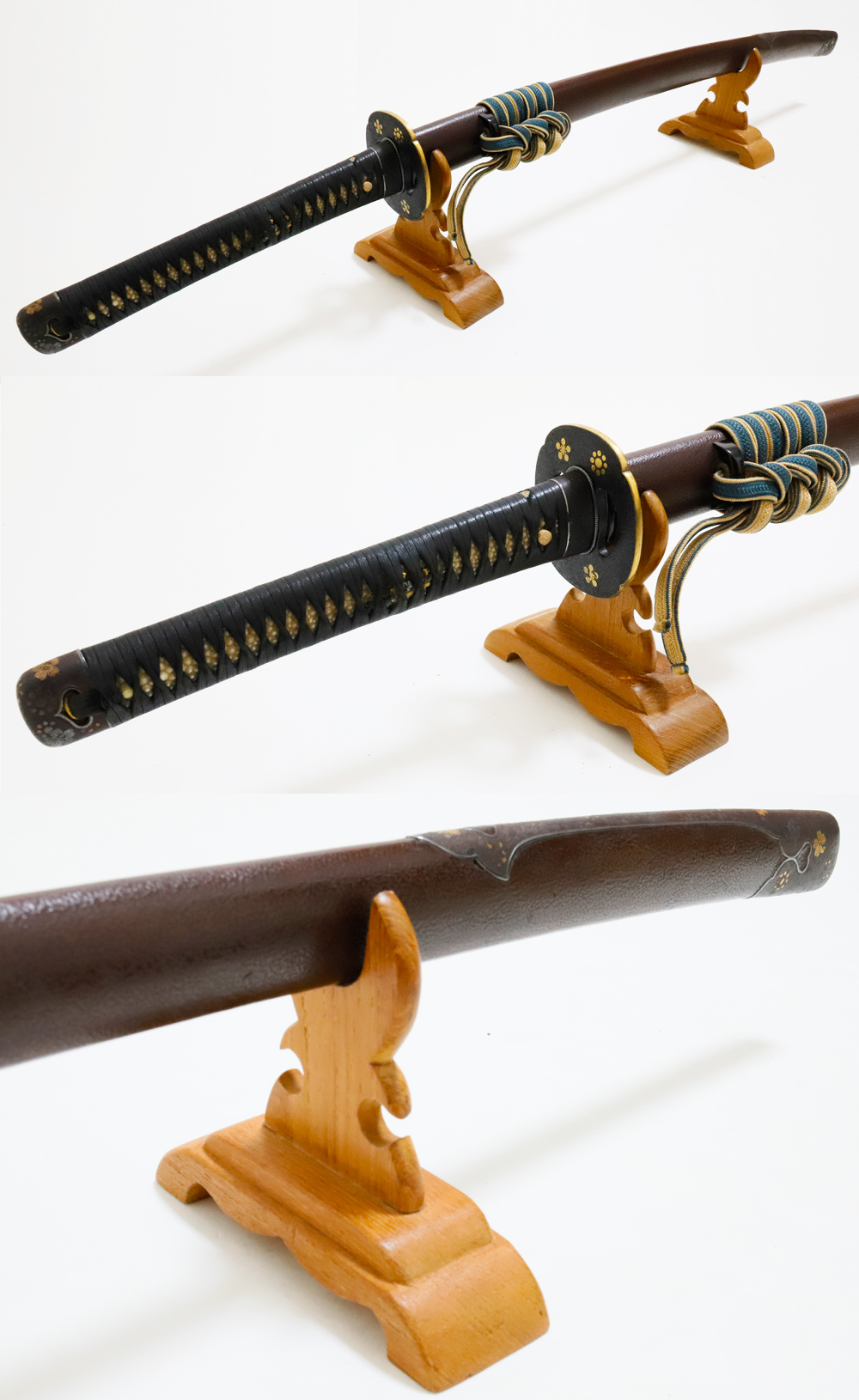
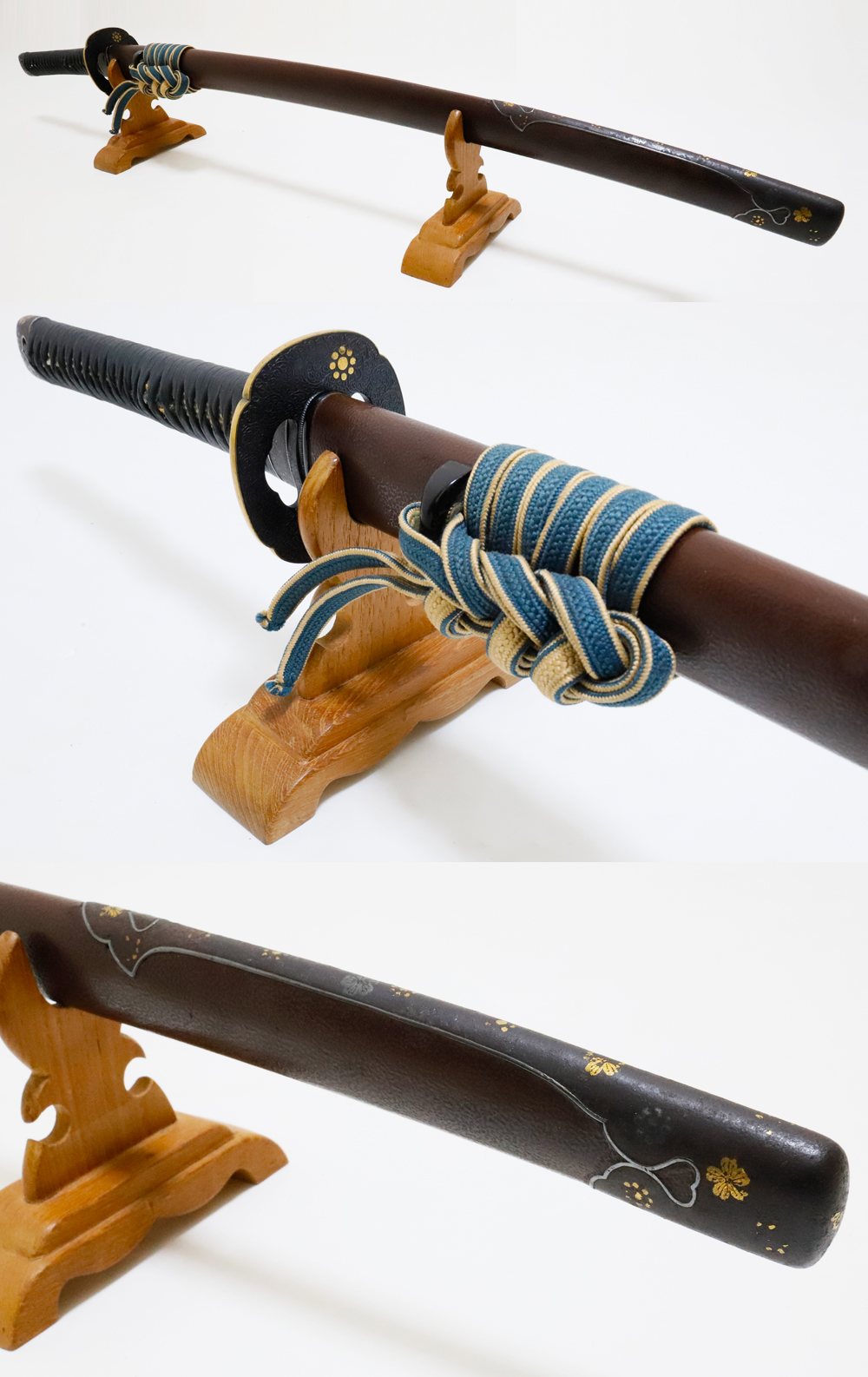
| Tsuba | Family crests and arabesque design / Shakudo ground, mokko-shaped. |
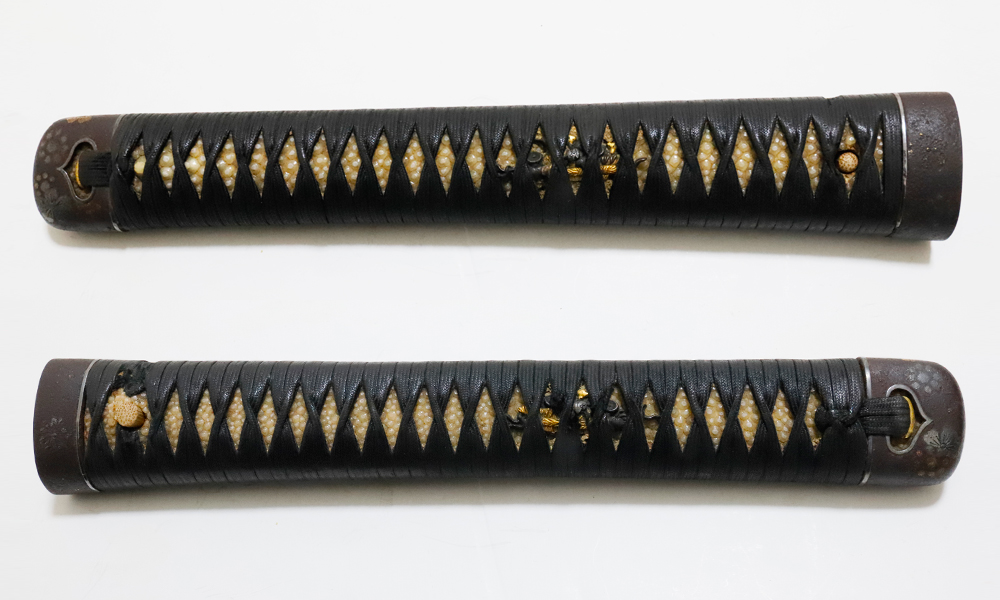
| Menuki | Morning glory design / Shakudo ground, katachibori |
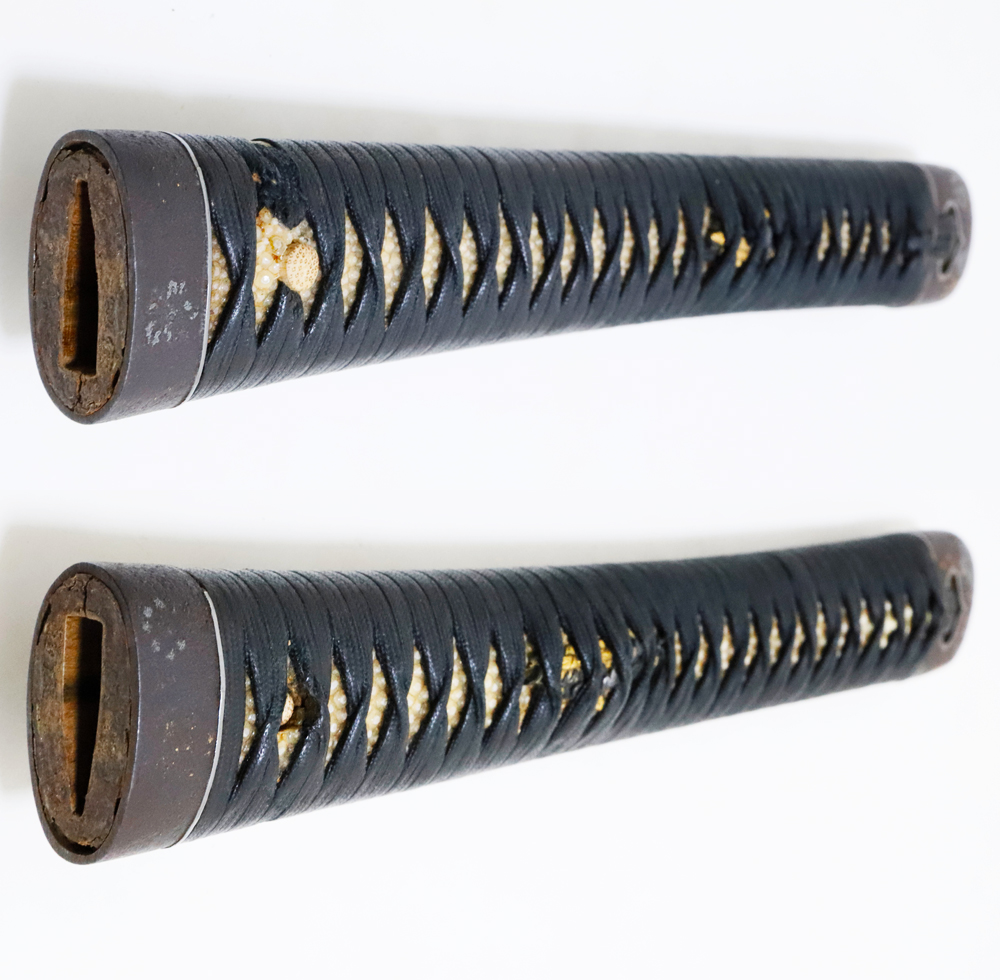
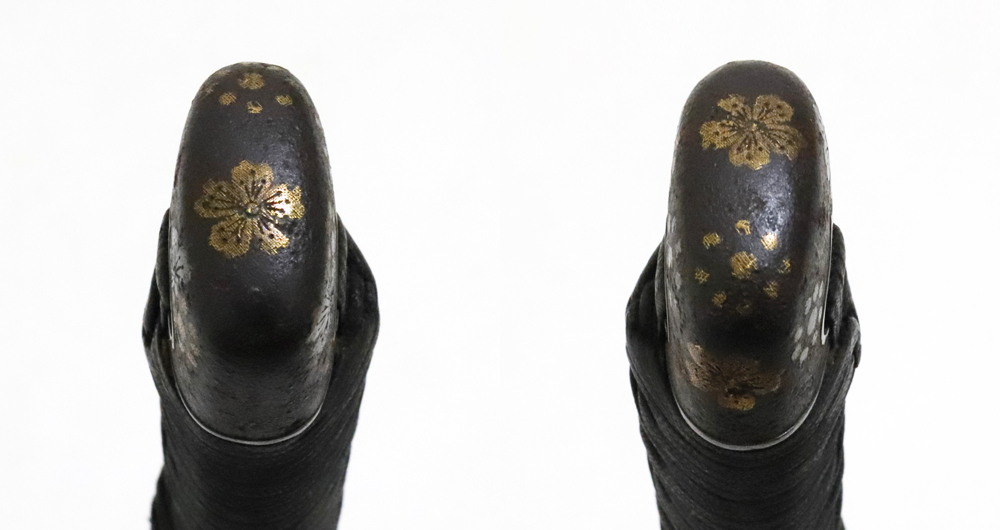
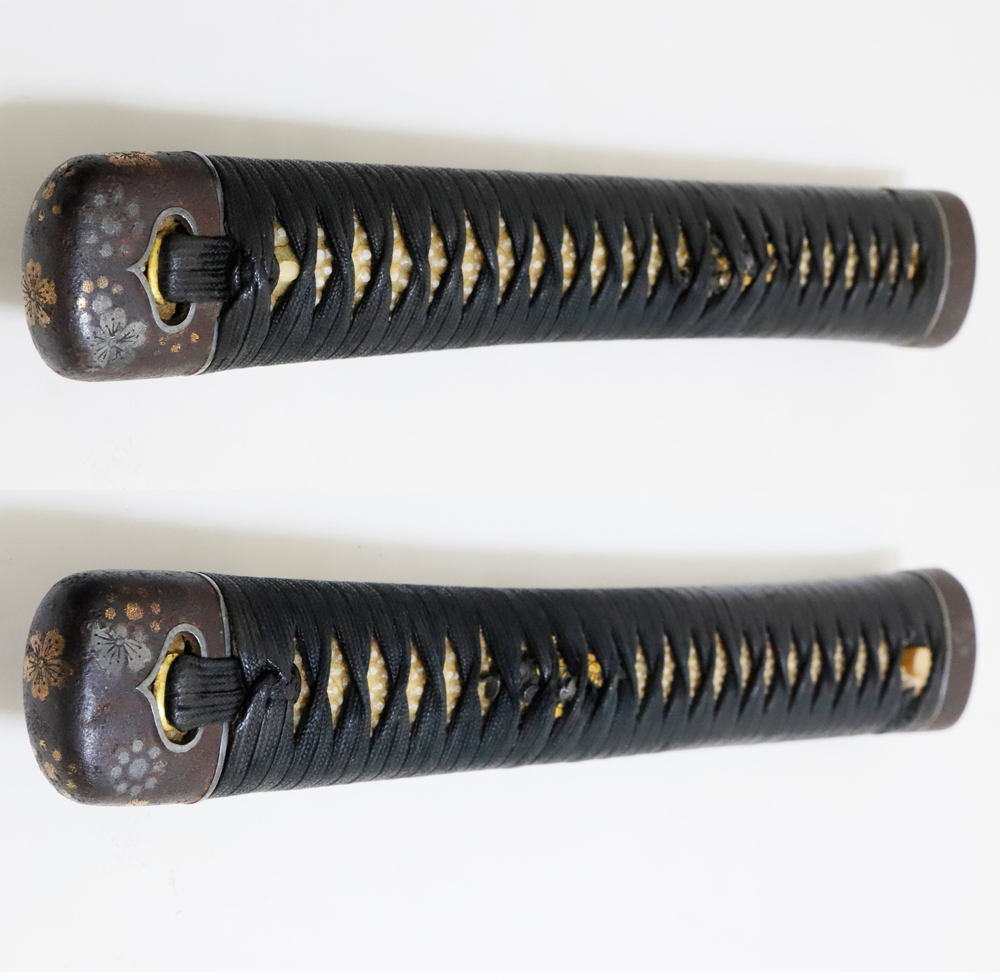
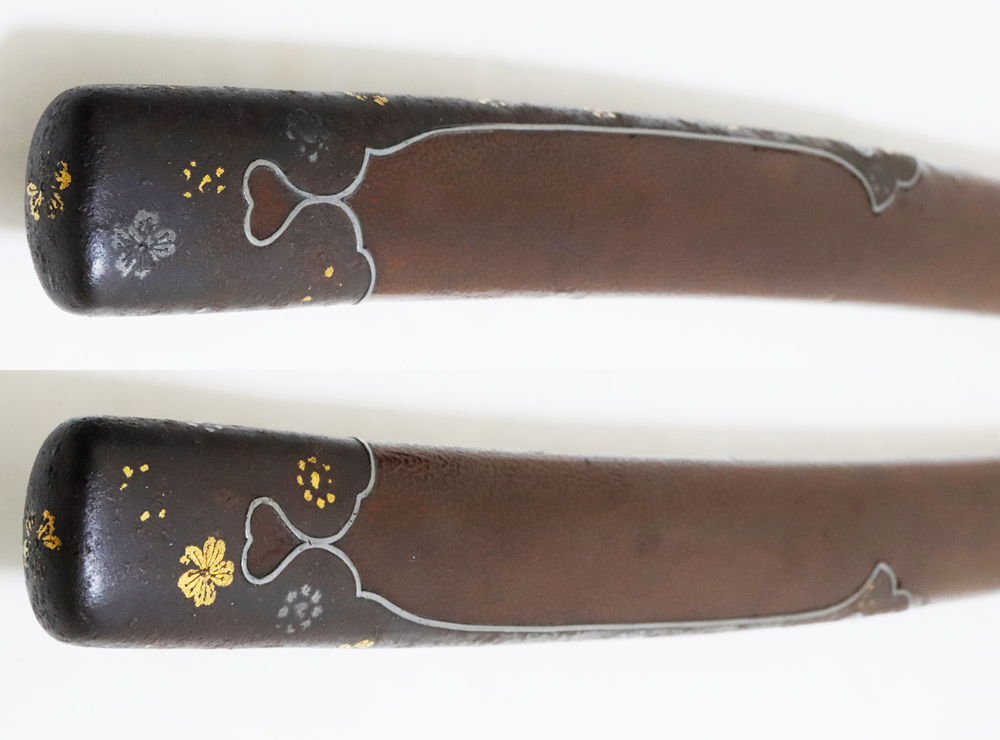
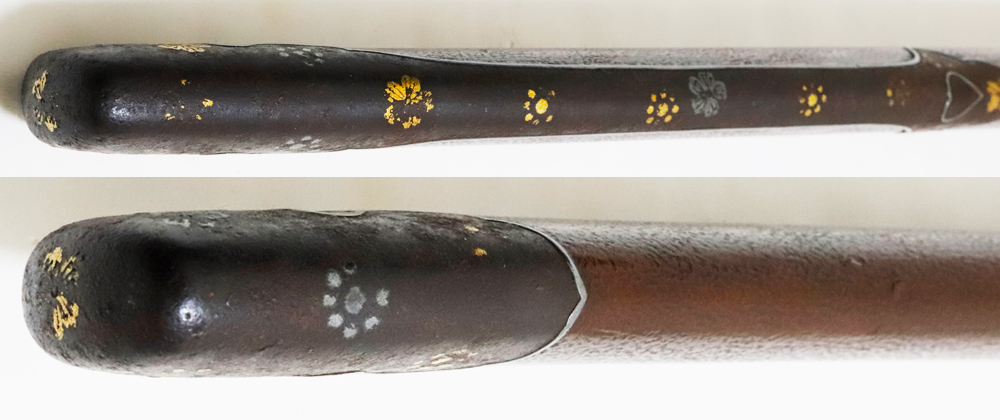
| Fuchigashira | Iron ground throughout, scattered kuyo-mon (nine-star crests), zogan |
| Other details | White samegawa with black silk tsumami-maki, Iron ground, inome-sukashi, scattered kuyo-mon, long kuwagata-shaped kojiri |
Price |
400,000 JPY |
| Higo koshirae is a style of Japanese sword mounting developed during the Edo period by Hosokawa Sansai (Tadaoki), the first lord of the Kumamoto Domain in Higo Province, who was also renowned as a tea master. It combines practical features suited to rapid sword drawing, as emphasized in the Hoki-ryu school, with the spirit of wabi-sabi found in the tea ceremony. Higo koshirae is characterized by its sturdy construction and refined elegance. This example features a brown ishiji-lacquered saya mounted with Higo fittings decorated with scattered kuyo-mon (nine-star crests). It is accompanied by a Tokubetsu Kicho Kodogu certificate issued in Showa 38 (1963). |
 Search