| Product No. KA-0822 無銘(長船盛重) | |
|---|---|
| Mei |
Mumei, but attributed to Morishige from Osafune Back: -- |
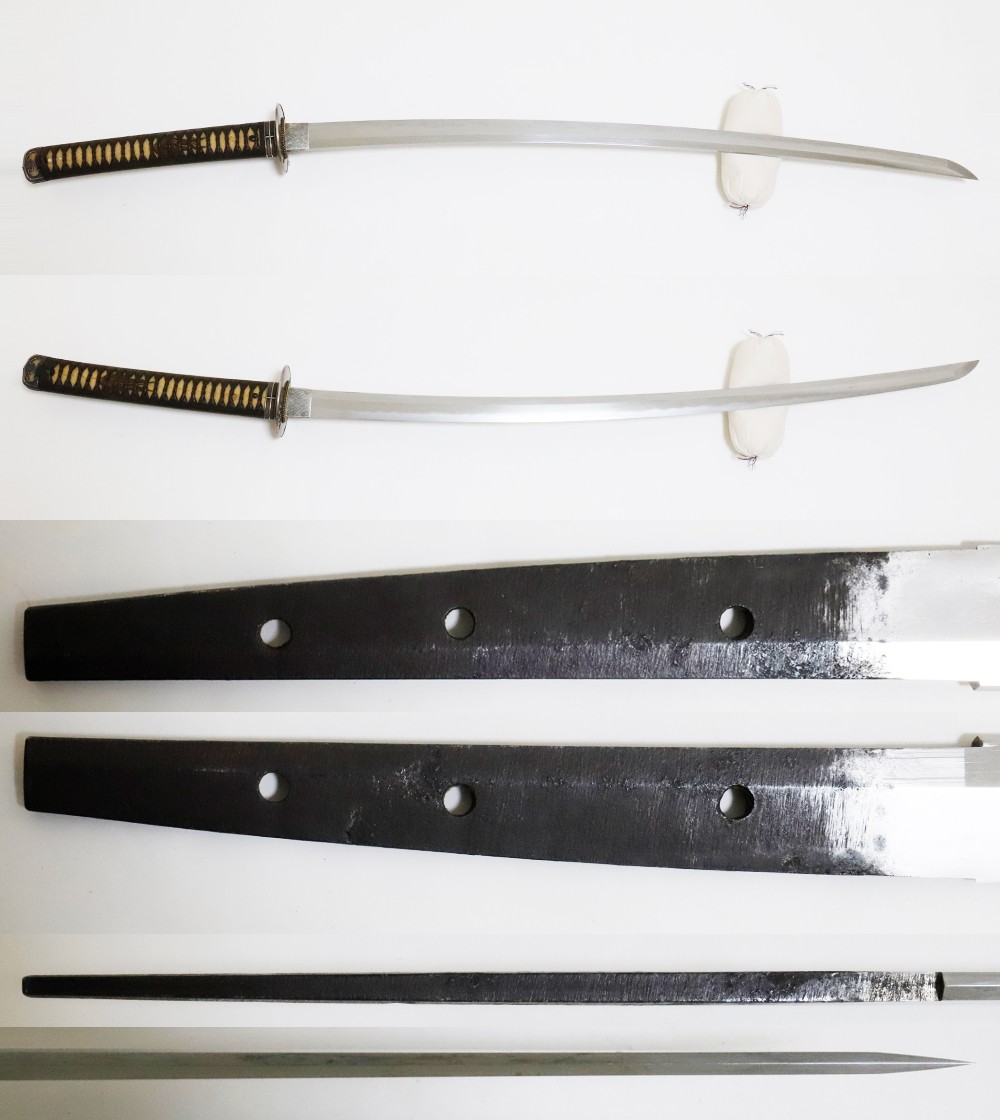
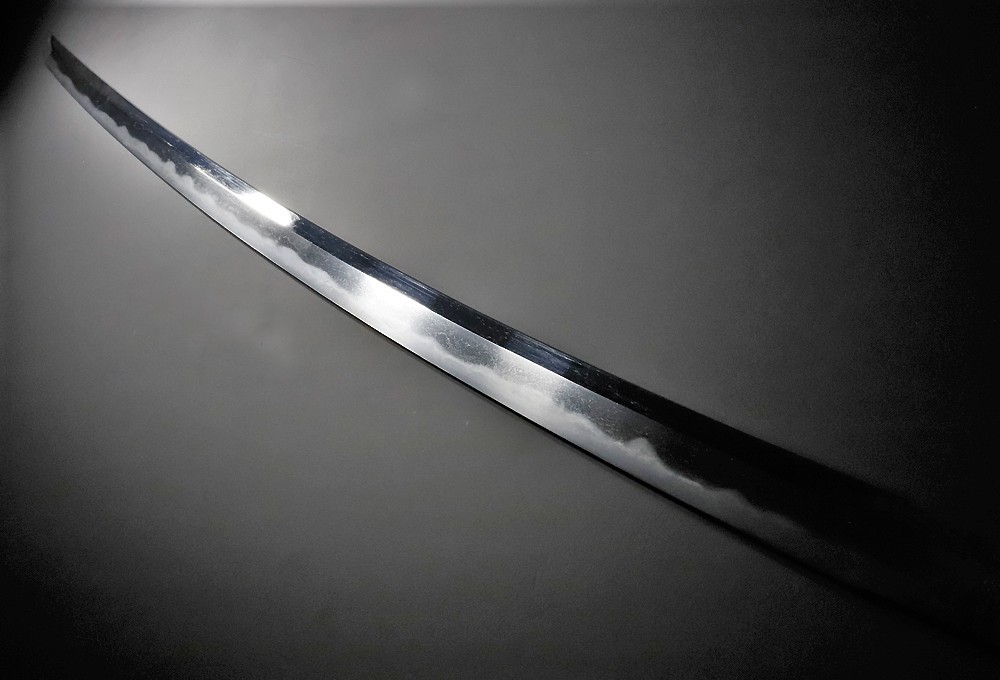
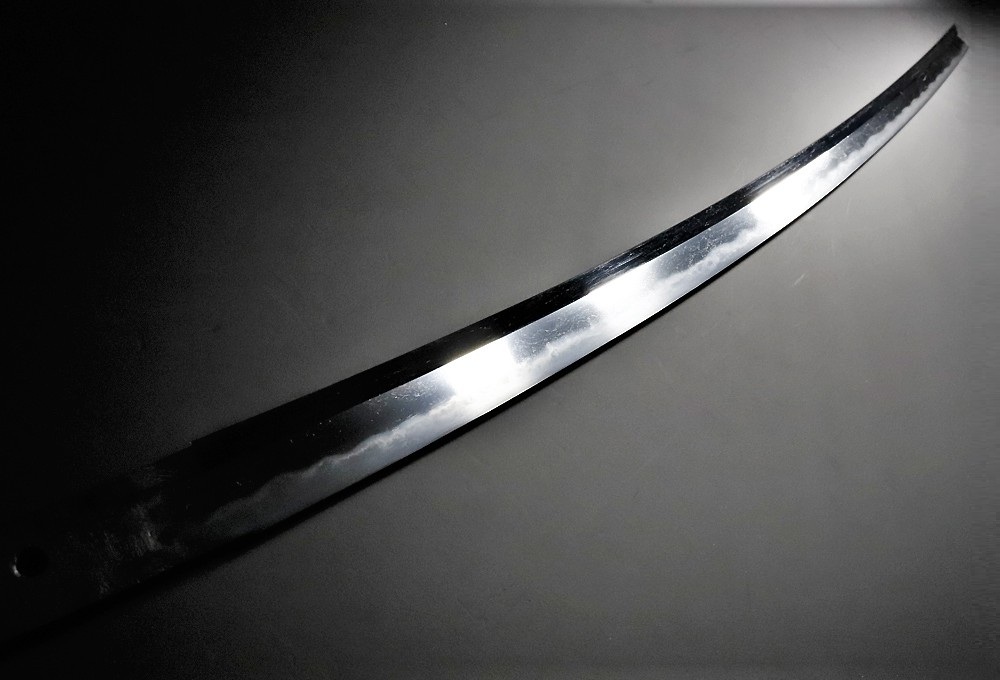
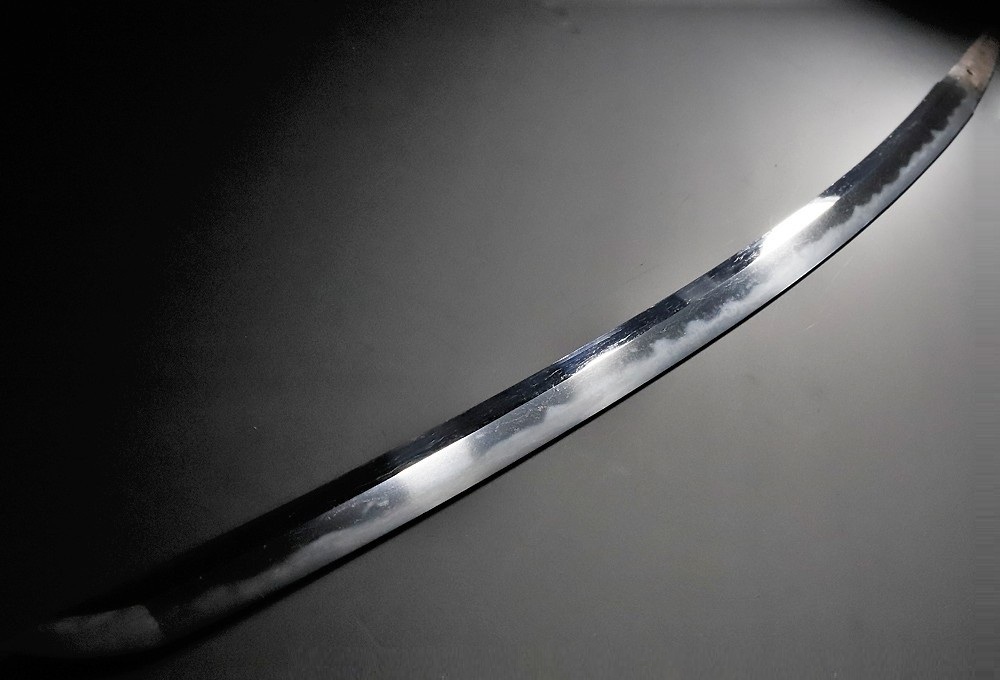
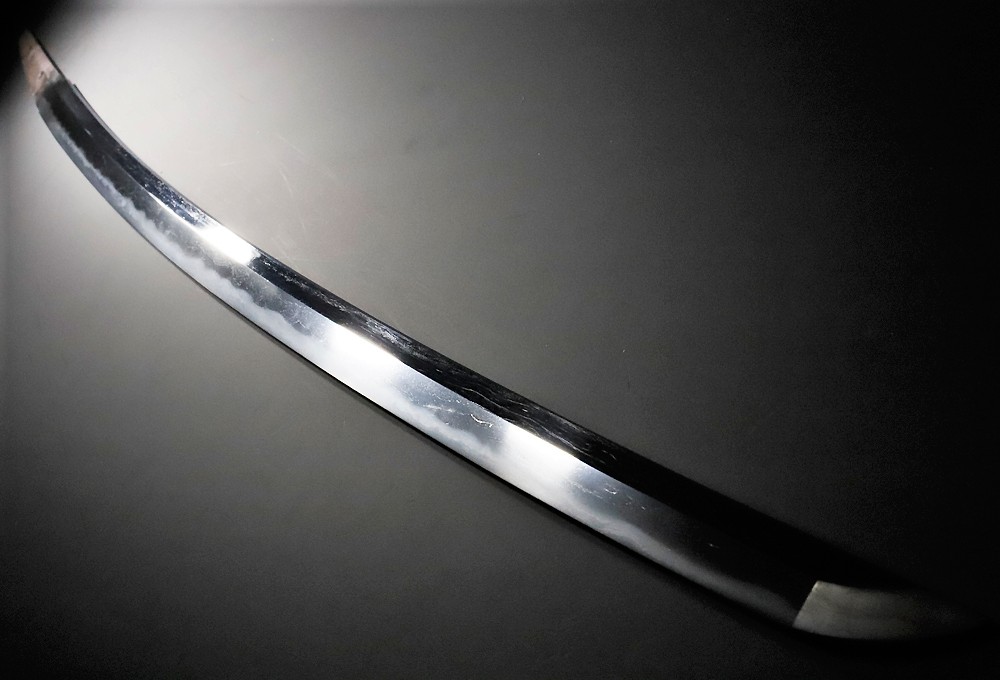
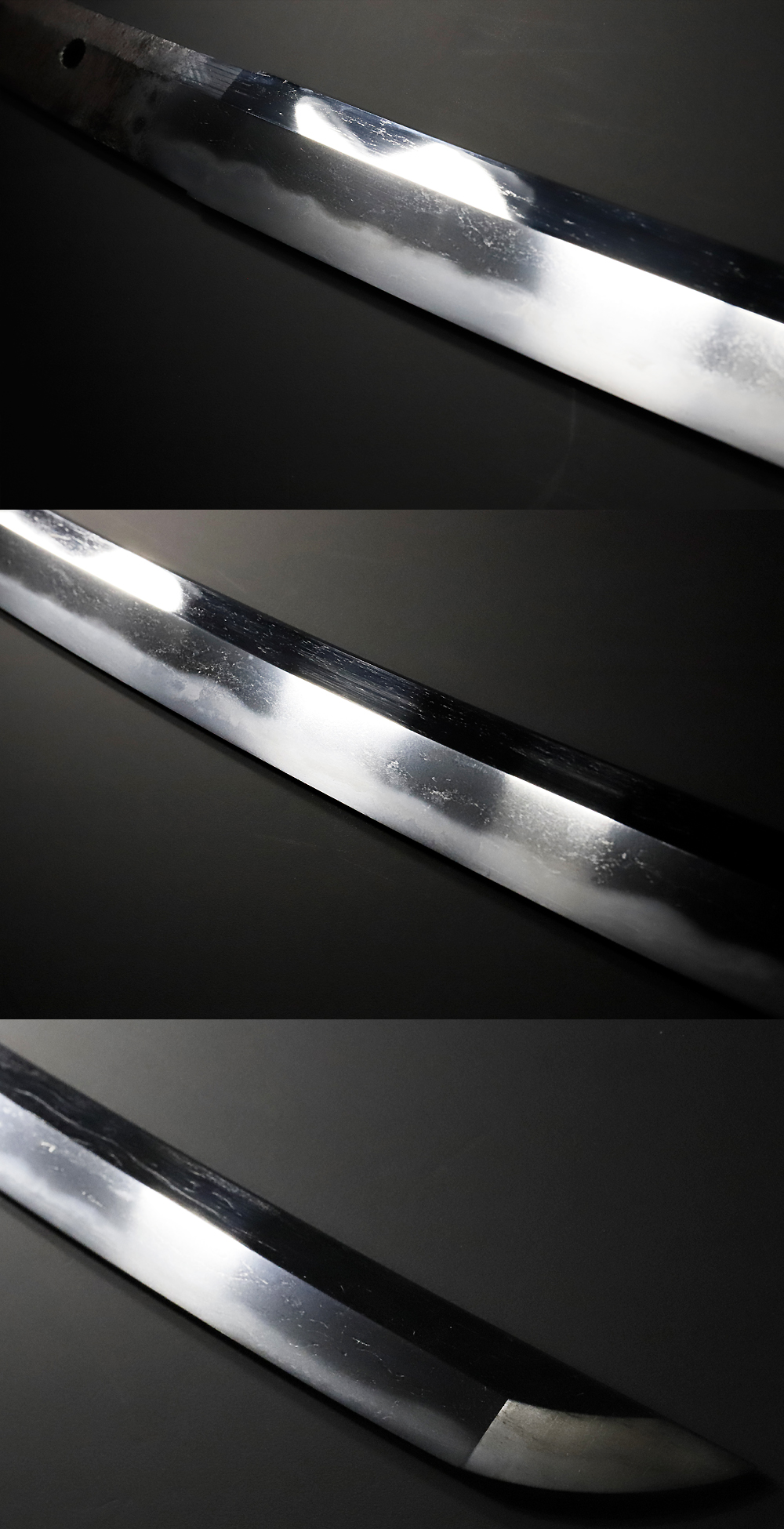
| Shape | Shinogi-zukuri with an iori-mune, a slightly extended medium kissaki, standard width and thickness, and an elegant sugata with a moderate sakizori |
| Region | Bizen Province |
| Era | Namboku-cho Period |
| Length |
71.6 cm 28.2 in |
| Sori (curvature) |
2 cm 0.8 in |
| Motohaba |
3 cm 1.2 in |
| Sakihaba |
2 cm 0.8 in |
| Munekasane |
0.6 cm 0.2 in |
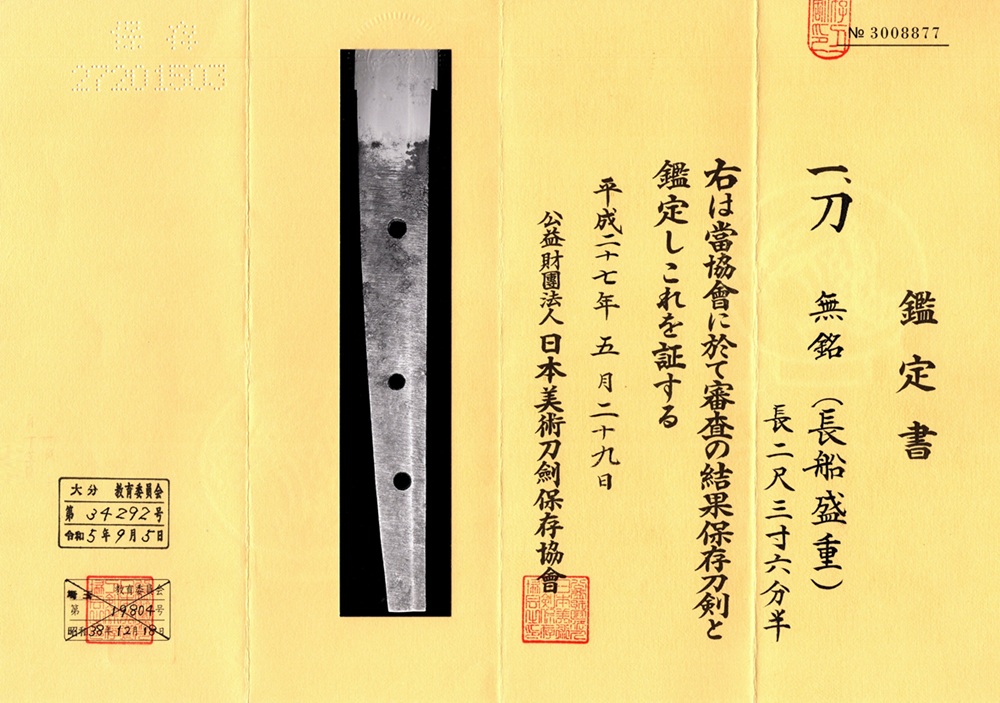
| Status | Hozon Token |
| Certification Date | May 29, 2015 |
| Registration Authority | Ooita Prefecture |
| Registration Date | September 05, 2023 |
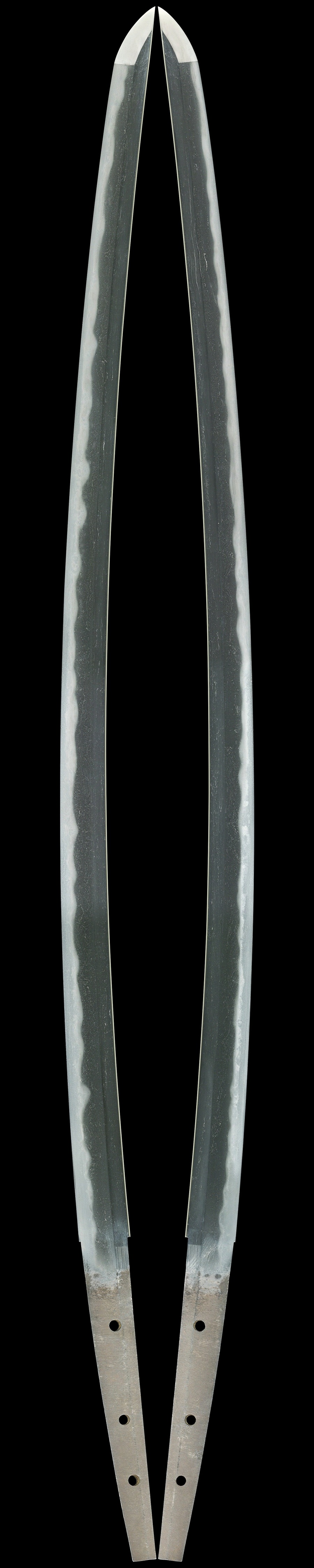
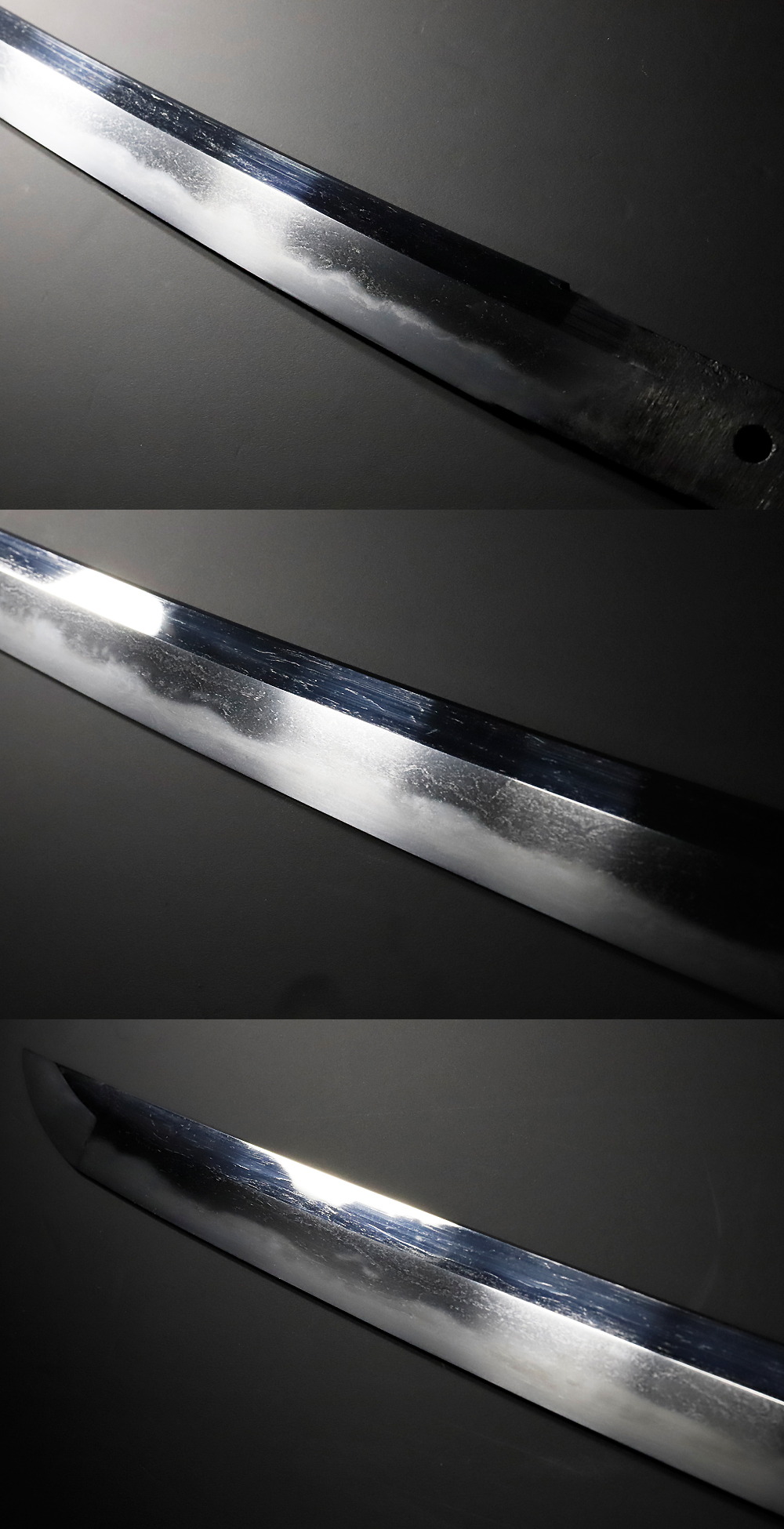
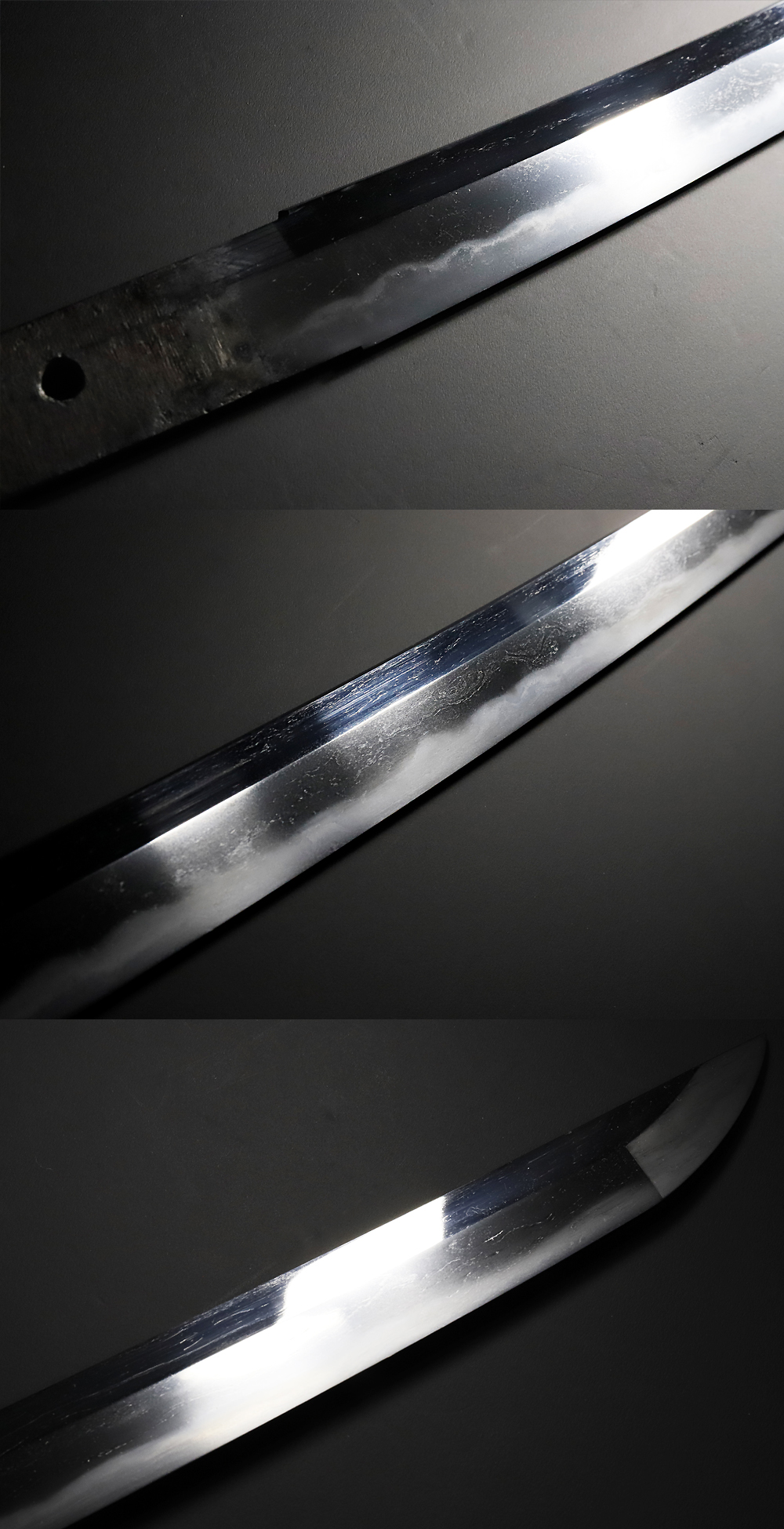
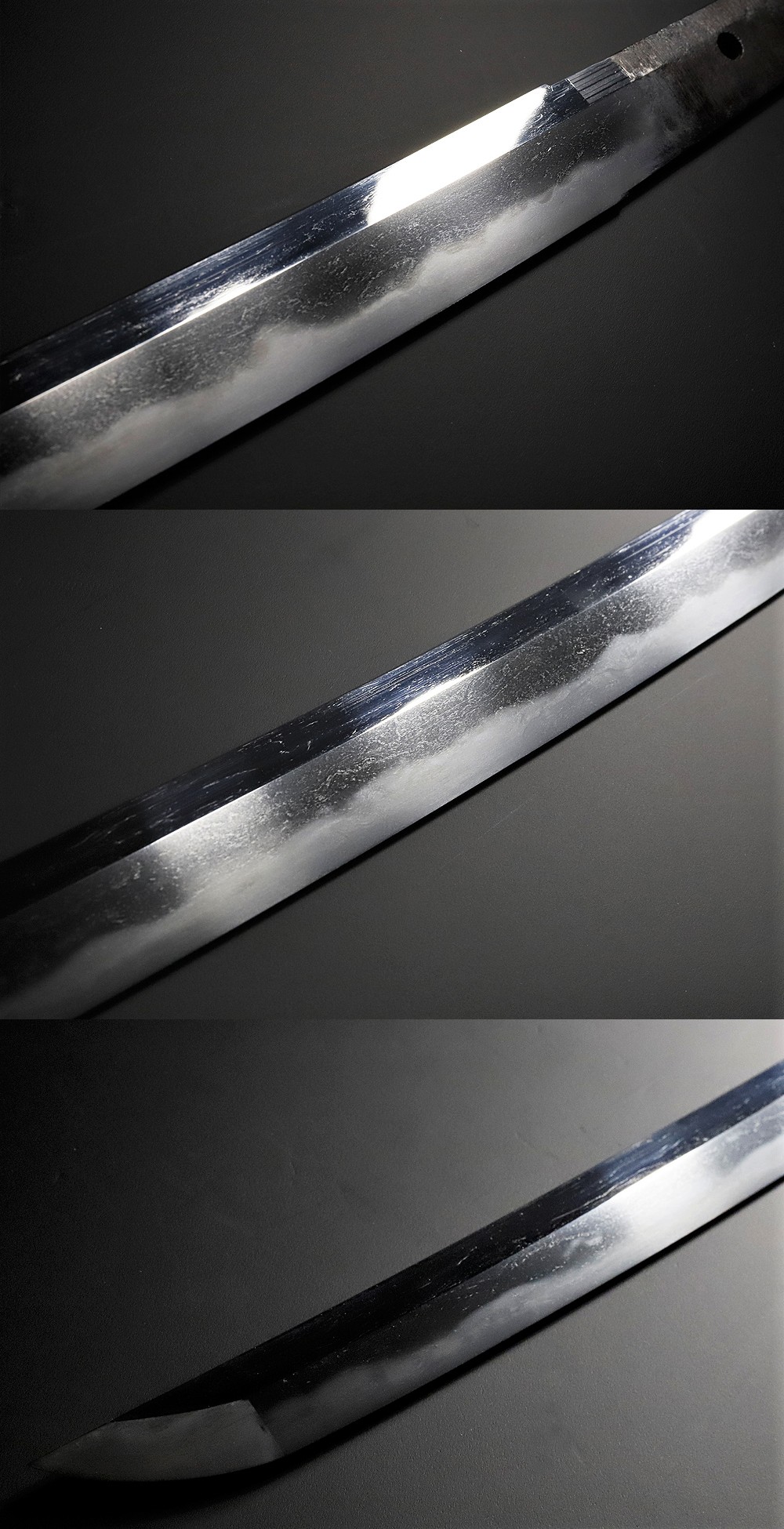
| Jihada (Metal pattern) | Itame mixed with mokume, flowing hada with ji-nie, and a faint, smoky midare-utsuri |
| Hamon (Temper line) | Nioi-based and tight, with ko-nie, a choji-midare hamon with ashi and kinsuji, and small tobiyaki. |
| Bōshi (Point / Tip) | A boshi with nie, sweeping back in an ichimai-style hakikake |
| Nakago (Tang) | Osuriage |
| Mekugiana (Rivet holes) | 3 |
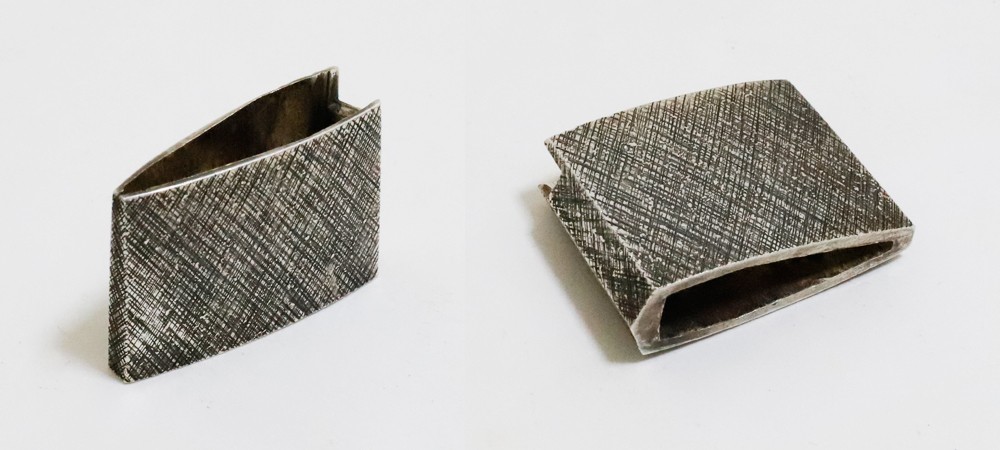
| Habaki | Solid silver habaki with higaki file marks |
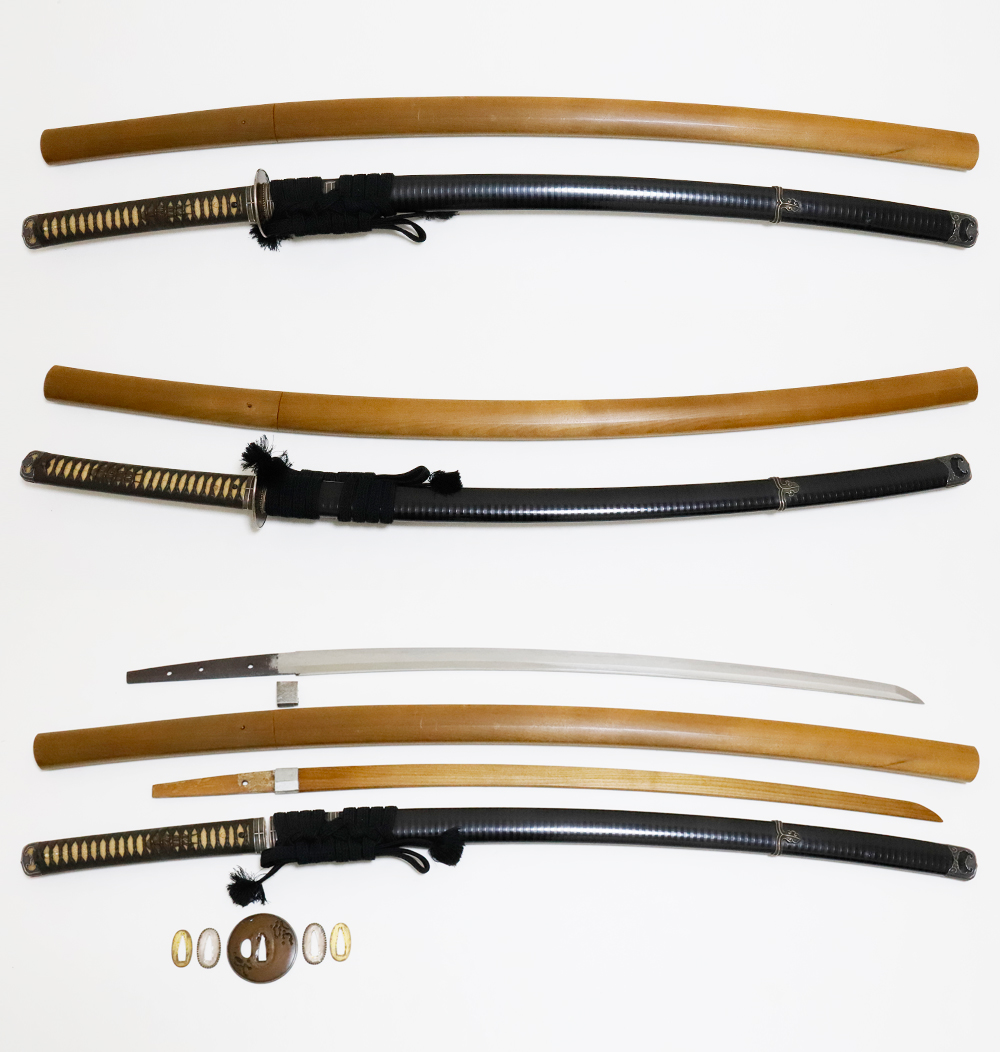
| Mountings | Koshirae-tsuki |
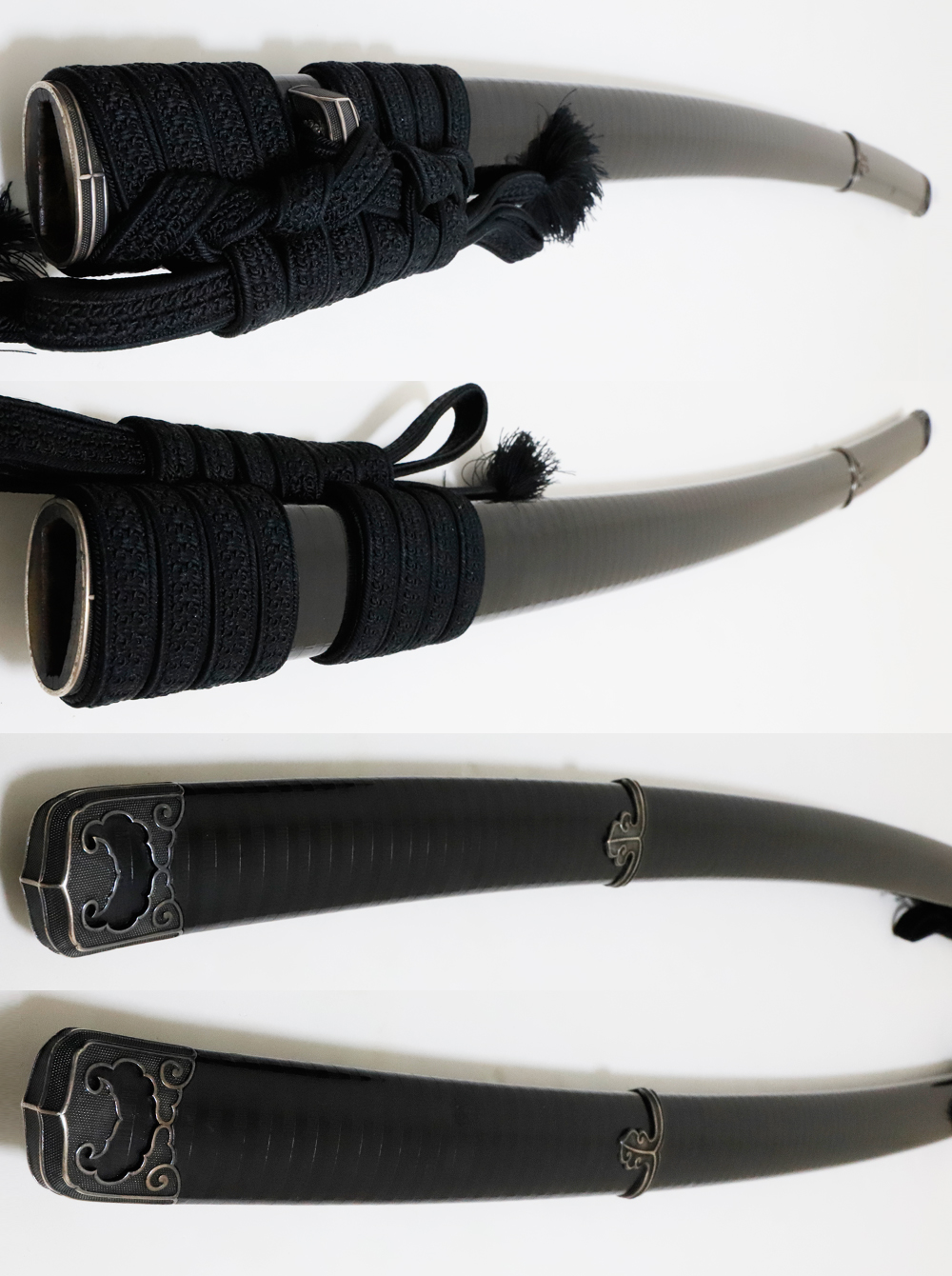
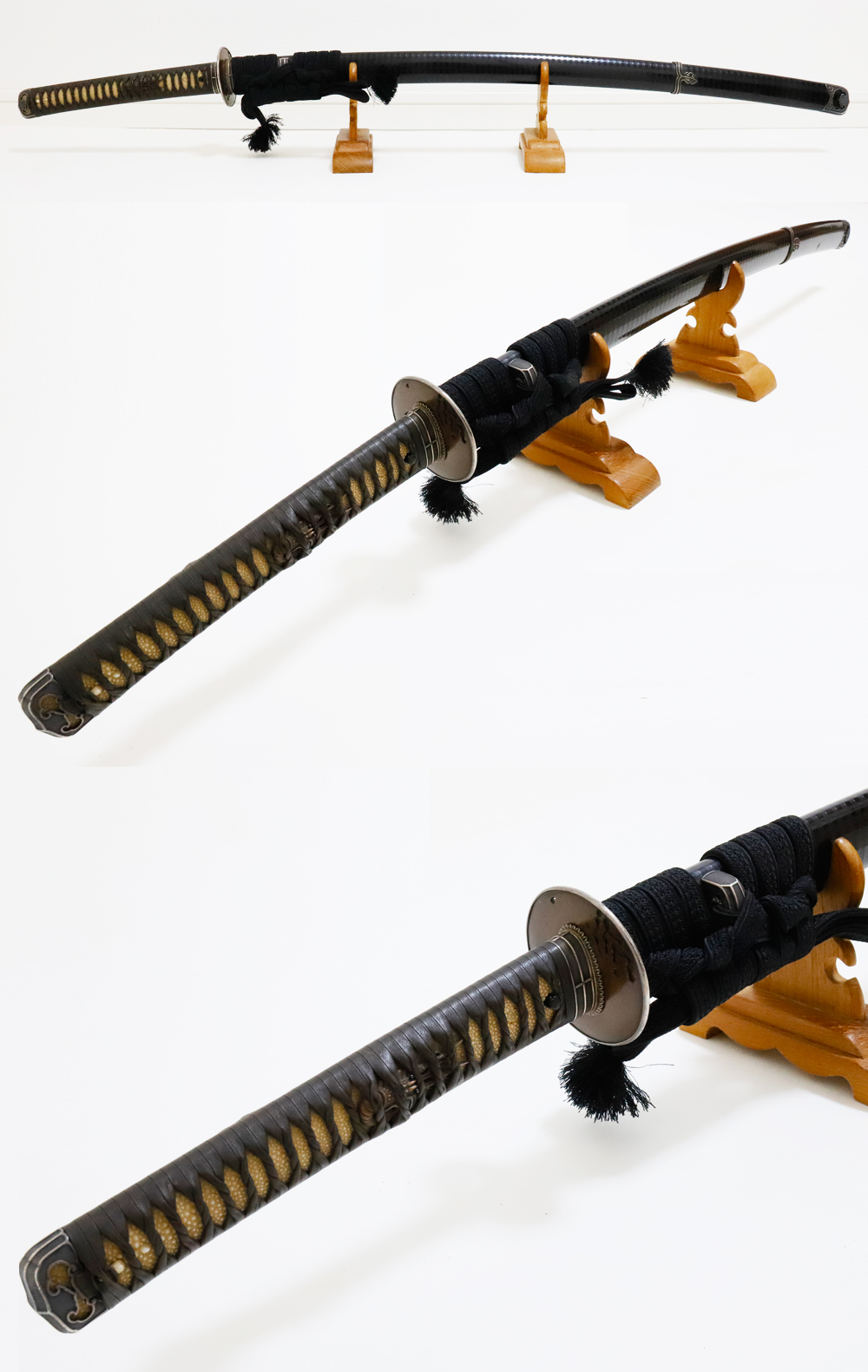
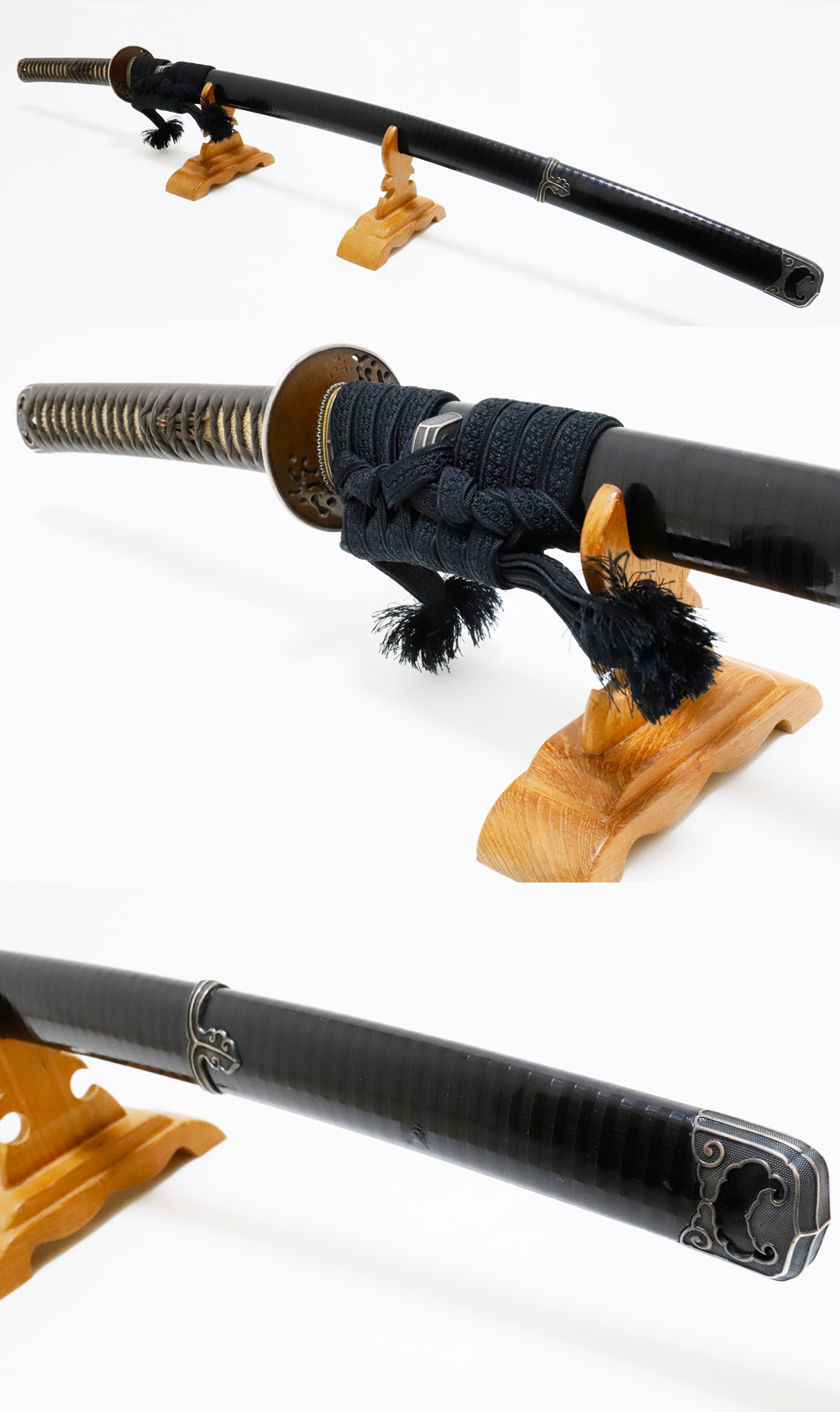
| Koshirae | Black Fue-maki Lacquered Saya Uchigatana Koshirae |
| Koshirae Length |
102.2 cm 40.2 in |
| Tsuka Length |
25.0 cm 9.8 in |
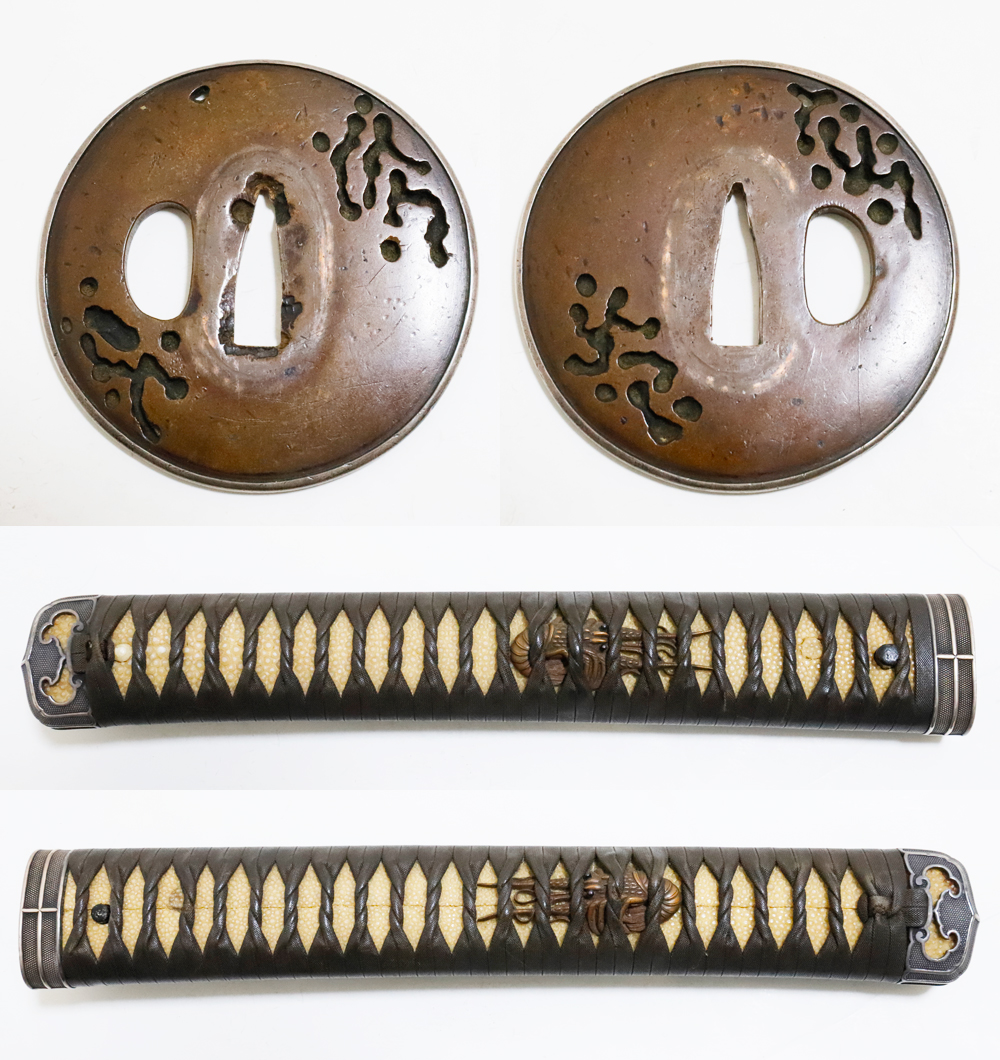
| Tsuba | Insect-eaten Design, Polished Copper Ground, Vertical Maru-gata, Sukidashi-bori Small Openwork, Silver Fukurine |
| Menuki | Spiny Lobster Design, Copper Ground, Katachibori |
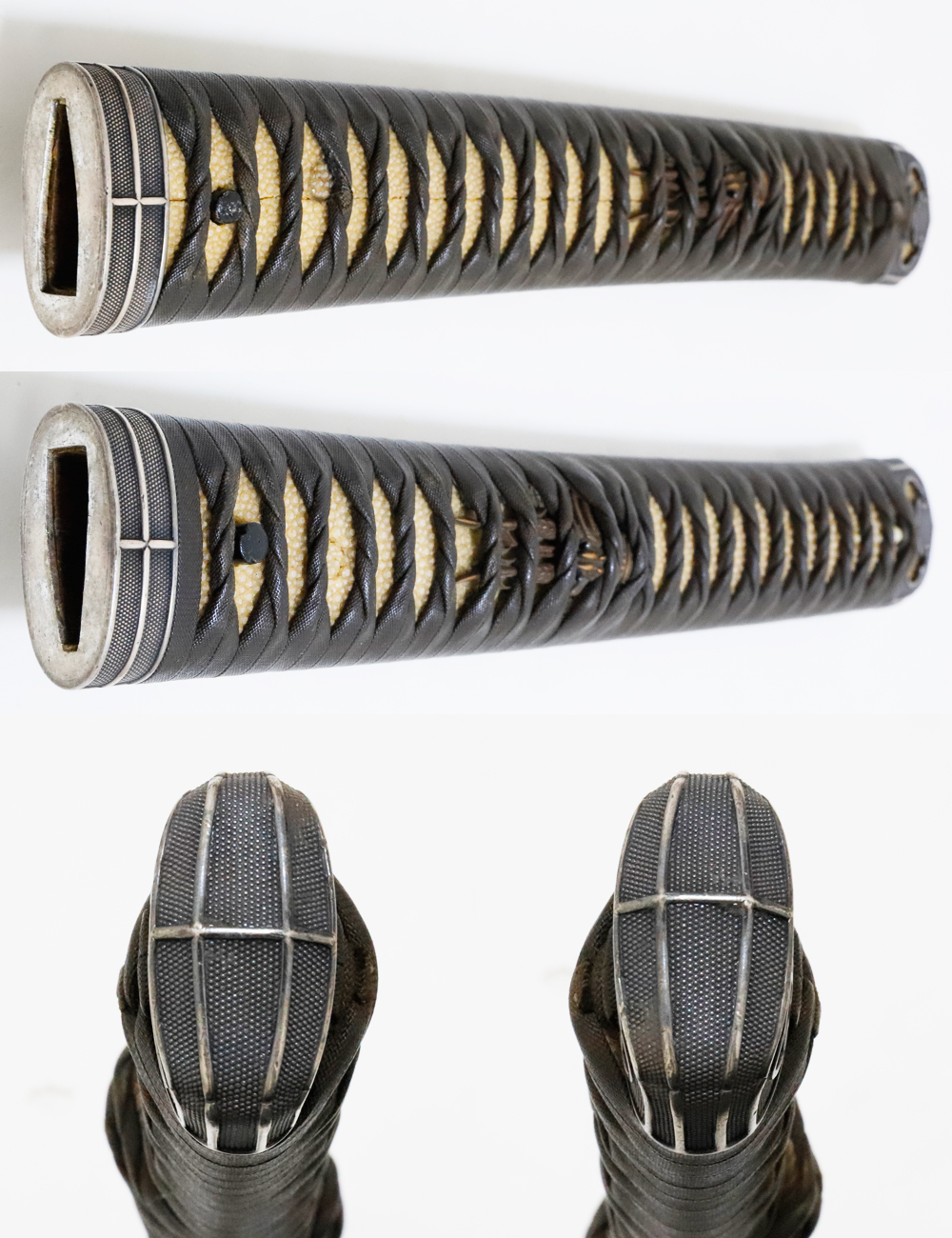
| Fuchigashira | Silver Nanako Ground and Rimmed Border |
| Other details | Tsuka: wrapped in twisted dark brown cotton cord over white samegawa covering, Matching fittings with silver nanako ground and rimmed borders |
Price |
1,000,000 JPY |
| A katana attributed to Osafune Morishige. Morishige represents a lineage of seven generations, from the second generation of the Oei era to the mid-Muromachi period (around the Meio era), following the first generation in the late Nanbokucho period. Although traditionally regarded in the Edo period as part of the Bizen Omiya school descending from Morikage, the absence of the characteristic gyakutagane chisel marks and the similarity to Morimitsu’s workmanship have led to the view that he should be considered an Osafune smith.This work shows a sugata typical of the early Muromachi period (Oei era). The jihada is a flowing itame mixed with mokume, with faint, smoky midare-utsuri. The hamon is a nioi-based gunome-midare. The attribution to Osafune Morishige is convincing.It passed Hozon Token shinsa in 2015.The sword is accompanied by an uchigatana koshirae with a black Fue-maki lacquered saya, fitted with matching fittings with a silver nanako ground and rimmed borders. |

 Search