| Product No. WA-0930 無銘(出羽大掾国路) | |
|---|---|
| Mei |
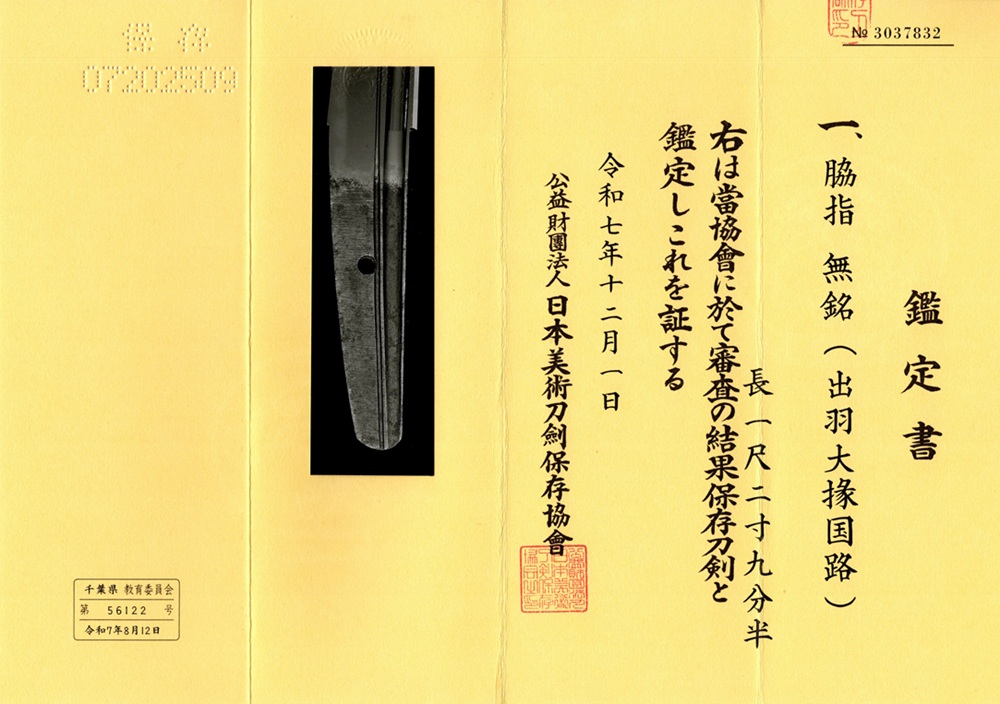
Mumei (unsigned, attributed to Dewa Daijo Kunimichi) Back: -- |
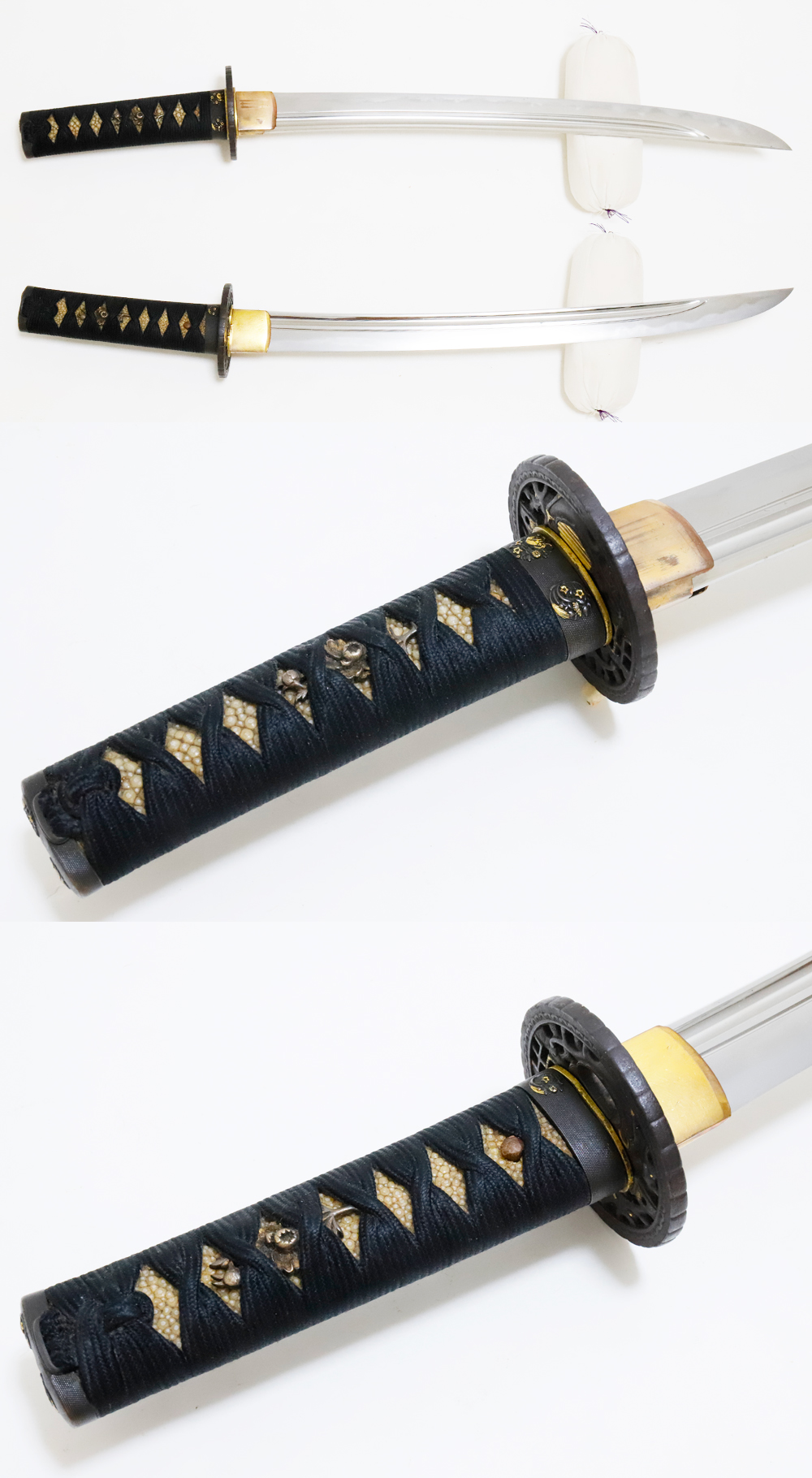
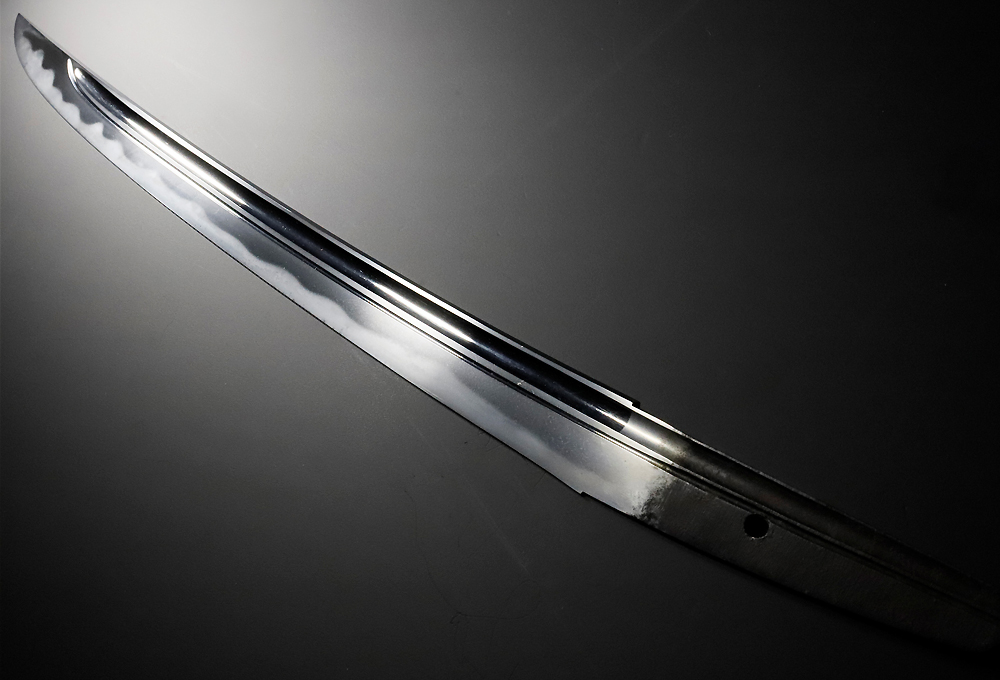
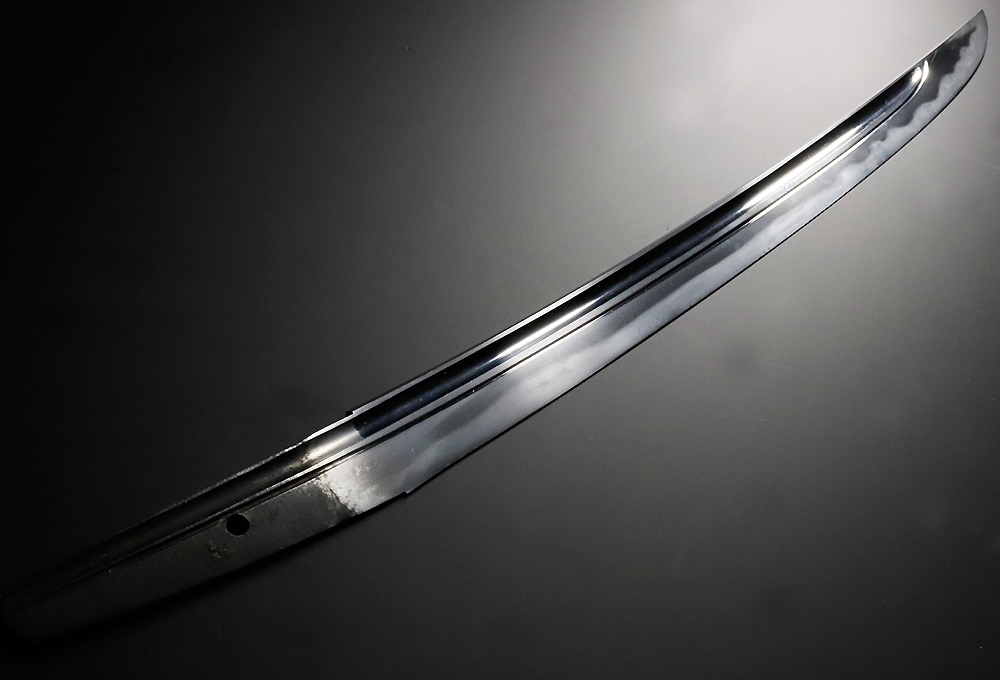
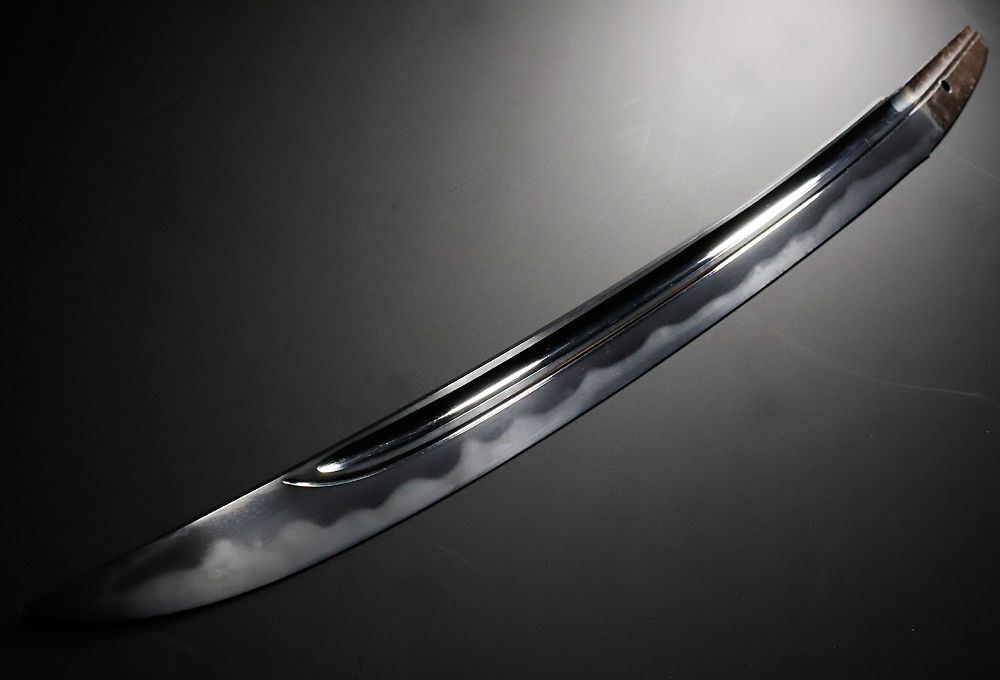
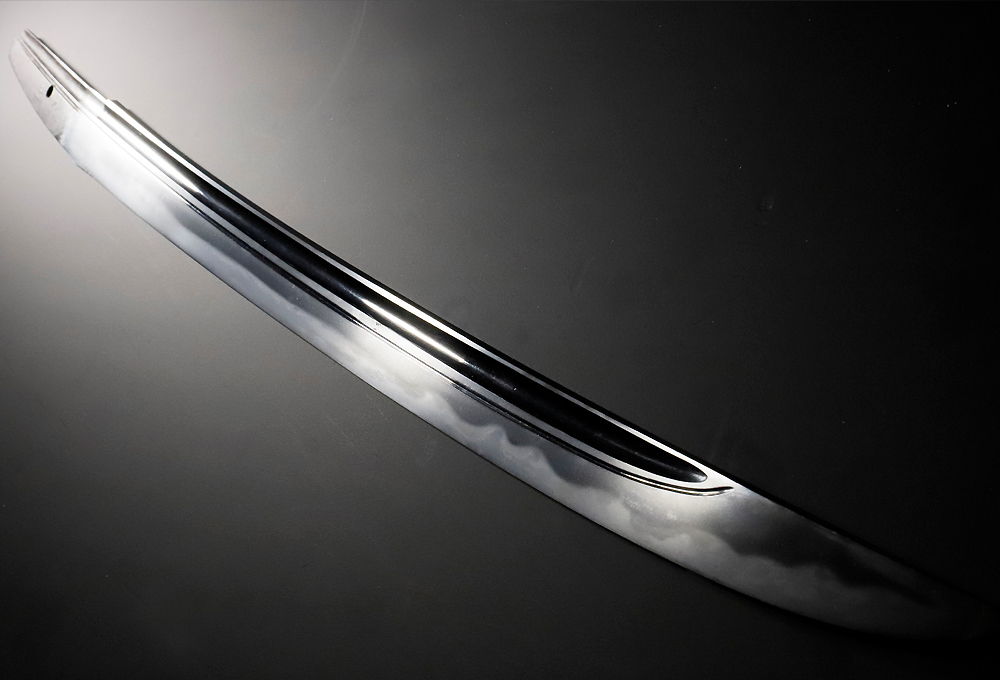
| Shape | Hira-zukuri, mitsumune. A short wakizashi with a wide blade, substantial thickness, and slight curvature toward the tip. |
| Region | Yamashiro Province |
| Era | Early Edo Period |
| Length |
39.3 cm 15.5 in |
| Sori (curvature) |
0.8 cm 0.3 in |
| Motohaba |
3.1 cm 1.2 in |
| Munekasane |
0.7 cm 0.3 in |
| Status | Hozon Token |
| Certification Date | December 01, 2025 |
| Registration Authority | Chiba Prefecture |
| Registration Date | August 12, 2025 |
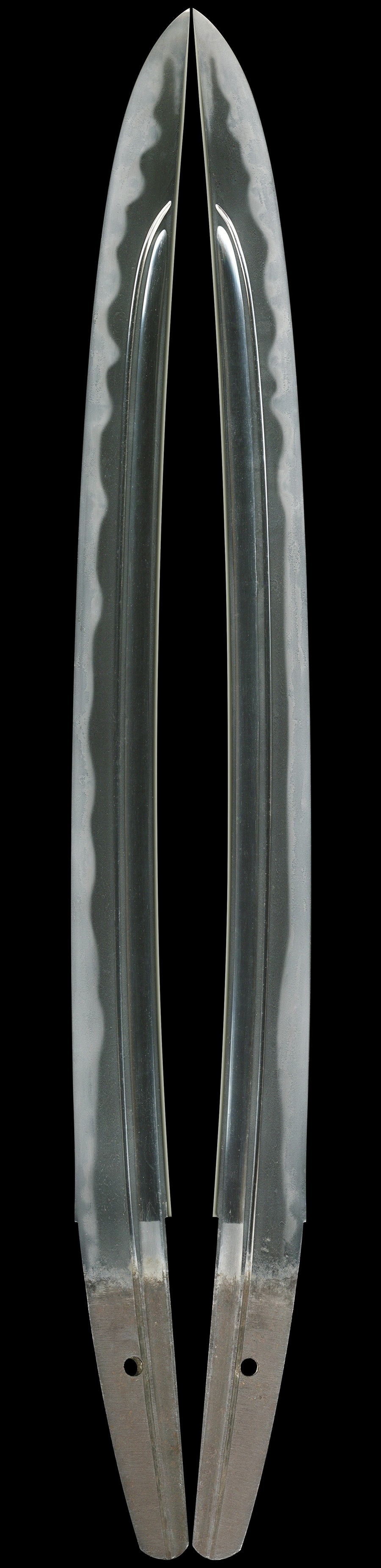
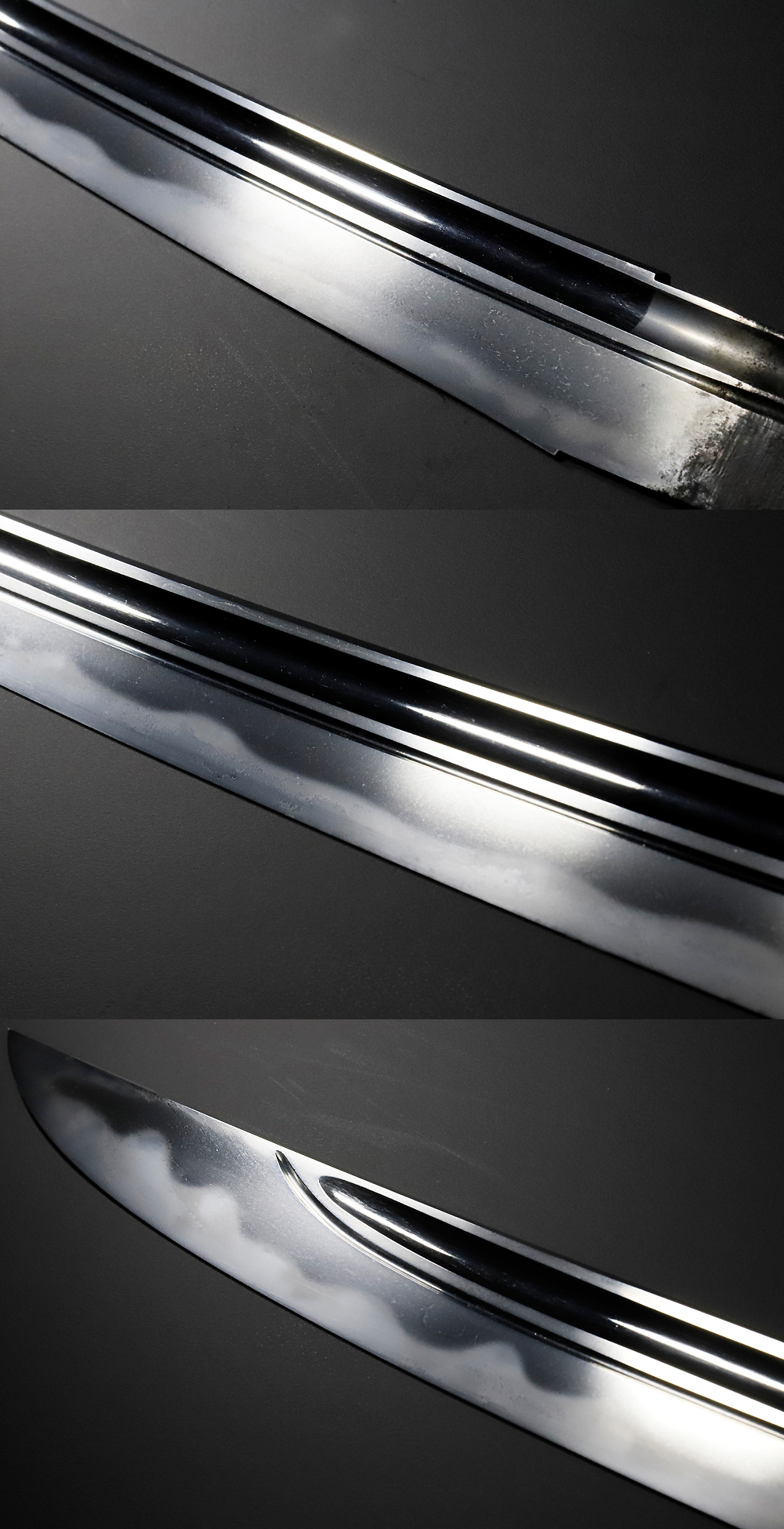
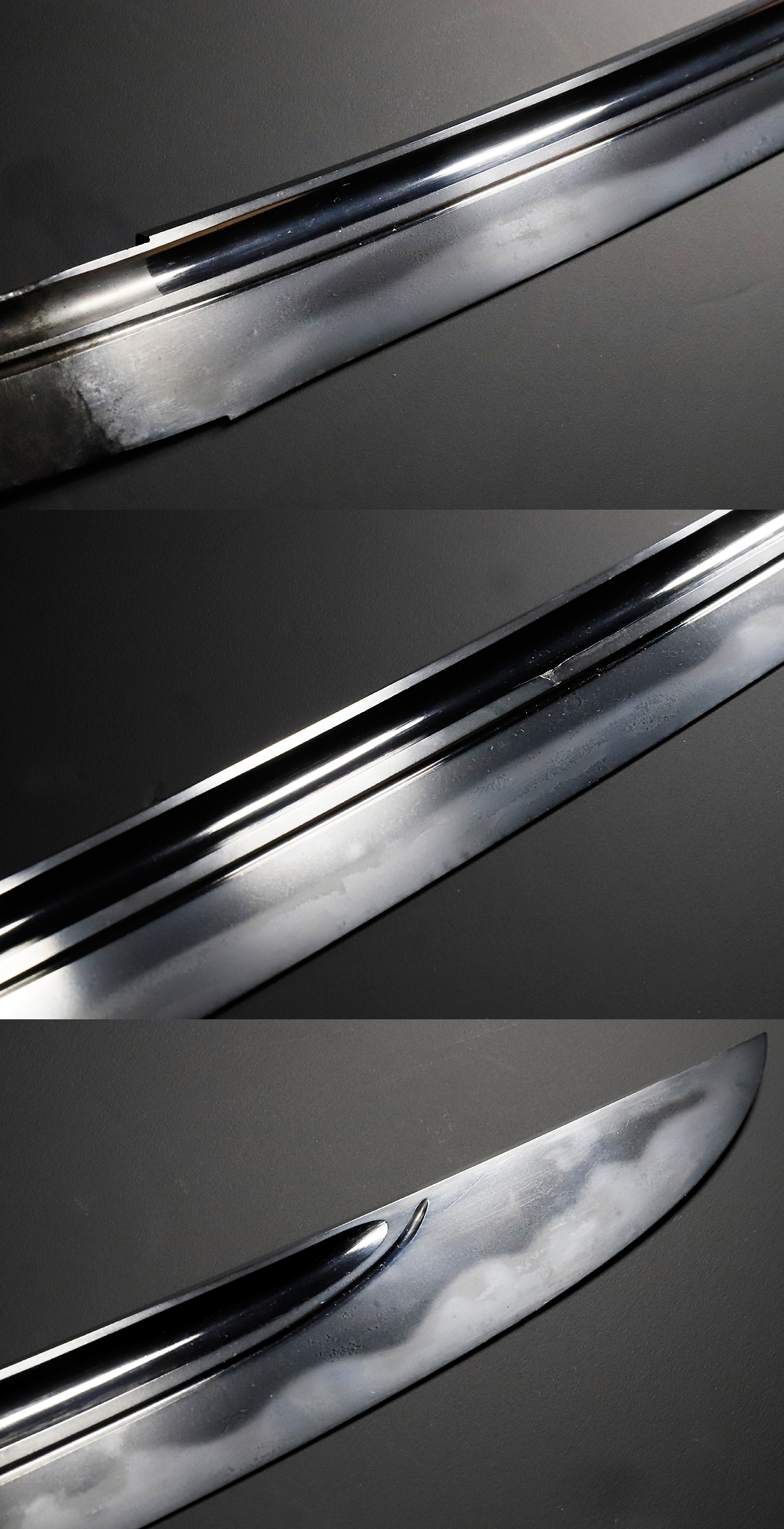
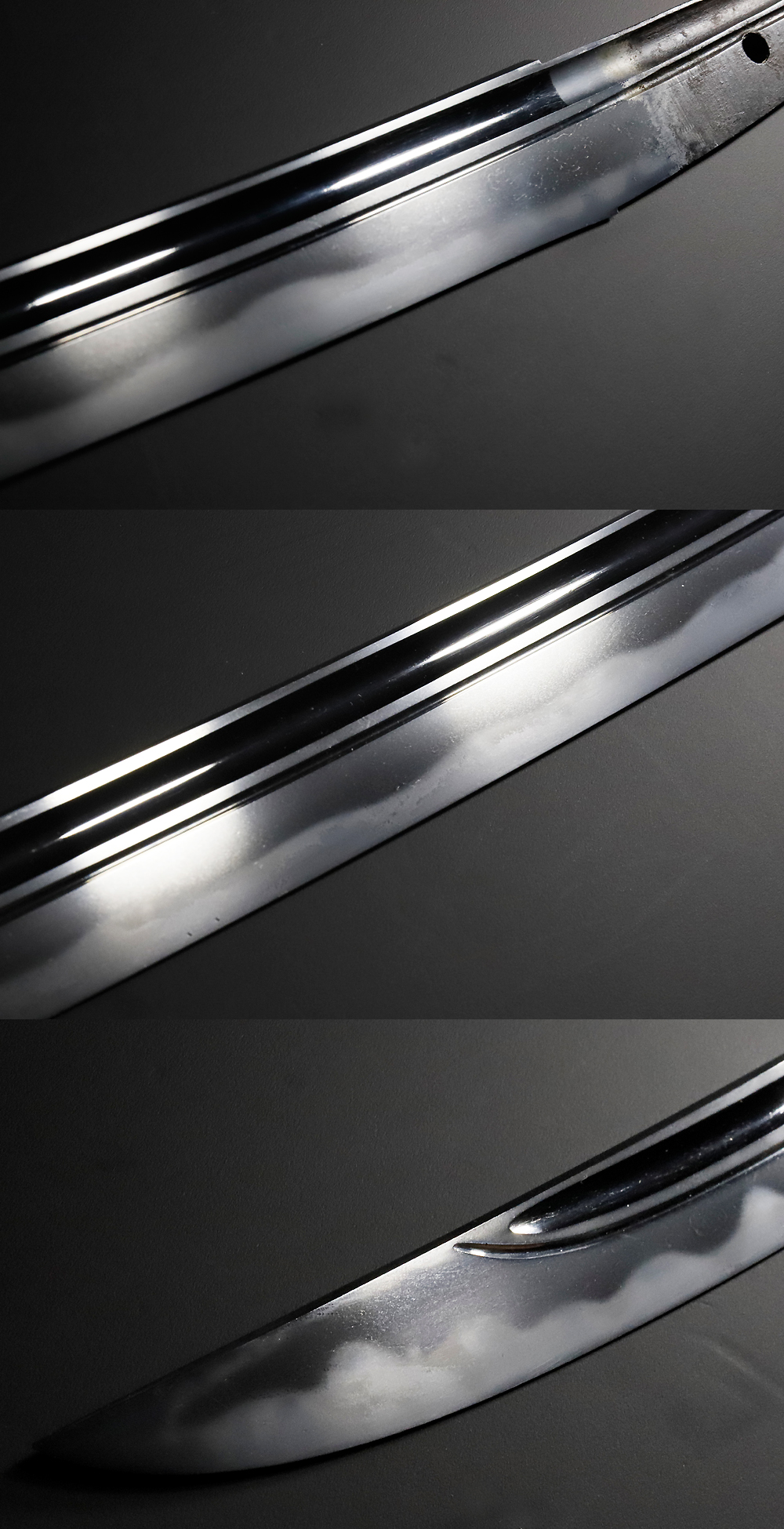
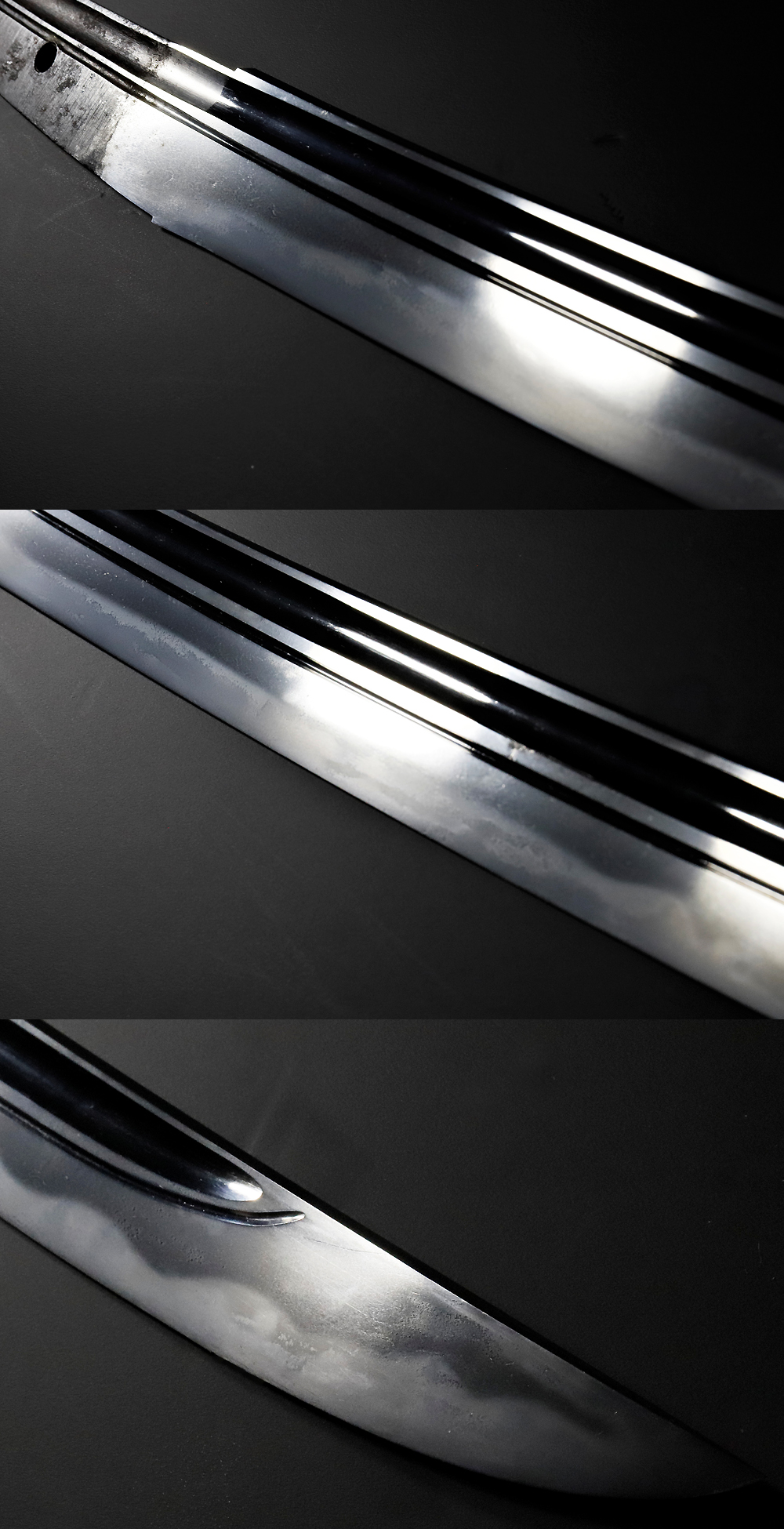
| Jihada (Metal pattern) | Ko-itame hada. |
| Hamon (Temper line) | Notare-based gunome-midare, with abundant nie, featuring yubashiri and tobiyaki. |
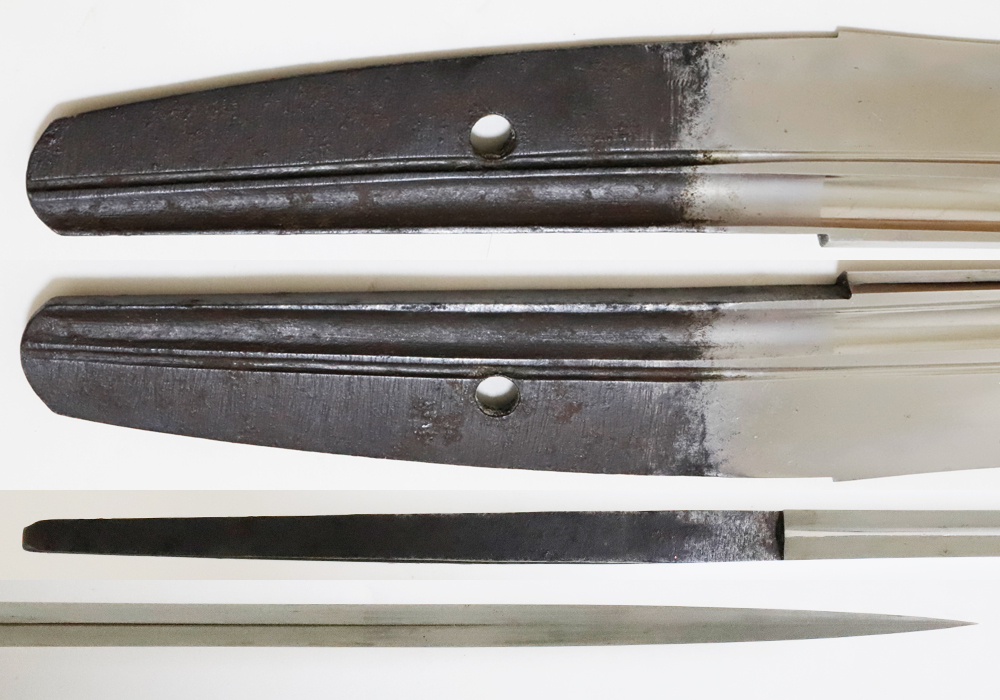
| Engraving | Bo-hi with soe-hi, both carved through to the nakago on the omote and ura sides. |
| Bōshi (Point / Tip) | Irregular, tending toward a pointed shape, with a relatively deep ko-maru turnback and muneyaki. |
| Nakago (Tang) | Ubu (original, unshortened), mumei (unsigned), kiri file marks, kurijiri tip. |
| Mekugiana (Rivet holes) | 1 |
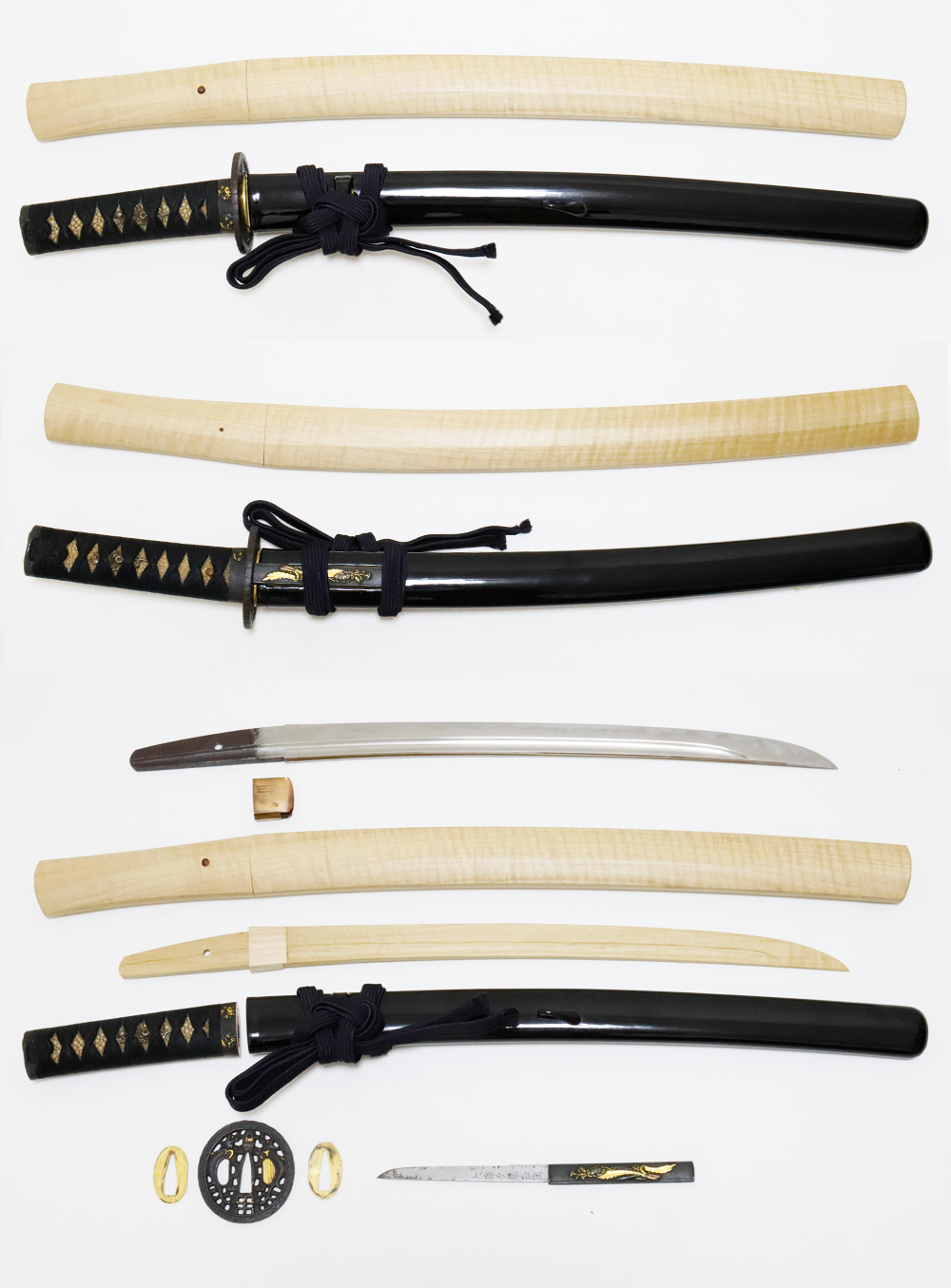
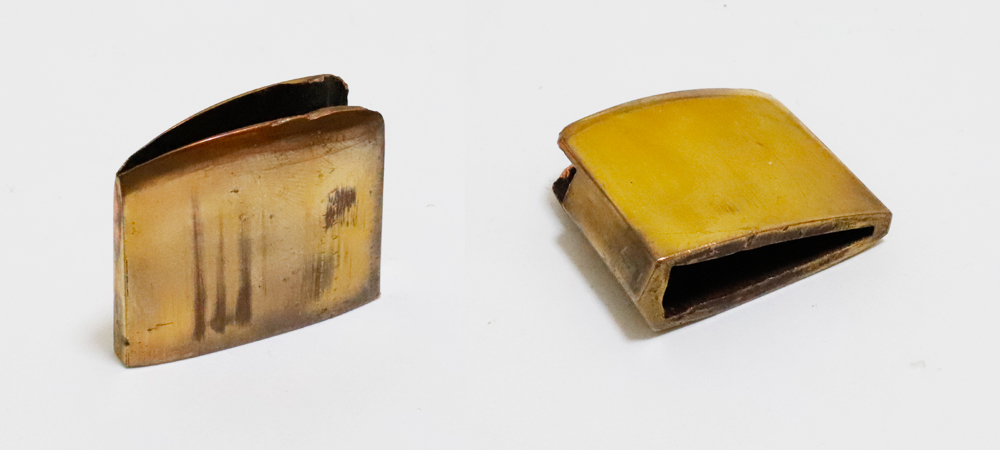
| Habaki | Gold-plated copper habaki. |
| Mountings | Koshirae-tsuki |
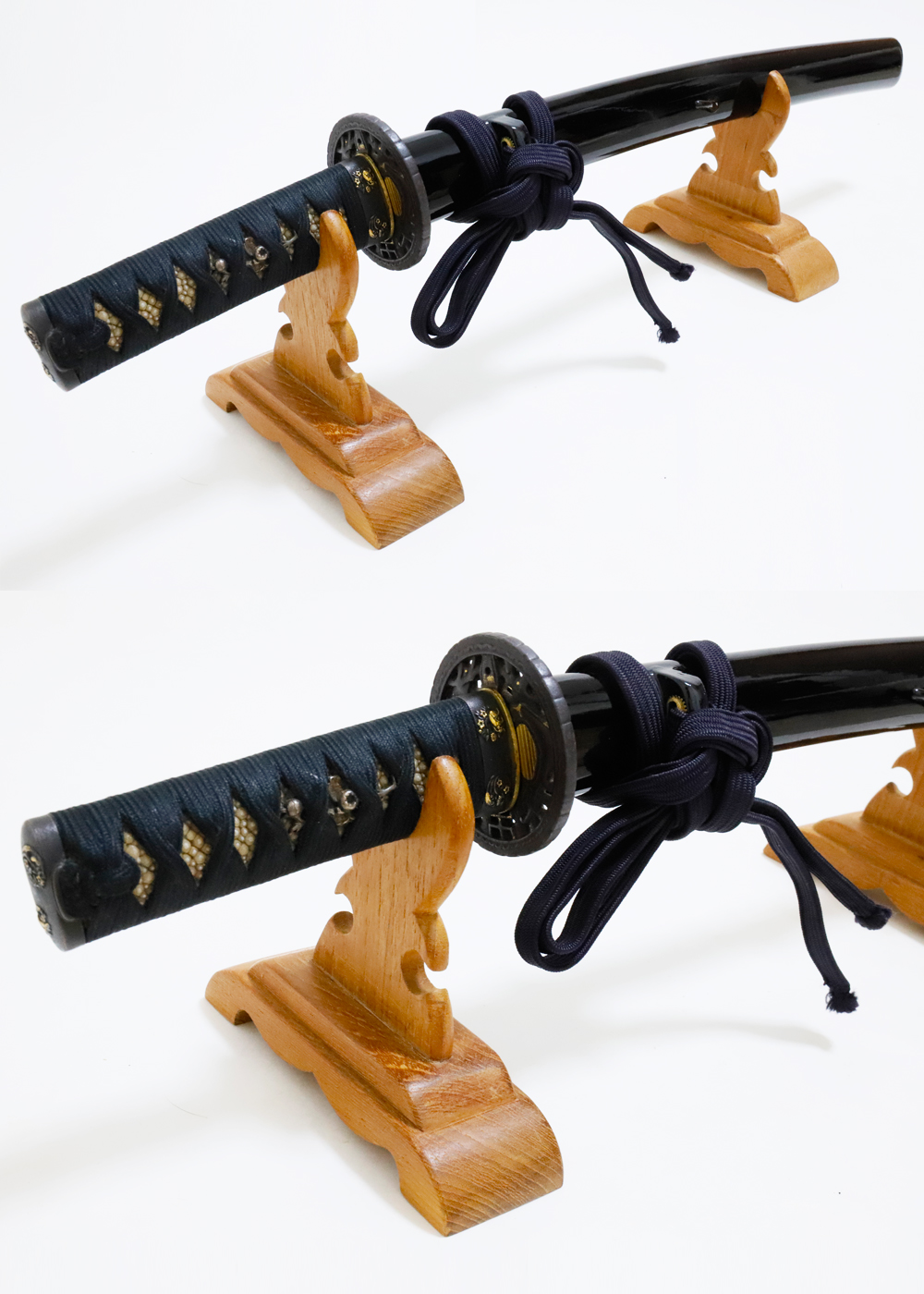
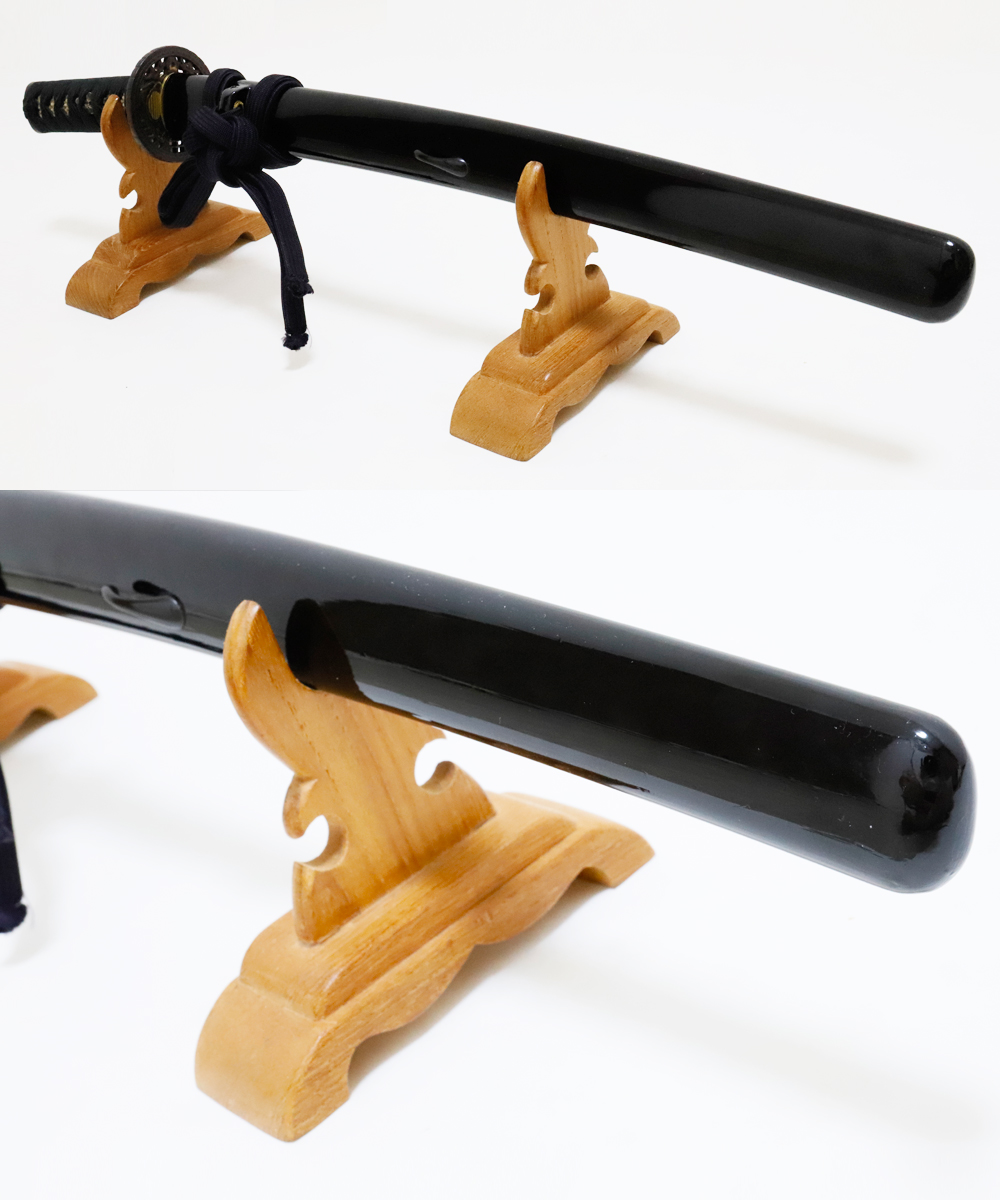
| Koshirae | Wakizashi-style koshirae with a black lacquer saya. |
| Koshirae Length |
63.0 cm 24.8 in |
| Tsuka Length |
14.3 cm 5.6 in |
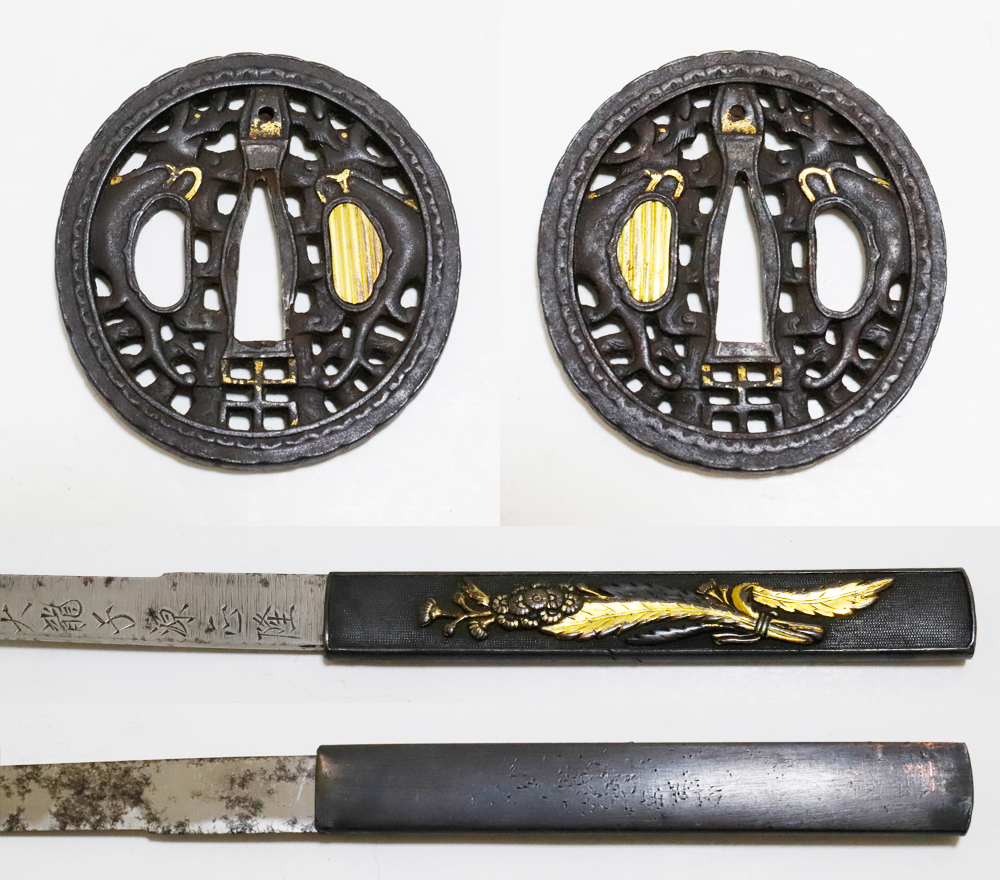
| Tsuba | Twin Dragons Openwork. Mumei (unsigned, probably Nanban). Iron, tatemaru (vertically elongated oval) shape, gold nunome-zogan (inlay). |
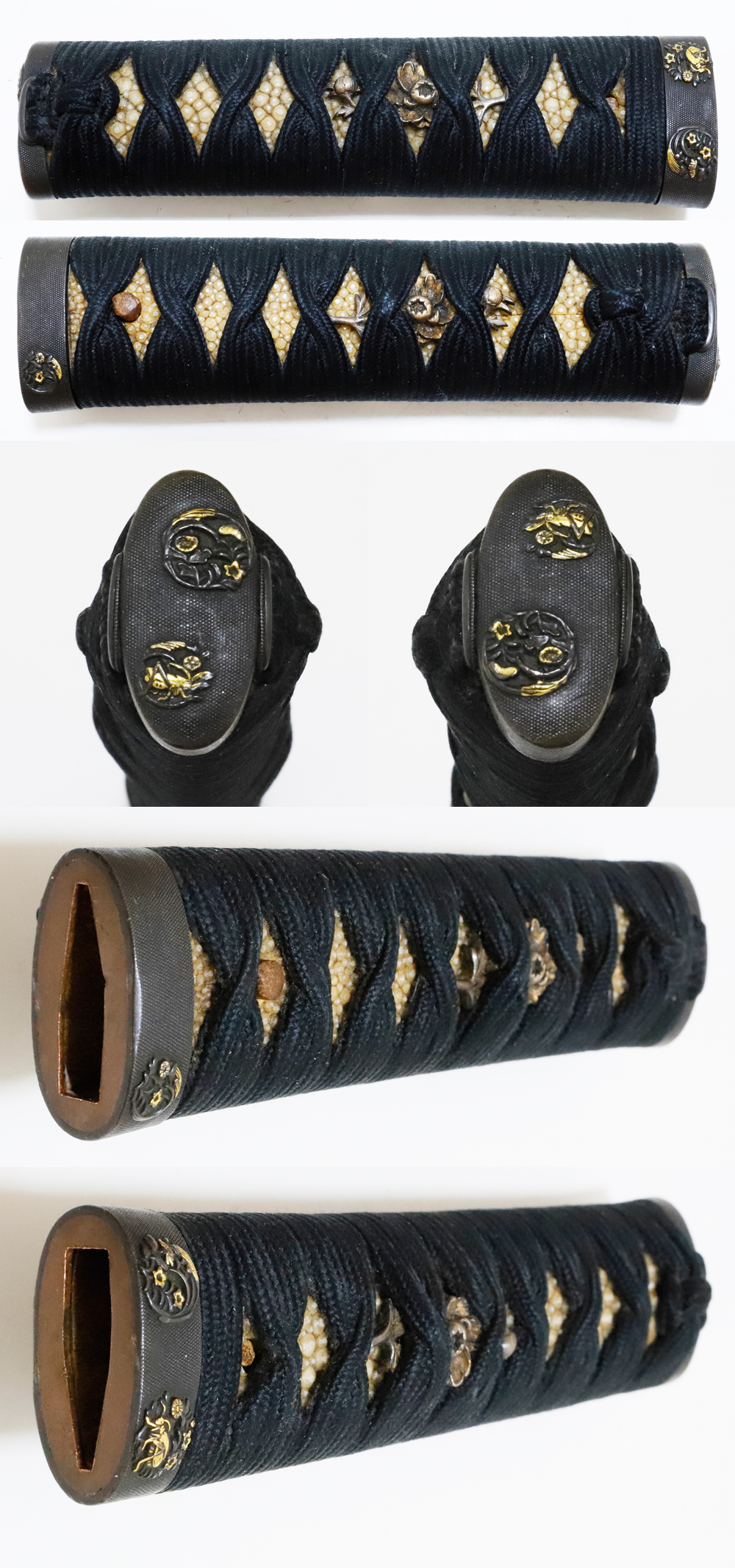
| Menuki | Peony Design. Katachibori (three-dimensional carving), gold iroe decoration. |
| Fuchigashira | Autumn Grasses and Insects Design. Shakudo with nanako texture, inlay and gold iroe decoration. |
| Kozuka | Bundled Chrysanthemums Design. Nanako texture, inlay and gold iroe decoration. |
| Other details | Tsuka: White samegawa (ray skin), wrapped with black silk cord in tsumamimaki style. |
Price |
450,000 JPY |
| This hira-zukuri short wakizashi has been attributed to Dewa Daijo Kunimichi. Dewa Daijo Kunimichi was born in 1576. Although his birthplace and lineage remain uncertain, he is said to have initially studied under Iga no Kami Kinmichi before becoming a disciple of Horikawa Kunihiro. He received the honorary title Dewa Daijo in 1615. Kunimichi enjoyed a long life, with a dated work from 1657, when he was 82 years old. His range of workmanship was even broader than that of his master, Kunihiro. As one of the leading swordsmiths of the Horikawa school, he is said to have enjoyed great success in Kyoto while maintaining close ties with the Iga no Kami Kinmichi family. This wakizashi is a fine example of the Soshu tradition, featuring abundant nie, tobiyaki, and yubashiri. Based on its excellent workmanship and the characteristic shape of an early Edo period hira-zukuri short wakizashi, it was attributed to Dewa Daijo Kunimichi, a Jojo-saku (highly superior) ranked swordsmith, at the NBTHK Hozon Token shinsa in 2025. It is accompanied by a wakizashi-style koshirae with a black lacquer saya. |

 Search