| Product No. WA-0926 手柄山甲斐守正繁 | |
|---|---|
| Mei |
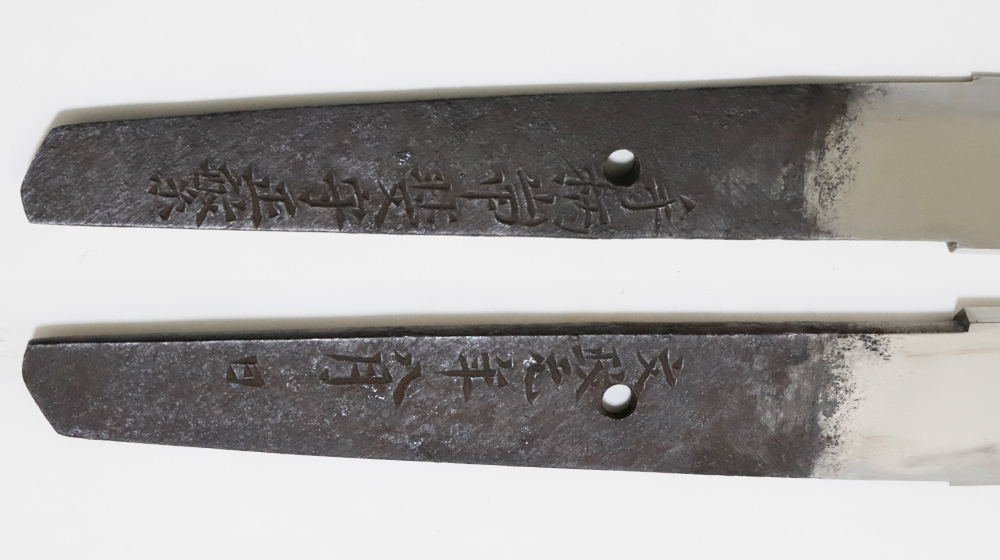
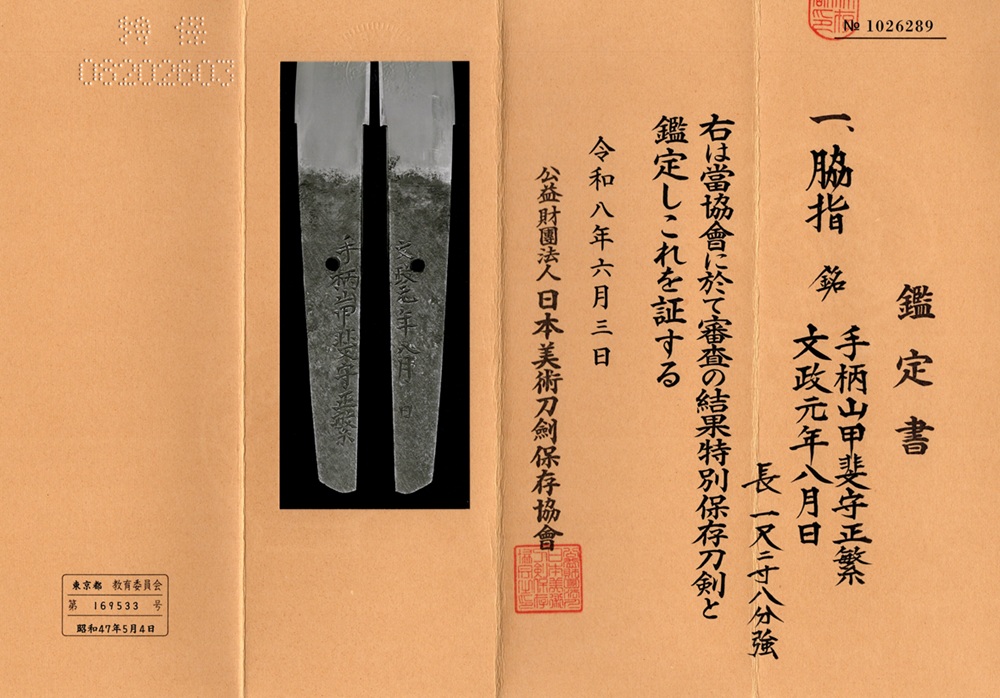
Tegarayama Kai no Kami Masashige Back: A day in the eighth month of Bunsei 1 (1818) |
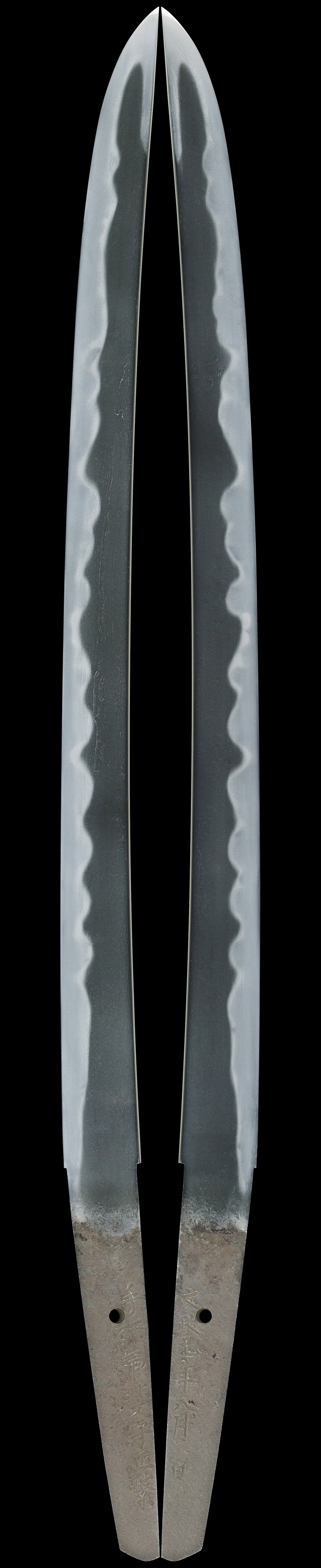
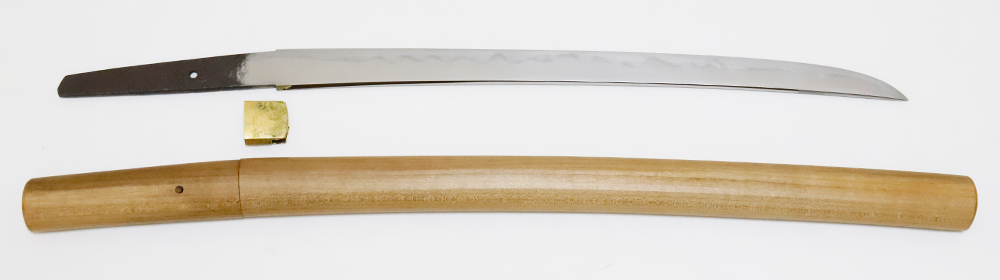
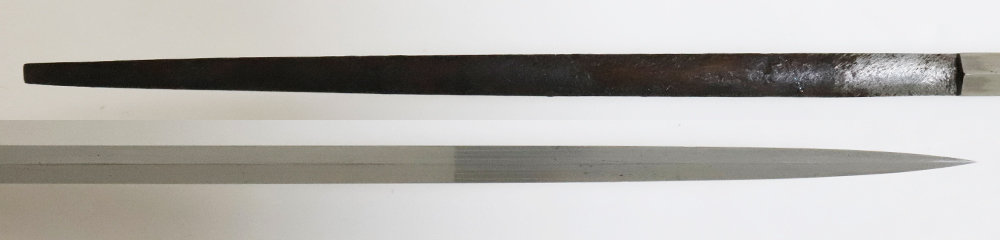
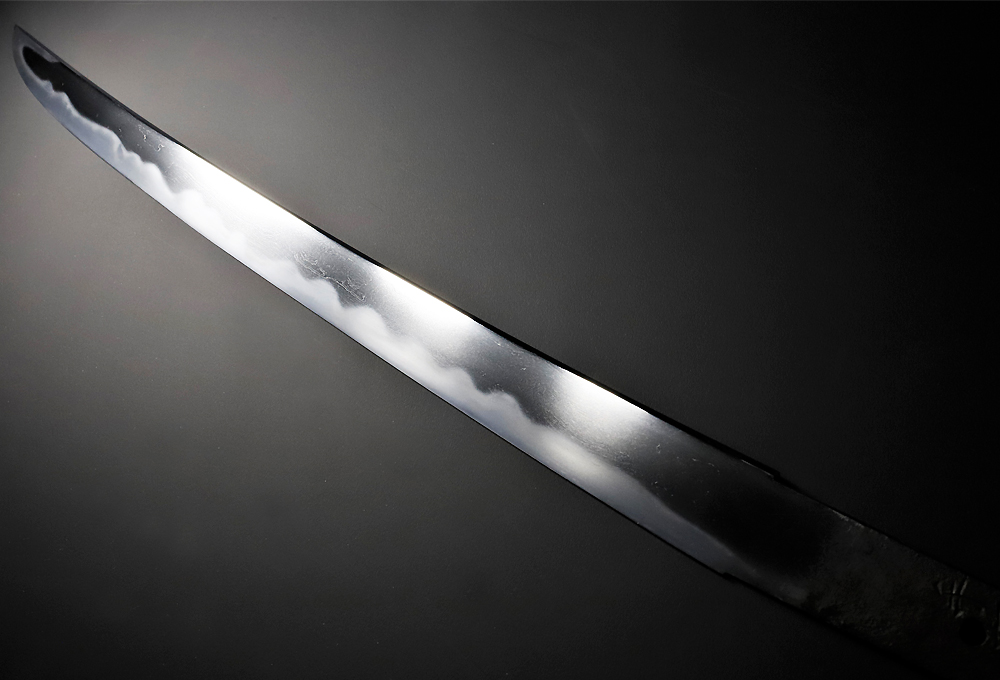
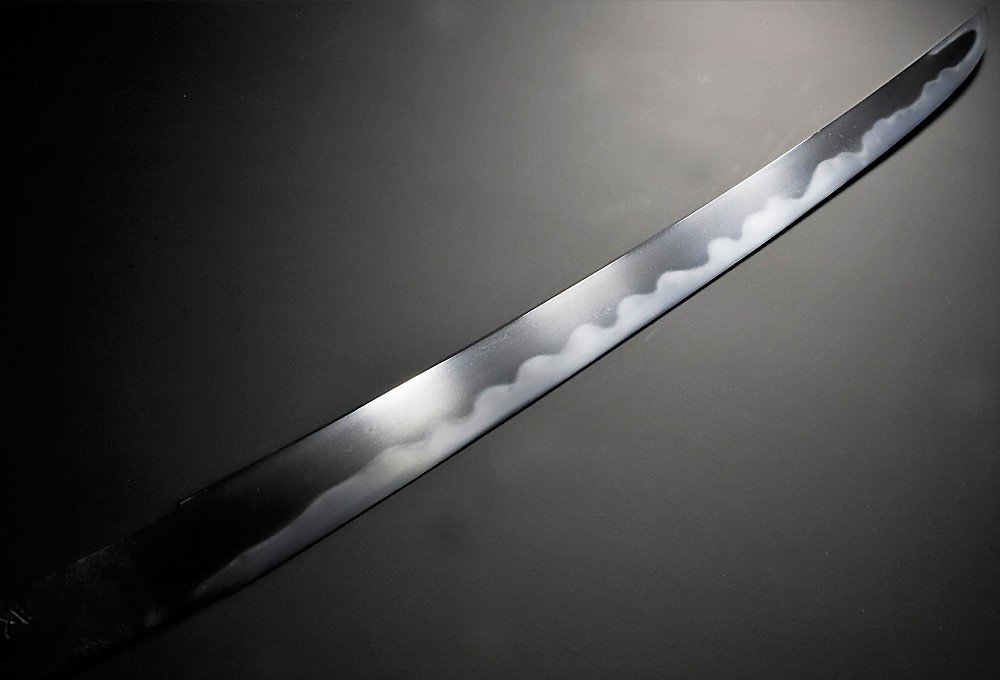
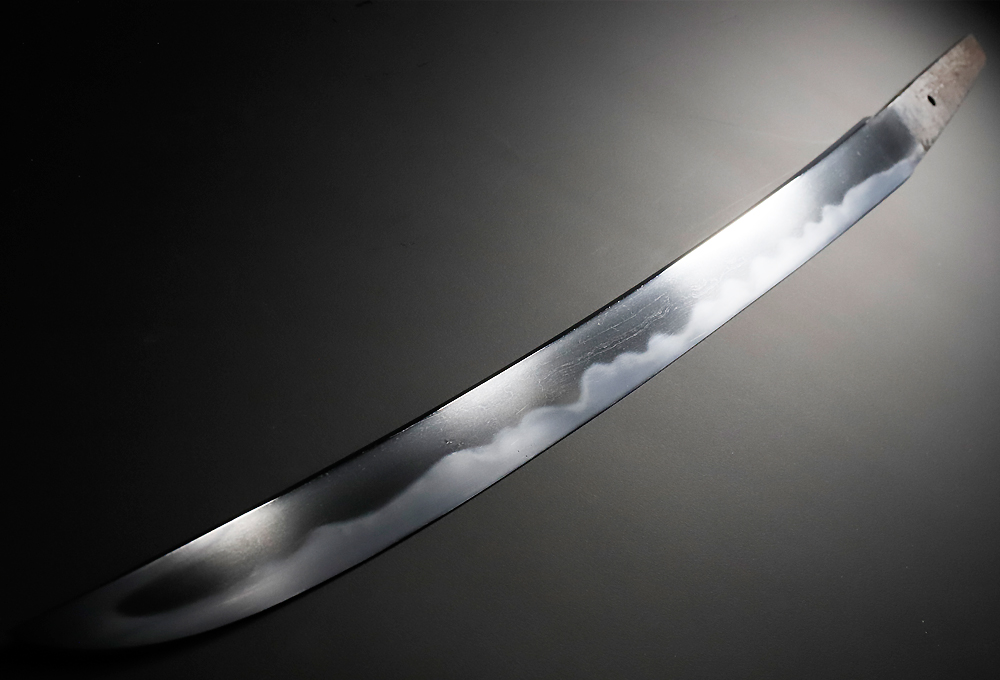
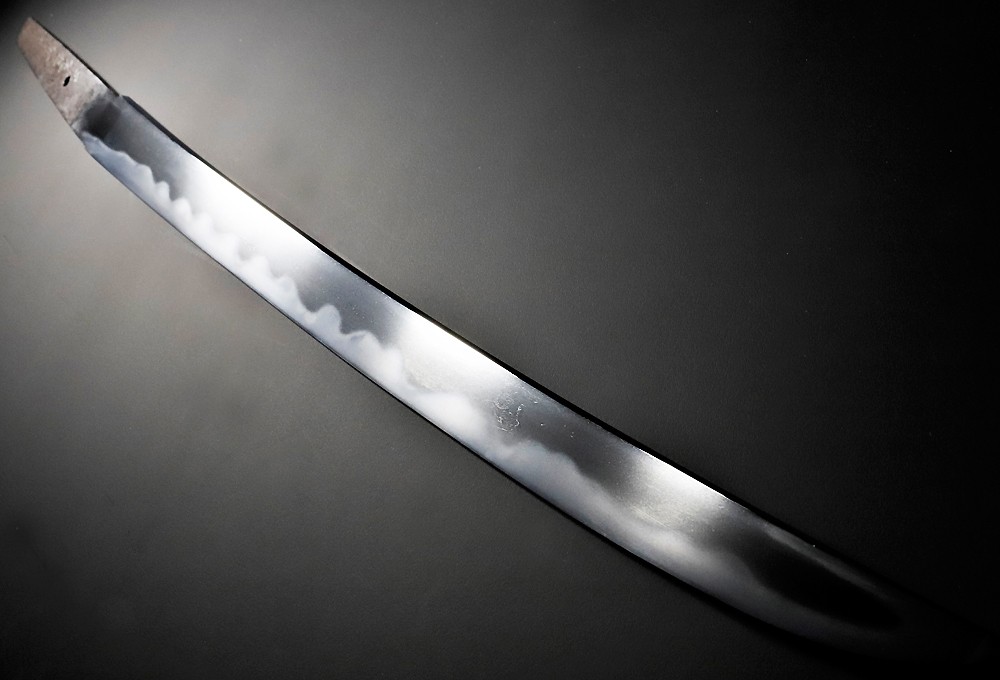
| Shape | Hira-zukuri with iori-mune, a relatively narrow blade width, moderate thickness and curvature, presenting a graceful and elegant shape. |
| Region | Musashi Province (Edo), originally from Harima Province, and a retained swordsmith of the Shirakawa Domain in Mutsu Province. |
| Era | Late Edo Period |
| Length |
39 cm 15.4 in |
| Sori (curvature) |
0.7 cm 0.3 in |
| Motohaba |
2.7 cm 1.1 in |
| Munekasane |
0.6 cm 0.2 in |
| Status | Tokubetsu Hozon Token |
| Certification Date | June 03, 2026 |
| Registration Authority | Tokyo |
| Registration Date | May 04, 1972 |
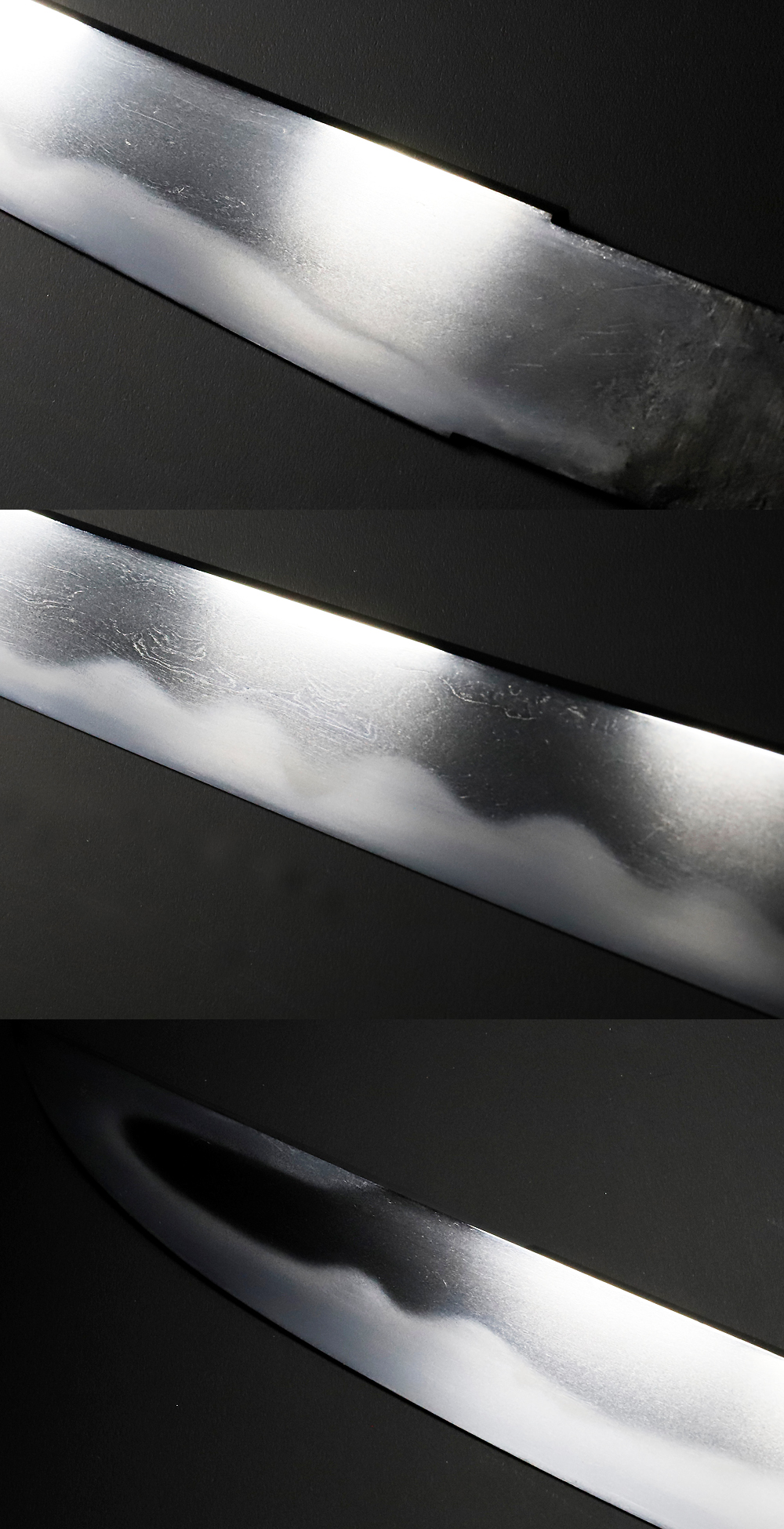
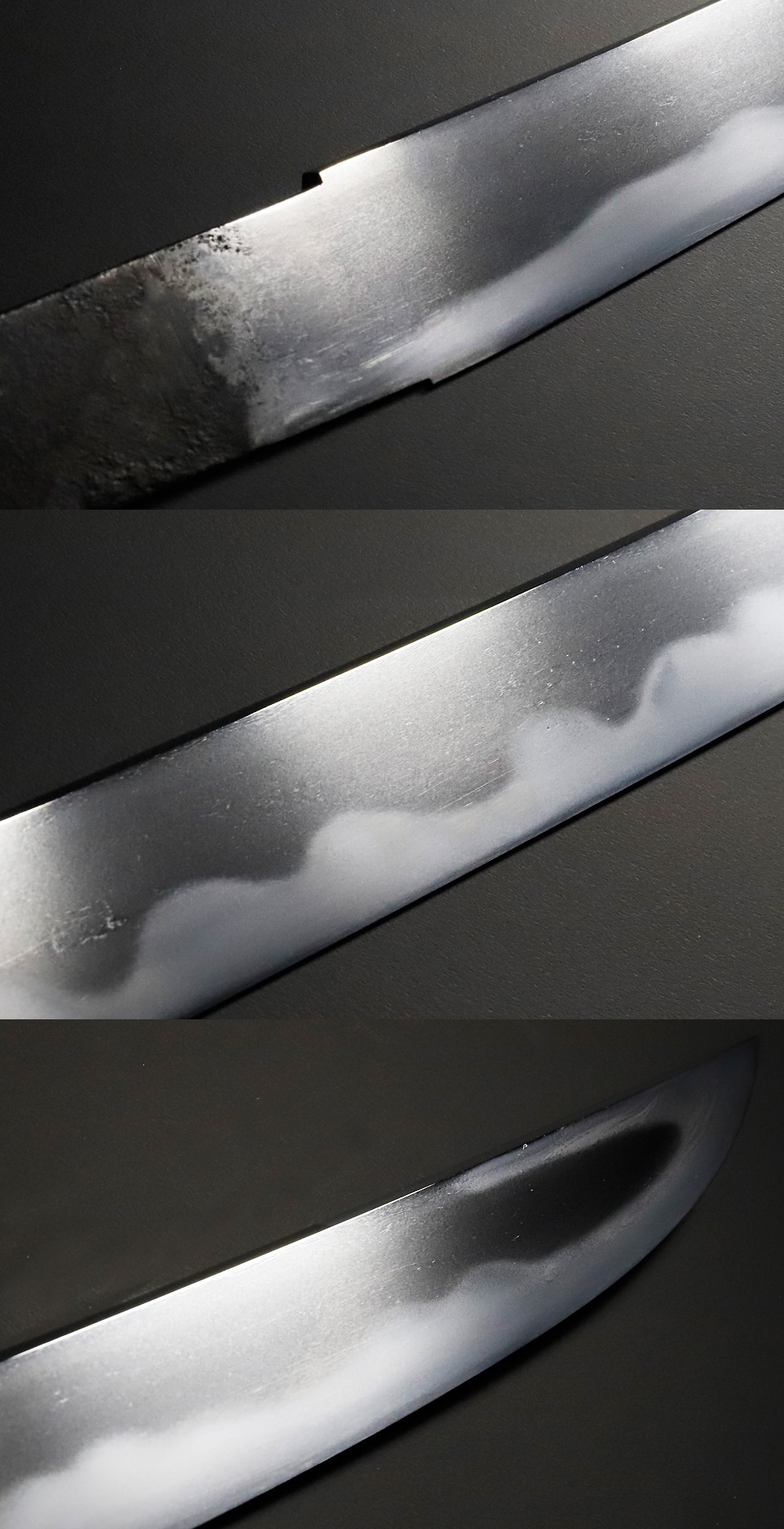
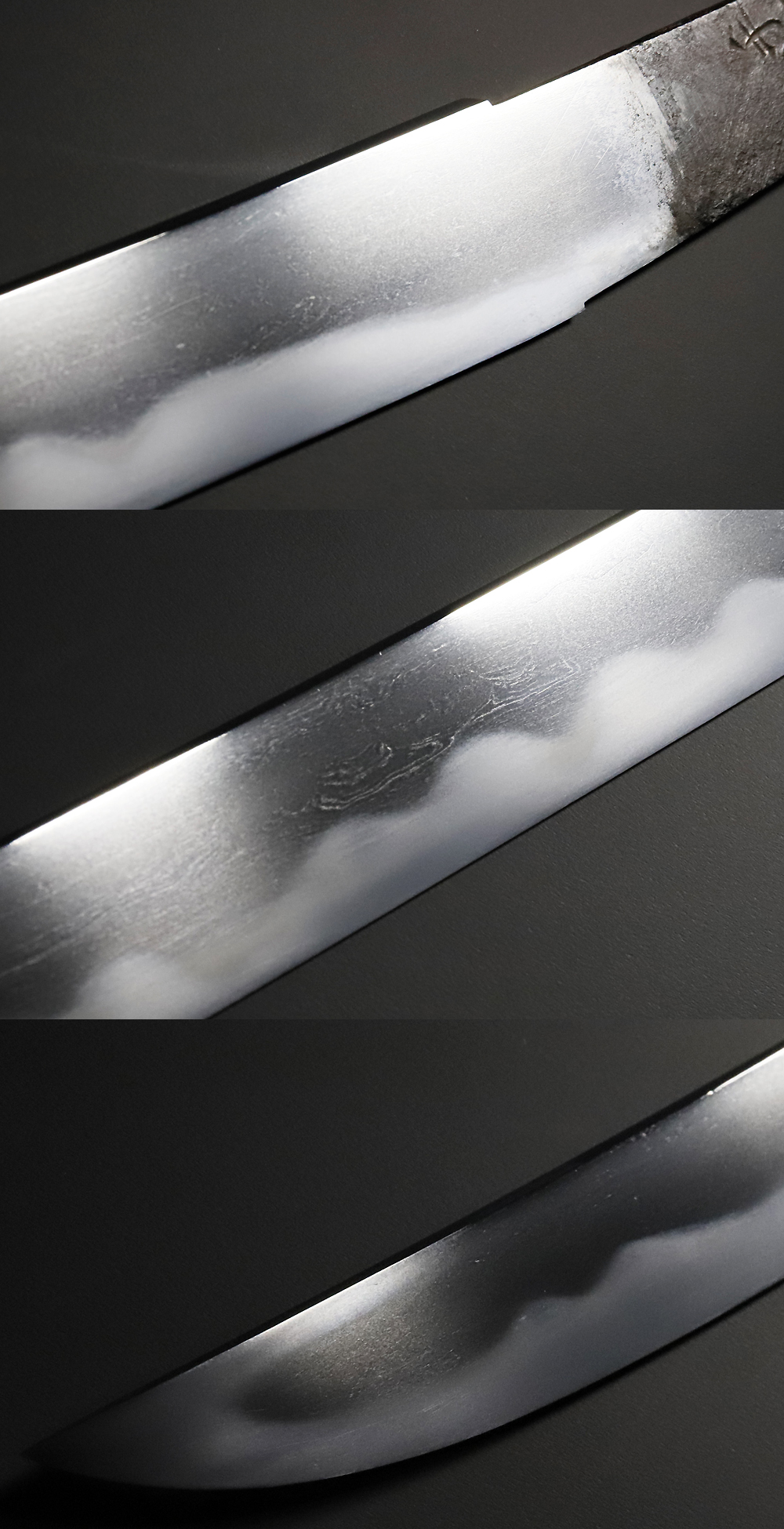
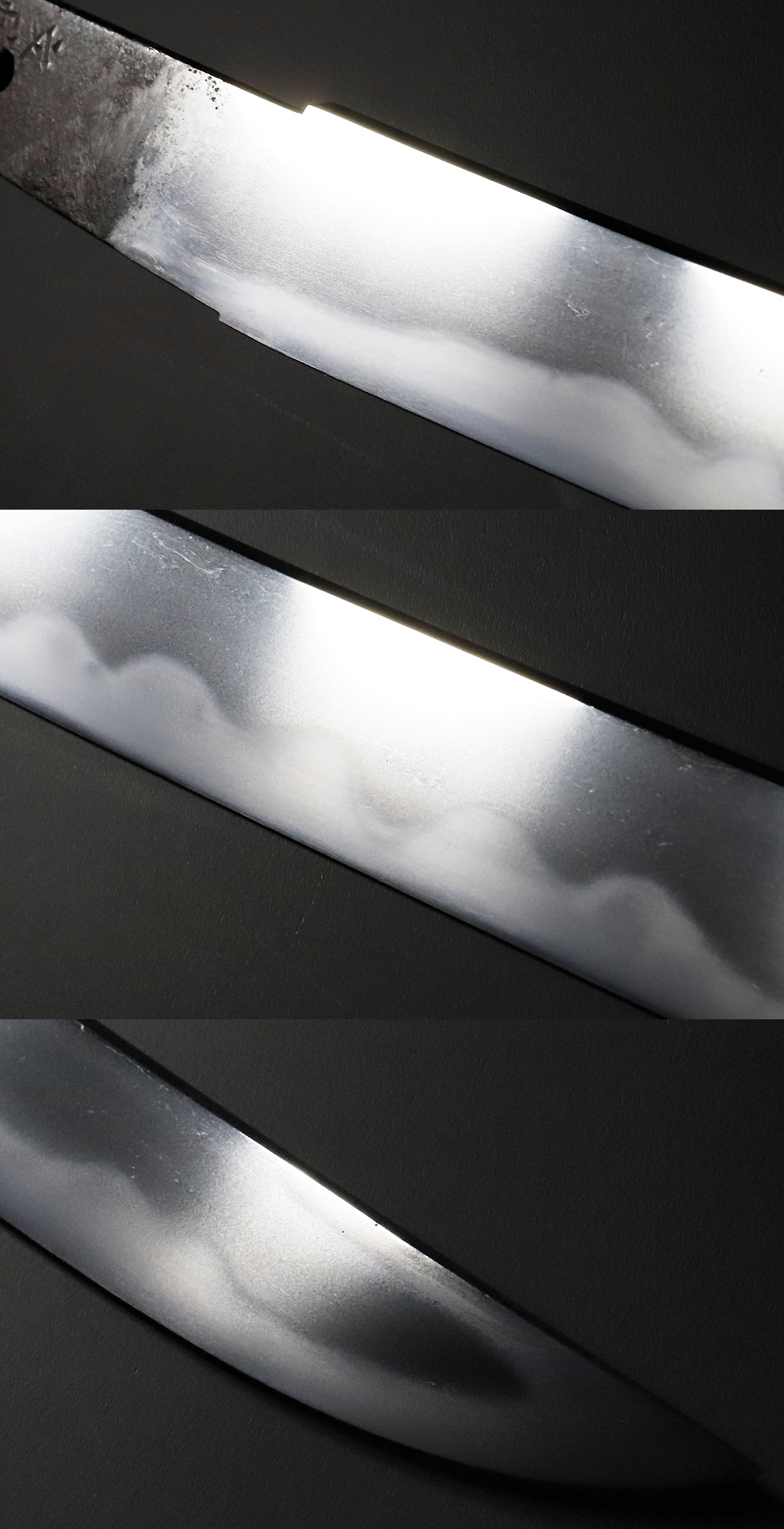
| Jihada (Metal pattern) | Tightly forged itame-hada mixed with flowing grain and mokume-hada. |
| Hamon (Temper line) | Gunome-midare in a toran-style pattern with ko-nie. |
| Bōshi (Point / Tip) | On the omote, straight with a small rounded tip and a long turn; on the ura, straight with a small rounded tip, accompanied by hakikake and a long turn. |
| Nakago (Tang) | Ubu (unaltered), with kesho and o-sujikai yasurime, and a shallow ha-agari kurijiri end. |
| Mekugiana (Rivet holes) | 1 |
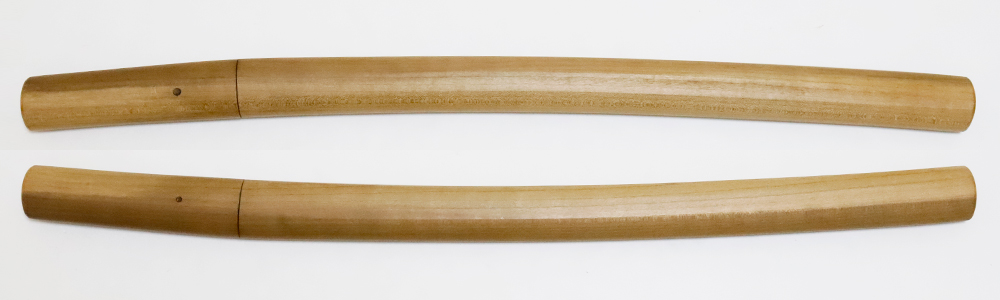
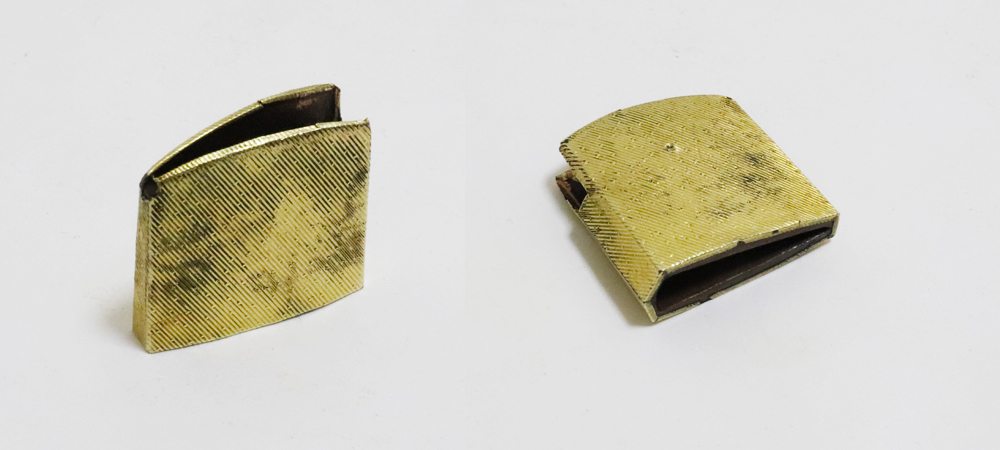
| Habaki | Gold-foiled copper habaki with Yujo yasurime. |
Price |
600,000 JPY |
| Tegarayama Masashige was born in Himeji, Harima Province, in Horeki 10 (1760), as the second son of the second-generation Tegarayama Ujishige. After his elder brother, Shinbei Ujishige, passed away at an early age, he succeeded him and signed his works using the names Ujishige (氏重 or 氏繁). He adopted the name Tegarayama because he lived at the foot of Mount Tegara in Himeji. During the Tenmei era, he forged swords in Osaka. In Tenmei 8 (1788), he became a retained swordsmith of Matsudaira Sadanobu, also known as Shirakawa Rakuo, the third lord of the Shirakawa Domain in Mutsu Province, a senior councilor of the Tokugawa shogunate, the leading figure behind the Kansei Reforms, and a grandson of the eighth shogun, Tokugawa Yoshimune. In the same year, Masashige moved to Edo, where he continued forging swords. He received the honorary title of Kai no Kami in Kyowa 3 (1803) and passed away in Bunsei 13 (1830) at the age of 70. Masashige greatly admired the works of Tsuda Sukehiro and excelled in producing large gunome-midare hamon in the toran style. This wakizashi was made during Masashige's mature period at the age of 59 and features a large gunome-midare hamon in the toran style with ko-nie. It is an elegant and well-proportioned hira-zukuri wakizashi by Tegarayama Kai no Kami Masashige, modeled on the workmanship of Sukehiro. This wakizashi passed the NBTHK Tokubetsu Hozon Token shinsa in March 2026. |

 Search