| Product No. WA-0920 無銘(島田) | |
|---|---|
| Mei |
Mumei (Attributed to the Shimada School) Back: -- |
| Shape | Hira-zukuri with a maru-mune. Wide mihaba with normal kasane and slight curvature. |
| Region | Suruga Province |
| Era | Late Muromachi Period |
| Length |
34.9 cm 13.7 in |
| Sori (curvature) |
0.4 cm 0.2 in |
| Motohaba |
3.1 cm 1.2 in |
| Munekasane |
0.6 cm 0.3 in |
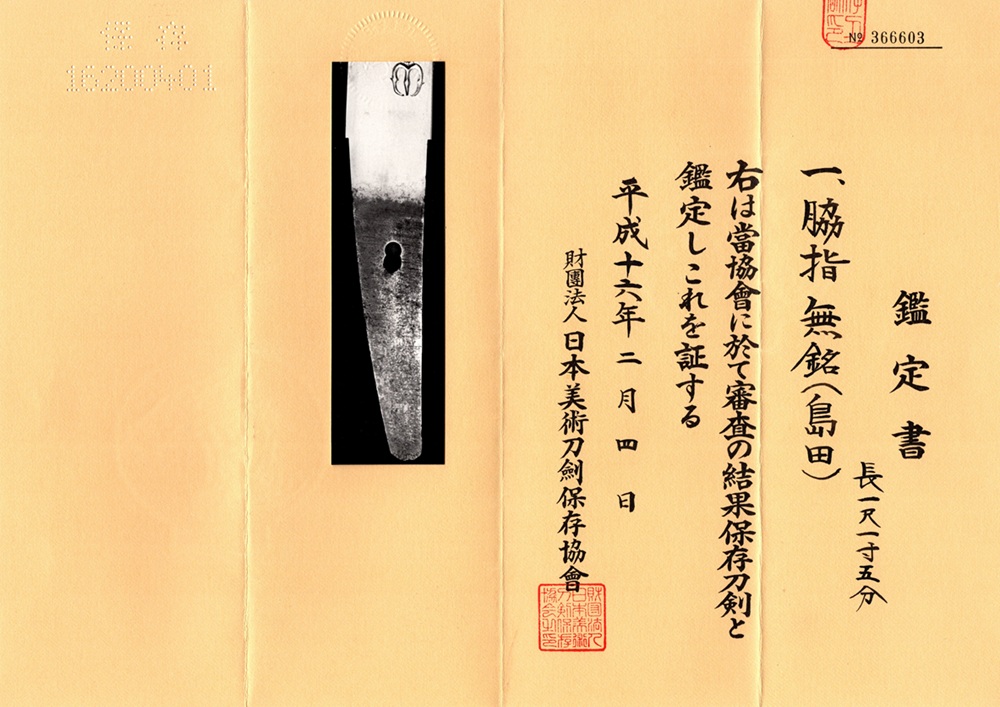
| Status | Hozon Token |
| Certification Date | February 04, 2004 |
| Registration Authority | Ibaraki Prefecture |
| Registration Date | September 30, 2003 |
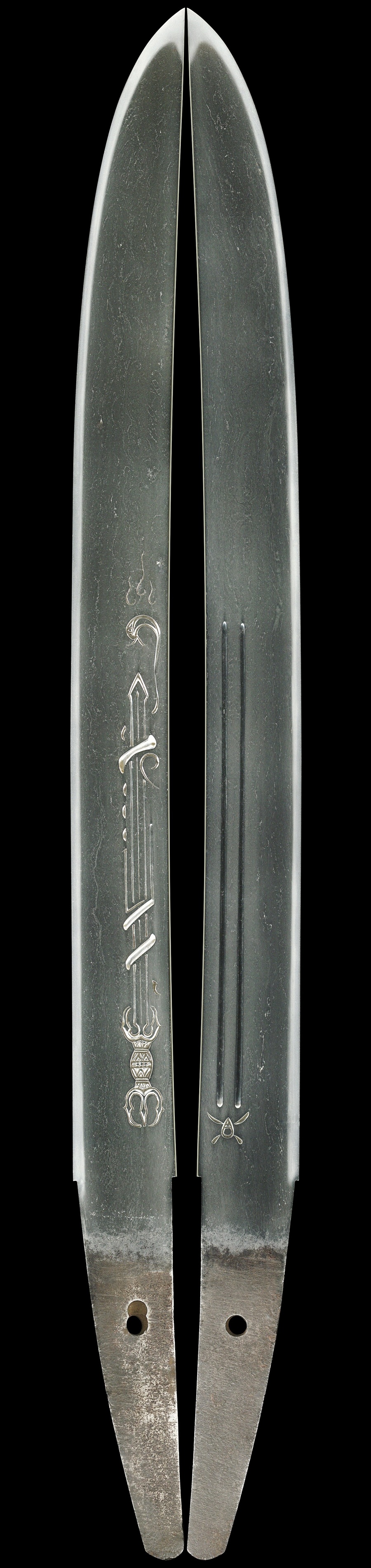
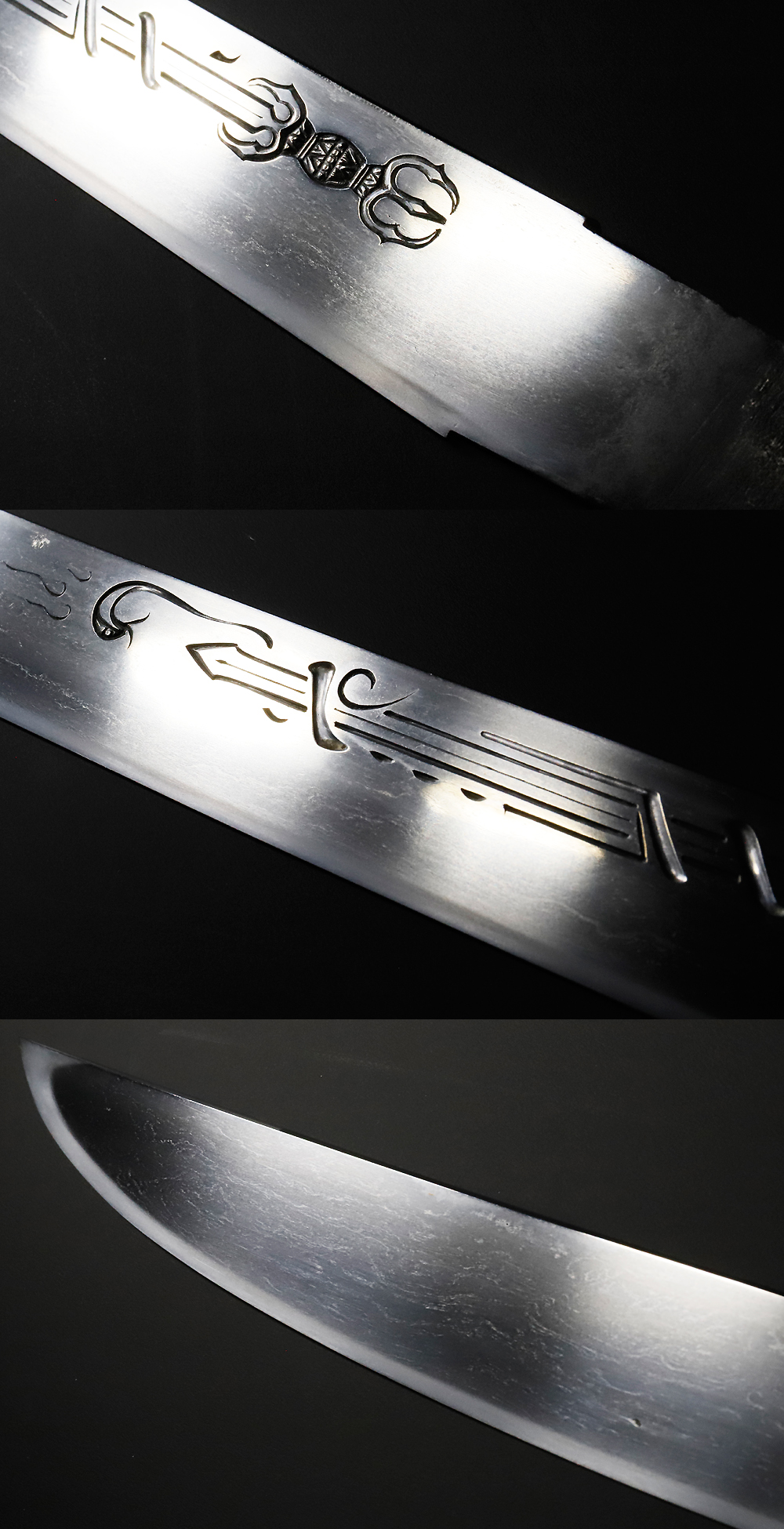
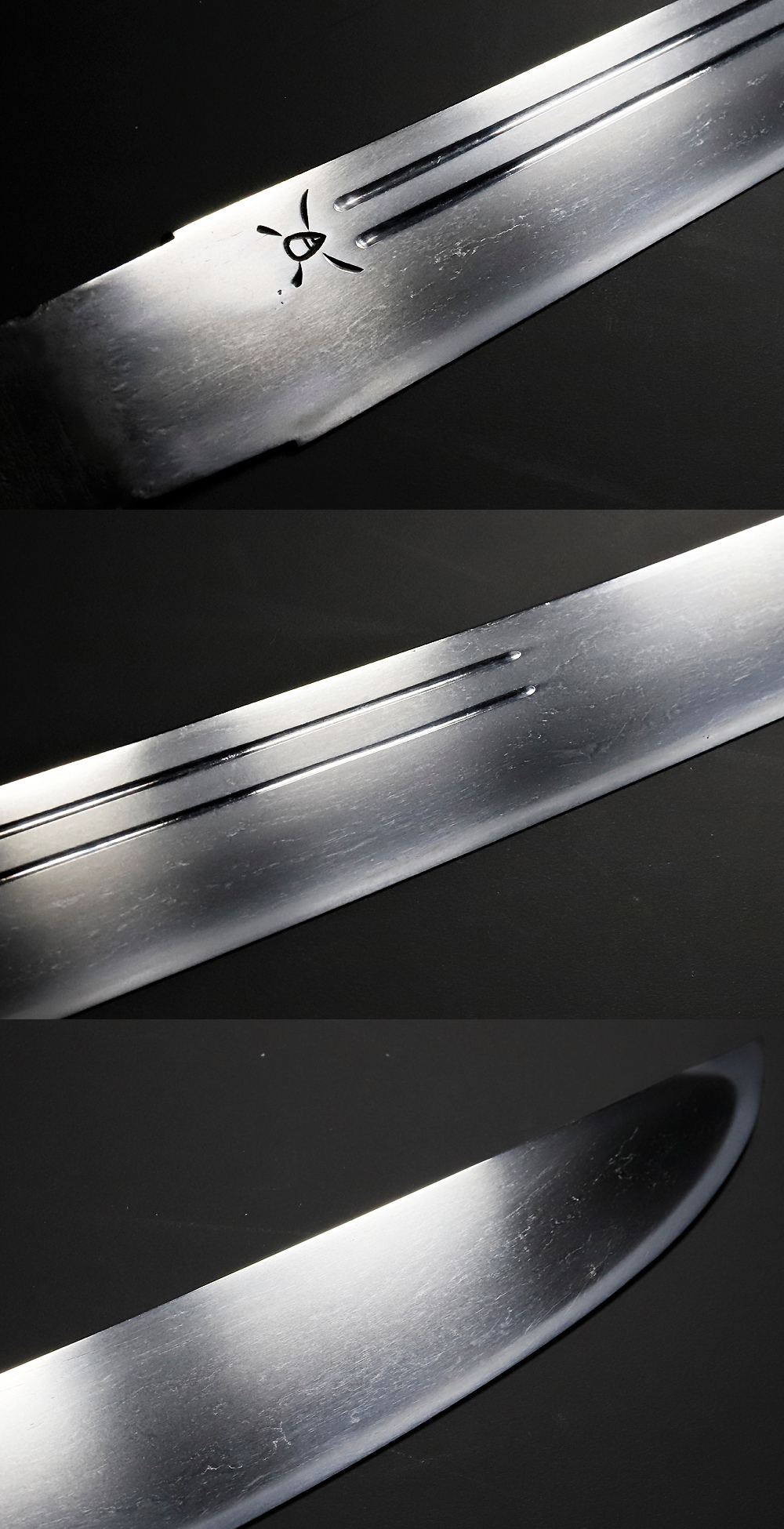
| Jihada (Metal pattern) | Itame-hada with flowing grain patterns, slightly prominent. |
| Hamon (Temper line) | Gentle, narrow suguha. |
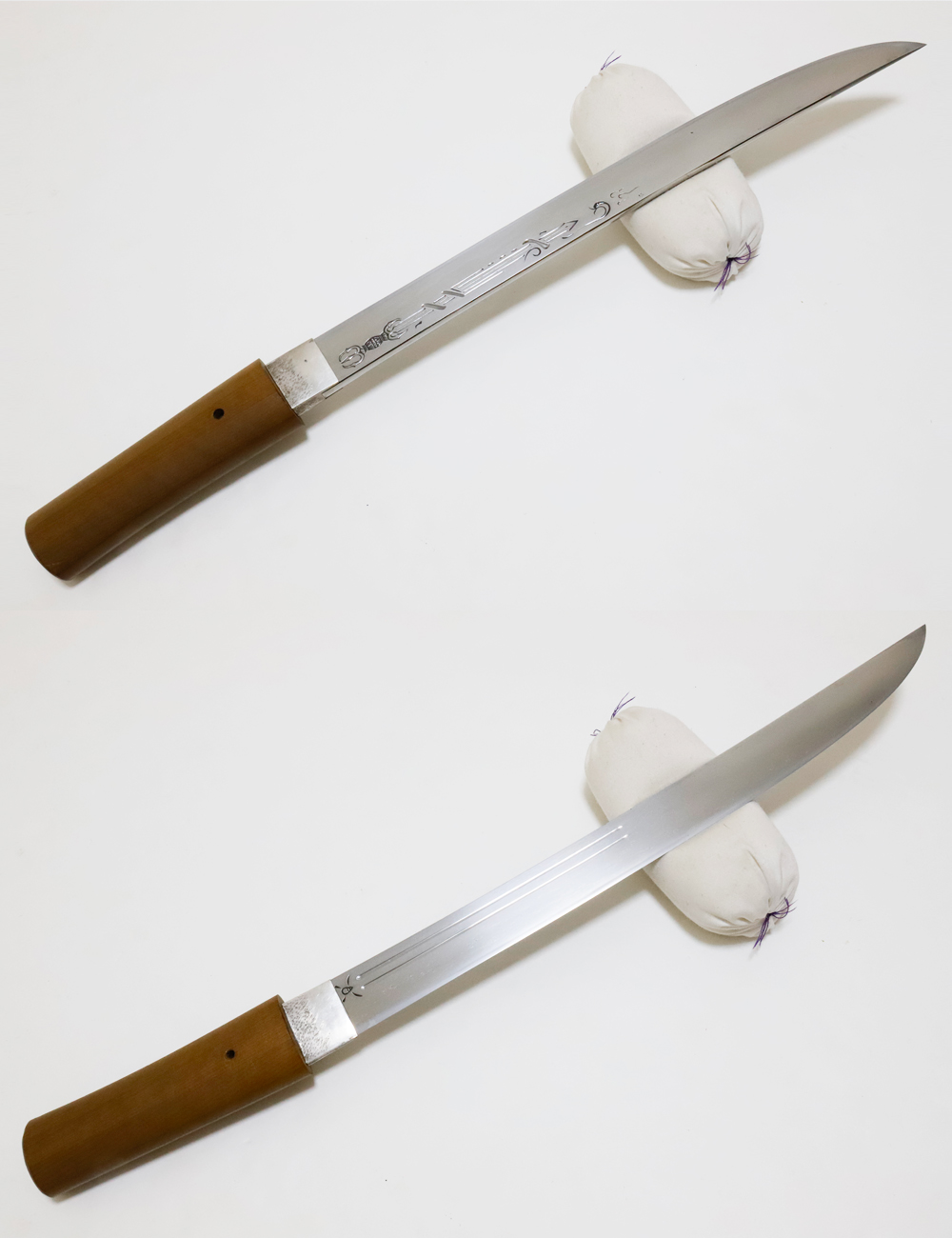
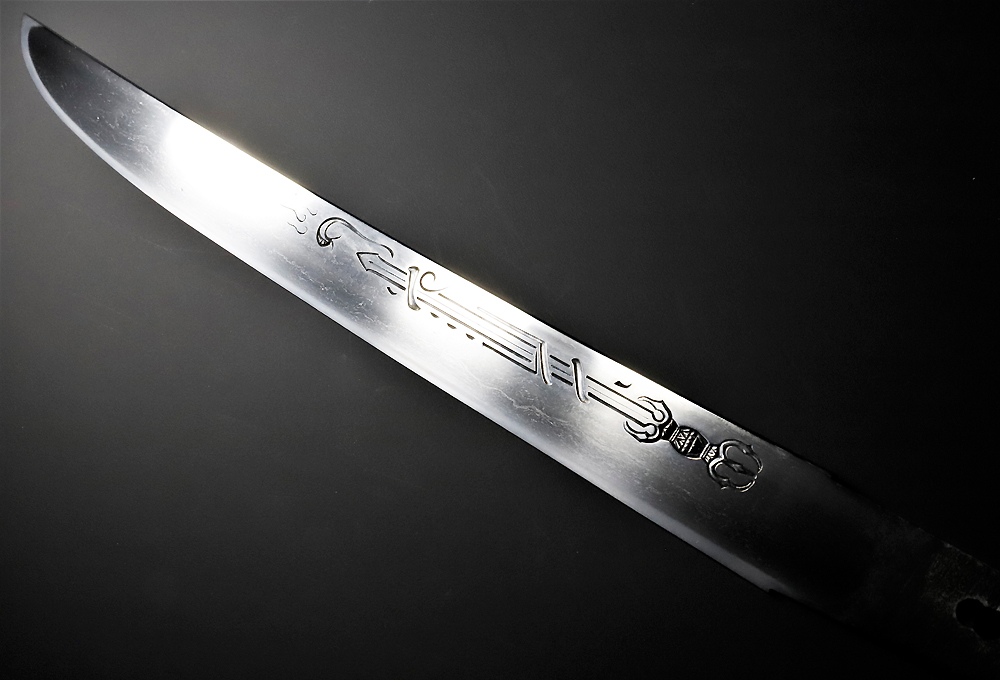
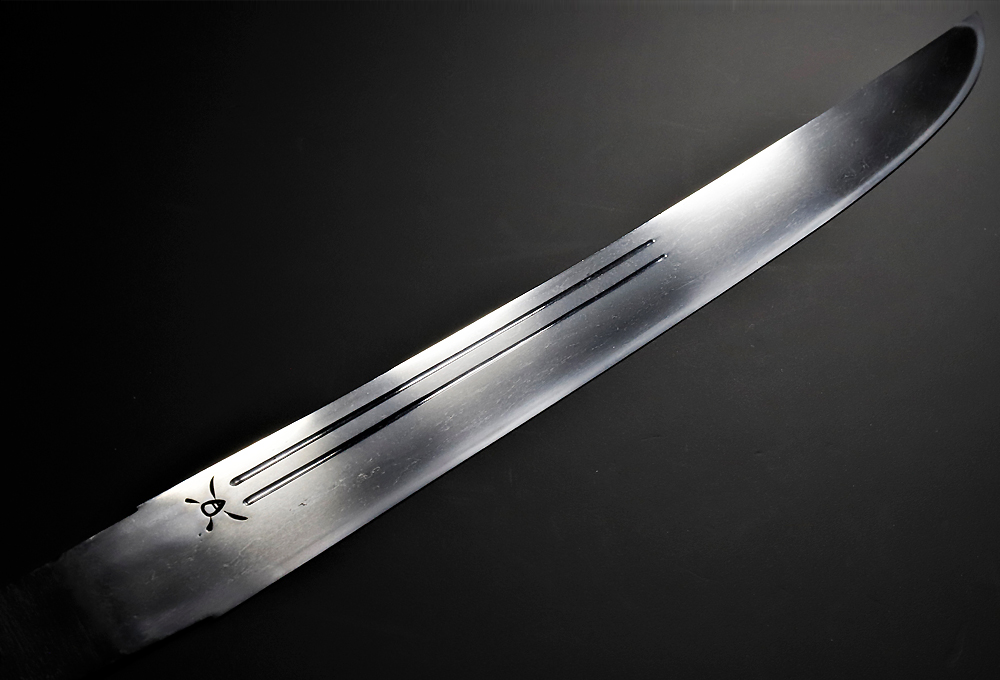
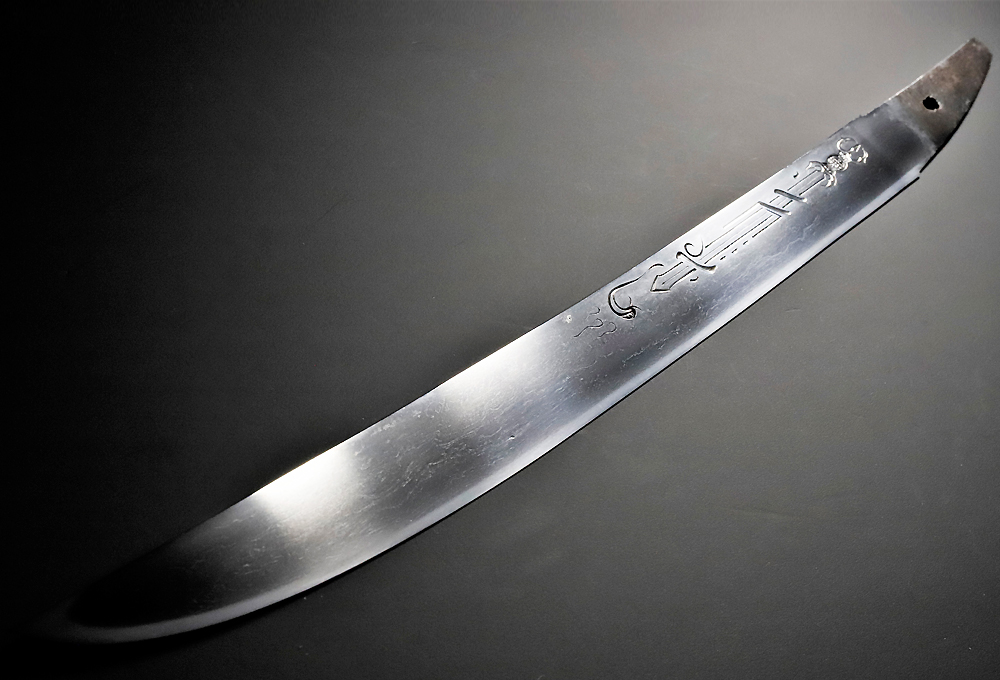
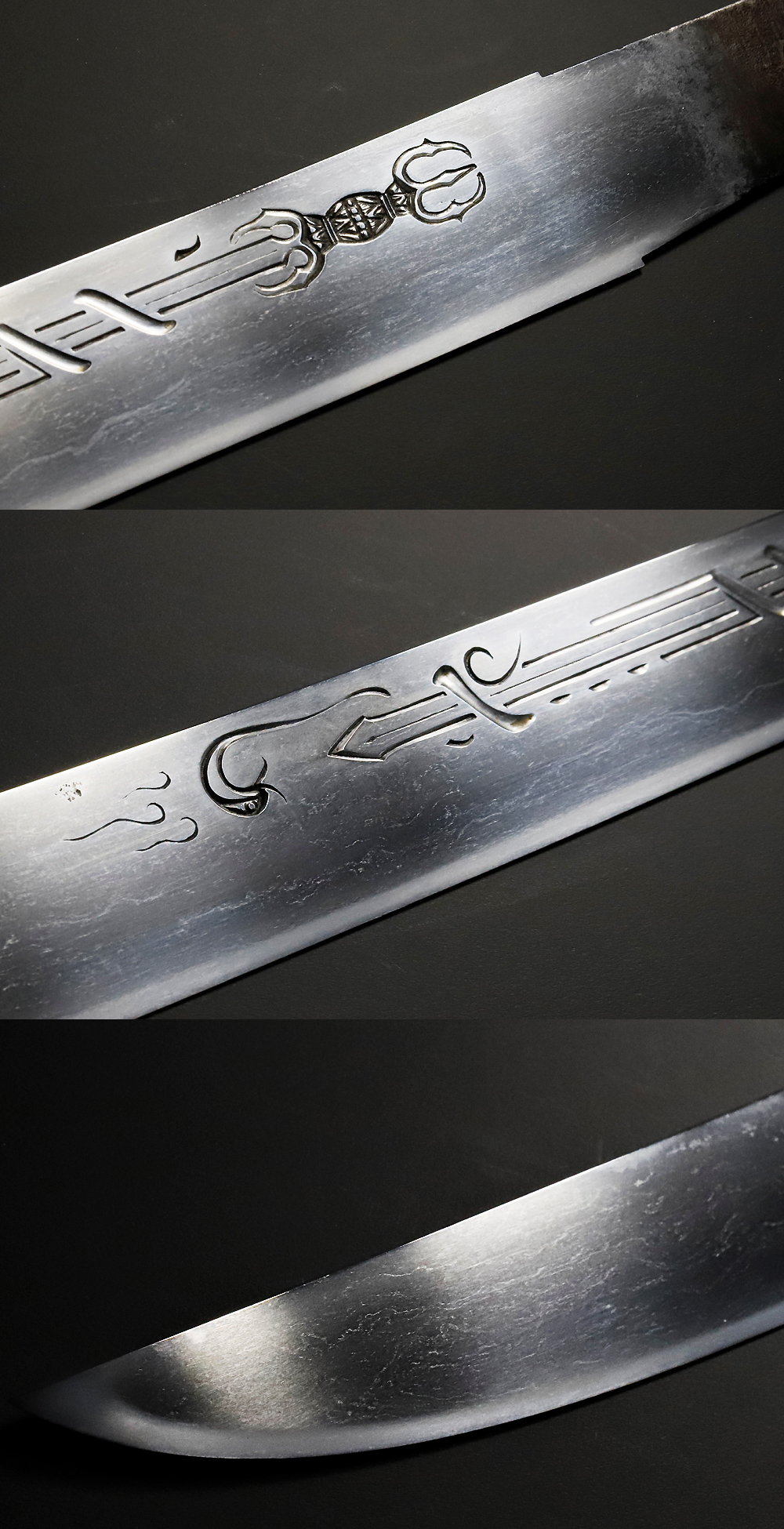
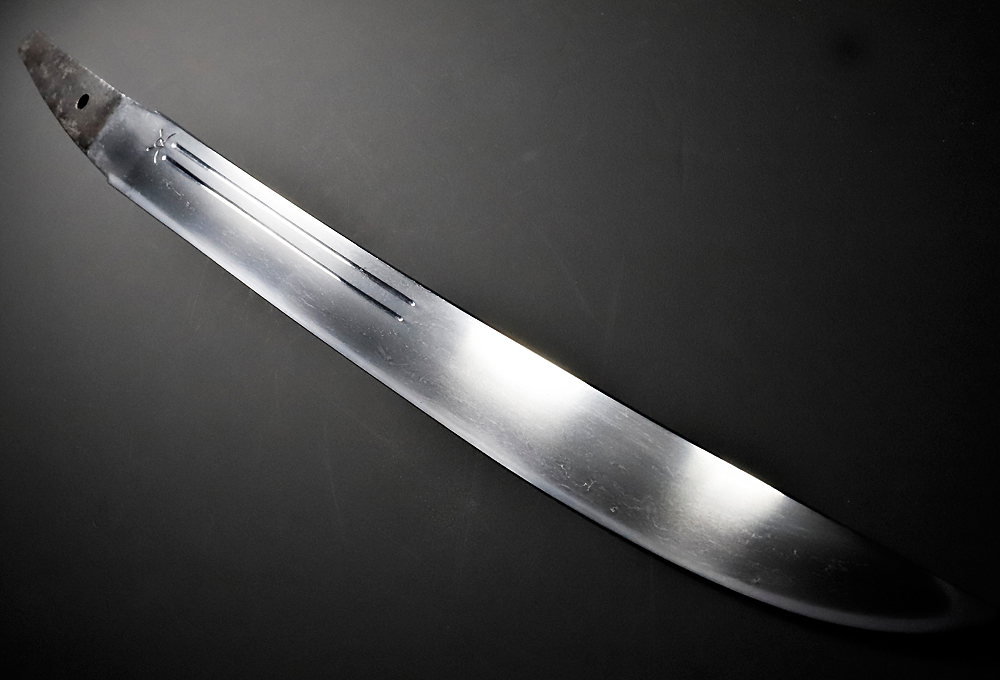
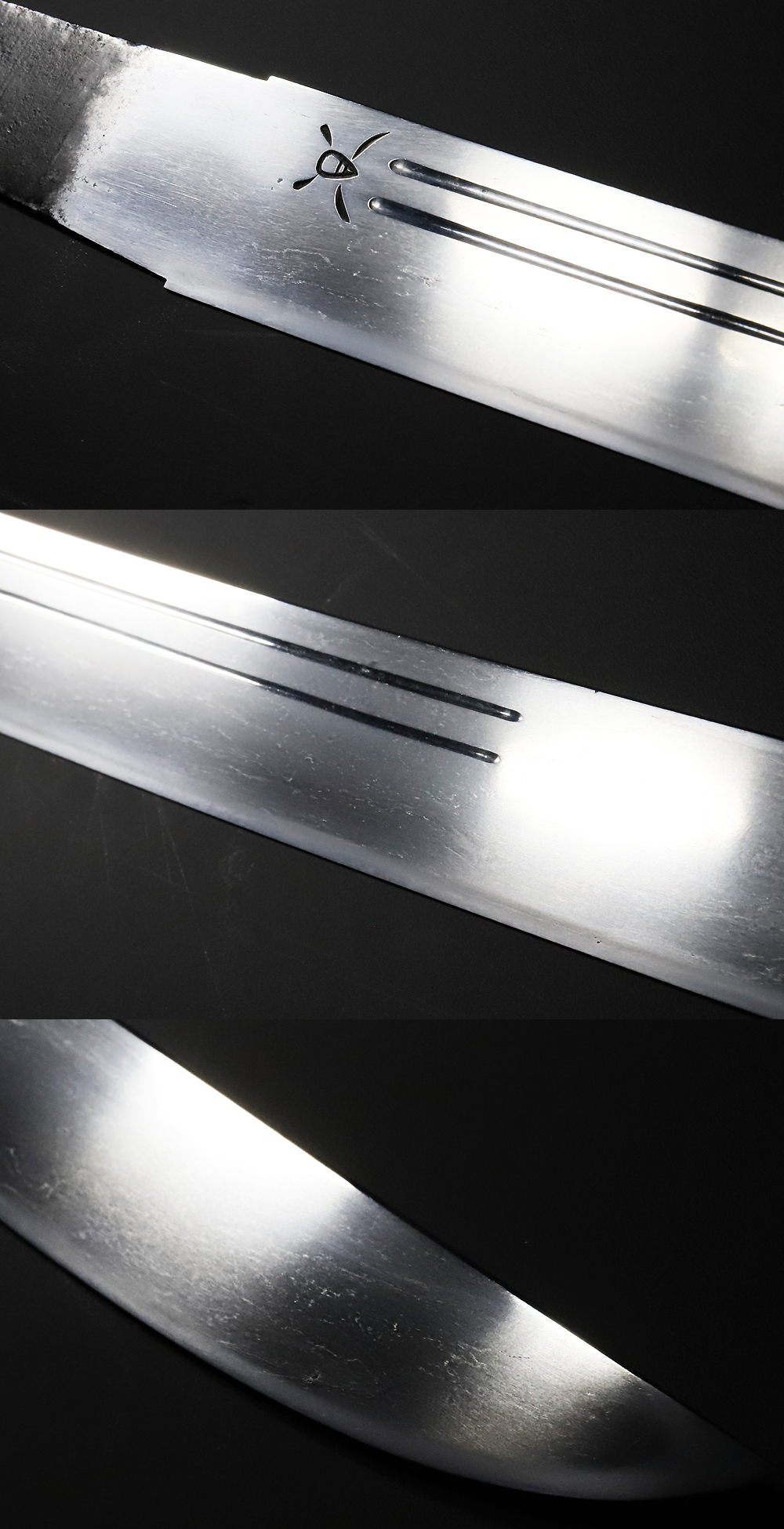
| Engraving | So-no-Kurikara (stylized Kurikara dragon) and Sankosho (three-pronged vajra). Ura (Back): Gomabashi and Hoju (sacred jewel). |
| Bōshi (Point / Tip) | Straight with a shallow, rounded turn-back. |
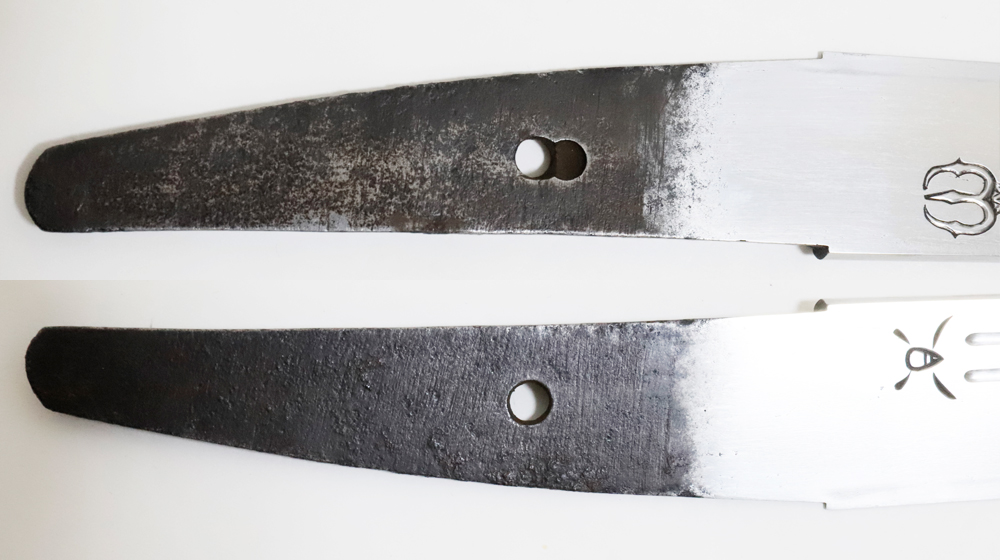
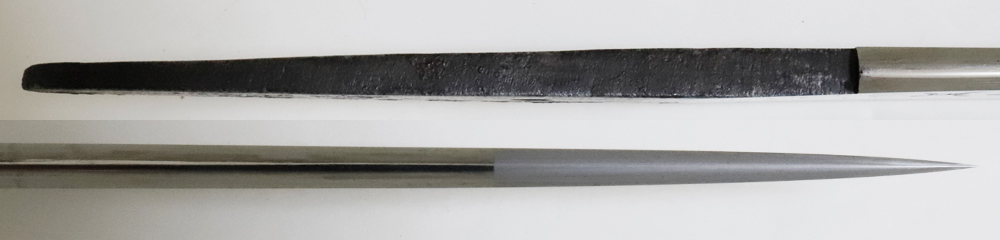
| Nakago (Tang) | Ubu and mumei (unsigned), with kiri-yasurime. Funazoko-gata, tapering toward the tip, with a kuri-jiri. |
| Mekugiana (Rivet holes) | 1 |
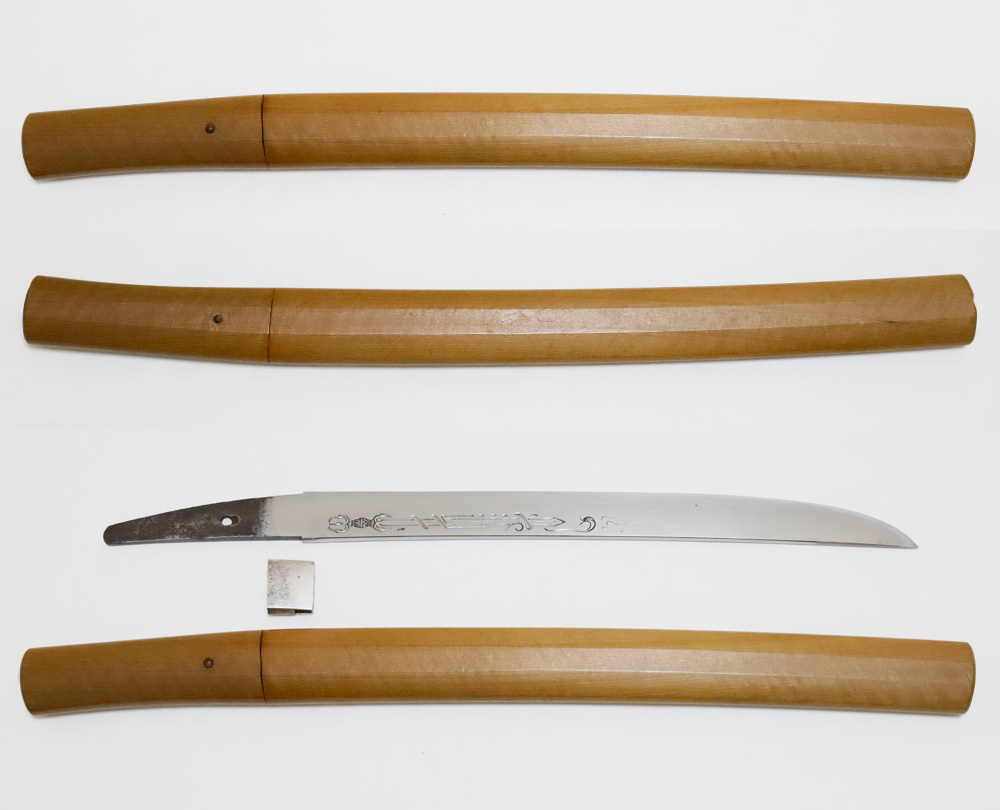
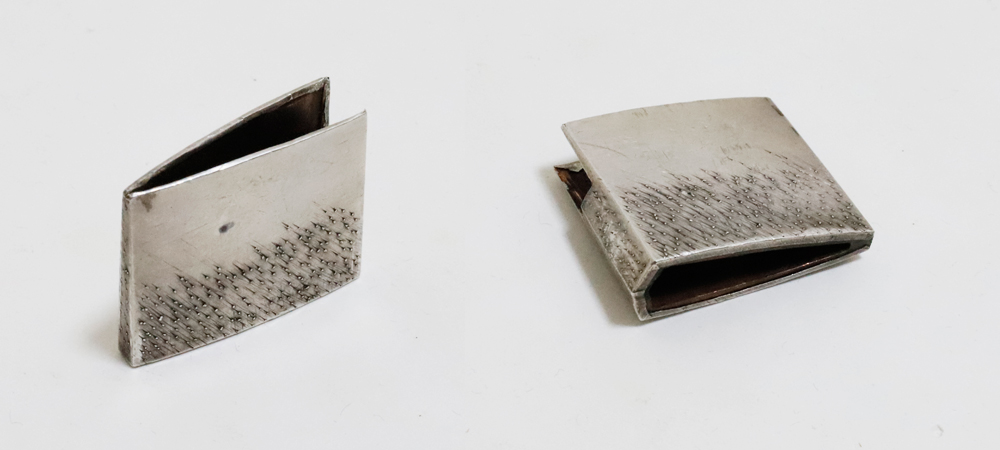
| Habaki | Silver-foiled copper habaki with koshi-Yujo yasurime. |
Price |
250,000 JPY |
| This is a hira-zukuri sun-nobi tanto with an unsigned ubu nakago, attributed to the Shimada school. The Shimada school was a group of swordsmiths that flourished in Shimada, Suruga Province, during the Muromachi period. Its notable swordsmiths include Yoshisuke, Sukemune, and Hirosuke. Strongly influenced by the Soshu tradition, the school also incorporated elements of the Bizen and Mino traditions, developing a wide variety of styles. The Yoshisuke lineage was particularly known for producing sun-nobi tanto with wide mihaba and slight curvature, often featuring a distinctive boat-bottom-shaped (funazoko-gata) nakago. This blade is a hira-zukuri sun-nobi tanto with wide mihaba, normal kasane, and slight curvature. The jigane displays flowing itame-hada with a slightly prominent grain pattern, while the hamon is a gentle, narrow suguha. Although the Shimada school also produced blades with flamboyant irregular hamon reflecting the Soshu tradition, this example exhibits calm and refined workmanship characterized by its narrow suguha. The omote (front) is carved with So-no-Kurikara and a sankosho (three-pronged vajra), while the ura (back) features gomabashi and a hoju (sacred jewel). Kurikara depicts a dragon, an incarnation of Fudo Myo-o, entwined around a sword. Together with the sankosho, gomabashi, and hoju, these carvings carry Buddhist symbolism. The horimono harmonizes beautifully with the blade, giving this work its distinctive character. The ubu nakago is unsigned, with a distinctive boat-bottom shape tapering toward a kuri-jiri tip. This blade reflects both the characteristic features and the diversity of workmanship found in the Shimada school. The blade passed the NBTHK Hozon Token shinsa in 2004. |

 Search