| Product No. WA-0894 安好(六十一代波平行安前銘) | |
|---|---|
| Mei |
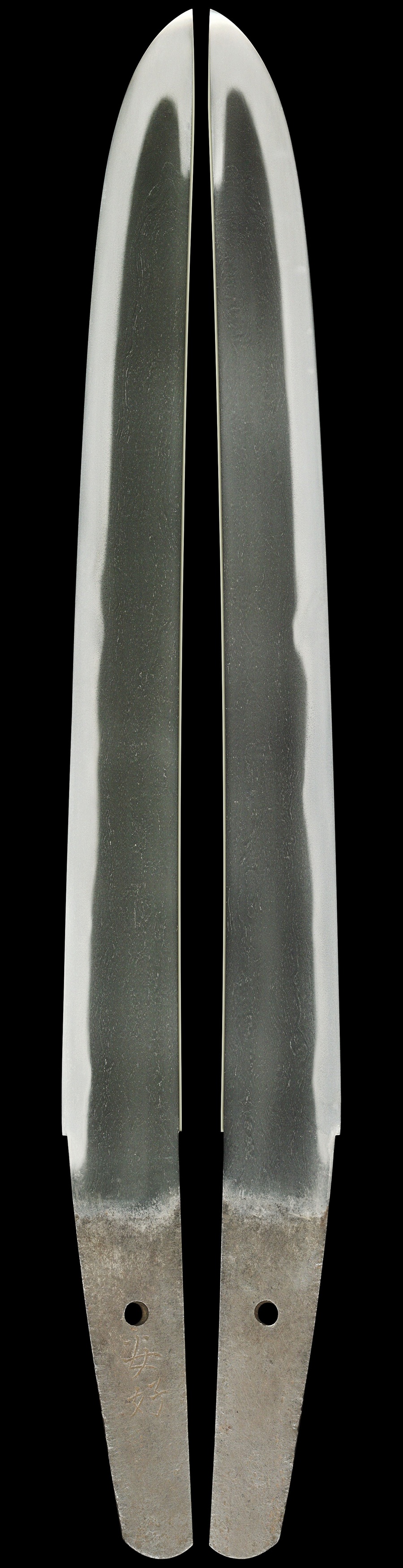
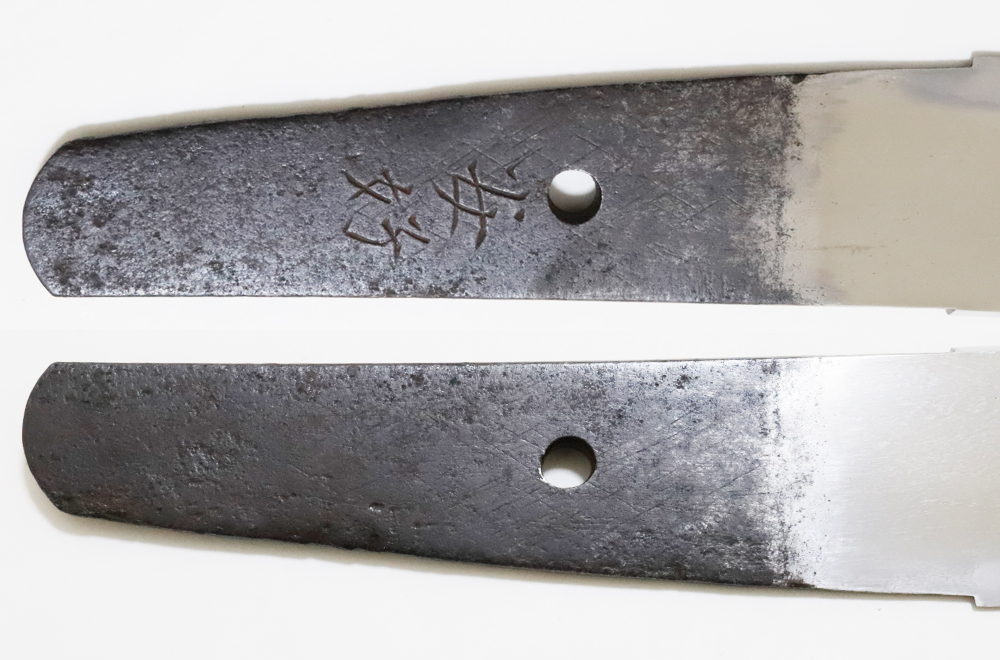
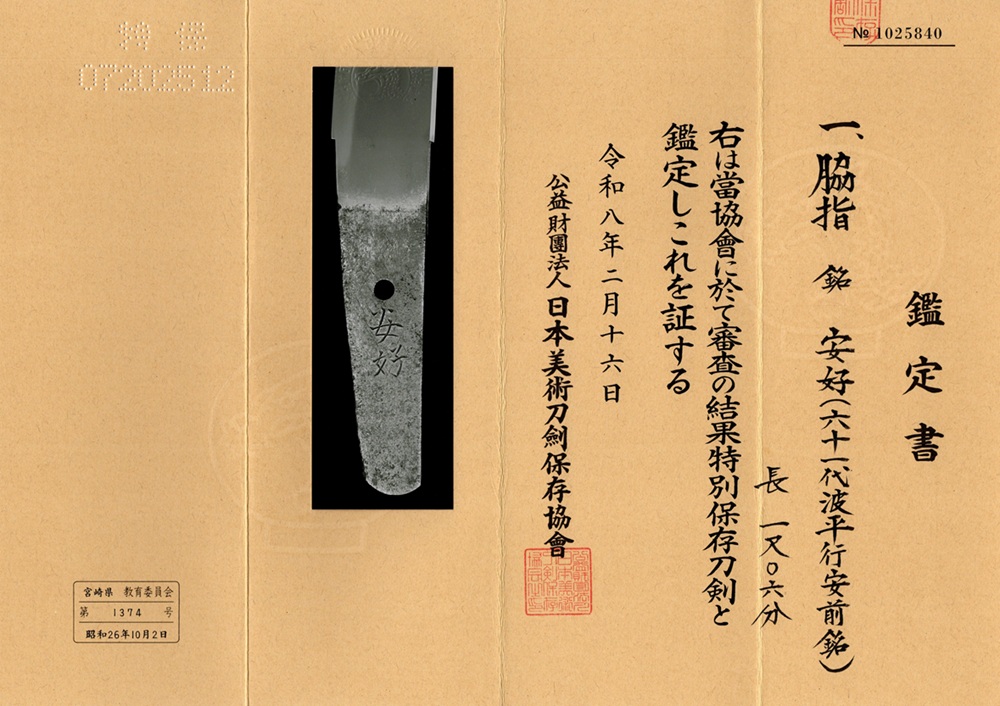
Yasuyoshi (the former name of the 61st-generation Naminohira Yukiyasu) Back: -- |
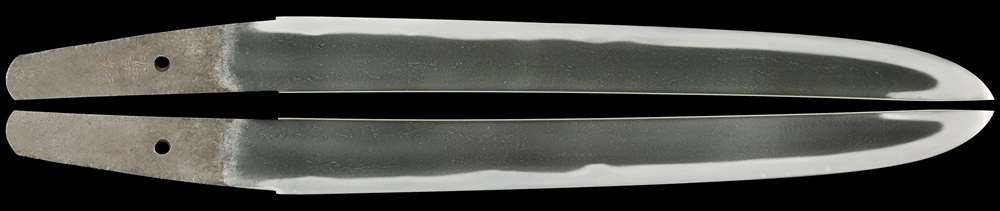
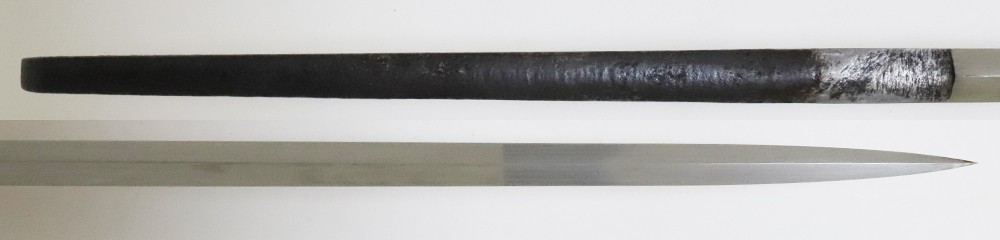
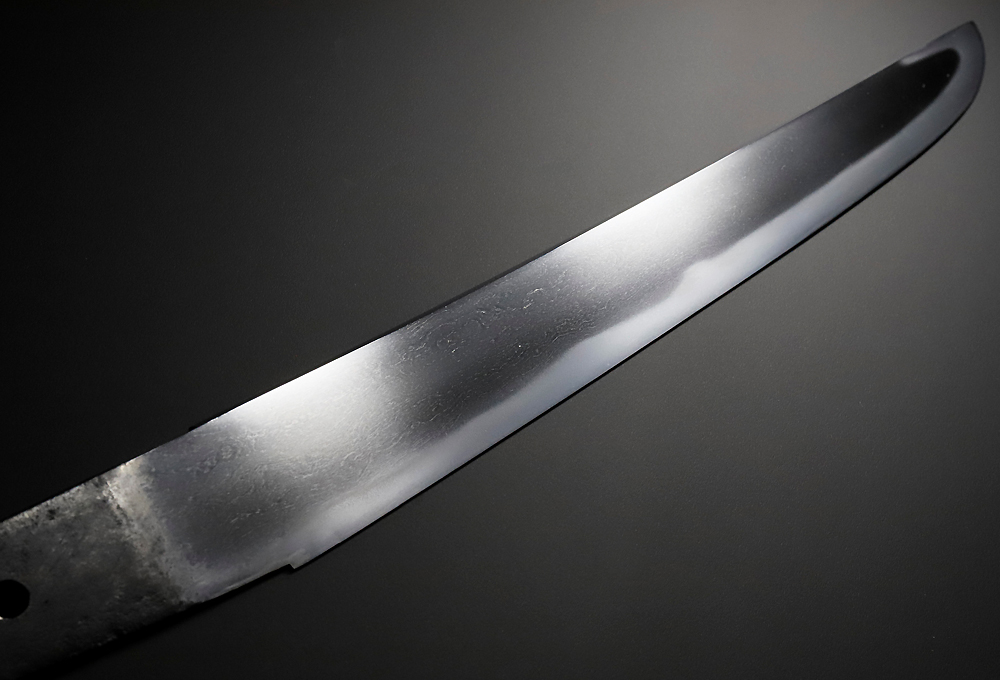
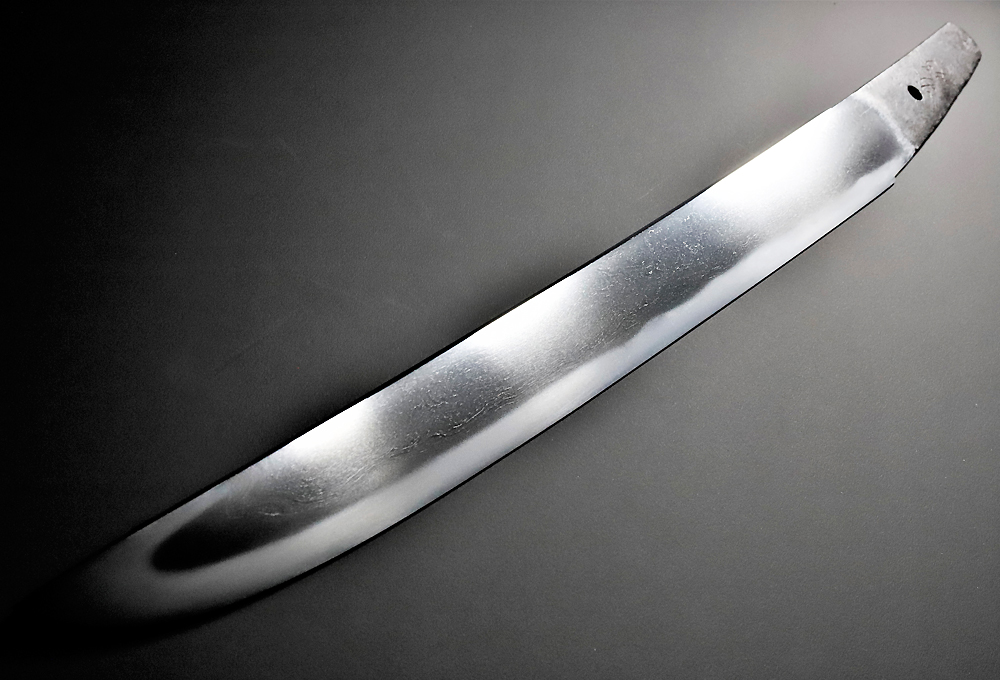
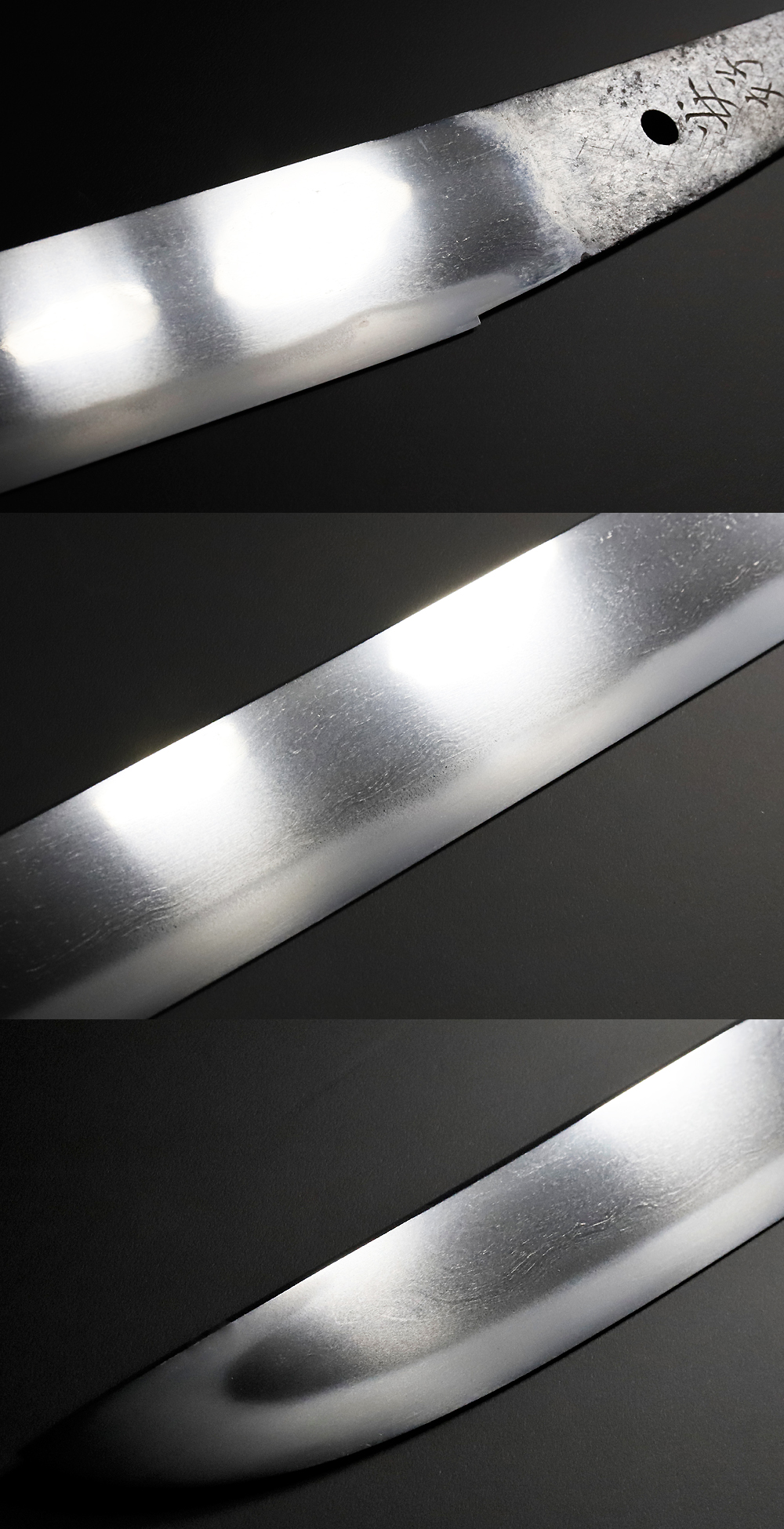
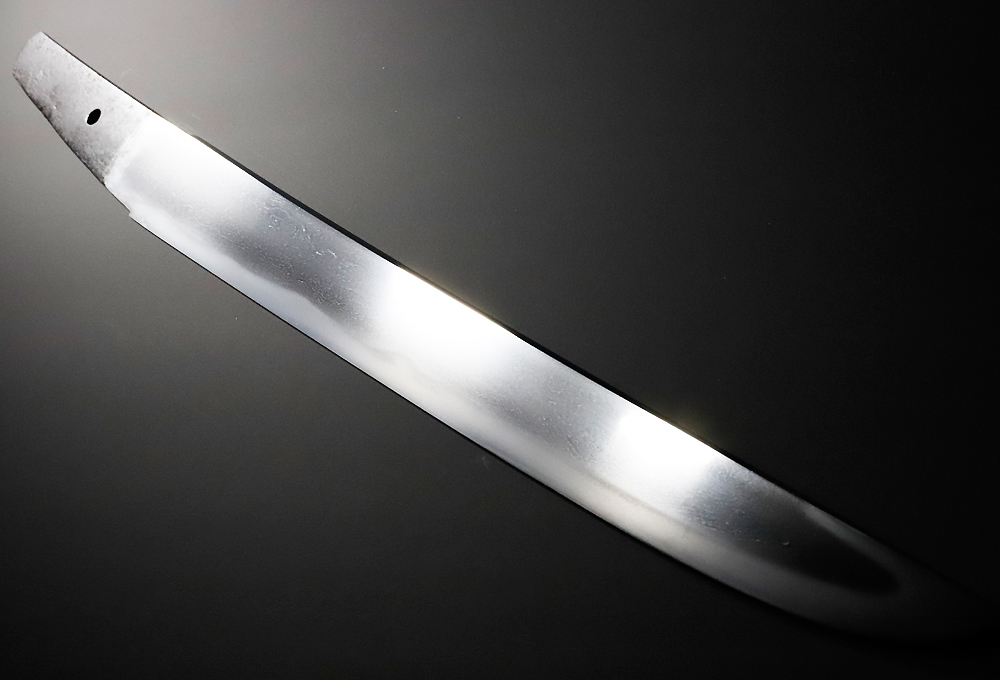
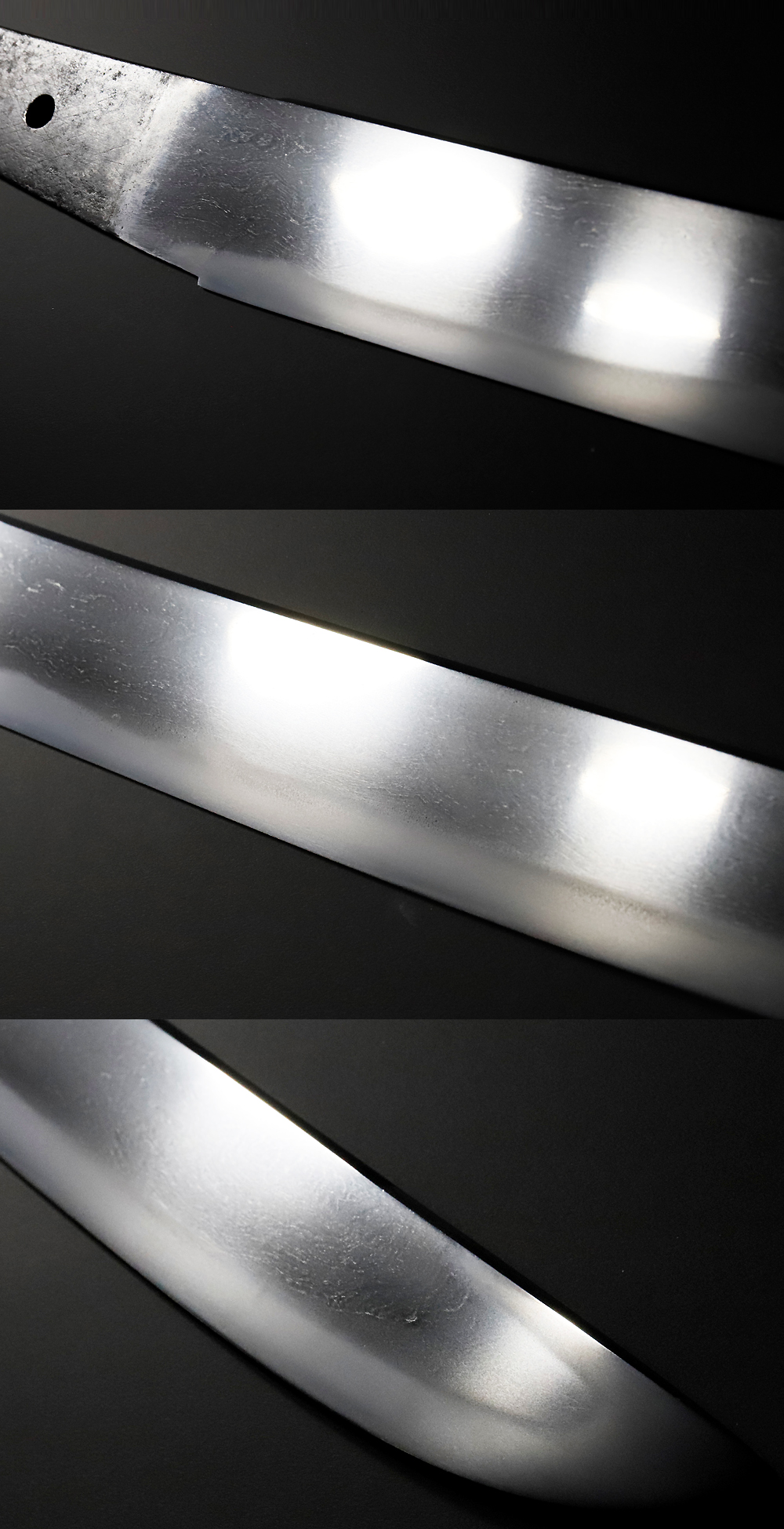
| Shape | Hira-zukuri, iori-mune, with a wide mihaba, thick kasane, and a robust, powerful sugata |
| Region | Satsuma Province |
| Era | Late Edo Period(Tempo Era 1830-1844) |
| Length |
32.3 cm 12.7 in |
| Sori (curvature) |
0.3 cm 0.1 in |
| Motohaba |
3.5 cm 1.4 in |
| Munekasane |
0.7 cm 0.3 in |
| Status | Tokubetsu Hozon Token |
| Certification Date | February 16, 2026 |
| Registration Authority | Miyazaki Prefecture |
| Registration Date | October 02, 1951 |
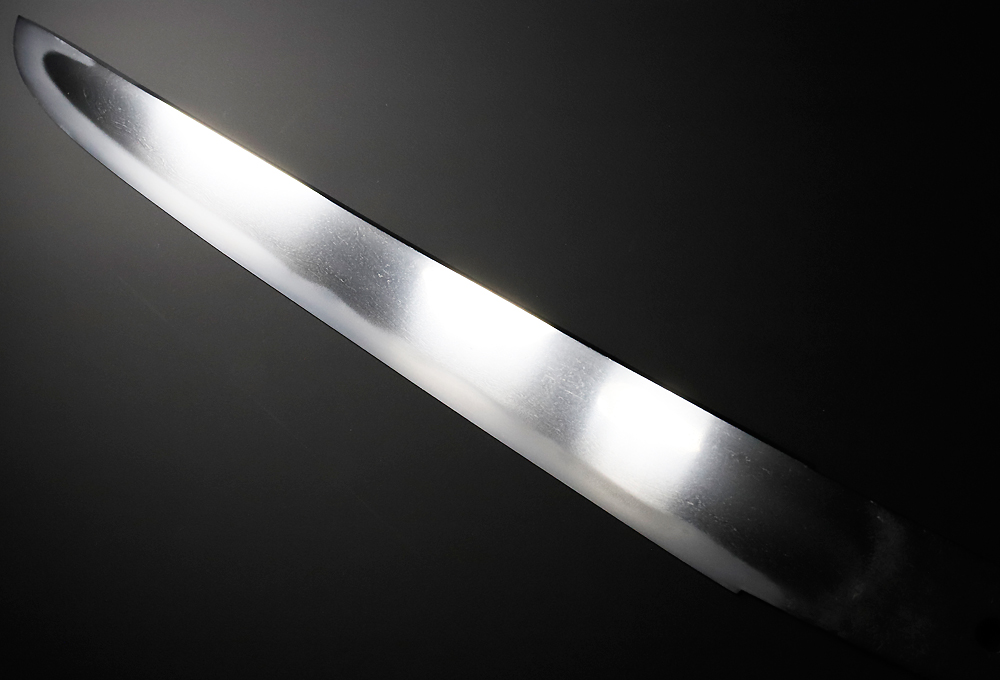
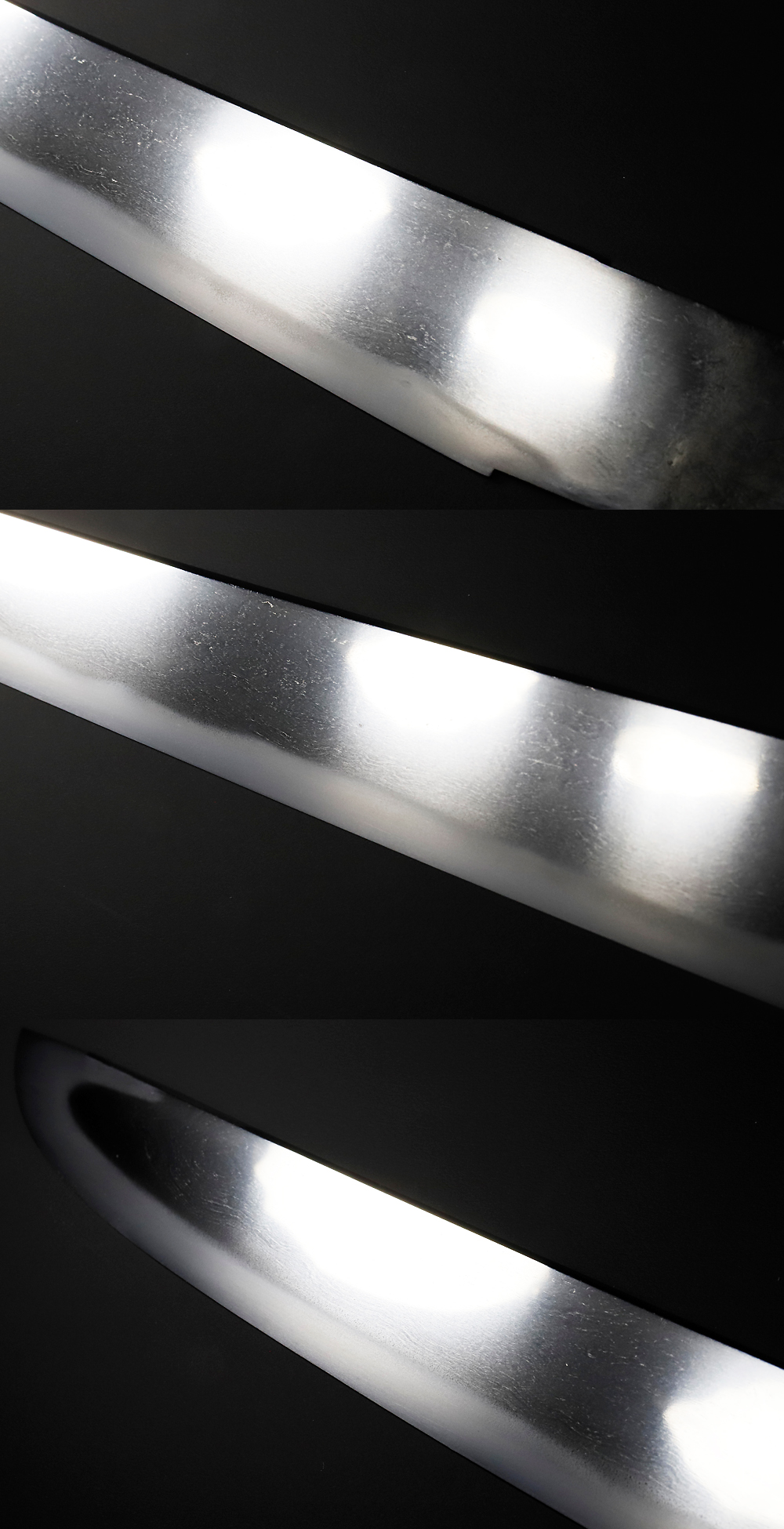
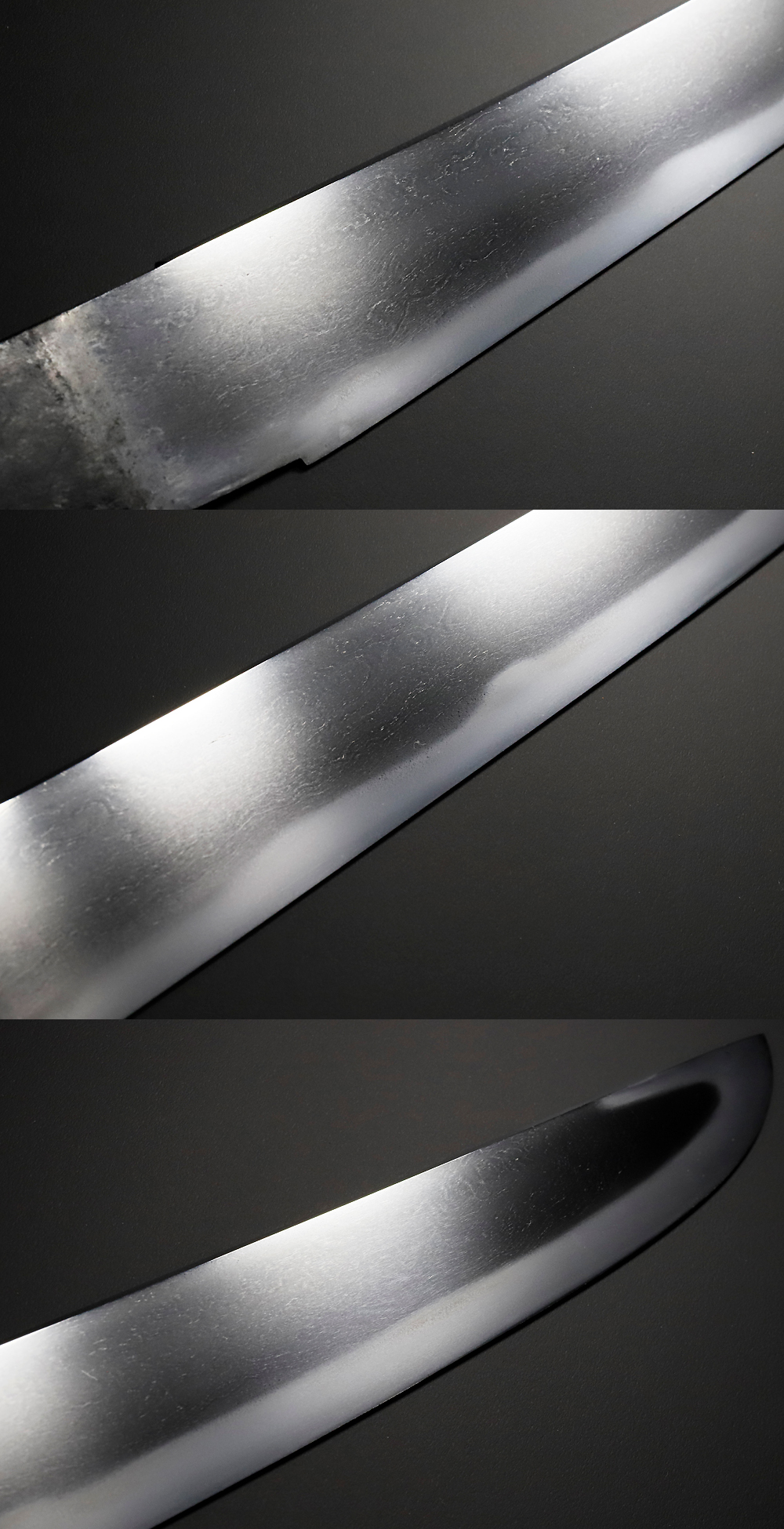
| Jihada (Metal pattern) | Ko-itame mixed with flowing masame, the grain standing slightly proud, with mokume mixed in along the mune side |
| Hamon (Temper line) | Sugu-notare mixed with gunome, with thick, abundant nie |
| Bōshi (Point / Tip) | Sugu, ending in a ko-maru and returning deeply |
| Nakago (Tang) | Ubu, finished with higaki yasurime and a kurijiri |
| Mekugiana (Rivet holes) | 1 |
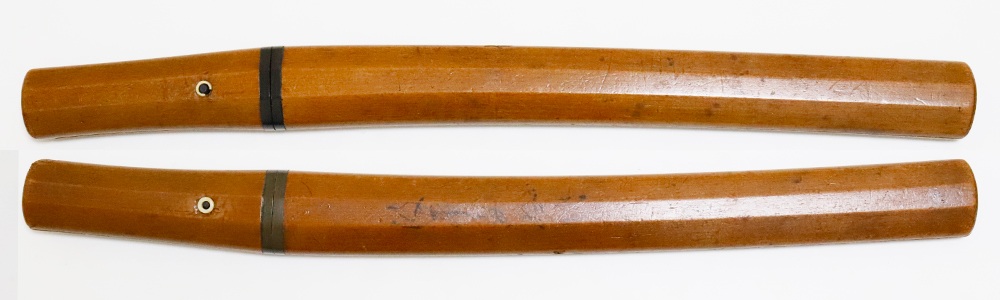
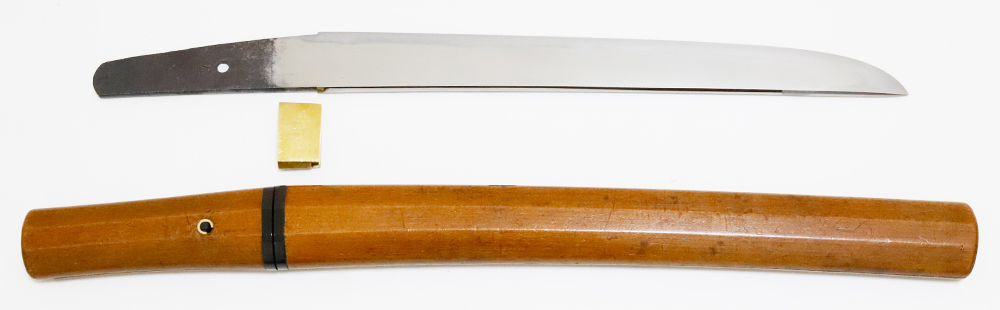
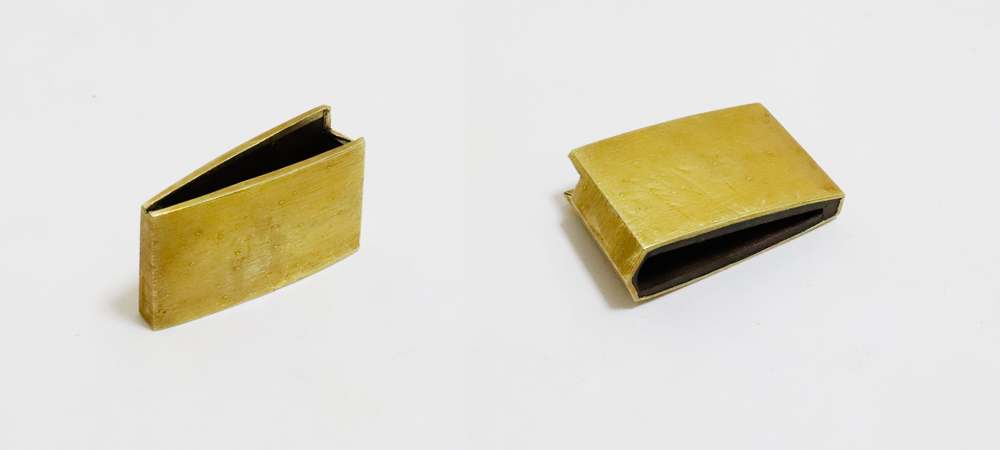
| Habaki | Copper-based, gold-foiled habaki with horizontal file marks |
Price |
SOLD |
| Yasuyoshi was the former name of the swordsmith later known as the 61st-generation Naminohira Yukiyasu. His personal name was Hashiguchi Kansuke, and he was the eldest son of Yasuyuki, the 60th-generation head of the direct Naminohira lineage. He later succeeded to the family name and changed his smith name to Yukiyasu, becoming the 61st-generation Naminohira Yukiyasu. A sword signed "Yukiyasu" and dated 1841, when he was sixty-seven years old, is known. This blade displays strong characteristics of the Yamato tradition, with a stout and powerful sugata. The hamon is a sugu-notare mixed with gunome, with thick, abundant nie and a deep nioiguchi. The jihada consists of ko-itame mixed with flowing masame, the grain standing slightly proud, with masame appearing along the ha side and mokume mixed in along the mune side. It is a well-executed work of high quality. Signed with his former name, "Yasuyoshi," this sword is of considerable documentary importance, as examples bearing this signature are extremely rare. It was registered in Miyazaki Prefecture in 1951 under what collectors commonly refer to as a daimyo registration, suggesting that it was most likely preserved in the collection of a distinguished family. It passed the NBTHK Tokubetsu Hozon Token examination in December 2025. |
 Search