| Product No. WA-0882 津田越前守助廣 | |
|---|---|
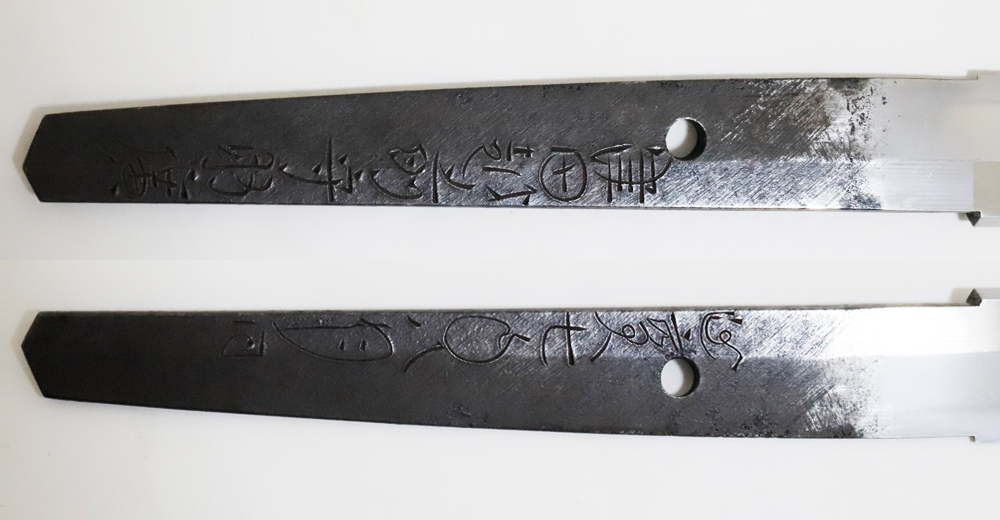
| Mei |
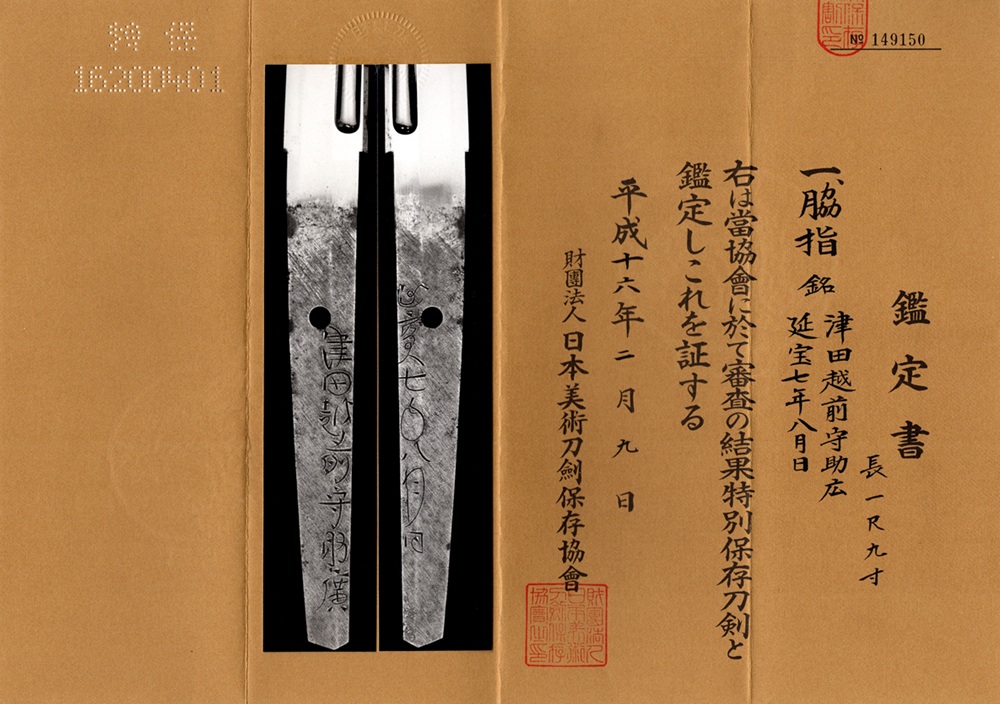
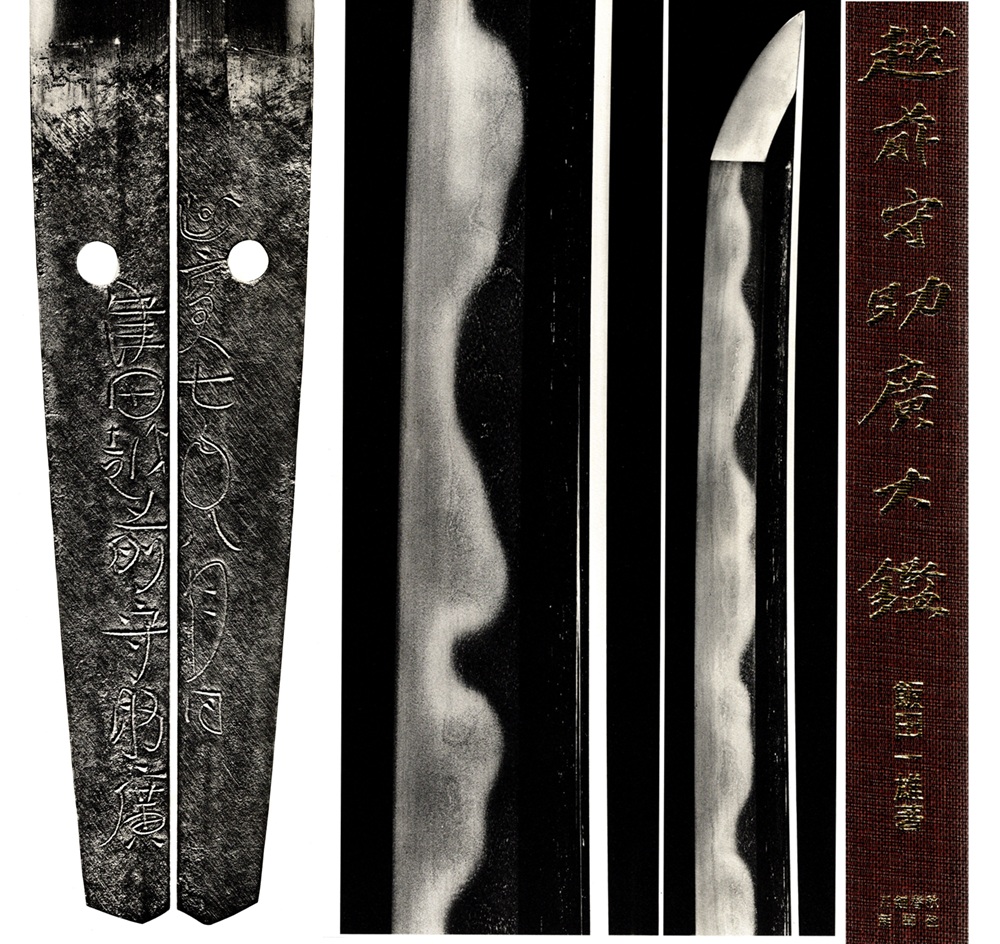
Tsuda Echizen no Kami Sukehiro Back: A day in August, Enpo 7 (1679) |
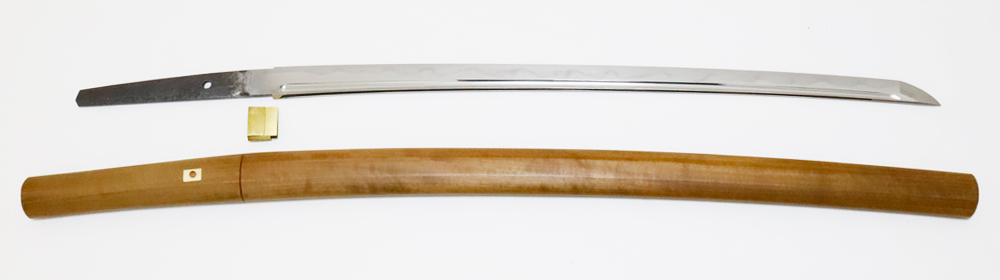
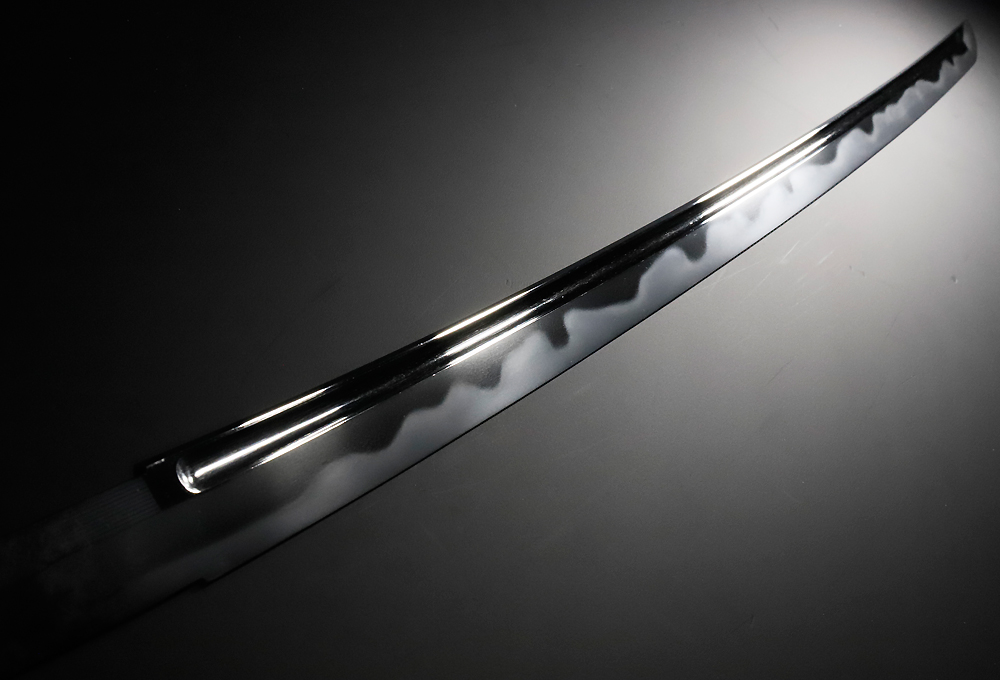
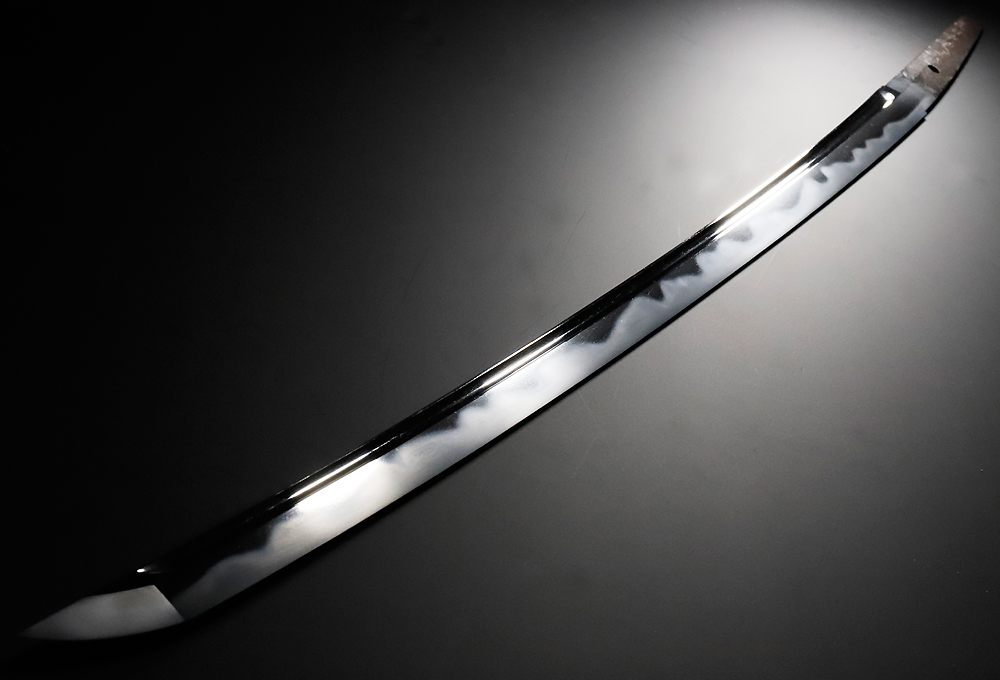
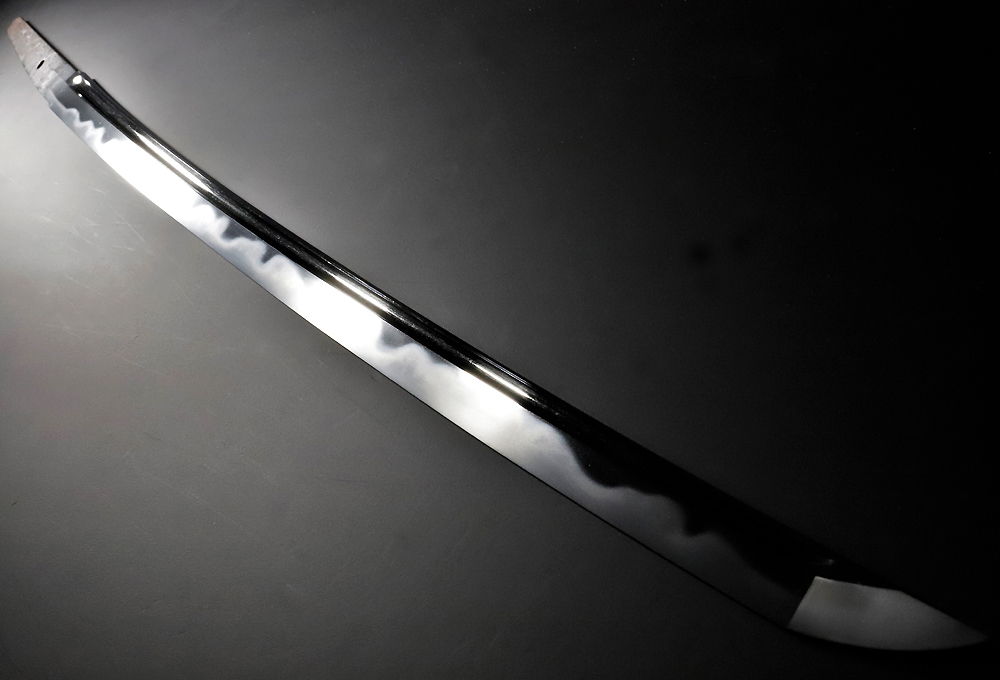
| Shape | Shinogi-zukuri, iori-mune construction. The blade has standard width and a relatively thin kasane. The shinogi is high, with shallow sori and a medium kissaki |
| Region | Settsu Province |
| Era | Early Edo period |
| Length |
57.6 cm 22.7 in |
| Sori (curvature) |
1.1 cm 0.4 in |
| Motohaba |
3 cm 1.2 in |
| Sakihaba |
2 cm 0.8 in |
| Munekasane |
0.7 cm 0.3 in |
| Status | Tokubetsu Hozon Token |
| Certification Date | February 09, 2004 |
| Registration Authority | Tokyo |
| Registration Date | April 26, 1951 |
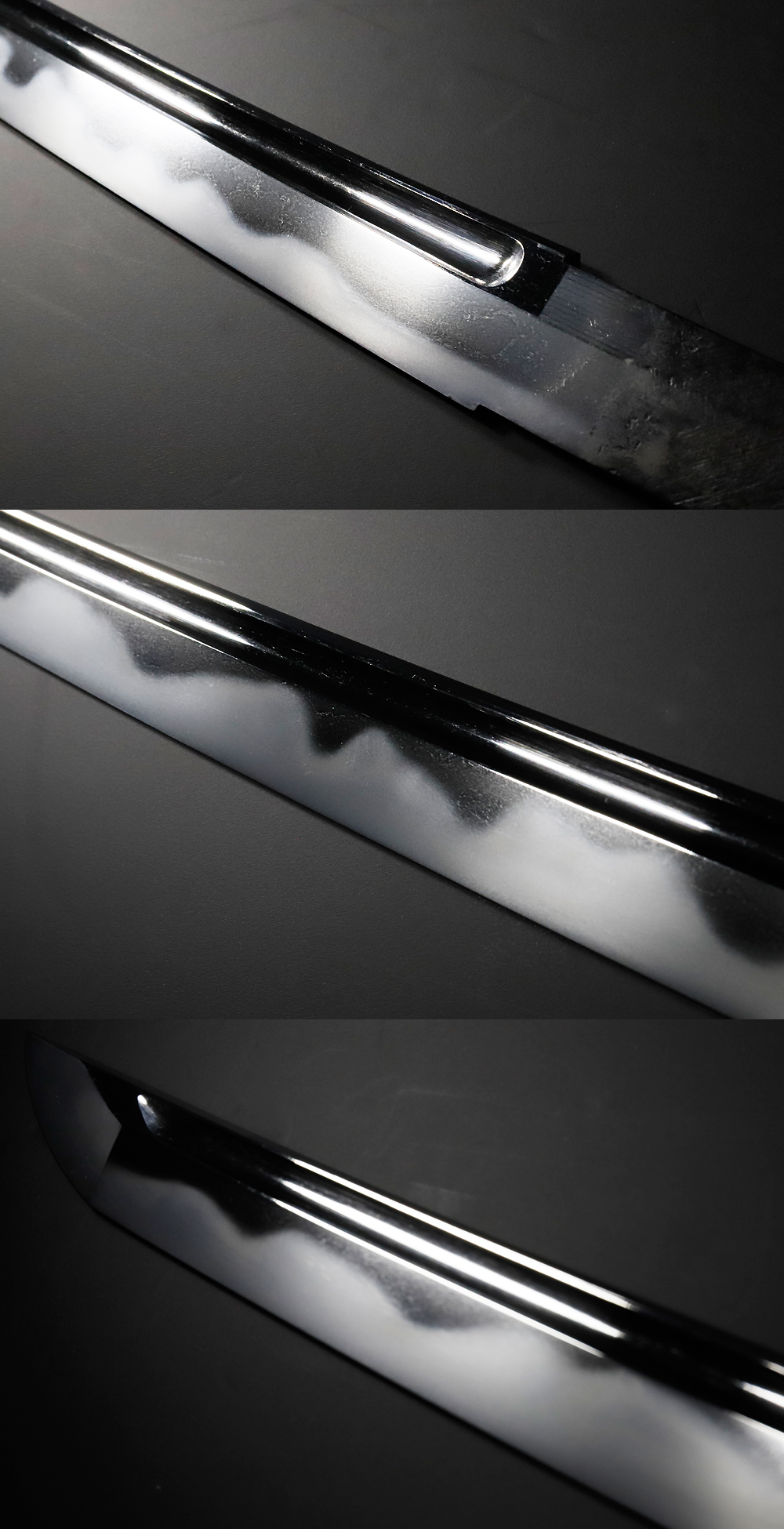
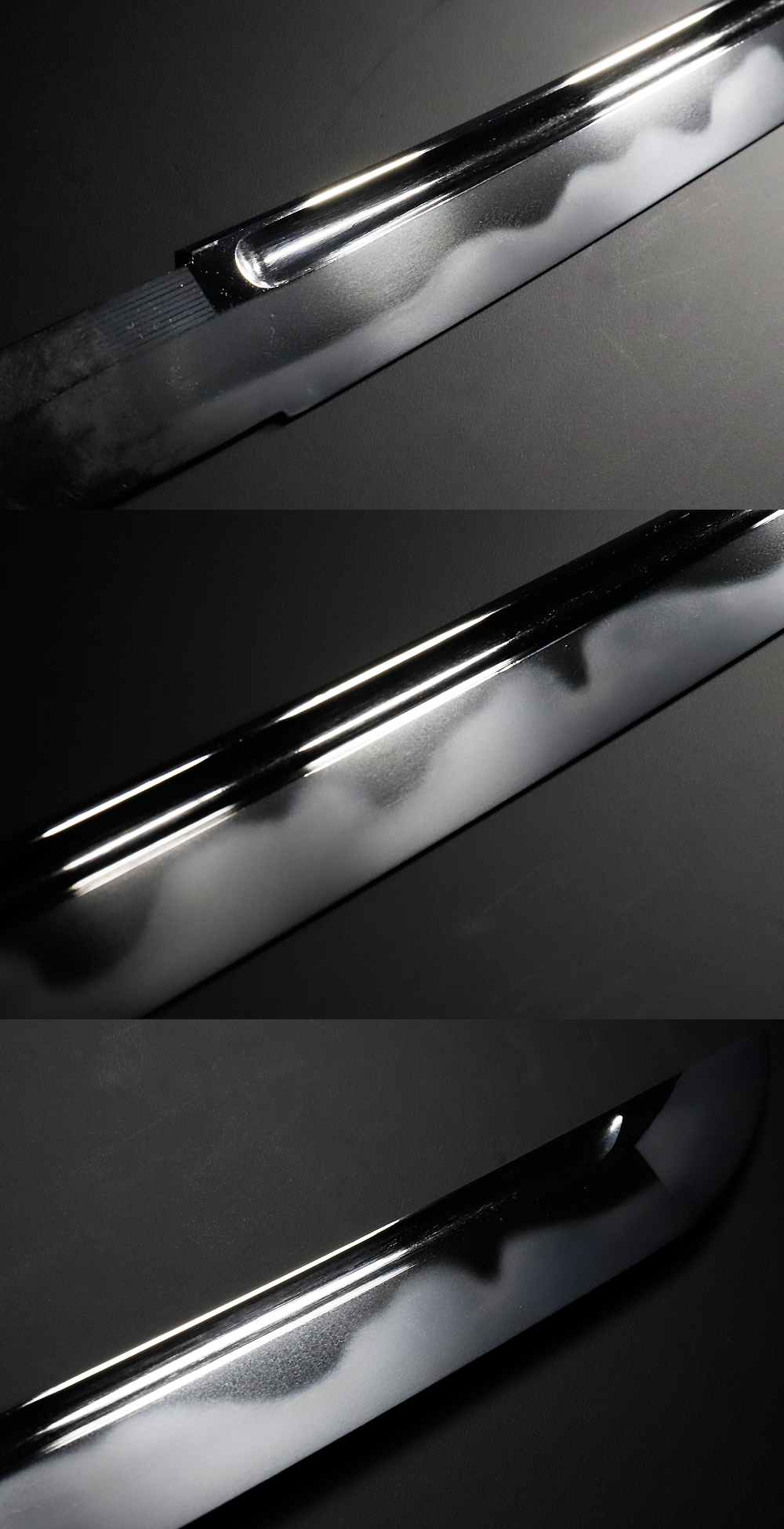
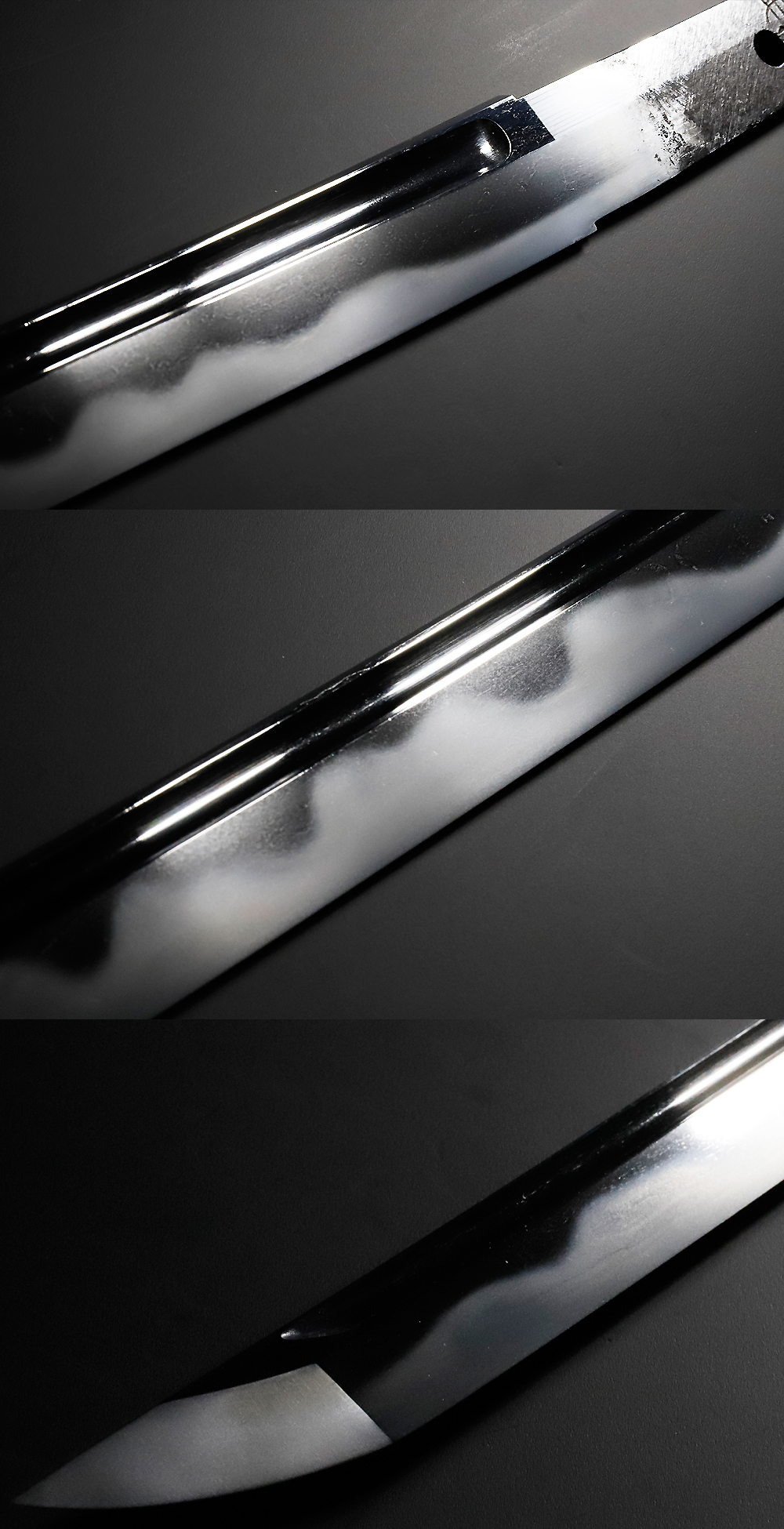
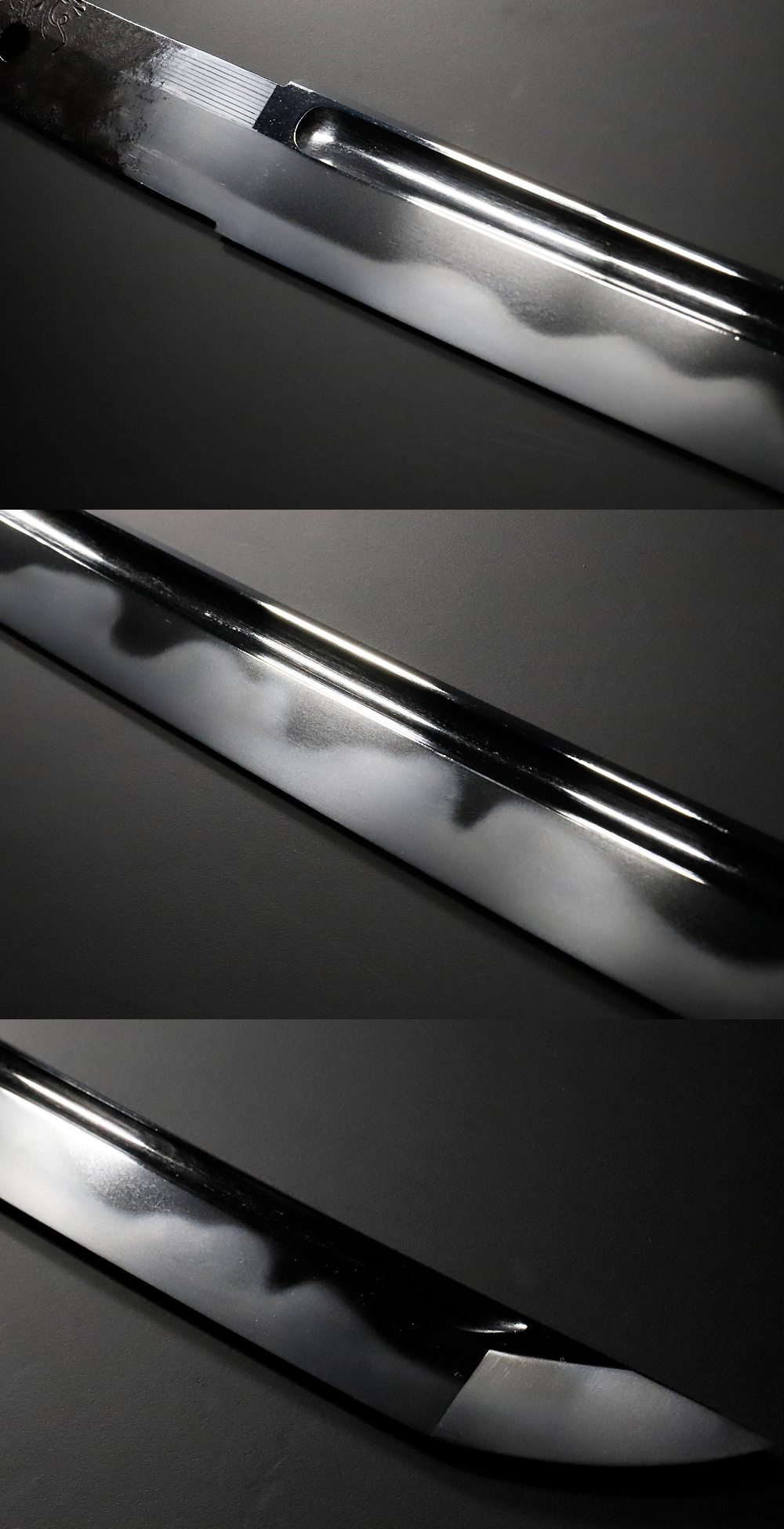
| Jihada (Metal pattern) | The ko-itame hada is tightly forged, with fine and thick ji-nie well applied |
| Hamon (Temper line) | The hamon is in a tōran-midare pattern with a wide yakihaba. Thick ashi are present, the nioi is deep, and fine ko-nie is well applied. The nioiguchi is bright and clear, with kinsuji appearing throughout |
| Engraving | Bo-hi grooves on both sides, terminating in maru-dome |
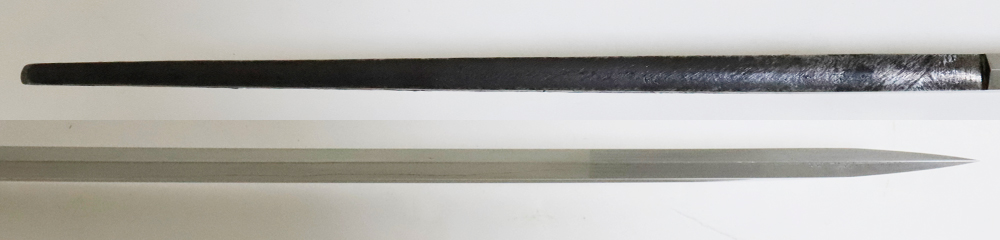
| Bōshi (Point / Tip) | The boshi is ko-maru, turning back slightly long, with kinsuji appearing within |
| Nakago (Tang) | Ubu. The yasurime are sujikai, with kesho-yasuri in the kōdzutsumi style applied |
| Mekugiana (Rivet holes) | 1 |
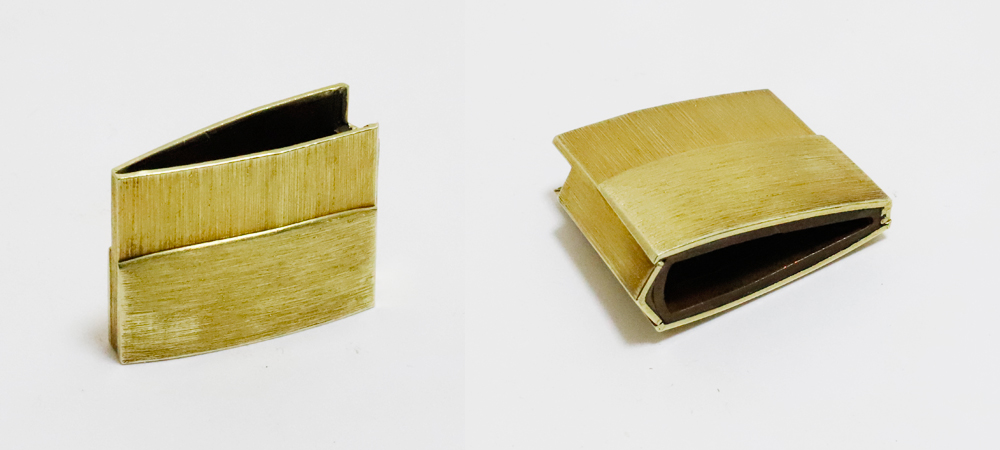
| Habaki | Double habaki with a plain copper ground and gold-foiled, file-marked outer covering |
Price |
SOLD |
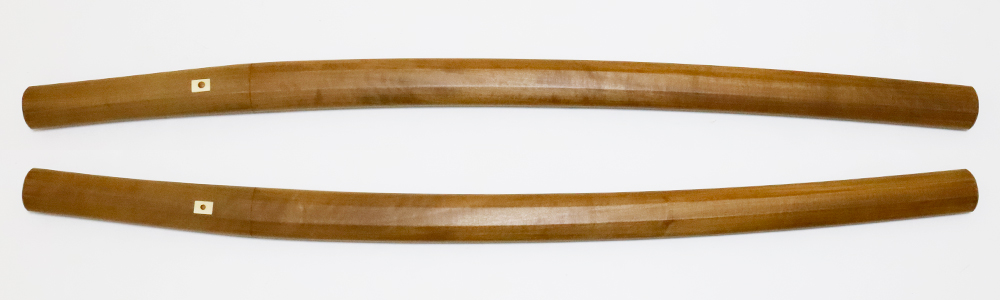
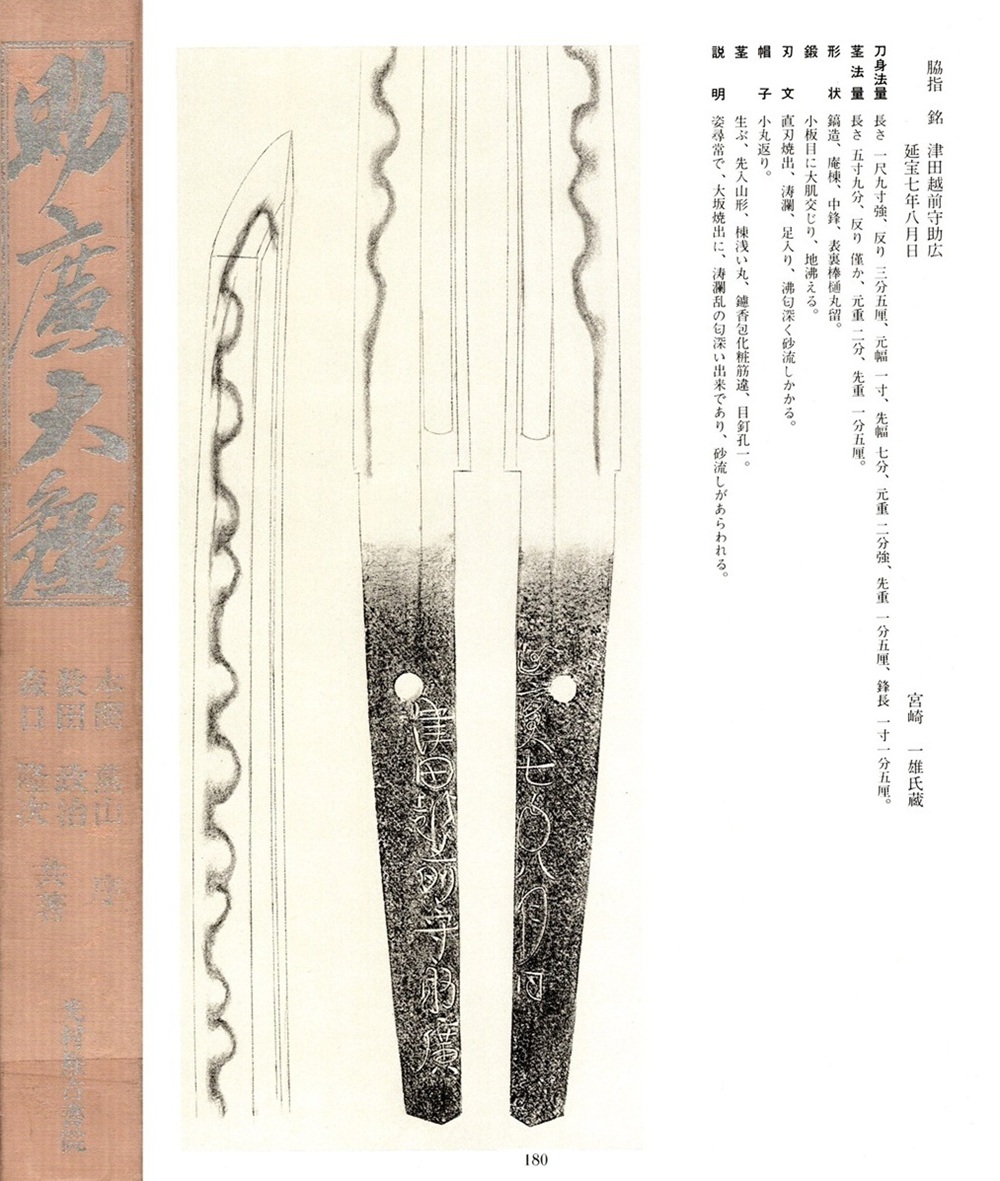
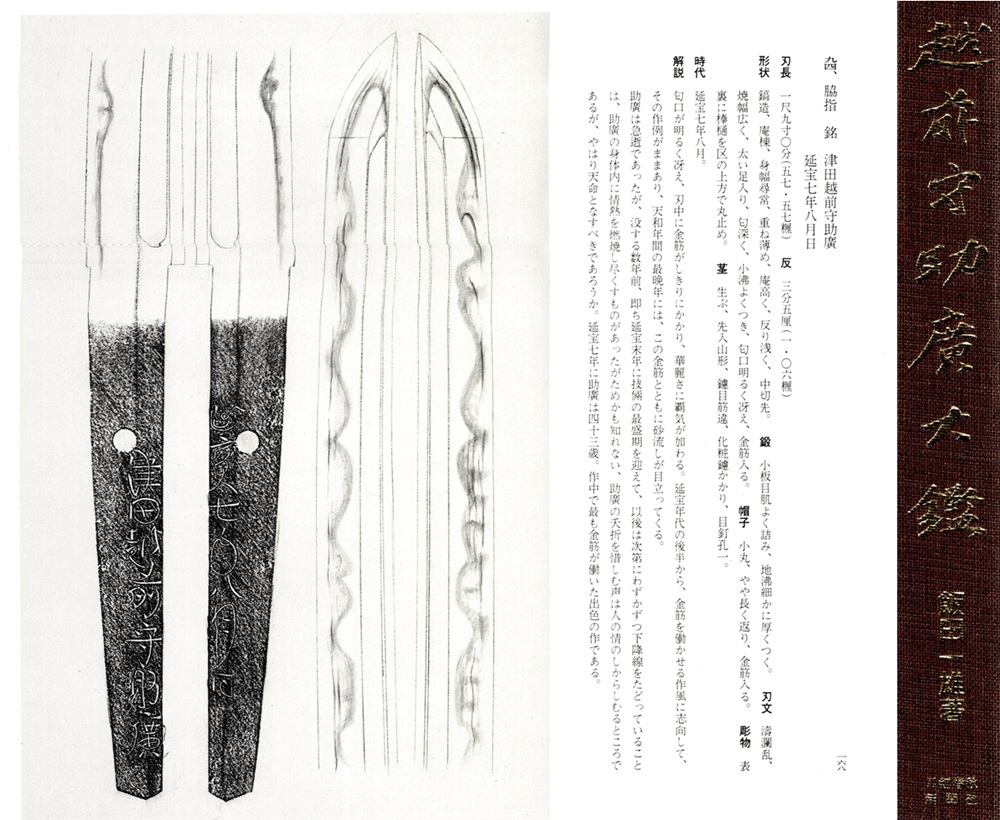
| This wakizashi is a maru-tsuda work dated Enpo 7 (1679) by Echizen no Kami Sukehiro. It is an outstanding masterpiece featured in the opening photographs of “Echizen no Kami Sukehiro Taikan” by Kazuo Iida, and is also illustrated in “Sukehiro Taikan” published by Mitsumura Suiko Shoin.The following is a summary based on the commentary in “Echizen no Kami Sukehiro Taikan”:“The nioiguchi is bright and exceptionally clear, while frequent kinsuji appear throughout the hamon, adding powerful vitality to its magnificent beauty. From the latter half of the Enpo era, Sukehiro increasingly pursued a style emphasizing active kinsuji, and several examples from this period remain. In his final years during the Tenna era, sunagashi also became more noticeable together with these kinsuji activities.Sukehiro passed away suddenly in Tenna 2 (1682) at the age of 46. A few years before his death, around the end of the Enpo era, he reached the peak of his technical skill, after which his workmanship gradually declined little by little. Perhaps Sukehiro burned through the full intensity of his passion within himself. Many lament his early death, yet it may simply have been his destiny.”In Enpo 7, Sukehiro was 43 years old. This blade is considered one of his finest works, showing the most remarkable kinsuji activity among his extant swords.The wakizashi passed the NBTHK Tokubetsu Hozon Token shinsa in 2004. |


 Search