| Product No. WA-0866 兼綱 | |
|---|---|
| Mei |
Kanetsuna Back: -- |
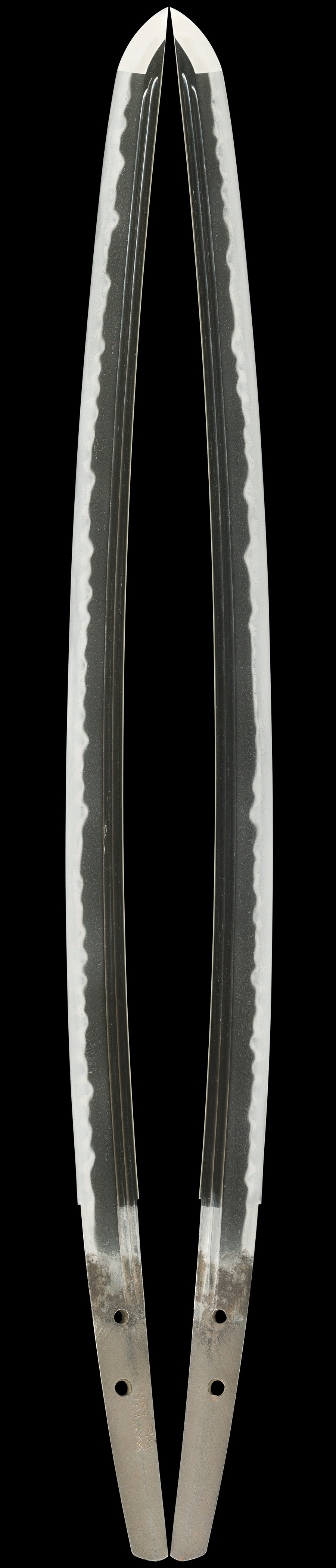
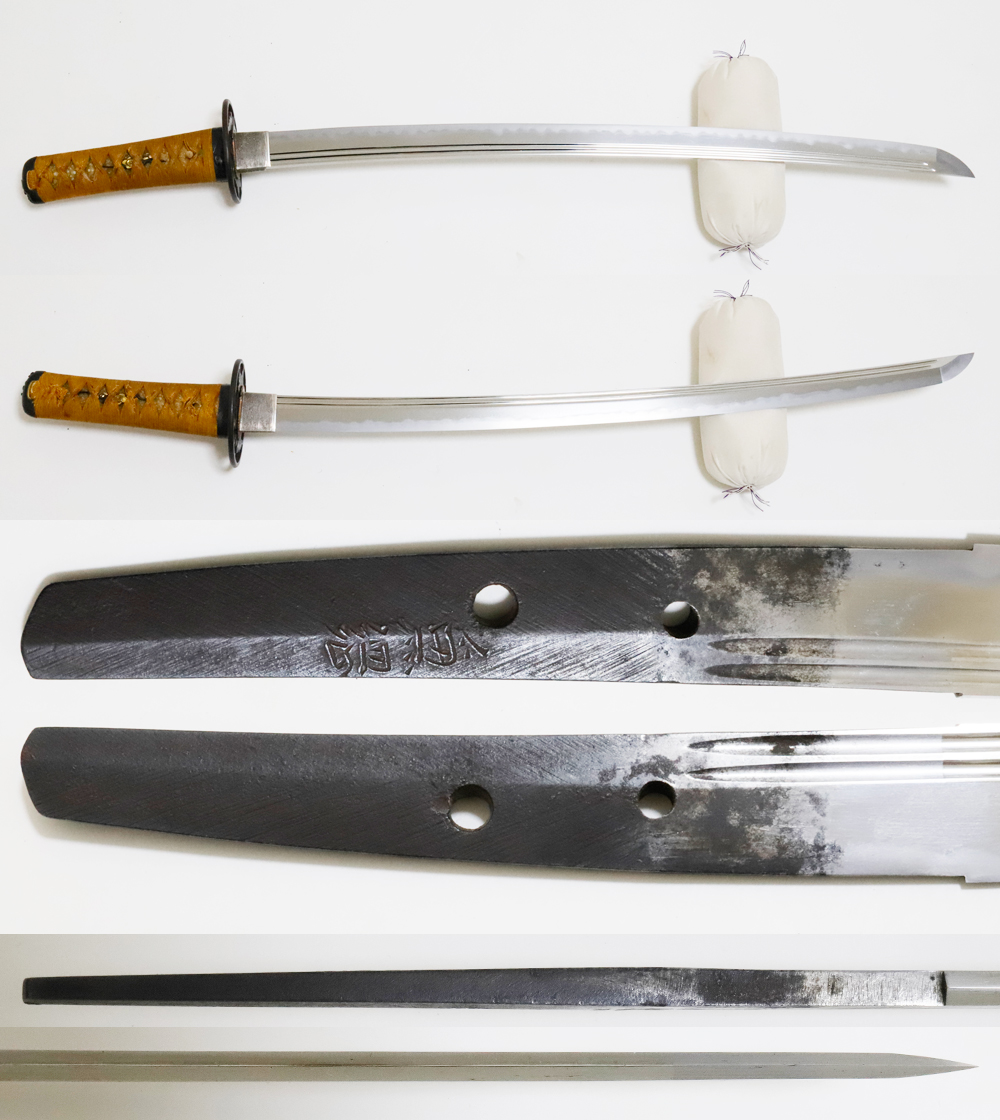
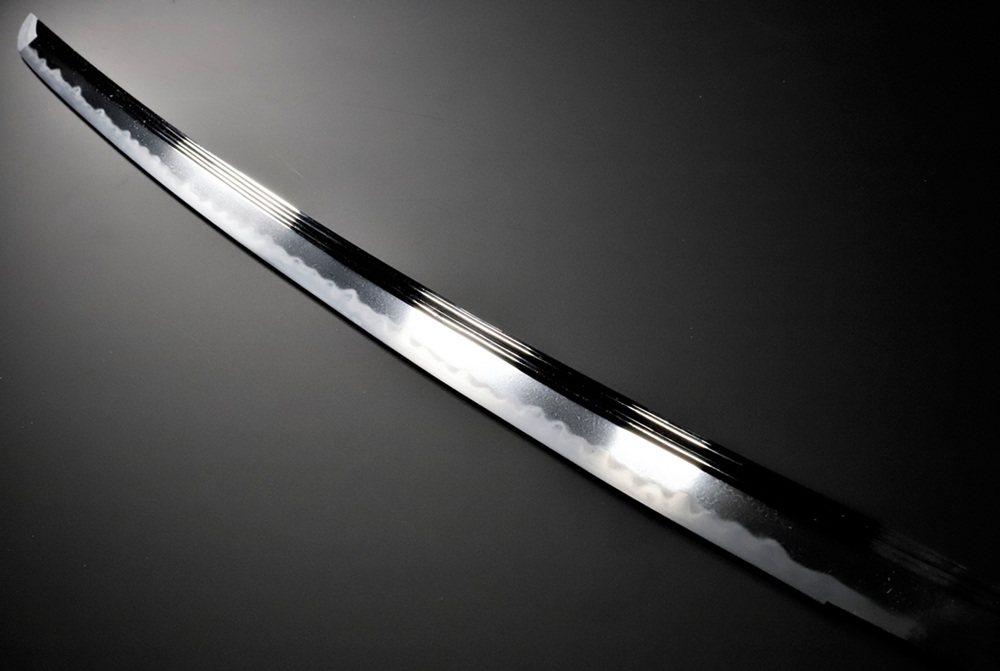
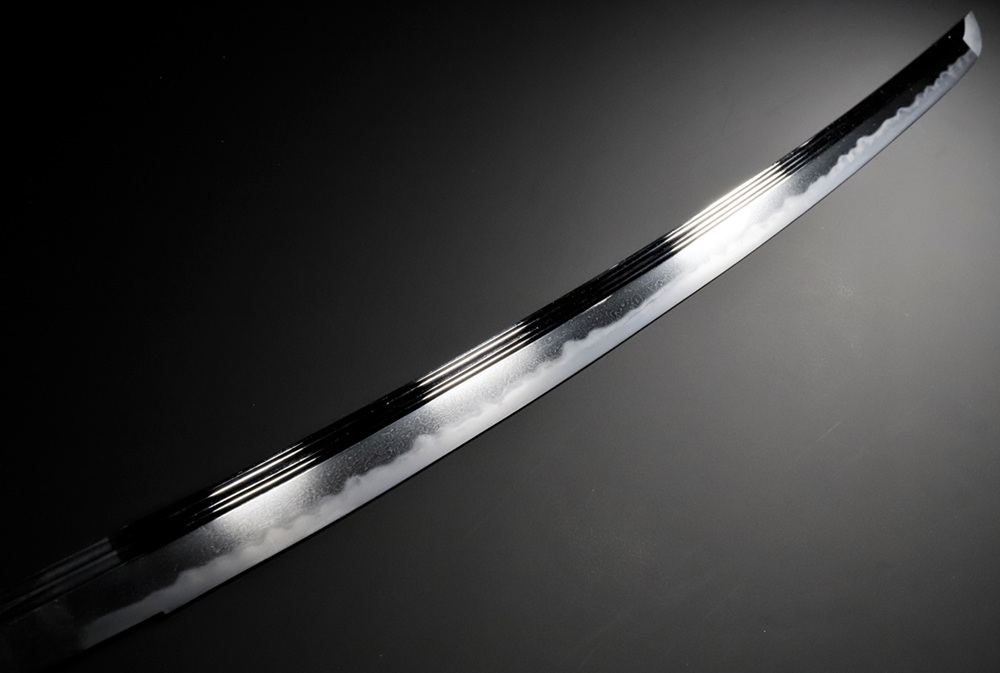
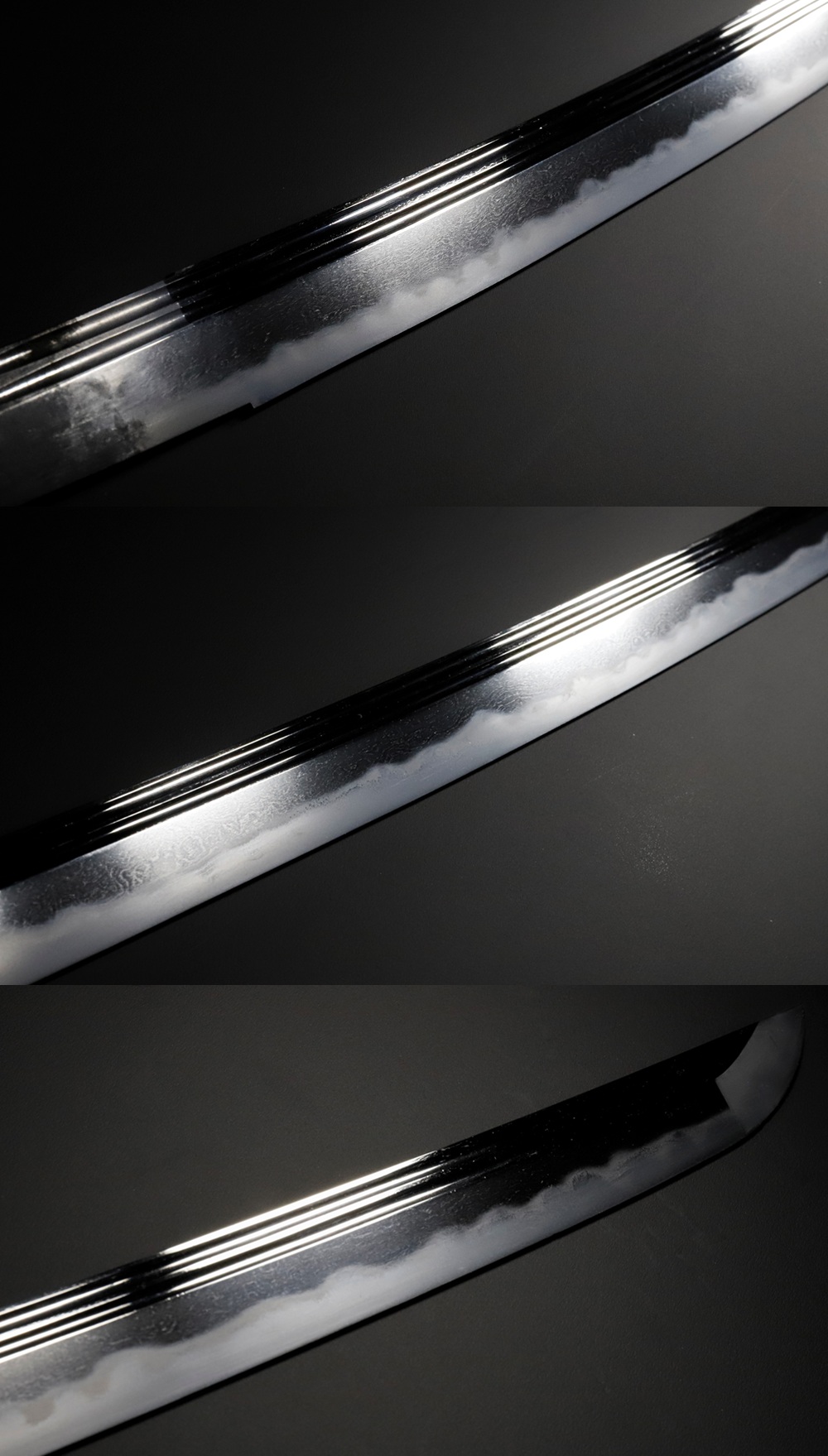
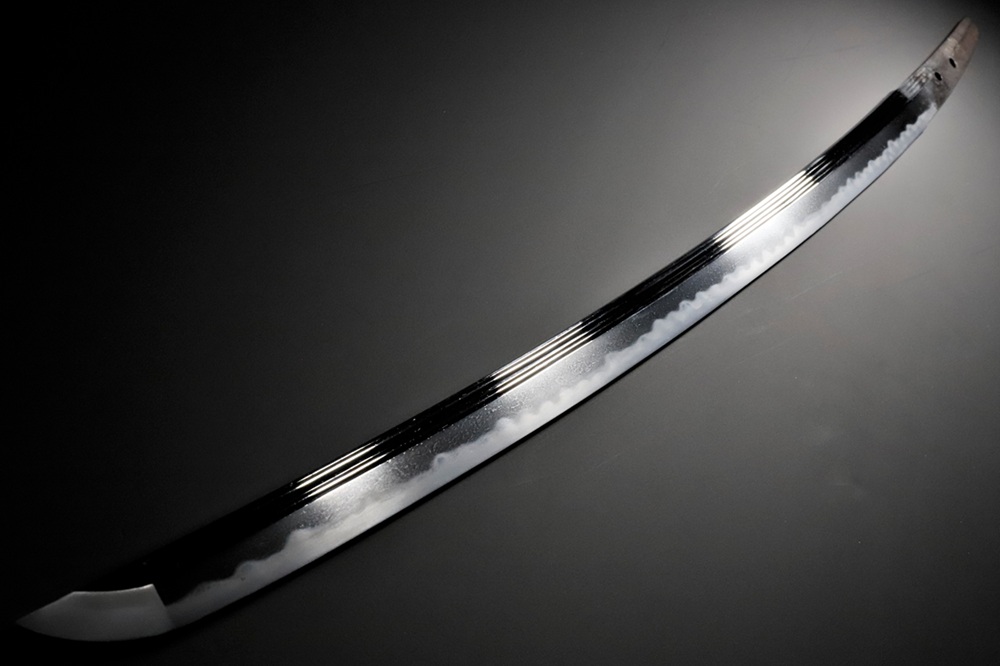
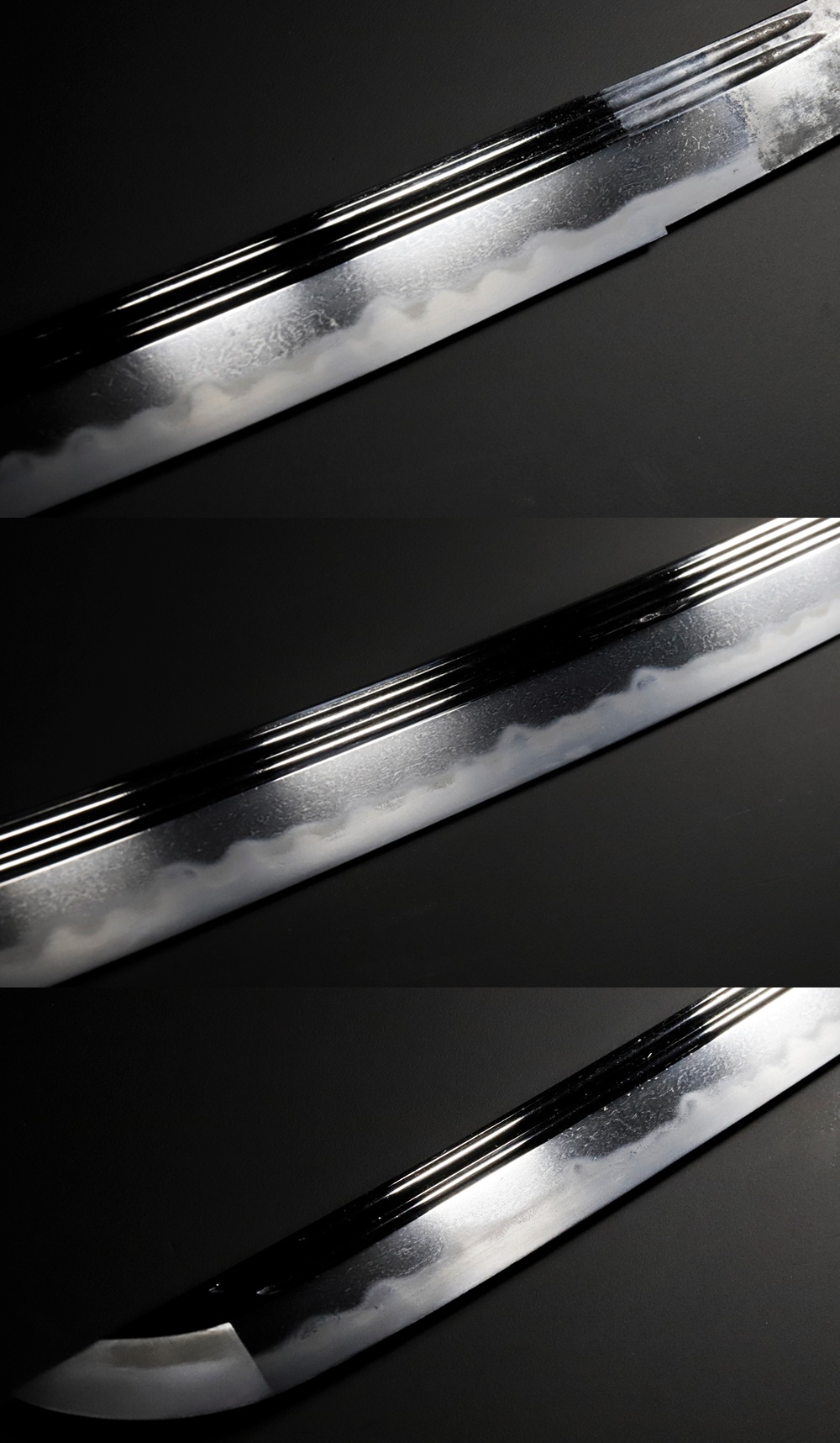
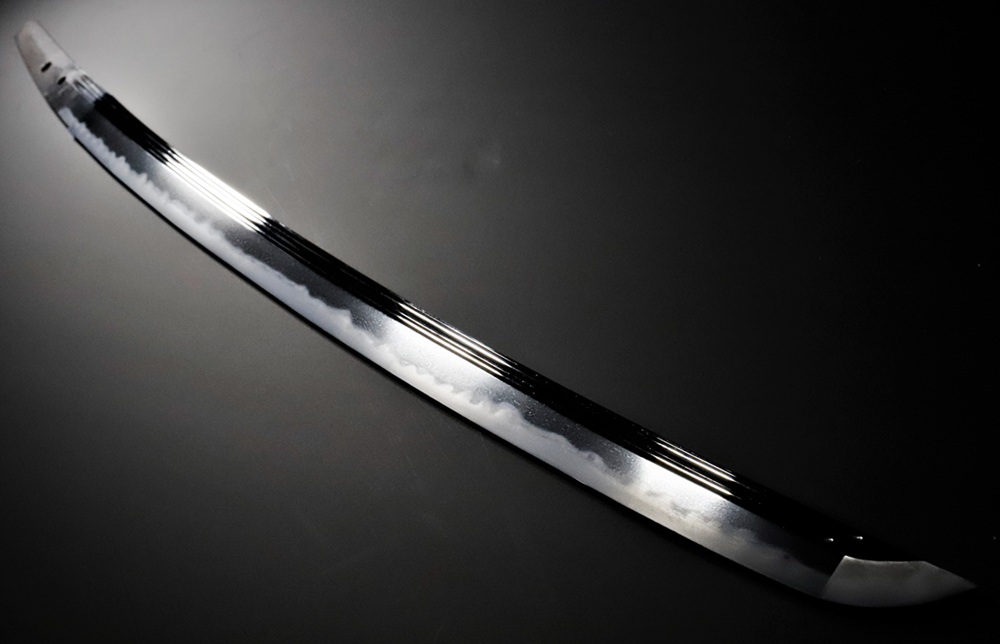
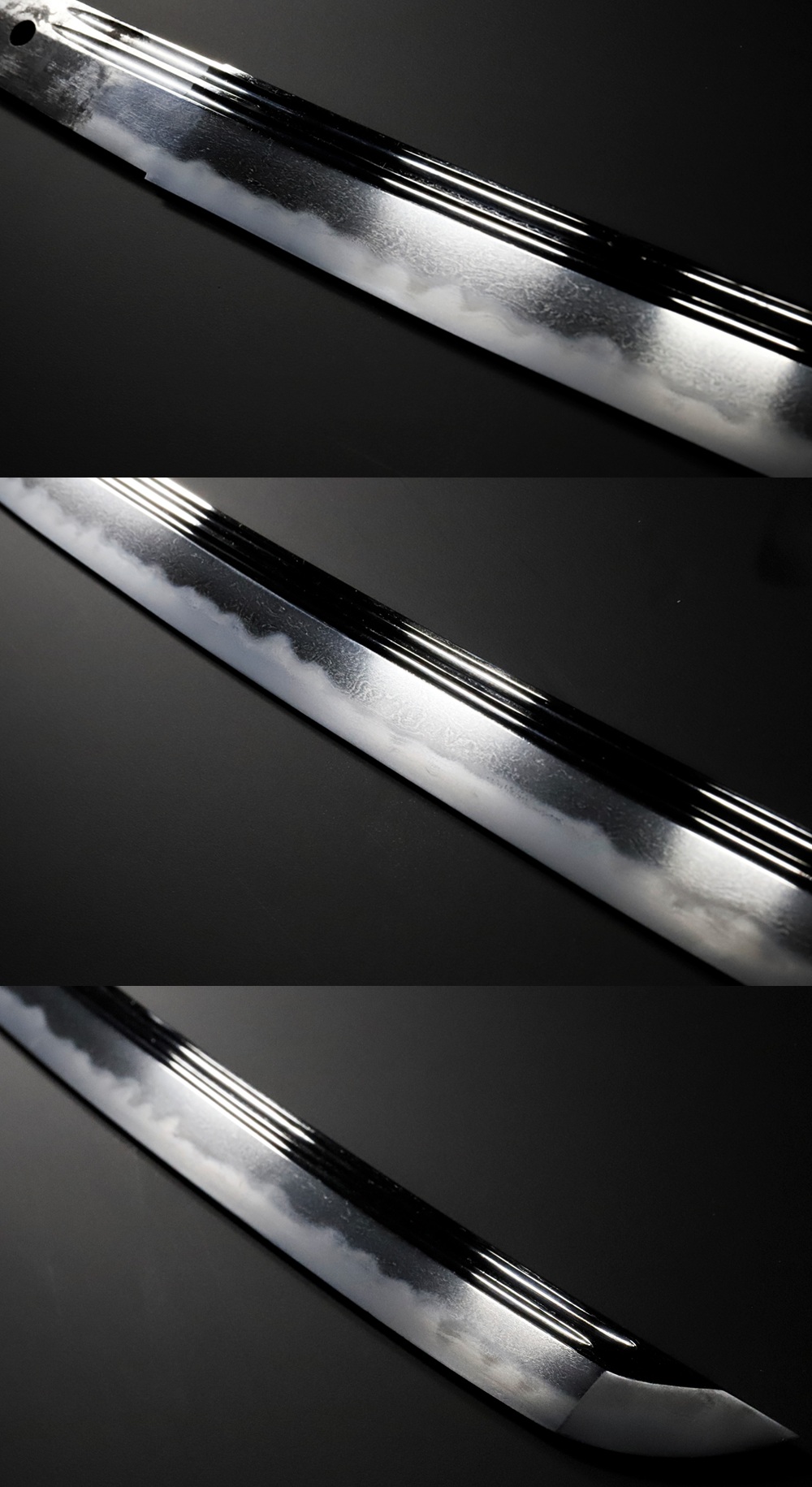
| Shape | In shinogi-zukuri with an iori-mune and chū-kissaki, showing a clear and refreshing sugata with well-balanced proportions of mihaba, kasane, and sori. |
| Region | Mino Province |
| Era | Early Edo Period |
| Length |
48.2 cm 19.0 in |
| Sori (curvature) |
1.2 cm 0.5 in |
| Motohaba |
2.5 cm 1.0 in |
| Sakihaba |
1.9 cm 0.7 in |
| Munekasane |
0.6 cm 0.2 in |
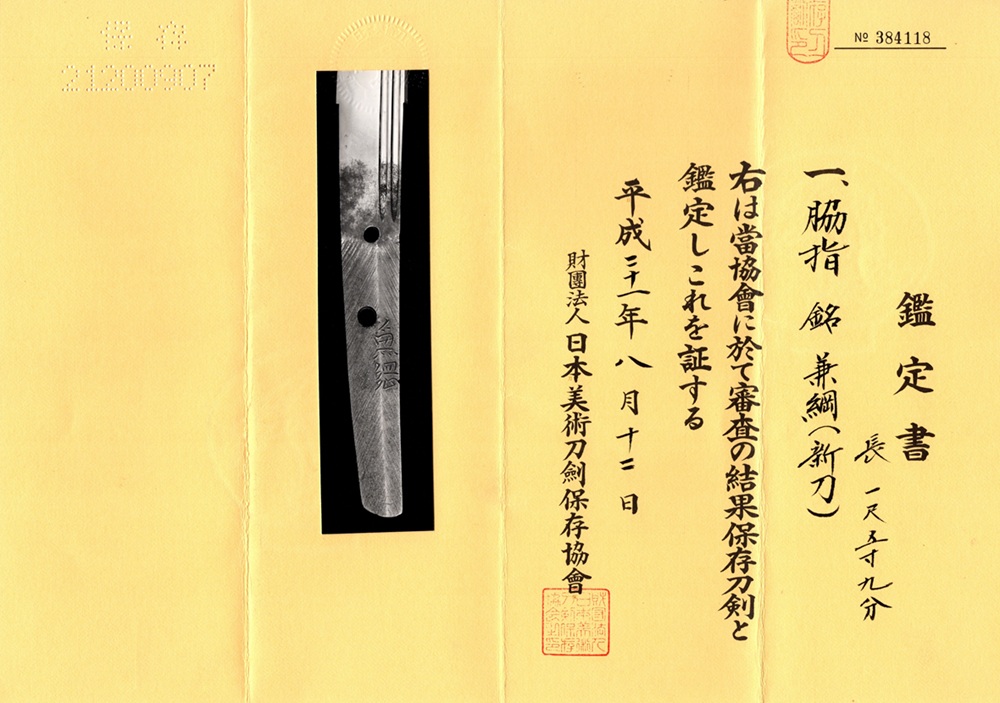
| Status | Hozon Token |
| Certification Date | August 12, 2009 |
| Registration Authority | Saitama Prefecture |
| Registration Date | November 08, 2012 |
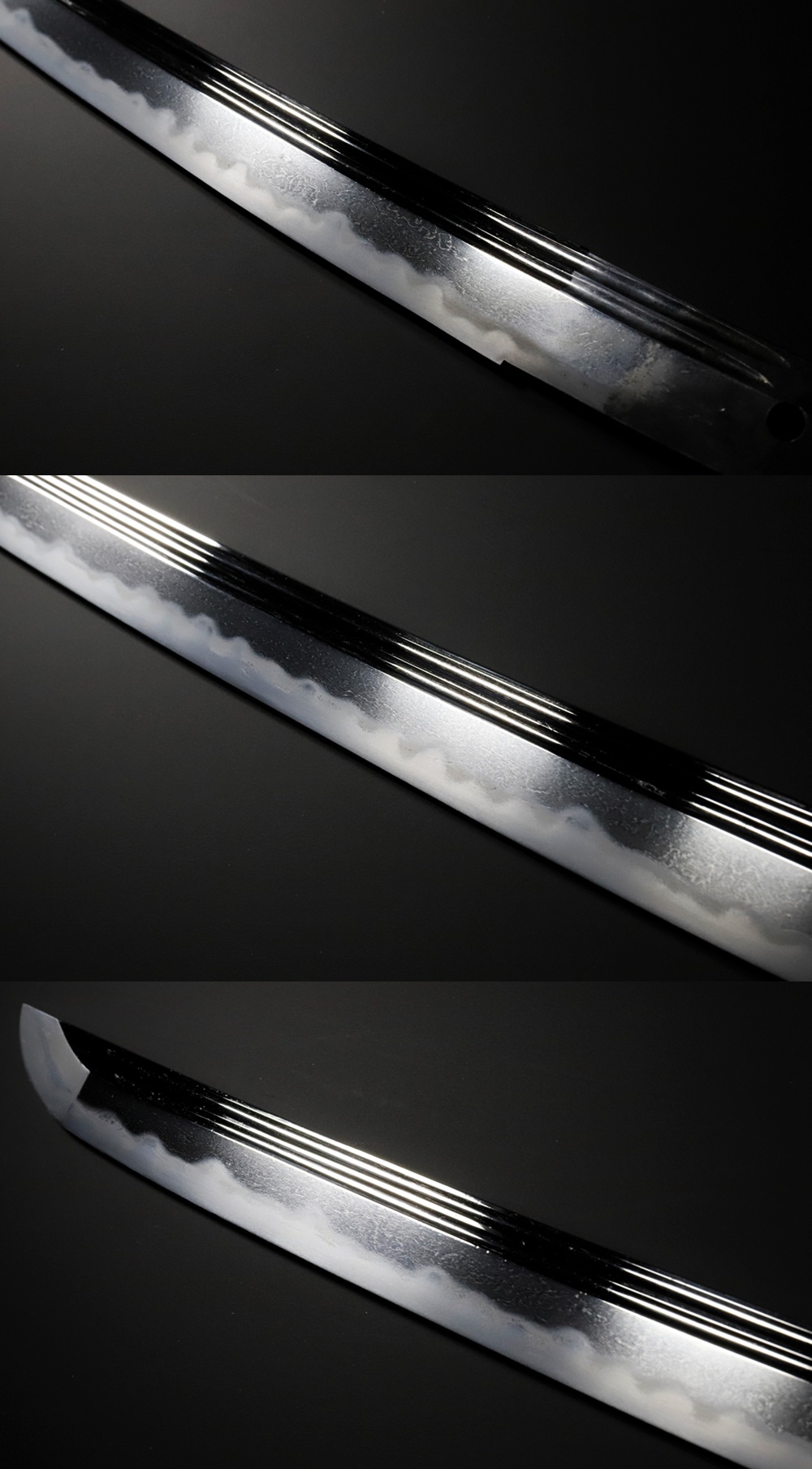
| Jihada (Metal pattern) | Itame hada mixed with mokume, with ji-nie clearly present |
| Hamon (Temper line) | A gunome-midare hamon with rounded peaks, featuring sunagashi activity |
| Engraving | Futasuji-hi on both sides |
| Bōshi (Point / Tip) | The boshi on the omote turns back straight with a slightly hakikake tendency, while on the ura it returns in a Jizō-style |
| Nakago (Tang) | Slightly suriage, with takanoha file marks on the tang |
| Mekugiana (Rivet holes) | 2 An ubu mekugi-ana at the lower position |
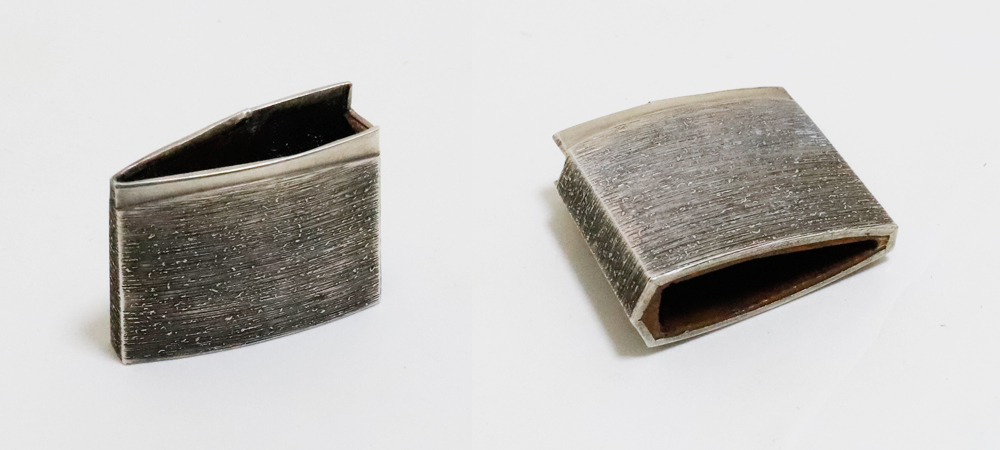
| Habaki | Solid silver habaki with full-filed finish |
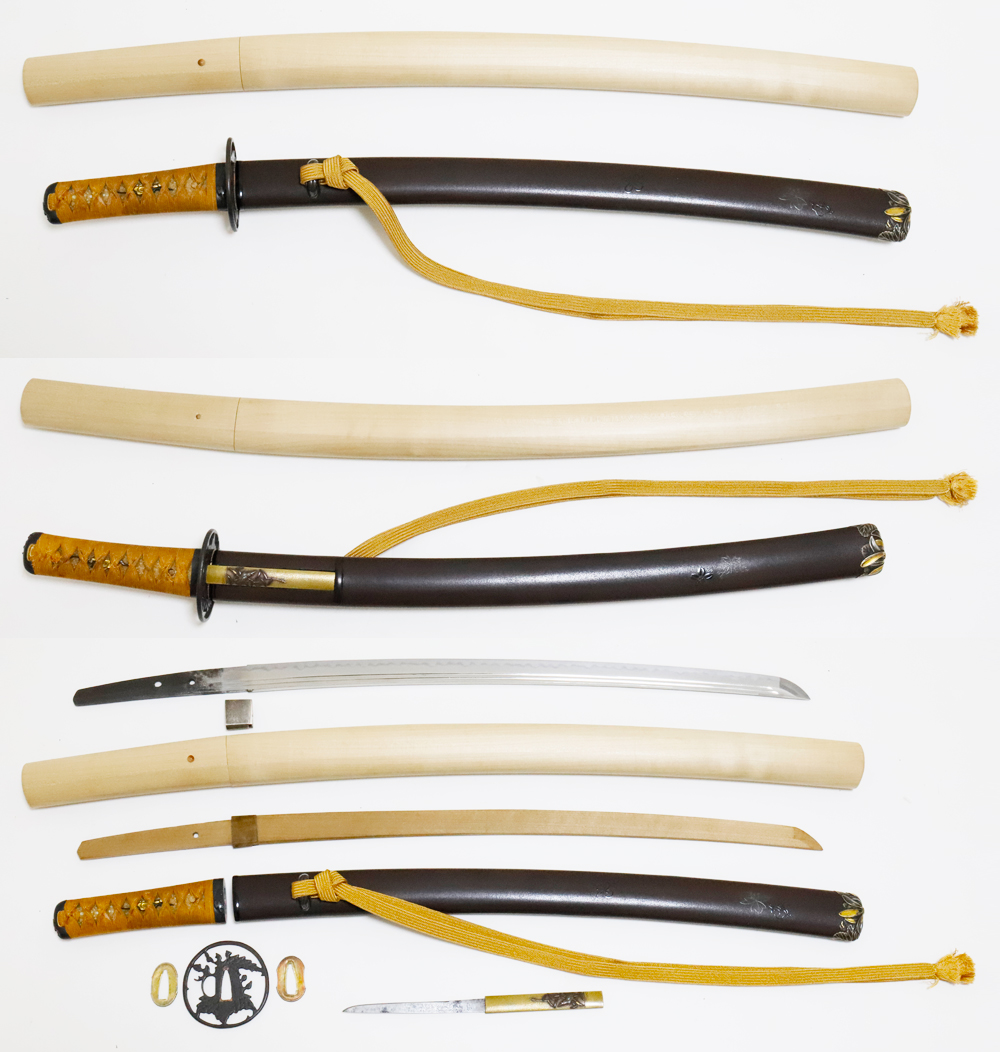
| Mountings | Koshirae-tsuki |
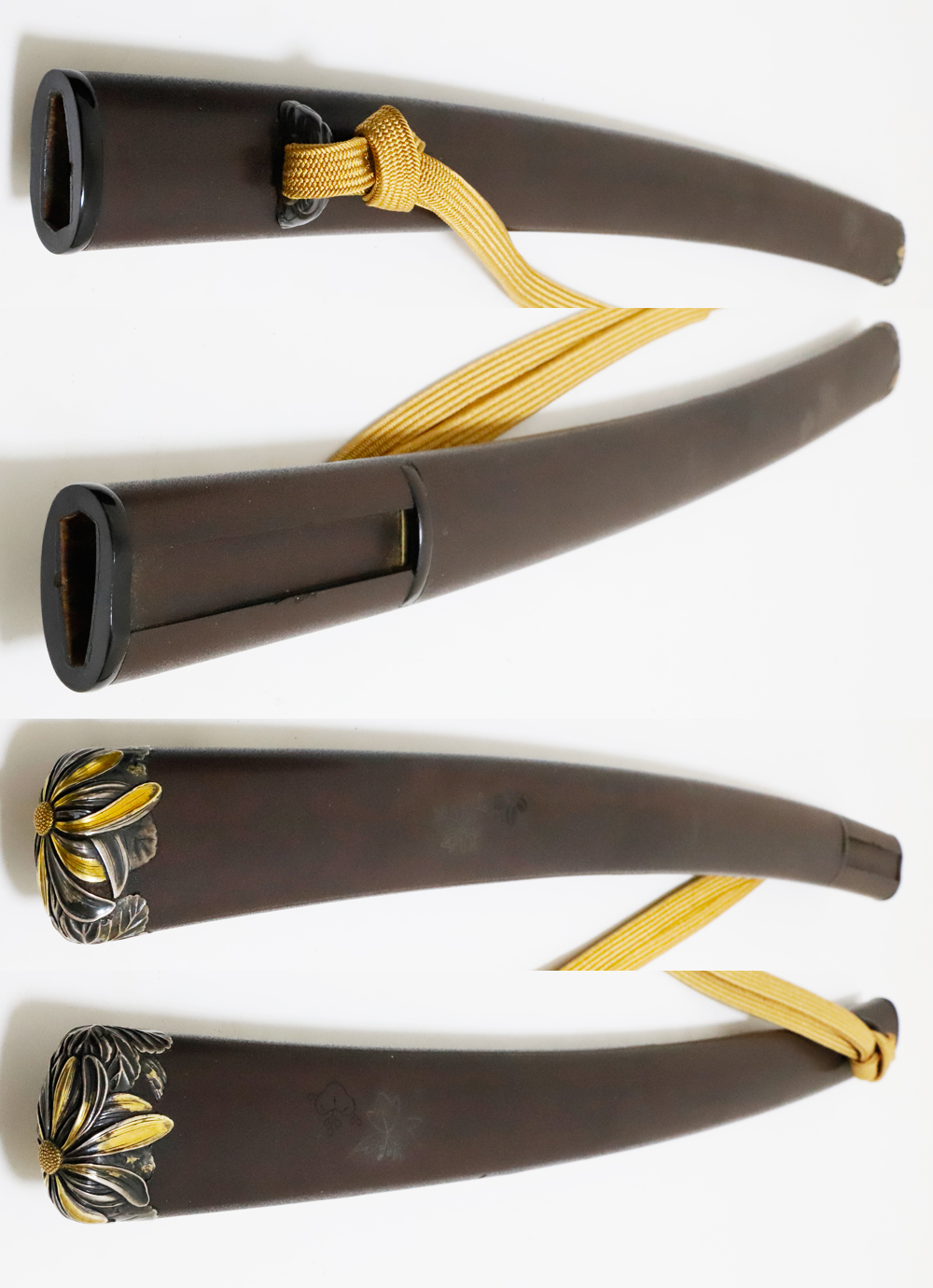
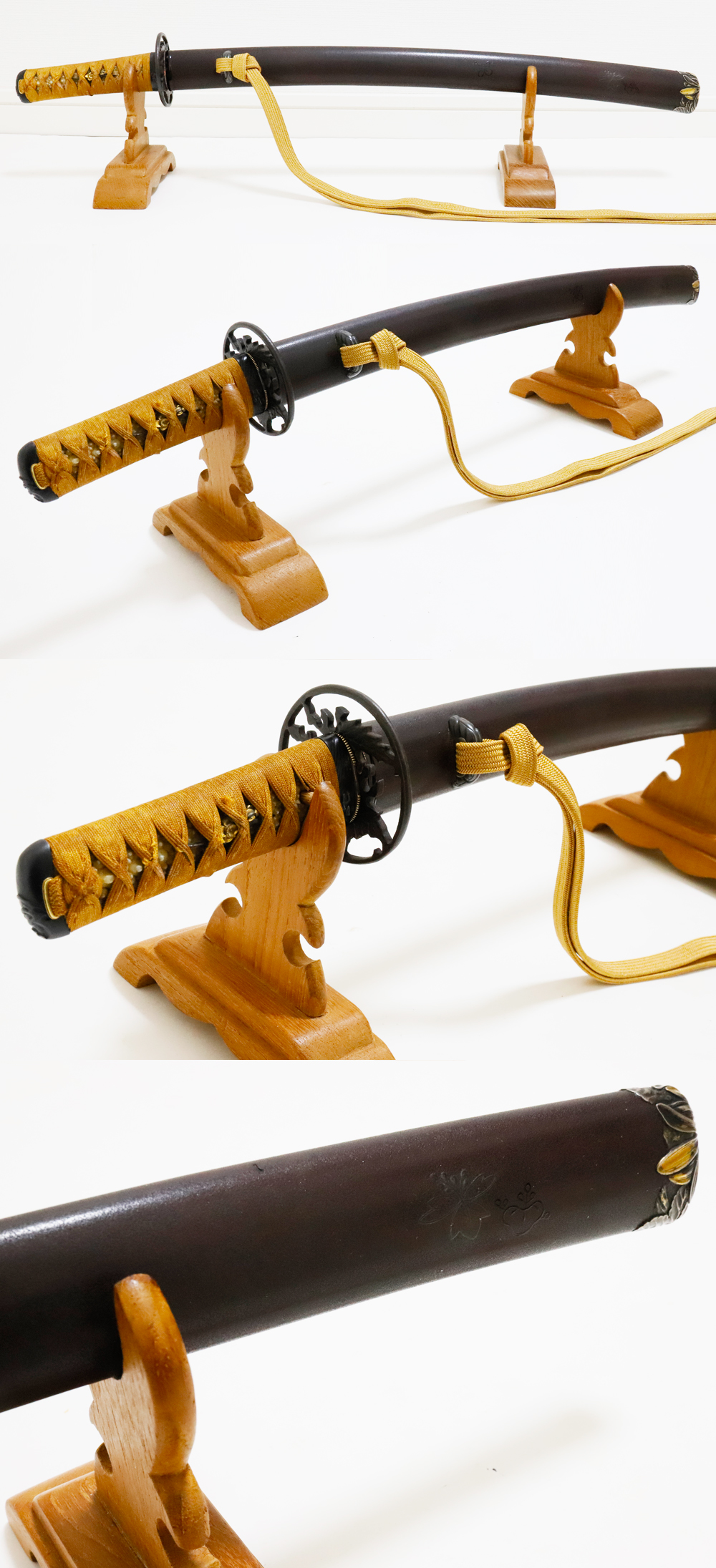
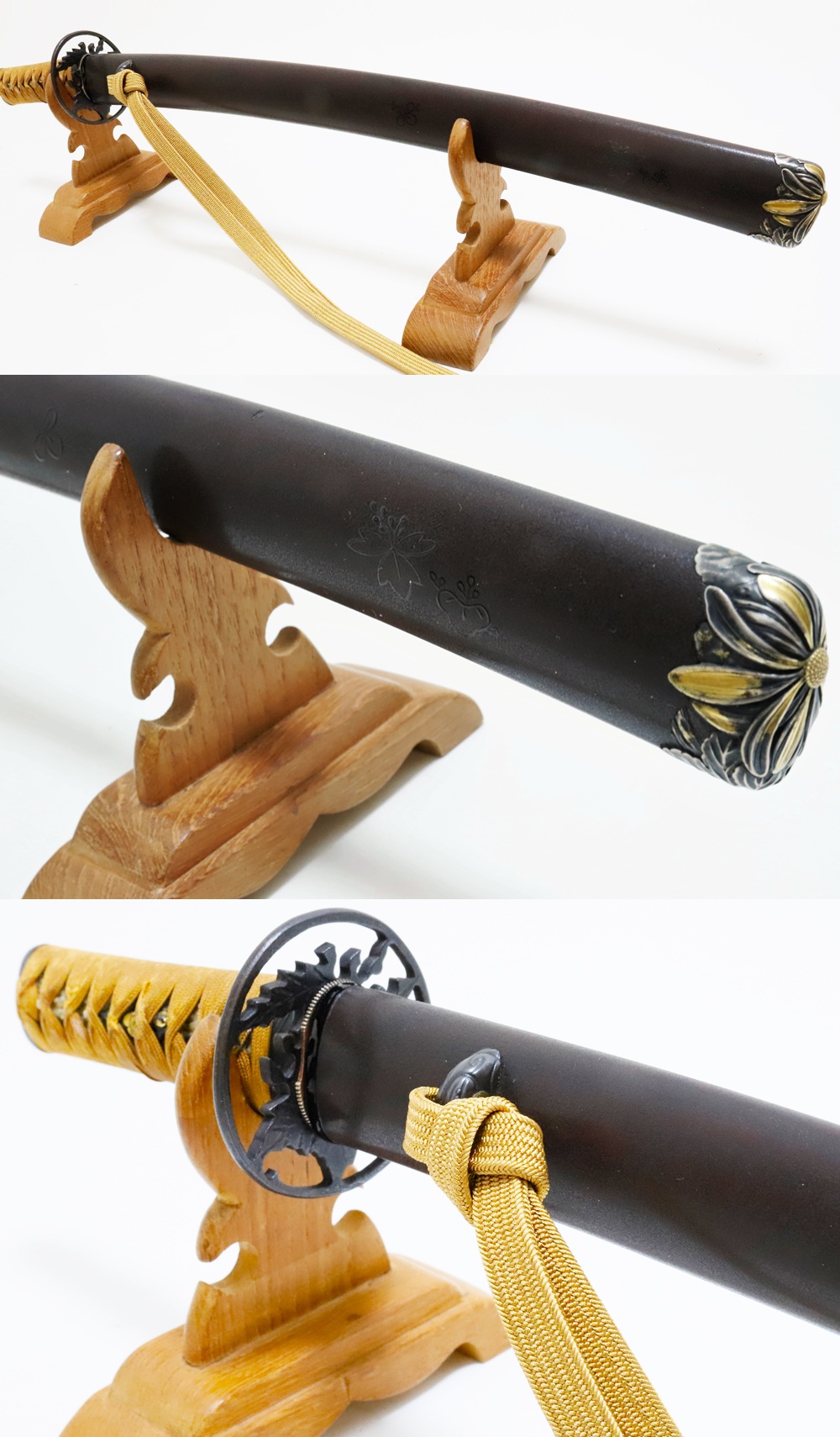
| Koshirae | Wakizashi Koshirae with a Brown Ishime Ground Saya Decorated with Paulownia Crest Kage-makie |
| Koshirae Length |
65.0 cm 25.6 in |
| Tsuka Length |
13.5 cm 5.3 in |
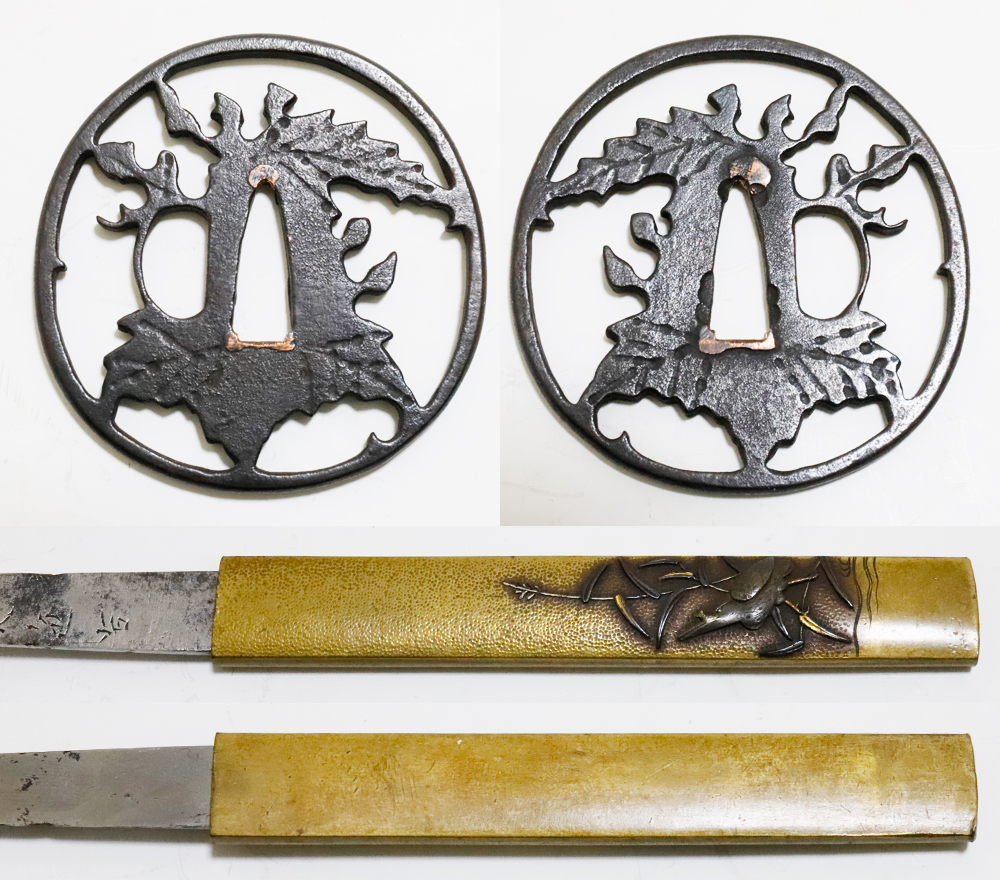
| Tsuba | Paulownia Openwork |
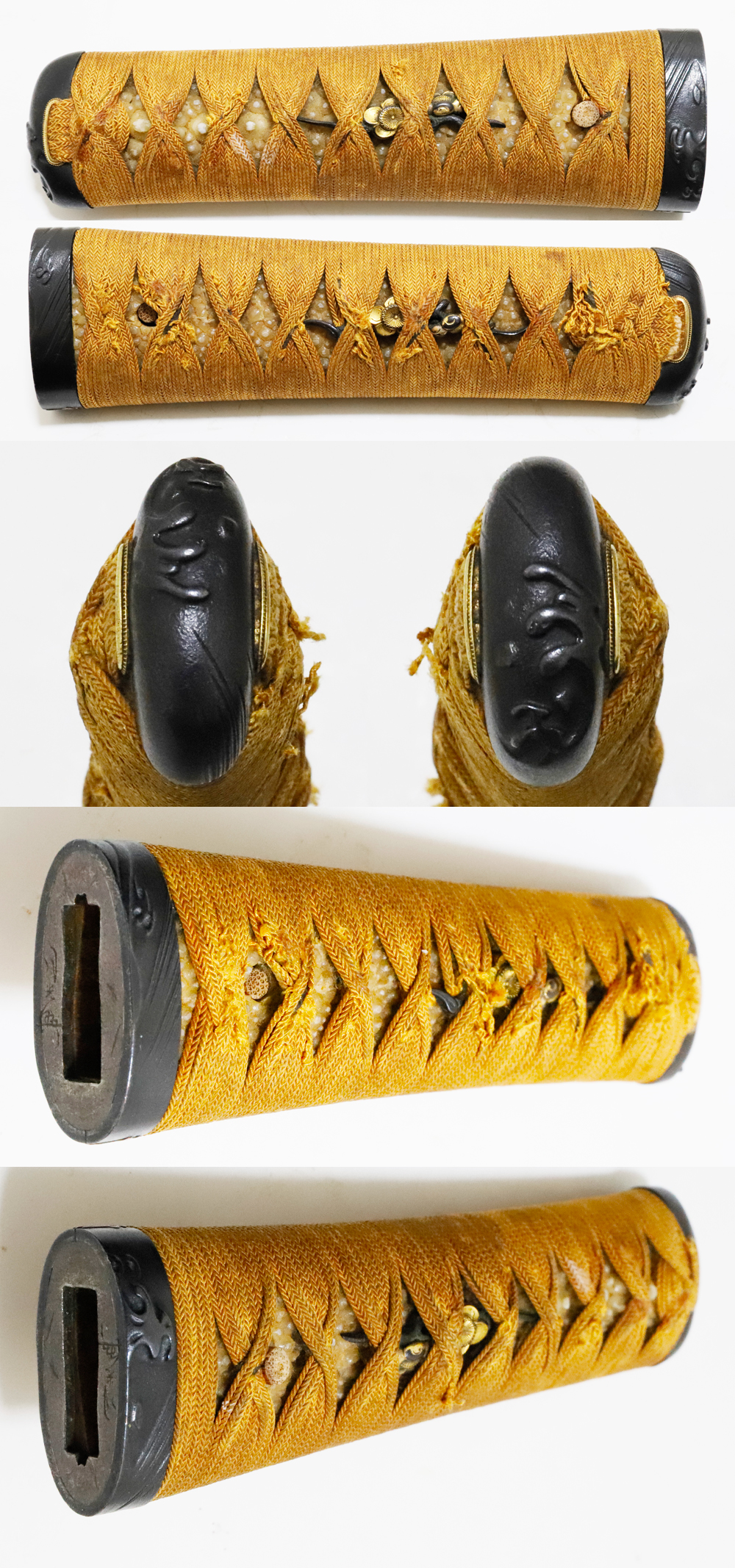
| Menuki | Branch Plum Blossom |
| Fuchigashira | Waves |
| Kozuka | A Cicada Resting on Reed |
| Other details | Tsuka with White Samegawa and Yamabuki-iro Tsumi-maki, Kojiri with Chrysanthemum Design in Gold Iroe on a Silver Ground |
Price |
SOLD |
| Kanetsuna was a smith of the Tokuei school, one of the Seven Seki Schools of Mino Province. In addition to Kanetsuna, the Tokuei school included smiths such as Kanenori, Kaneaki, and, in the Shinto period, Ōmi no Kami Kiyonobu and Bitchū no Kami Kiyonobu.The name Kanetsuna continued through successive generations from around the Bunmei era (mid-Muromachi period), and a survey of Seki smiths in Keichō 2 (1597) records seven Kanetsuna active in the early Shinto period.This work is an early Edo-period Kanetsuna, as indicated by the straight boshi and the style of the “Tsuna” character in the signature, and as attributed as “Shinto” in the NBTHK Hozon certificate. It is by one of the seven Kanetsuna of the Shinto period.Passed NBTHK Hozon Token shinsa in 2009.Accompanied by a wakizashi koshirae with a brown ishime ground saya decorated with paulownia crest kage-makie. |

 Search