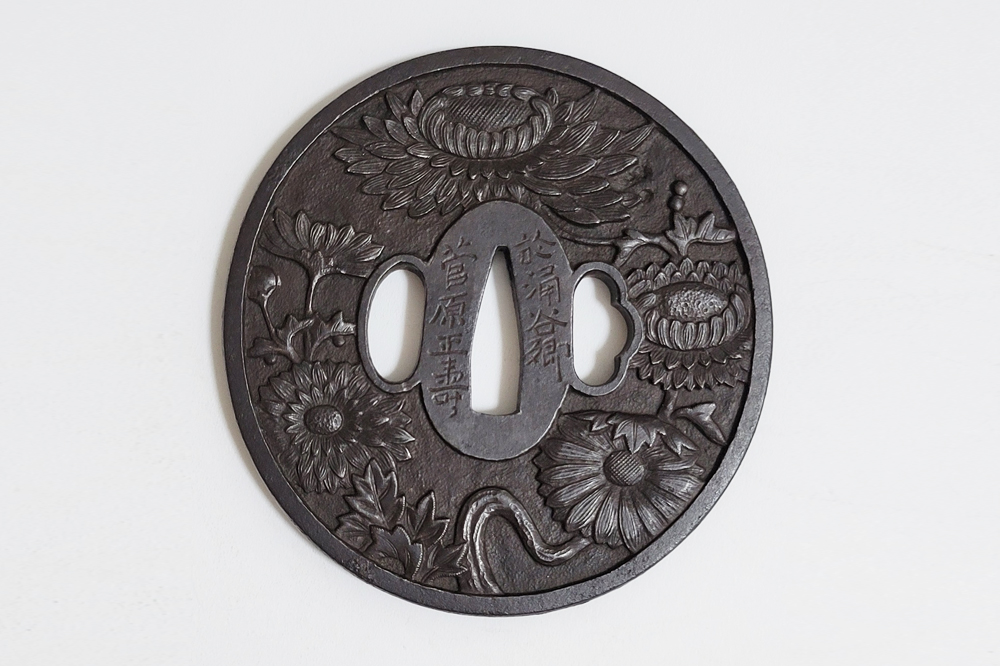
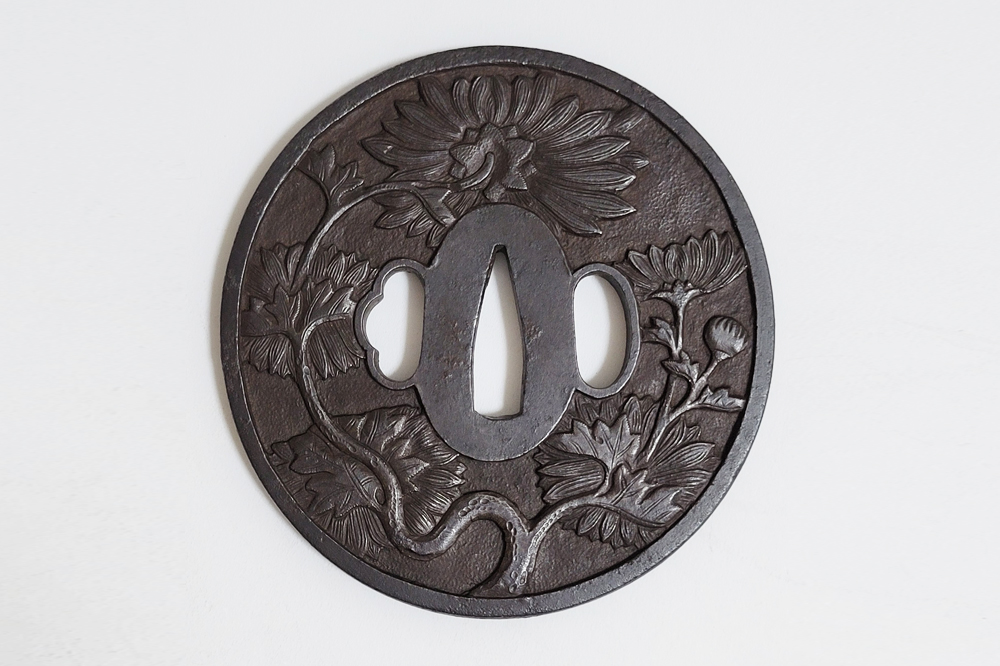
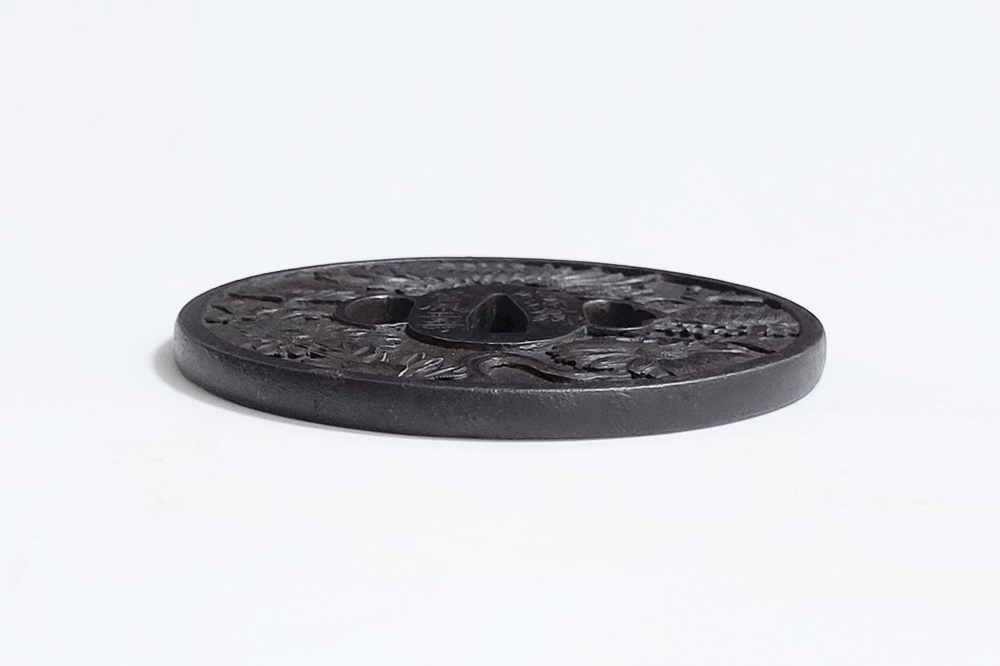
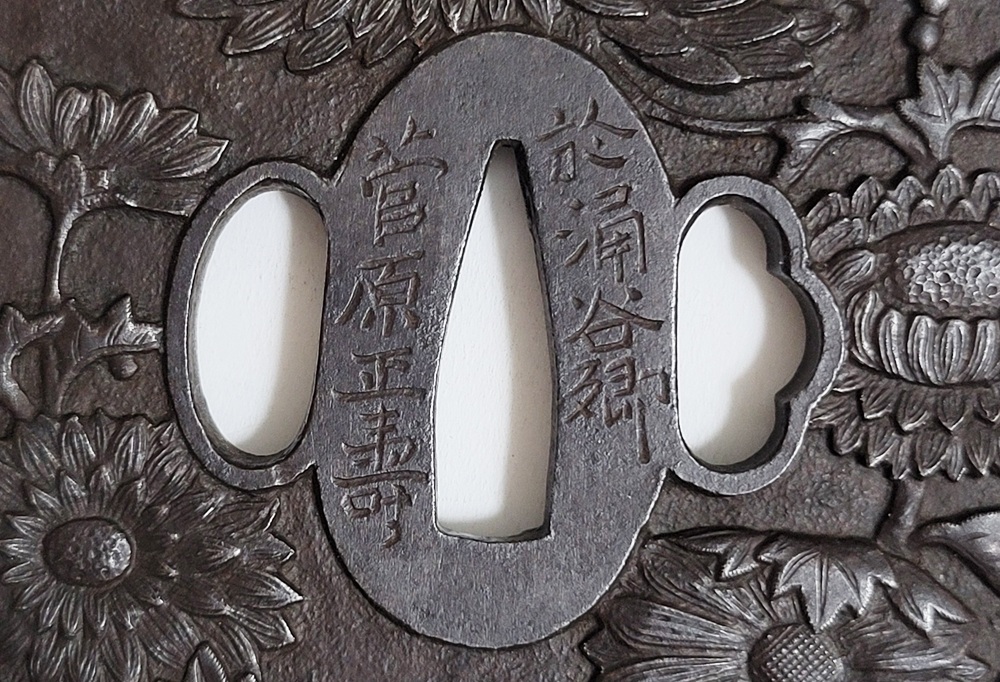
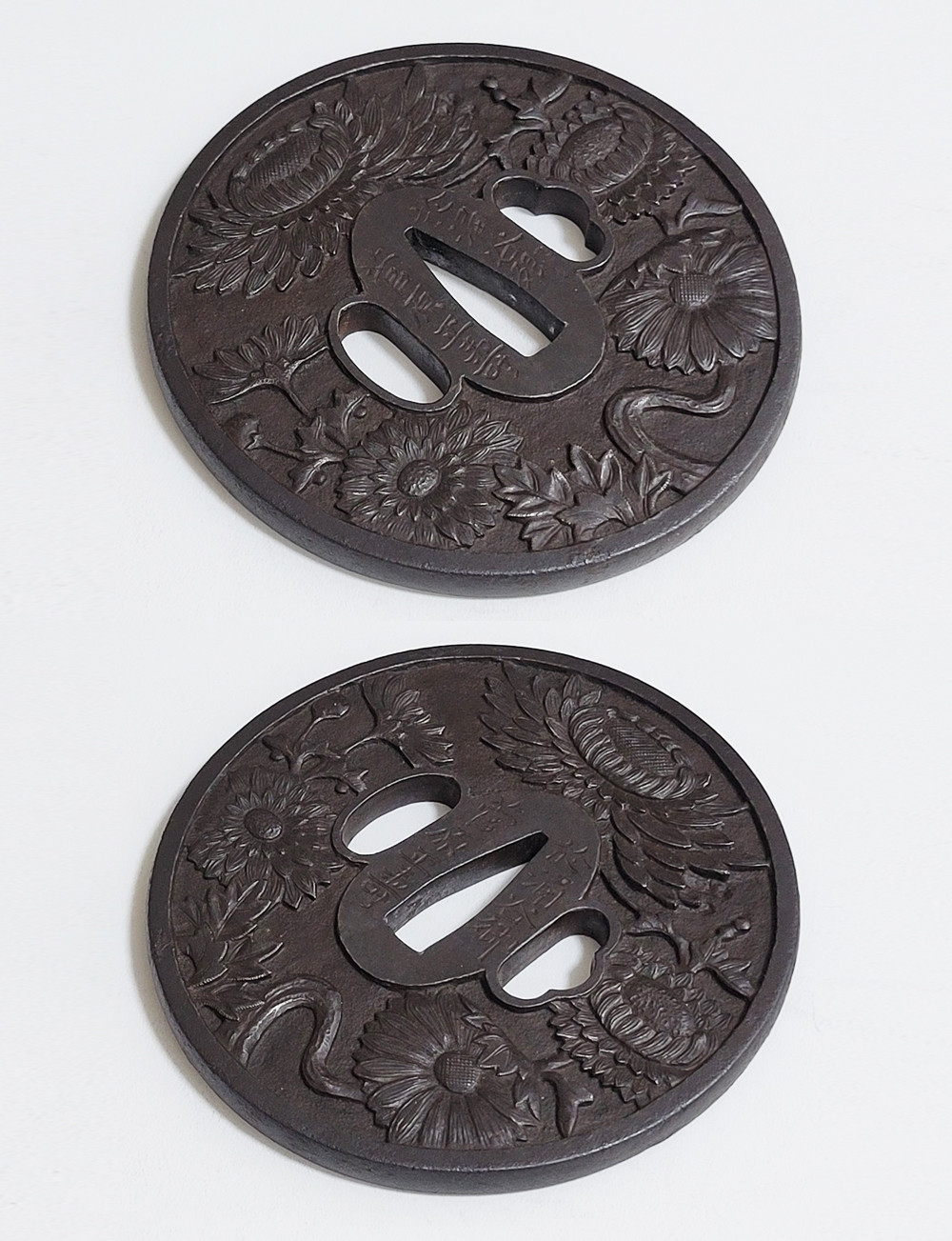
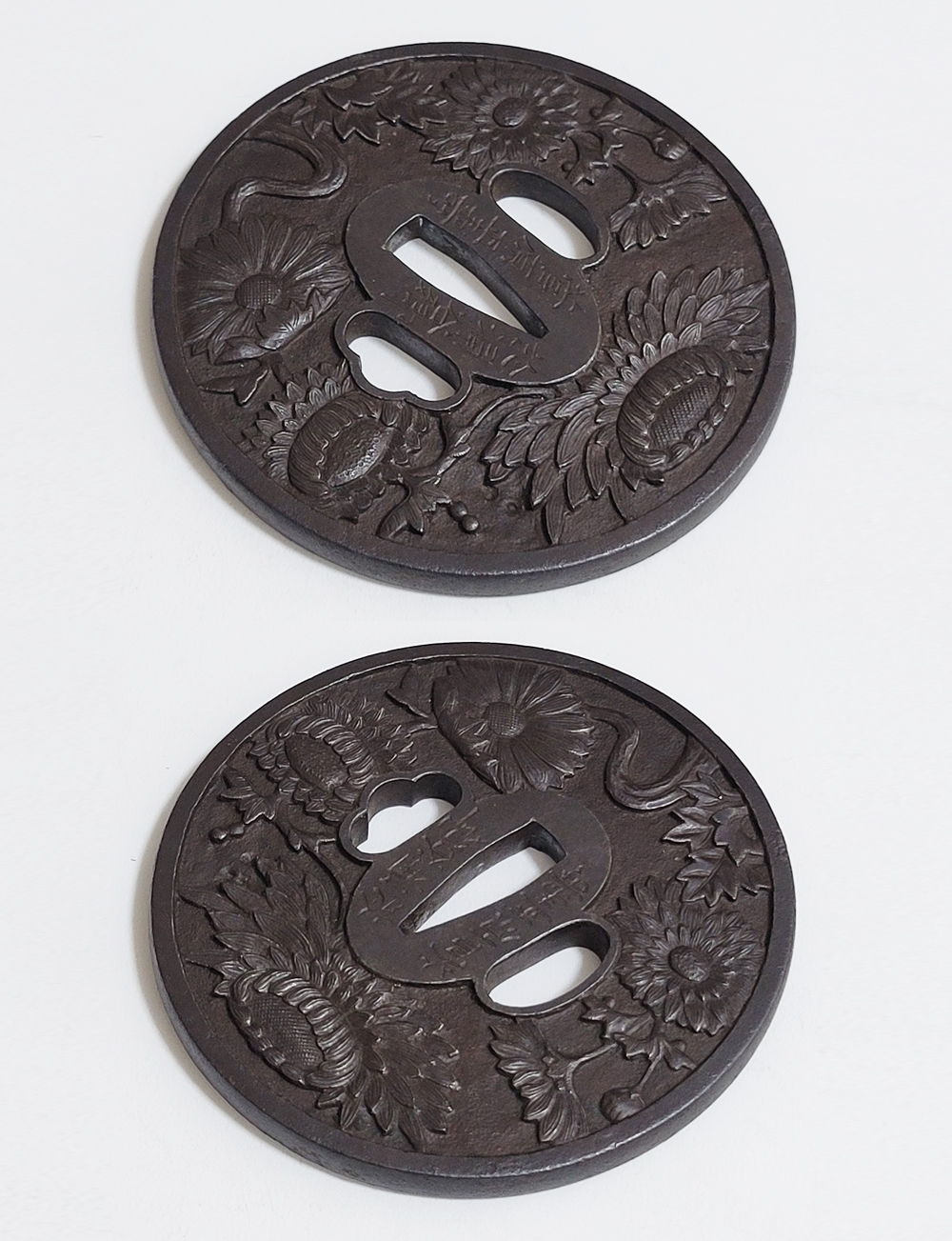
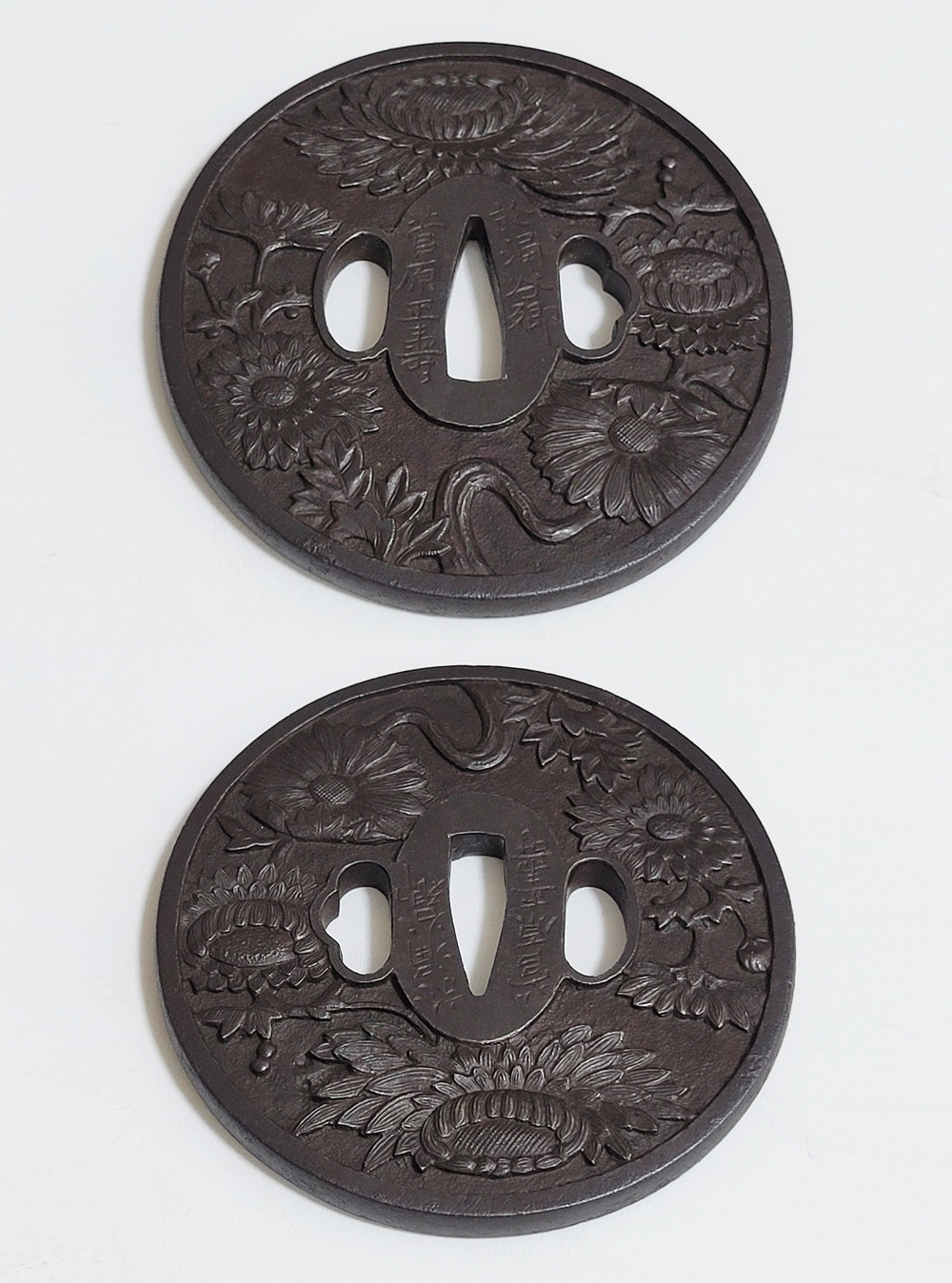
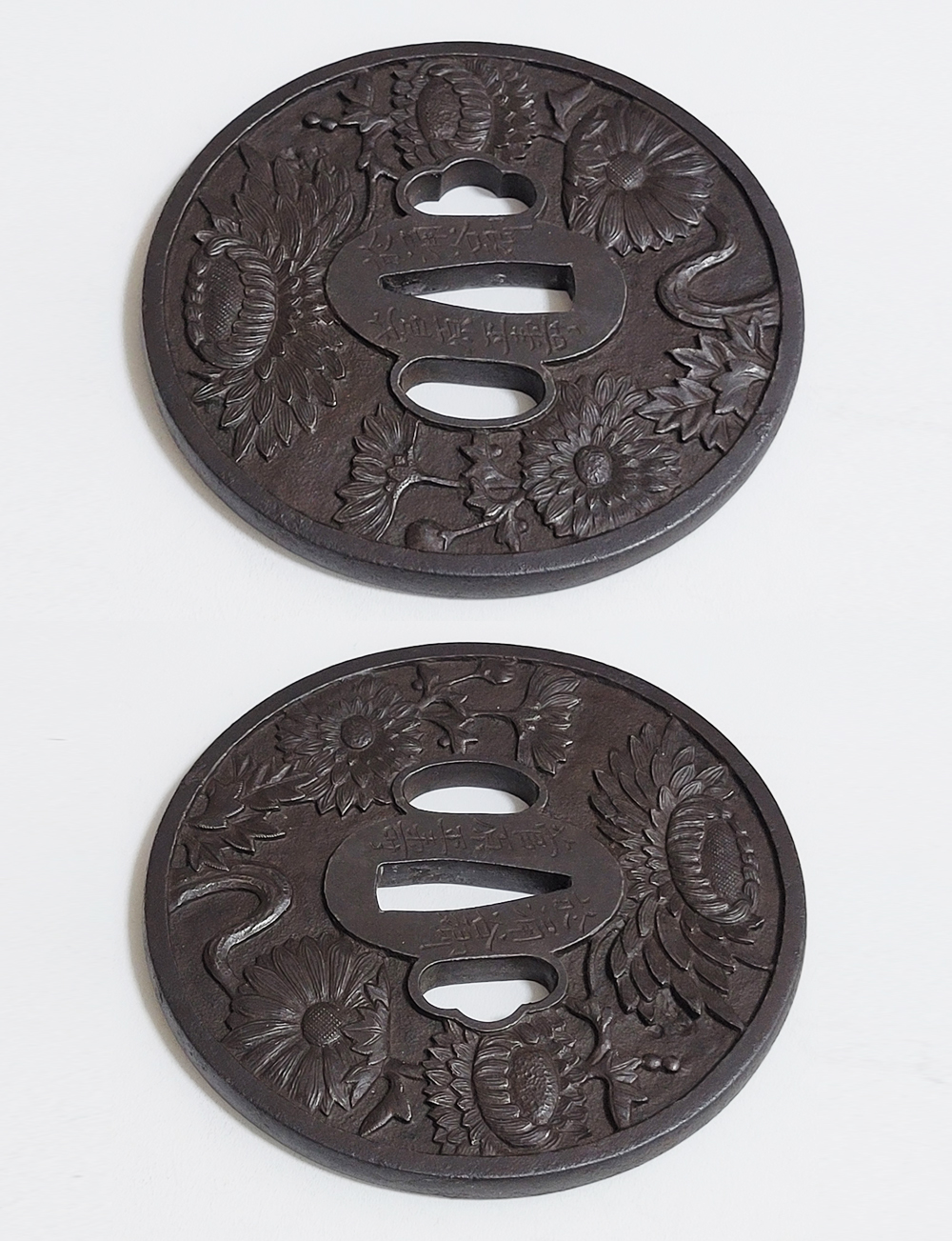
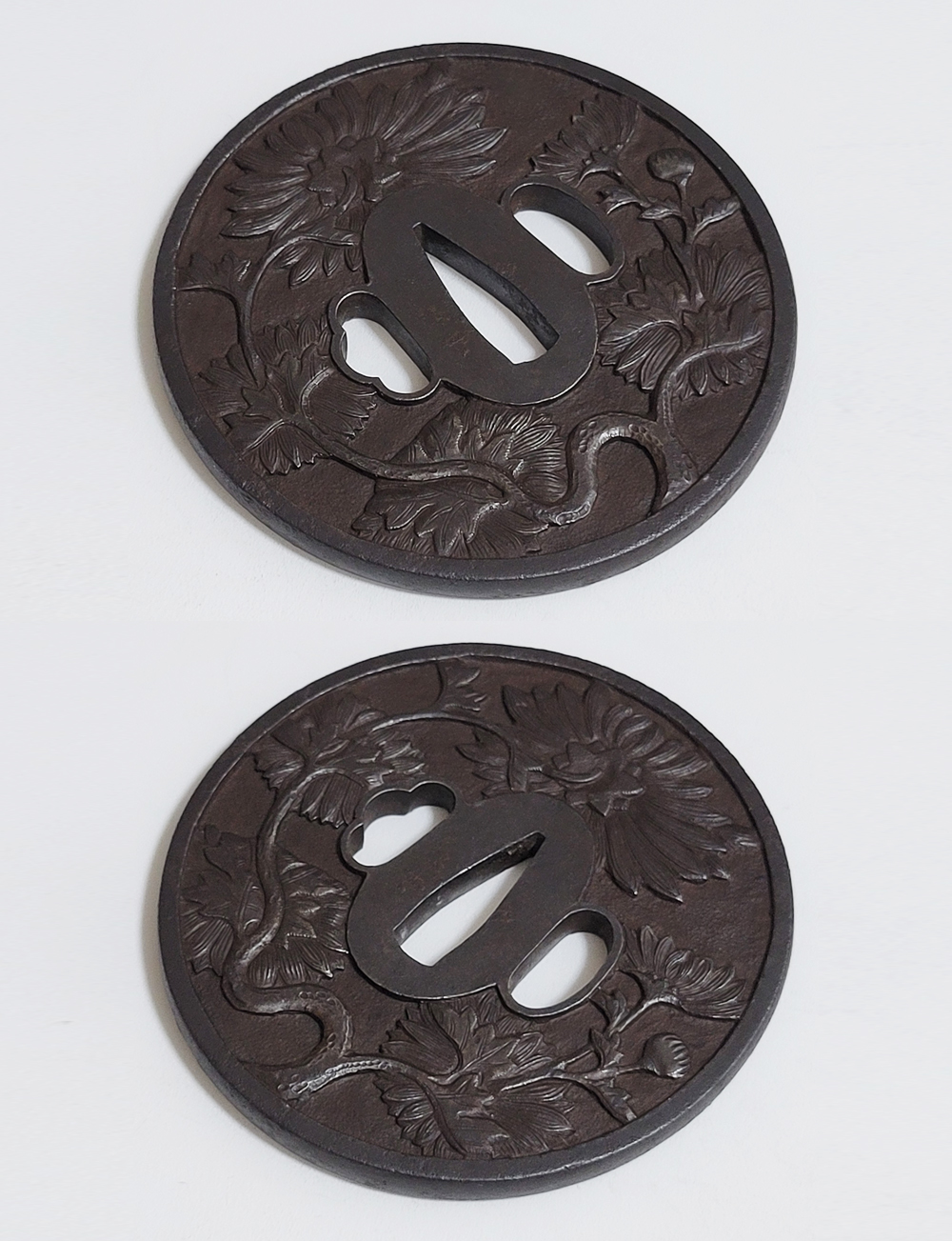
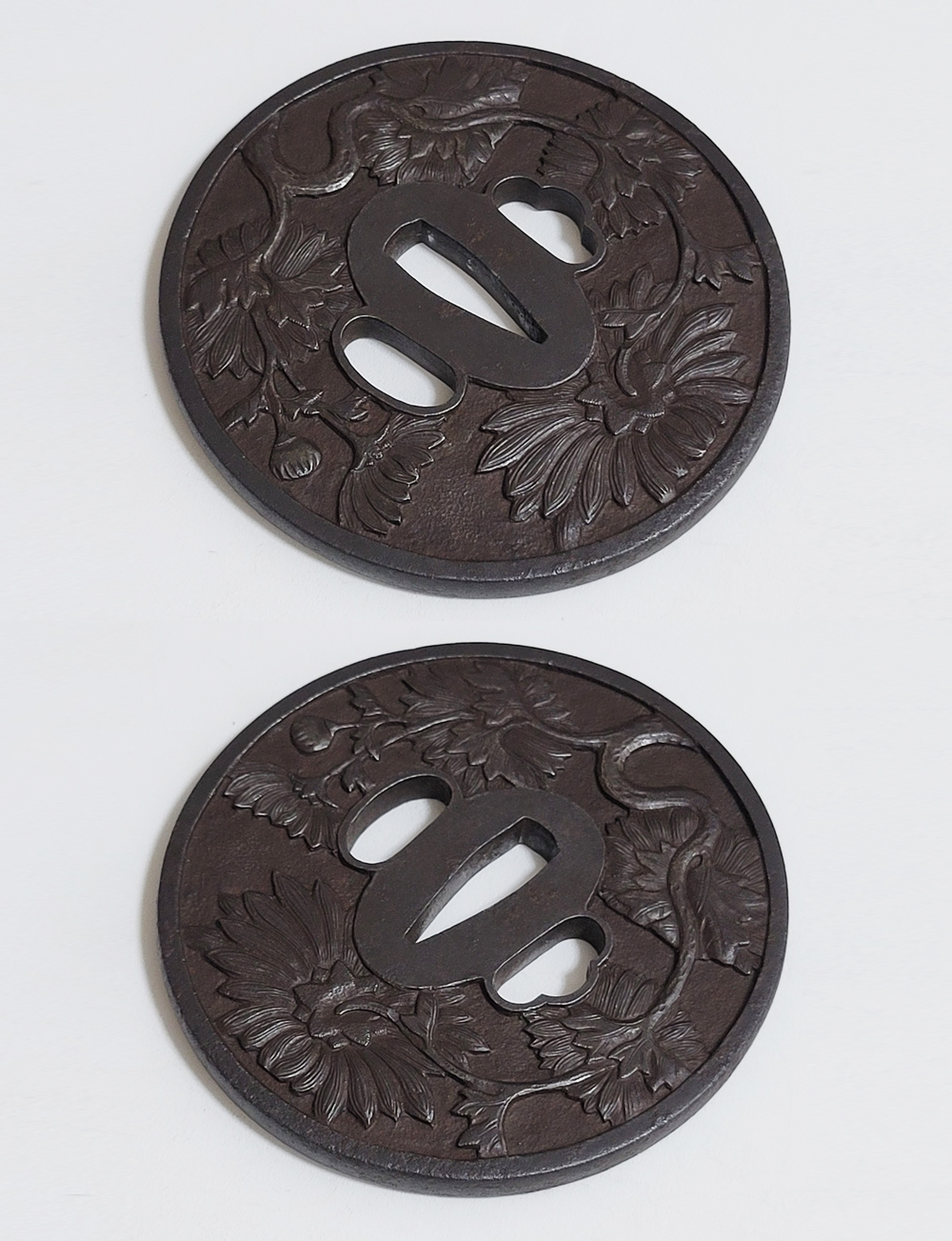
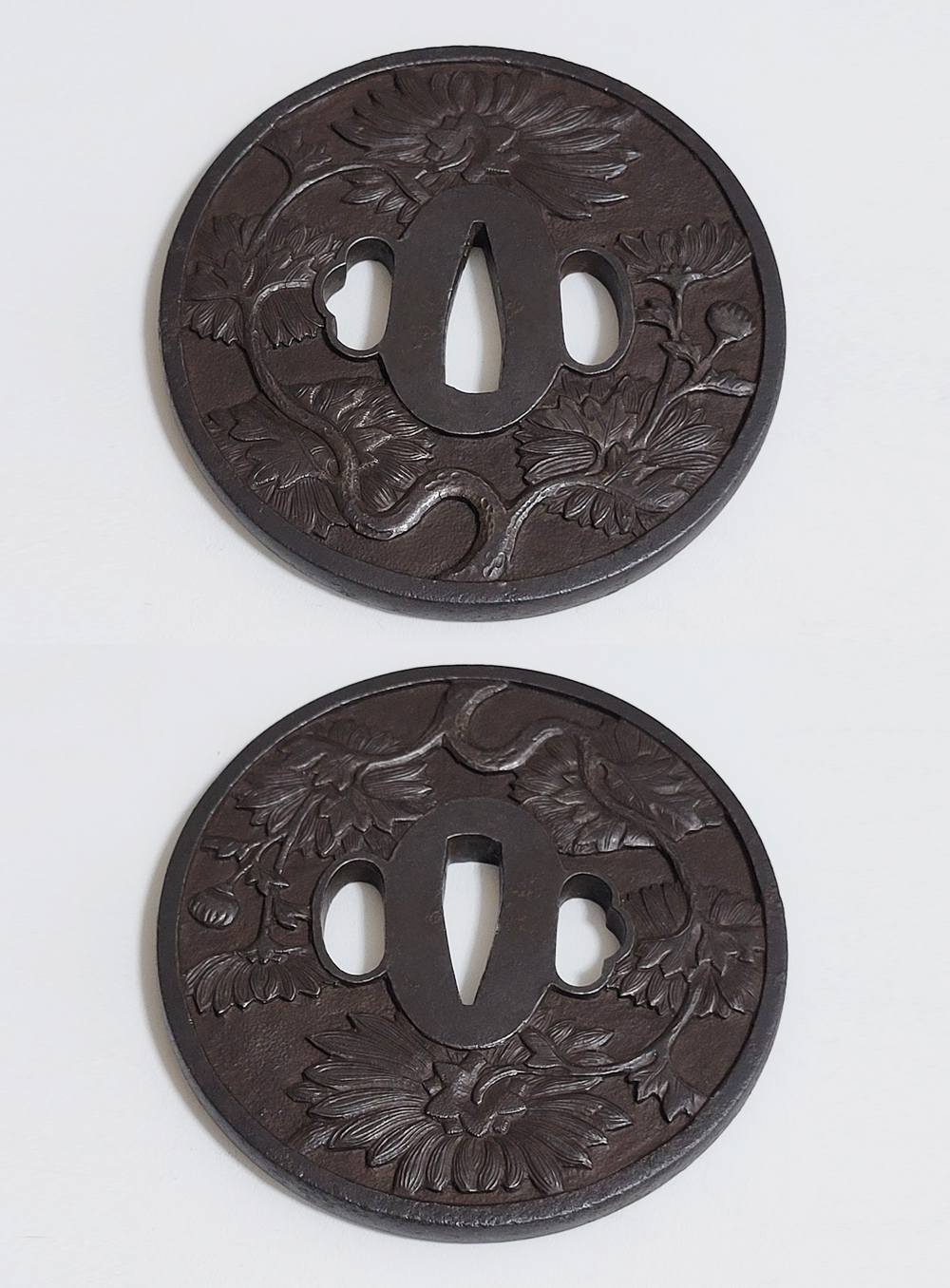
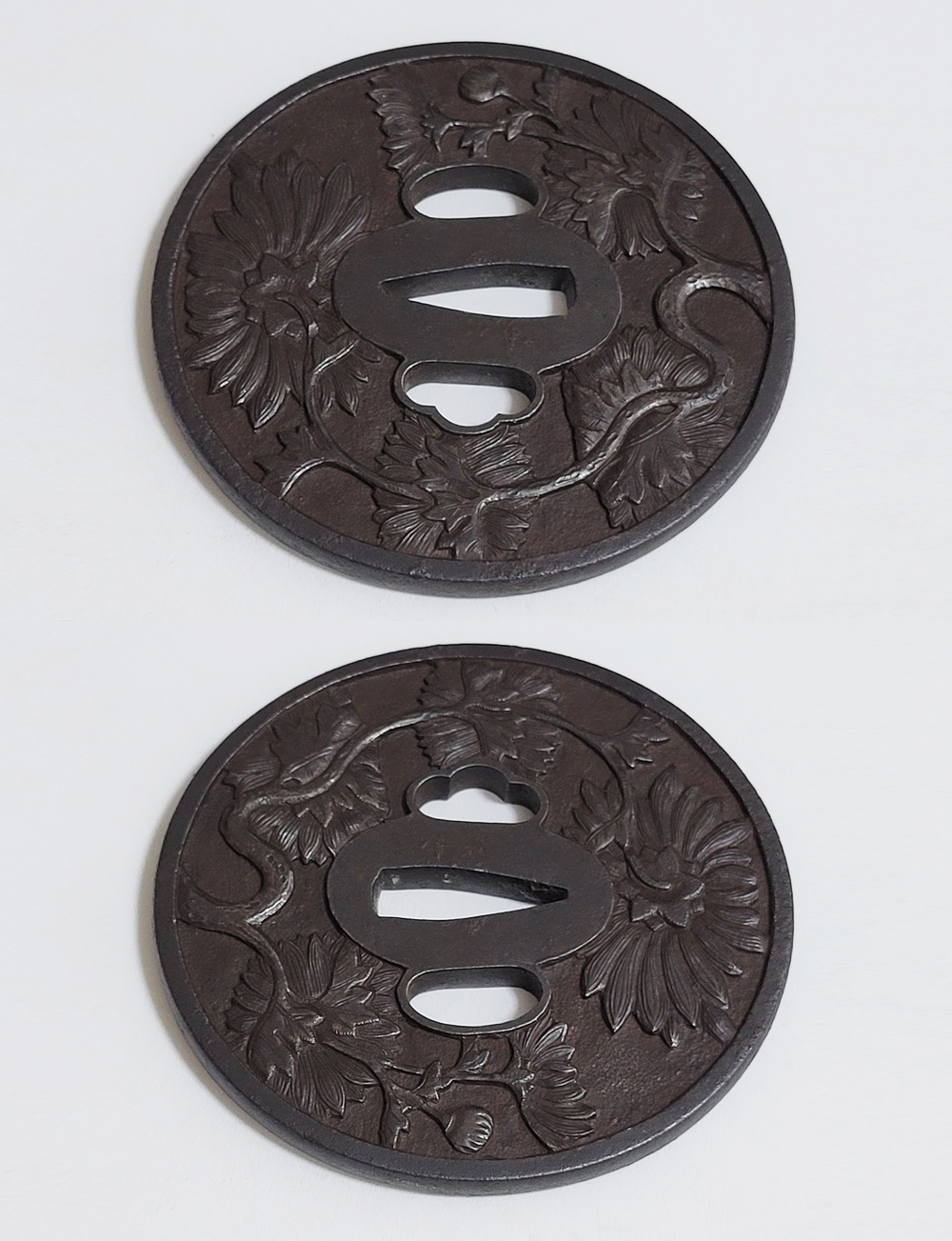
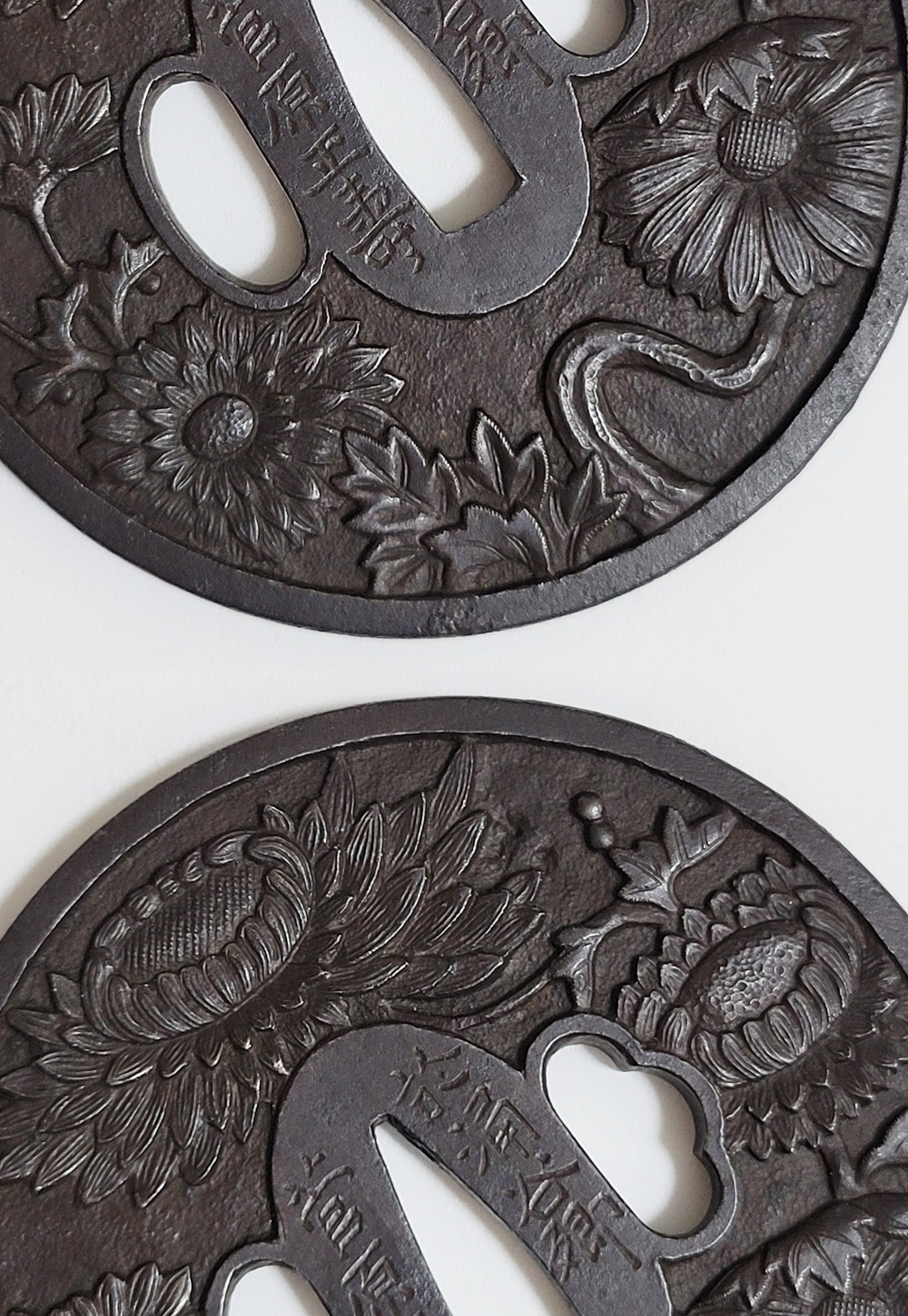
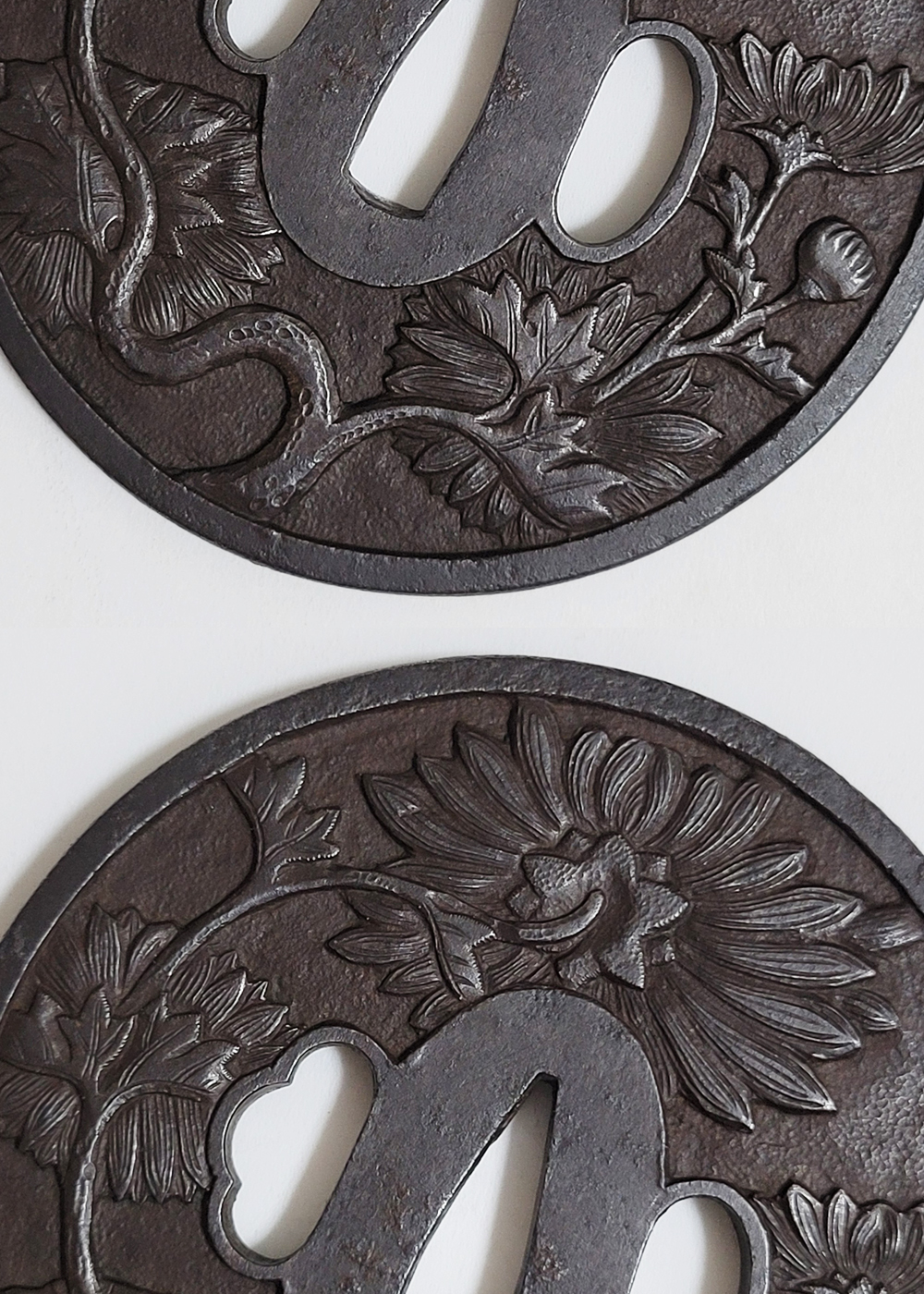
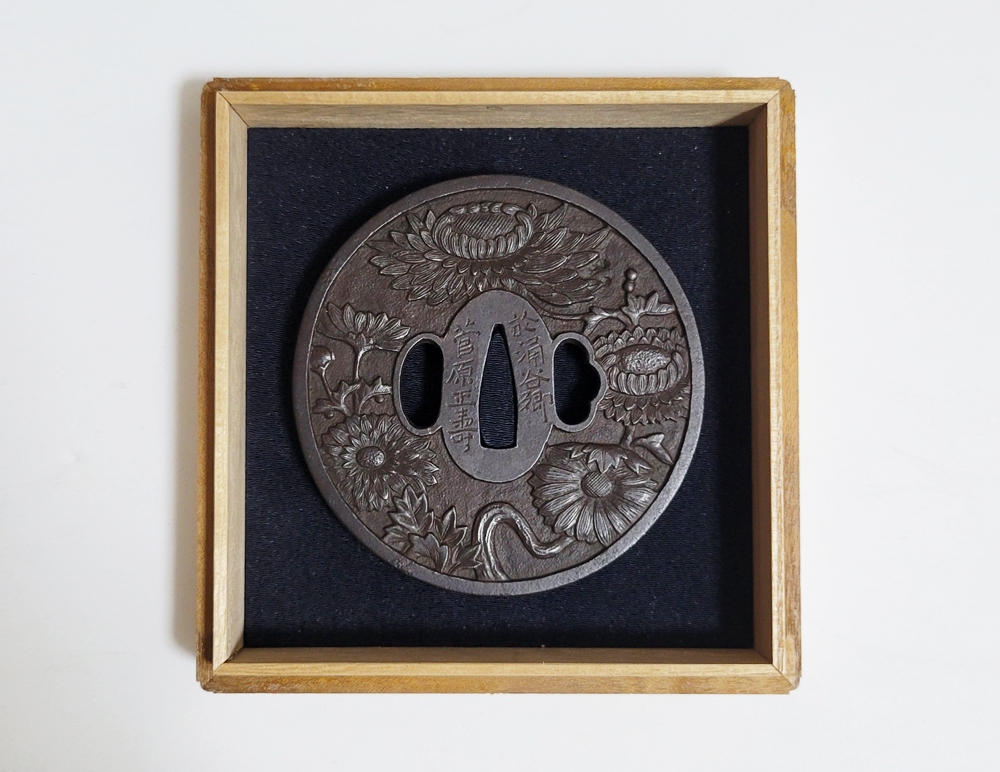
| This tsuba with a chrysanthemum design is by Sugawara Masatoshi, a metalworker who lived in Mutsu Province. Works by Masatoshi are known with the signature “Wakamatsu ju Sugawara Masatoshi saku,” as well as signatures indicating places where he worked, such as Matsuyama, Wakuya, and Sendai. Some of his works are dated Keio 3 (1867) and Meiji 2 (1869). He was the same metalworker as Masatoshi who signed “Oite Senpu Masatoshi saku.” This tsuba is signed “Sugawara Masatoshi, made in Wakuya.” Various chrysanthemums are arranged across the entire surface of the vertically oval iron plate. On both sides, the flowers, leaves, and stems are rendered in relief by carving away the surrounding ground and adding fine line engraving. The lowered ground makes the chrysanthemums stand out prominently, while the petals are carefully detailed with fine engraved lines. On the front, blooming chrysanthemums are densely arranged, while the reverse presents the flowers from a viewpoint looking upward from below, creating a continuous chrysanthemum composition across the entire tsuba. The natural tone of the iron and skillful carving convey the splendor of the chrysanthemums without the use of colored metals, demonstrating the accomplished carving technique of Masatoshi, who was active from the late Edo period into the early Meiji period.It passed the Hozon Tosogu shinsa in May 2026. |

 Search