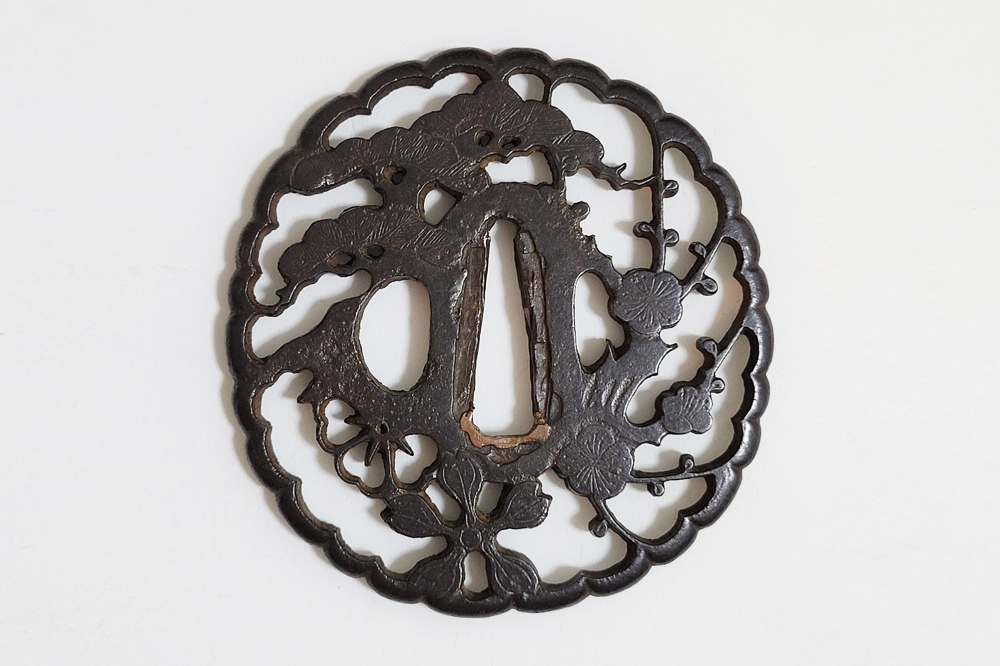
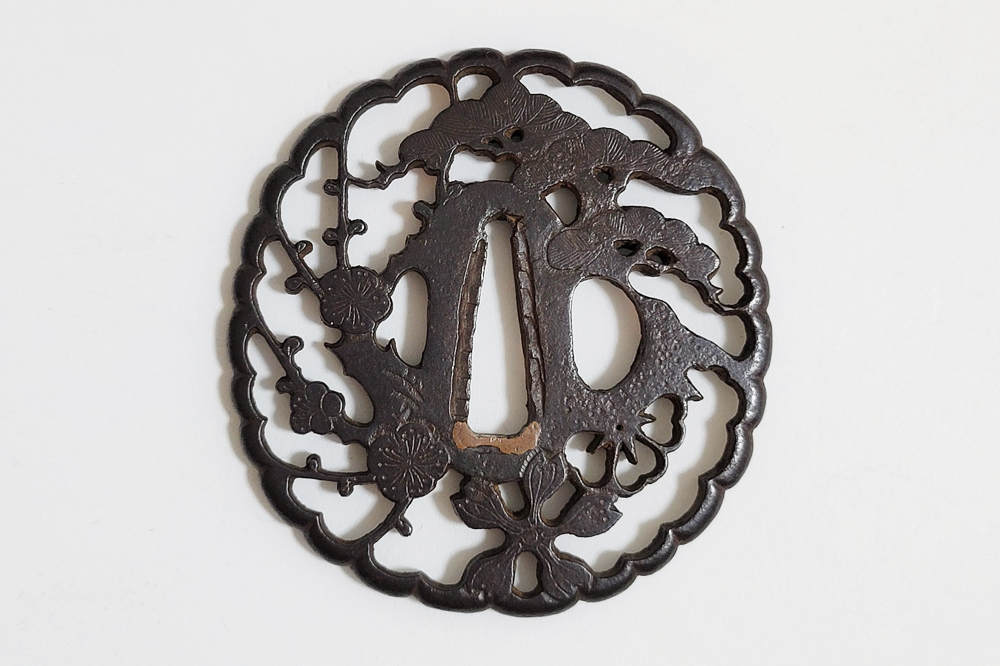
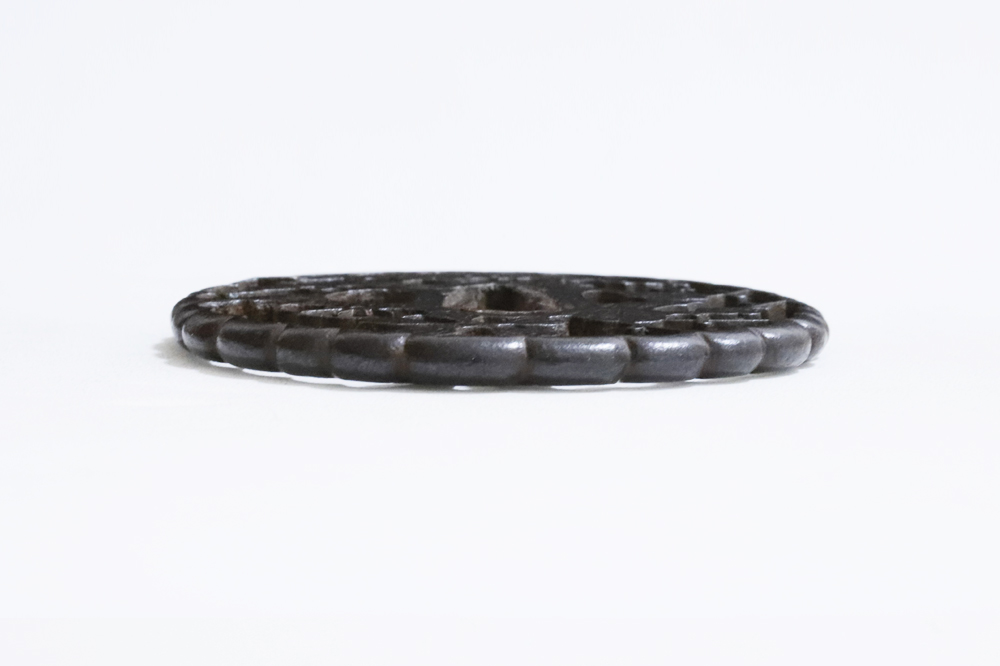
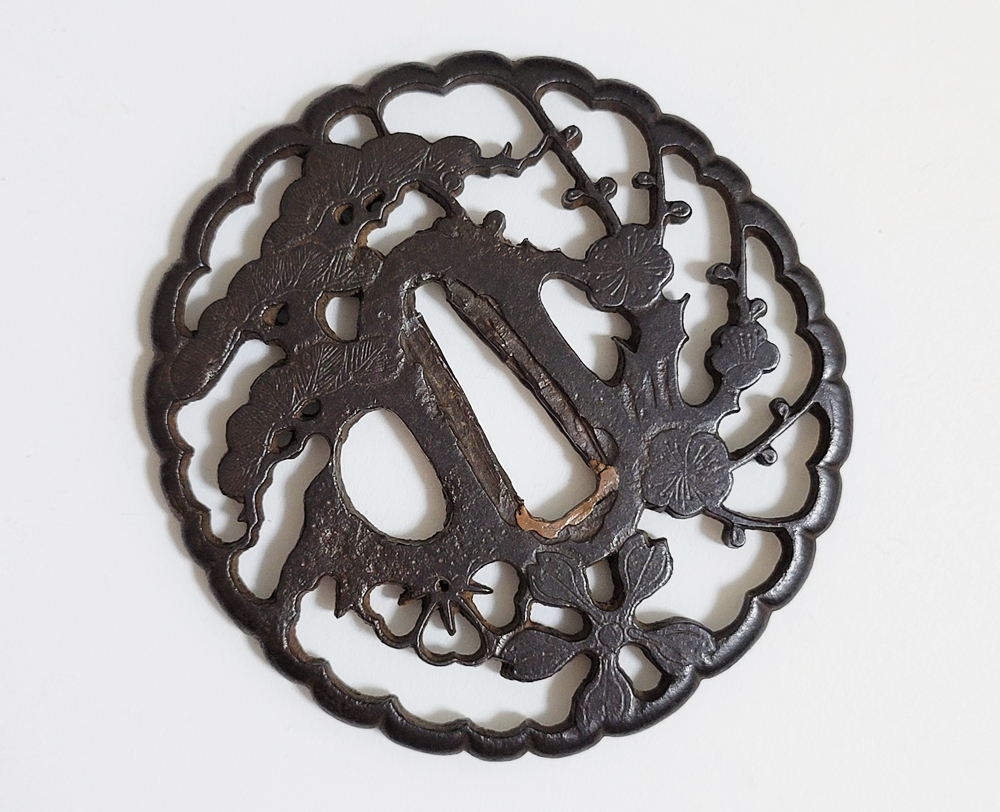
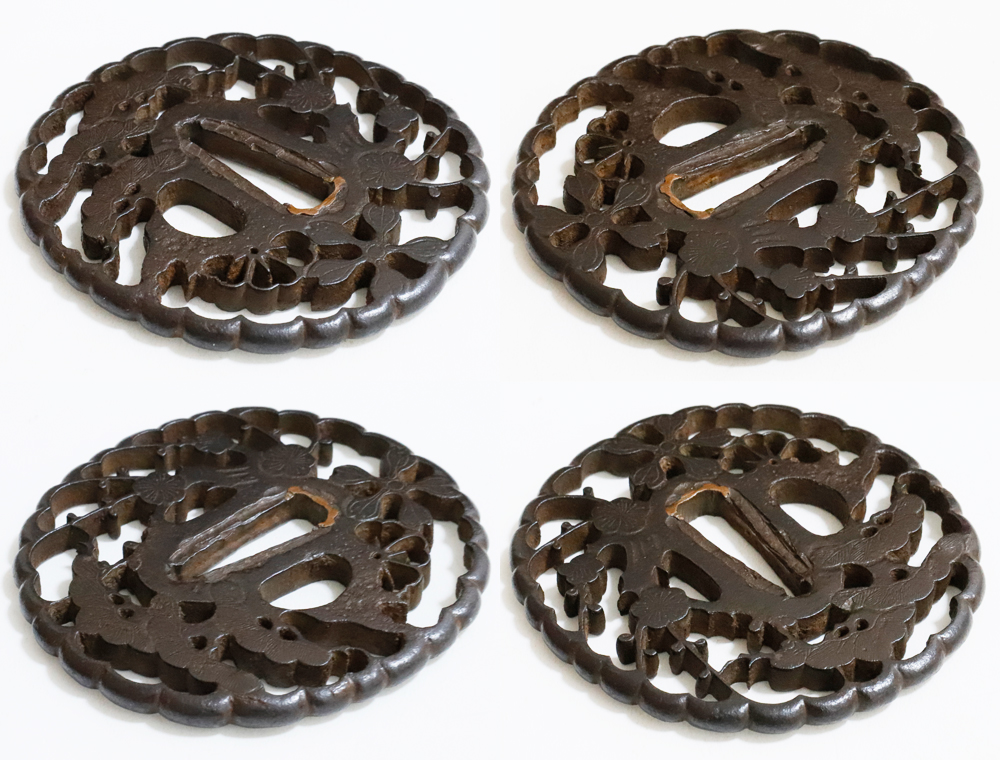
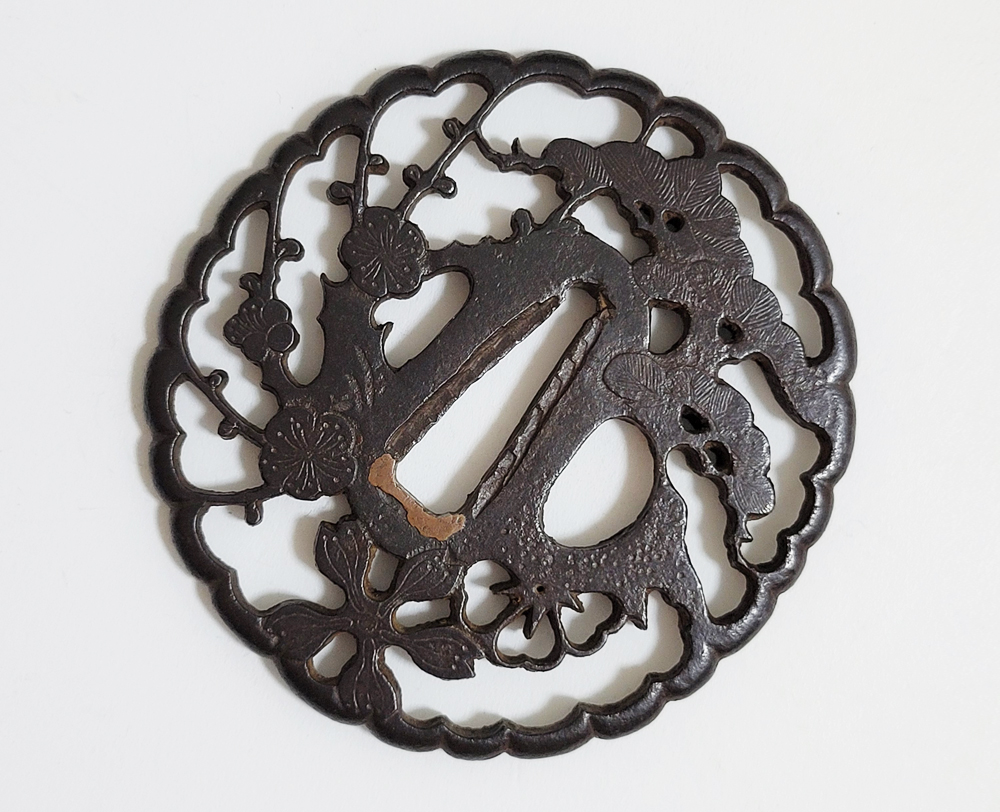
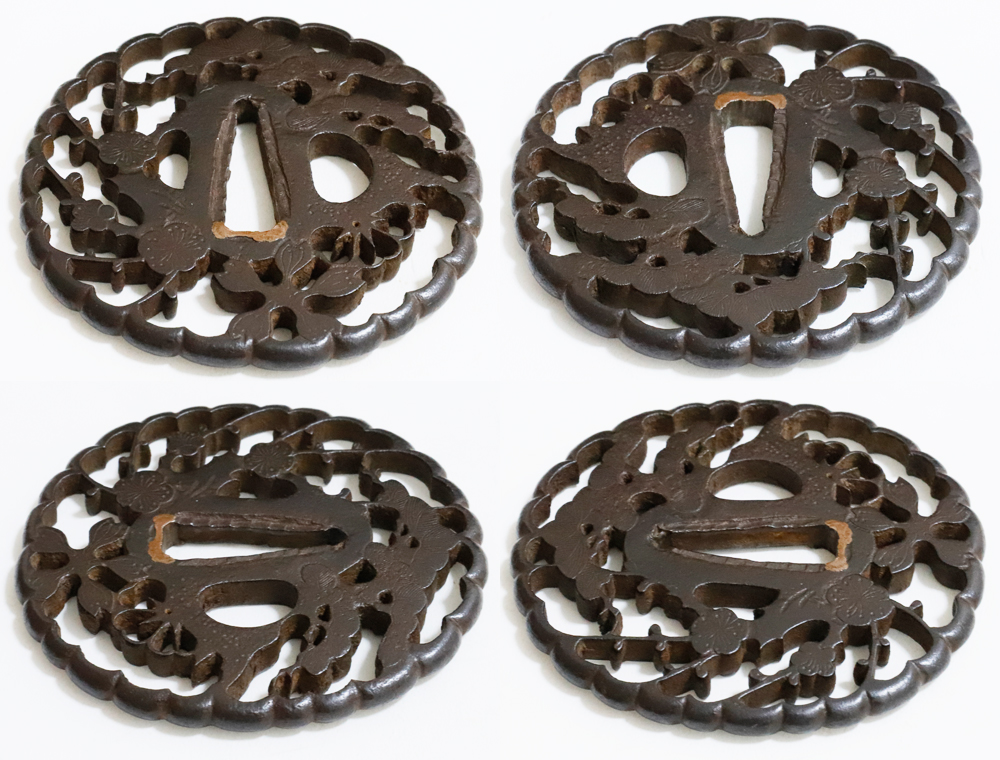
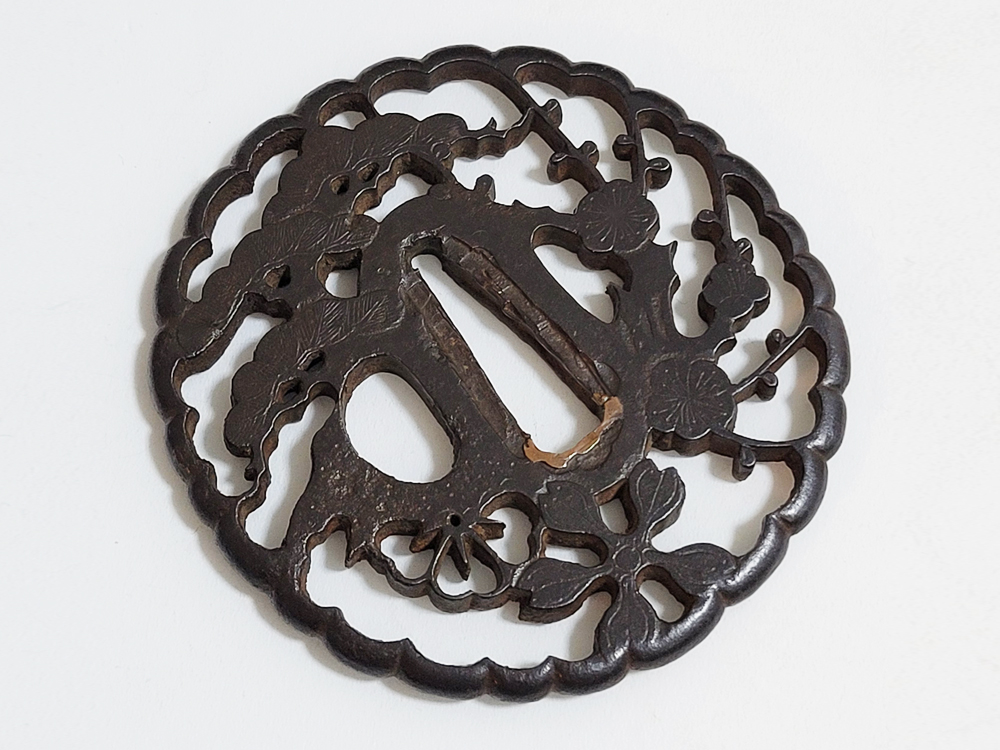
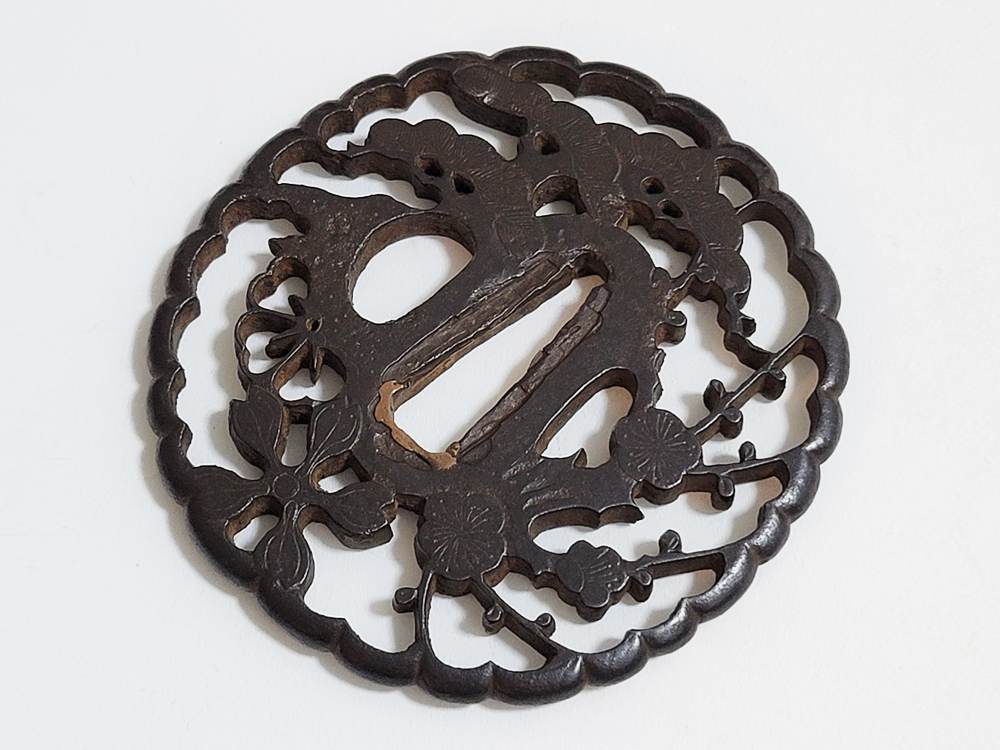
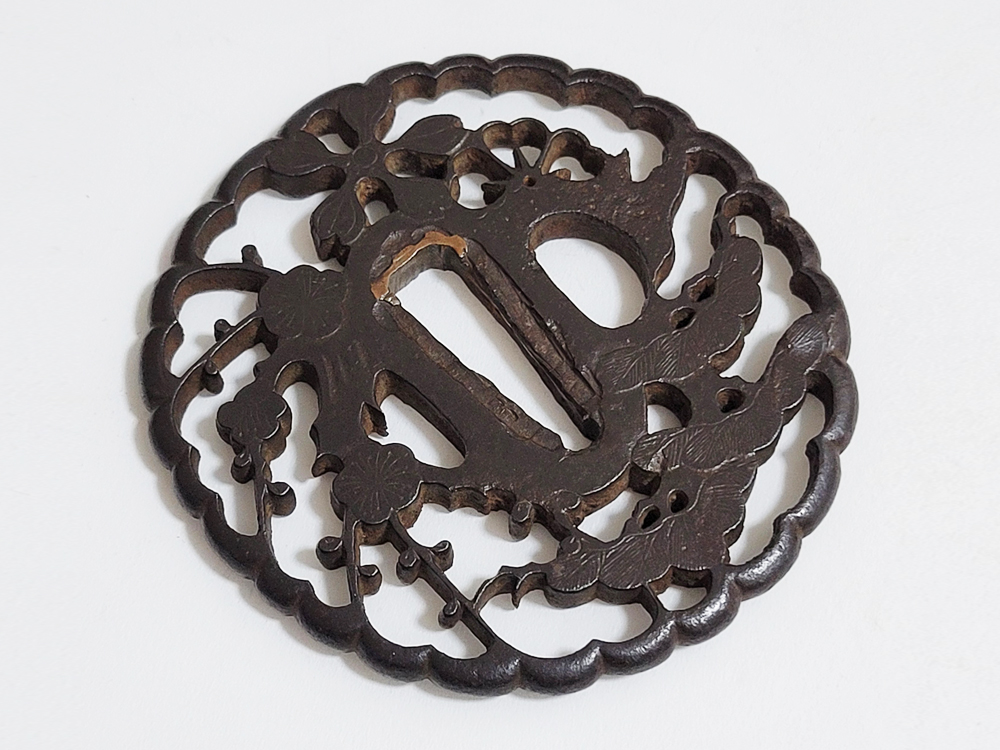
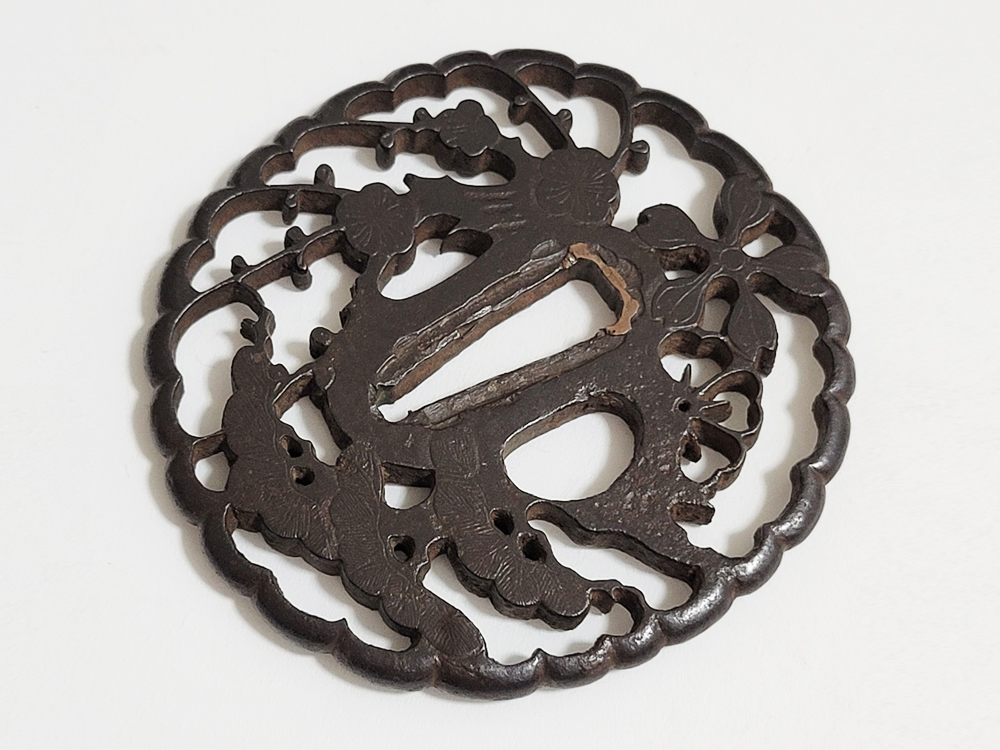
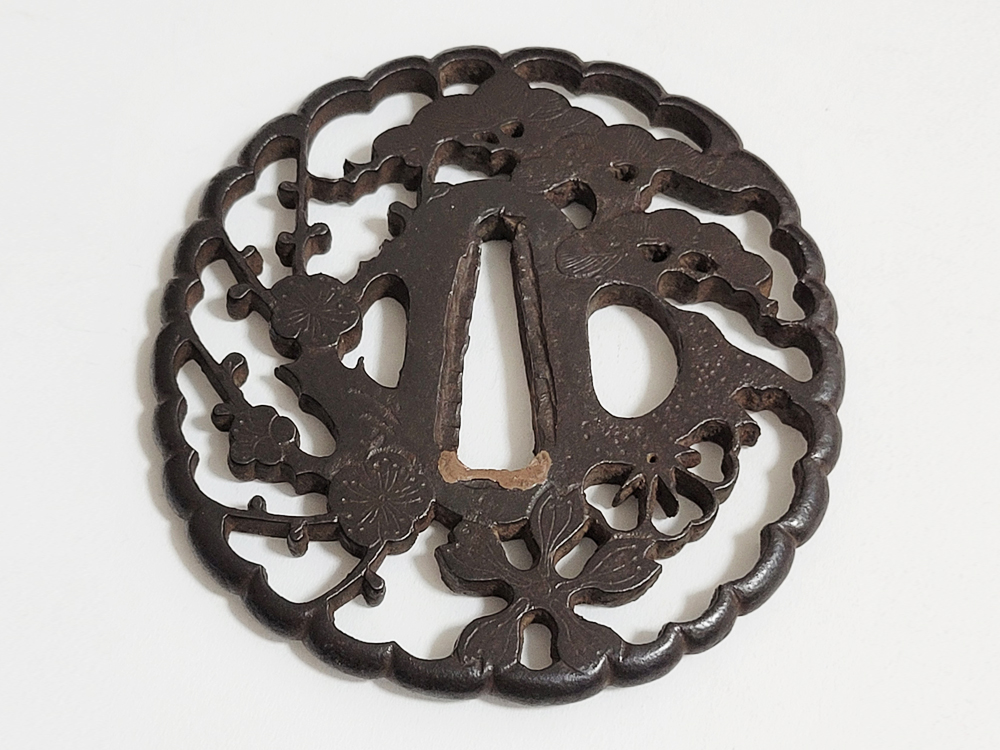
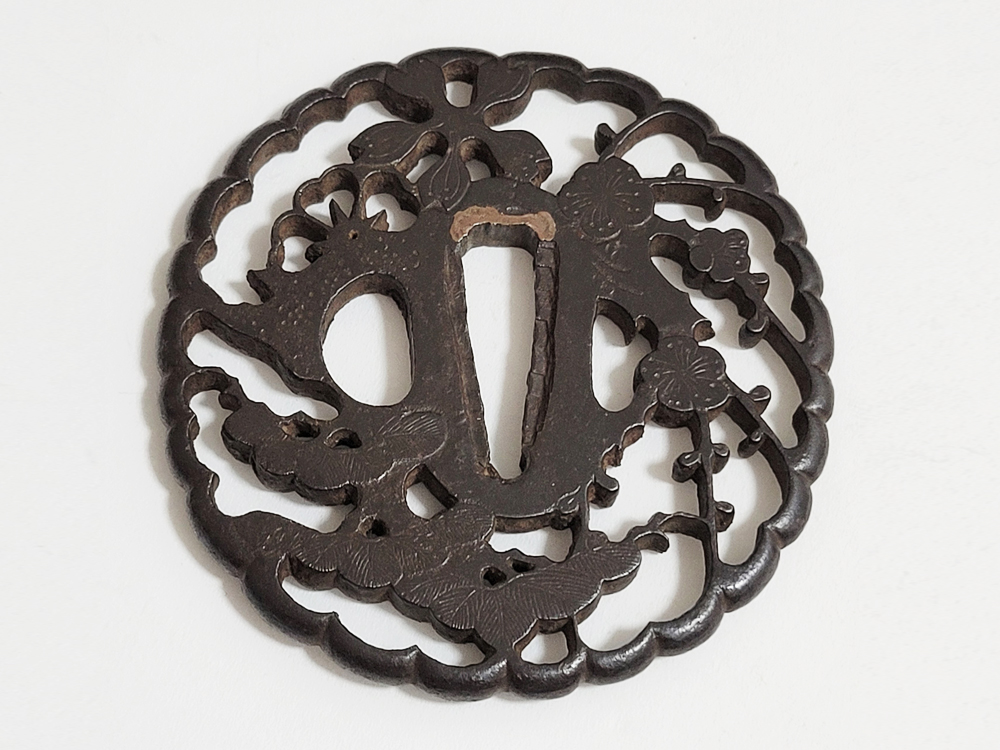
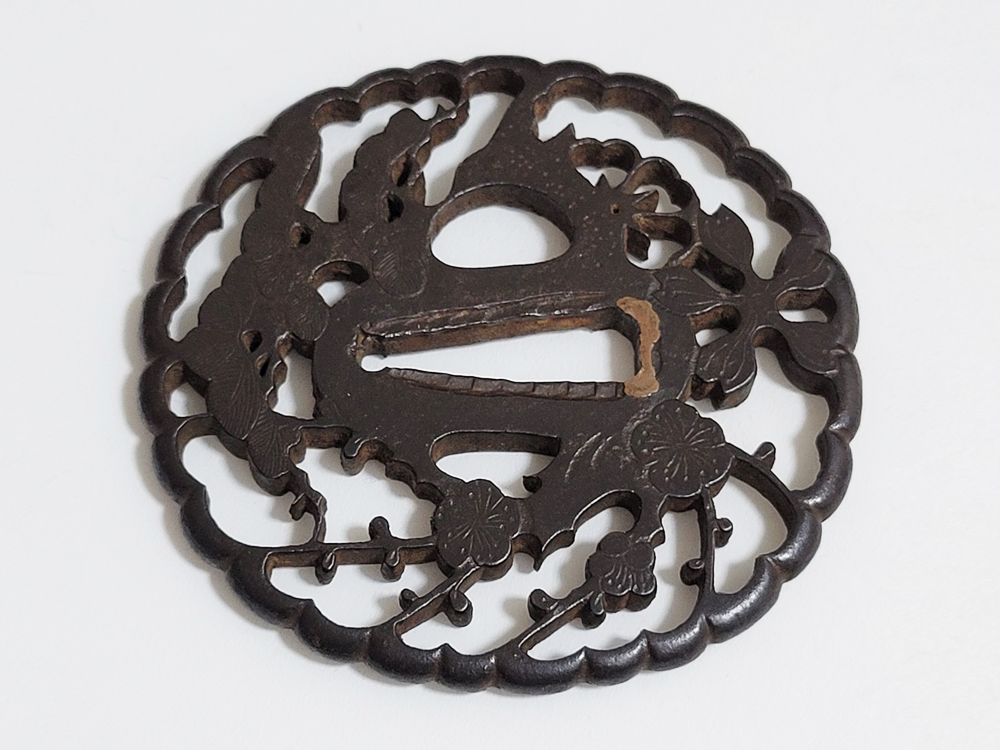
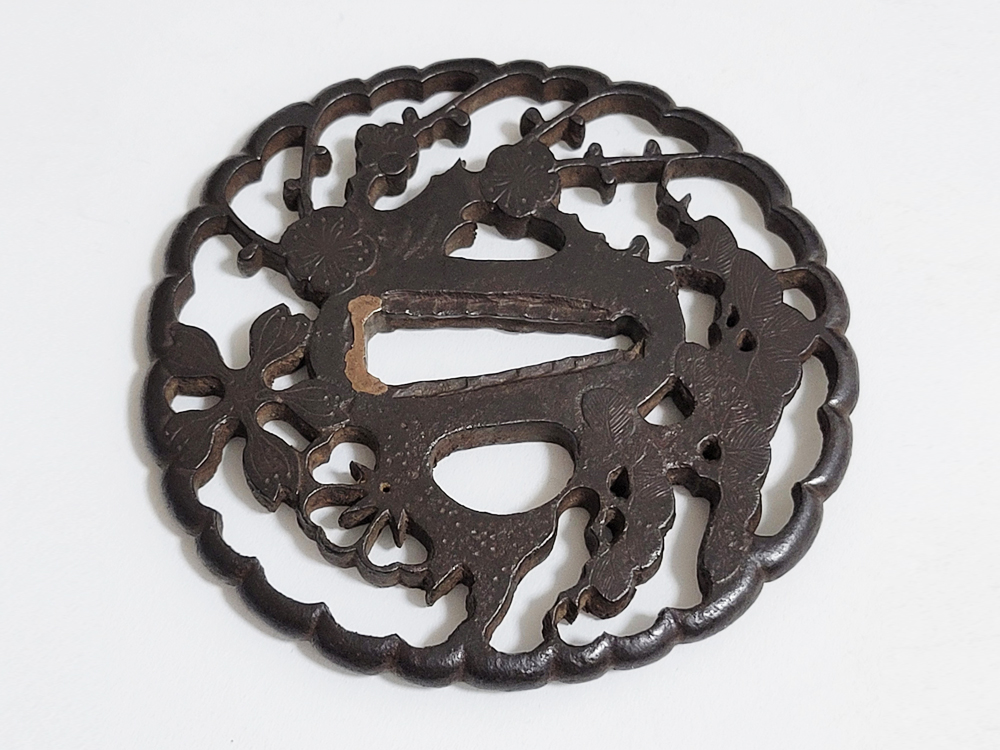
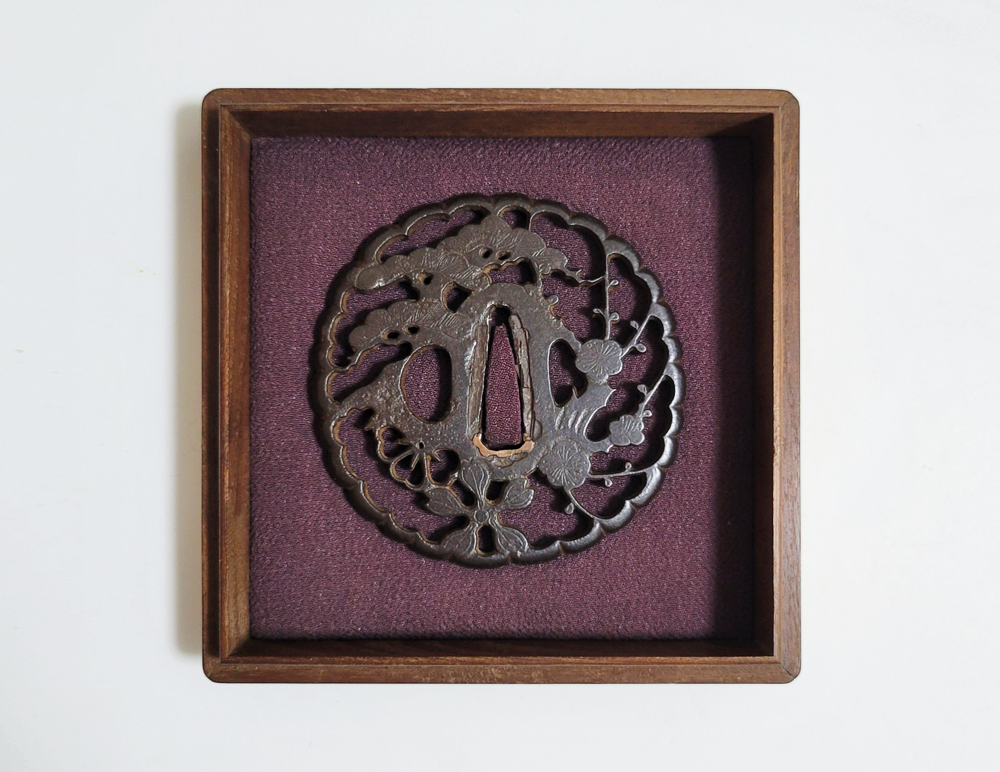
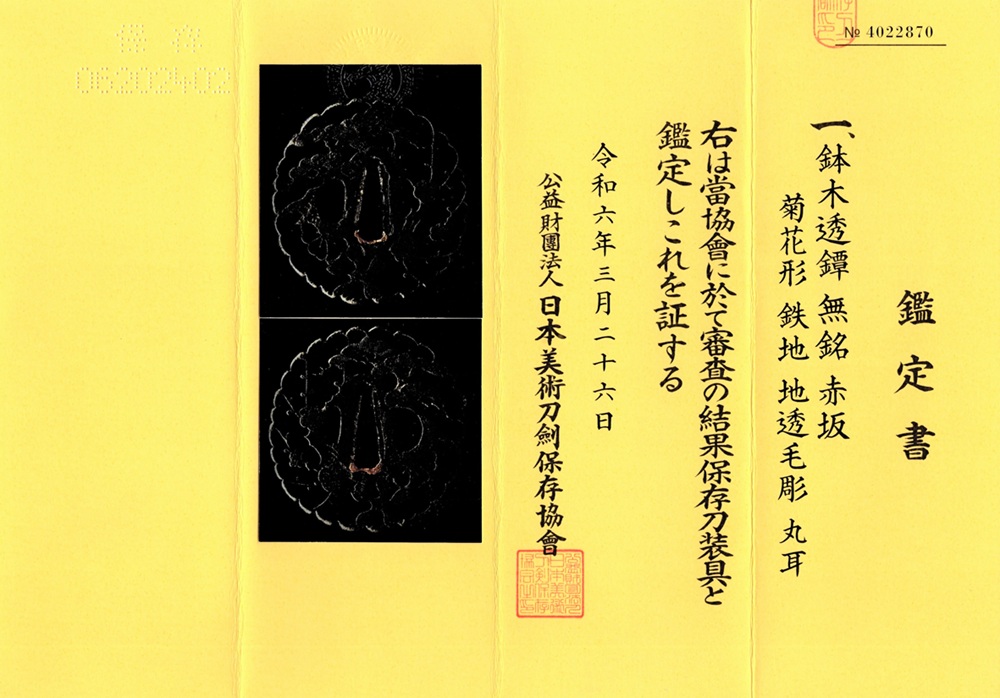
| The design depicts Hachinoki (Potted Trees), a famous subject derived from the Noh play of the same name. According to the story, the Kamakura Regent Hōjō Tokiyori, traveling incognito in the guise of a Buddhist monk, was caught in a heavy snowstorm and sought shelter at the humble home of the impoverished samurai Sano Tsuneyo. To warm his unexpected guest, Tsuneyo cut down and burned his cherished potted pine, plum, and cherry trees—his most valued possessions. Though living in poverty, he spoke passionately of his unwavering loyalty and readiness to answer the call of duty should an emergency arise in Kamakura. Later, when such a summons was issued, Tsuneyo hastened to Kamakura, where he discovered that the monk had in fact been Hōjō Tokiyori himself. In recognition of his loyalty and sincerity, Tsuneyo was rewarded with lands and status. The story has long been celebrated as an example of the samurai virtues of loyalty and self-sacrifice. This tsuba depicts the pine, plum, and cherry trees of the Hachinoki story. The rim is ingeniously shaped to resemble a snowflake roundel (yukiwa), reinforcing the winter setting of the tale. The composition is notable for its unusually small kogai-hitsu opening and its finely executed openwork design. Elegant, refined, and highly sophisticated, it is an excellent example of the Akasaka school's artistic taste and craftsmanship. Passed NBTHK Hozon Tōsōgu shinsa in 2024. |

 Search