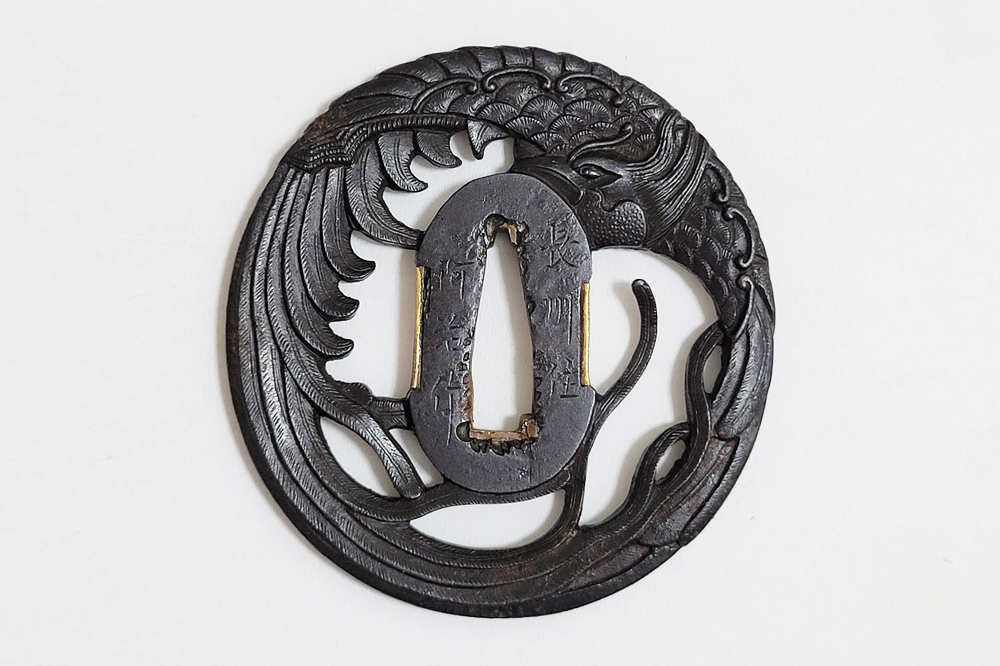
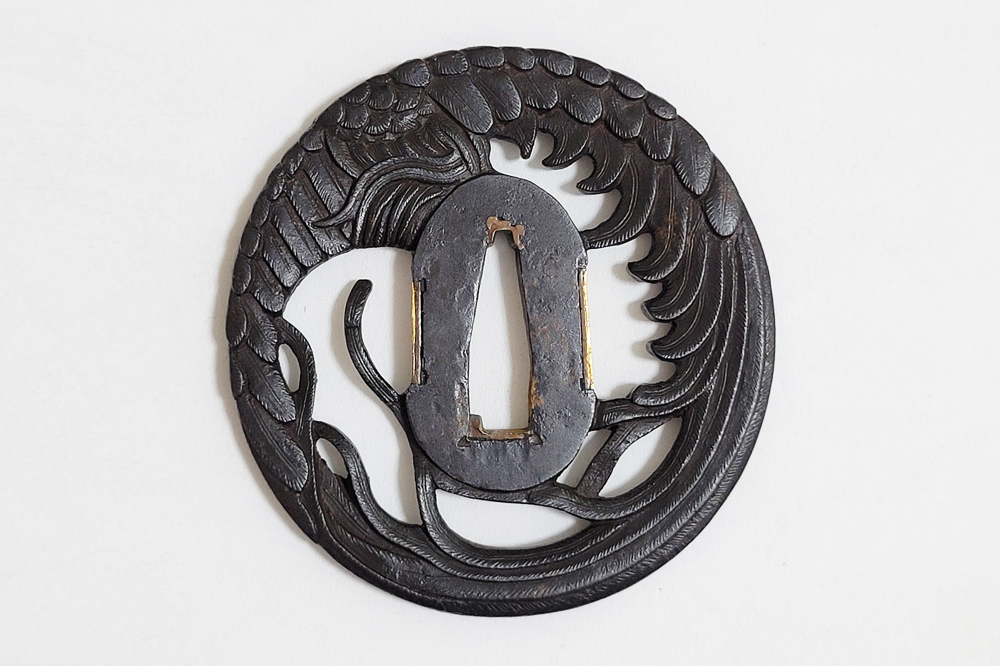
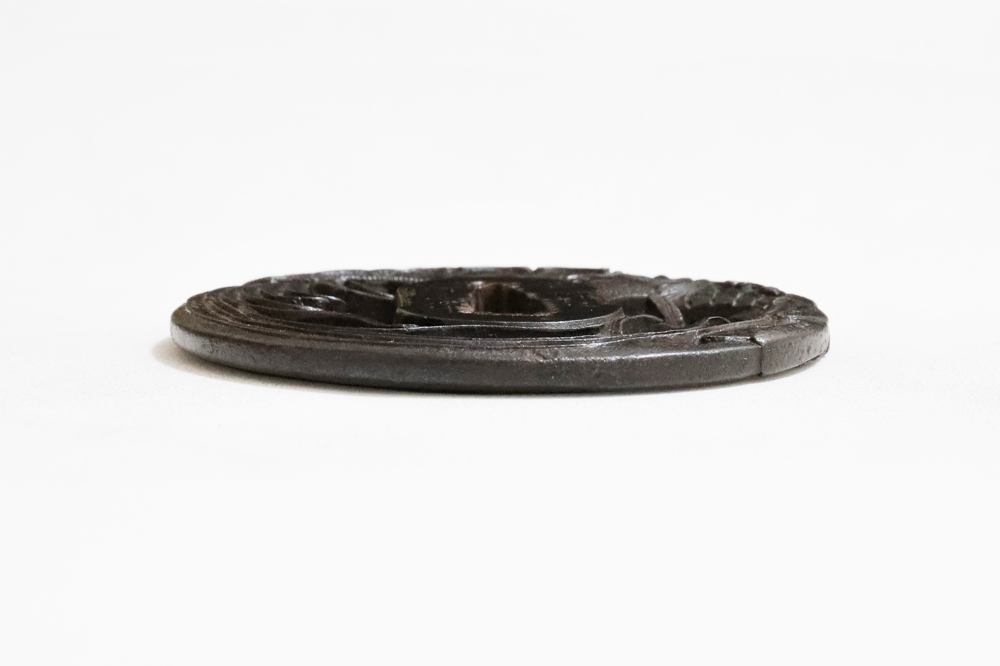
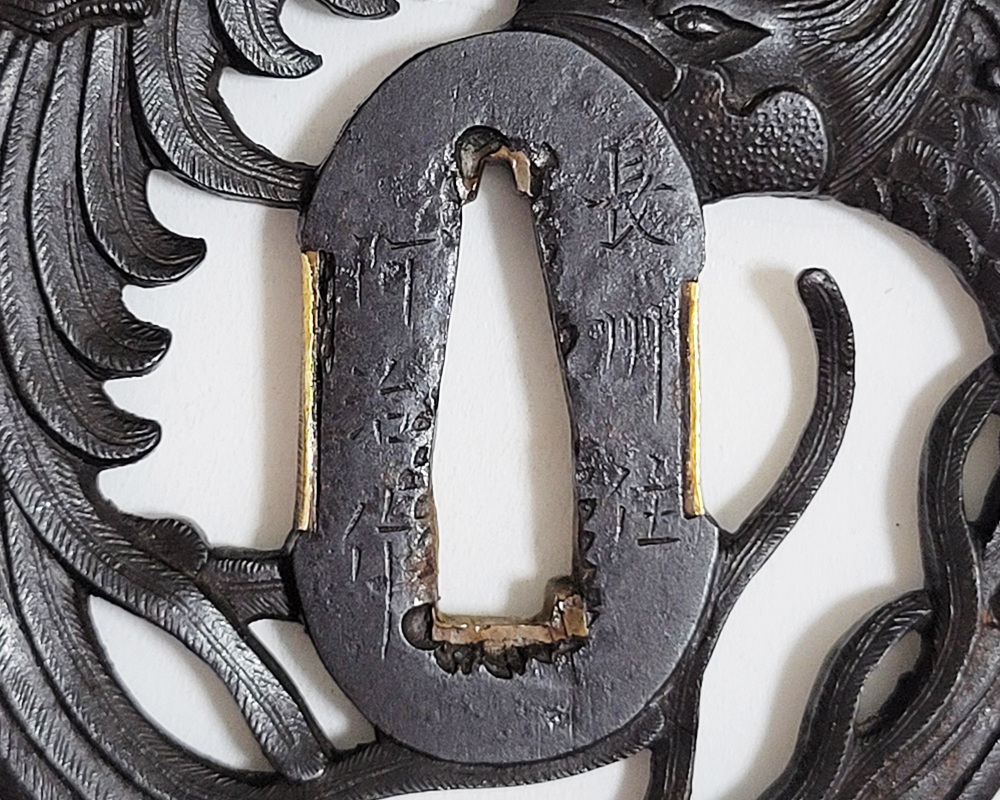
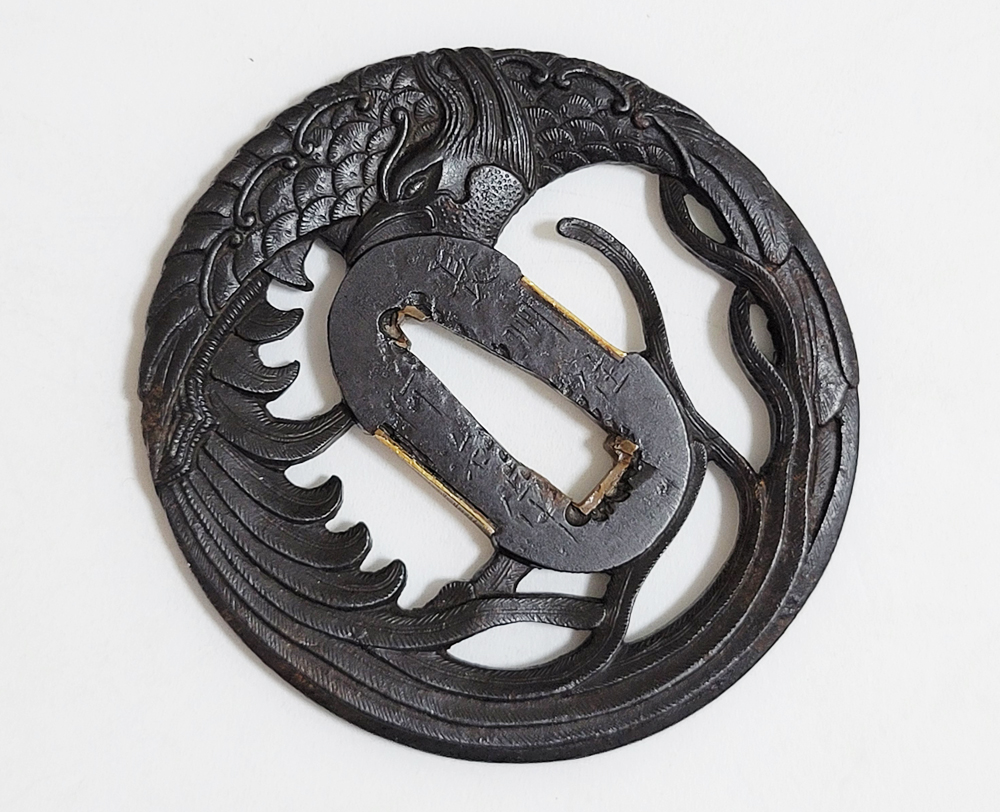
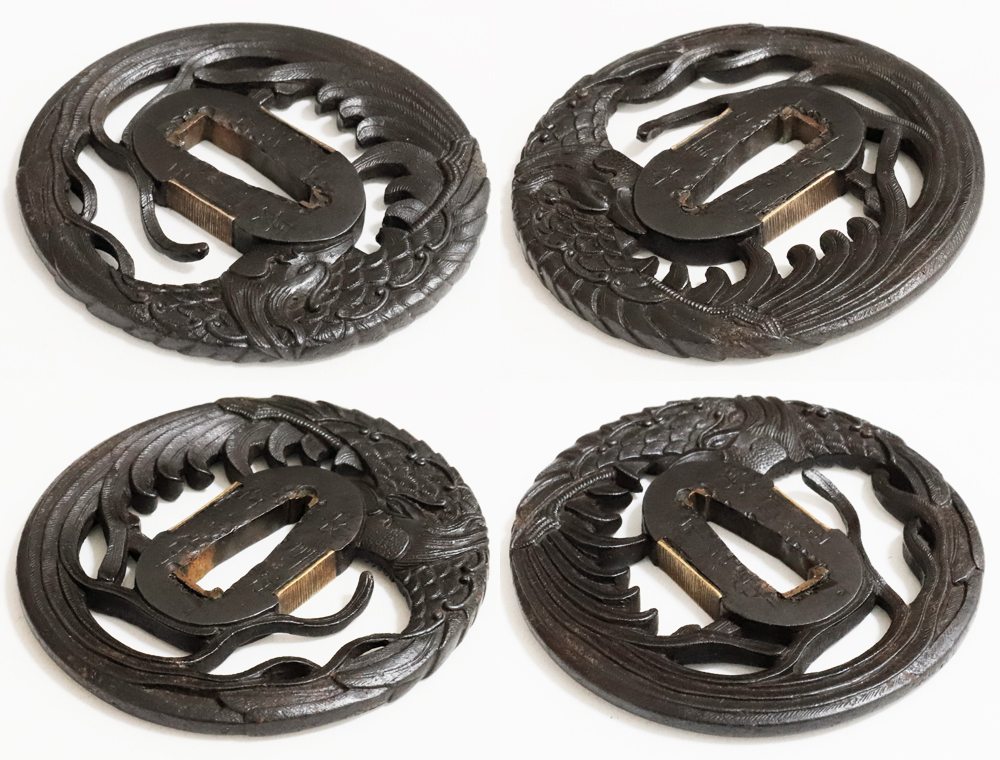
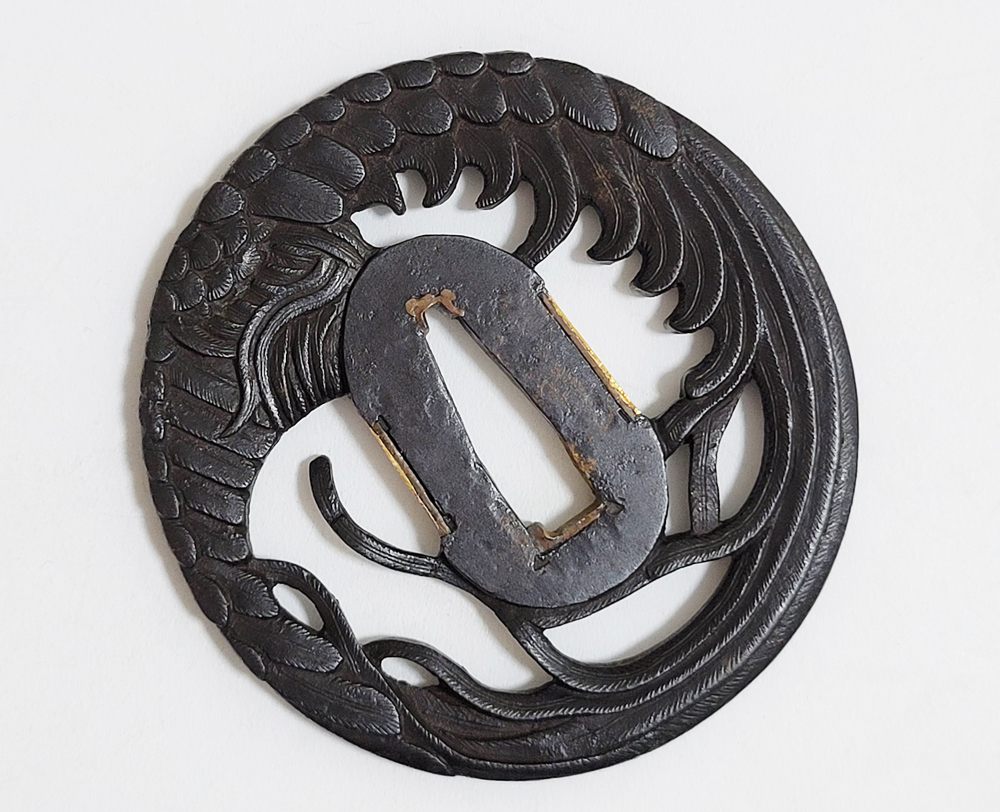
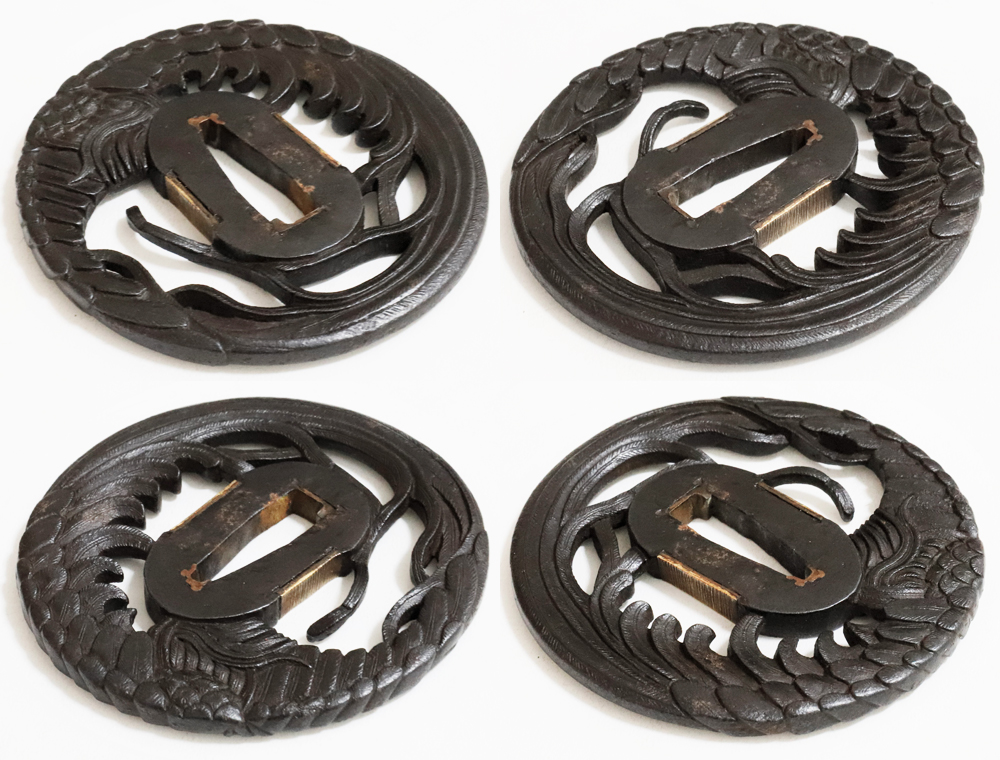
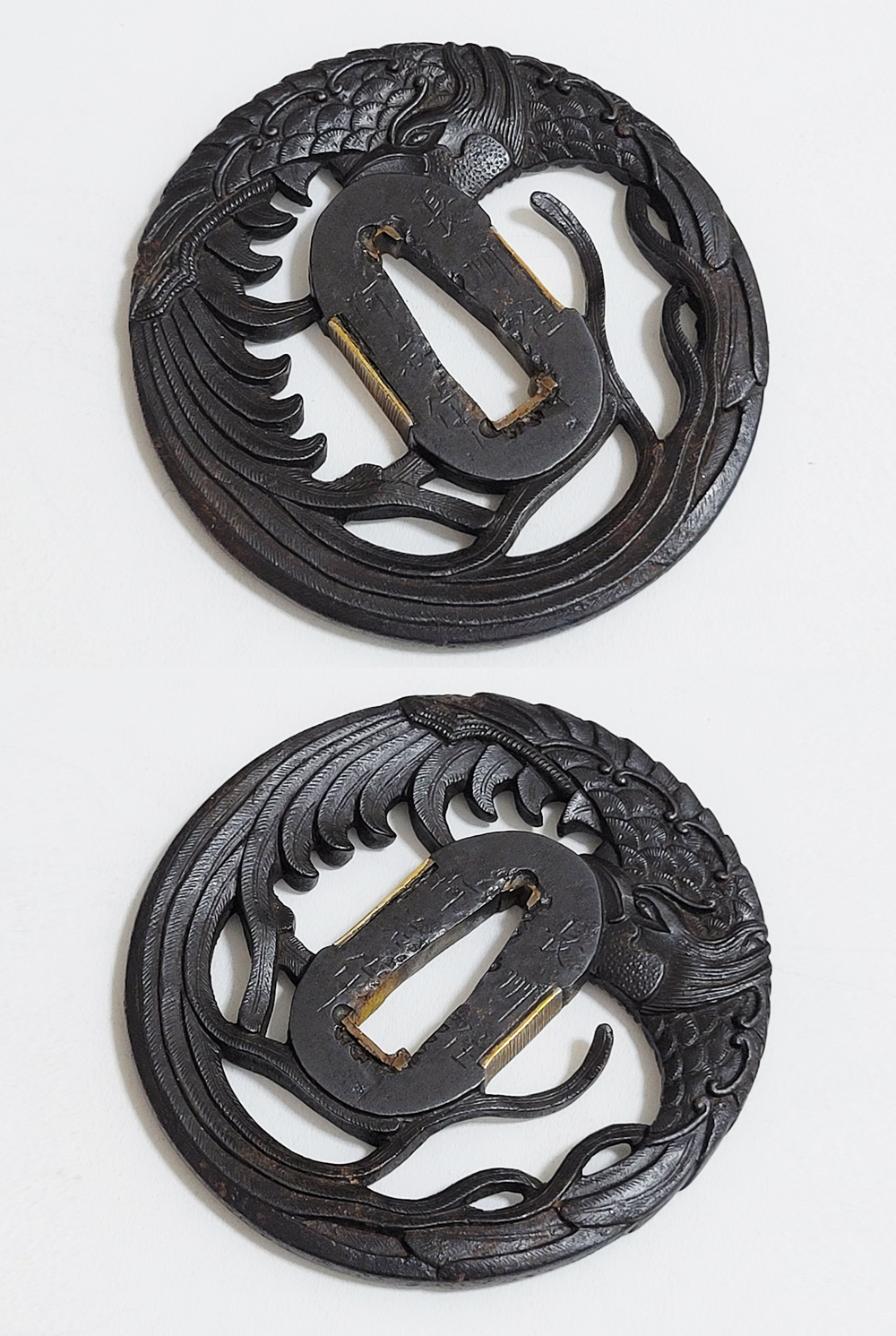
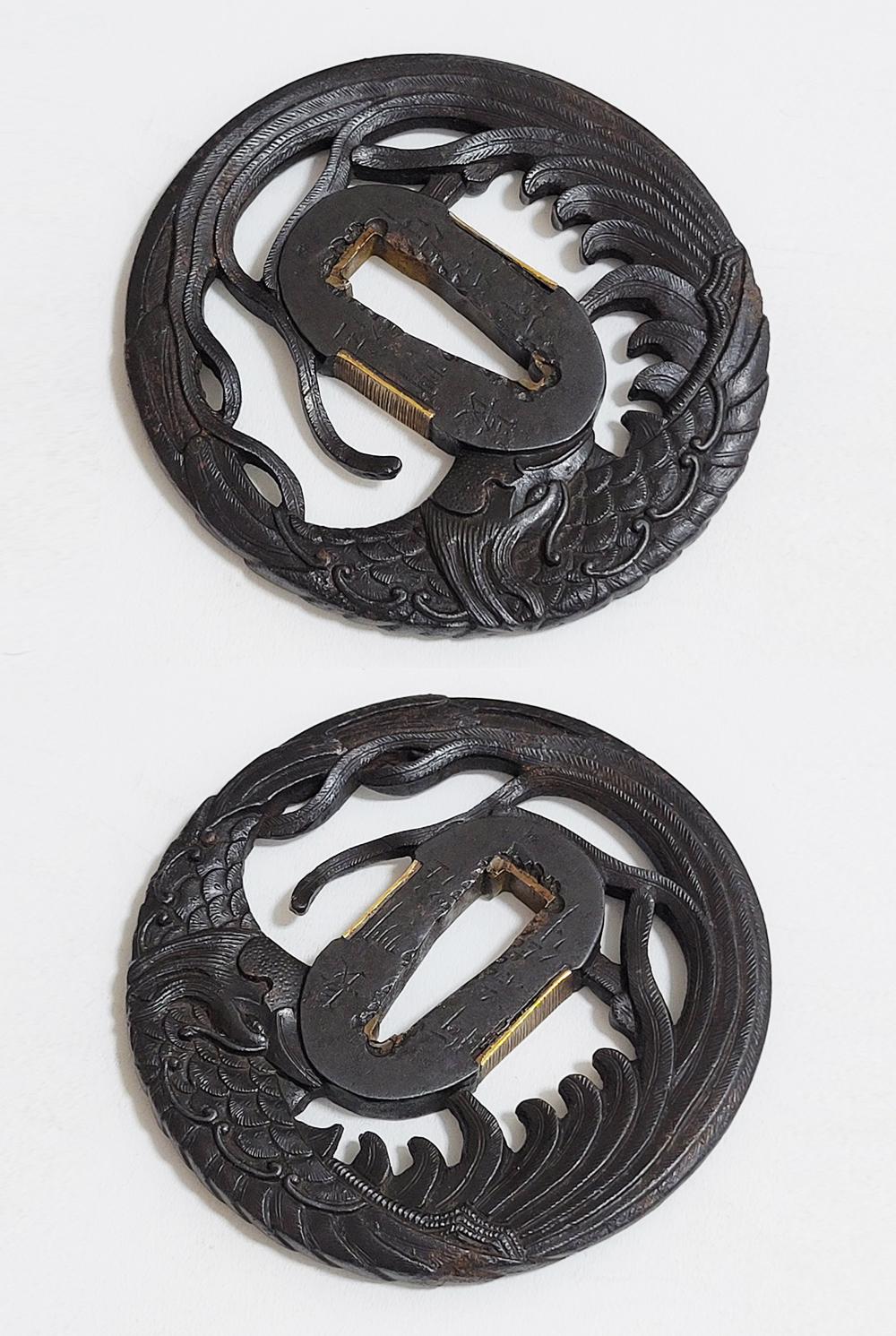
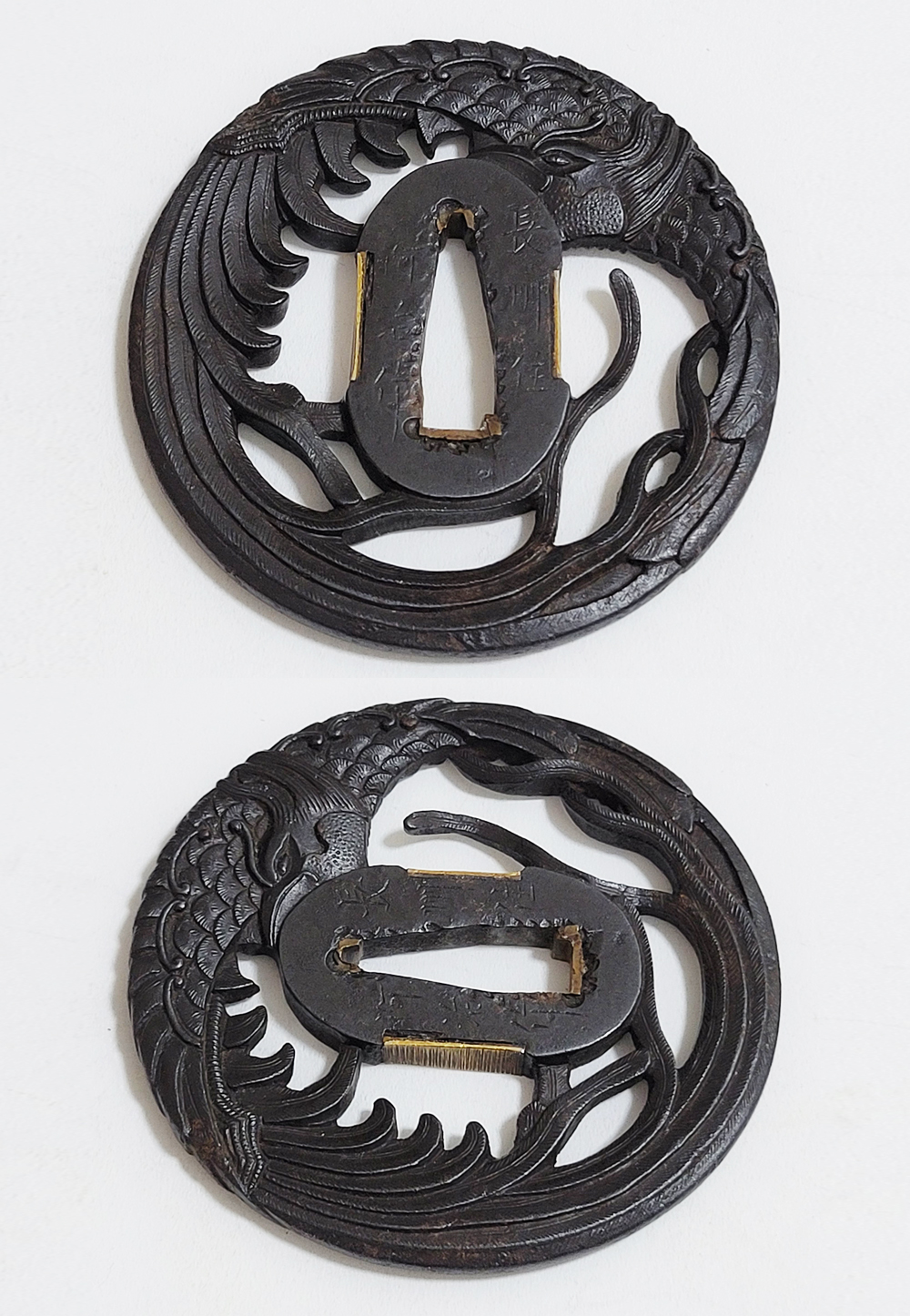
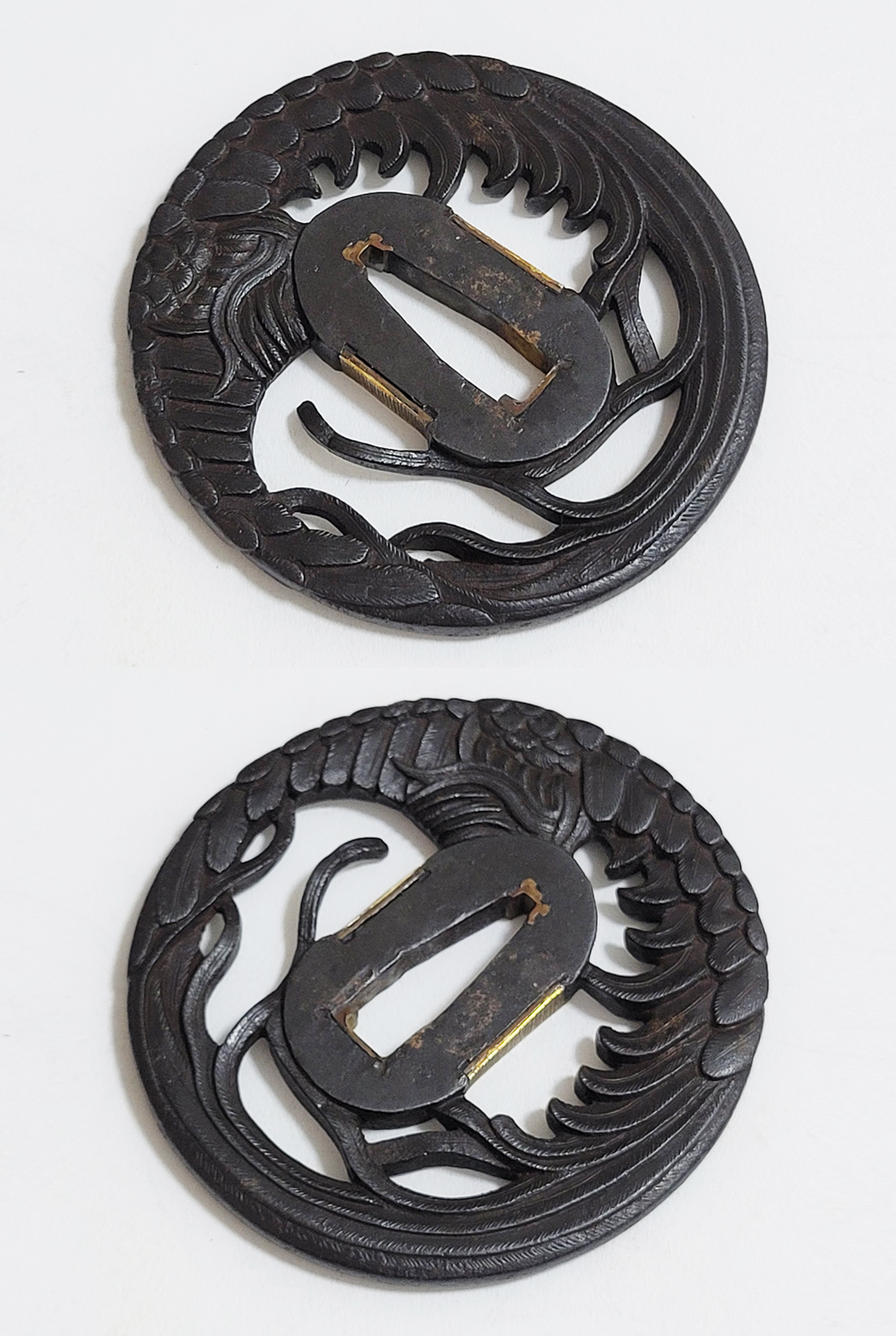
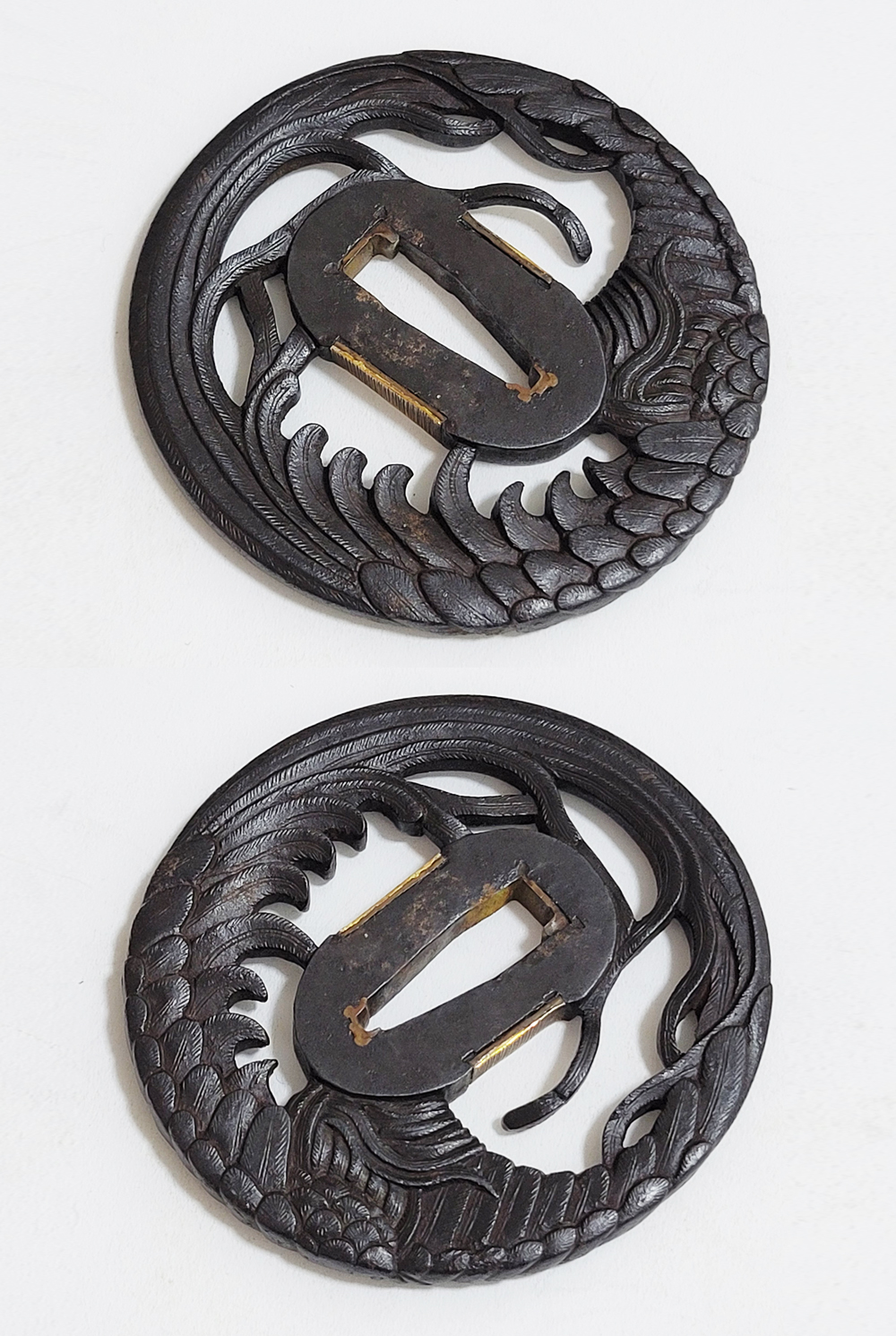
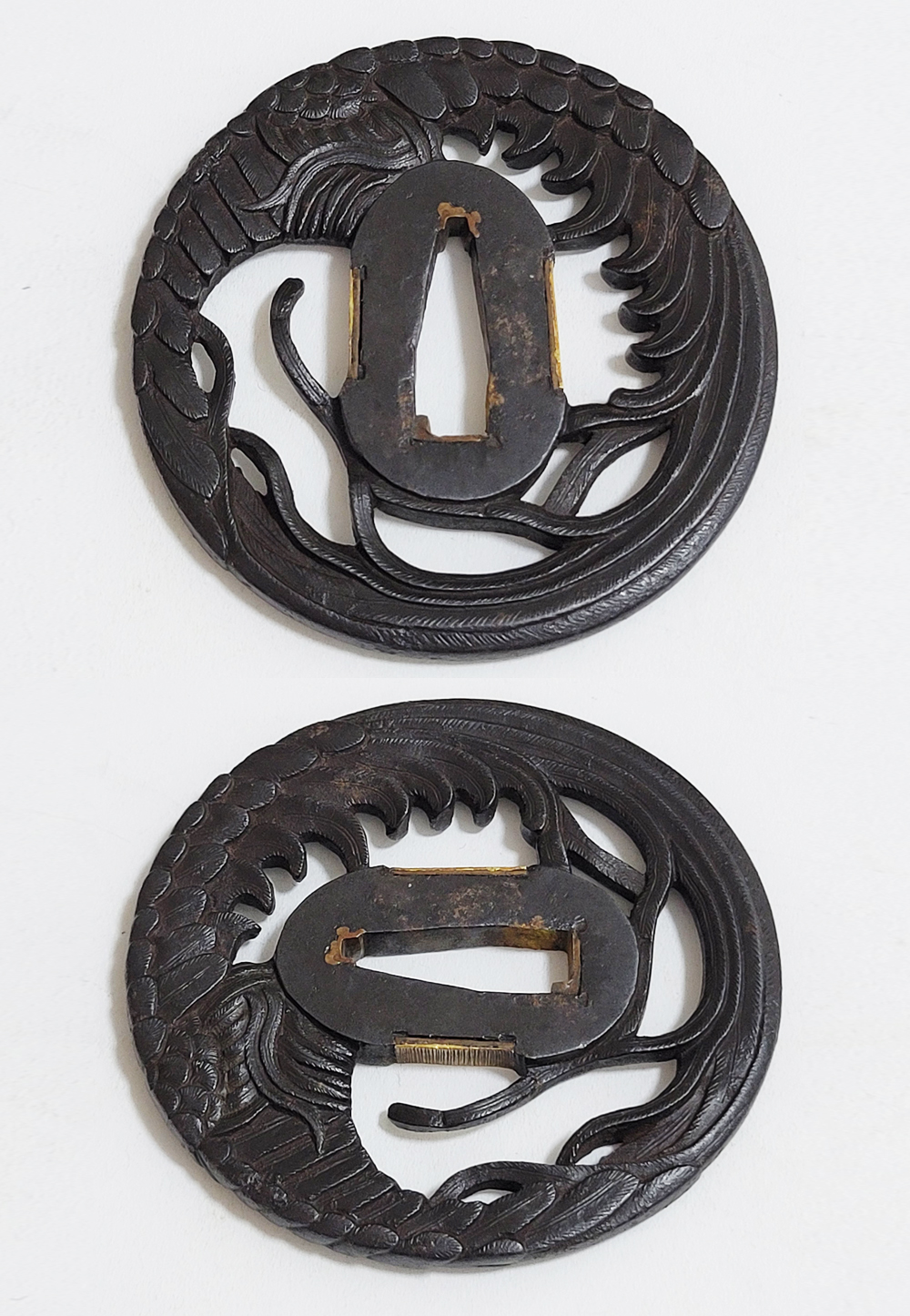
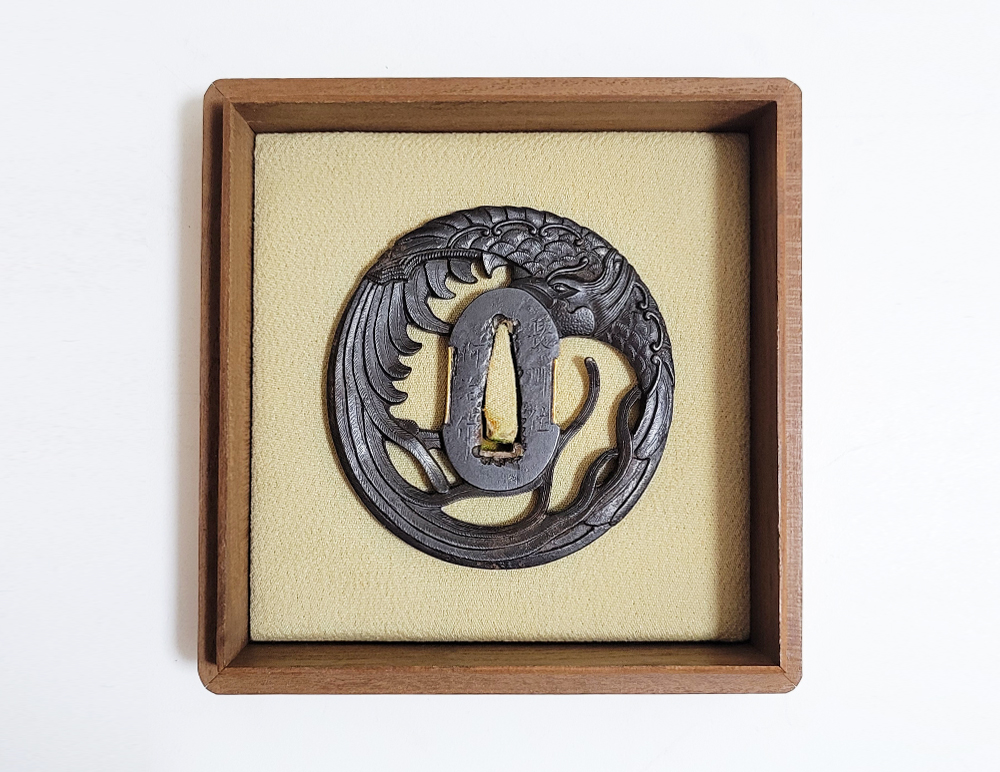
| This is a Chōshū tsuba with openwork phoenix design, signed “Chōshū-jū Kawaji saku.”The phoenix (hōō) is a sacred bird from ancient Chinese legend said to appear only when a virtuous ruler governs the world in peace and justice. It is counted among the Four Sacred Creatures together with the kirin, turtle, and dragon, and has long been respected as a symbol praising the virtue and dignity of emperors and noble rulers.According to traditional belief, each part of the phoenix represents a moral virtue: its head resembles a rooster symbolizing virtue, its wings a swallow representing propriety, its back a turtle signifying righteousness, and its tail a fish expressing faithfulness. Its five-colored feathers are also said to represent the five Confucian virtues of benevolence, righteousness, propriety, wisdom, and faith.The Kawaji family was one of the main Chōshū metalworking lineages active during the late Edo period. They commonly signed works with inscriptions such as “Nagato no Kuni (Chōshū) Hagi-jū Kawaji saku.” Metalworkers of this school generally did not use individual personal names.This piece is an elegant and finely crafted example of Chōshū tsuba, featuring carefully executed openwork carving and gold sekigane inserts applied to both hitsu-ana. |

 Search