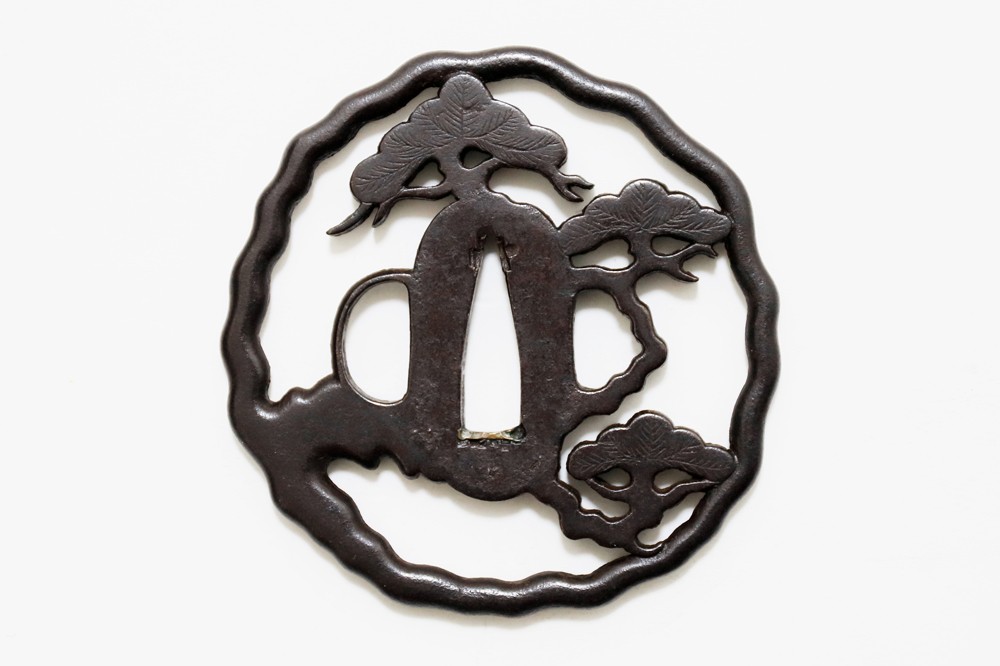
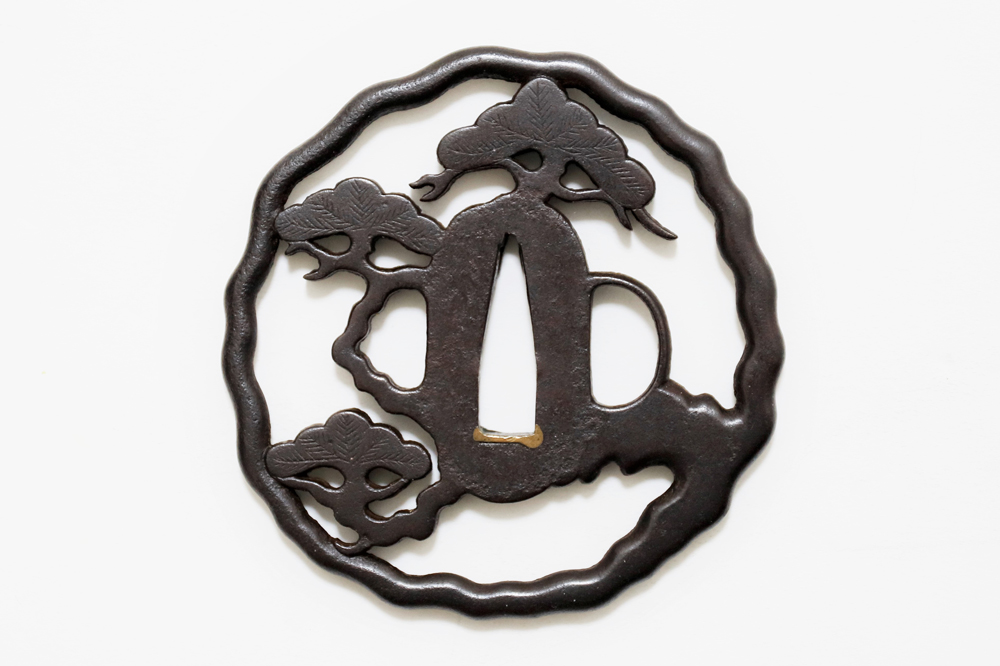
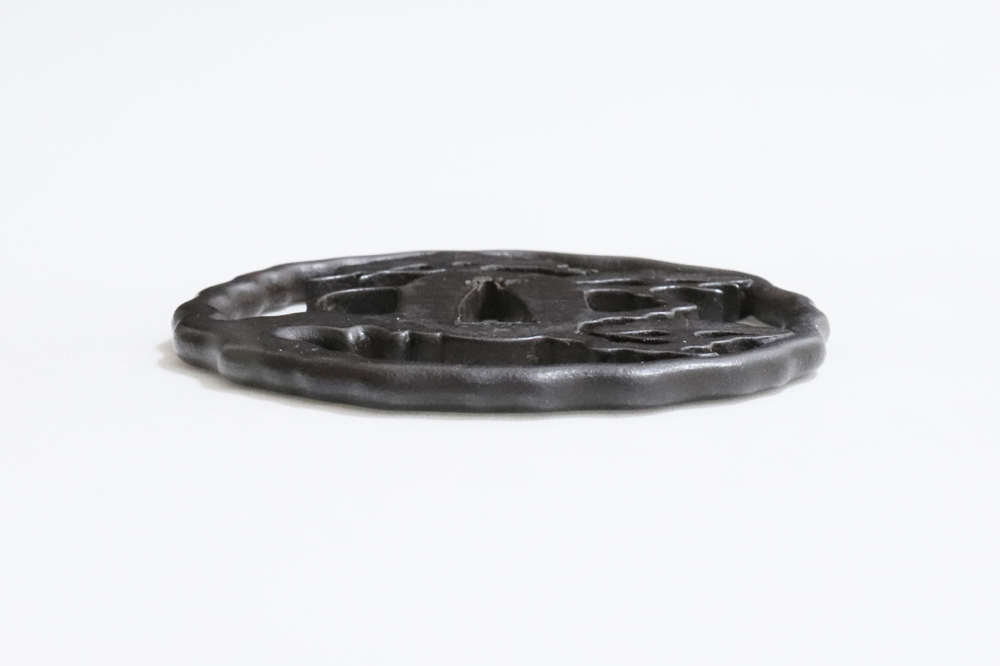
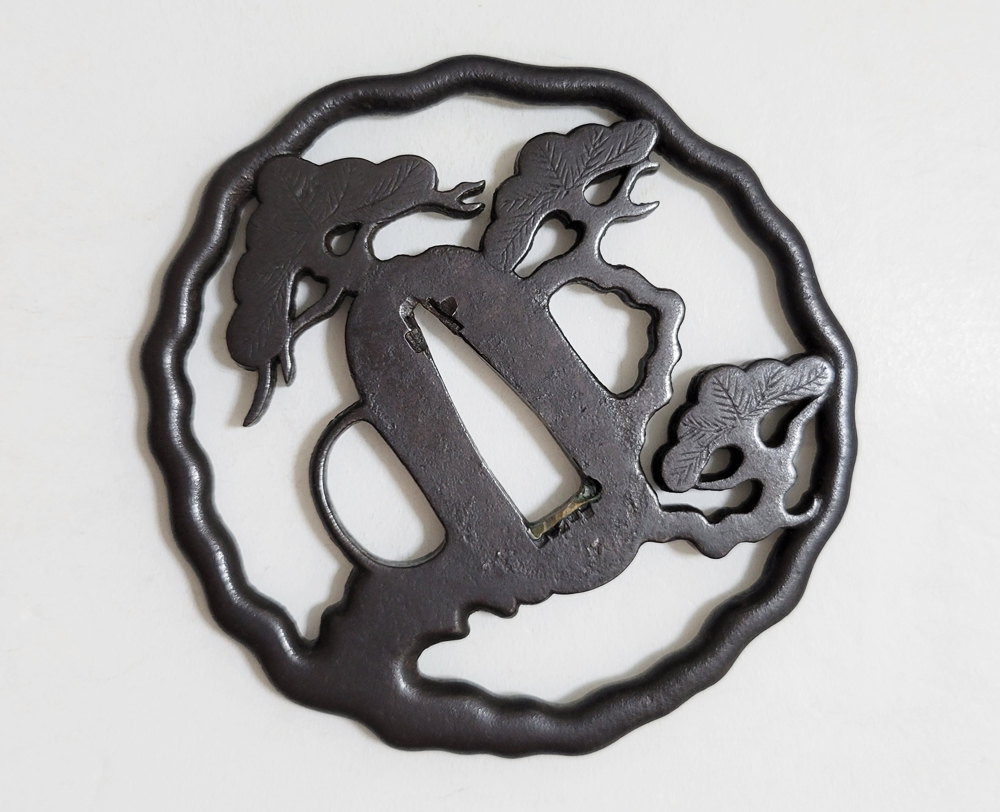
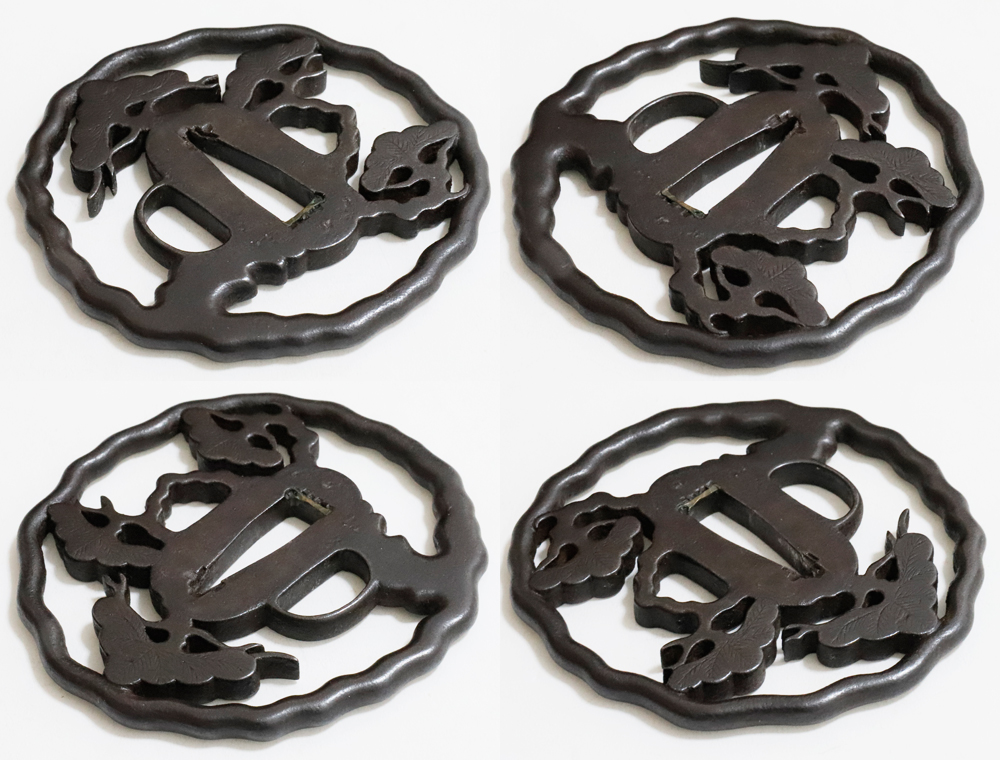
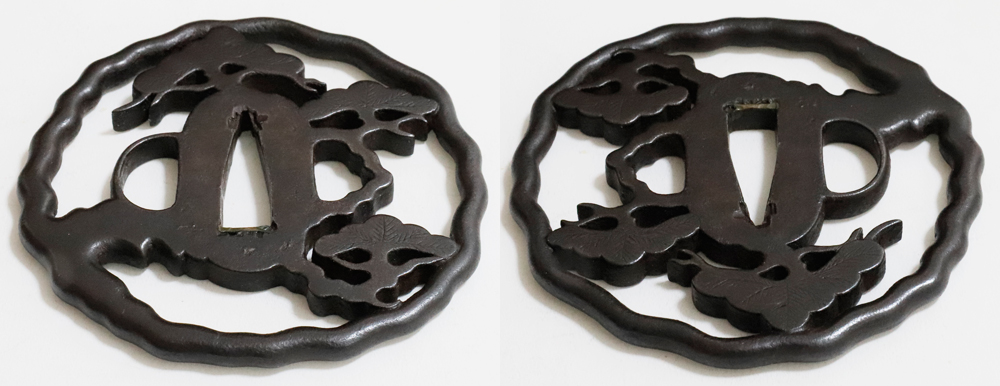
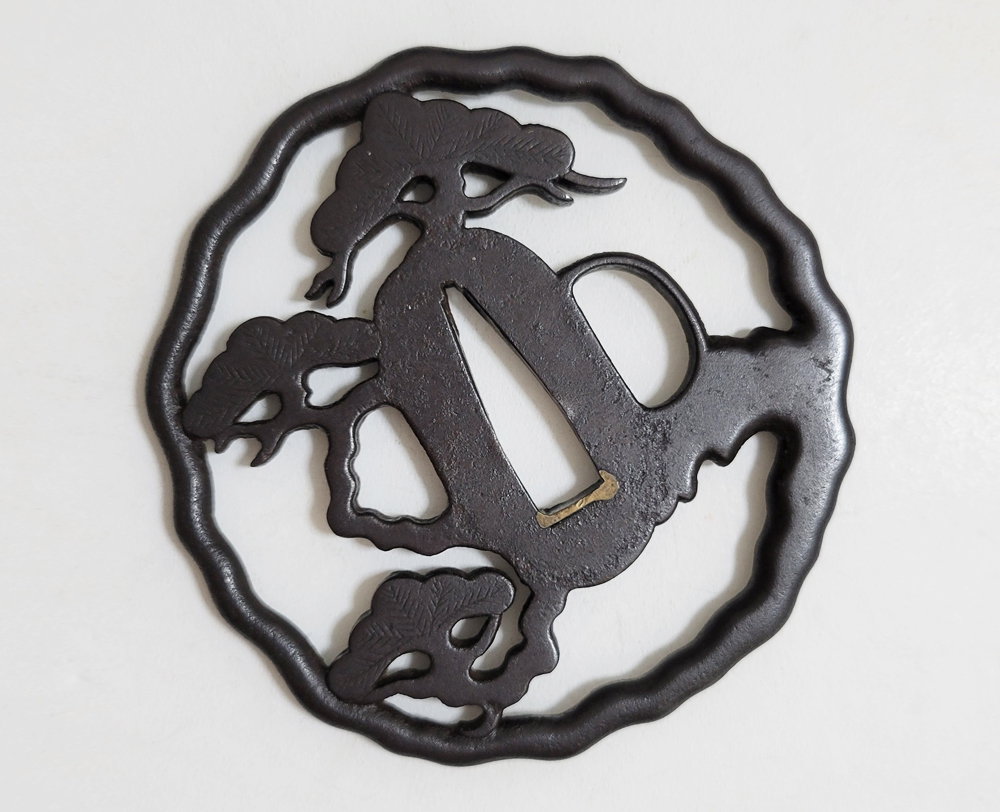
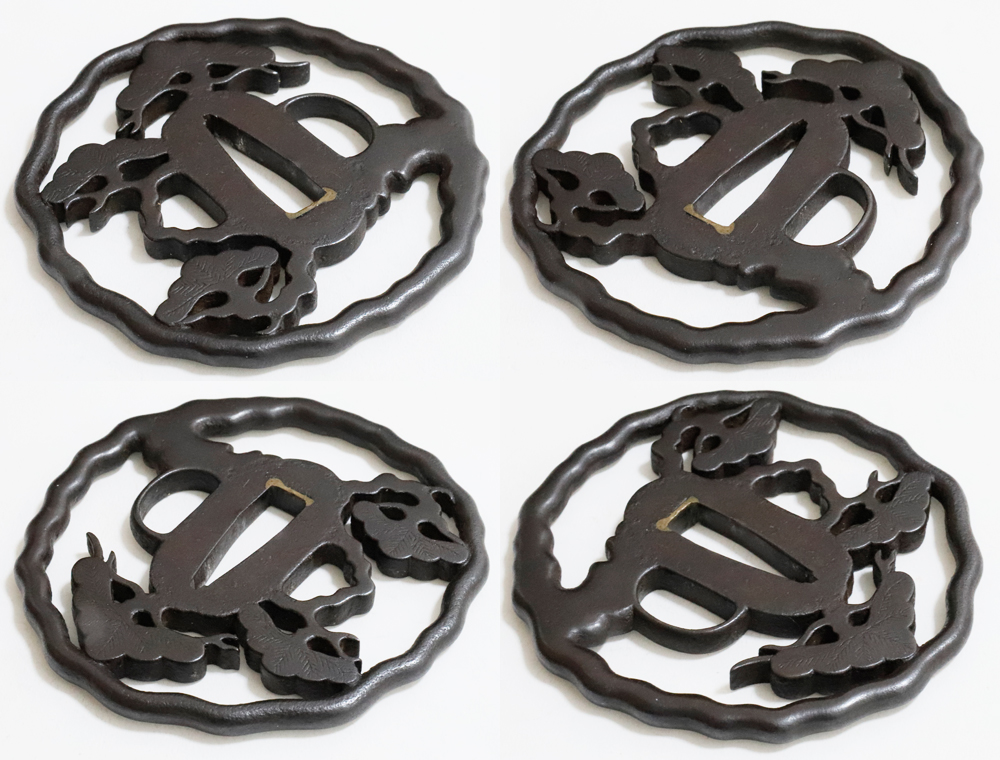
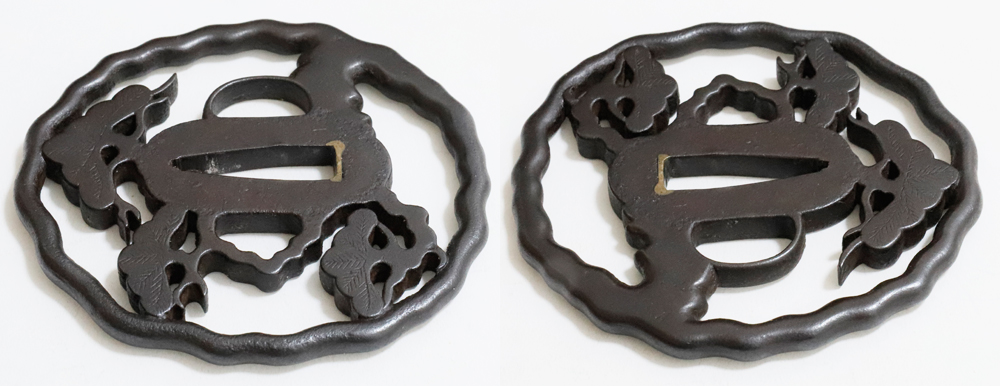
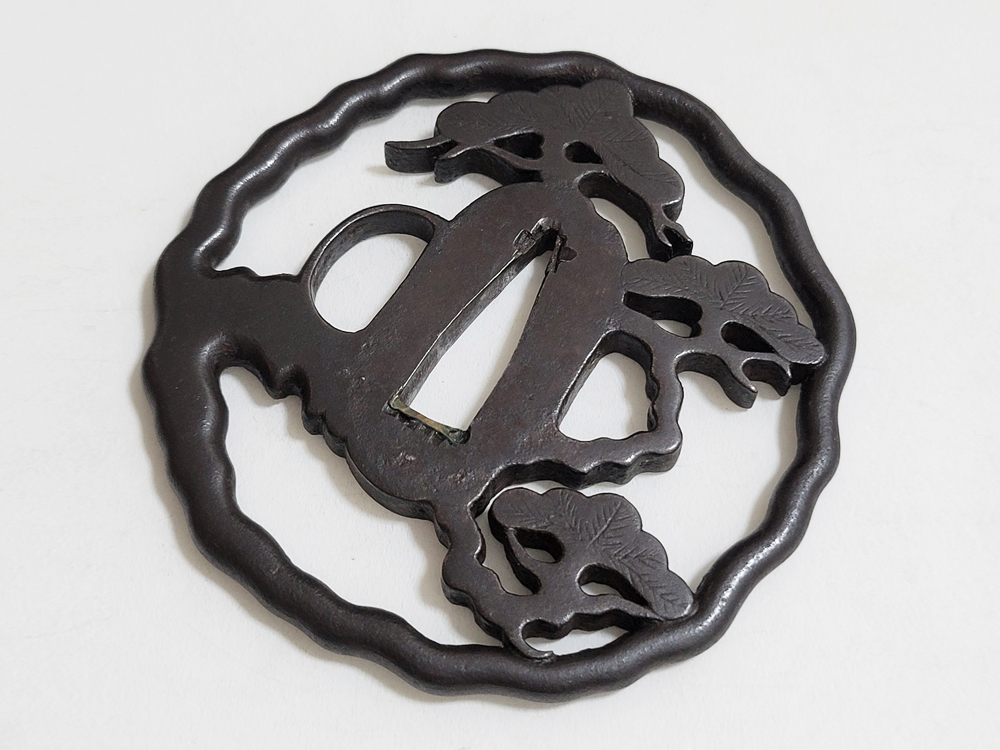
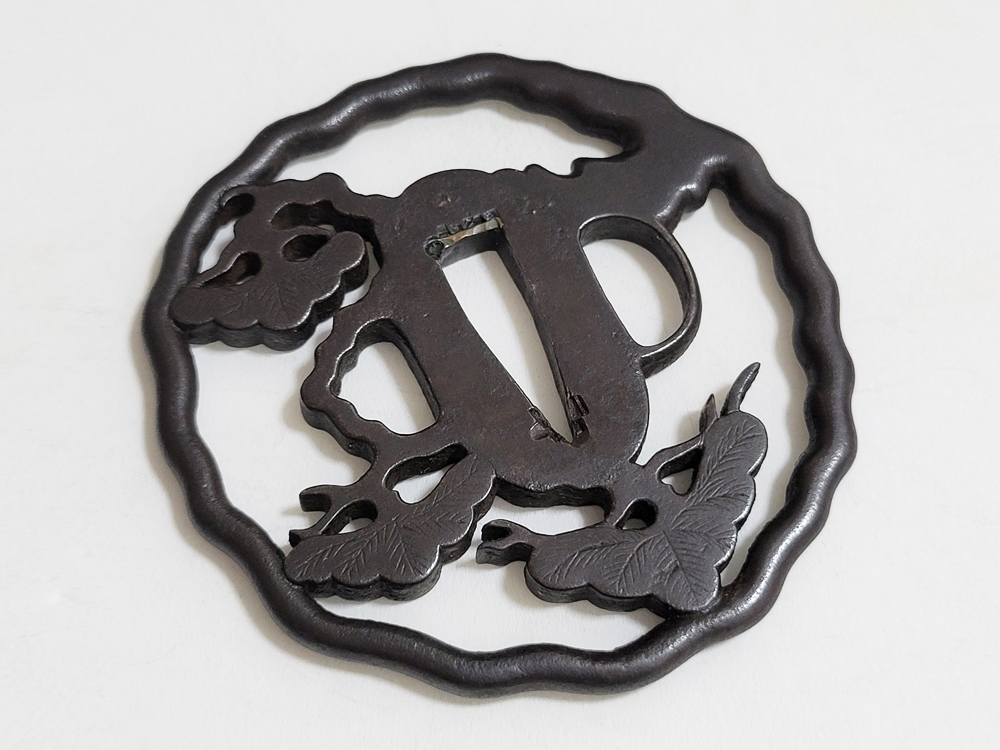
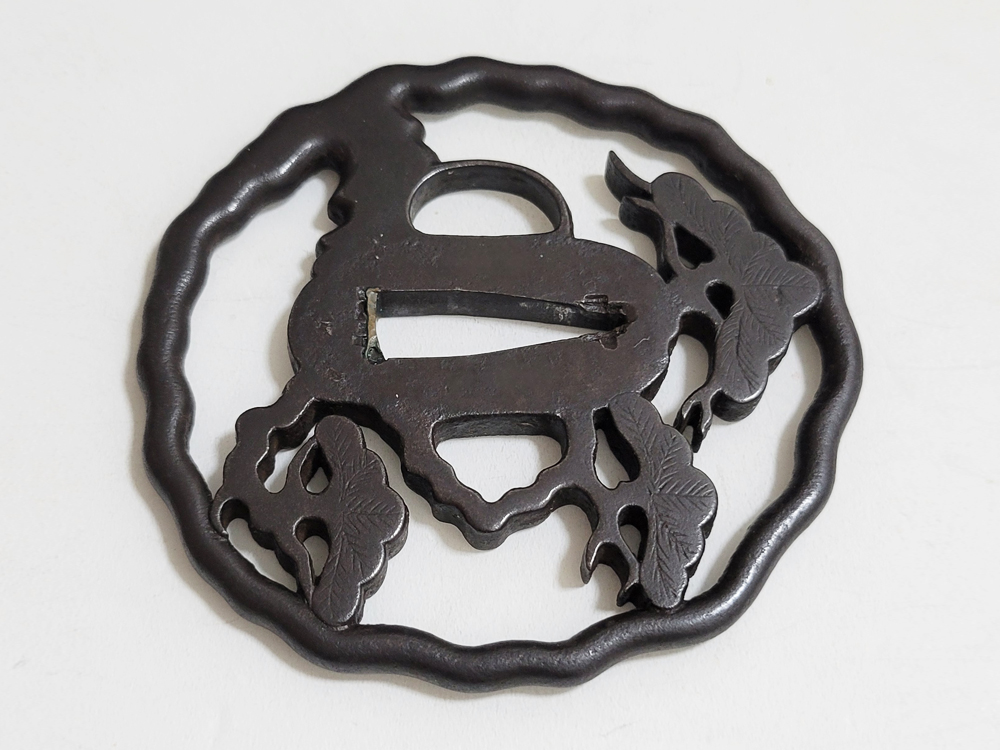
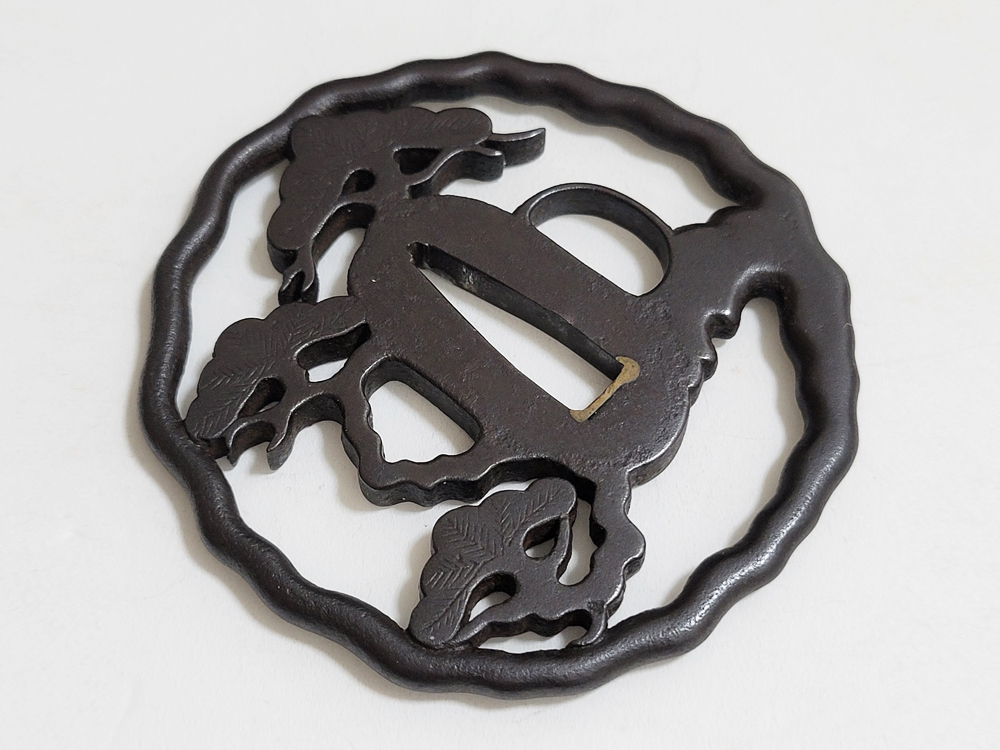
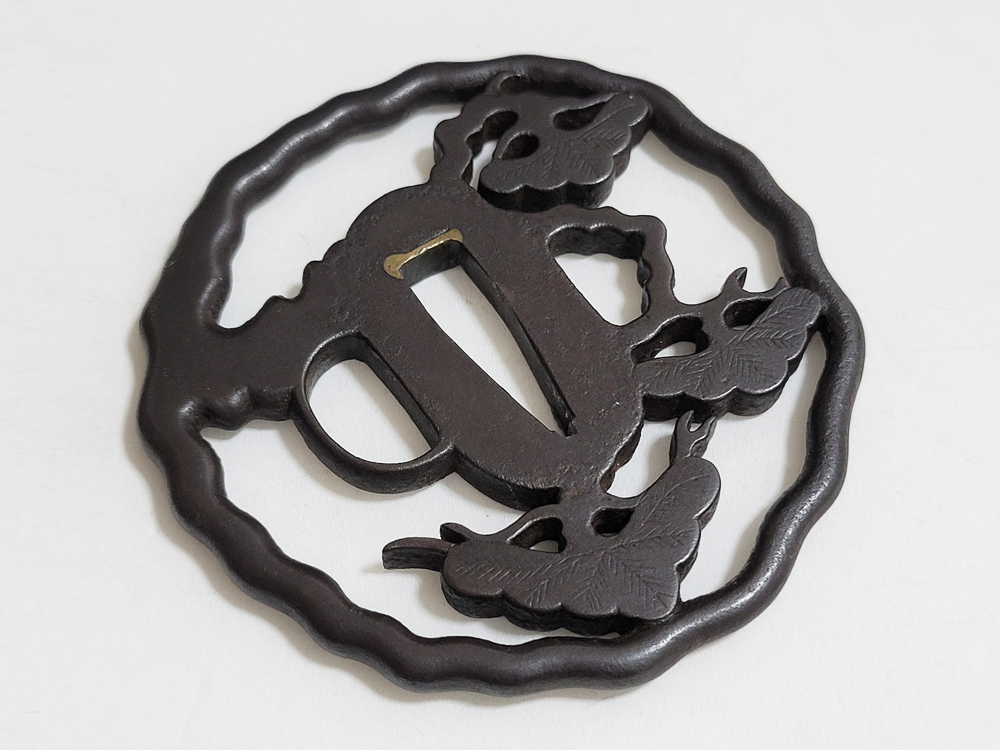
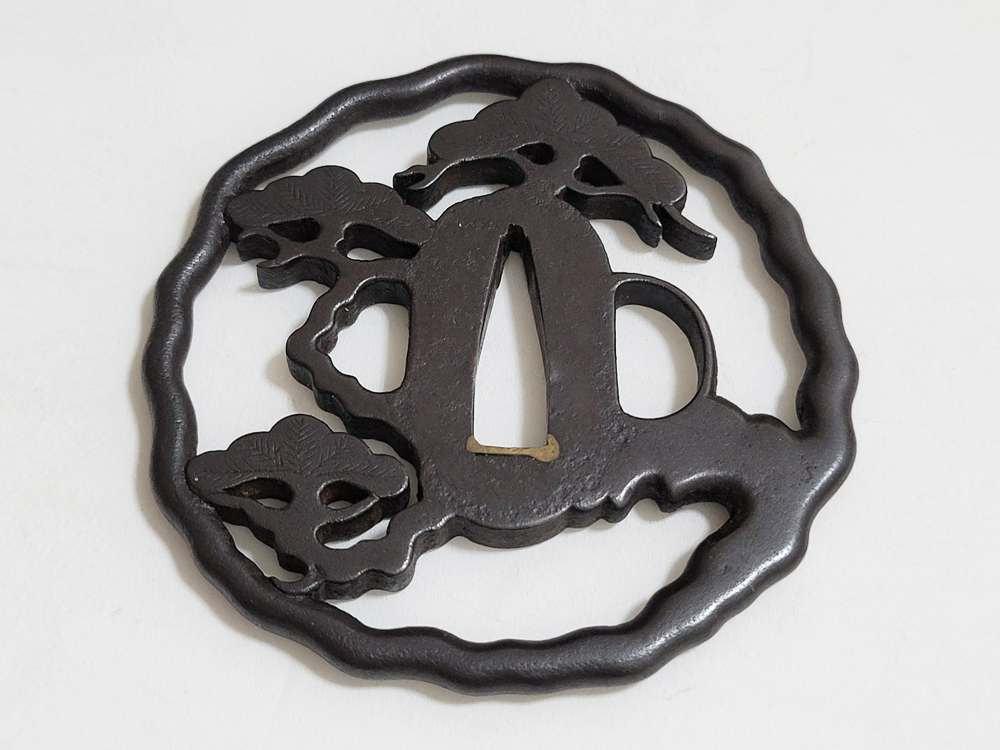
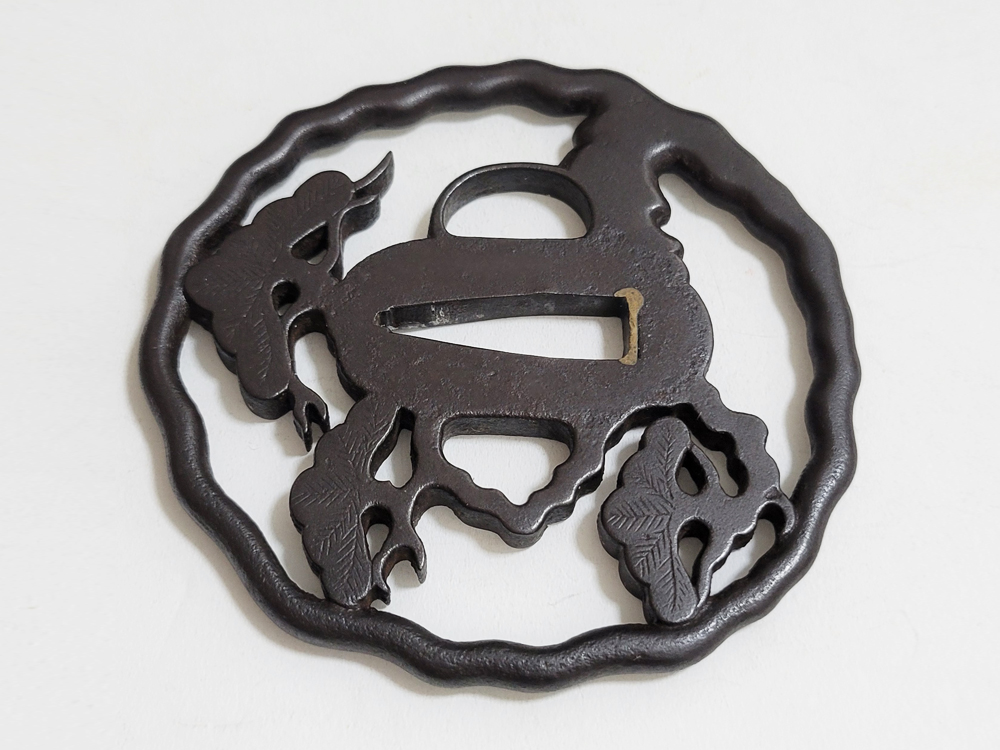
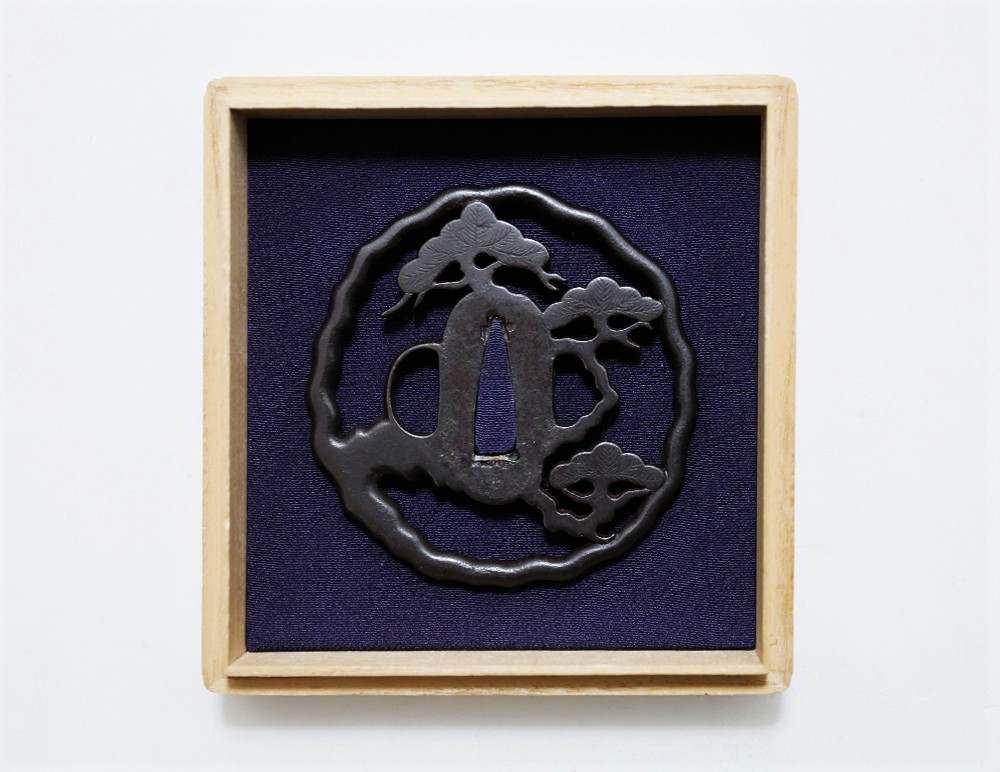
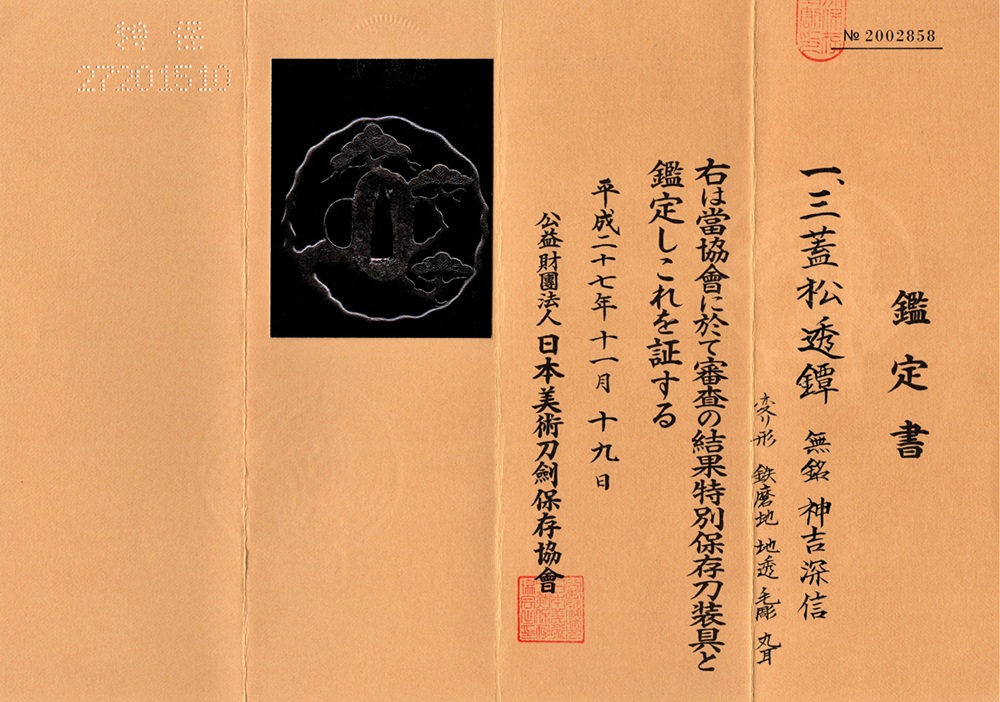
| This tsuba is an outstanding example of Higo workmanship, attributed to Kamiyoshi Fukanobu (深信), the second master of the Kamiyoshi family—one of the last distinguished lineages of Higo metalworkers.Fukanobu was active from 1798 (Kansei 10) to 1851 (Kaei 4).According to tradition, the Kamiyoshi school was entrusted by the Hosokawa clan with preserving the secret techniques of the Hayashi school, which were transmitted to Juhei, the first-generation Kamiyoshi master. Fukanobu was Juhei’s son and successor.The chiseling around the nakago-ana strongly supports an attribution to Kamiyoshi Fukanobu, based on characteristic tool marks unique to his work.The design, “Mitsugaematsu Sukashi” (Three-Tiered Pine Openwork), depicts pine branches arranged in three layered tiers, rendered in openwork. This auspicious motif symbolizes longevity, righteousness, and spiritual order, quietly embodying the ideals and self-discipline valued by the samurai class.In contrast to “Tōmi-matsu sukashi” (Distant-view Pine Openwork), where the outlines of the pine appear soft and indistinct, this work is clearly defined and is therefore classified specifically as Mitsugaematsu Sukashi.This tsuba was awarded Tokubetsu Hozon Tosogu certification in 2015. |

 Search