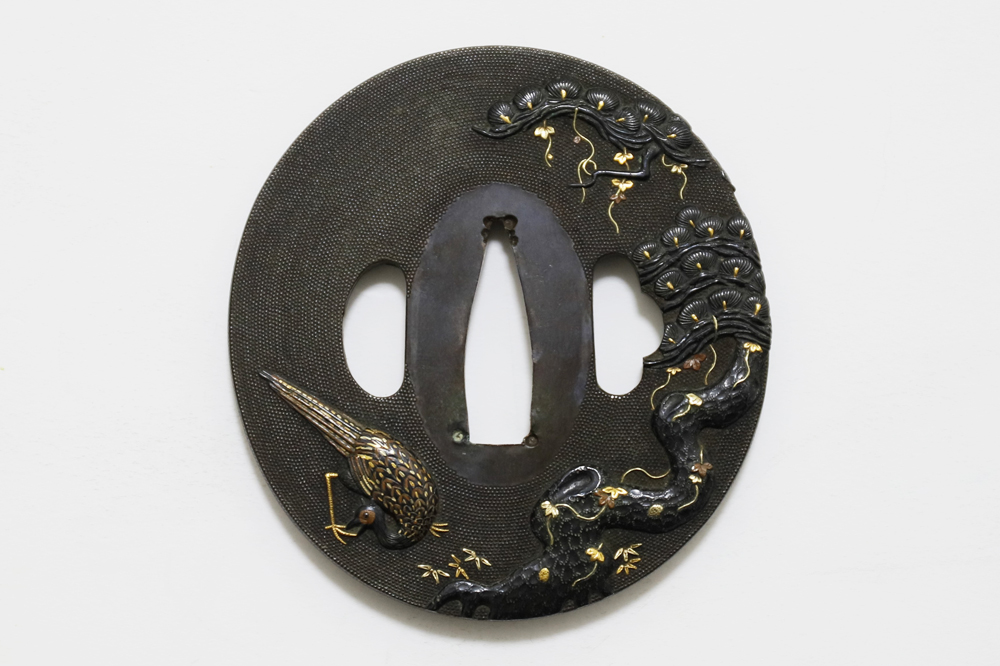
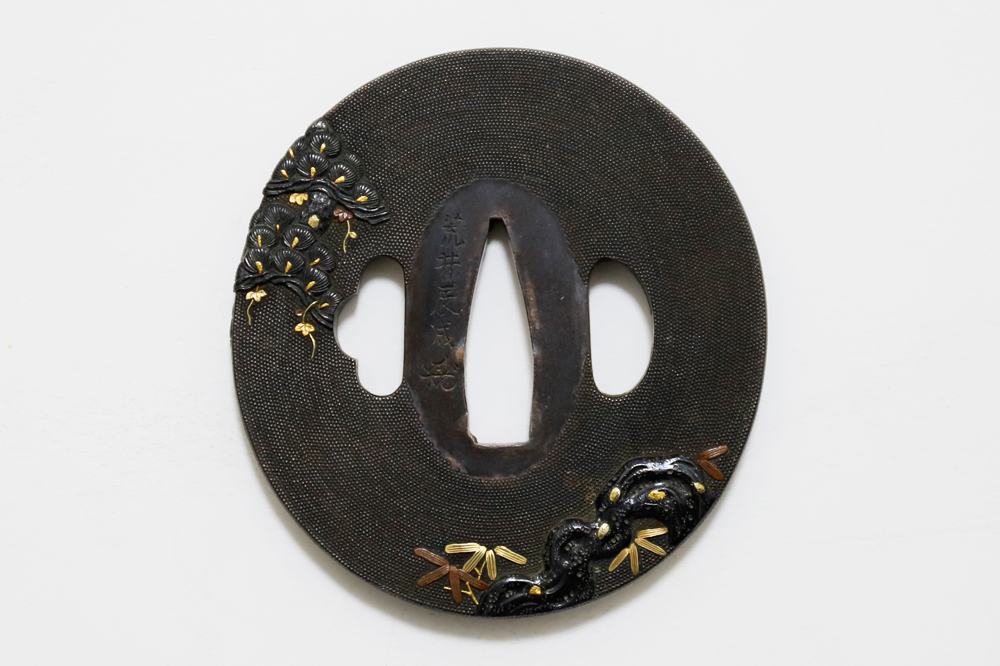
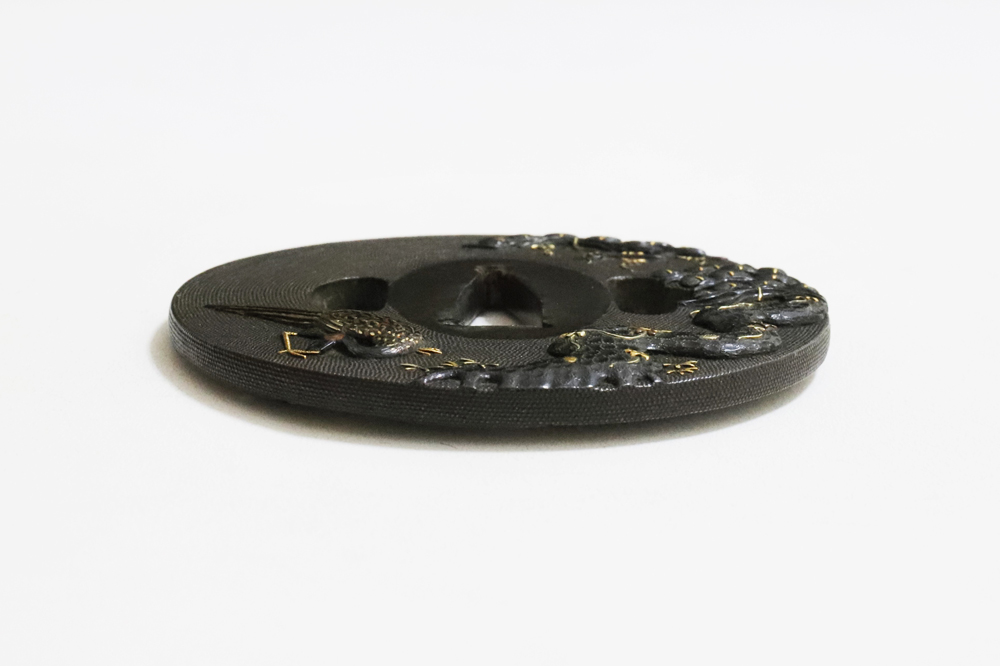
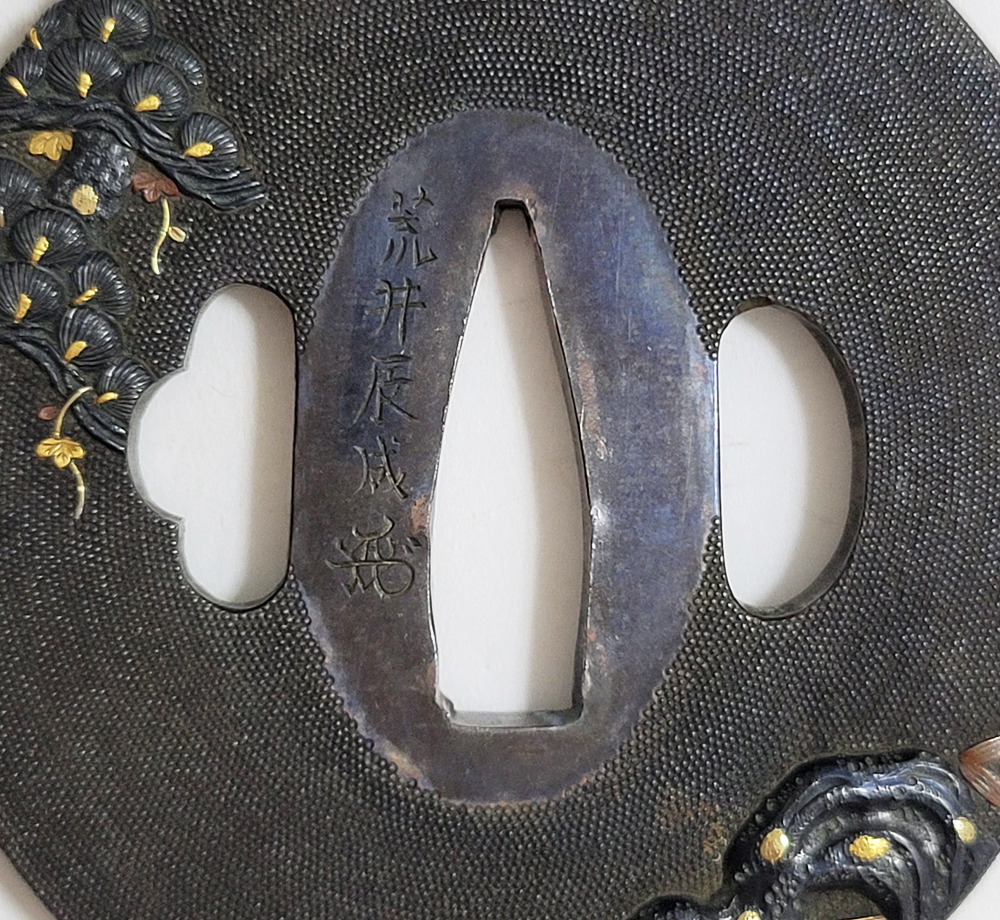
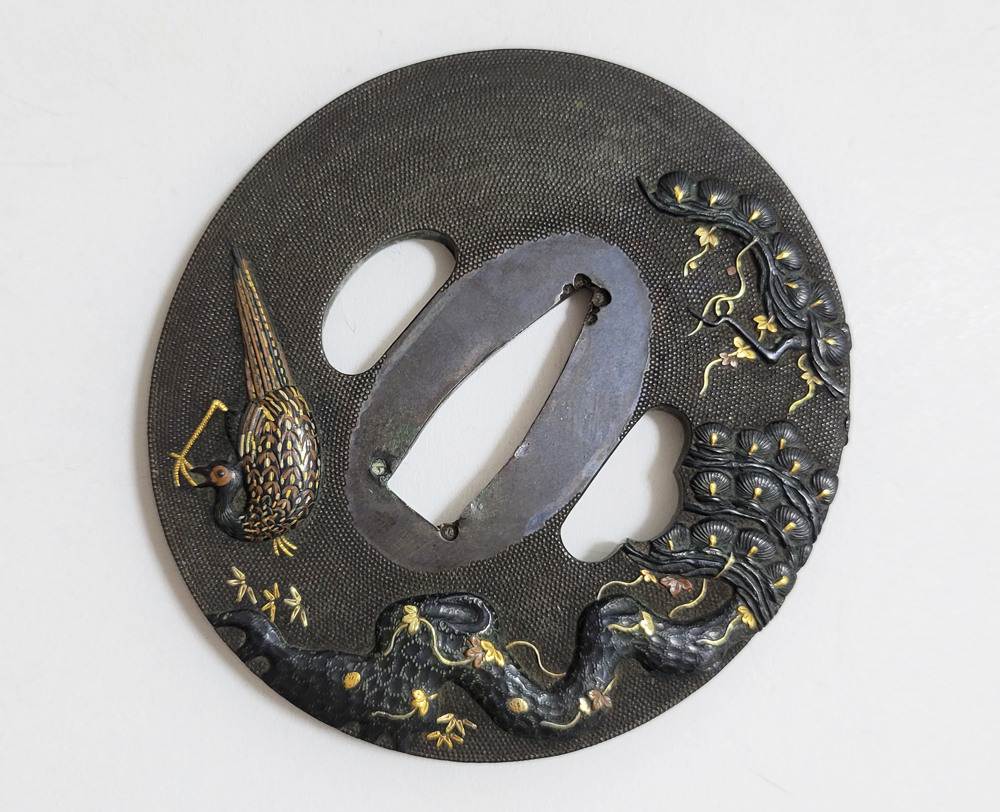
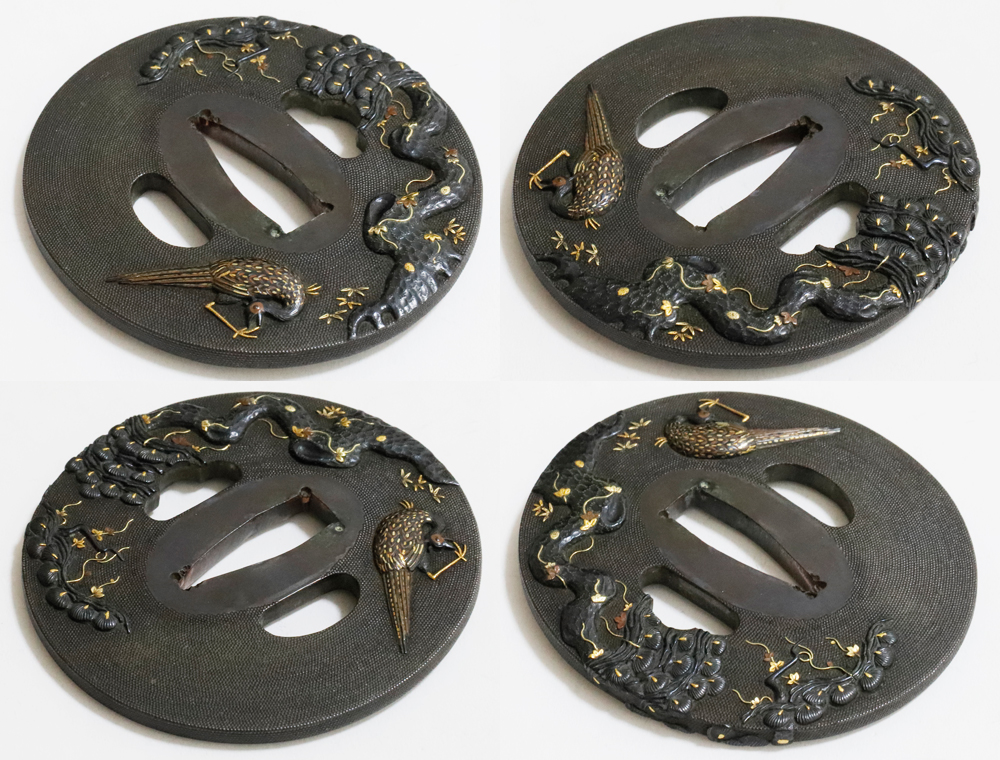
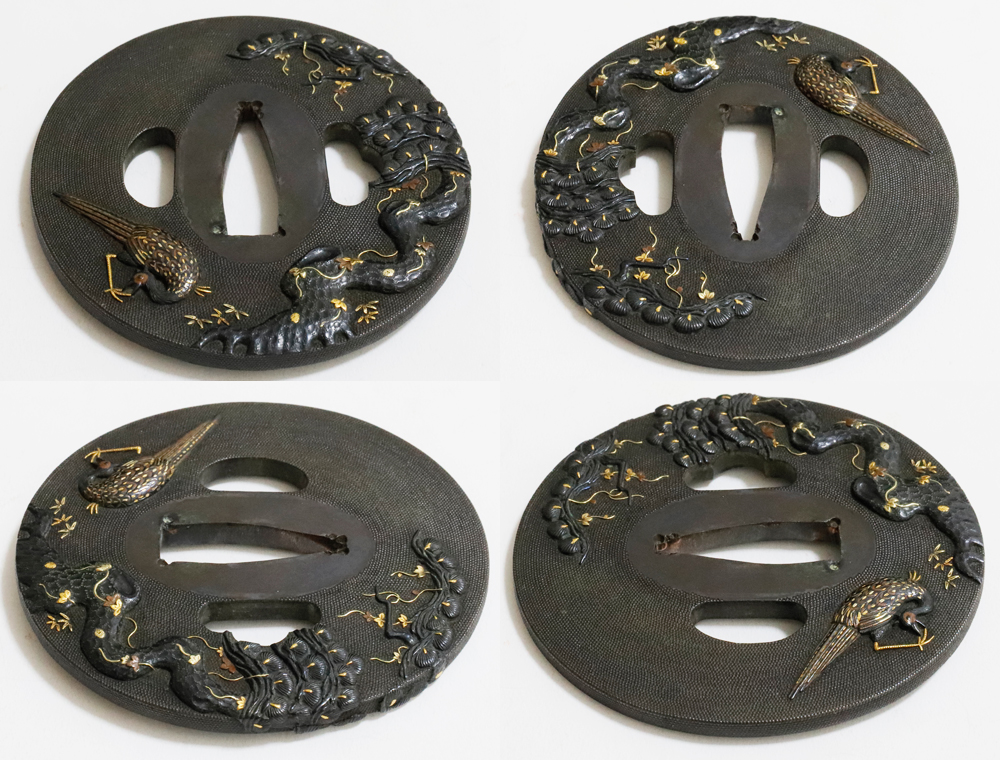
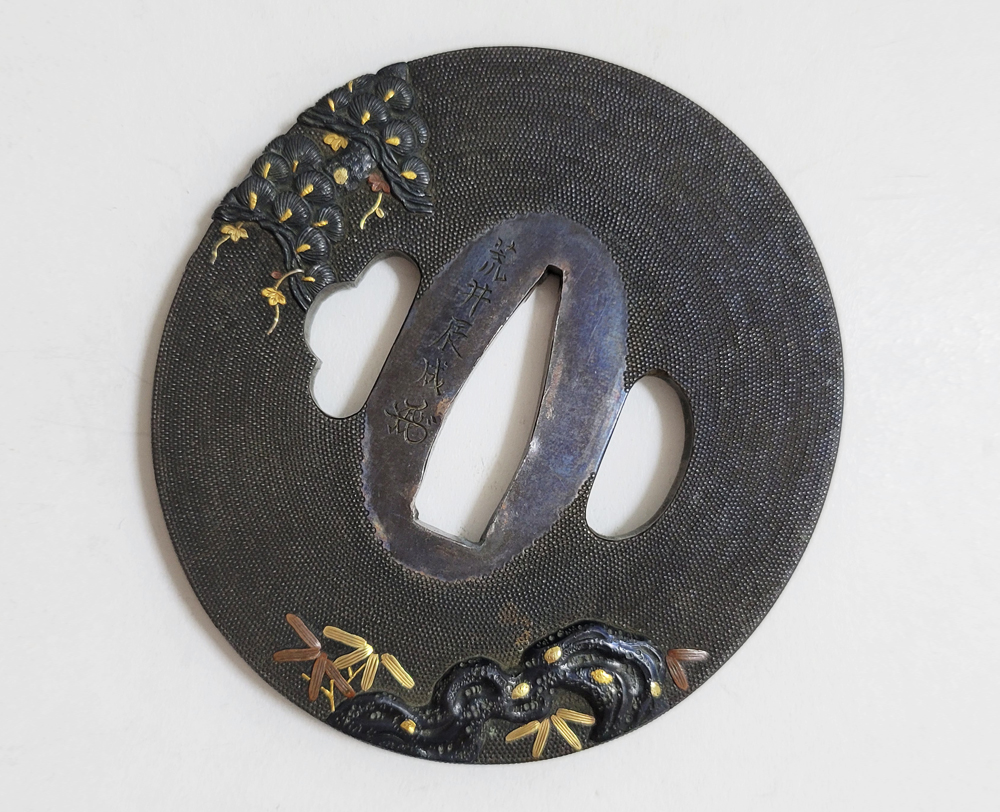
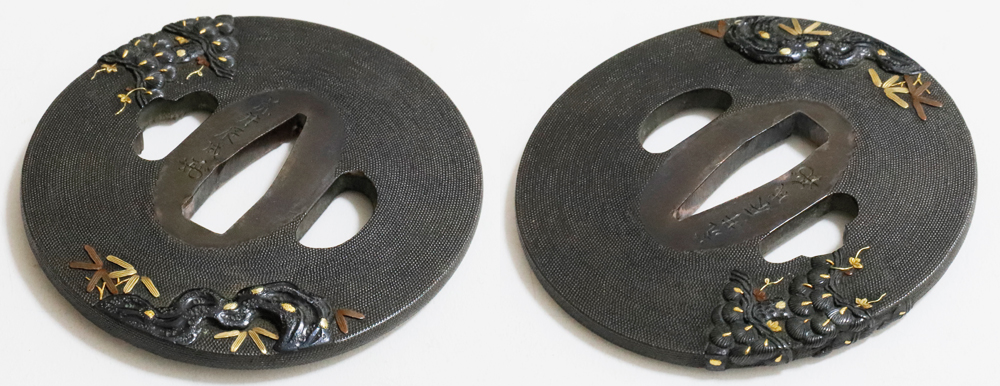
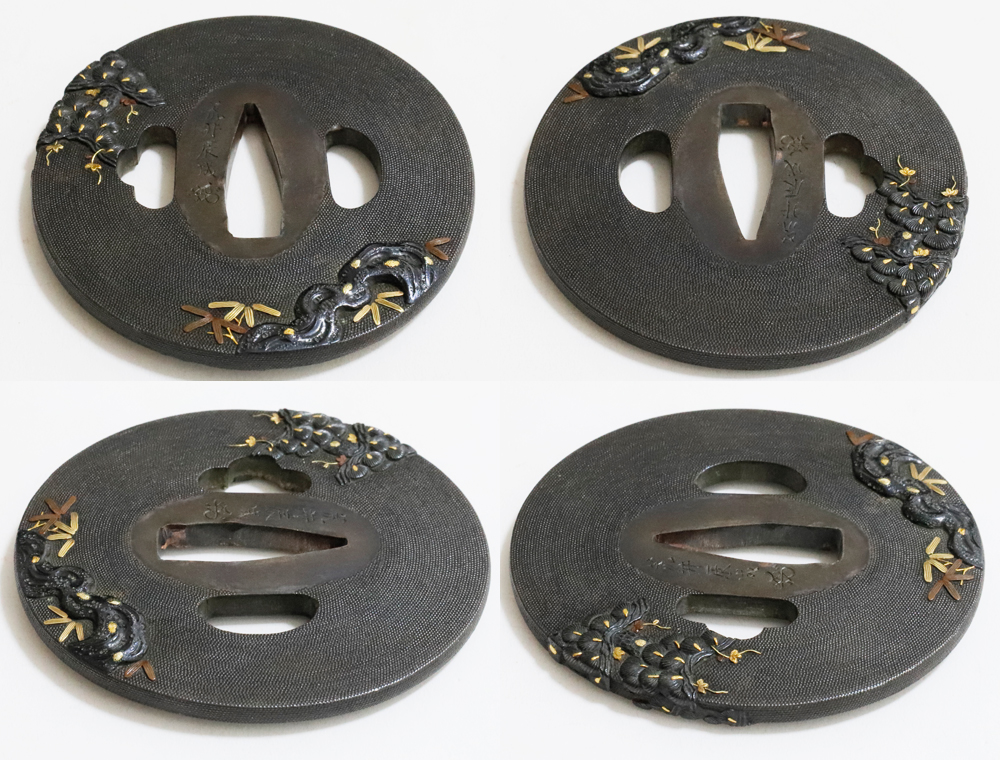
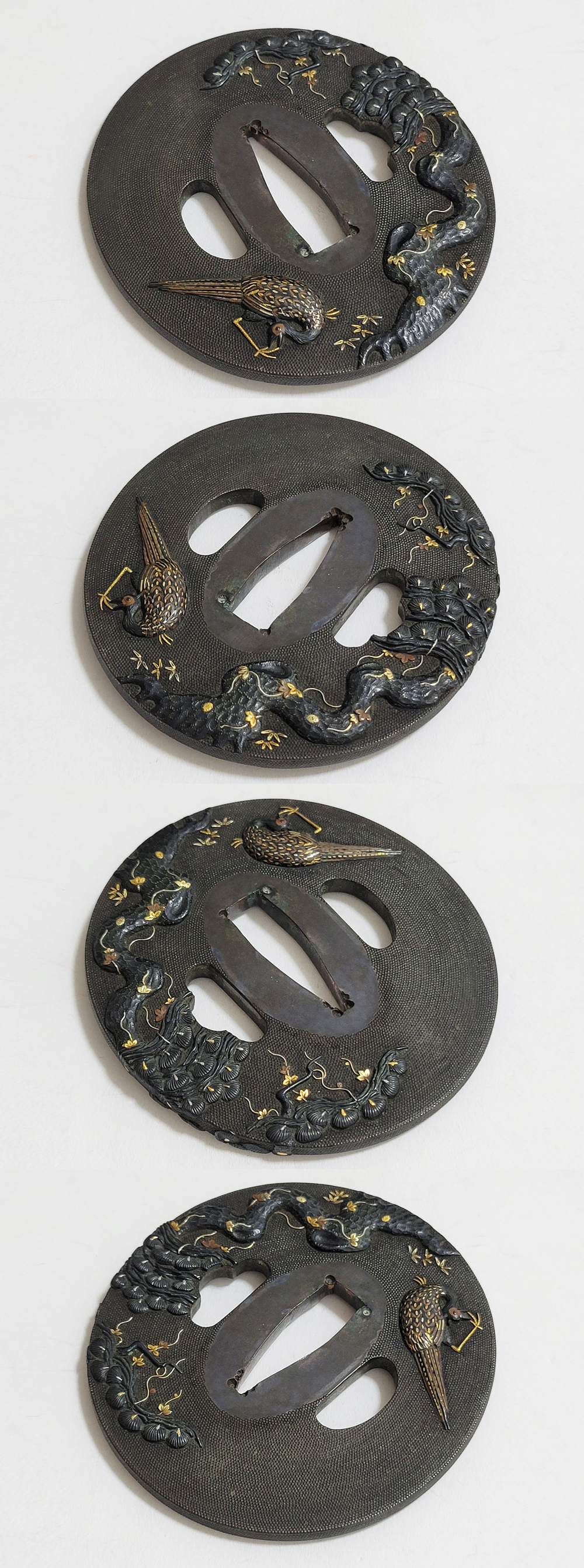
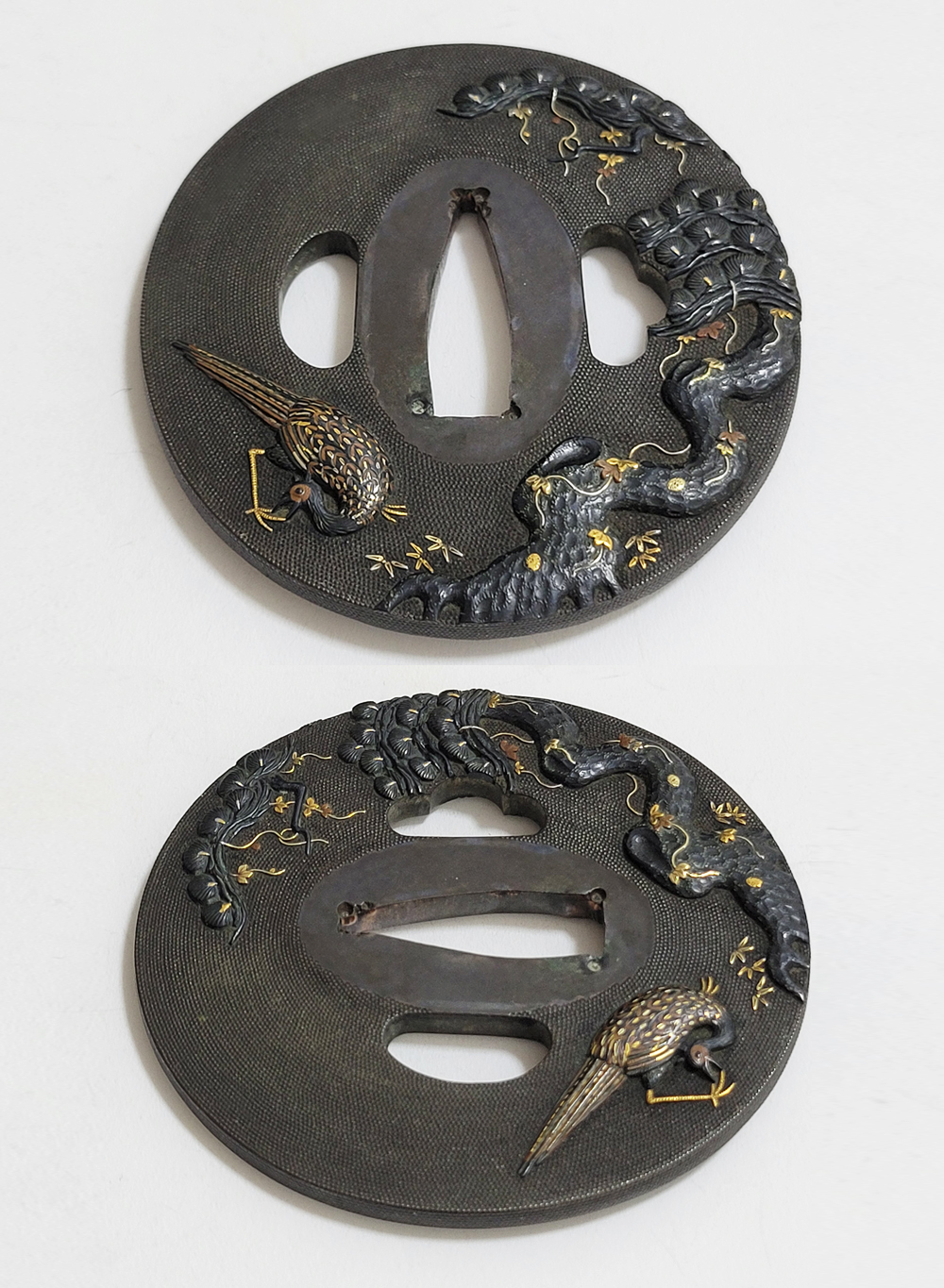
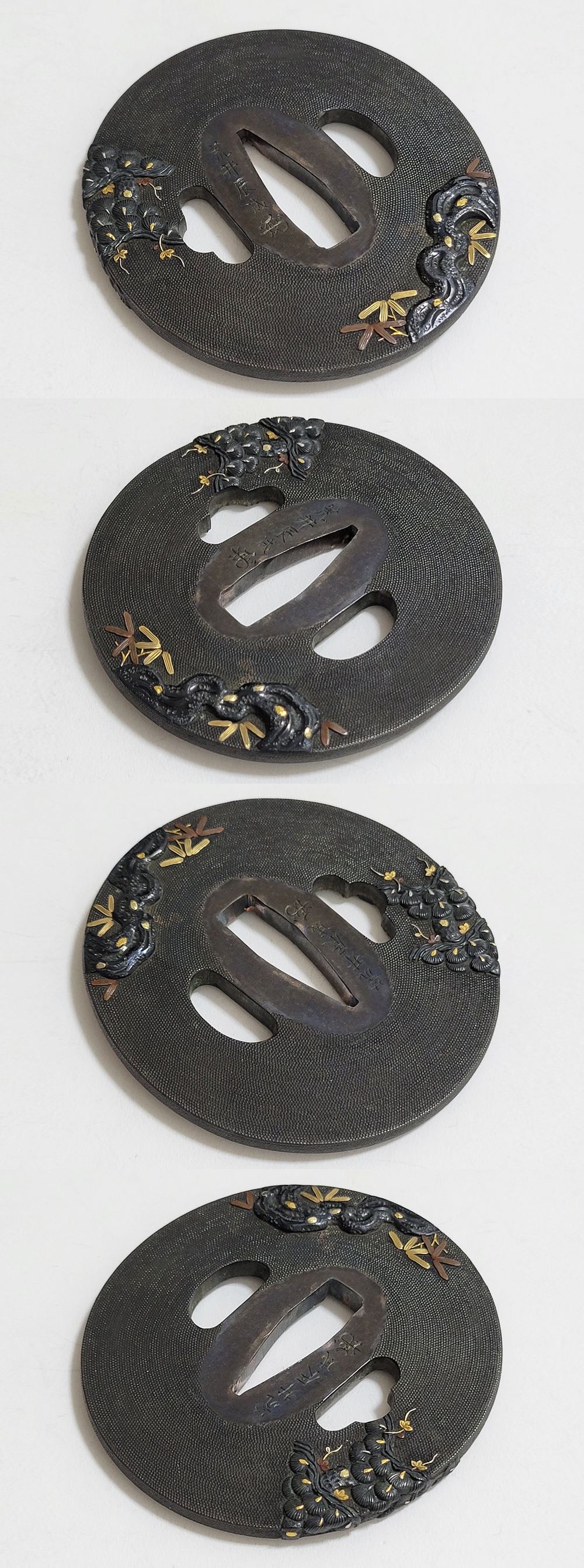
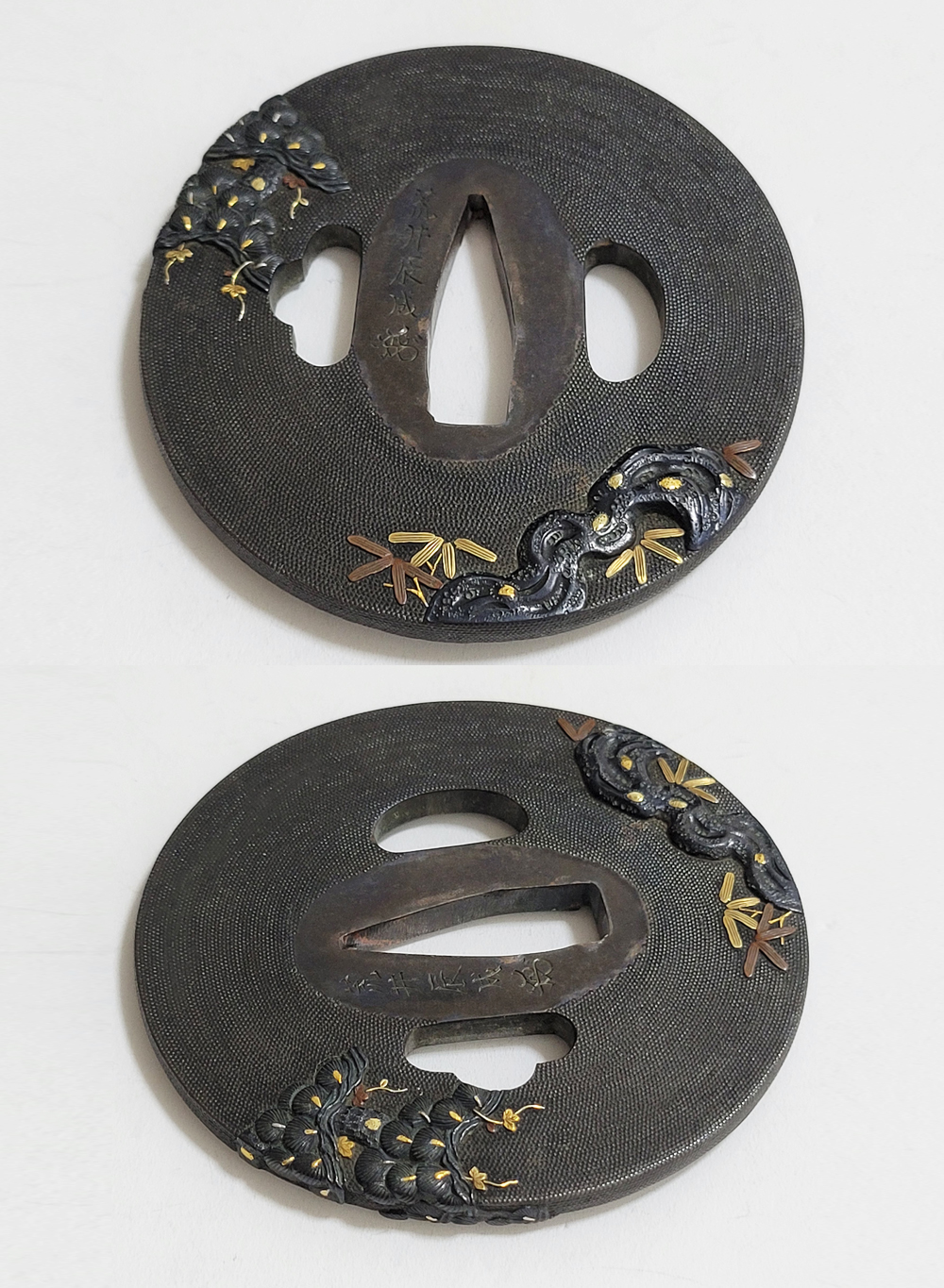
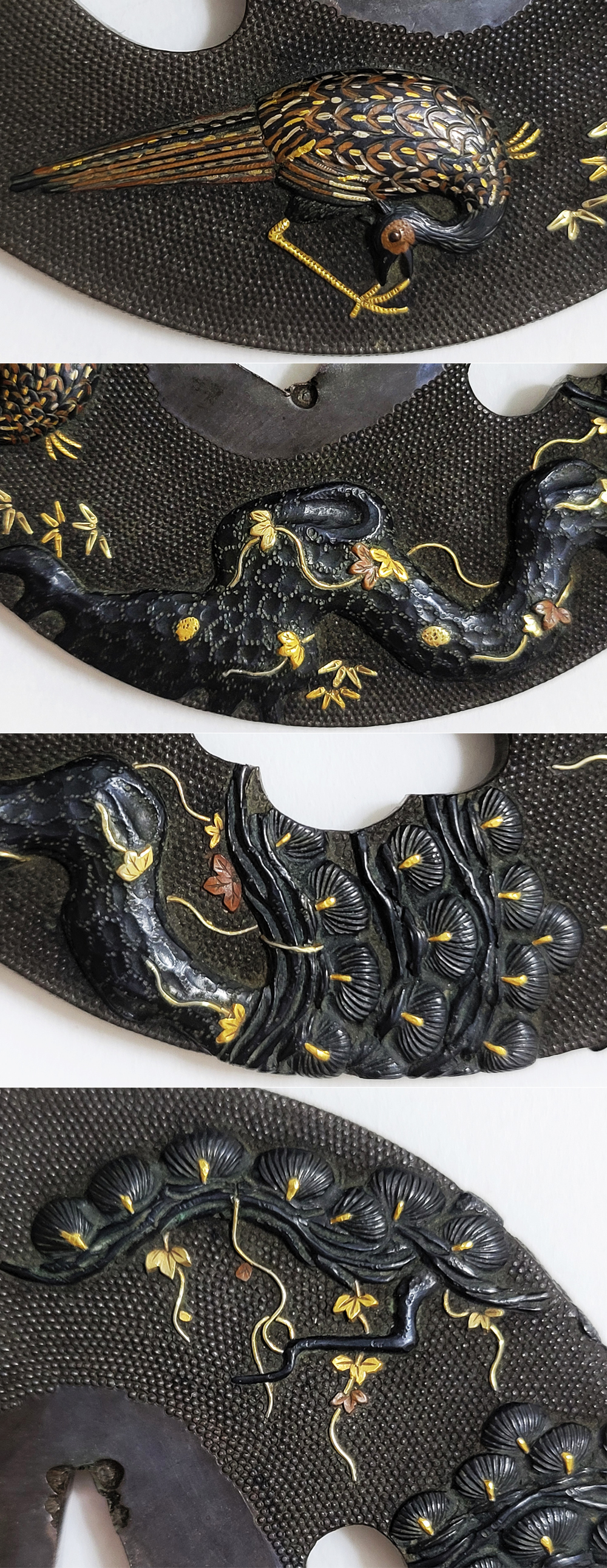
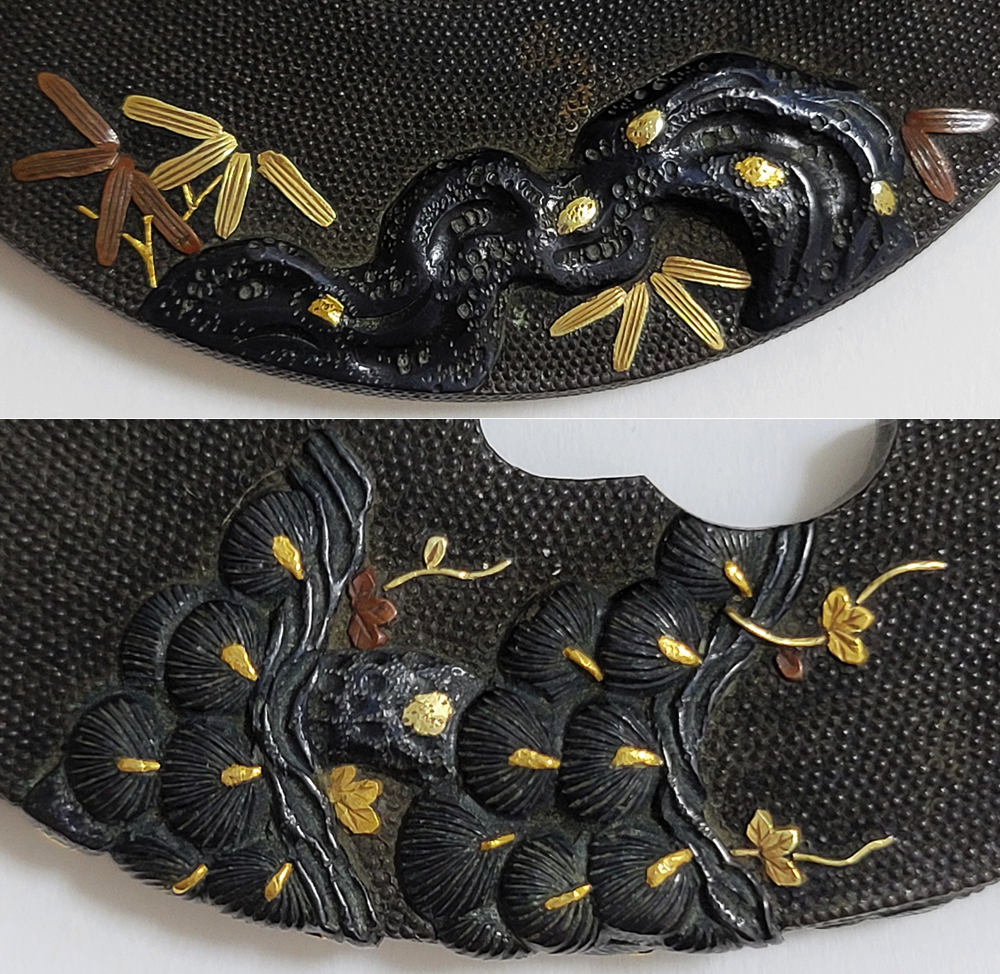
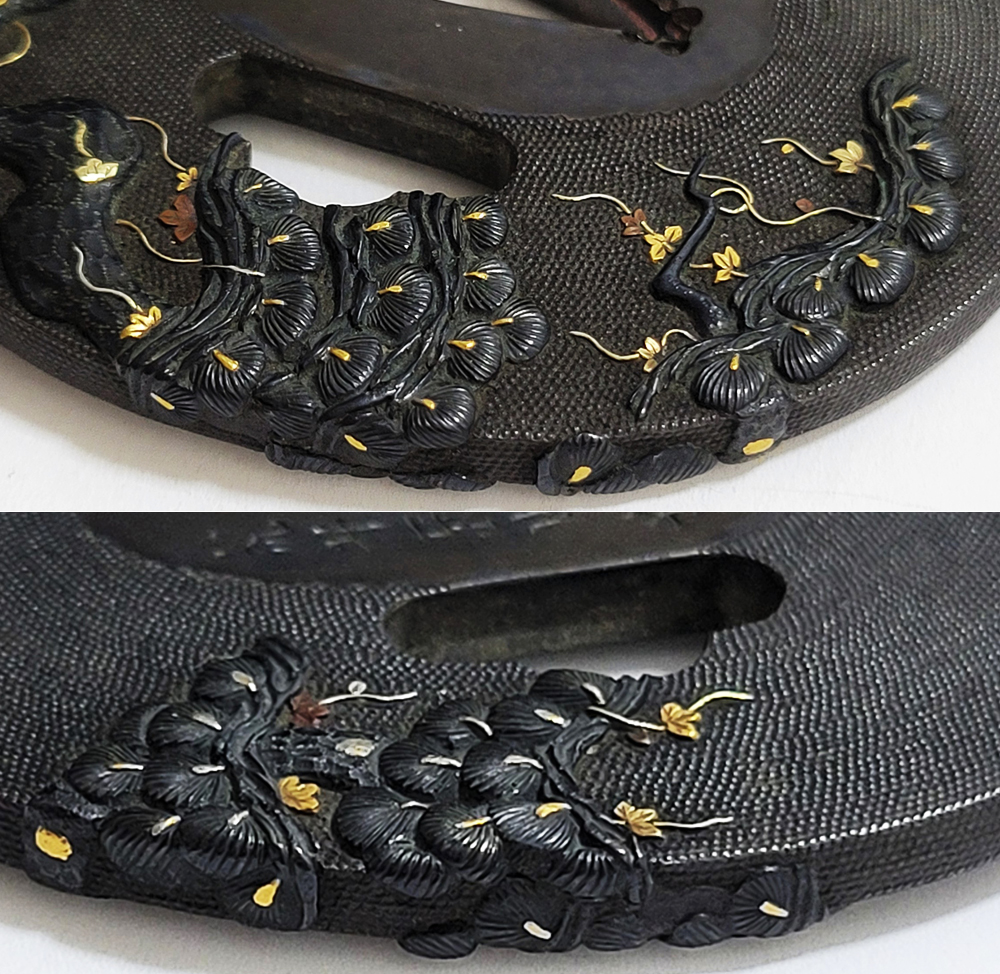
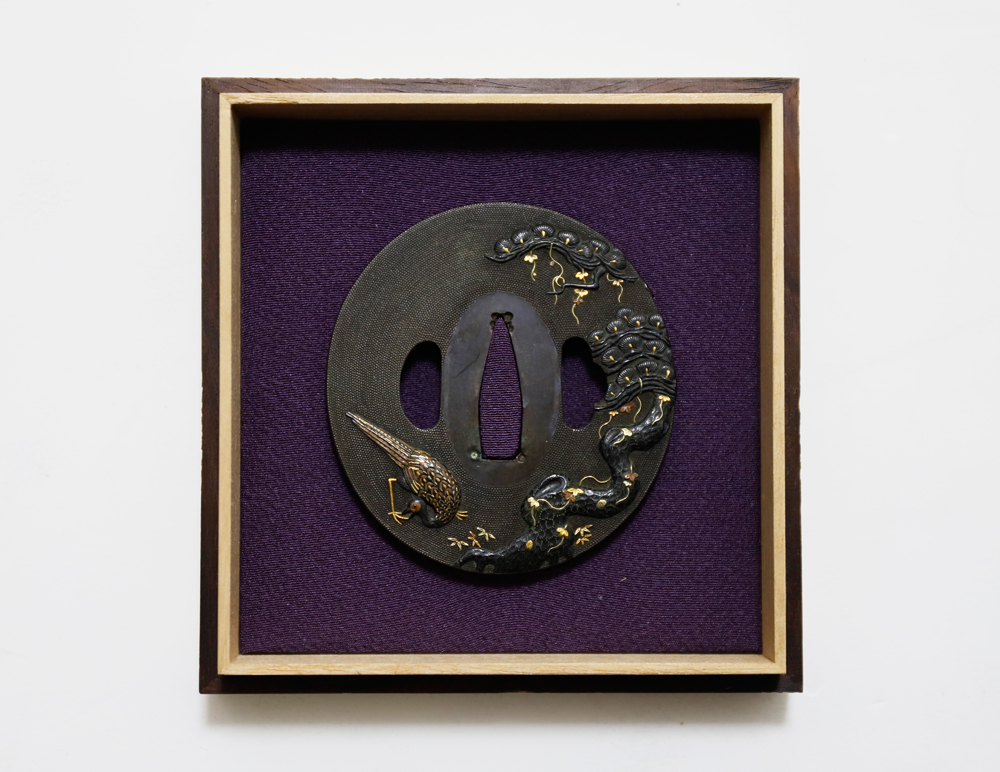
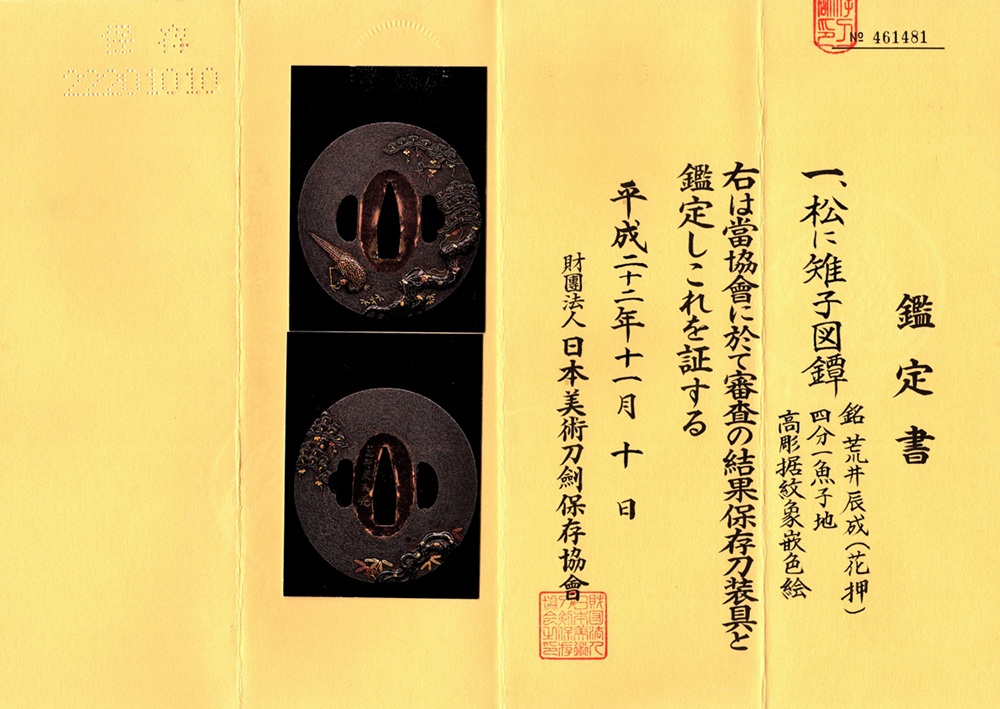
| This tsuba depicts a lone pheasant and a single pine tree, a highly auspicious motif that accords with the aesthetic ideals of the samurai class.The pine, an evergreen enduring both severe cold and heat, symbolizes longevity and steadfastness, while the pheasant—an indigenous bird of Japan—was admired for its courage and keen vigilance. Together, they represent martial virtue, resilience, and disciplined awareness.The tsuba maker Arai Tatsunari (辰成) was a disciple of Tokuno Terutoki, who himself studied under two successive masters of the Ōmori school, Ōmori Terumasa (大森英昌) and Ōmori Teruhide (大森英秀), and was granted the use of the Ōmori surname.According to one theory, Tatsunari is said to have been Terutoki’s younger brother.This work is executed in the traditional Ōmori school style, featuring a shakudō nanako ground with exquisitely detailed carving, high-relief workmanship, and gold and silver iroe inlay to express the pine and pheasant motif with exceptional refinement.This tsuba was designated Hozon Tōsōgu by the NBTHK in 2010. |

 Search