| Product No. TAN-0393 源正忠(岡島正忠) | |
|---|---|
| Mei |
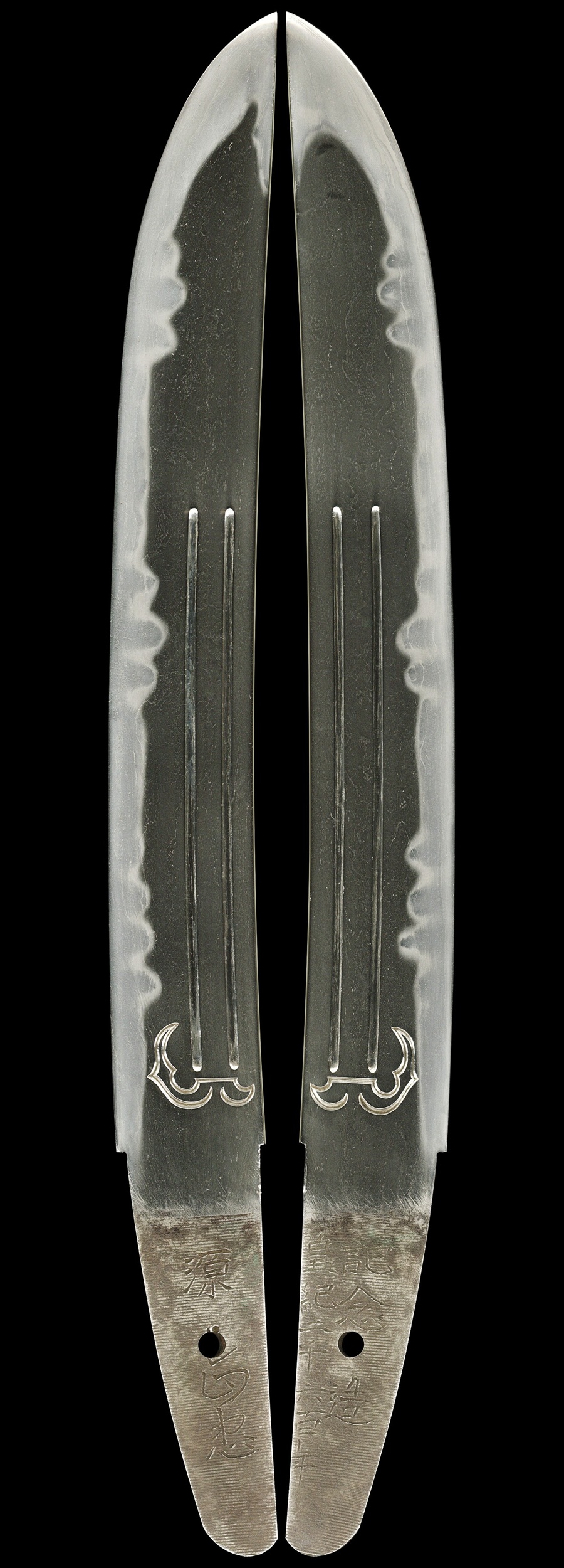
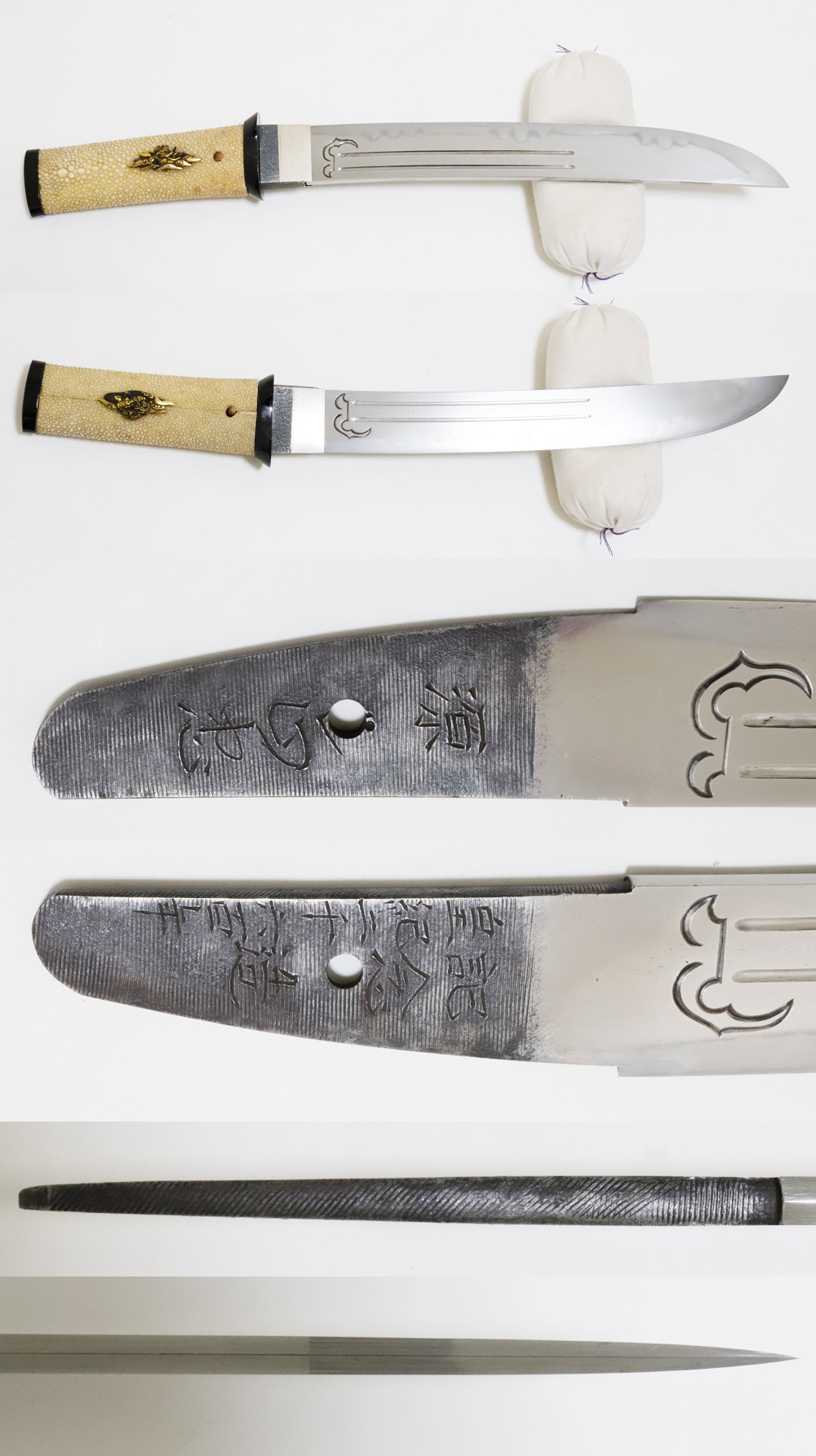
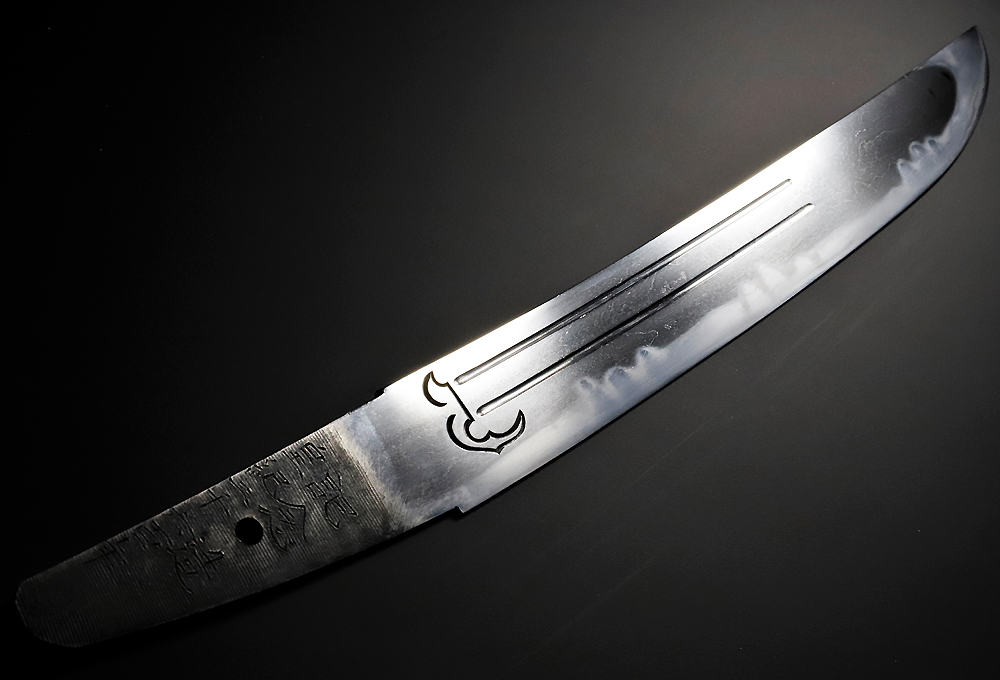
Minamoto Masatada(Okajima Masatada). Back: Made in Commemoration of the Imperial Year 2600(1940). |
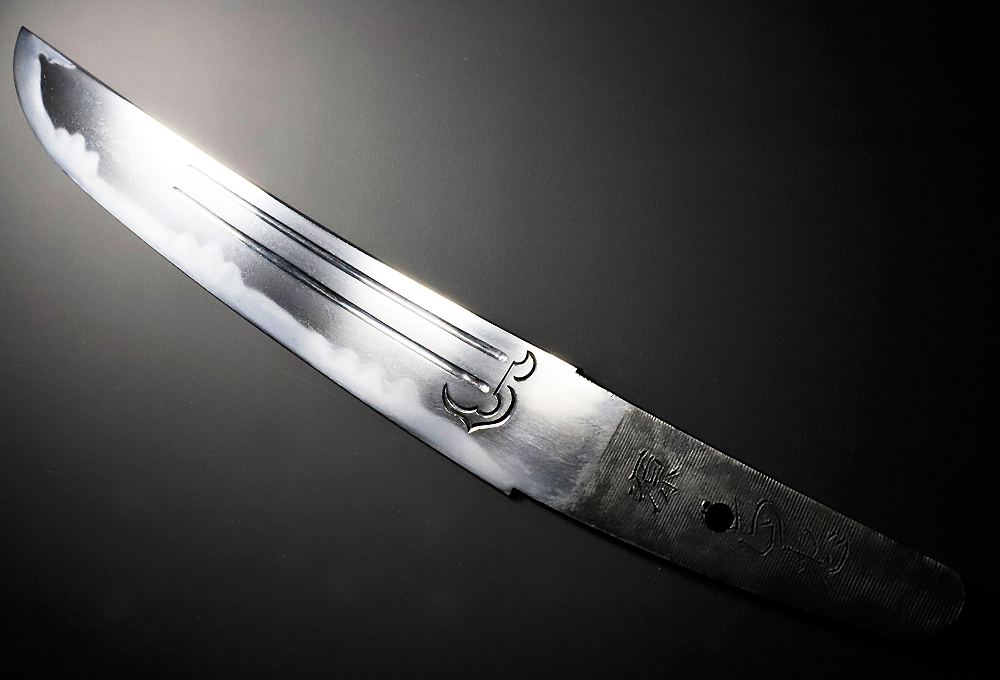
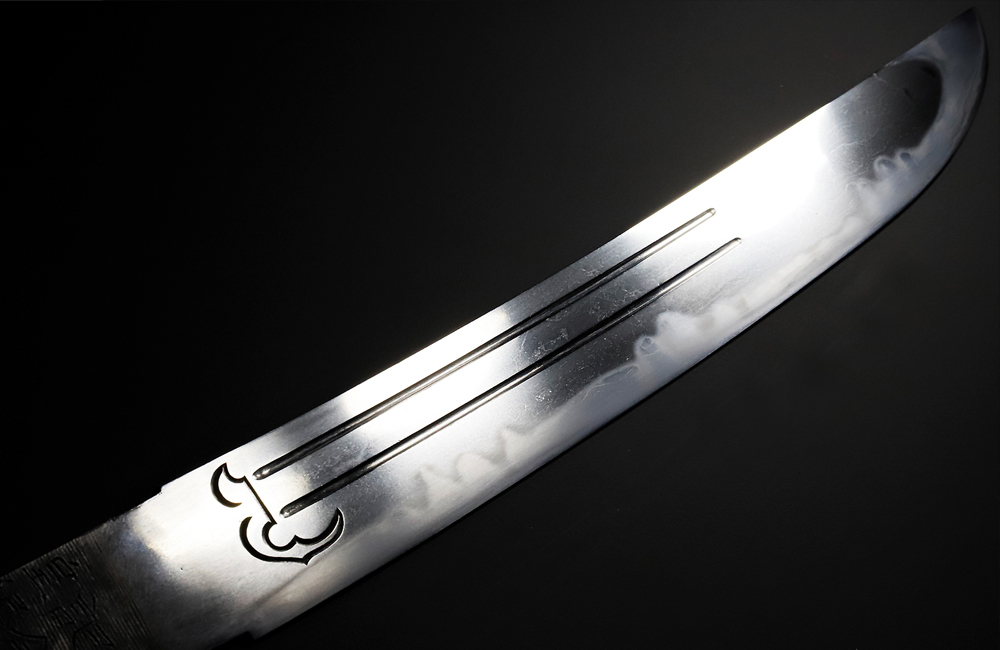
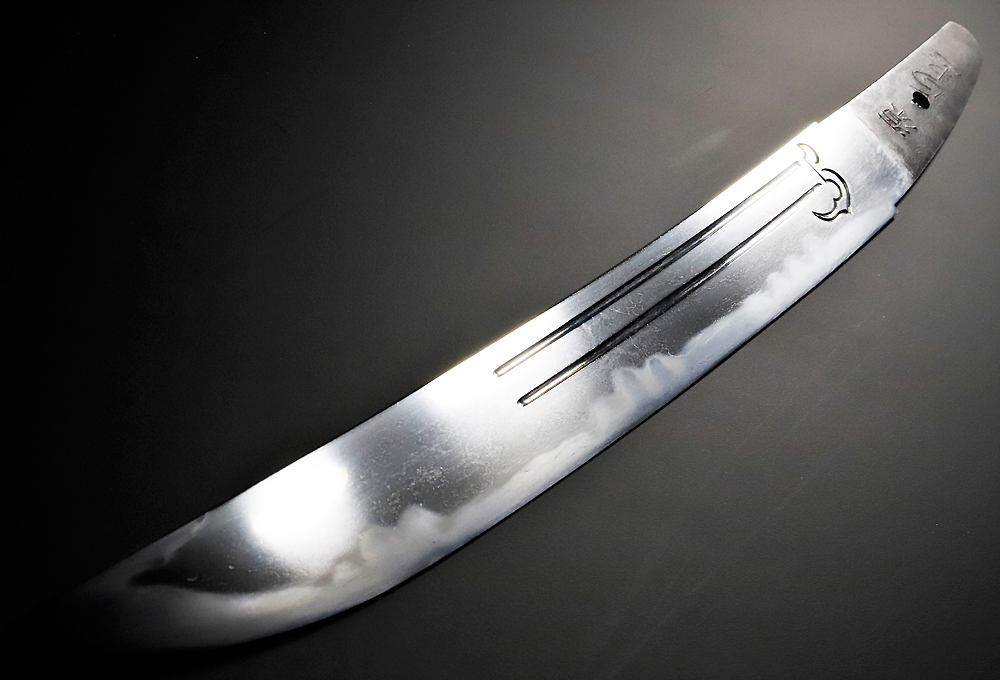
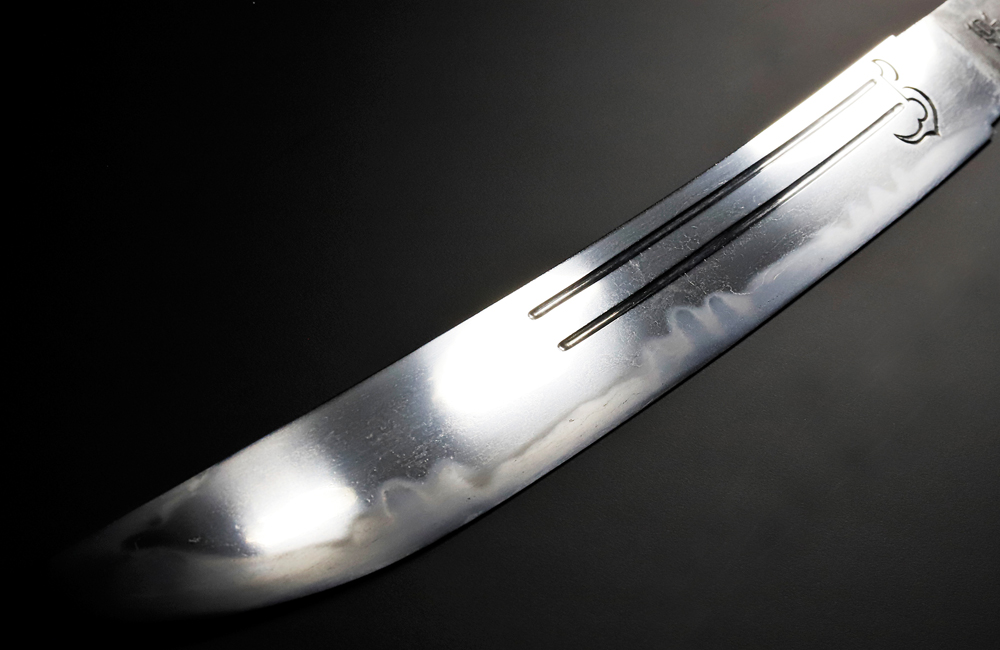
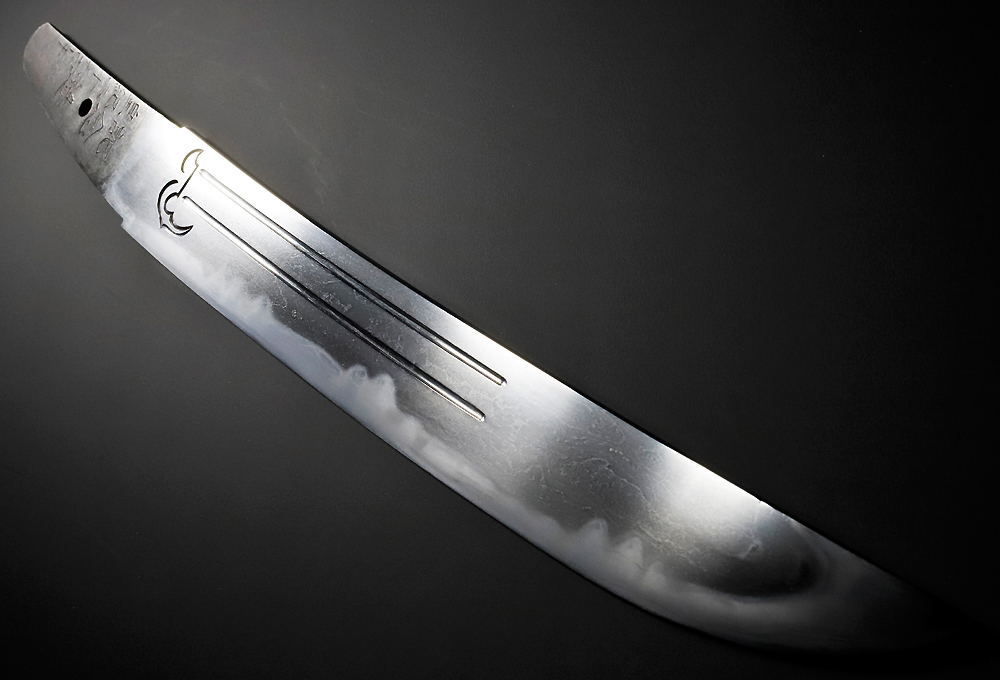
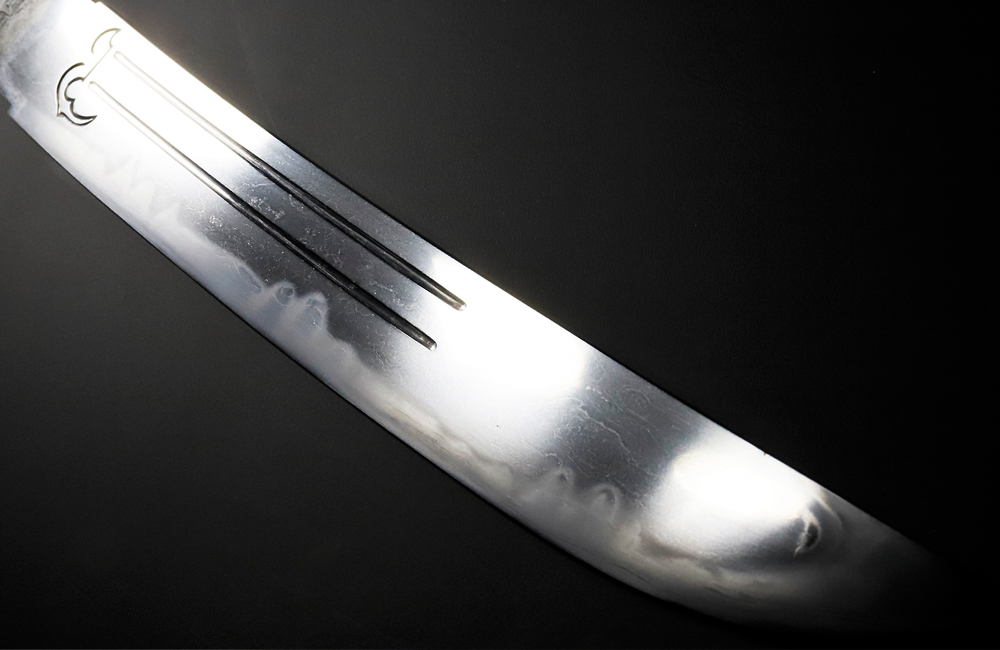
| Shape | Hira-zukuri, iori-mune. An exceptionally wide blade with relatively thin kasane and slight curvature, reminiscent of the famous Hocho Masamune tanto. |
| Region | Ibaraki Prefecture |
| Era | Showa Period |
| Length |
26.8 cm 10.6 in |
| Sori (curvature) |
0.4 cm 0.2 in |
| Motohaba |
3.6 cm 1.4 in |
| Munekasane |
0.7 cm 0.3 in |
| Status | Hozon Token |
| Certification Date | Passed the shinsa in June 2026 |
| Registration Authority | Ibaraki Prefecture |
| Registration Date | April 25, 1973 |
| Jihada (Metal pattern) | Tightly forged itame-hada with a slight tendency toward flowing grain. |
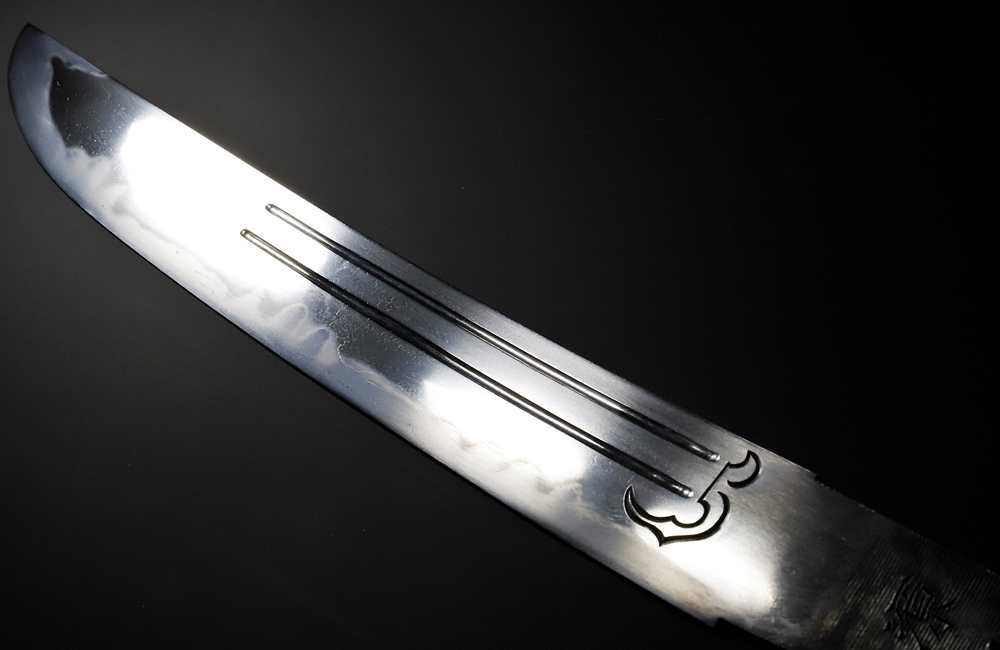
| Hamon (Temper line) | Predominantly suguha, with groups of three successive gunome elements appearing in the upper, middle, and lower sections of the blade. |
| Engraving | Gomabashi with tsume (claw-shaped carvings) on both the omote and ura sides. |
| Bōshi (Point / Tip) | On the omote side, notare with a slightly upward-thrusting tendency, esnding in ko-maru. On the ura side, runs straight and turns back in a small, rounded shape. |
| Nakago (Tang) | Ubu (original, unshortened), kiri file marks, kurijiri tip. |
| Mekugiana (Rivet holes) | 1 |
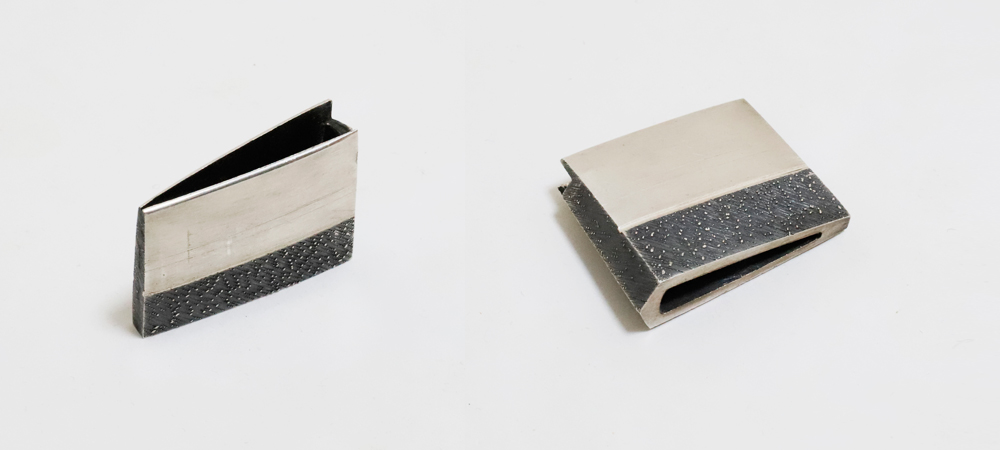
| Habaki | Solid silver Mito-style habaki. |
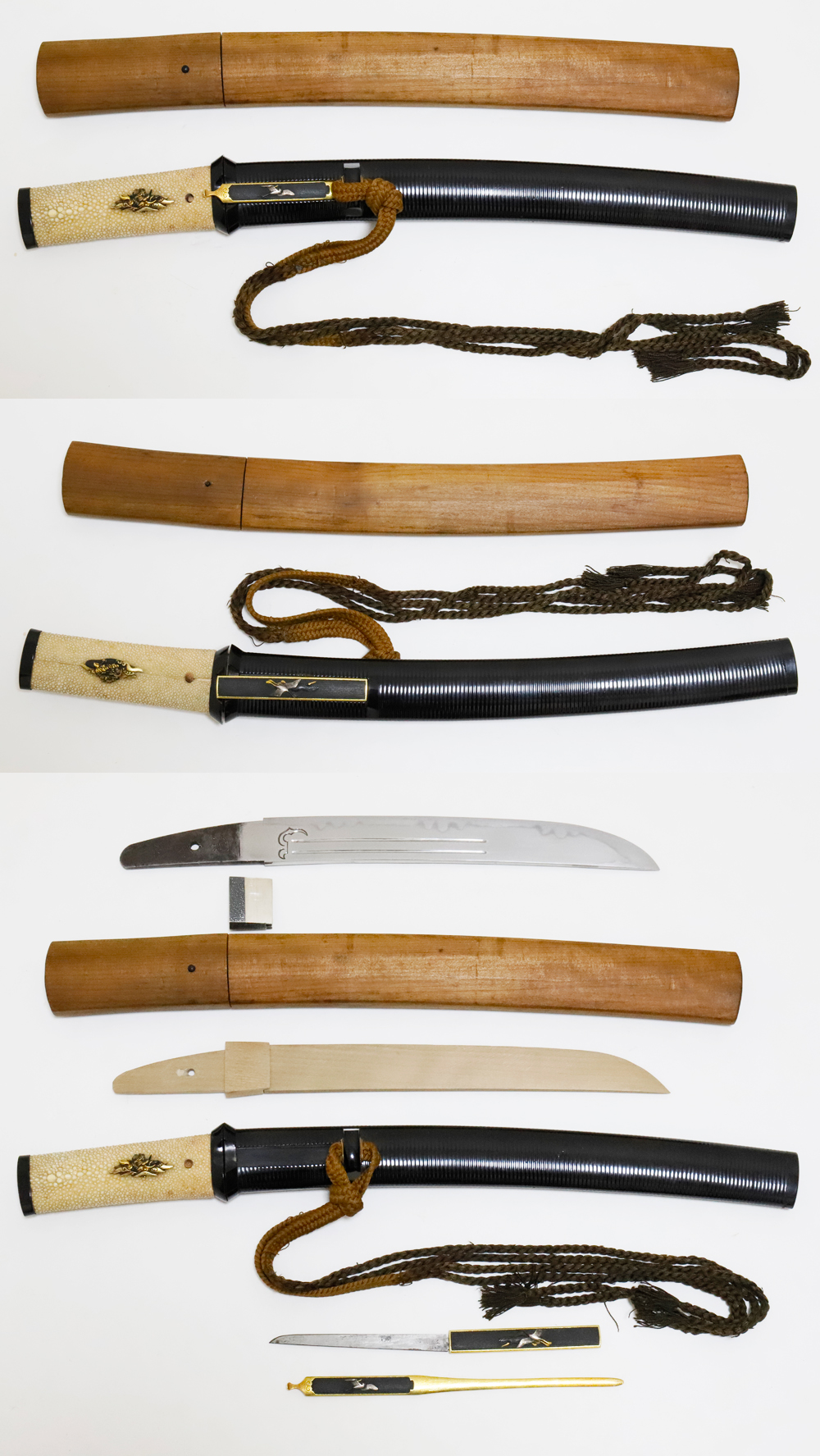
| Mountings | Koshirae-tsuki |
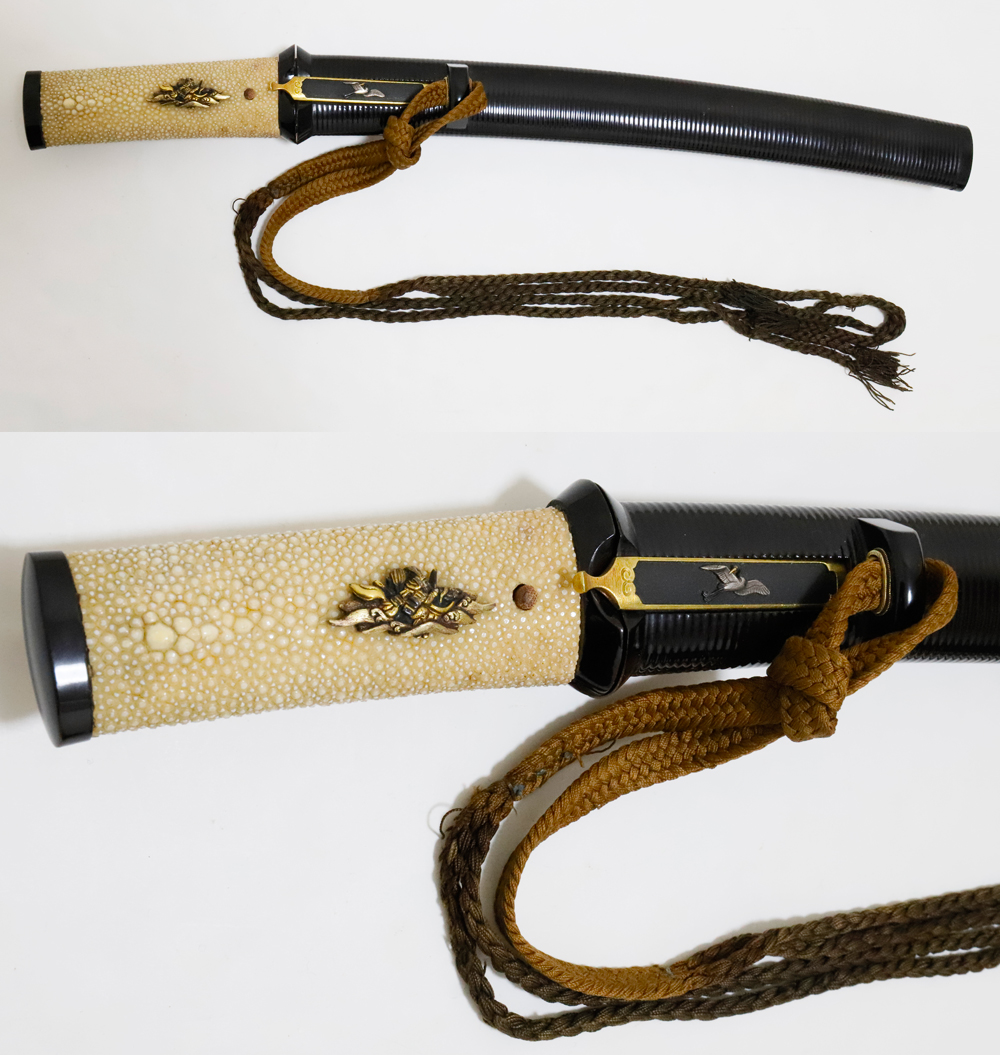
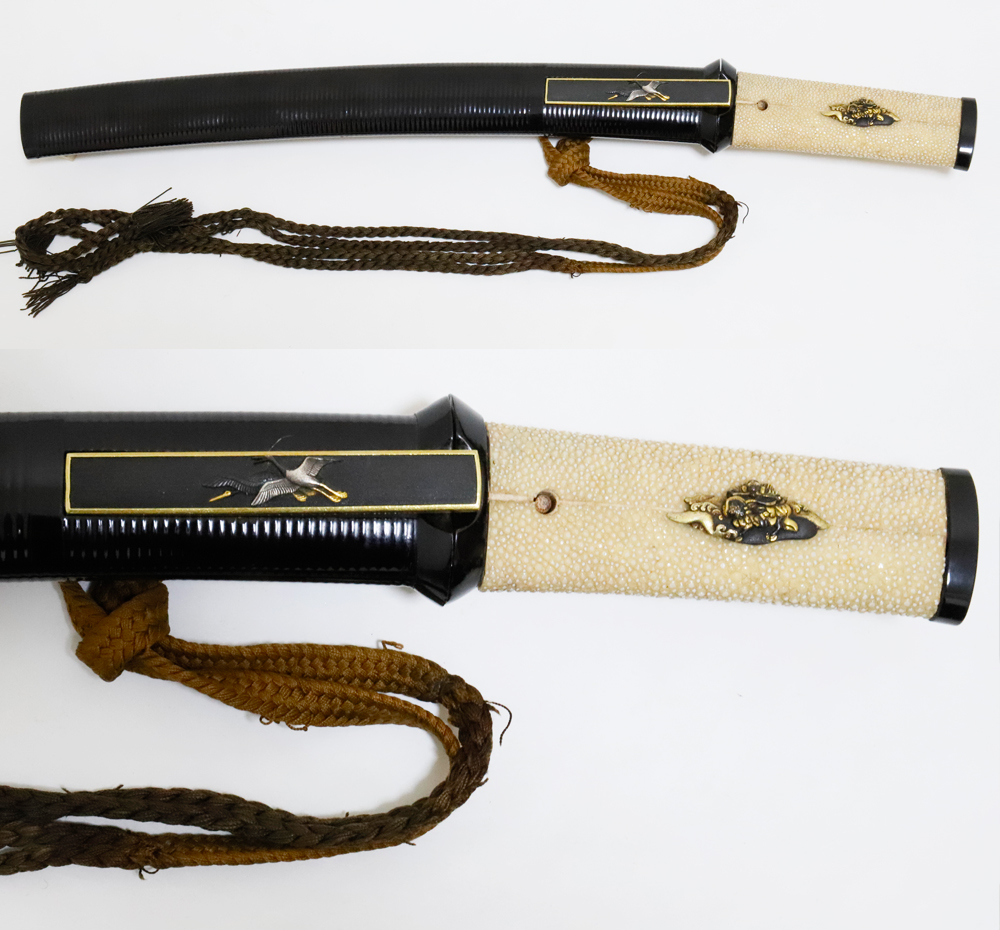
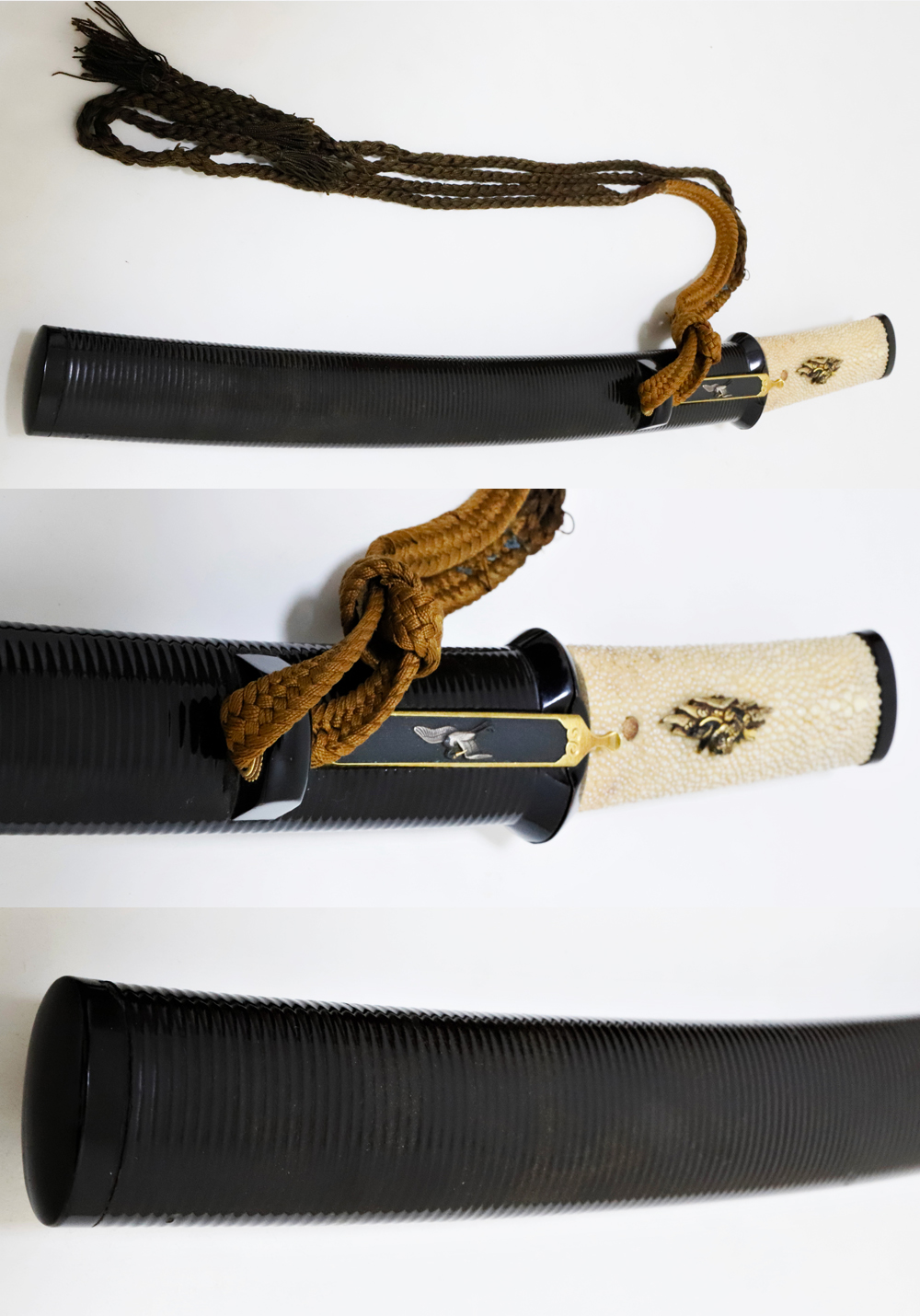
| Koshirae | Aikuchi-style koshirae with a black roiro lacquered saya featuring fine parallel grooves. |
| Koshirae Length |
49.7 cm 19.6 in |
| Tsuka Length |
13.2 cm 5.2 in |
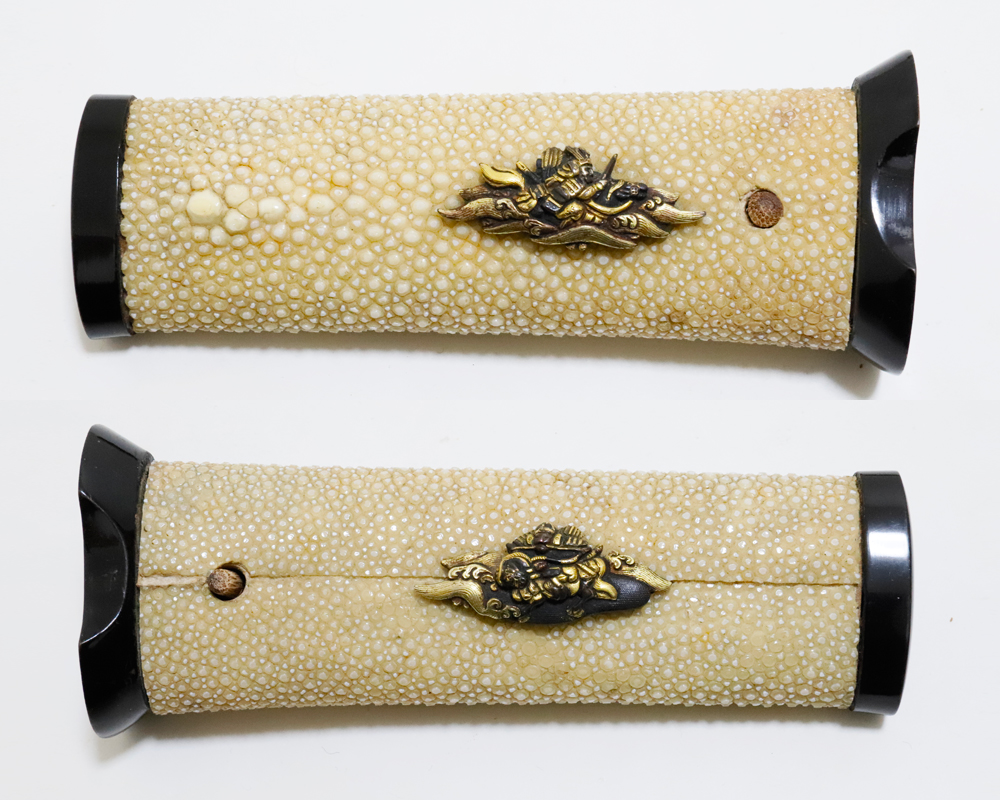
| Menuki | Battle of Uji River (Ujigawa Senjin), possibly depicting the race for the first crossing |
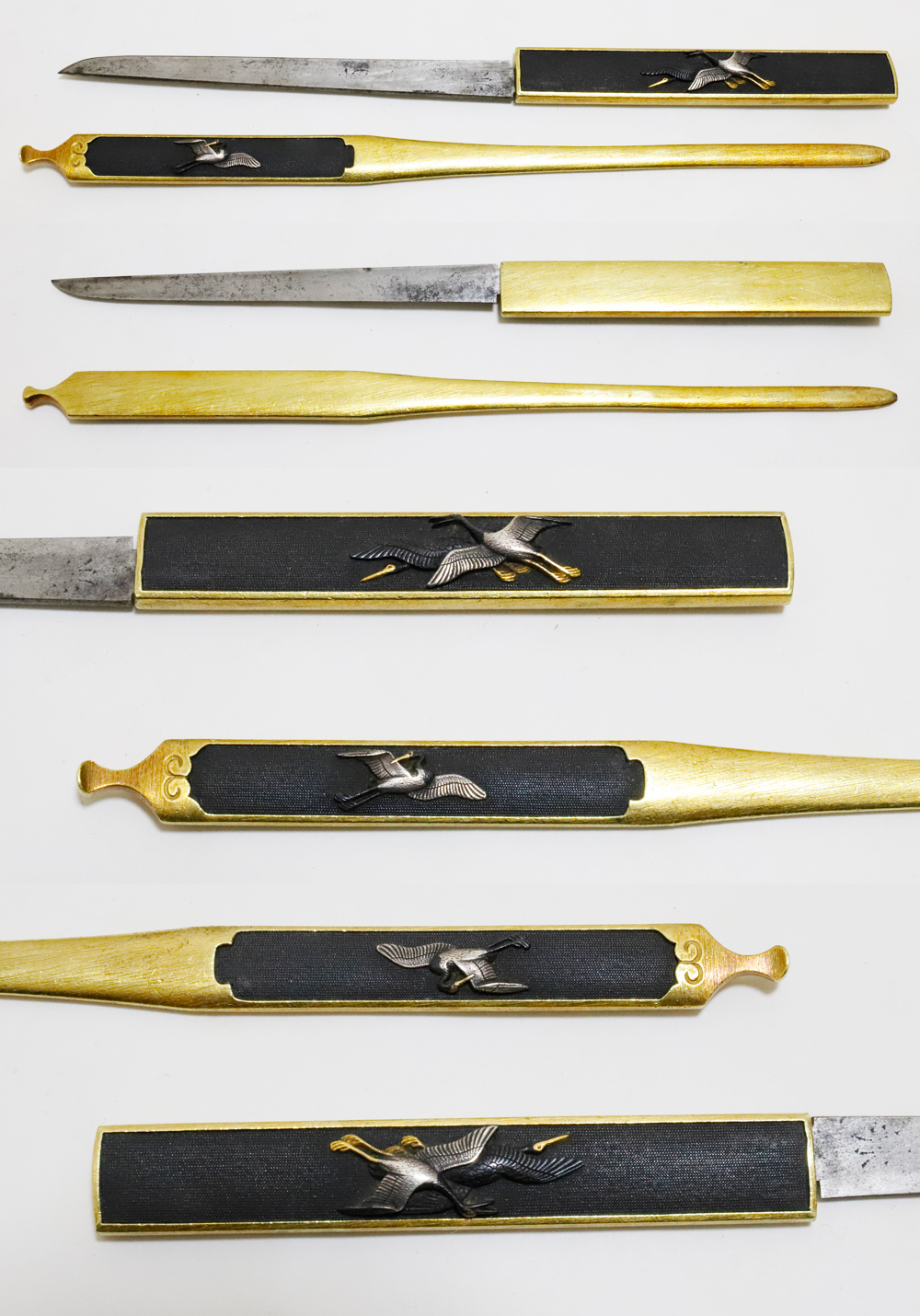
| Kozuka | Two Cranes in Flight design, shakudo nanako ground, gold-sheet-lined reverse (ura-fukumi-kin). |
| Kogai | Dancing Crane design, shakudo nanako ground, gold-sheet-lined reverse (ura-fukumi-kin). |
| Other details | suka (Handle): White rayskin with menuki exposed. Fuchi-Kashira, Koiguchi and Kojiri: Horn. |
Price |
600,000 JPY |
| This tanto was made by Minamoto Masatada in 1940 to commemorate the 2600th anniversary of the founding of Japan according to the traditional imperial calendar. The swordsmith, Minamoto Masatada, was born in Ibaraki Prefecture in 1899. He studied under the second-generation Katsumura Masakatsu and was an officially commissioned swordsmith of the Imperial Japanese Army (Rikugun Jumei Tosho). As indicated by the inscription on the reverse of the nakago, "Made in Commemoration of the Imperial Year 2600," this tanto reflects the historical background of 1940, when commemorative events were held throughout Japan to celebrate the 2600th imperial year. The exceptionally wide blade, with its relatively thin kasane and hira-zukuri shape, is reminiscent of the famous Hocho Masamune tanto by the renowned Soshu swordsmith Masamune. Both sides feature gomabashi (parallel grooves) accompanied by tsume carvings, clearly showing that the sword was made with the distinctive shape and design of Hocho Masamune in mind. The jihada consists primarily of tightly forged itame-hada. The hamon is predominantly straight, with three successive gunome elements arranged in the upper, middle, and lower sections of the blade. Taking this celebrated classical masterpiece as his model, Masatada created an ambitious work demonstrating his own craftsmanship as a Showa-period swordsmith. The tanto is accompanied by an elegant aikuchi-style koshirae specially made for this blade. It features a black roiro lacquered saya, a white rayskin-covered tsuka with exposed menuki, and a matching kozuka and kogai decorated with auspicious flying cranes, beautifully accented with gold. This tanto passed the NBTHK Hozon Token shinsa in June 2026. |

 Search