| Product No. TAN-0392 相州住広光 | |
|---|---|
| Mei |
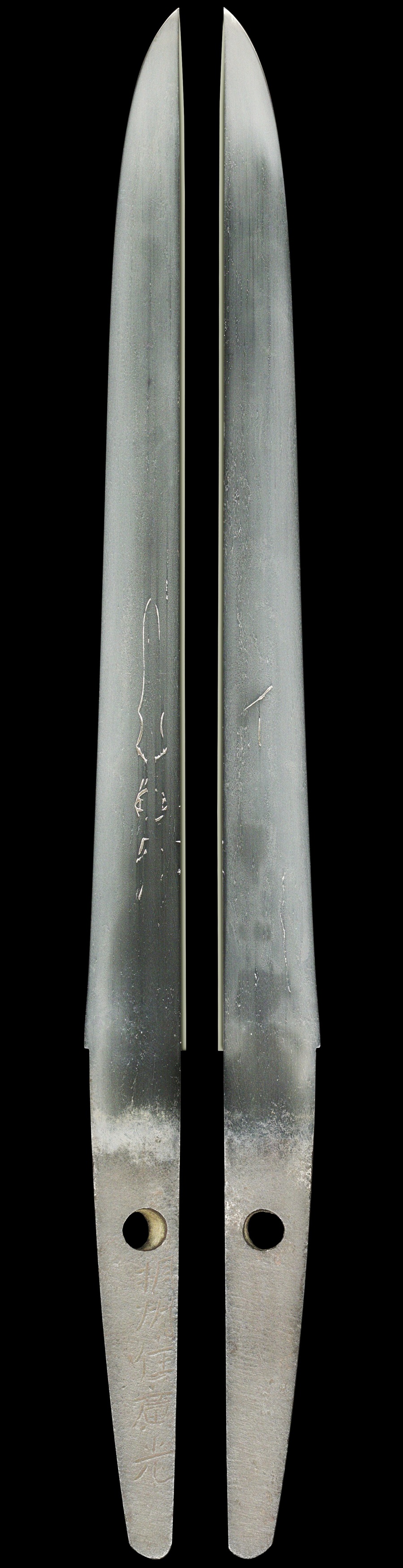
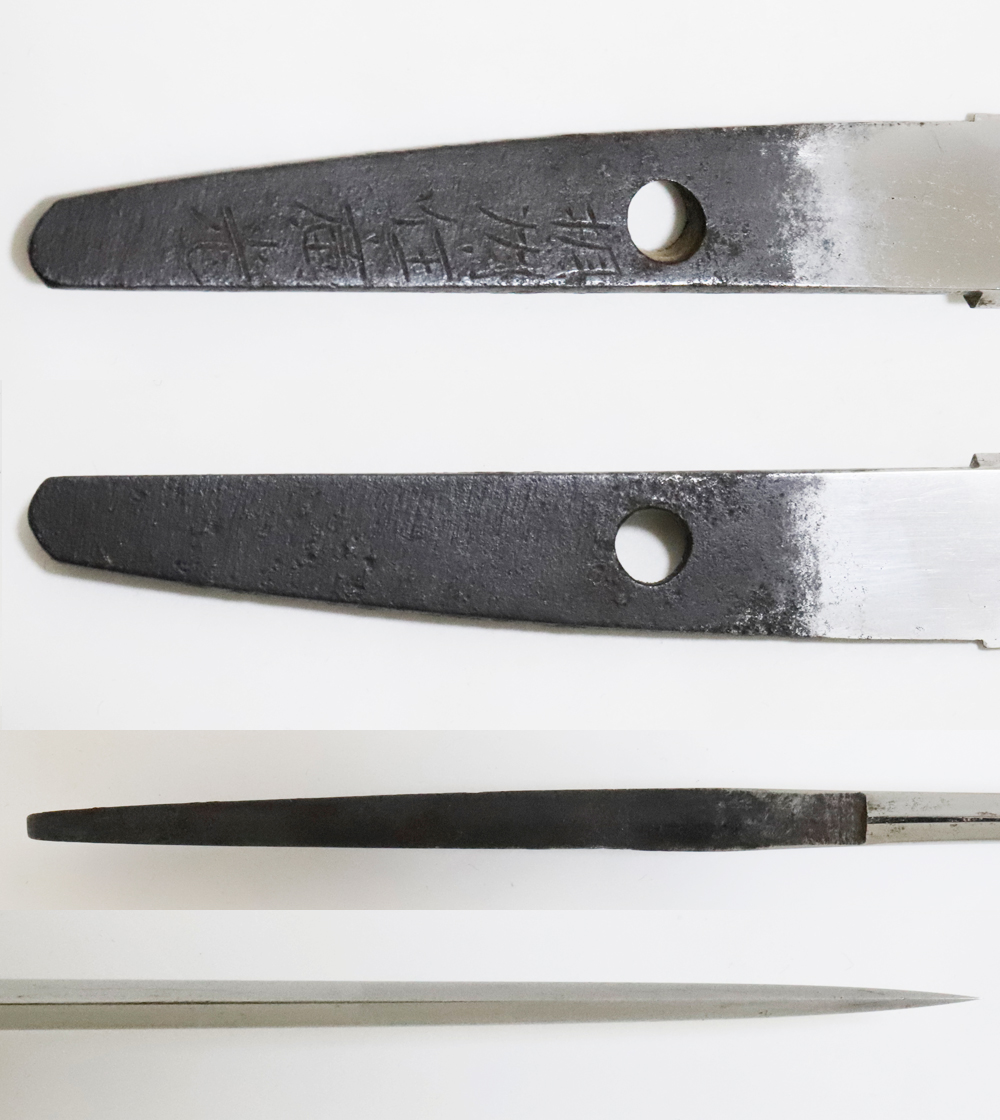
Soshu ju Hiromitsu (相州住広光, resident of Soshu) Back: -- |
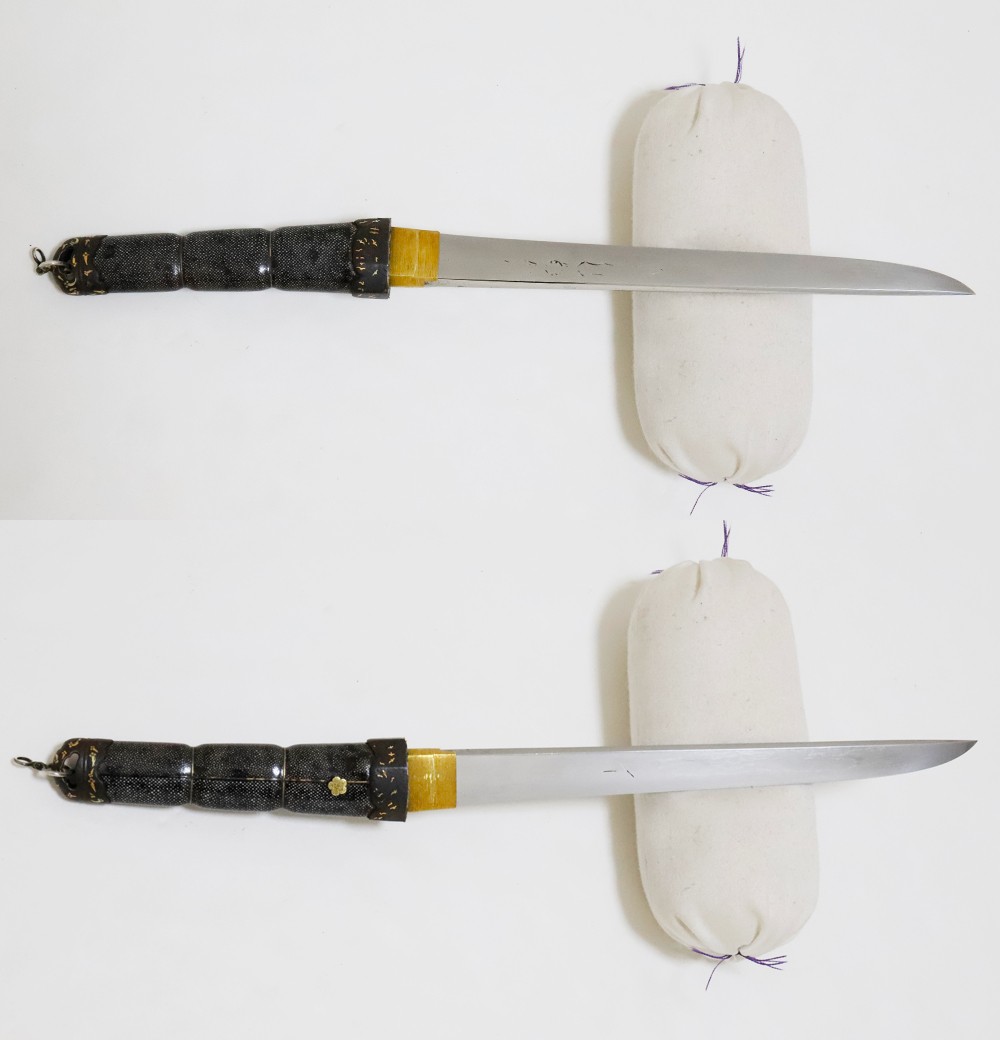
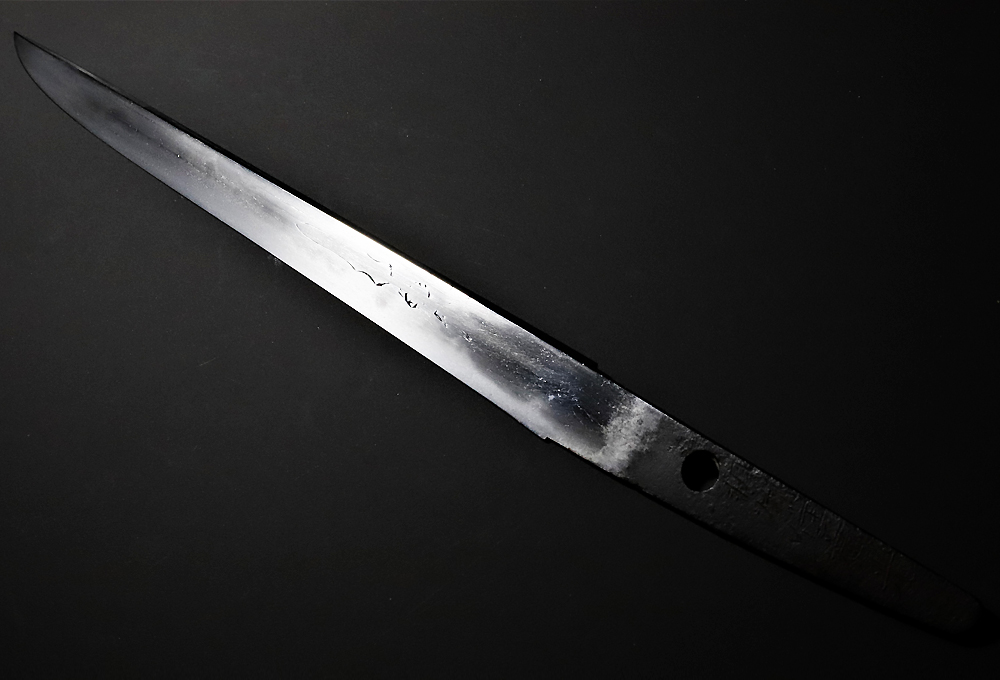
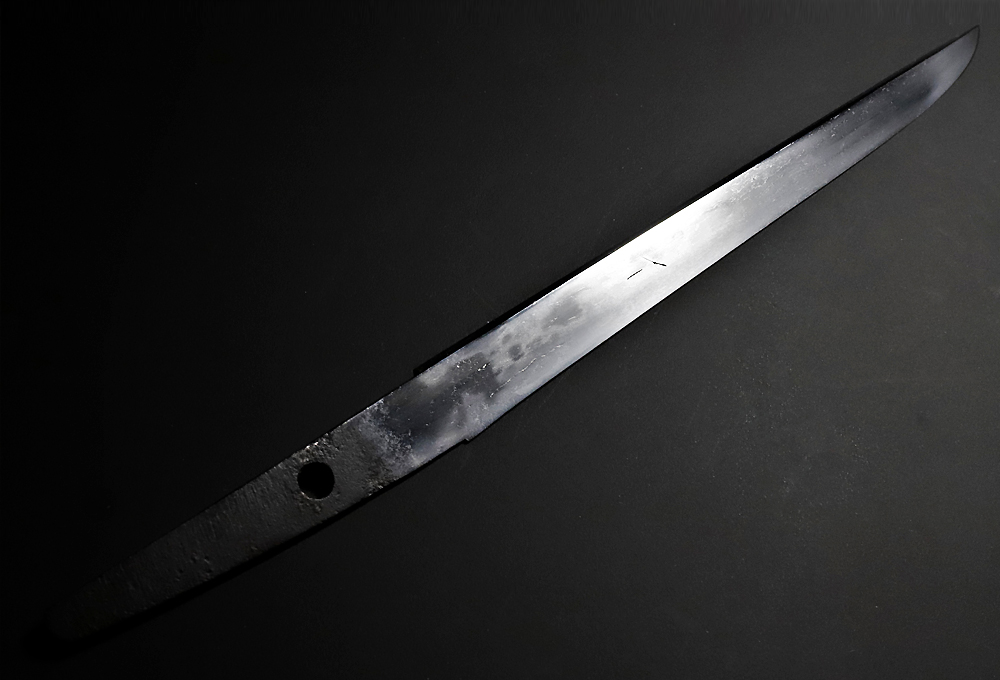
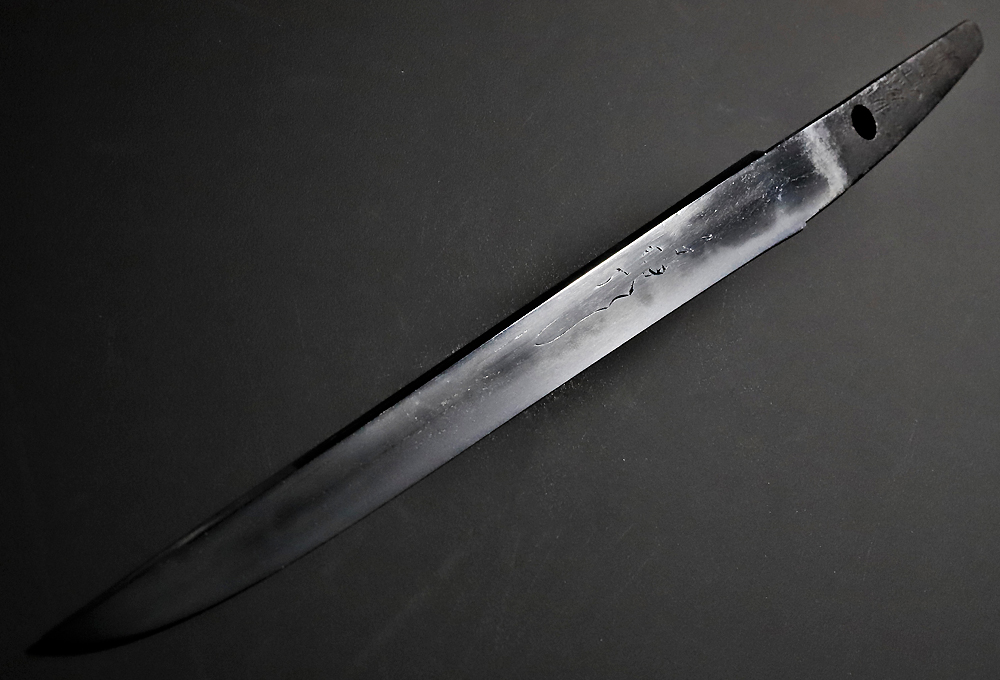
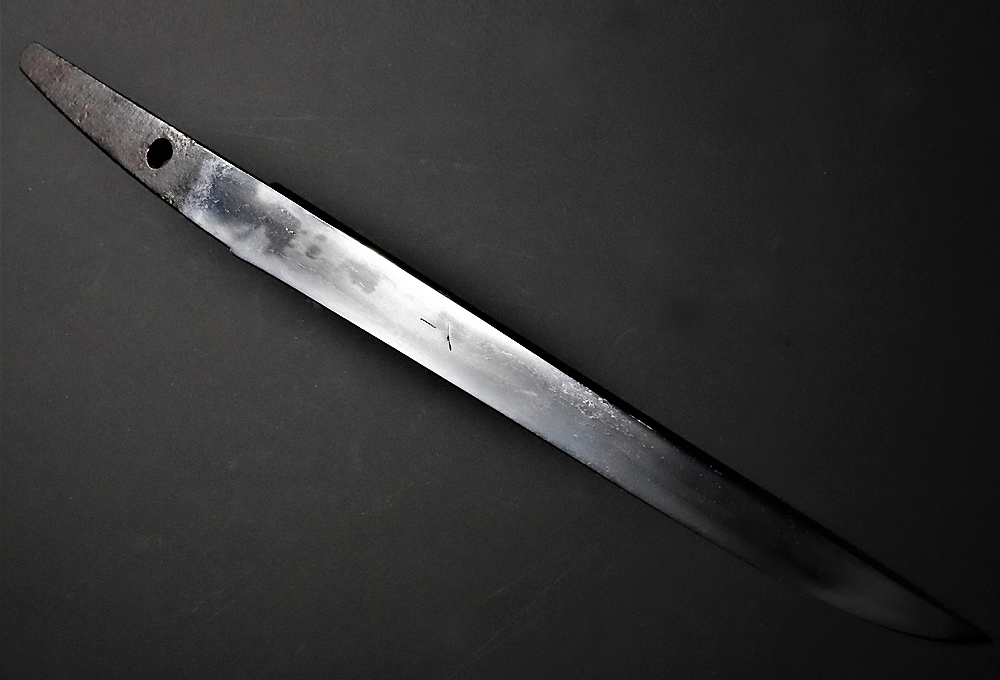
| Shape | Hira-zukuri, Mitsumune. A relatively small blade with standard width and thickness, featuring slight reverse curvature and a sharp, elegant profile. |
| Region | Sagami Province |
| Era | Late Muromachi Period |
| Length |
17.8 cm 7.0 in |
| Motohaba |
1.8 cm 0.7 in |
| Munekasane |
0.5 cm 0.2 in |
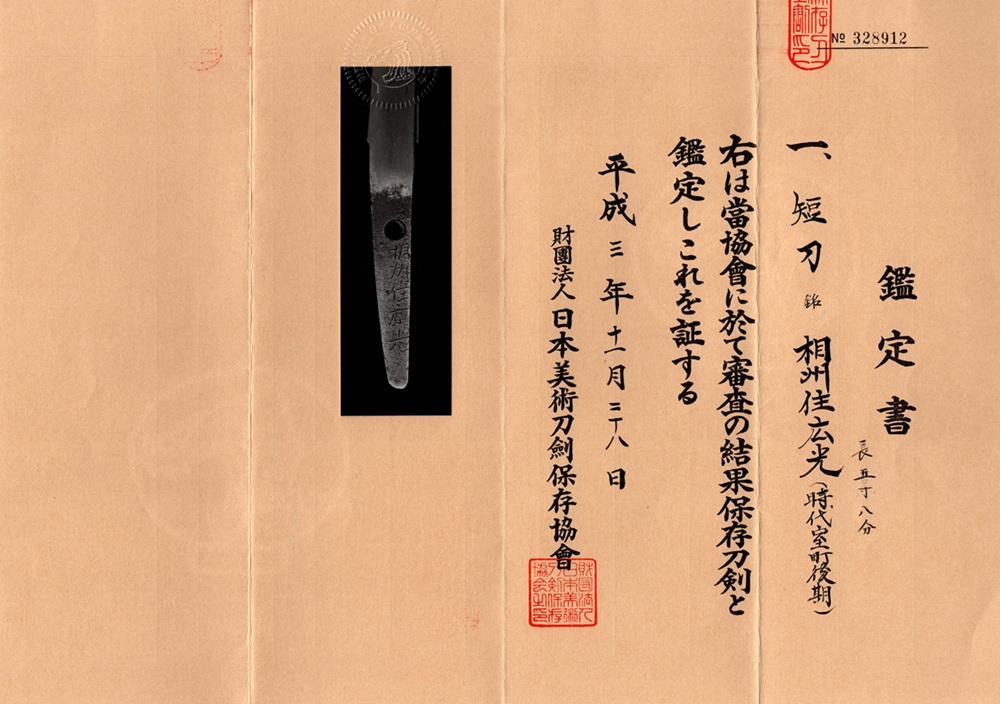
| Status | Hozon Token |
| Certification Date | November 28, 1991 |
| Registration Authority | Mie Prefecture |
| Registration Date | July 03, 1962 |
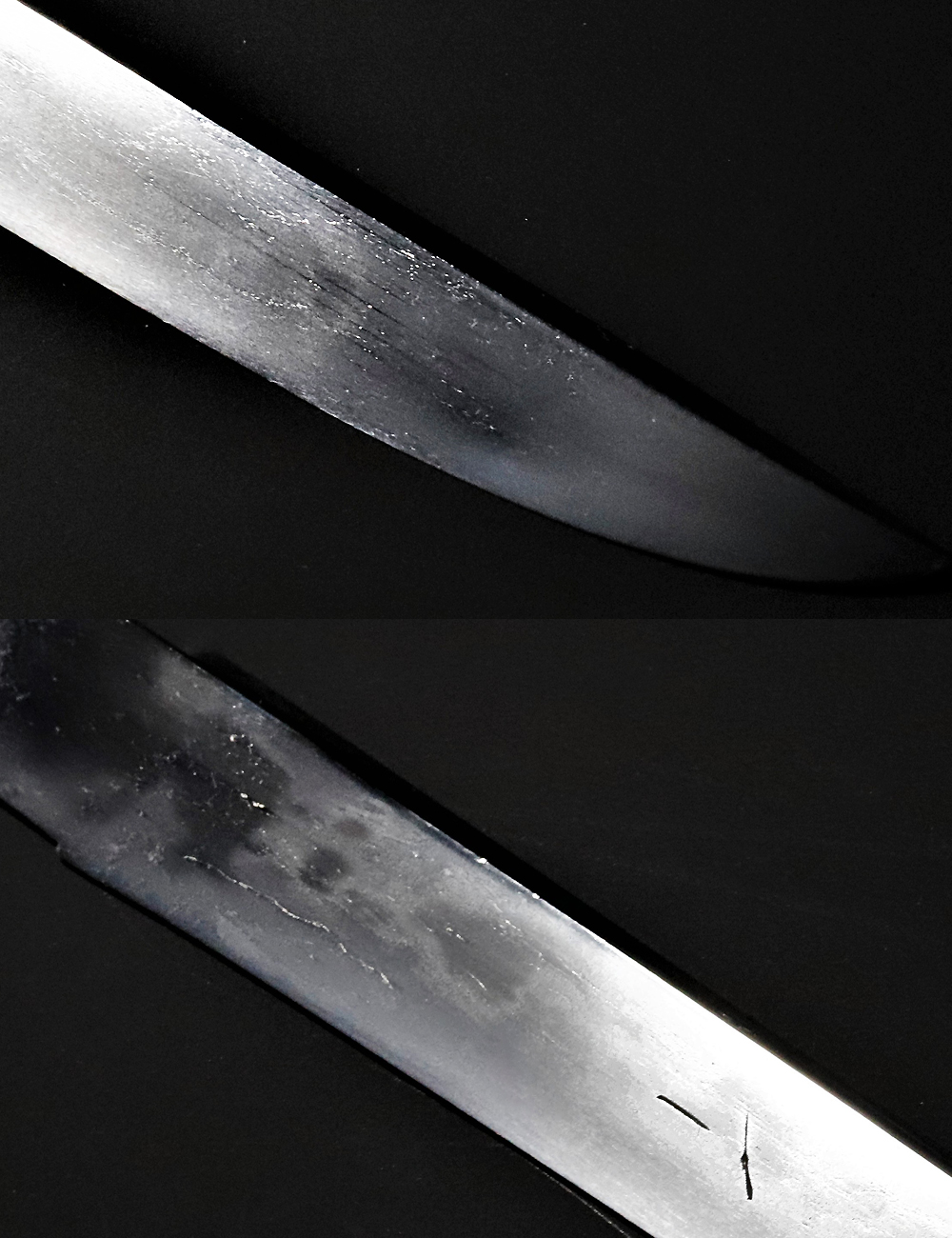
| Jihada (Metal pattern) | Ko-itame hada with a slight flowing tendency. |
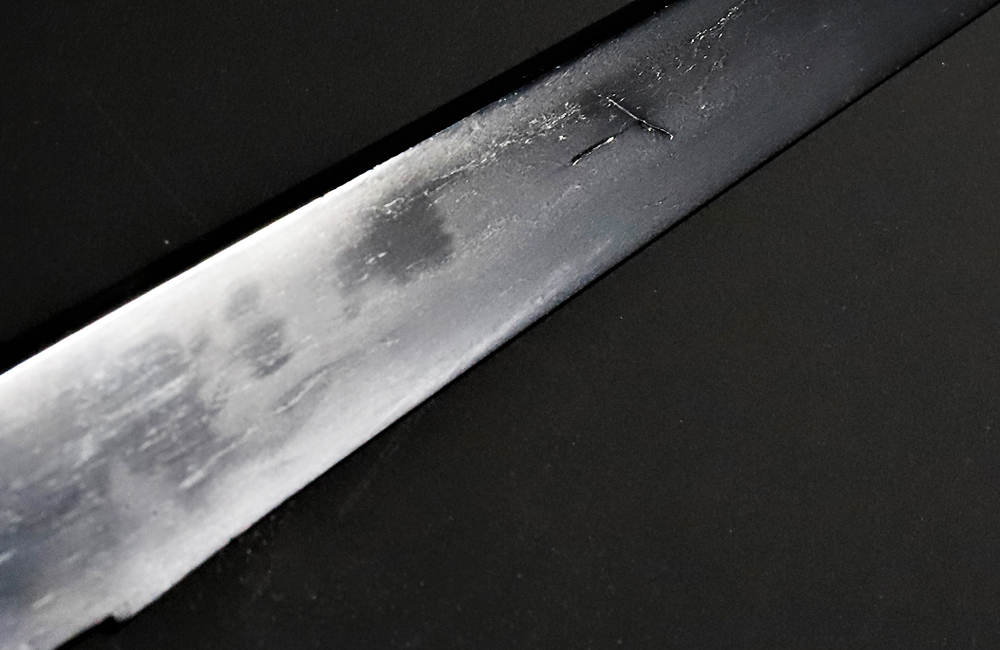
| Hamon (Temper line) | Hitatsura with ko-nie. |
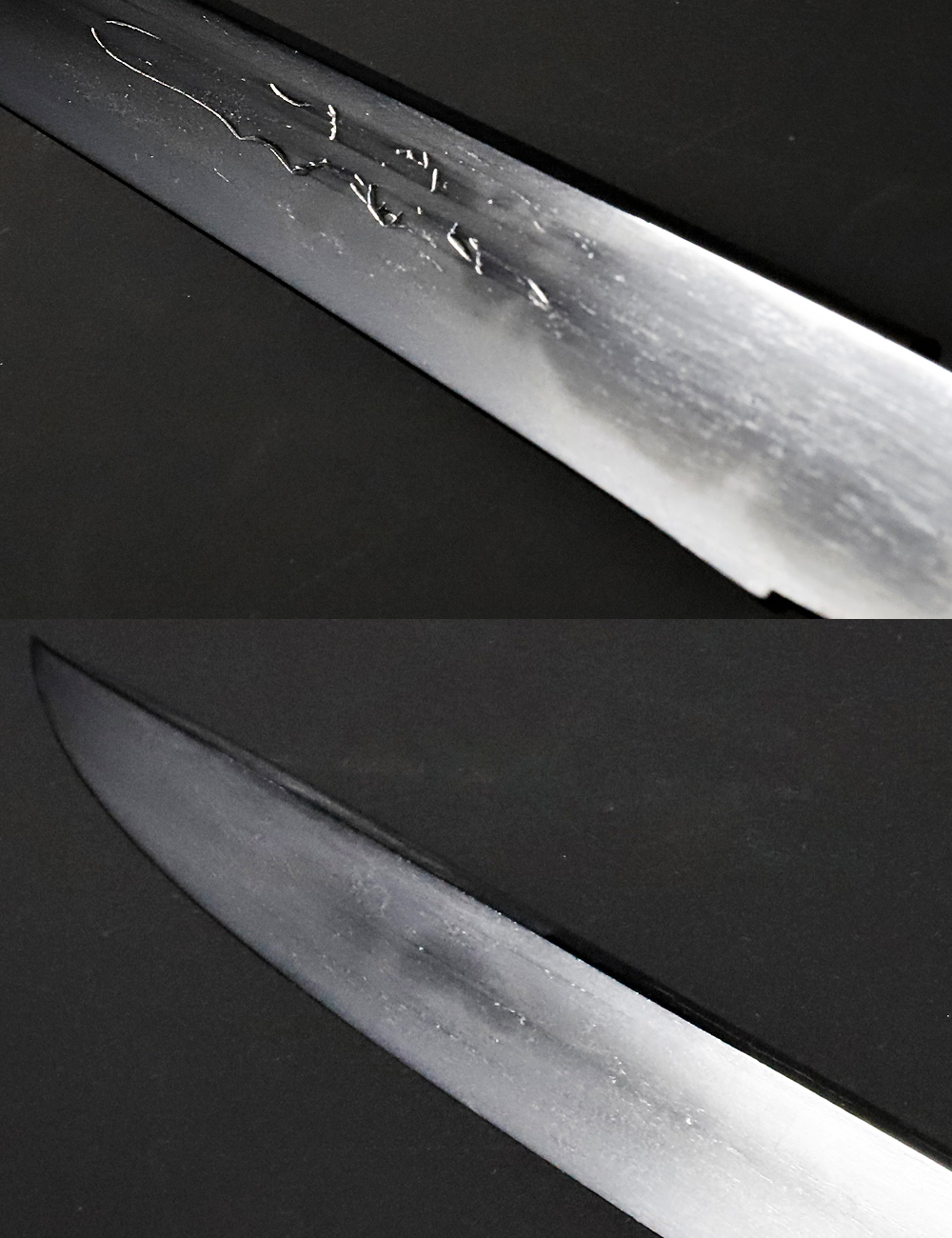
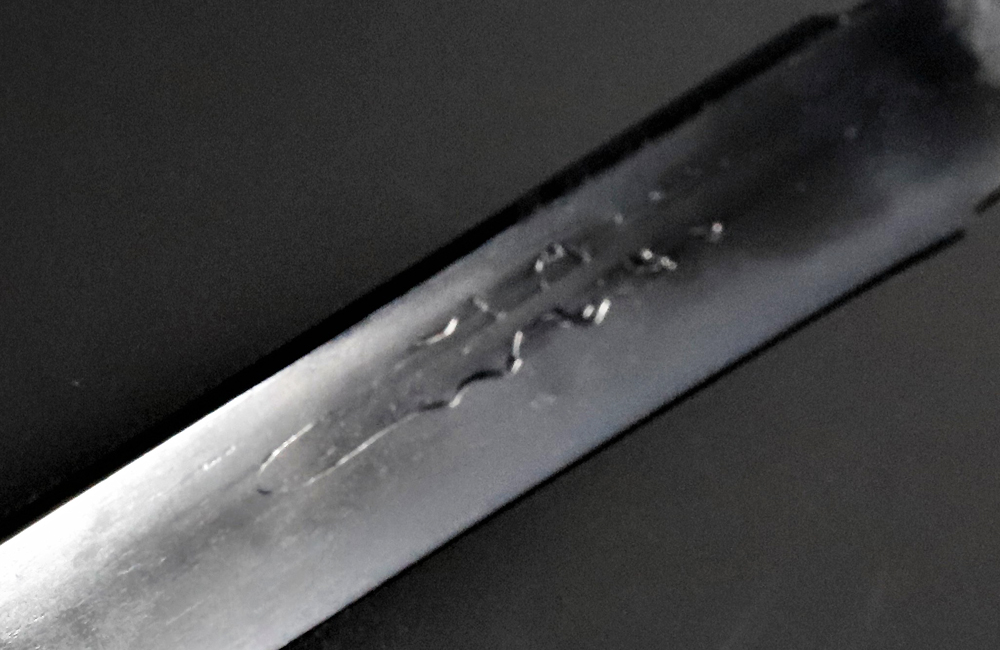
| Engraving | Possibly Kurikara (dragon entwined around a sword). Ura: Unidentified. |
| Bōshi (Point / Tip) | Midare-komi. |
| Nakago (Tang) | Ubu, katte-sagari file marks, tapering to a kuri-jiri tip. |
| Mekugiana (Rivet holes) | 1 |
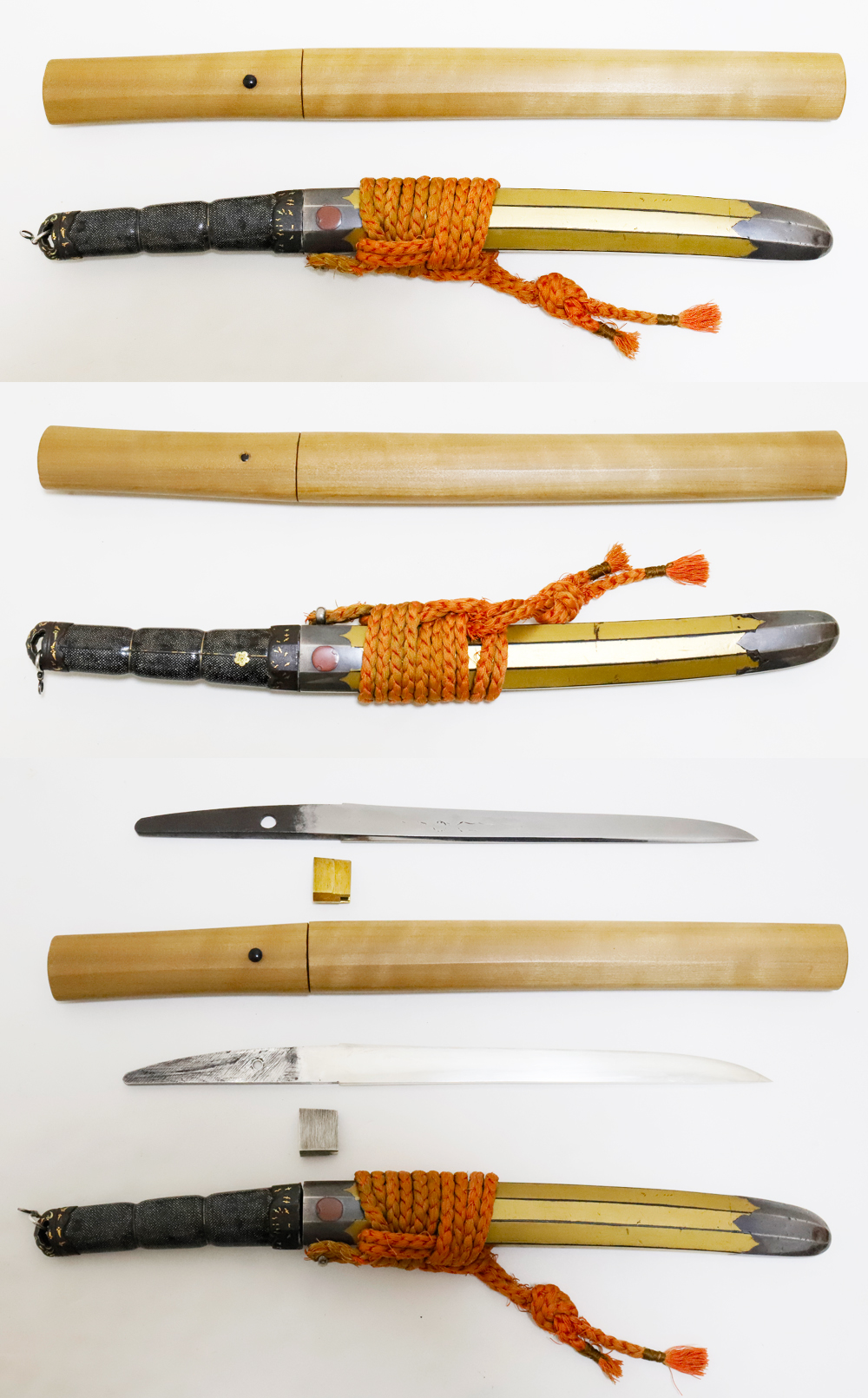
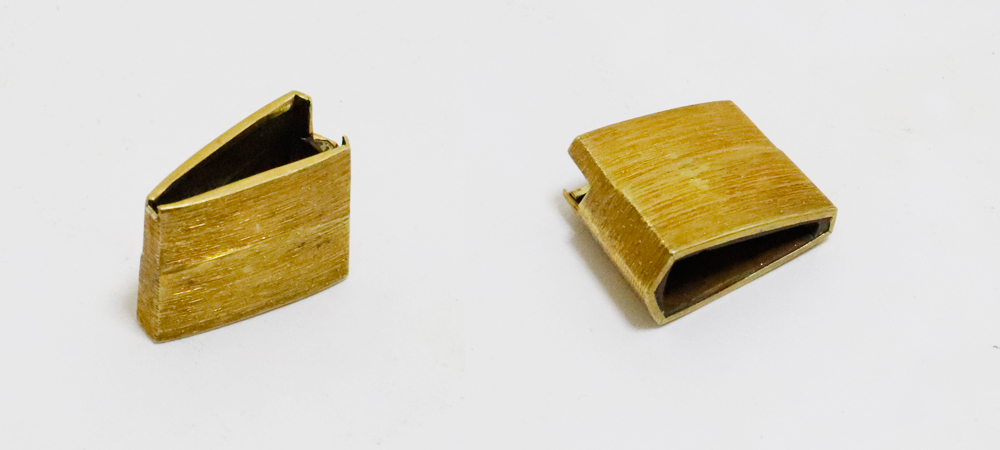
| Habaki | Gold-foiled copper Echū-style habaki with file marks over the entire surface. |
| Mountings | Koshirae-tsuki |
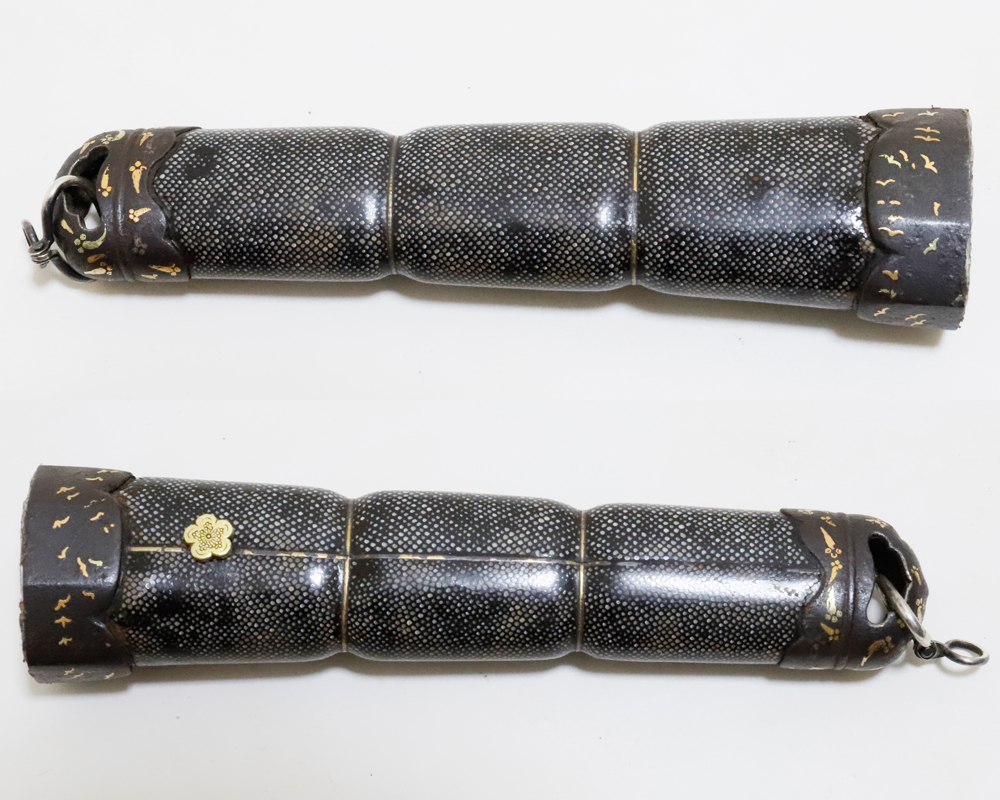
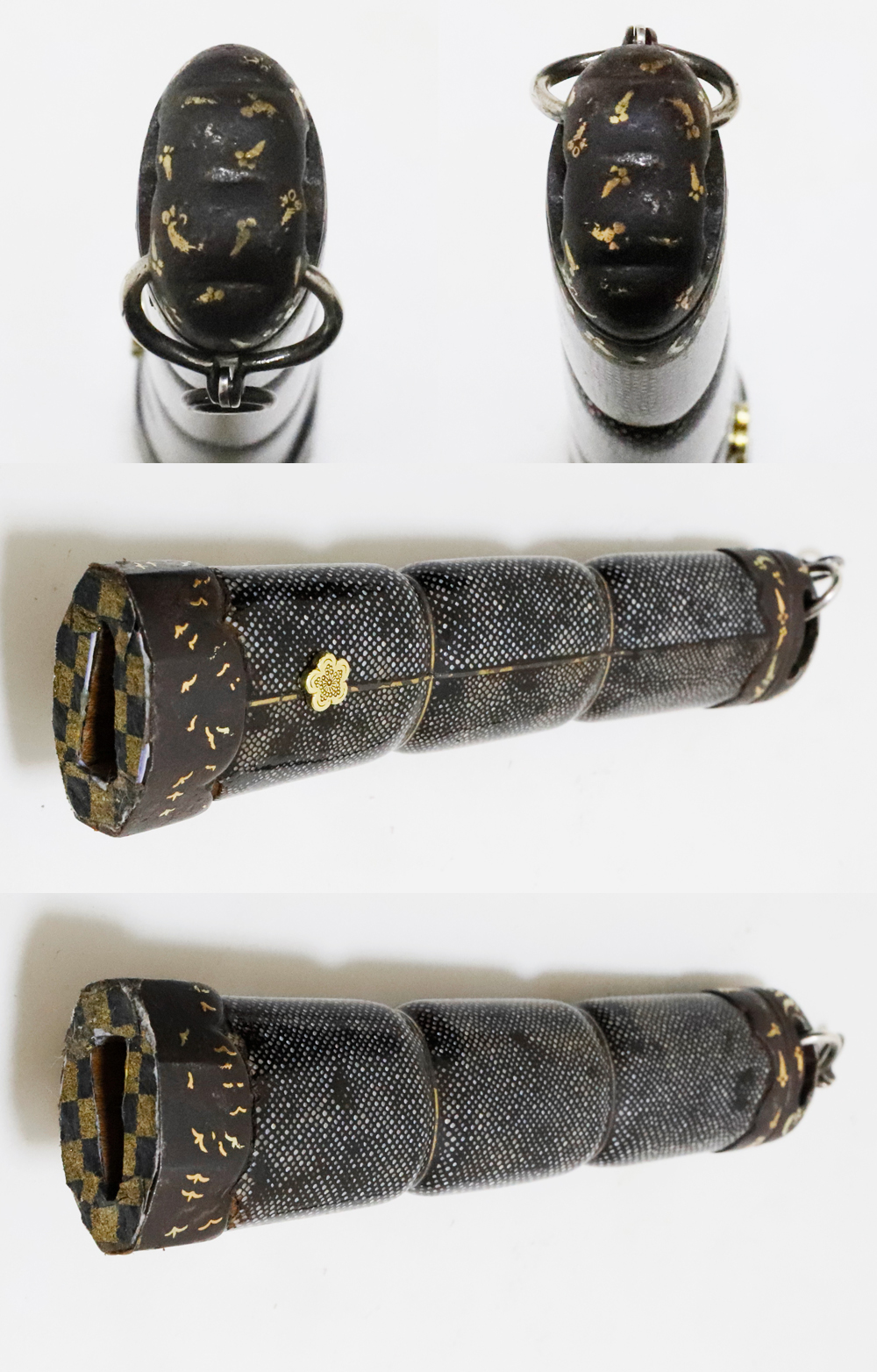
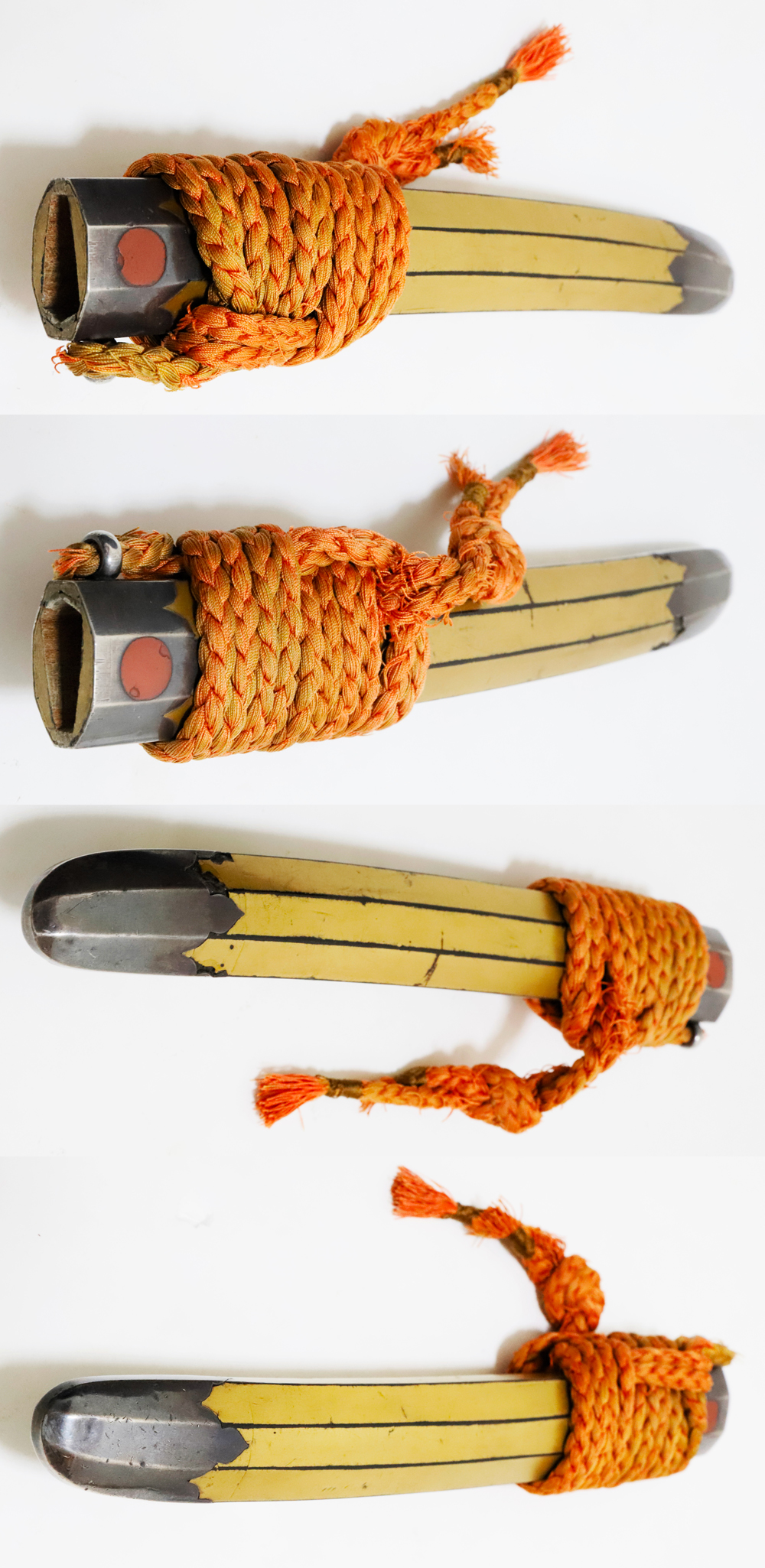
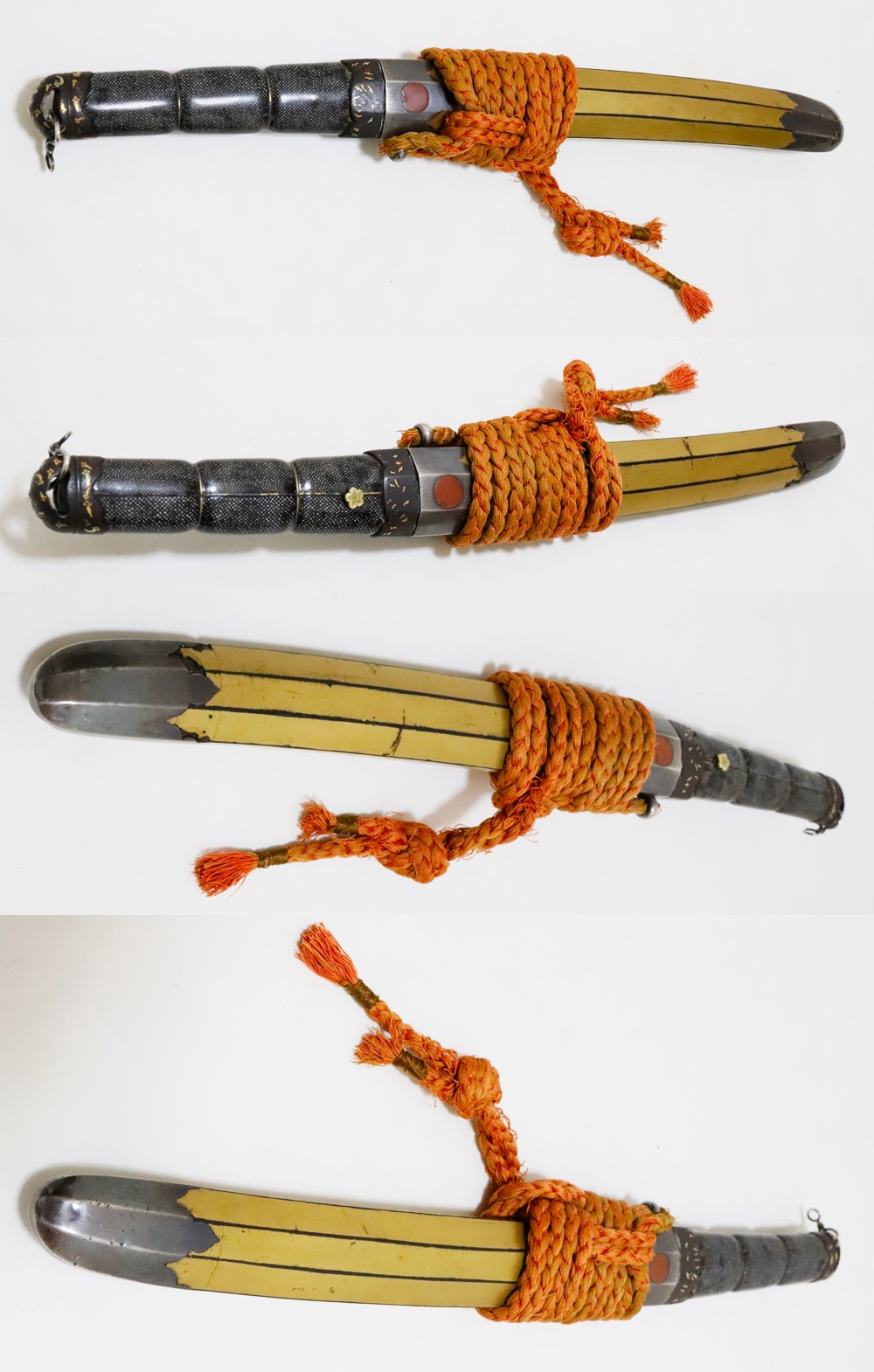
| Koshirae | Aikuchi-style unusual mounting with an octagonal wooden scabbard finished in gold ikakeji lacquer, and a three-section hilt covered in polished samegawa (ray skin). |
| Koshirae Length |
31.8 cm 12.5 in |
| Tsuka Length |
10.7 cm 4.2 in |
| Other details | Tsunagi: Solid silver substitute blade with a solid silver habaki featuring horizontal file marks. |
Price |
800,000 JPY |
| The first-generation Hiromitsu of Sagami Province is said to have been either a student or a son of Masamune. Together with Akihiro, he was one of the leading swordsmiths of the Soshu tradition during the Nanbokucho period (1336–1392). He was particularly renowned for his flamboyant hitatsura tempering, a distinctive feature of the Soshu tradition. Judging from the signature "Soshu ju Hiromitsu" and the relatively small blade with standard proportions, this tanto is attributed to the late Muromachi period, possibly to the sixth-generation Hiromitsu, active around Daiei (1521), or the seventh generation, active around Koji (1555). The authentication certificate also identifies the period as late Muromachi. After approximately 500 years, the carvings on the blade have faded to faint traces. Nevertheless, the magnificent hitatsura hamon and the remarkably well-preserved condition of the tang are particularly noteworthy. This tanto passed the NBTHK Hozon Token shinsa in 1991. The accompanying koshirae is an unusual aikuchi-style mounting featuring an octagonal scabbard finished in gold ikakeji lacquer and a three-section hilt covered in polished ray skin (togidashi samegawa). The wooden scabbard has an octagonal cross-section, with gold ikakeji lacquer applied to each flat surface, leaving the ridges black. Both the scabbard mouth (koiguchi) and the end fitting (kojiri) are made of silver. The distinctive three-section hilt is covered in black polished ray skin. A metal ring is attached to the hilt end. The fuchi and kashira are probably of Higo workmanship, decorated with scattered gold motifs of flying birds on the fuchi and cloves on the kashira. A thick vermilion-orange sageo cord of considerable age is wrapped around the scabbard. The vivid contrast of colors and the highly original design make this an exceptionally distinctive aikuchi-style koshirae. A fine Soshu Hiromitsu tanto with a magnificent hitatsura hamon, complemented by an extraordinary aikuchi-style koshirae featuring an octagonal gold ikakeji lacquer scabbard and a three-section hilt covered in polished ray skin. |

 Search