| Product No. TAN-0387 弘前住紀倫賀 | |
|---|---|
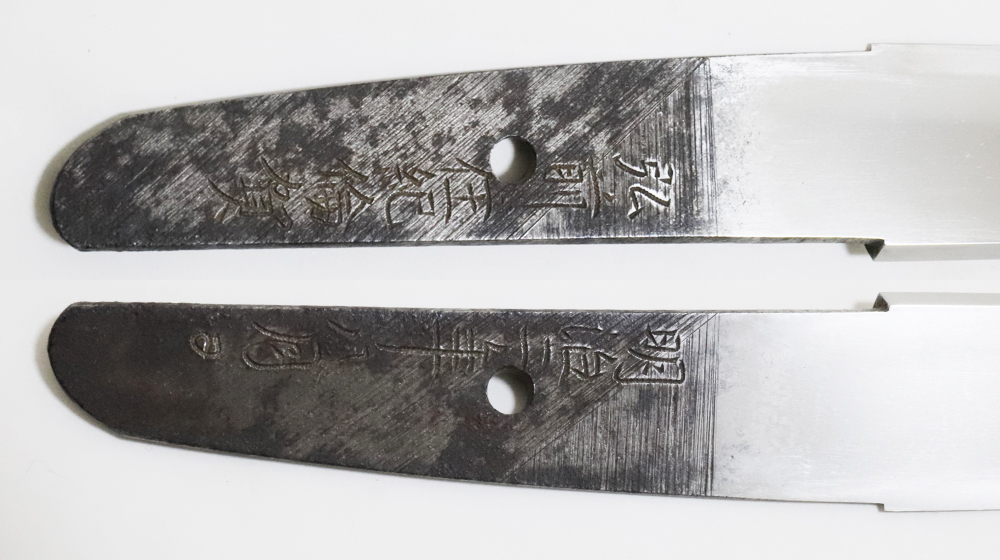
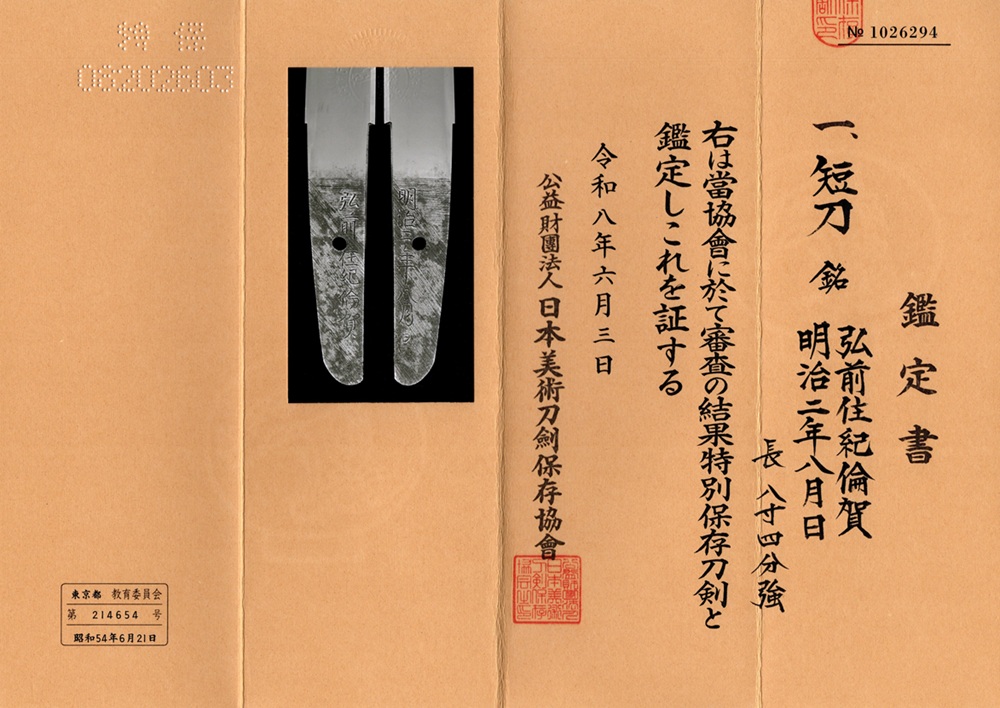
| Mei |
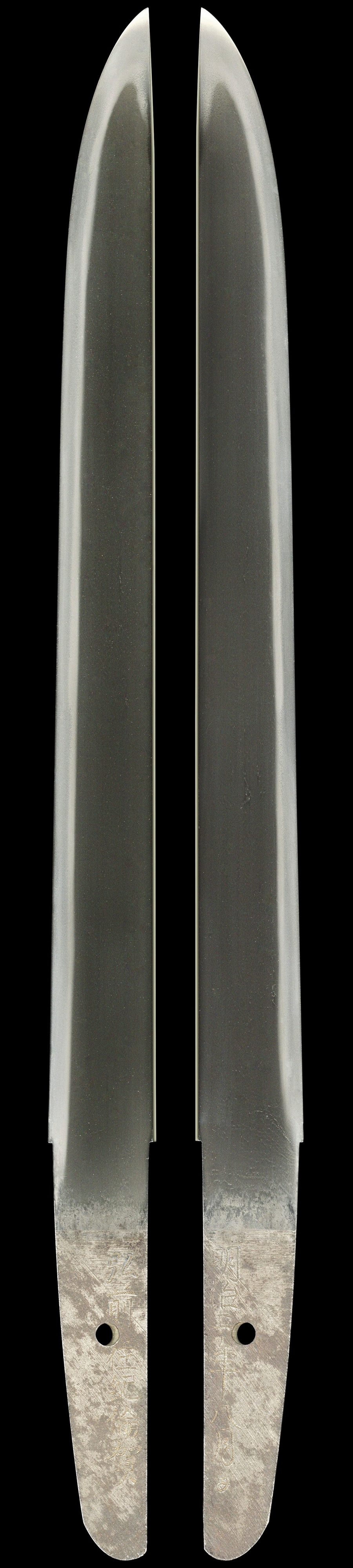
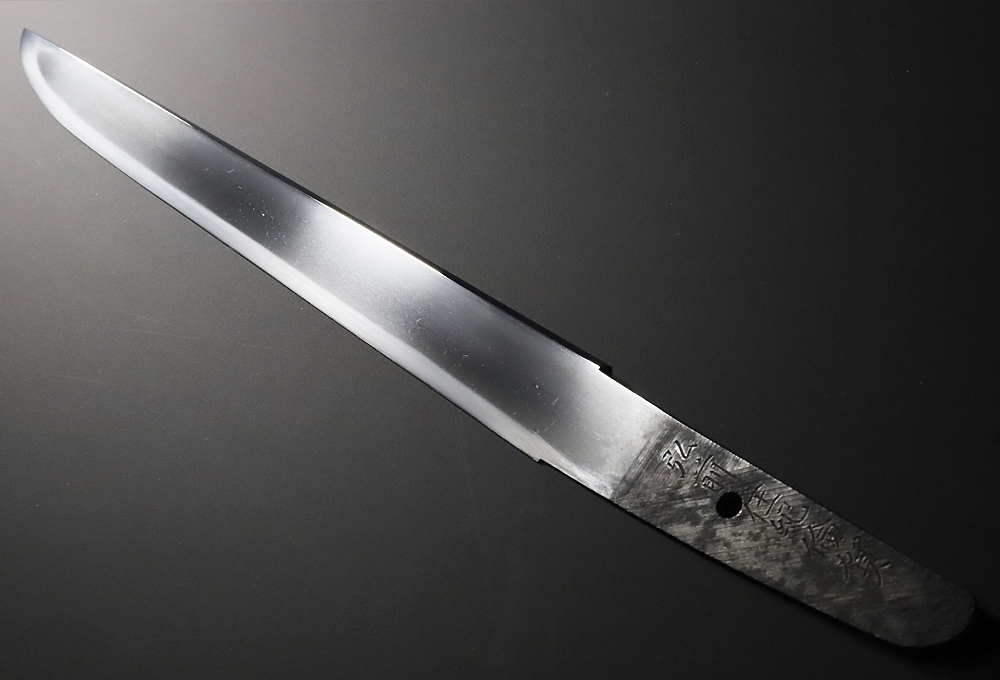
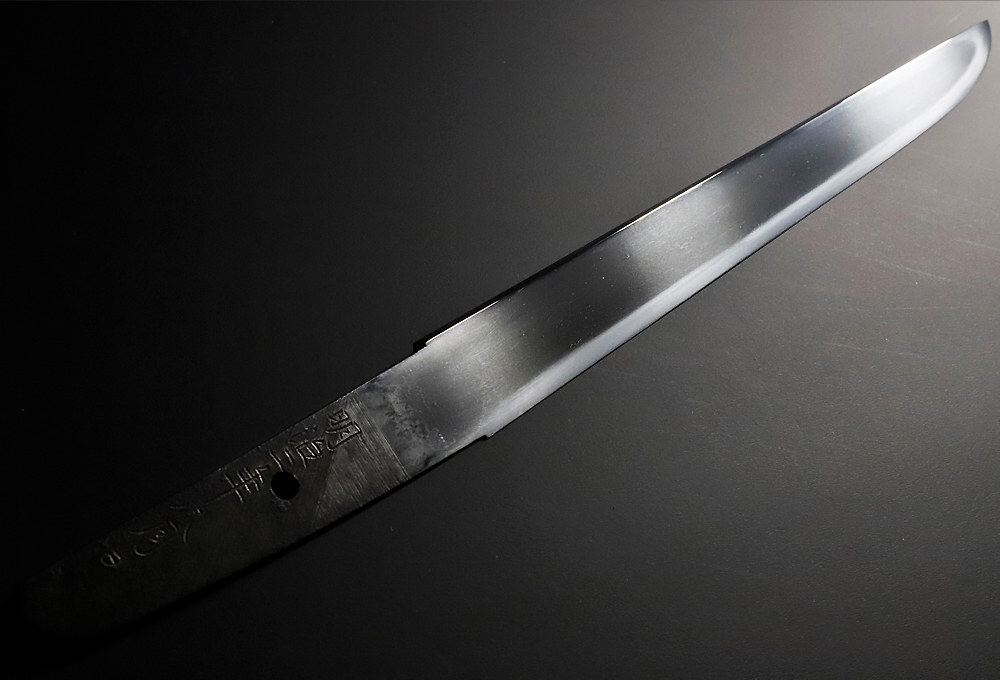
Hirosaki-ju Ki no Tomoyoshi Back: On a day in August, Meiji 2(1869) |
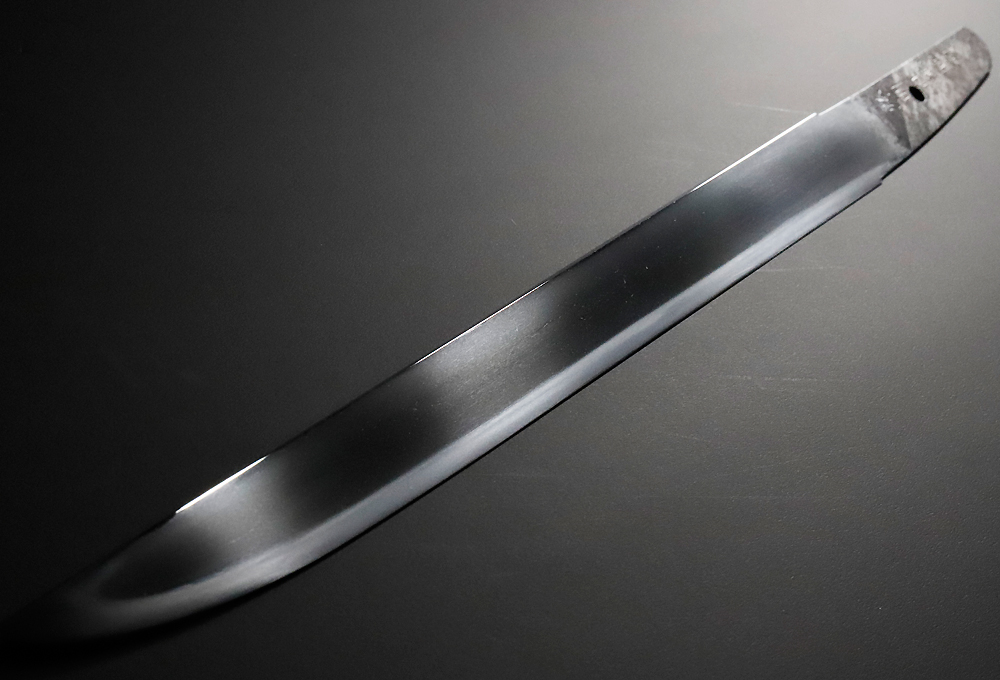
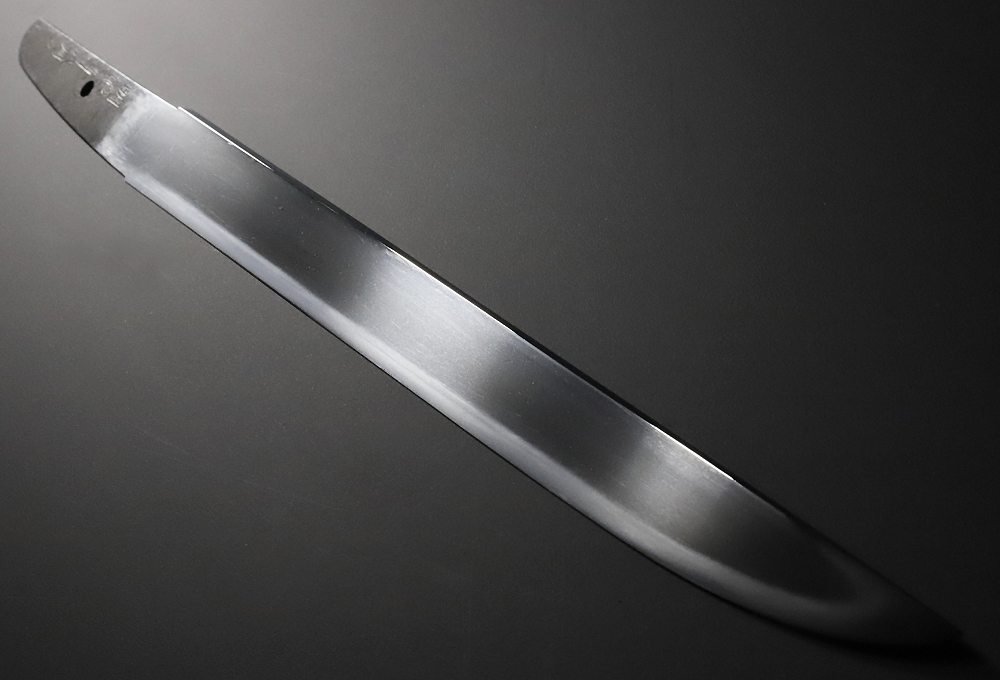
| Shape | Hira-zukuri, iori-mune. The mihaba and kasane are of standard proportions. A healthy blade with no curvature. |
| Region | Hirosaki, Mutsu Province |
| Era | Early Meiji Period |
| Length |
25.8 cm 10.2 in |
| Motohaba |
2.5 cm 1.0 in |
| Munekasane |
0.7 cm 0.3 in |
| Status | Tokubetsu Hozon Token |
| Certification Date | Passed the Shinsa in March 2026 |
| Registration Authority | Tokyo |
| Registration Date | June 21, 1979 |
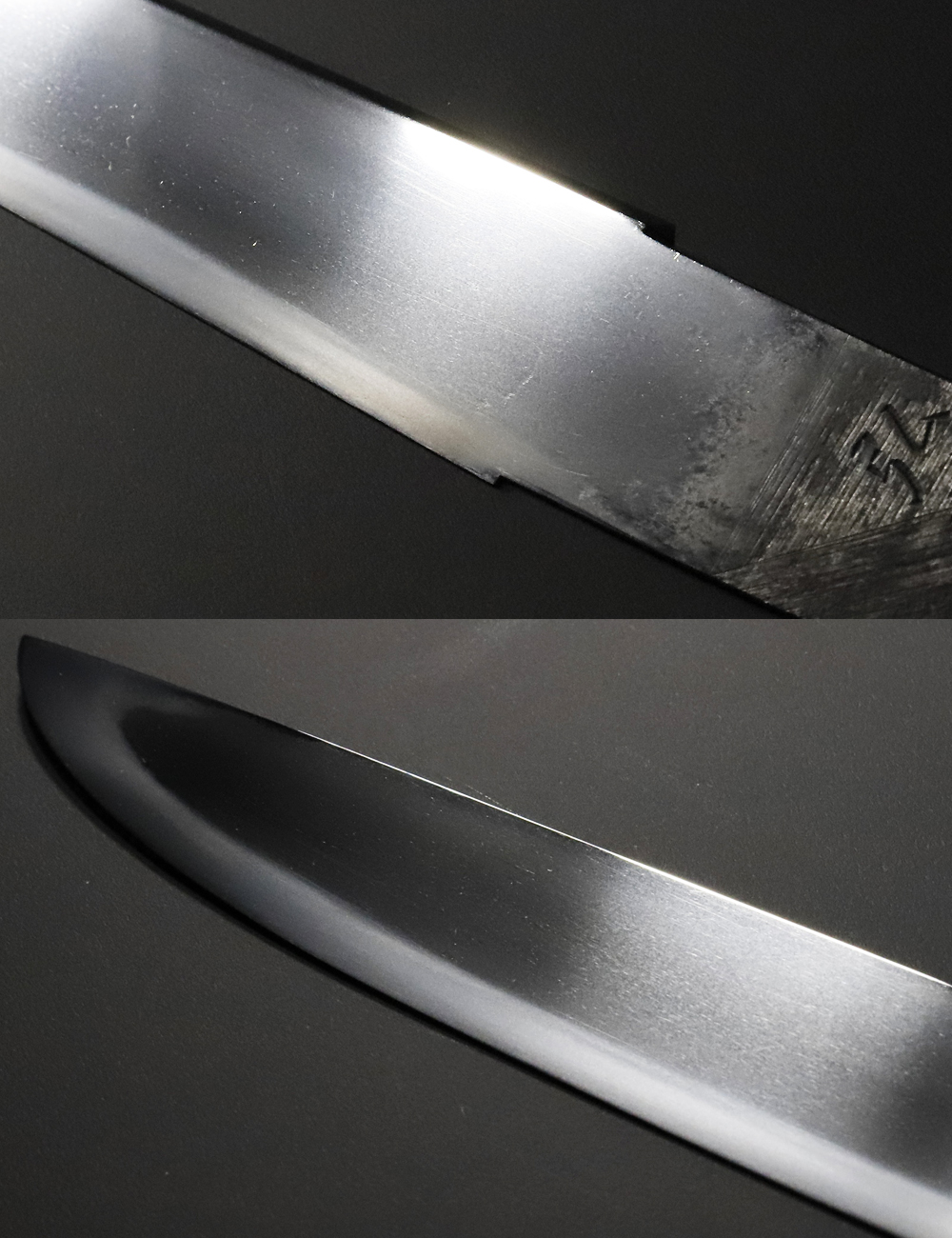
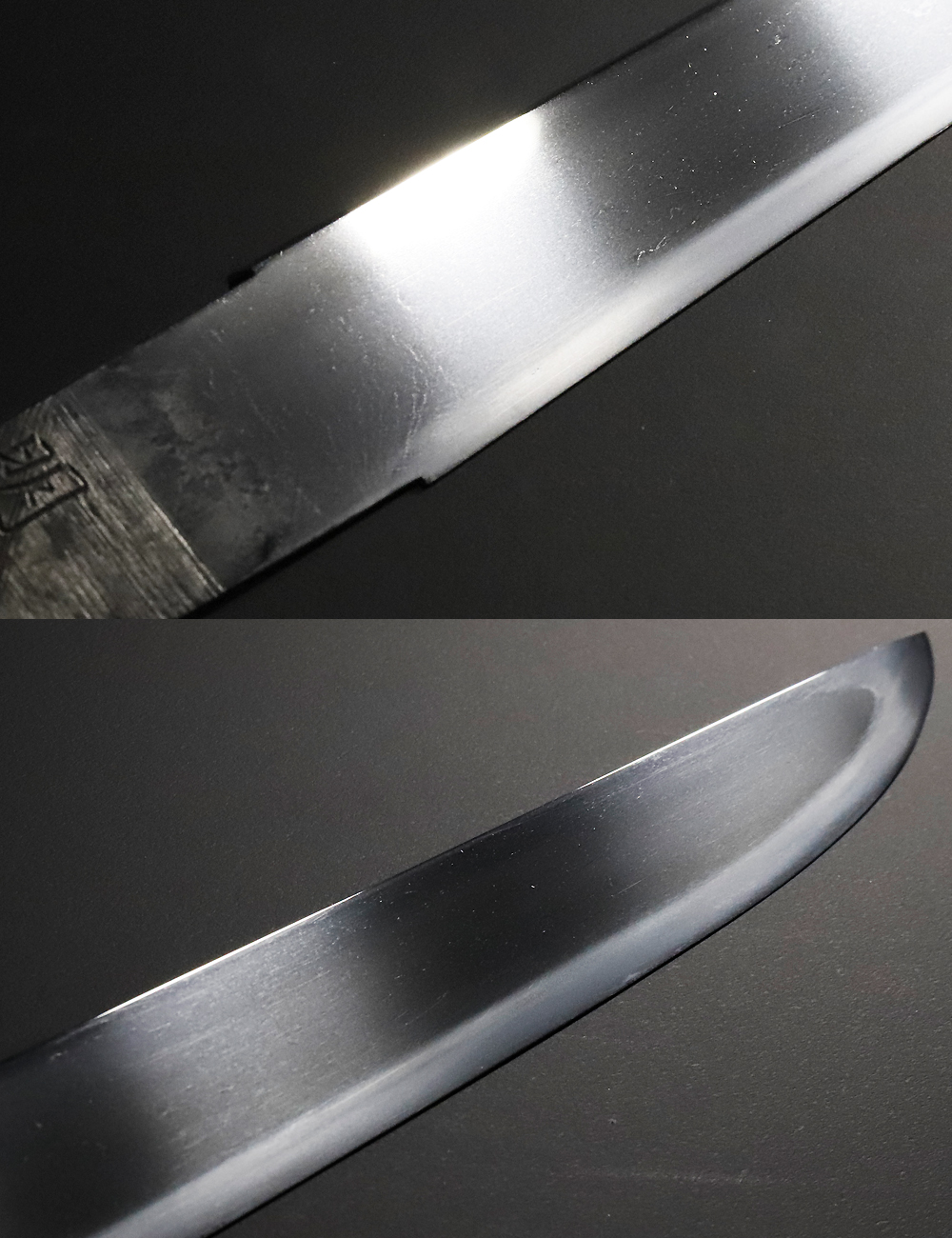
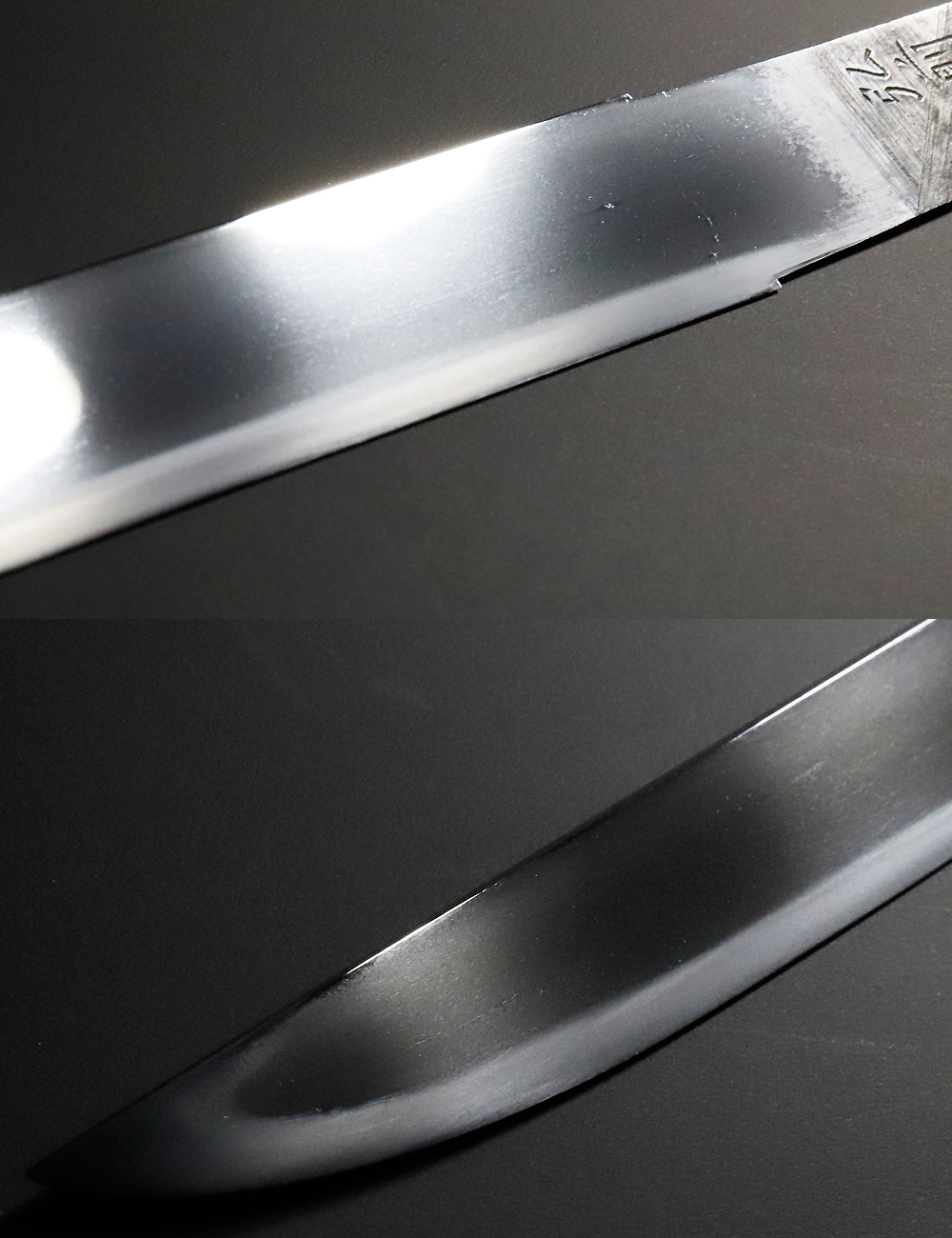
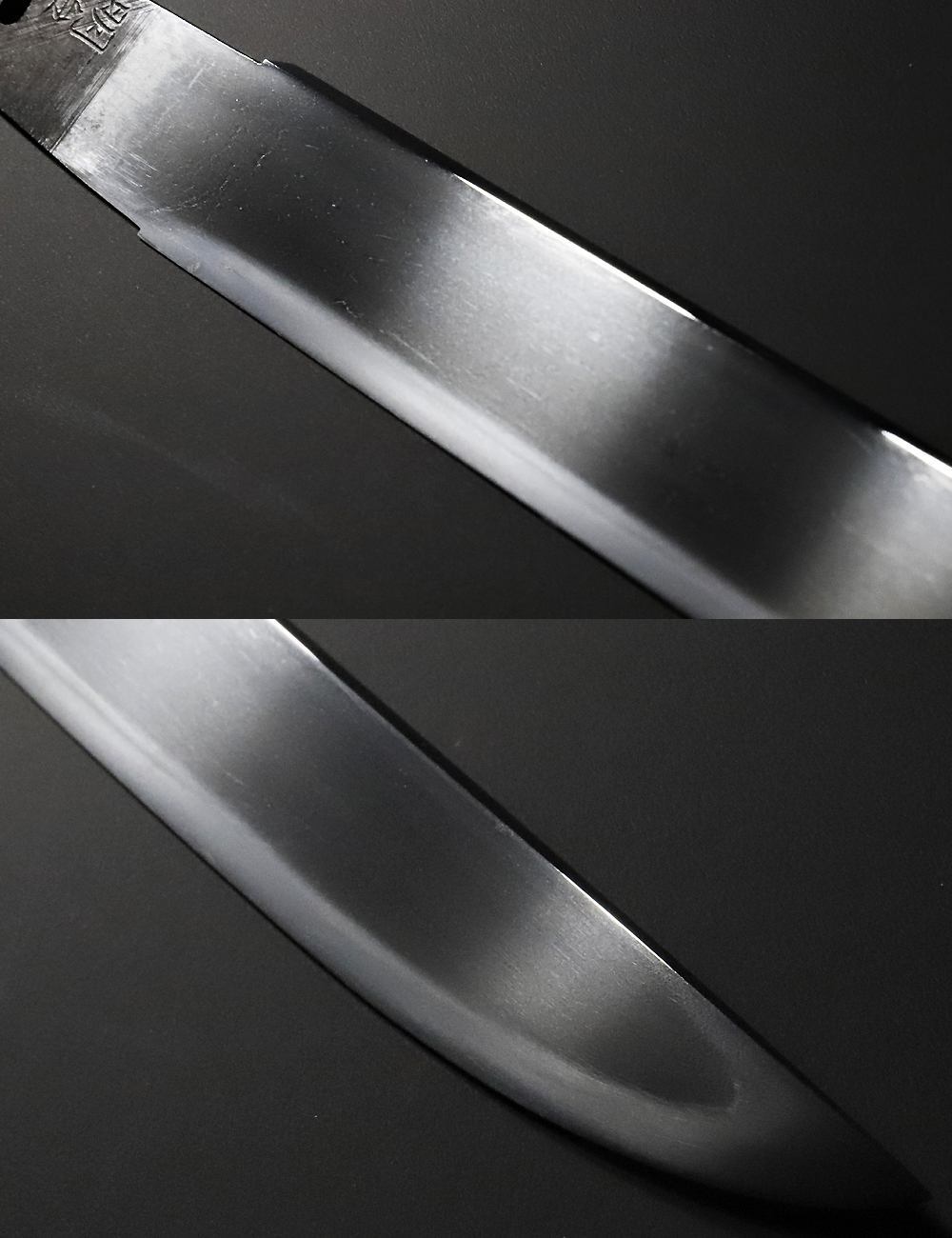
| Jihada (Metal pattern) | The kitae is a tightly forged ko-itame that tends to flow. |
| Hamon (Temper line) | The hamon is a bright and clear chu-suguha with slight notare. |
| Bōshi (Point / Tip) | The boshi is straight and turns back in a small maru. |
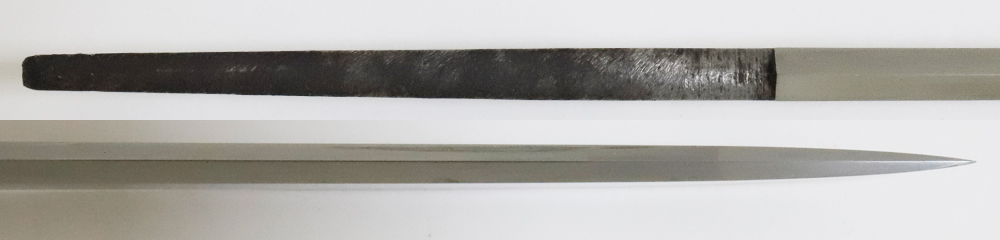
| Nakago (Tang) | The nakago is ubu, with kesho and o-sujikai yasurime, and a ha-agari kurijiri. |
| Mekugiana (Rivet holes) | 1 |
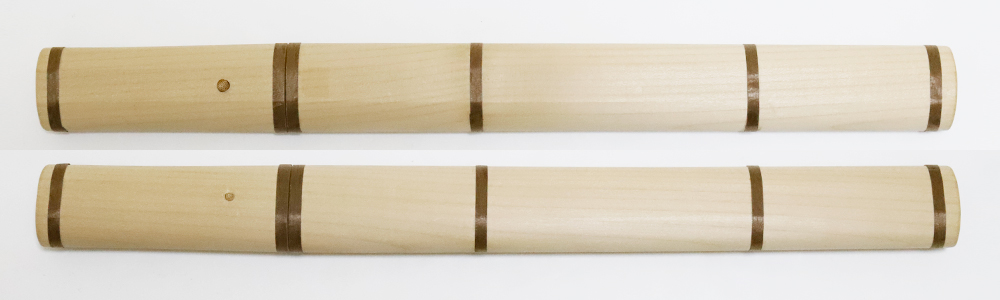
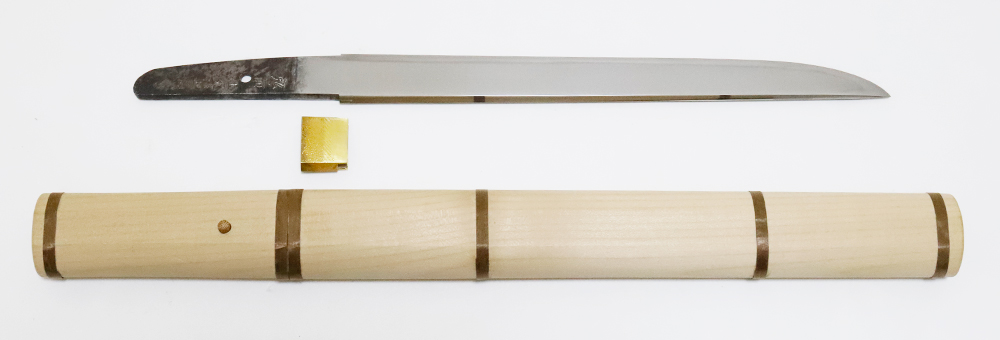
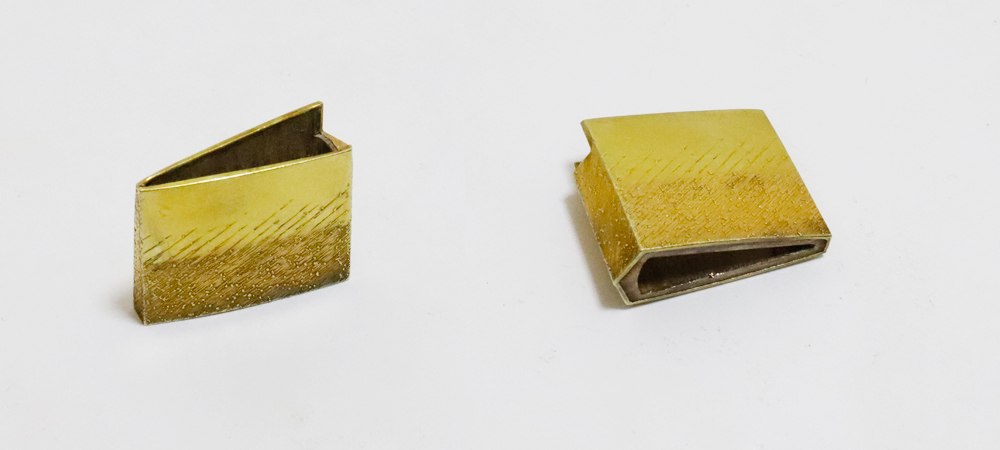
| Habaki | Solid silver habaki covered with gold foil, with koshi-yujo yasuri. |
Price |
SOLD |
| This smith, Tomoyoshi, was active in Hirosaki in Tsugaru, Mutsu Province, from the closing years of the Edo period into the early Meiji era. He signed his works with inscriptions such as “Hirosaki-ju Ki Tomoyoshi” (紀倫賀). According to materials published by Hirosaki City, his workmanship is characterized by a tightly forged itame jigane and a gunome hamon. Two swords by Tomoyoshi have been preserved at Takateru Shrine, both of which are designated Tangible Cultural Properties of Hirosaki City. One of them bears the date “On a day in February, Meiji 3 (1870).” The Takaoka no Mori Hirosaki Clan Historical Museum also houses a tanto signed “Hirosaki-ju Ki Tomoyoshi,” dated Meiji 3 (1870). In Tsugaru during the late Edo period, the swordsmith Ki Masayoshi, also known as Takahashi Kichijiro, undertook swordsmithing training by order of Tsugaru Yasuchika, lord of the Hirosaki Domain. He later traveled to Edo and studied under Suishinshi Masahide, producing swords using iron sand from Sotogahama. Tomoyoshi likewise worked in Hirosaki, used the surname “Ki” (紀), and bore a smith name incorporating the character “Yoshi” (賀). These similarities suggest a possible connection with this tradition of Tsugaru Shinshinto swordsmithing; however, the precise nature of any teacher-student or family relationship between Tomoyoshi and Masayoshi remains unclear. This tanto is signed “Hirosaki-ju Ki Tomoyoshi” and dated “On a day in August, Meiji 2 (1869).” The year 1869 came immediately after the conclusion of the Boshin War, at a time when the old domain system and the social order surrounding it were undergoing profound transformation in the wake of the Meiji Restoration. Tanto by Tomoyoshi dated the following year, Meiji 3 (1870), are still preserved in Hirosaki today, placing this blade squarely within the period when he was actively forging swords there. This is a valuable dated work by Ki Tomoyoshi, a Tsugaru swordsmith who continued to wield his hammer during the dramatic transition from the Edo period to the Meiji era. Carefully and skillfully made, it is also a particularly interesting example of a regional Tsugaru sword. Passed Tokubetsu Hozon Token Shinsa in March 2026. |

 Search