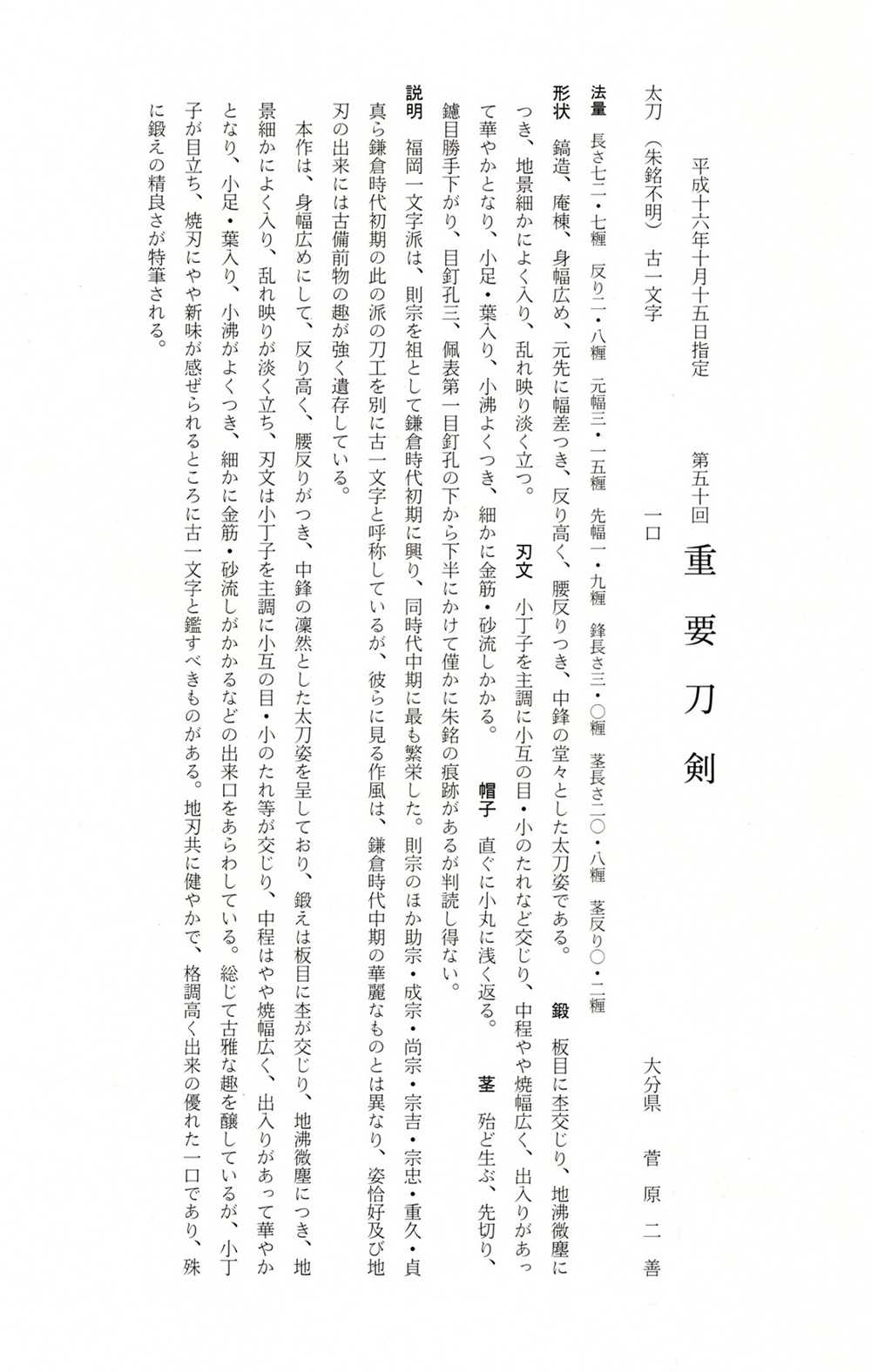
| Product No. KA-0877 (朱銘不明)古一文字 | |
|---|---|
| Mei |
Shu-mei (red lacquer inscription, illegible), Ko-Ichimonji. Back: -- |
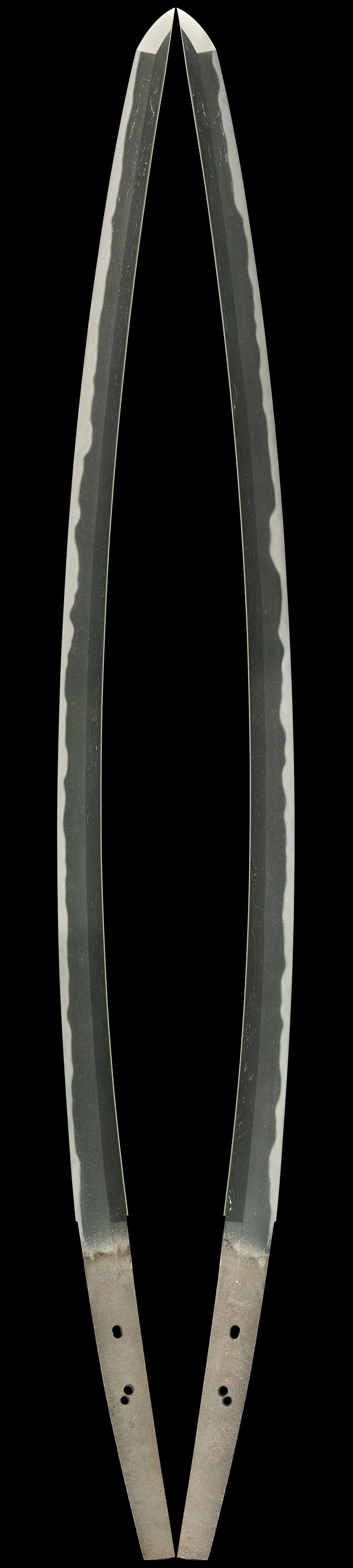
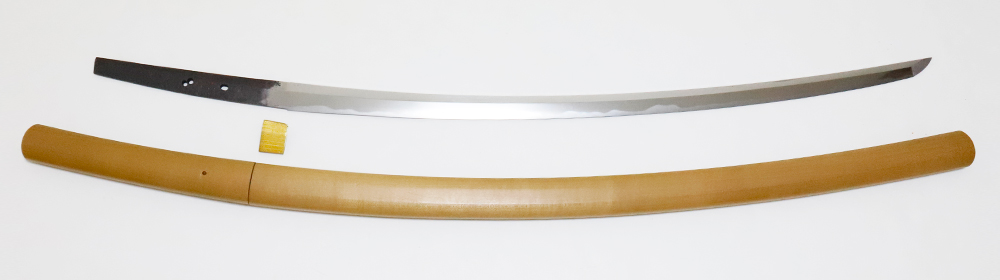
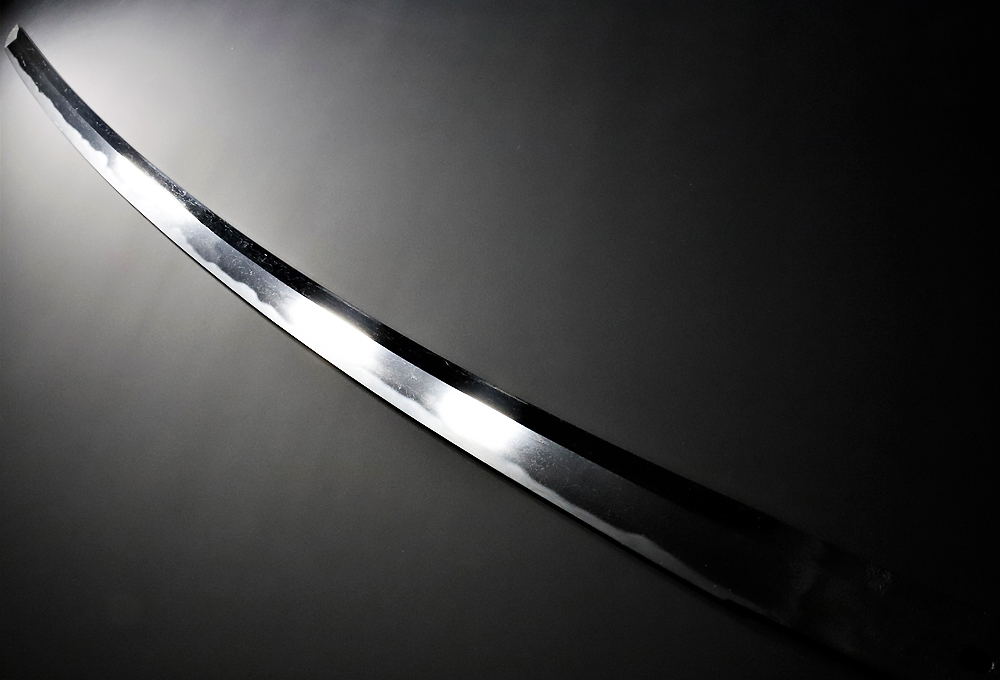
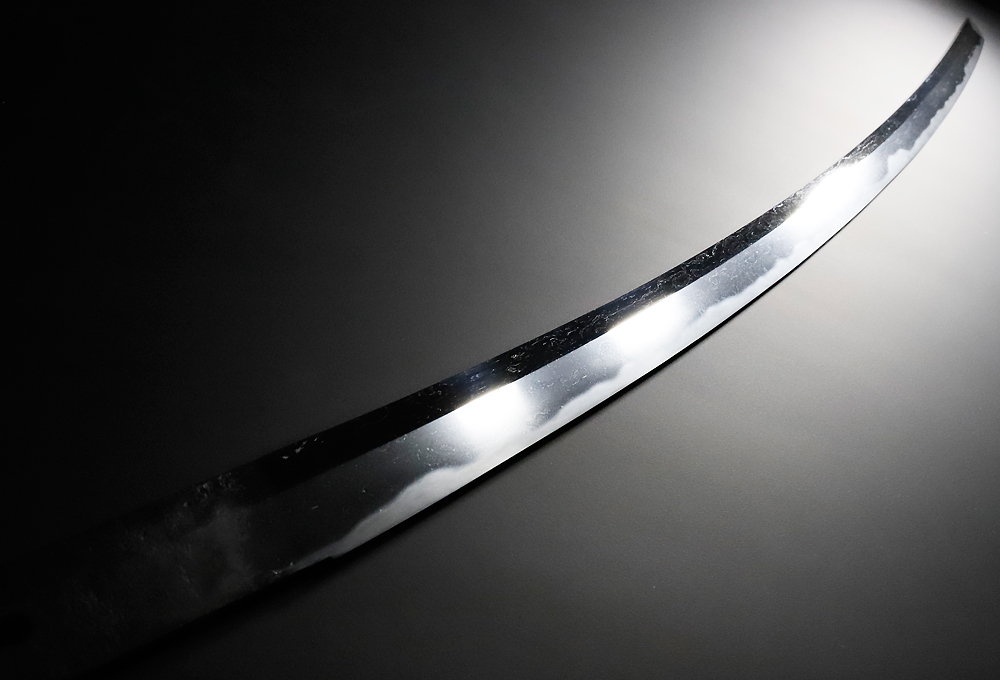
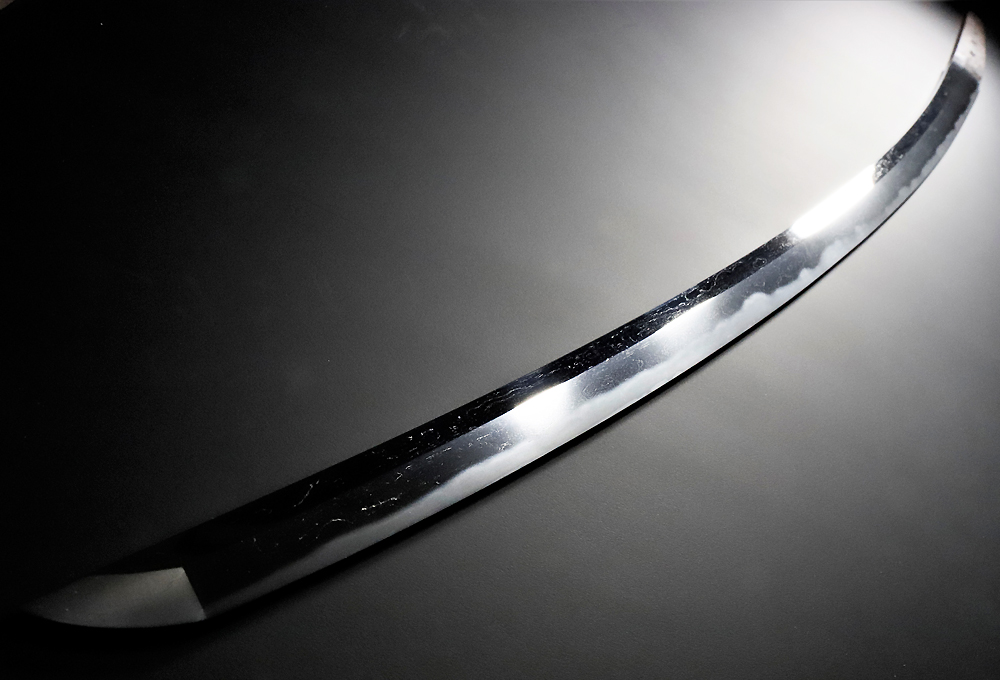
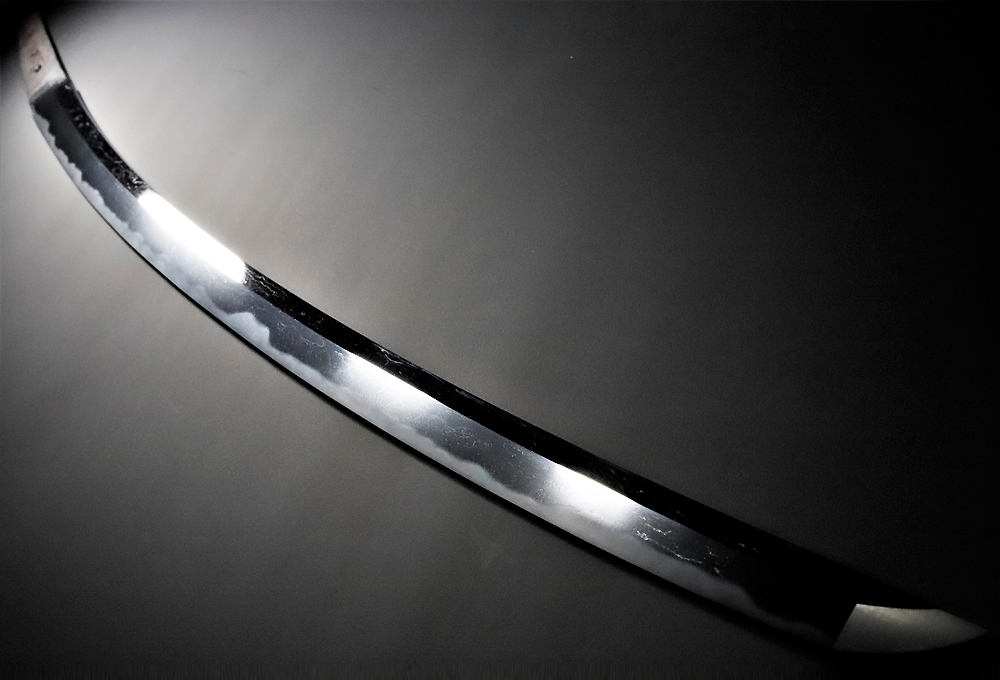
| Shape | Shinogi-zukuri, iori-mune. A magnificent tachi shape with a relatively wide blade, deep curvature concentrated toward the base (koshi-zori), and a chu-kissaki. |
| Region | Bizen Province |
| Era | Early Kamakura Period |
| Length |
72.8 cm 28.7 in |
| Sori (curvature) |
2.8 cm 1.1 in |
| Motohaba |
3.2 cm 1.2 in |
| Sakihaba |
2 cm 0.8 in |
| Munekasane |
0.7 cm 0.3 in |
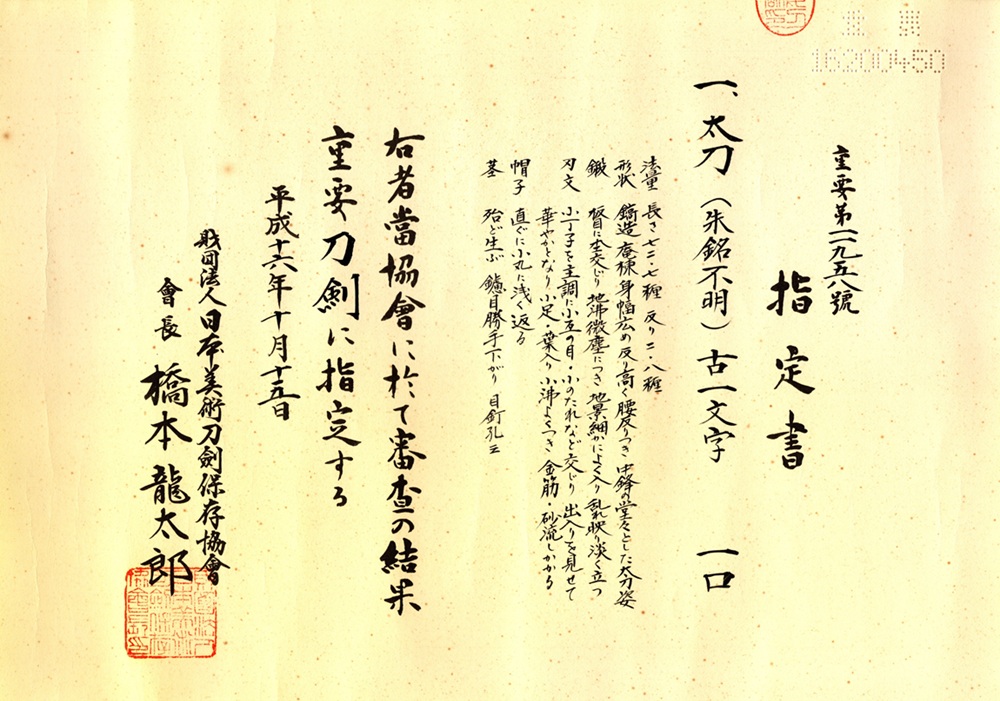
| Status | Juyo Token |
| Certification Date | October 15, 2004 |
| Registration Authority | Ooita Prefecture |
| Registration Date | May 12, 2004 |
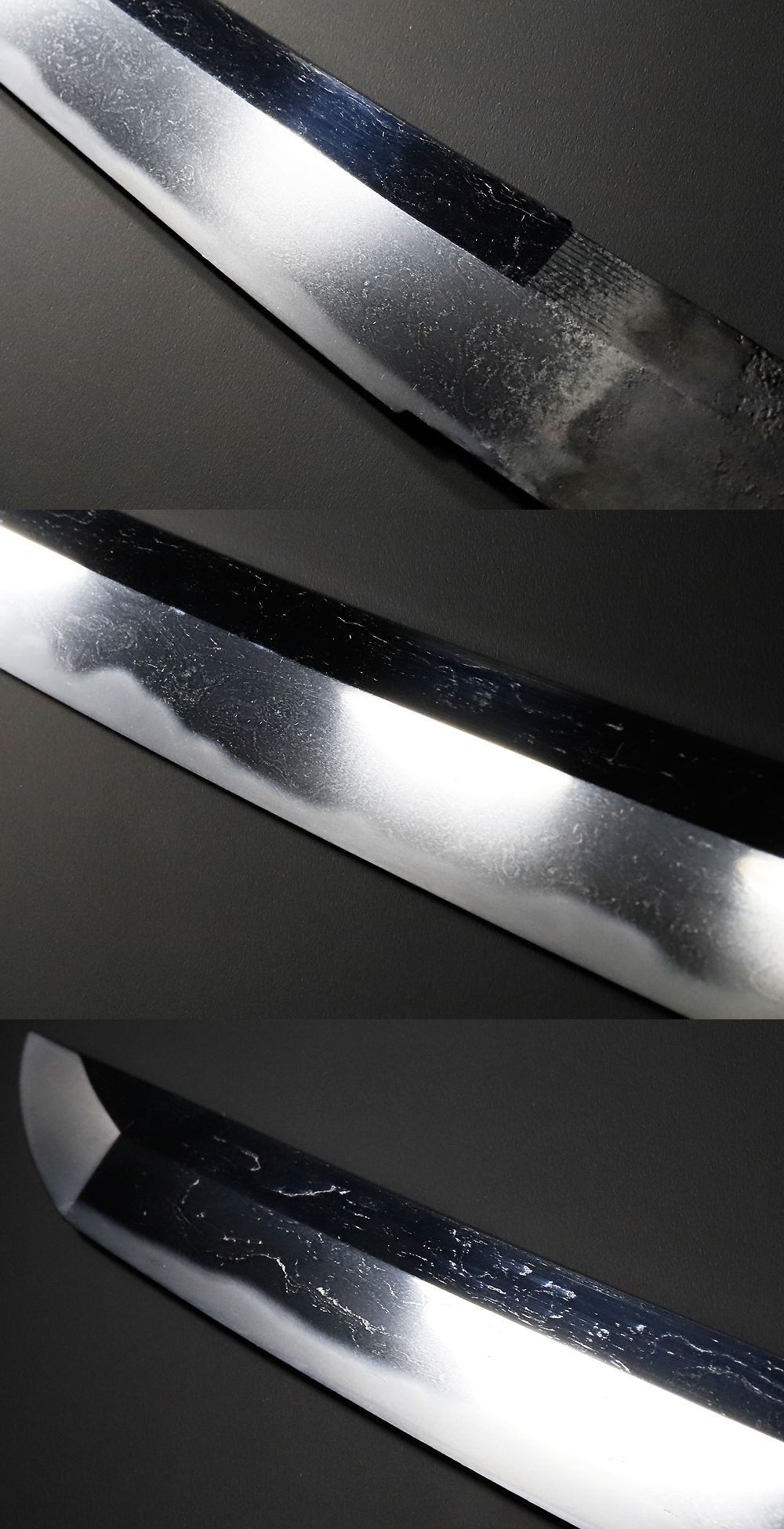
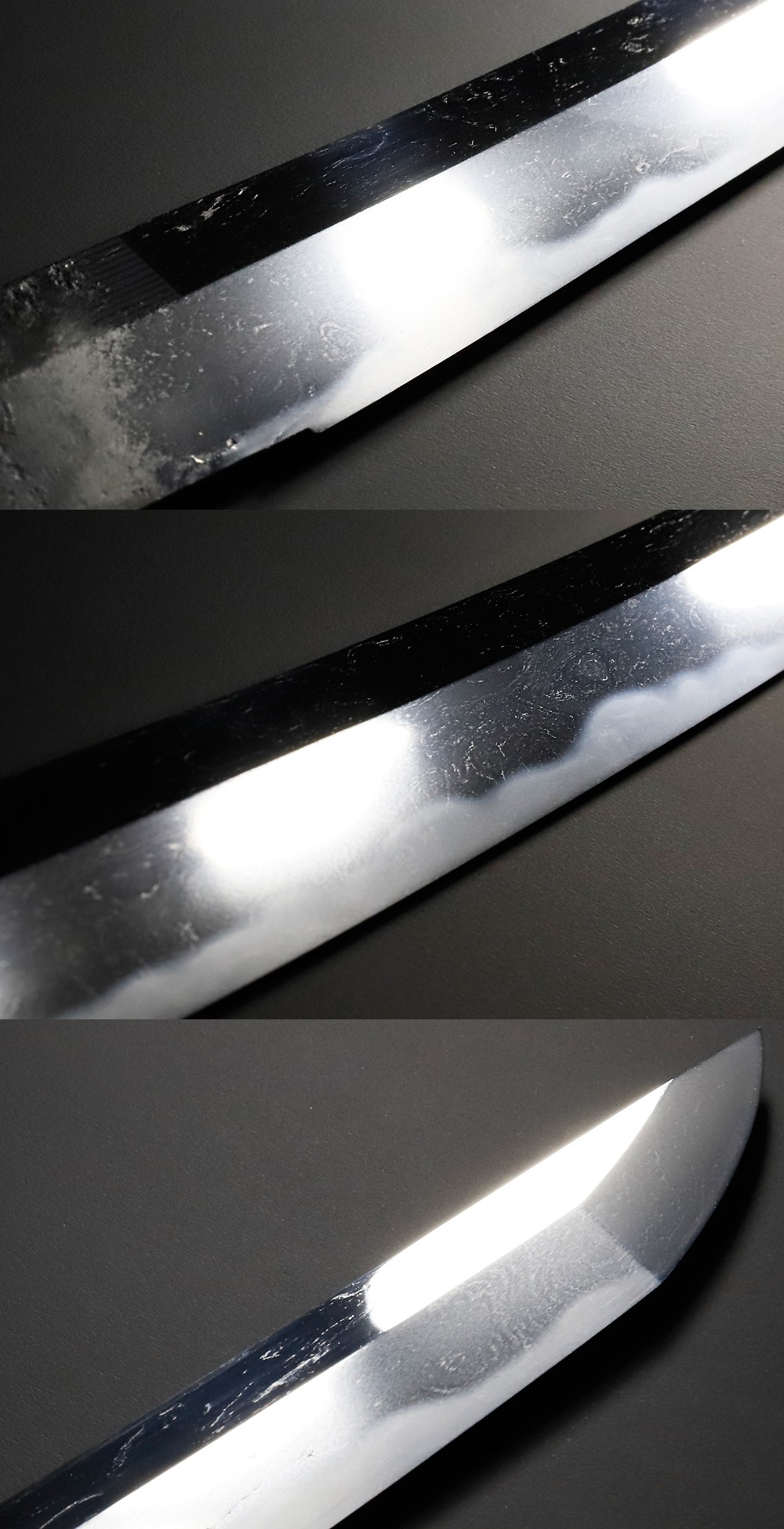
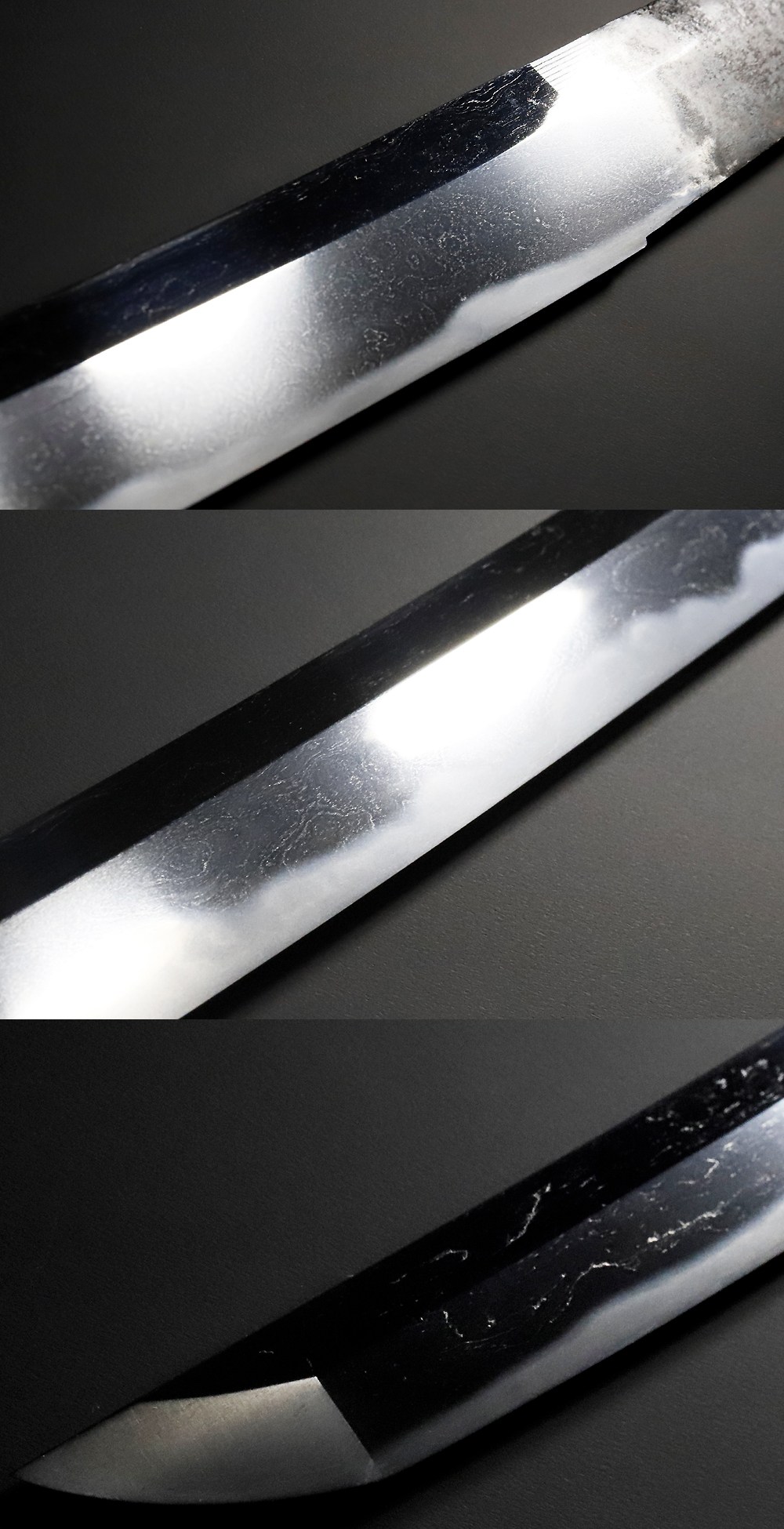
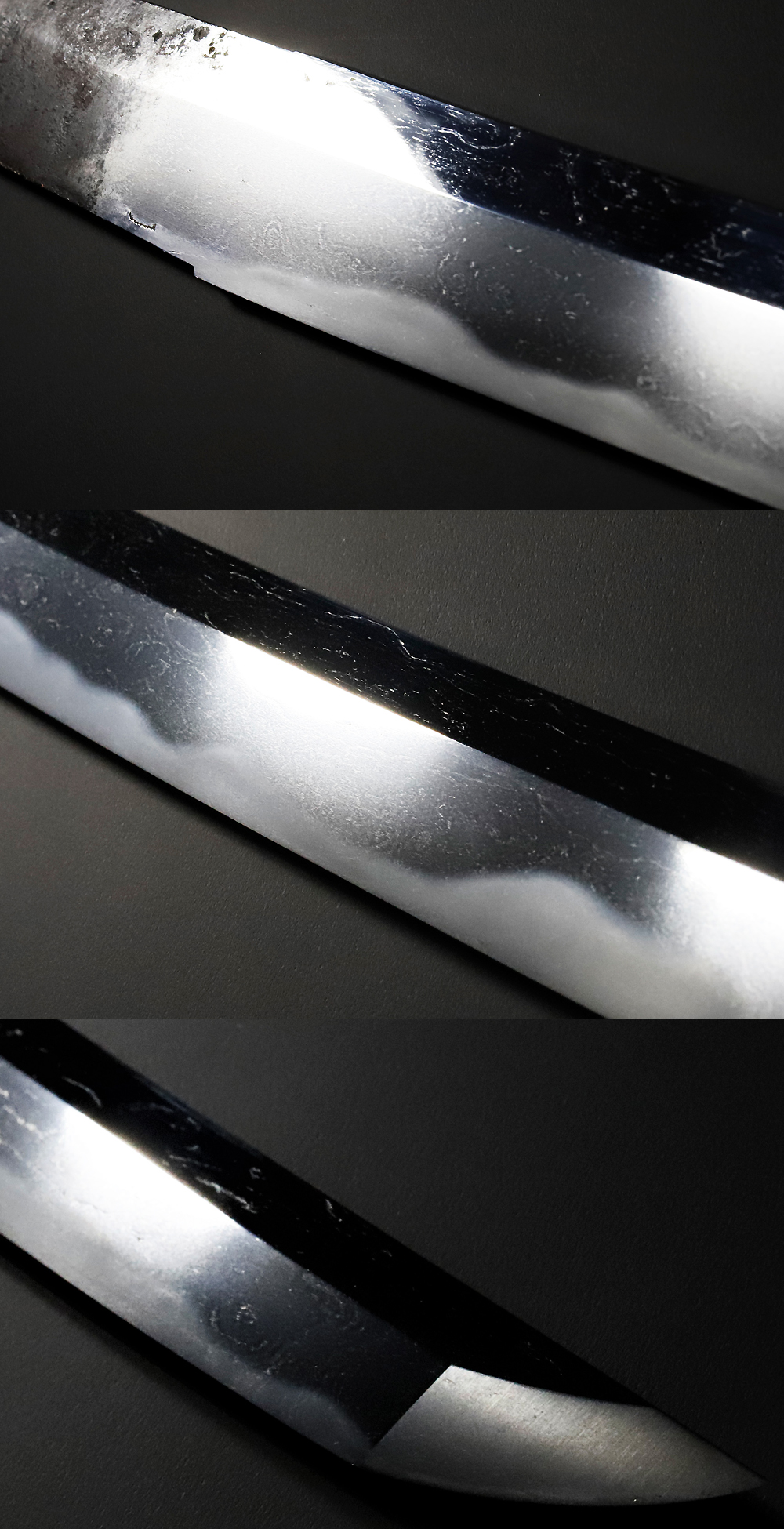
| Jihada (Metal pattern) | Itame-hada mixed with mokume-hada, featuring fine and abundant ji-nie, finely developed chikei, and faint midare-utsuri. |
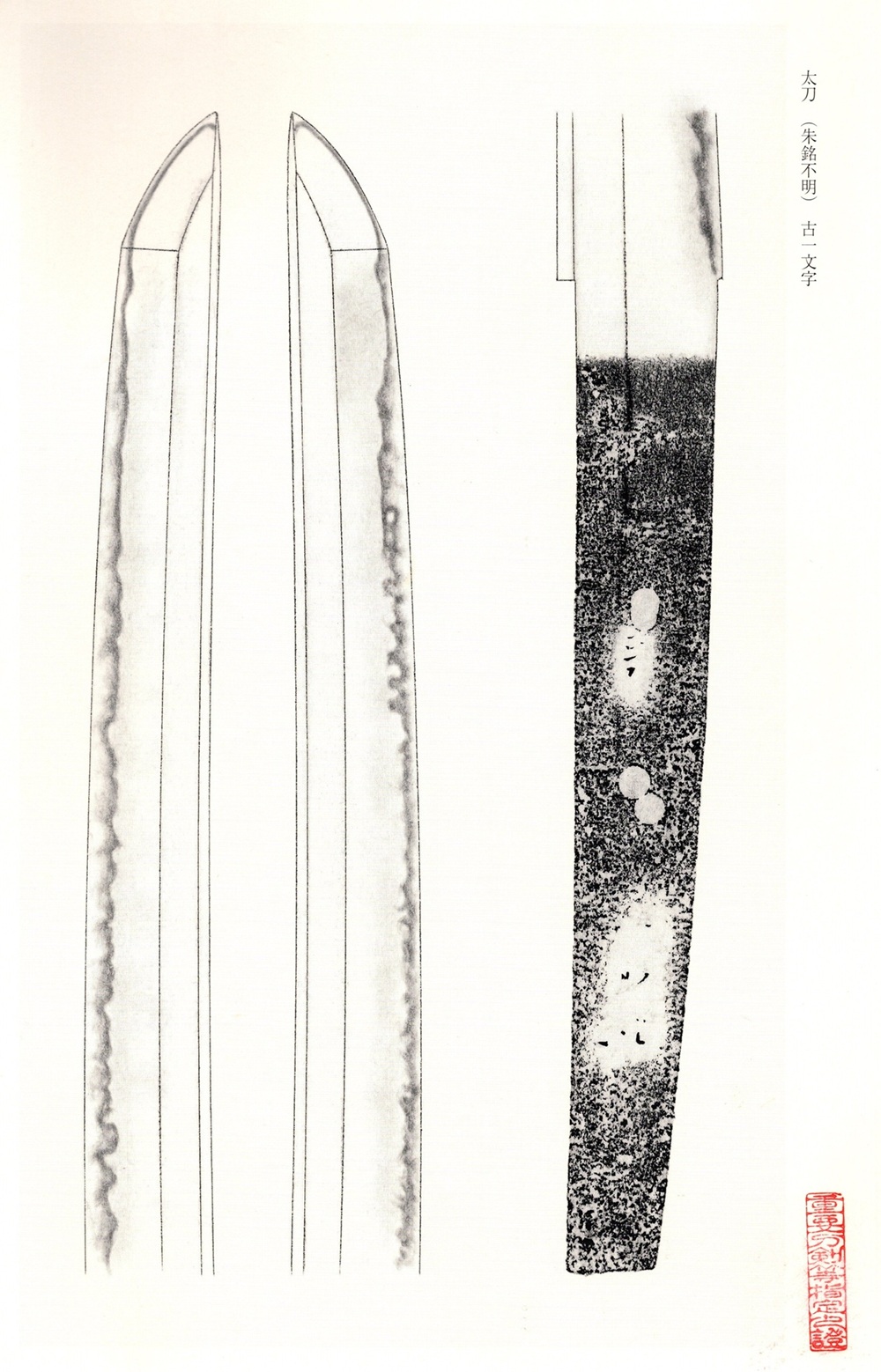
| Hamon (Temper line) | Predominantly ko-choji, mixed with gunome and ko-notare, forming a lively and flamboyant pattern with varied undulations. Ko-ashi and yo are present, with abundant ko-nie, accompanied by kinsuji and sunagashi. |
| Bōshi (Point / Tip) | Runs straight, with a shallow ko-maru turnback. |
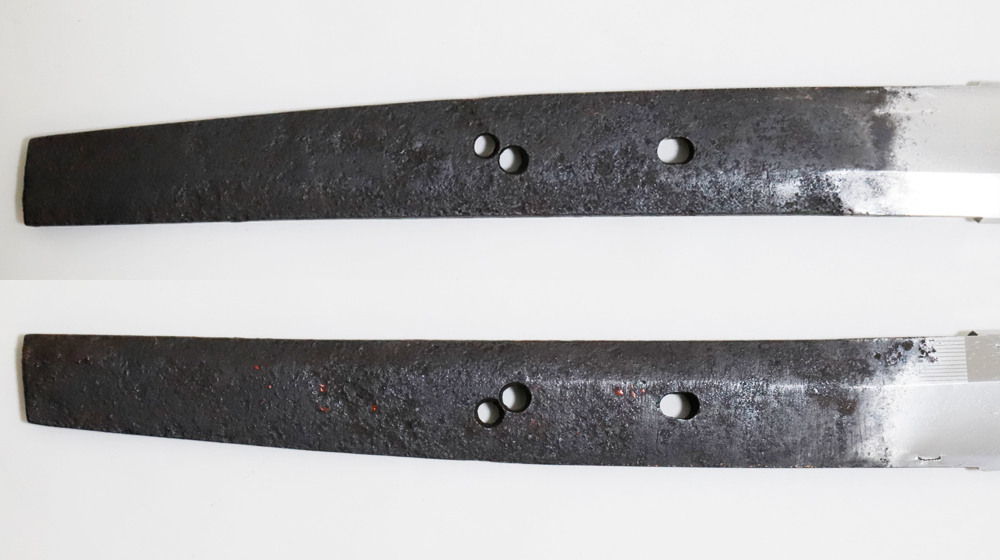
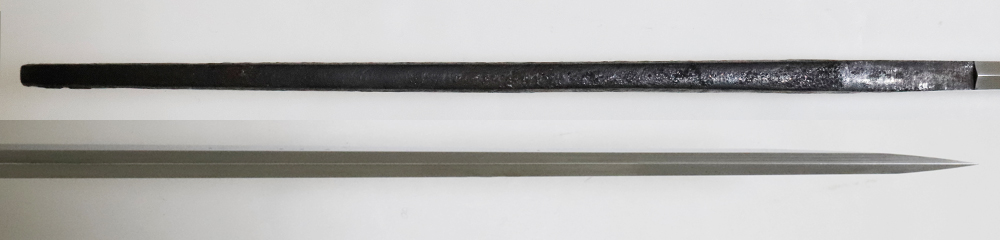
| Nakago (Tang) | Almost ubu (original, unshortened), katte-sagari file marks. |
| Mekugiana (Rivet holes) | 3 |
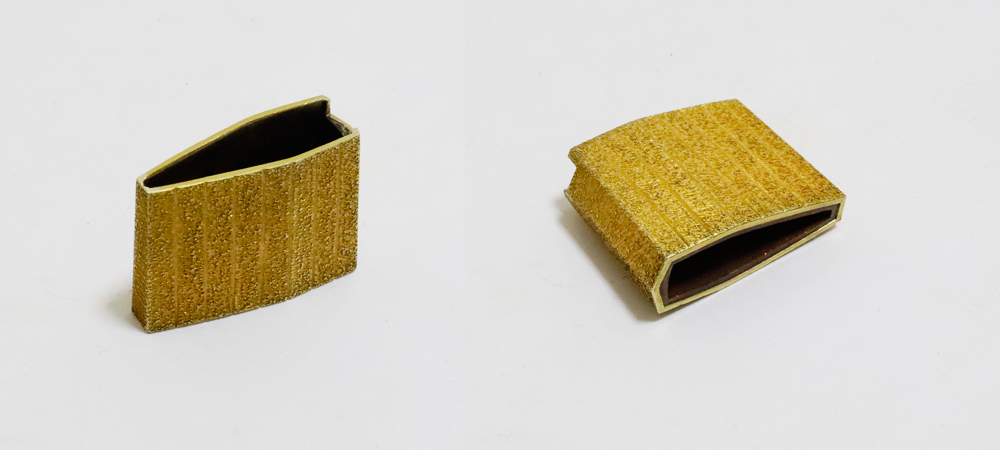
| Habaki | Gold-foiled copper tachi habaki with diagonal file marks and engraved vertical lines. |
Price |
10,000,000 JPY |
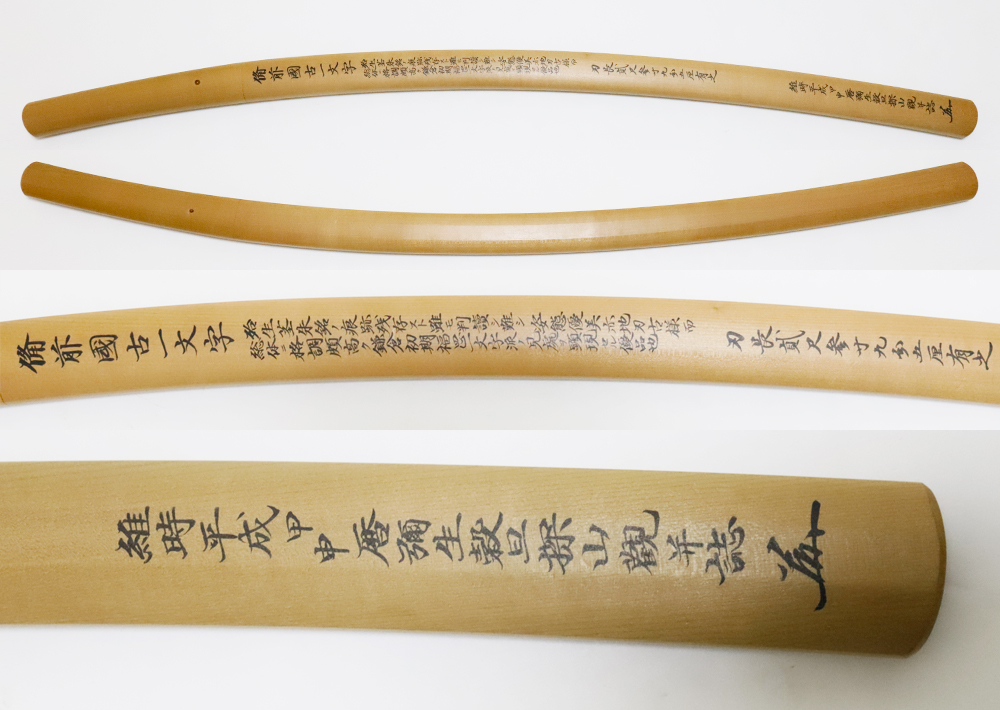
| This tachi was designated as Juyo Token (Important Sword) at the 50th NBTHK Juyo Token Shinsa in 2004, under the designation "Tachi, Shu-mei (illegible), Ko-Ichimonji." Shu-mei refers to an attribution inscribed in red lacquer on the nakago (tang), a practice traditionally maintained by the Hon'ami family. Such inscriptions were generally applied only to ubu (original, unshortened) nakago. The red lacquer inscription on this tachi has deteriorated and largely flaked away over time, making it difficult to decipher. This tachi displays the magnificent and powerful shape characteristic of the early Kamakura period, retaining an overwhelming presence despite the passage of centuries. Its beautifully forged jihada exhibits utsuri, while the hamon, featuring choji, is more varied than that of Ko-Bizen works yet more restrained than that of the Fukuoka Ichimonji school. The attribution to Ko-Ichimonji is therefore highly appropriate. The sayagaki (inscription on the scabbard) by Tanobe sensei reads: "Bizen Province, Ko-Ichimonji. Although traces of a red lacquer inscription remain on the almost ubu nakago, they are difficult to decipher. The elegant shape and classical characteristics of both the jihada and hamon give this sword an exceptionally dignified appearance. It is an excellent work displaying the distinctive qualities of the Fukuoka Ichimonji school of the early Kamakura period. Blade length: 2 shaku, 3 sun, 9 bu, 5 rin. Inscribed by Tanzan on an auspicious day in March 2004 (with kao)." This tachi is said to have been handed down in the Kurushima family, the former lords of the Mori Domain in Bungo Province. |

 Search