| Product No. KA-0837 摂州住包光 | |
|---|---|
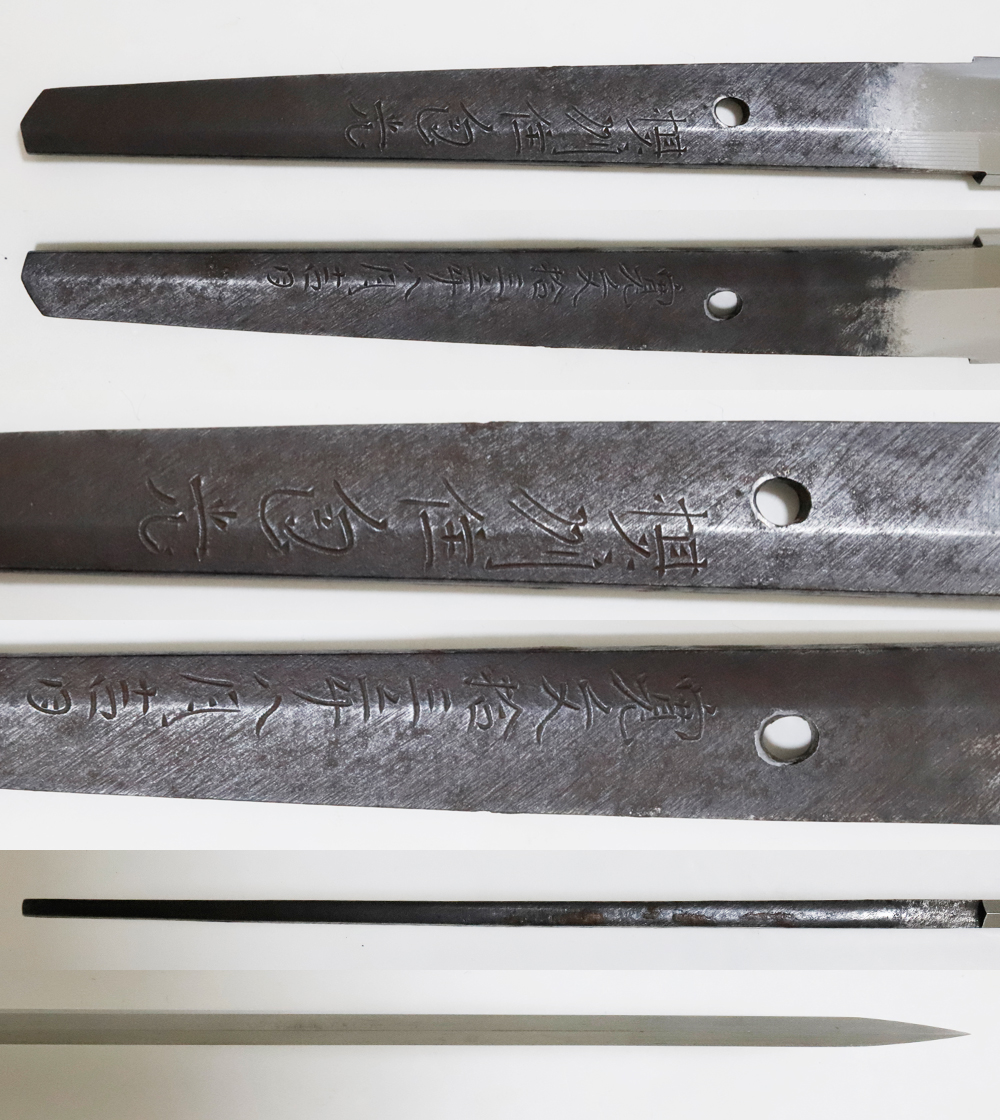
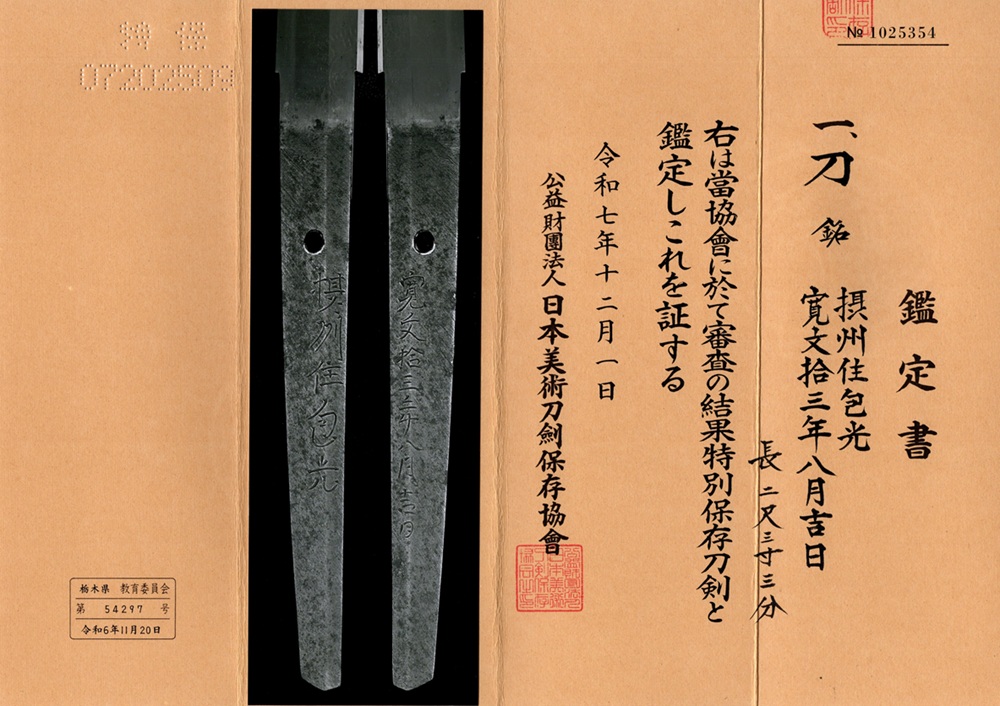
| Mei |
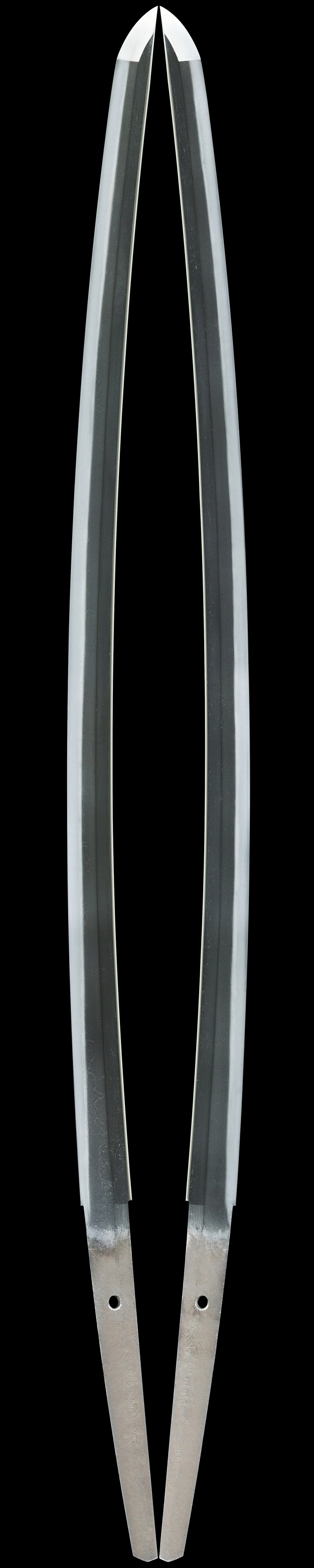
Kanemitsu, resident of Settsu Province Back: An auspicious day in August 1673 |
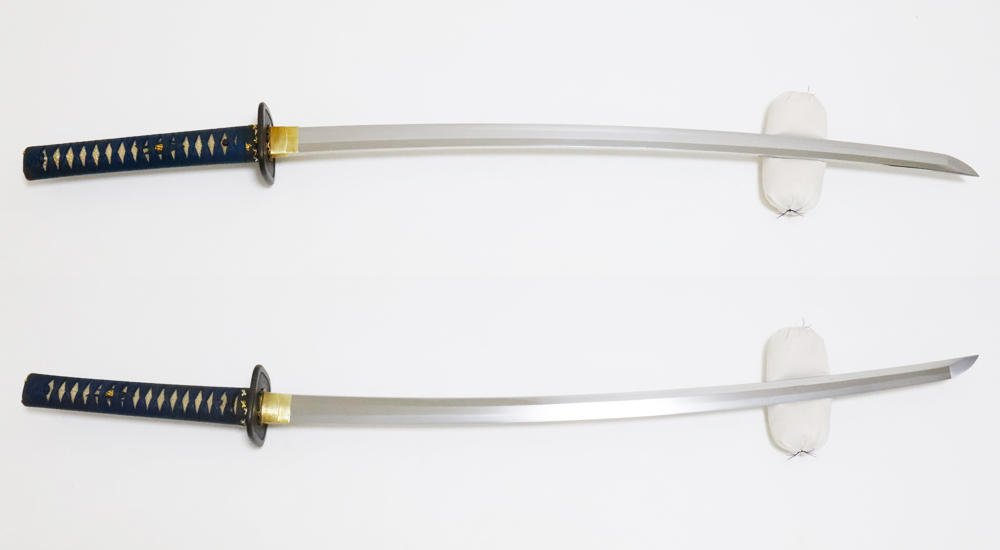
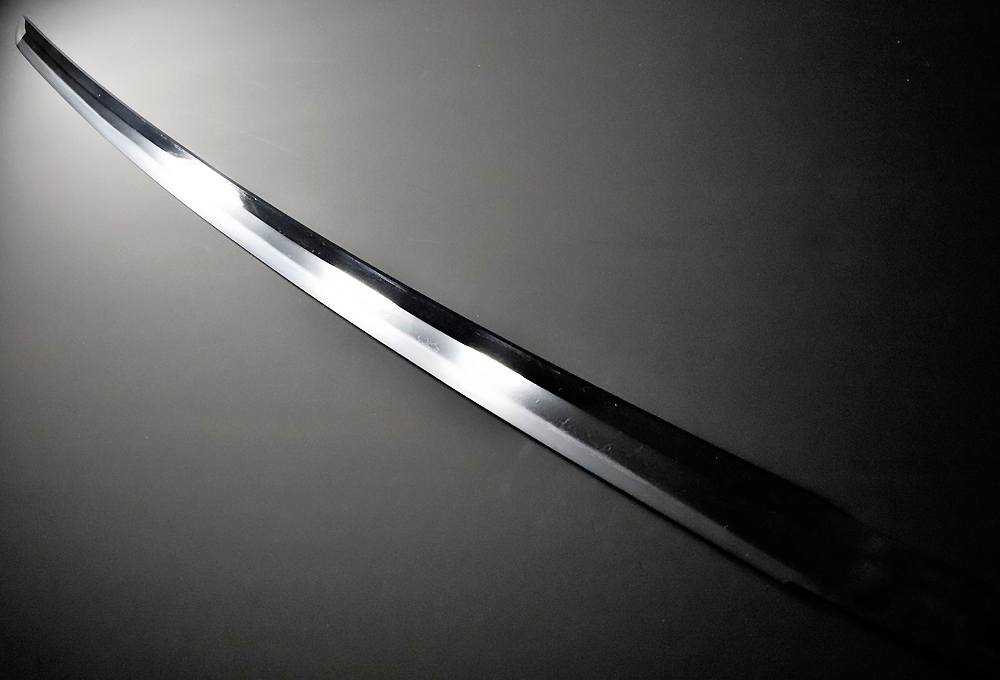
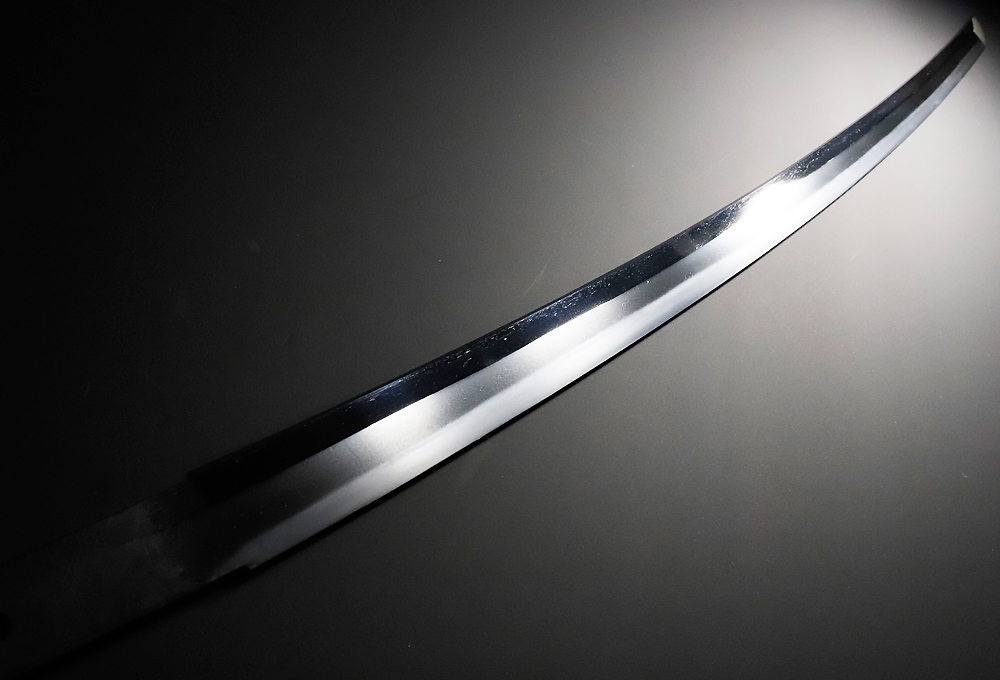
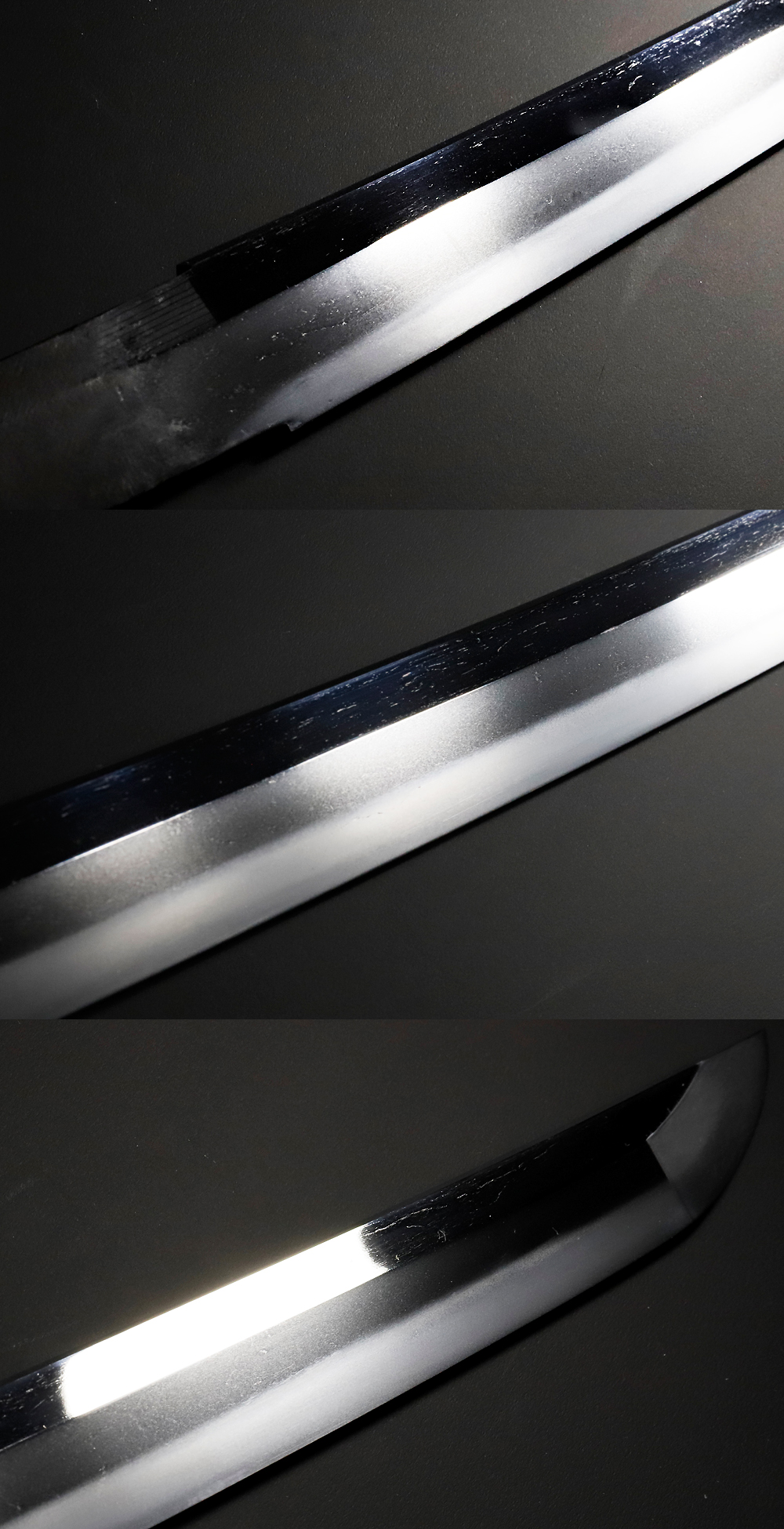
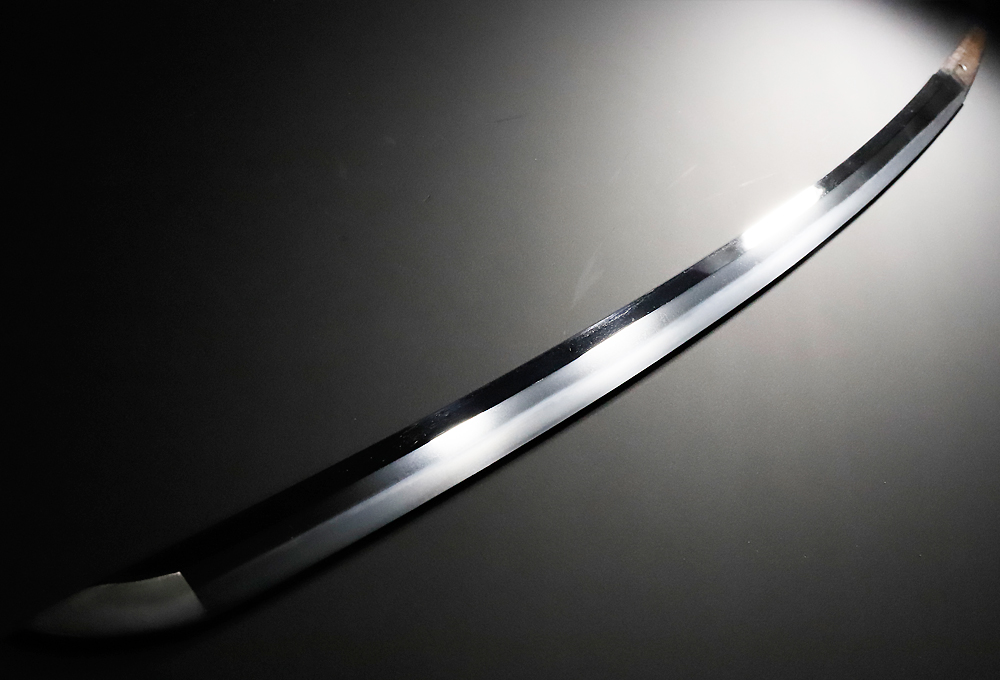
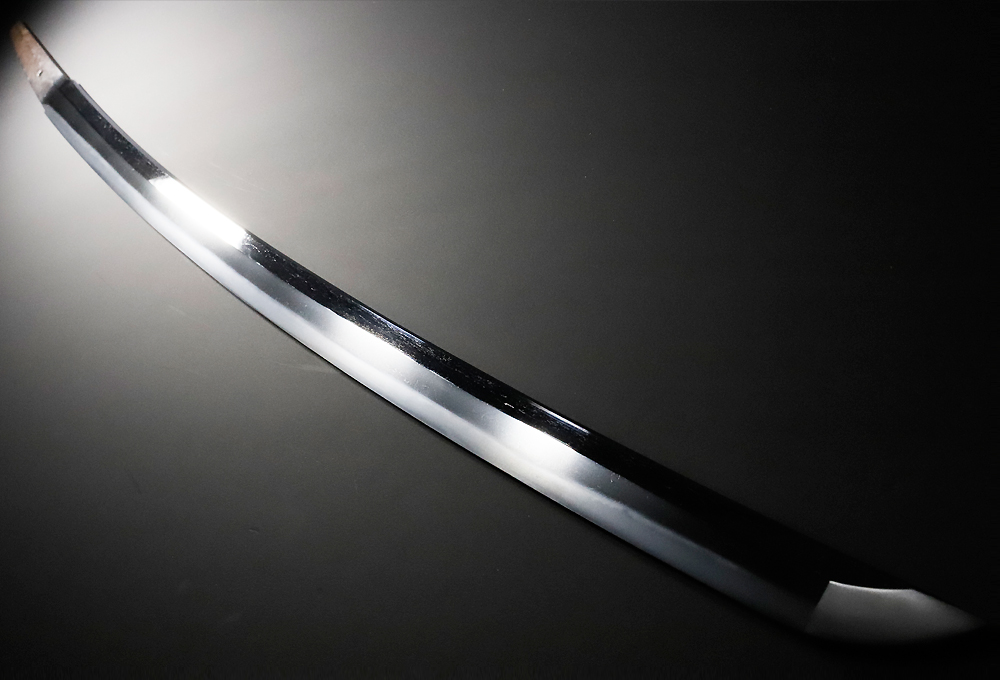
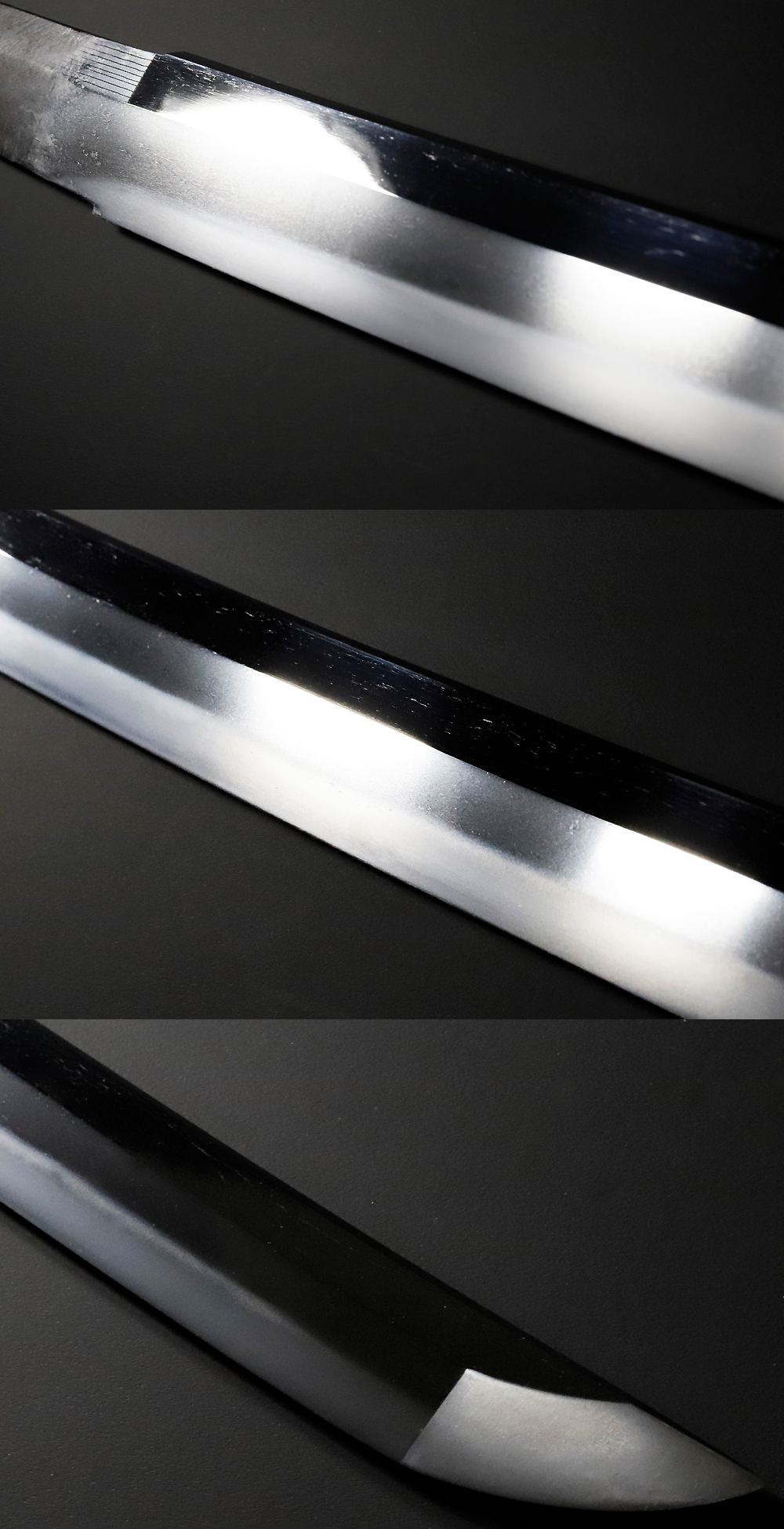
| Shape | Shinogi-zukuri with an iori-mune, featuring a medium kissaki. The blade has ample width and thickness, with a graceful, well-proportioned curvature, creating an elegant overall silhouette |
| Region | Settsu Province |
| Era | Early Edo Period |
| Length |
70.8 cm 27.9 in |
| Sori (curvature) |
1.8 cm 0.7 in |
| Motohaba |
3 cm 1.2 in |
| Sakihaba |
2.2 cm 0.8 in |
| Munekasane |
0.7 cm 0.3 in |
| Status | Tokubetsu Hozon Token |
| Certification Date | December 01, 2025 |
| Registration Authority | Tochigi Prefecture |
| Registration Date | November 20, 2024 |
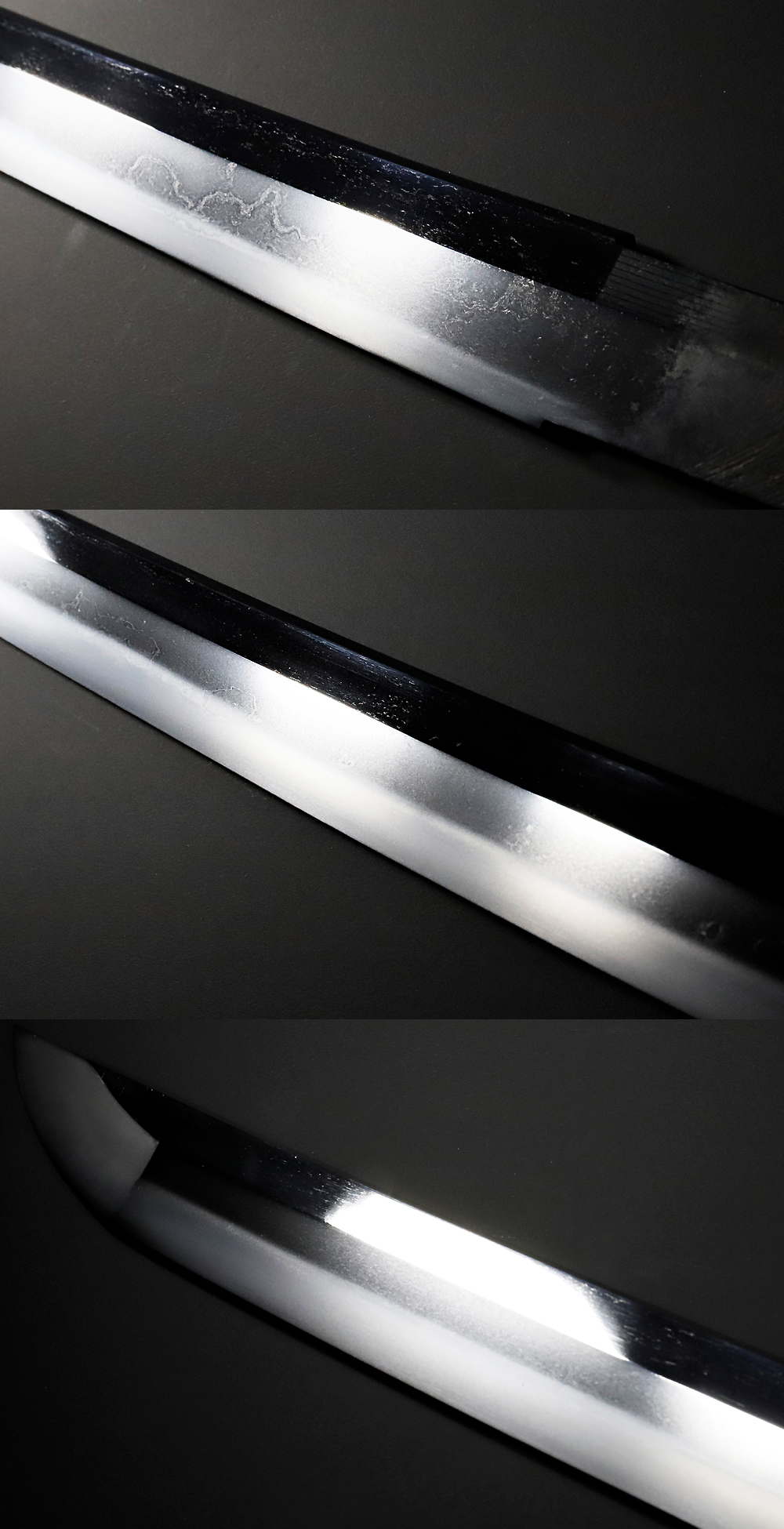
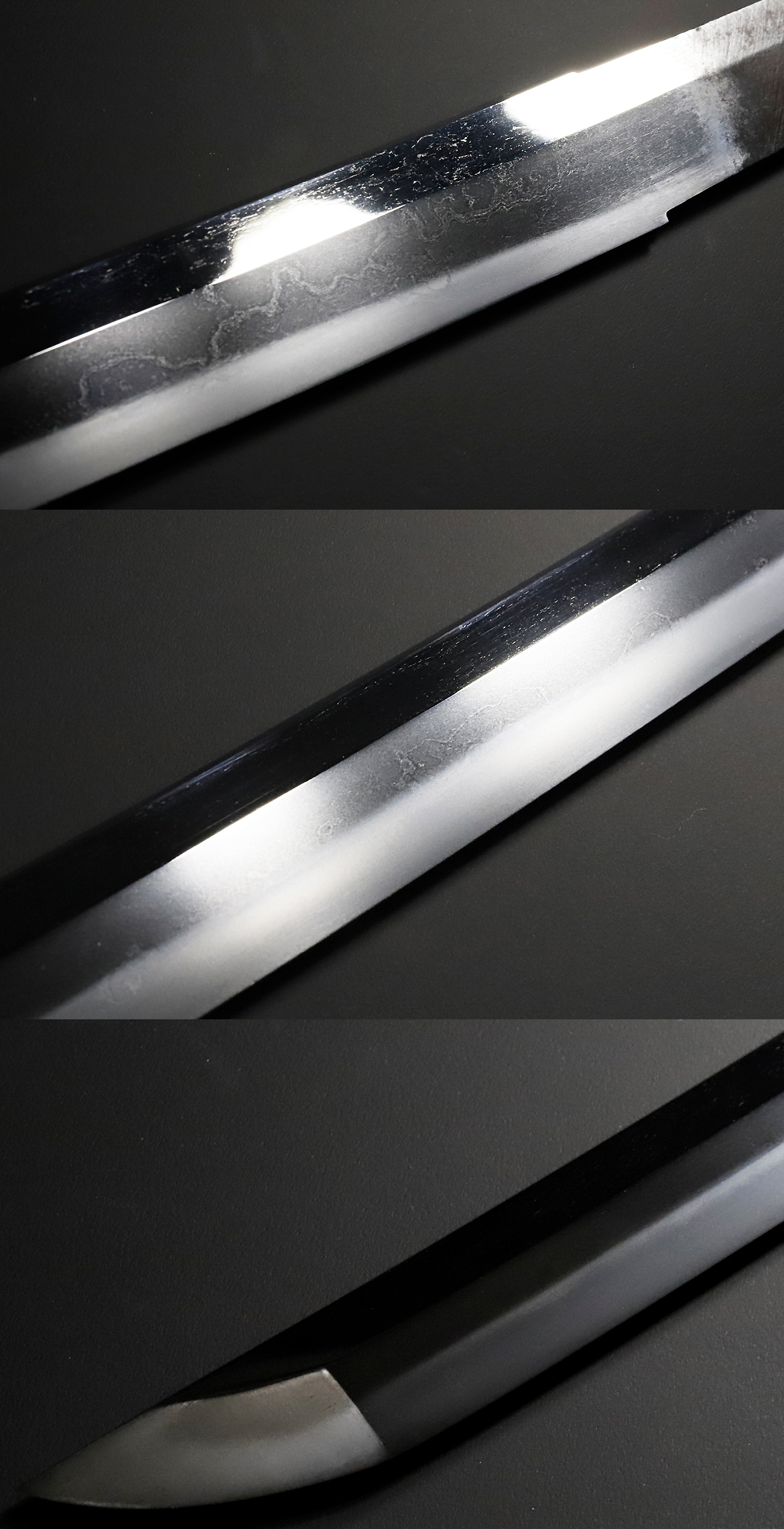
| Jihada (Metal pattern) | The jihada is a finely forged ko-itame mixed with occasional ō-hada (larger grain patterns) and is covered with ji-nie |
| Hamon (Temper line) | The hamon is a suguha tempered with fine nie, featuring frequent ko-ashi extending into the cutting edge |
| Bōshi (Point / Tip) | The boshi is straight with hakikake, returning in a ko-maru |
| Nakago (Tang) | Ubu, with sujikai file marks and an iriyamagata-shaped end |
| Mekugiana (Rivet holes) | 1 |
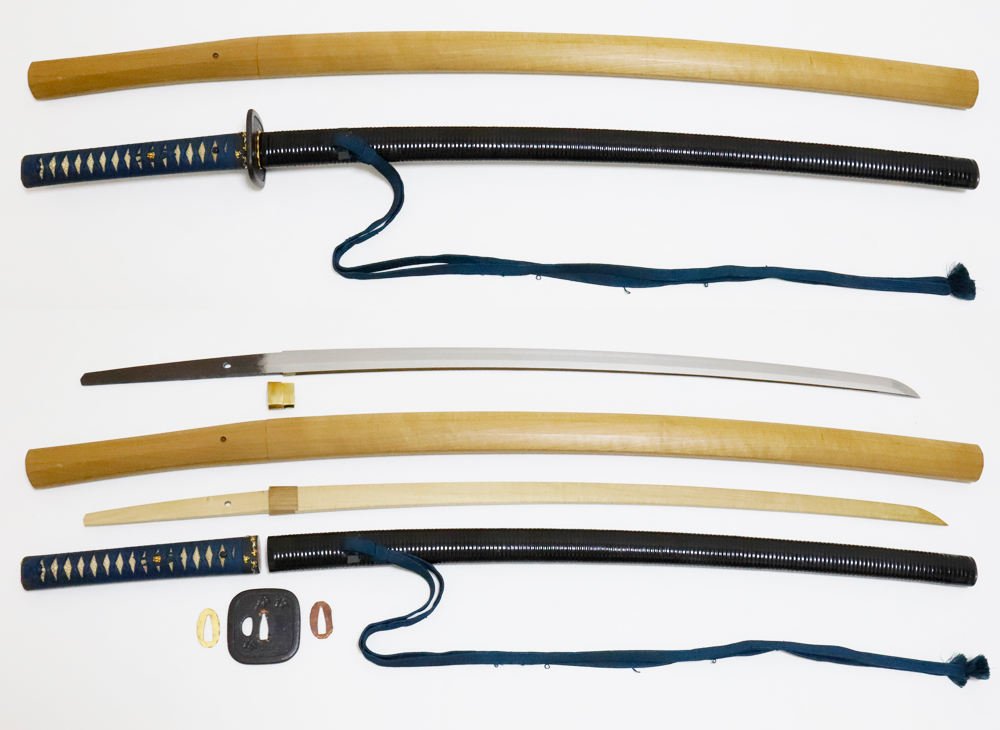
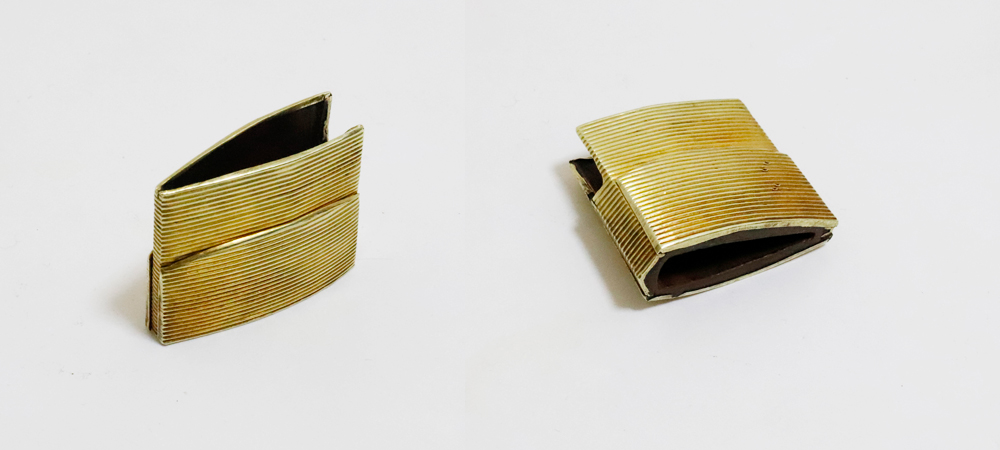
| Habaki | Gold-foiled copper habaki with horizontal file marks |
| Mountings | Koshirae-tsuki |
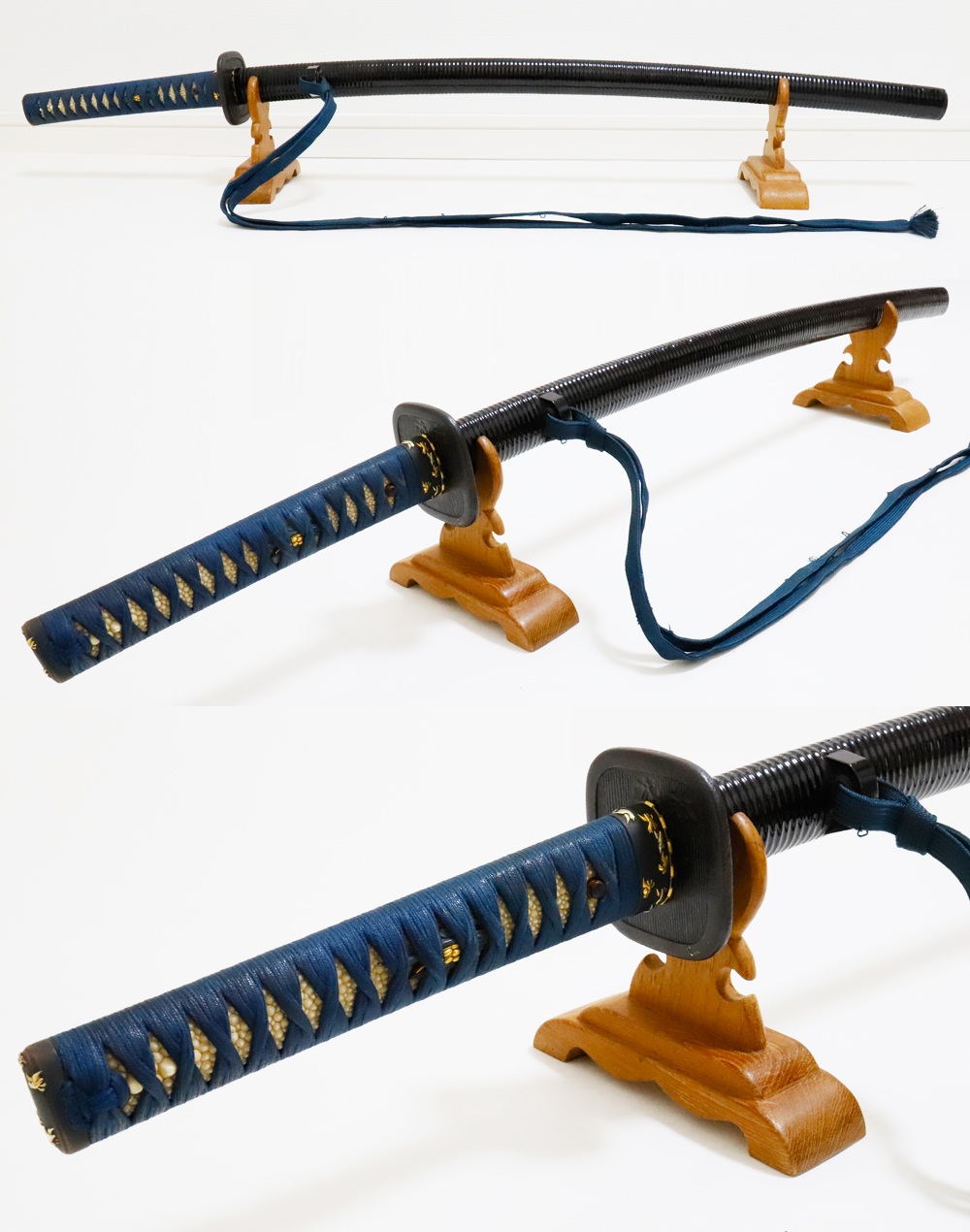
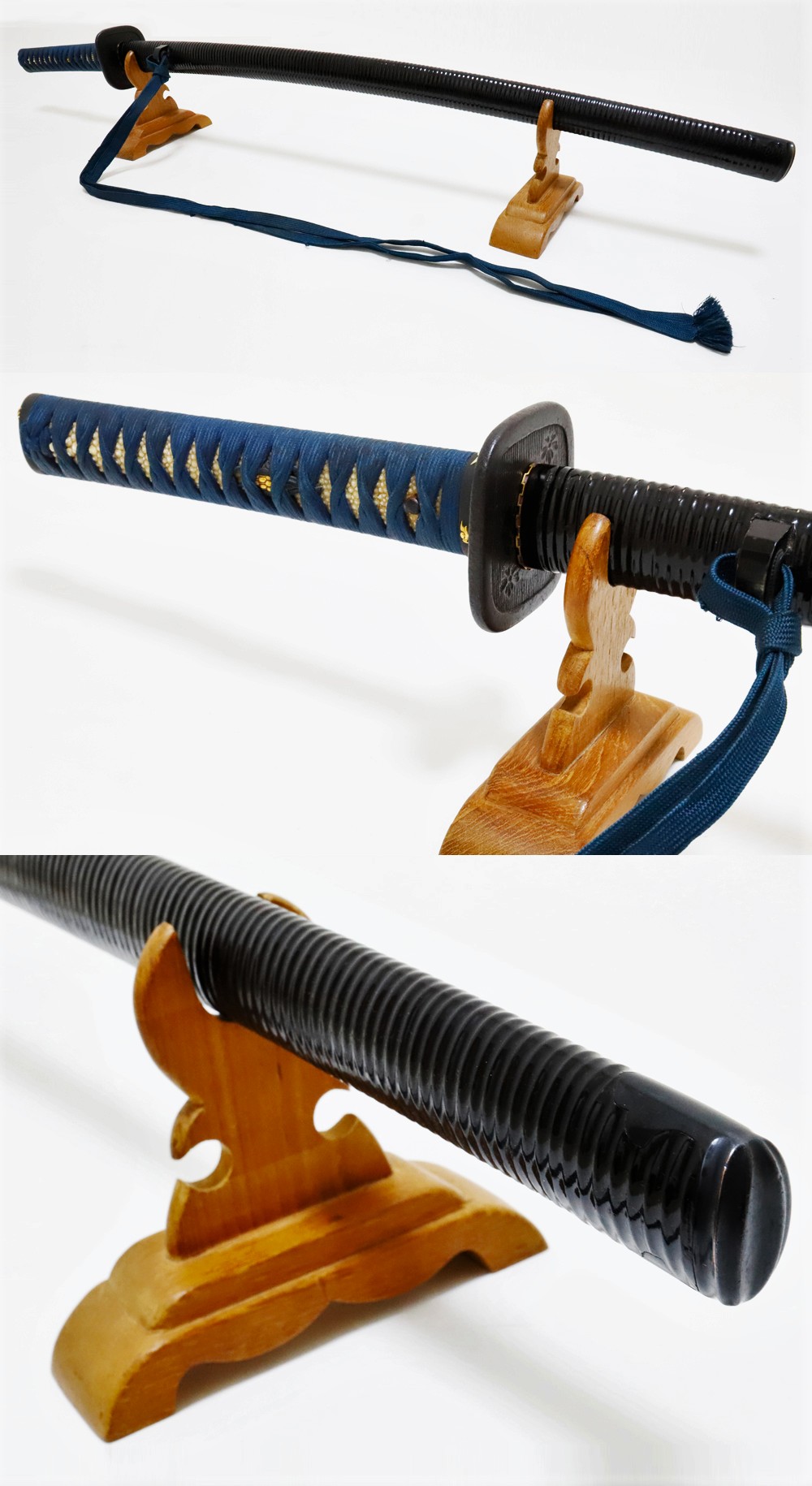
| Koshirae | An uchigatana koshirae with a black roiro-lacquered sendan-carved saya |
| Koshirae Length |
97.5 cm 38.4 in |
| Tsuka Length |
23.3 cm 9.2 in |
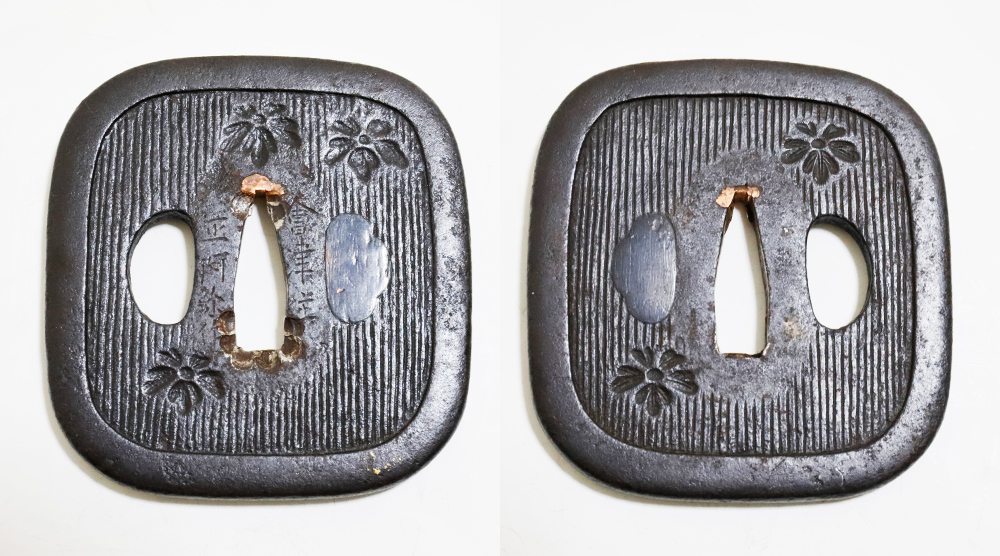
| Tsuba | Iron tsuba with scattered floral motifs, of square form with shino-yasuri, a dote-mimi rim, signed: Aizu-jū Shōami saku |
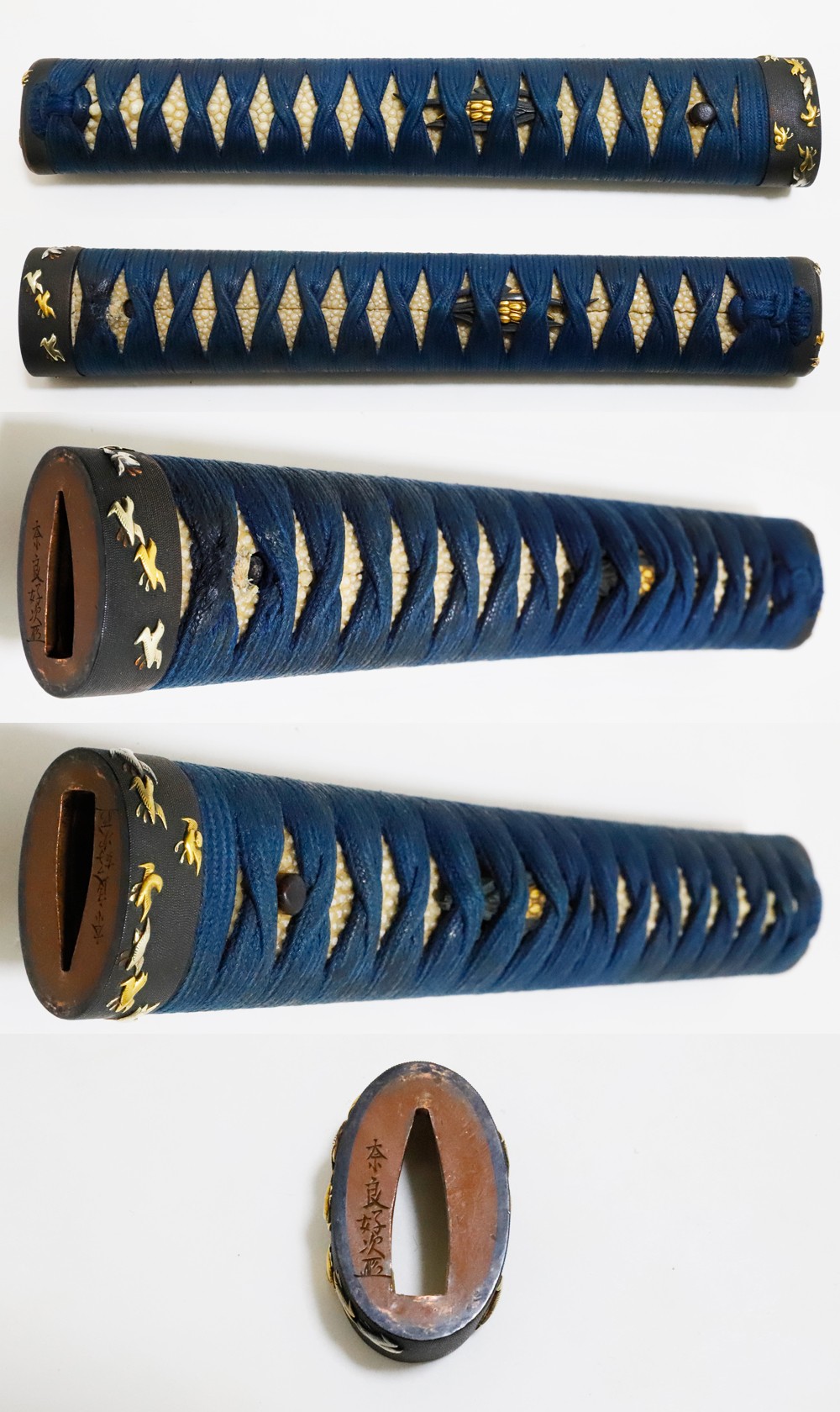
| Menuki | Rice ears design, shakudō, katachibori, and gold iroe |
| Fuchigashira | Plovers design, shakudō nanako, gold inlay and gold iroe. Signed: Nara Yoshitsugu (kaō) |
| Other details | Tsuka covered with white samegawa and wrapped in blue tsumami-maki. Iron kuwagata-shaped kojiri |
Price |
SOLD |
| Kanemitsu was also known as Monju Shirō Kanemitsu. According to the Nihon Tōkō Jiten (Dictionary of Japanese Swordsmiths), he was a student of the first-generation Echigo no Kami Kanesada. Active around the Kanbun era (1661–1673), he belonged to the Monju school of Yamato Province. In the early Edo period, members of the Monju school relocated from Yamato to the Settsu and Fushimi areas, where they produced refined works while preserving the characteristics of the Yamato tradition. This sword is a valuable dated example, signed Sesshū-jū Kanemitsu and dated An Auspicious Day in the Eighth Month of Kanbun 13 (1673). It is accompanied by a high-quality uchigatana koshirae with a black roiro-lacquered sendan-carved saya. It has passed the NBTHK Tokubetsu Hozon Token shinsa in 2025. |

 Search