| Product No. KA-0826 無銘(下原) | |
|---|---|
| Mei |
Mumei, but attributed to the Shitahara school Back: -- |
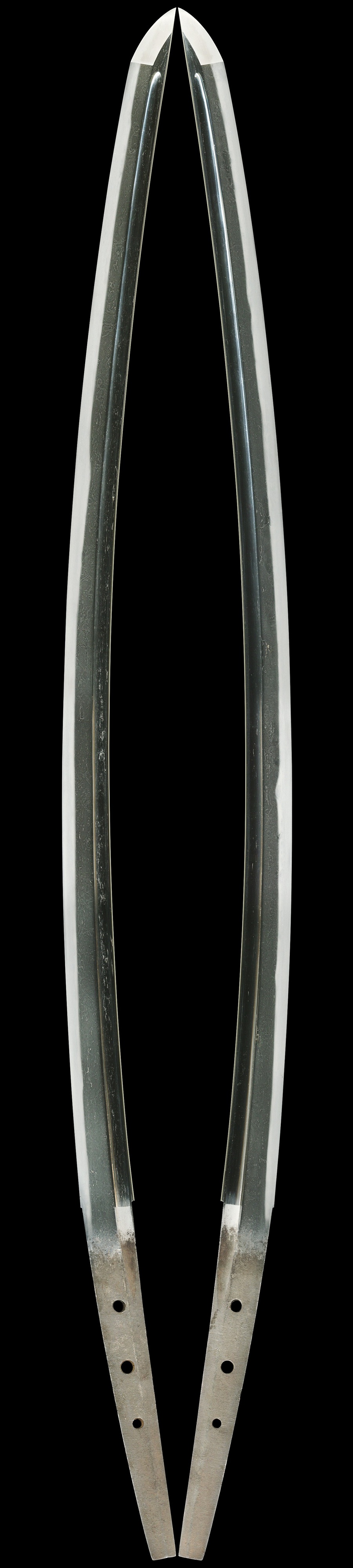
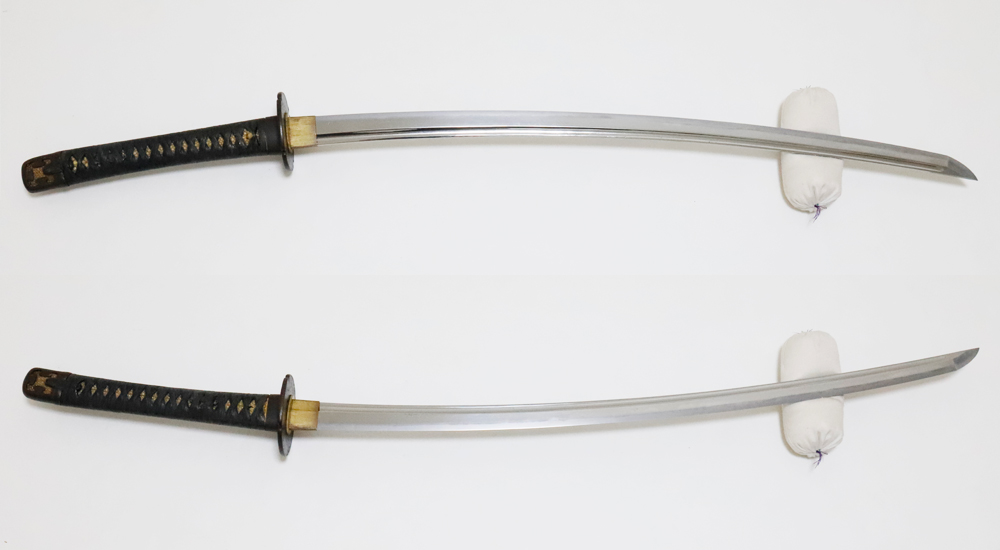
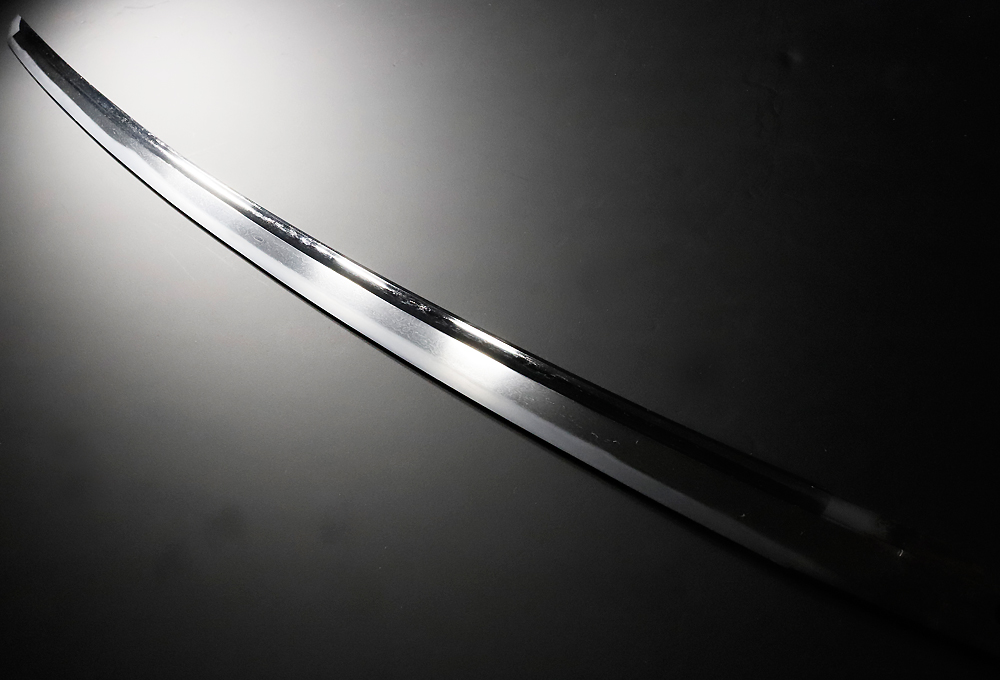
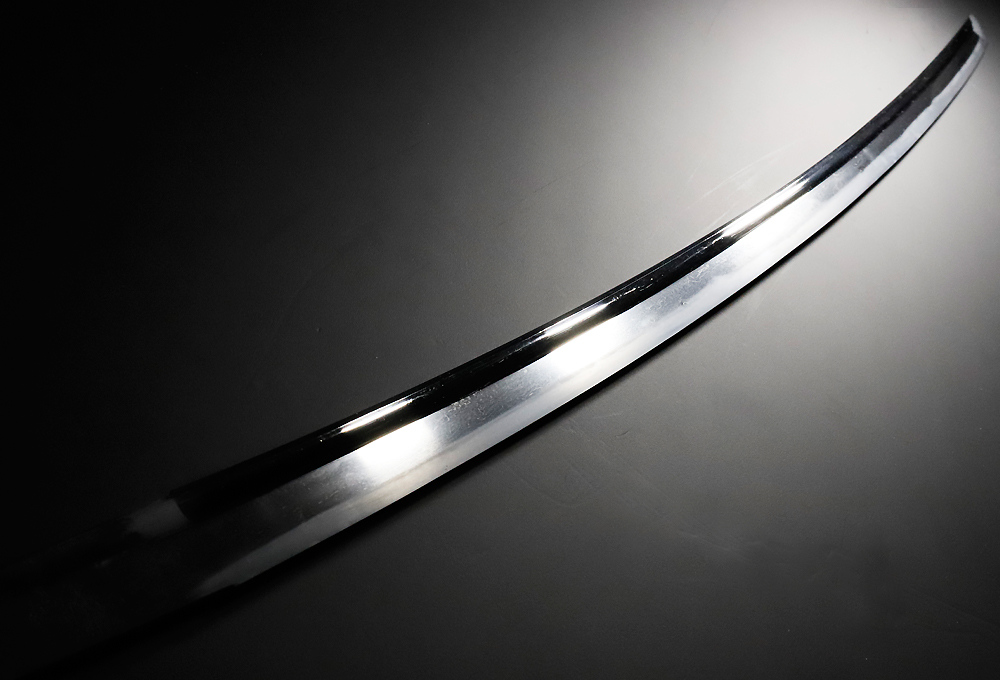
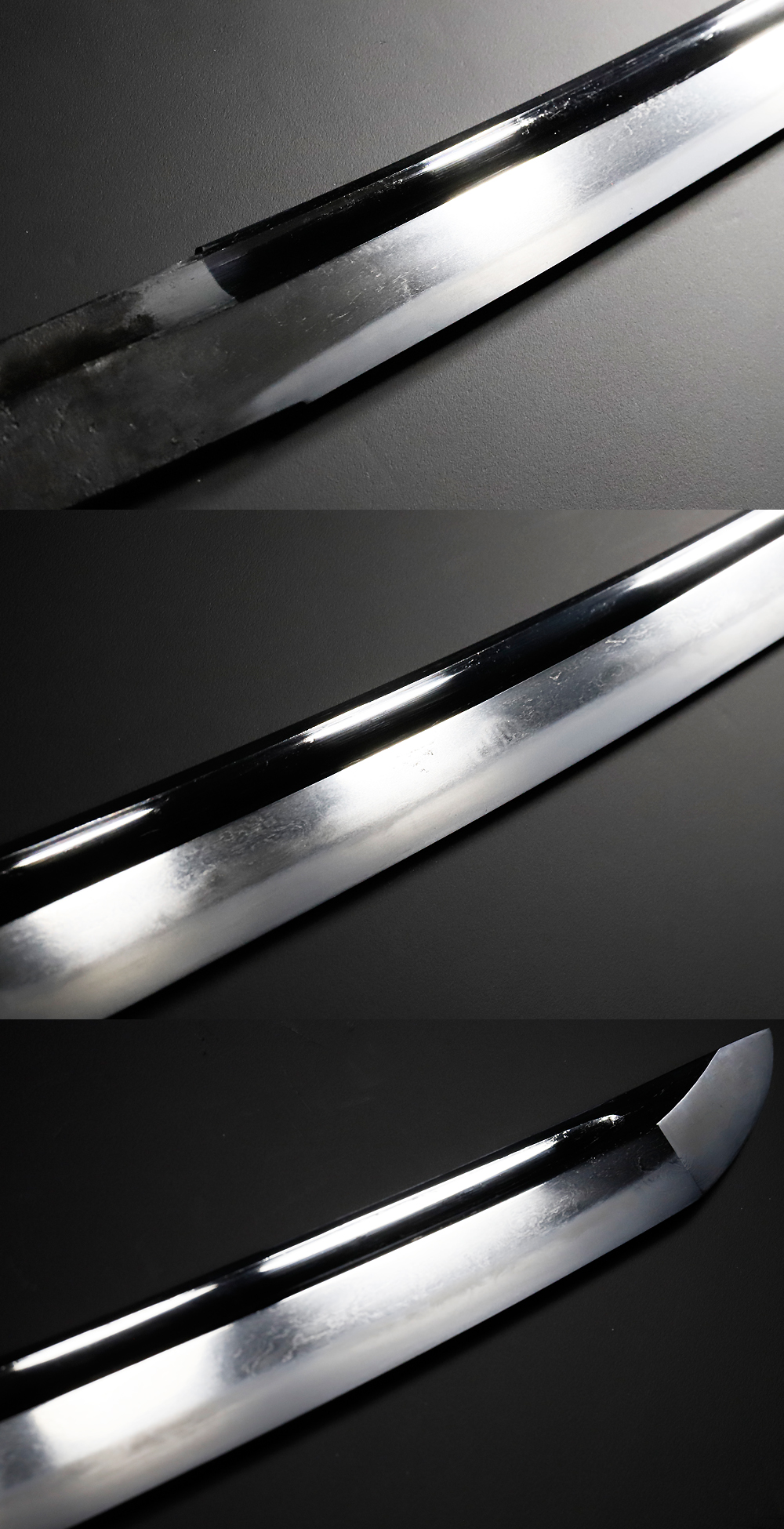
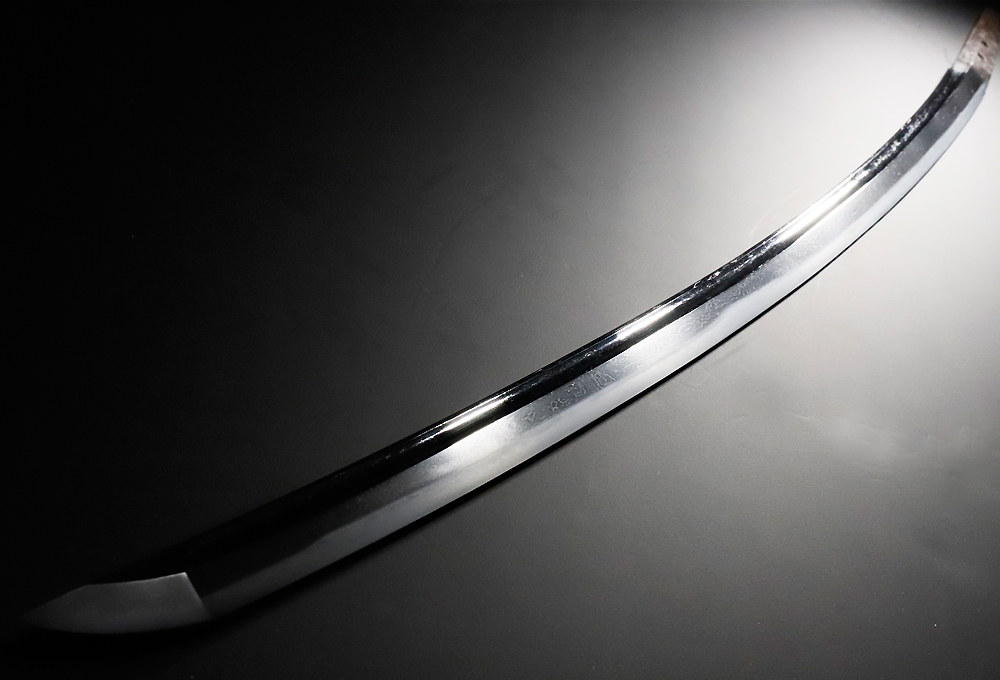
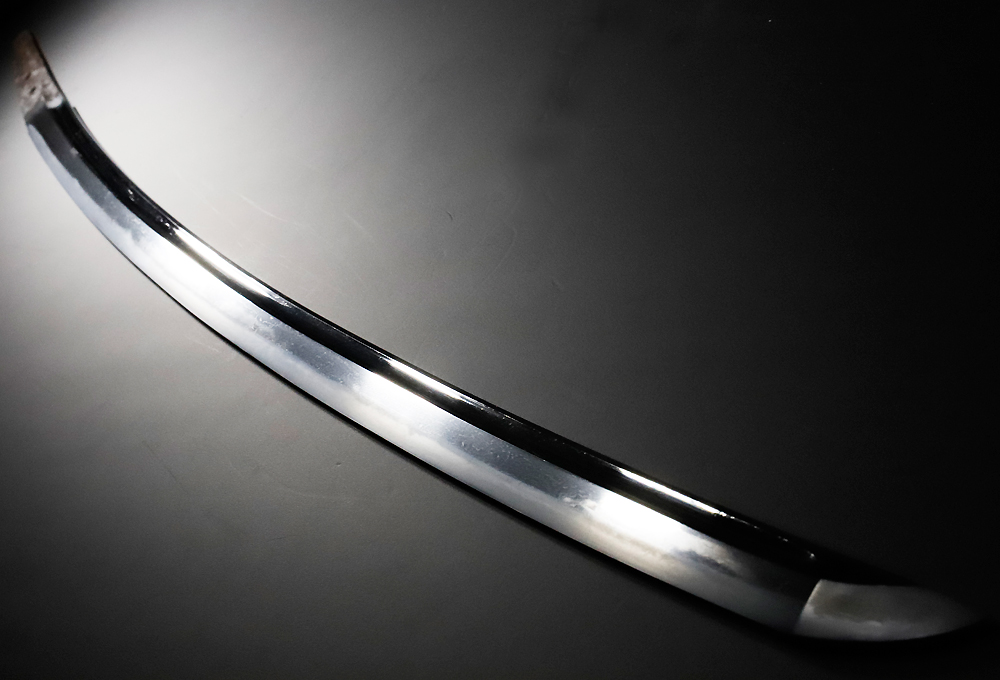
| Shape | Shinogi-zukuri with a maru-mune and chū-kissaki, featuring standard mihaba, bo-hi grooves, thin kasane, and deep sori, giving the blade a classical appearance |
| Region | Musashi Province |
| Era | Late Muromachi Period |
| Length |
68.2 cm 26.9 in |
| Sori (curvature) |
2.5 cm 1.0 in |
| Motohaba |
3 cm 1.2 in |
| Sakihaba |
2.1 cm 0.8 in |
| Munekasane |
0.4 cm 0.2 in |
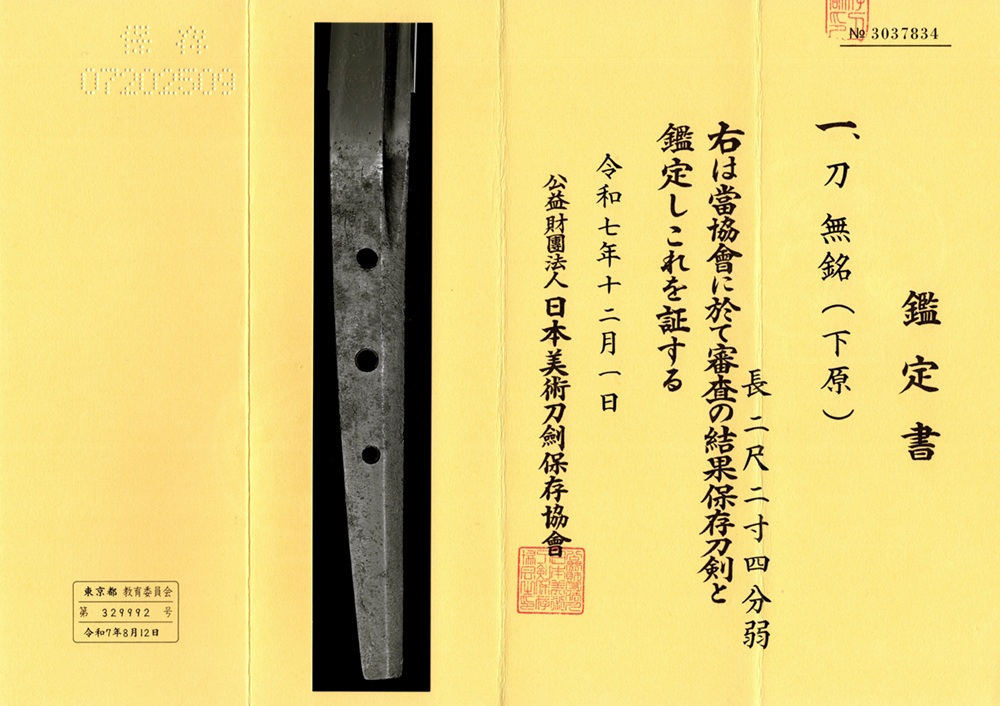
| Status | Hozon Token |
| Certification Date | December 01, 2025 |
| Registration Authority | Tokyo |
| Registration Date | August 12, 2025 |
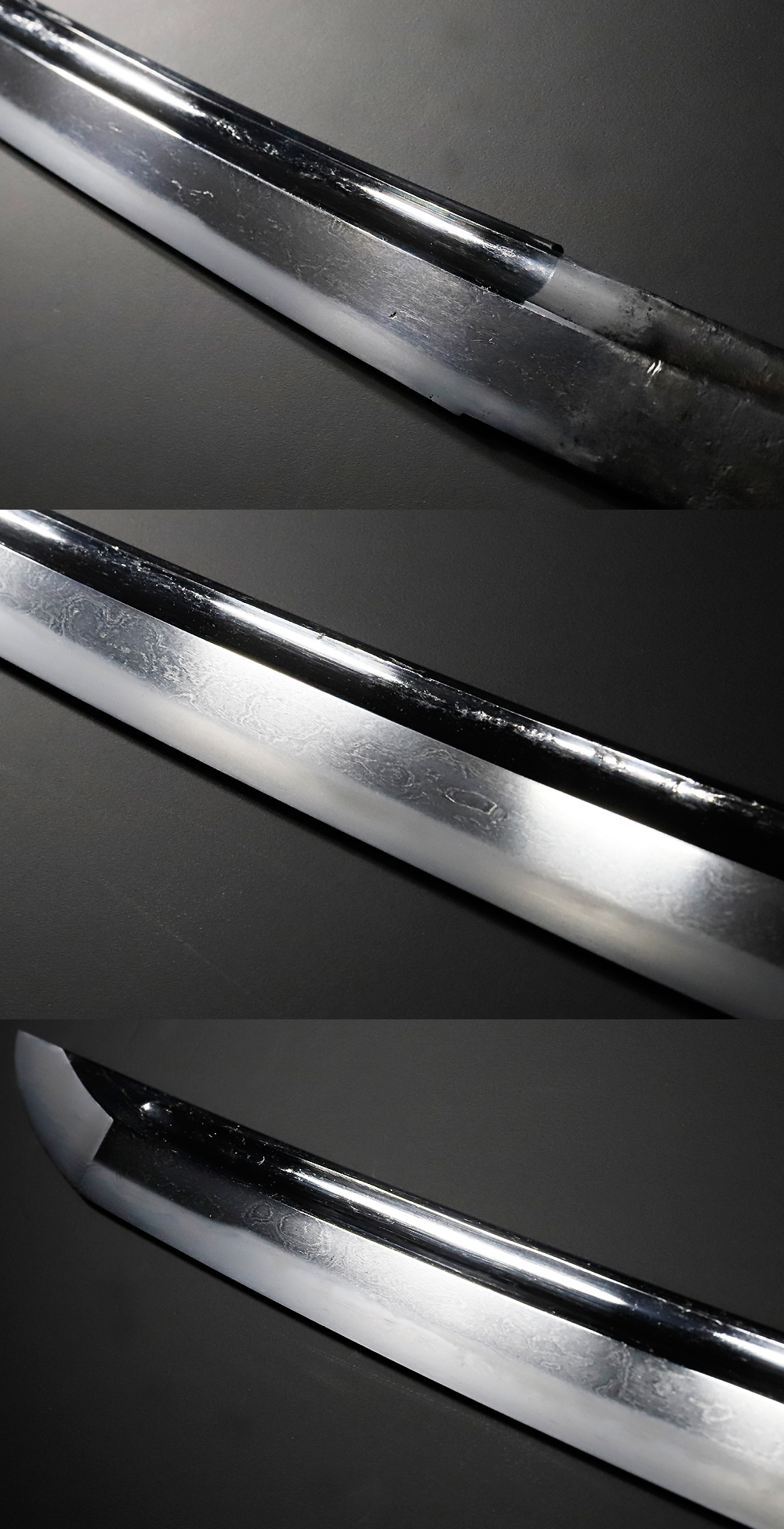
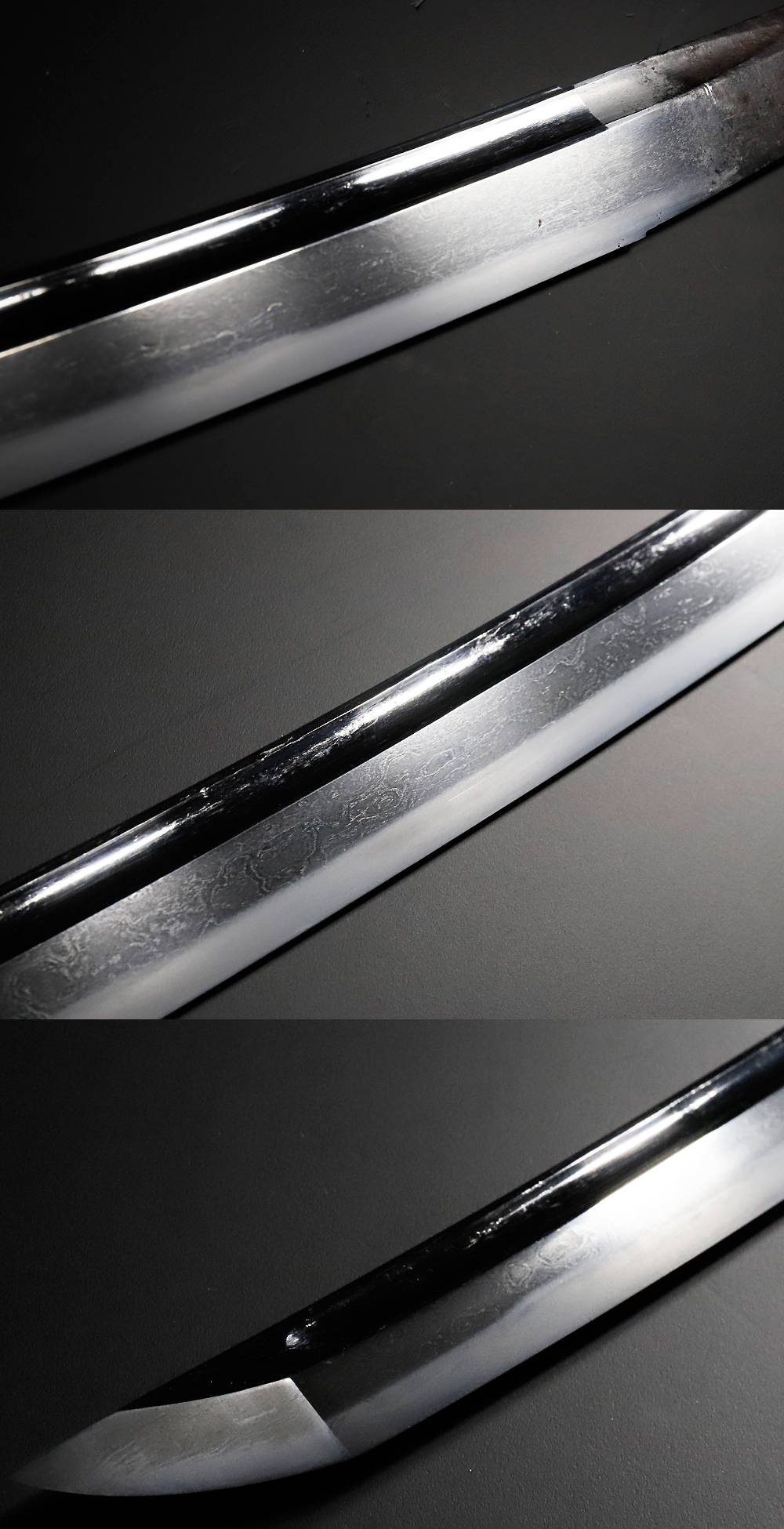
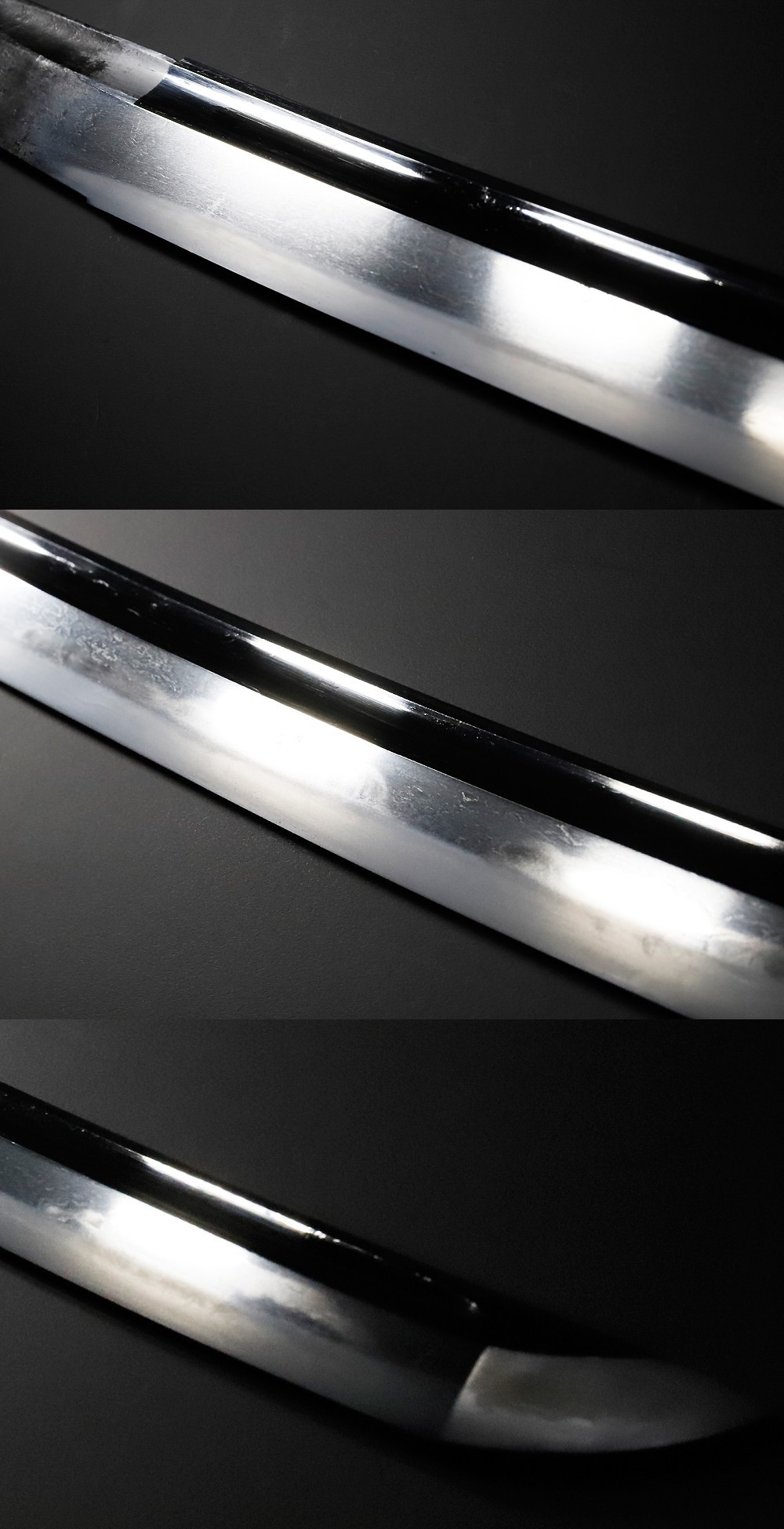
| Jihada (Metal pattern) | The jihada is an itame hada with a flowing tendency, mixed with mokume |
| Hamon (Temper line) | The hamon is a mostly suguha-based small midare with ko-ashi and yō, accompanied by tobiyaki |
| Engraving | Bo-hi grooves with kaki-nagashi termination on both sides of the blade |
| Bōshi (Point / Tip) | The bōshi is midare-komi with hakikake |
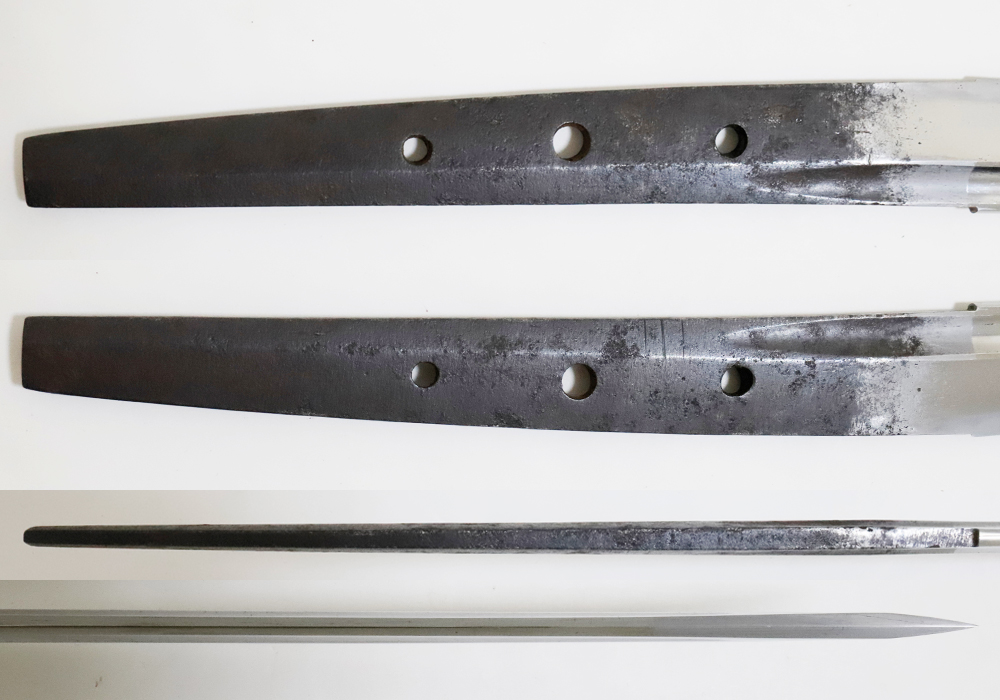
| Nakago (Tang) | Osuriage |
| Mekugiana (Rivet holes) | 3 |
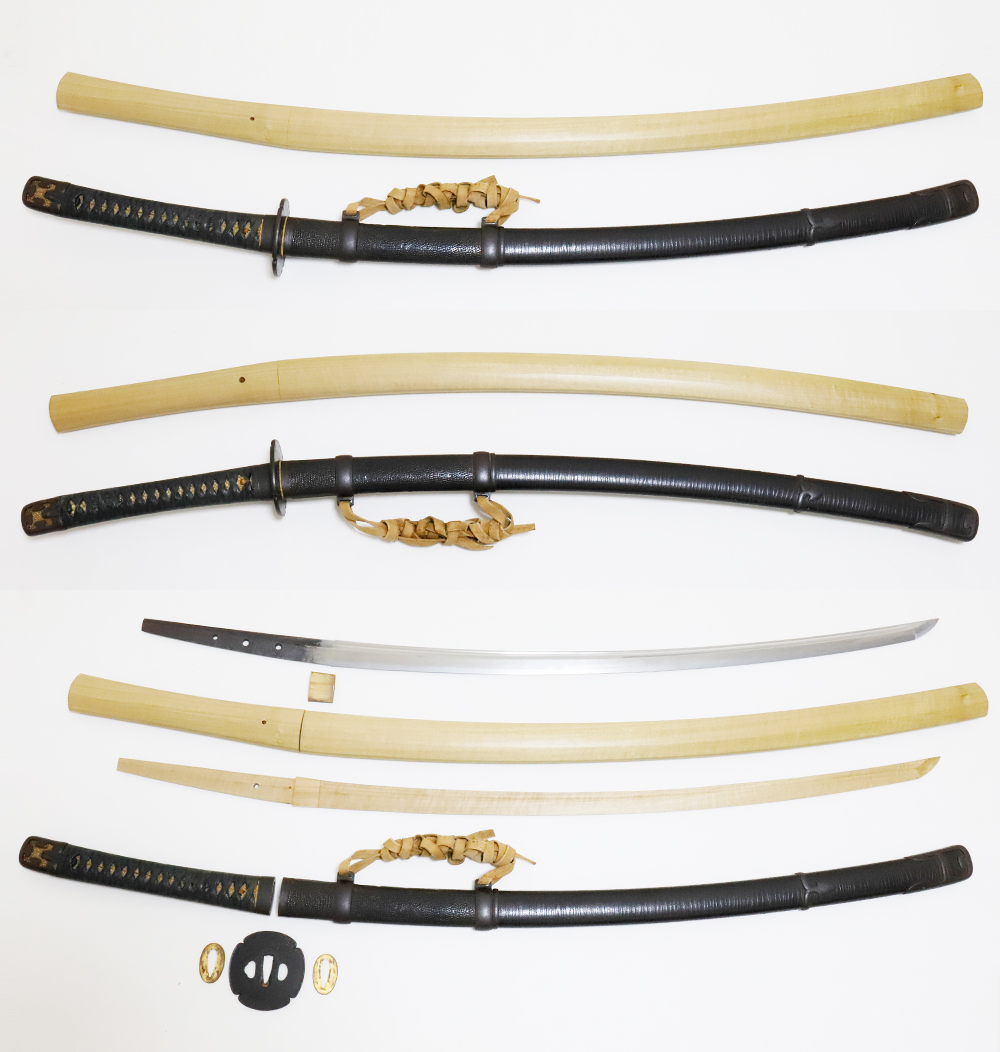
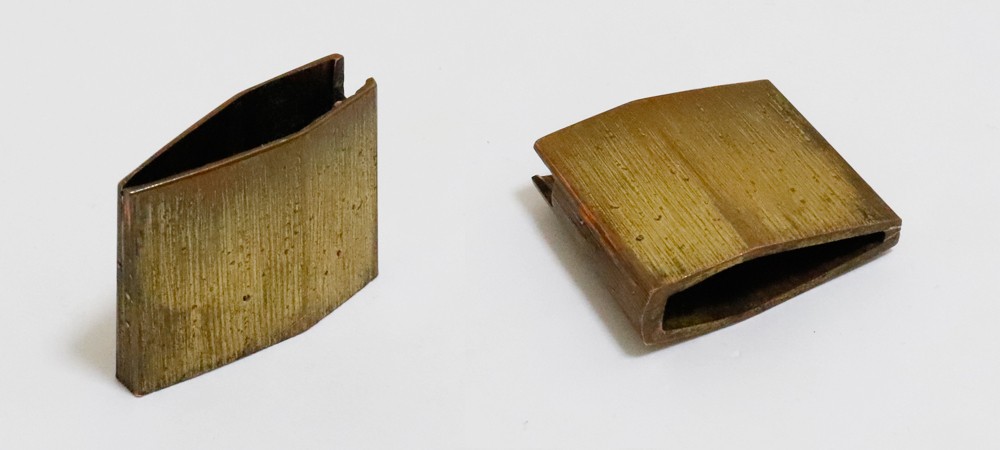
| Habaki | Copper tachi habaki with gold gilding |
| Mountings | Koshirae-tsuki |
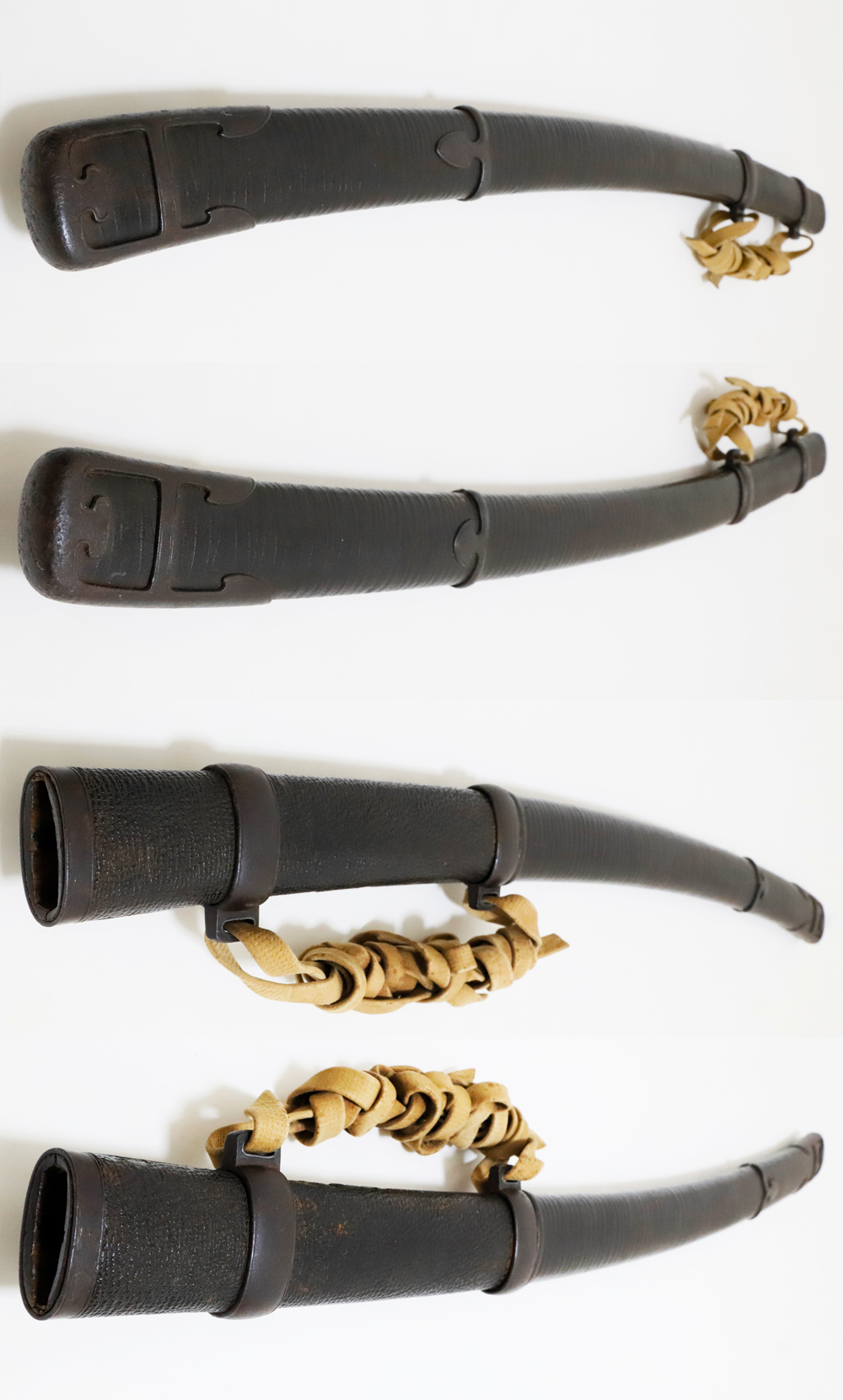
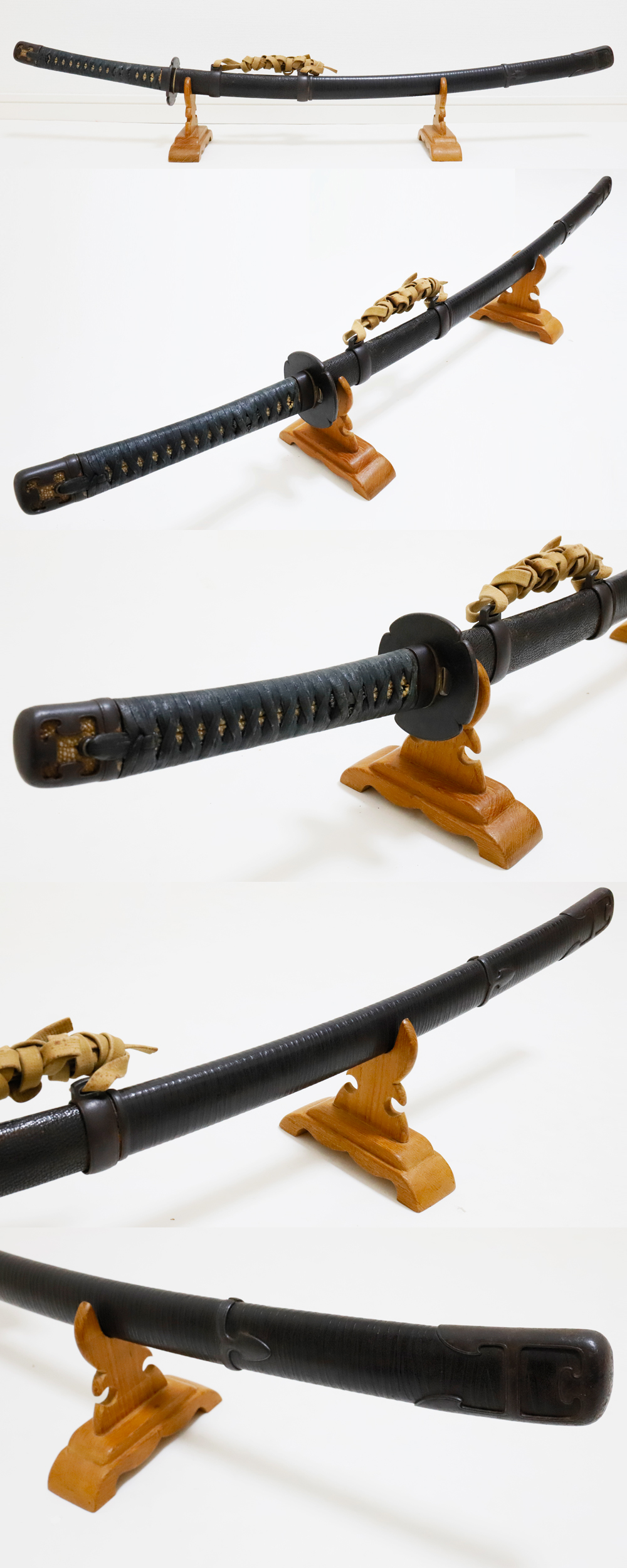
| Koshirae | Tachi koshirae with a black leather-covered lower scabbard and an unusual lacquer finish. |
| Koshirae Length |
98.2 cm 38.7 in |
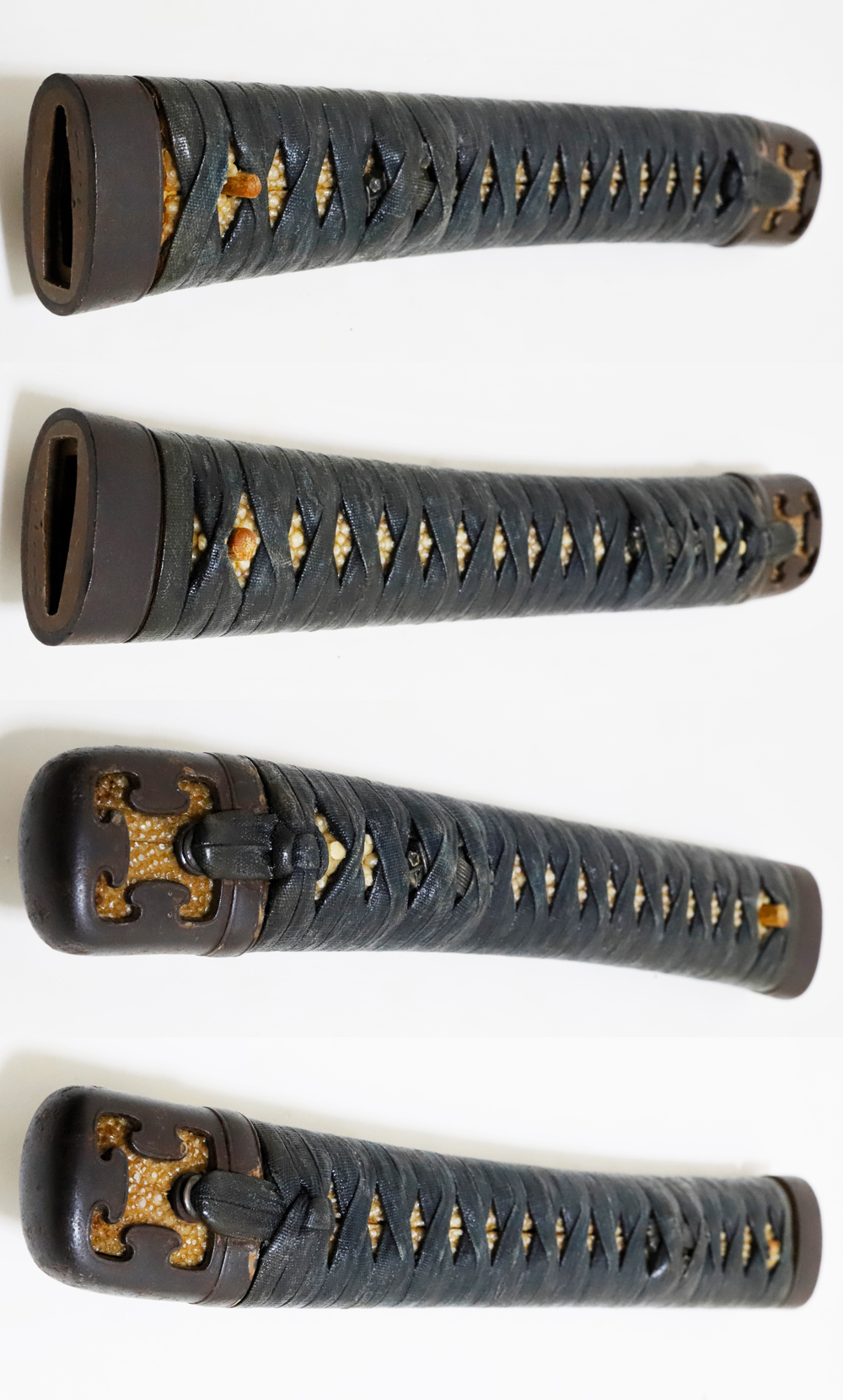
| Tsuka Length |
25.3 cm 10.0 in |
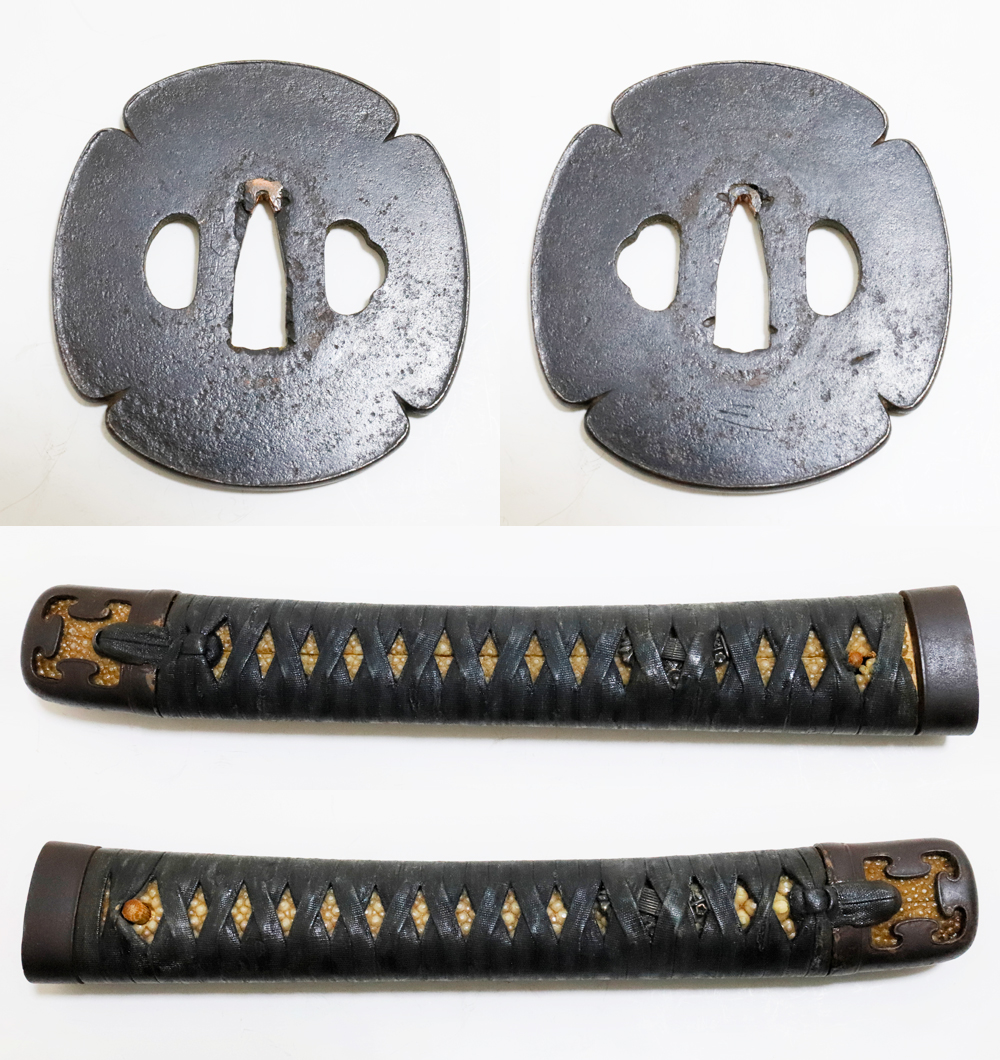
| Tsuba | Plain design ita-tsuba, iron ground, irimokkō-gata shape, signed “Saotome Iesada,” with uchikaeshi-mimi rim |
| Menuki | Flower Basket Design |
| Fuchigashira | Plain design, iron ground |
| Other details | Tsuka with white samegawa covering and iron-colored cloth hiramaki wrapping, Matching iron fittings |
Price |
SOLD |
| This uchigatana was attributed to the “Shitahara” school.The Shitahara smiths were a group of swordsmiths active in Musashi Province, around present-day Hachiōji, who inherited techniques of the Sōshū tradition. During the Sengoku period they worked under the patronage of the Hōjō clan, and in the Edo period they prospered as official swordsmiths of the Tokugawa shogunate until the end of the Edo era.The workmanship of the Shitahara school resembles the Odawara Sōshū tradition, and some of their better works can easily be mistaken for high-quality Sōshū-den blades. The school is also known for a distinctive jihada called “Jorin-mokuhada,” in which mokume grain appears repeatedly in wheel-like patterns.From the characteristics of the jihada and hamon, together with its highly practical sugata, this blade is considered to be a Sue-koto work. The characteristic Jorin-mokuhada associated with the Shitahara school can be observed, making the attribution appropriate.The sword is accompanied by an Edo-period tachi koshirae with a black leather-covered lower scabbard and an unusual lacquer finish.Passed the 2025 Hozon Token shinsa. |

 Search