| Product No. KA-0804 肥前国住肥後大掾源種広 | |
|---|---|
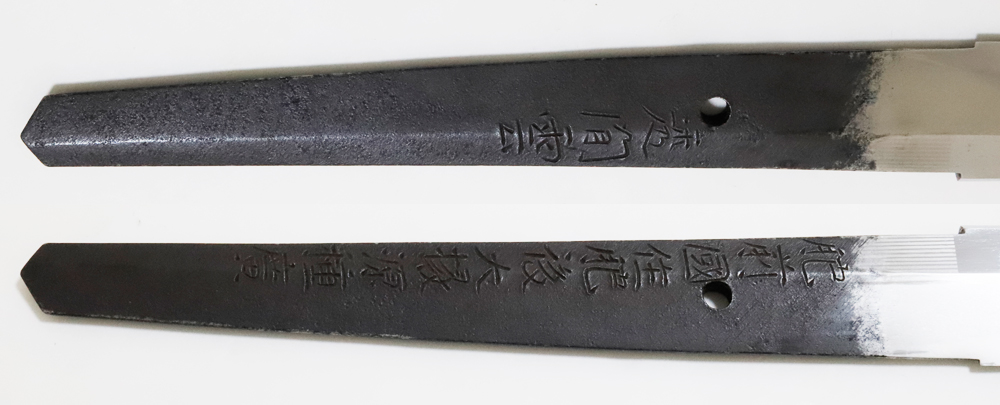
| Mei |
Hizen no Kuni jū Higo Daijō Minamoto no Tanehiro Back: “Sukima-gumo”: a sharp cutting quality likened to sunlight breaking through clouds. |
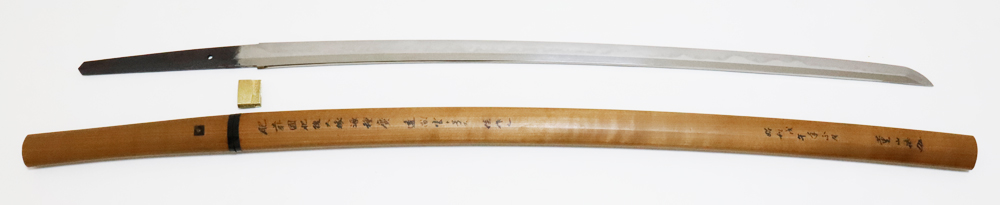
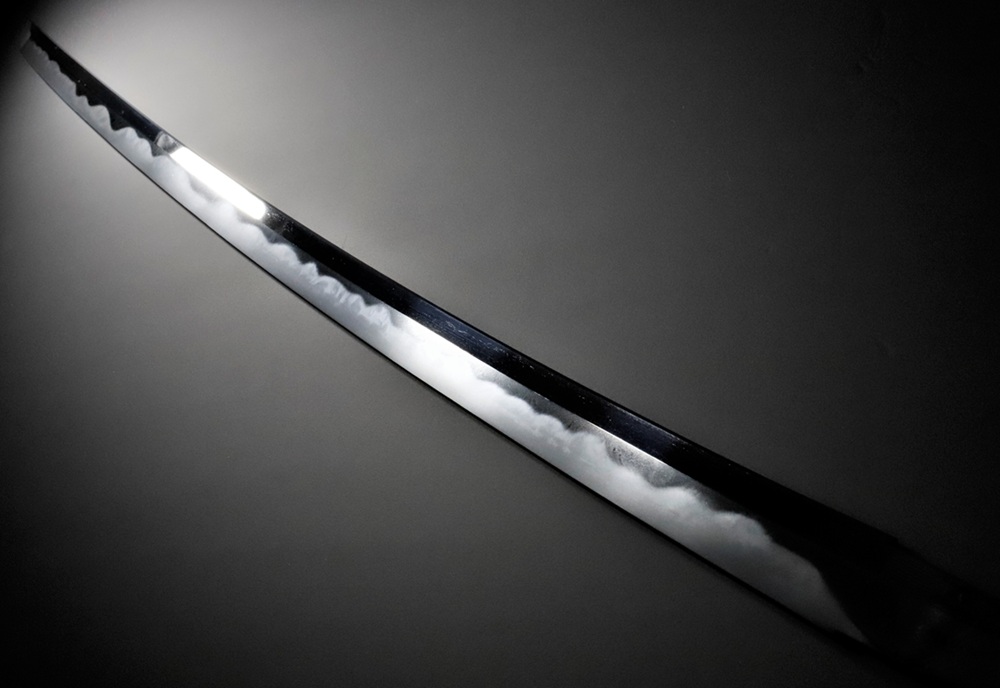
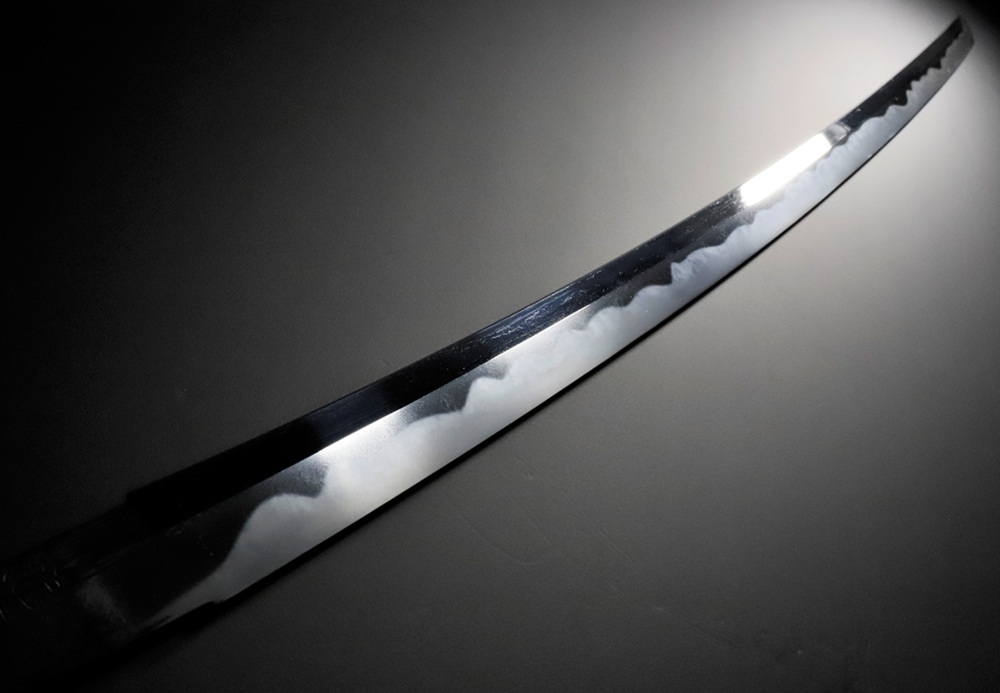
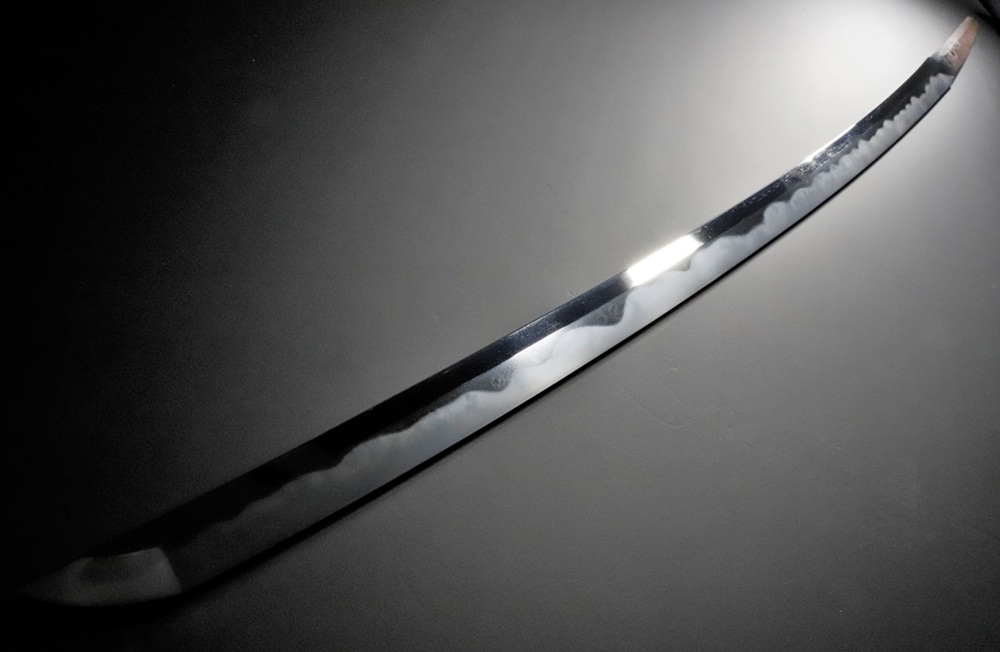
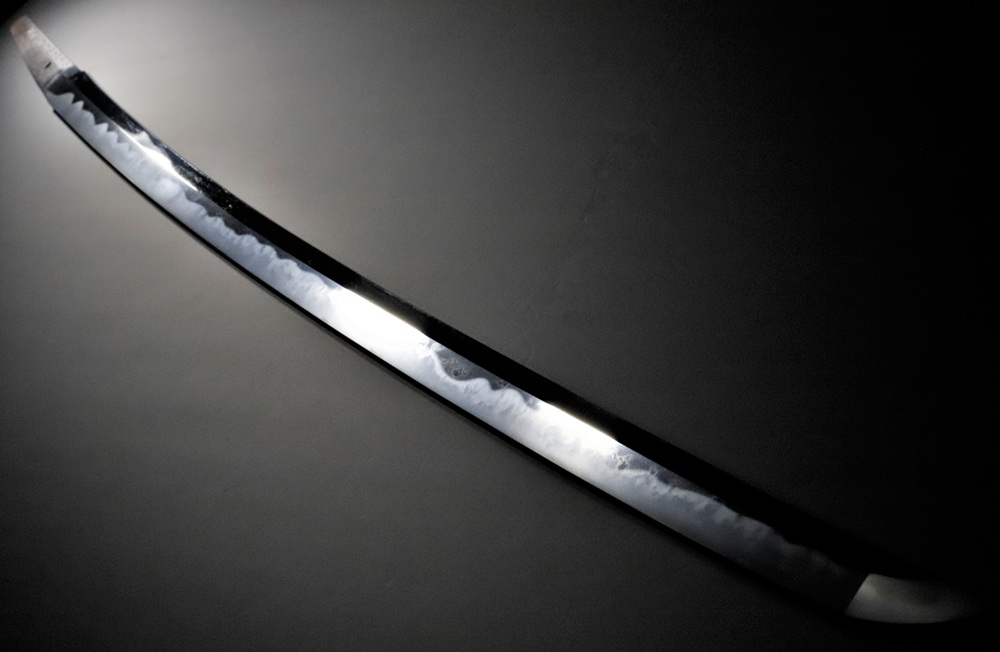
| Shape | Shinogi-zukuri, iori-mune; standard width, with shallow curvature and a medium kissaki. |
| Region | Hizen Province |
| Era | Early Edo Period(around Kanei 1624-1644) |
| Length |
76 cm 29.9 in |
| Sori (curvature) |
1.5 cm 0.6 in |
| Motohaba |
3.2 cm 1.2 in |
| Sakihaba |
2.1 cm 0.8 in |
| Munekasane |
0.7 cm 0.3 in |
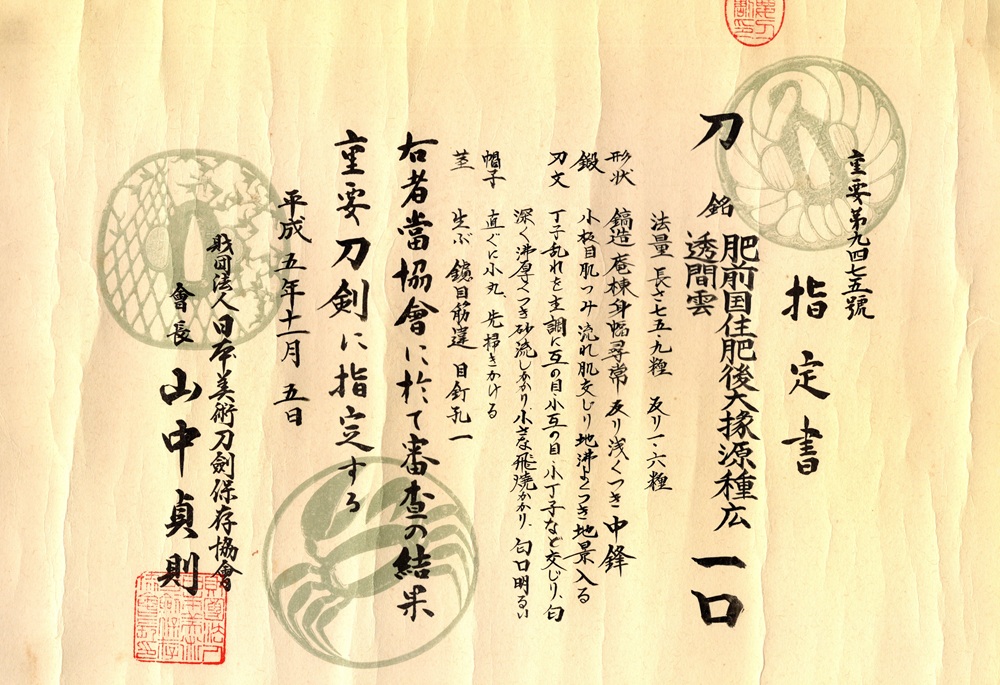
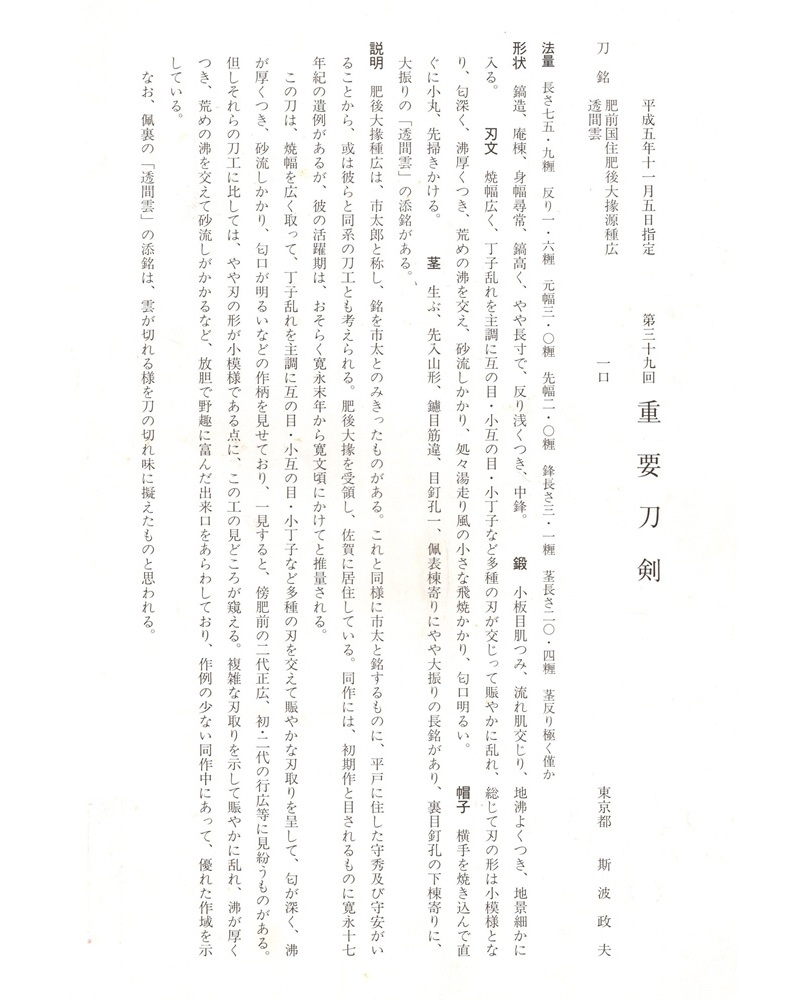
| Status | Juyo Token |
| Certification Date | November 05, 1993 |
| Registration Authority | Tokyo |
| Registration Date | May 23, 1955 |
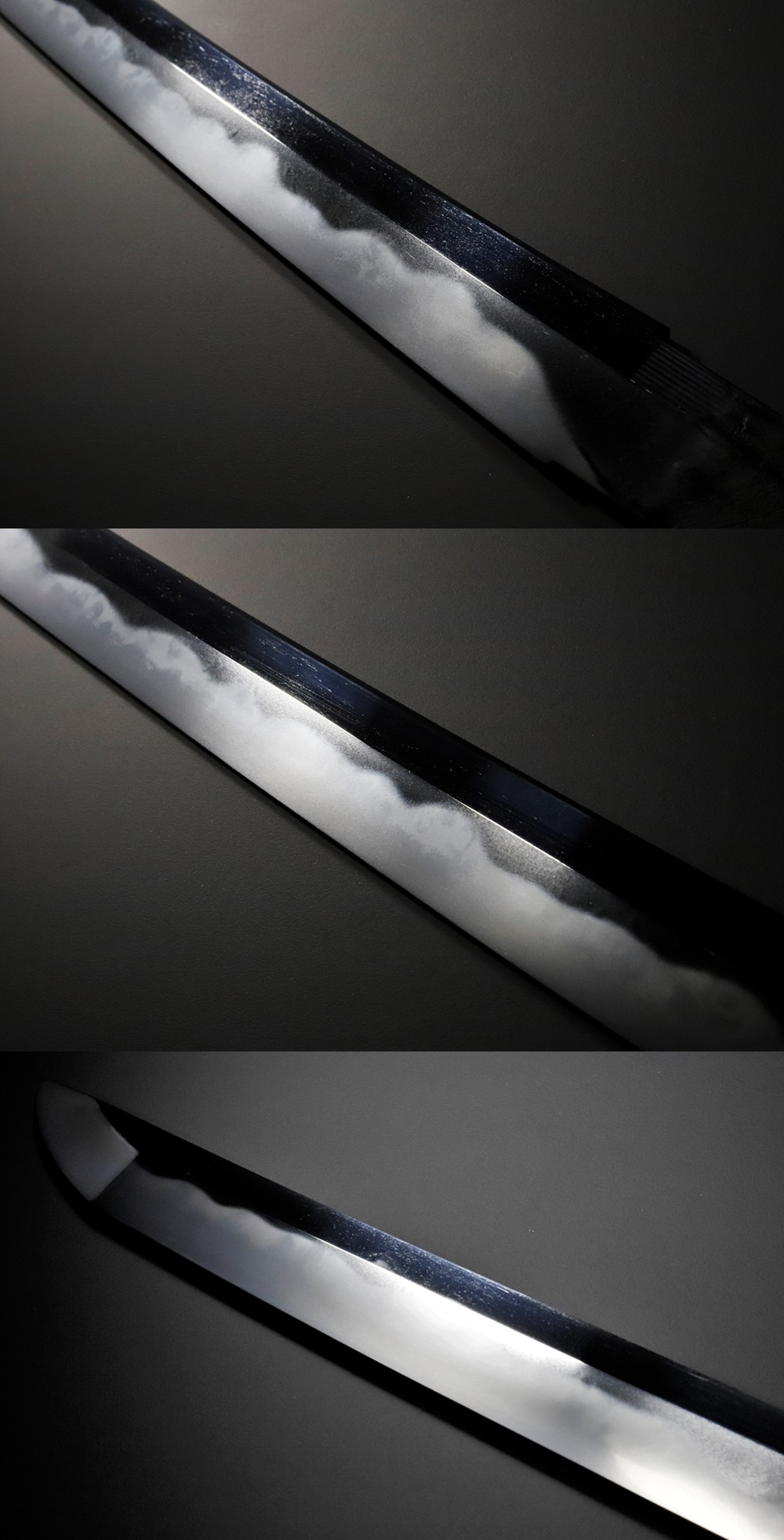
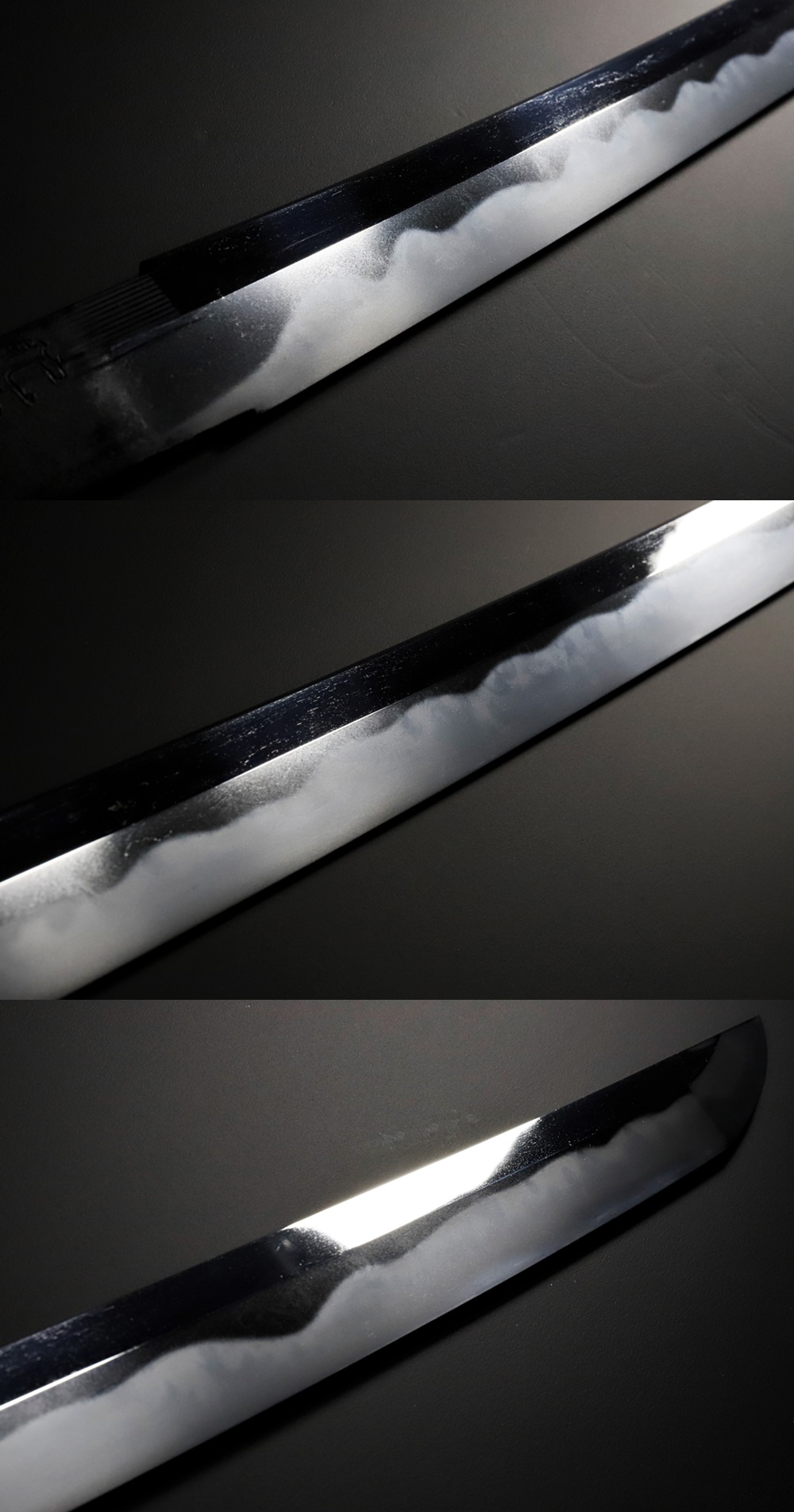
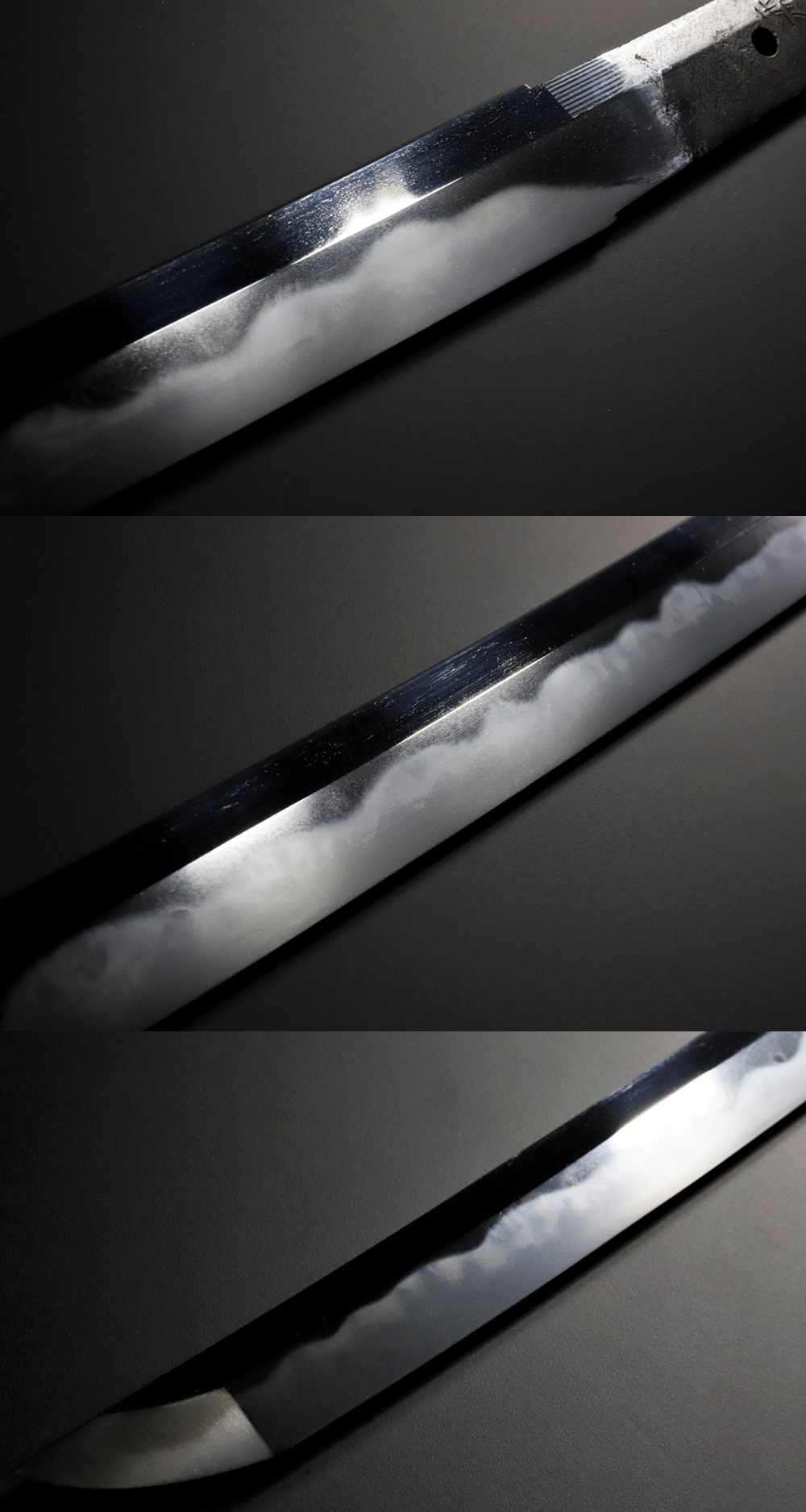
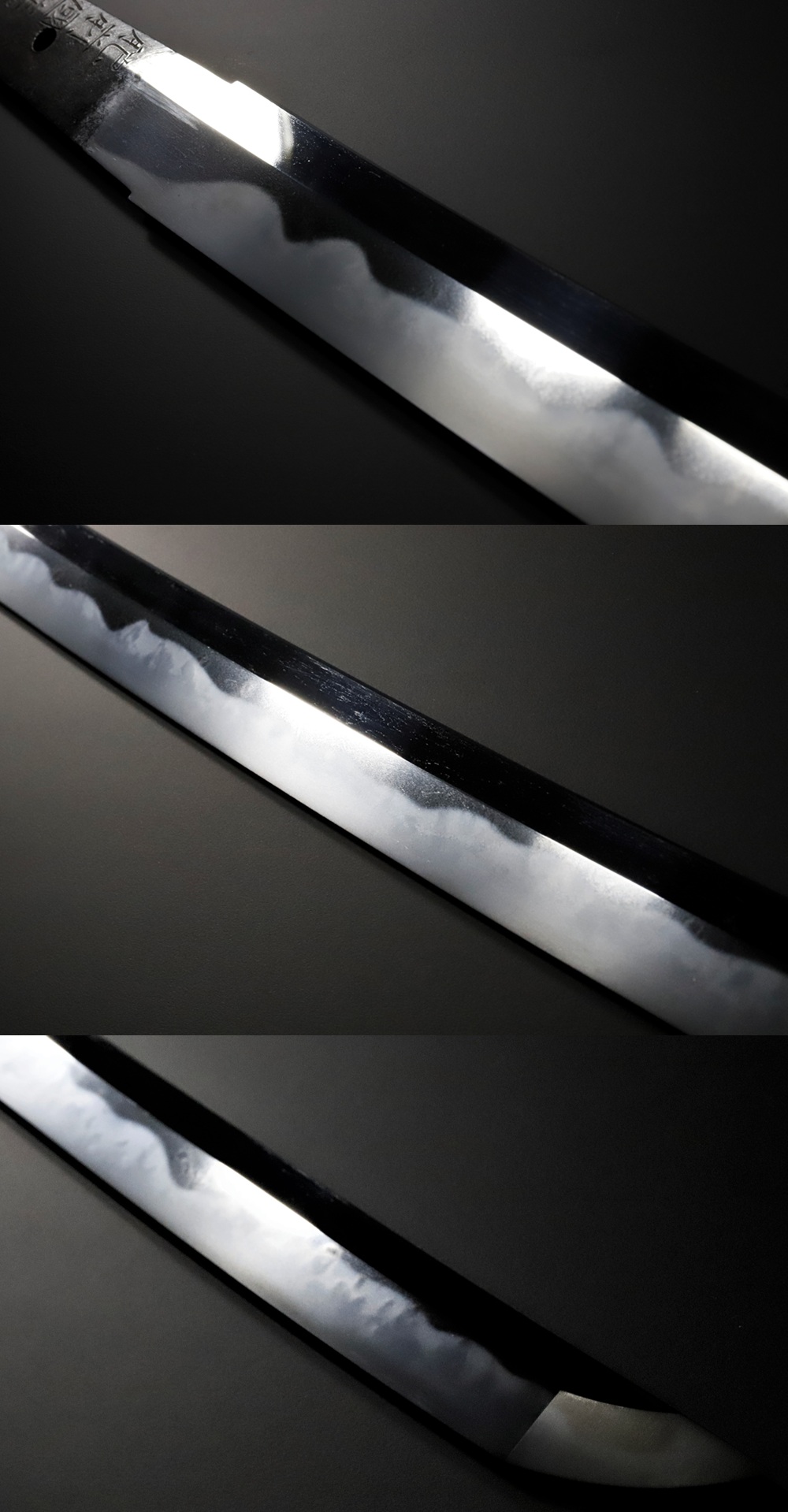
| Jihada (Metal pattern) | The jihada is a tight ko-itame mixed with flowing masame, with well-developed ji-nie and chikei |
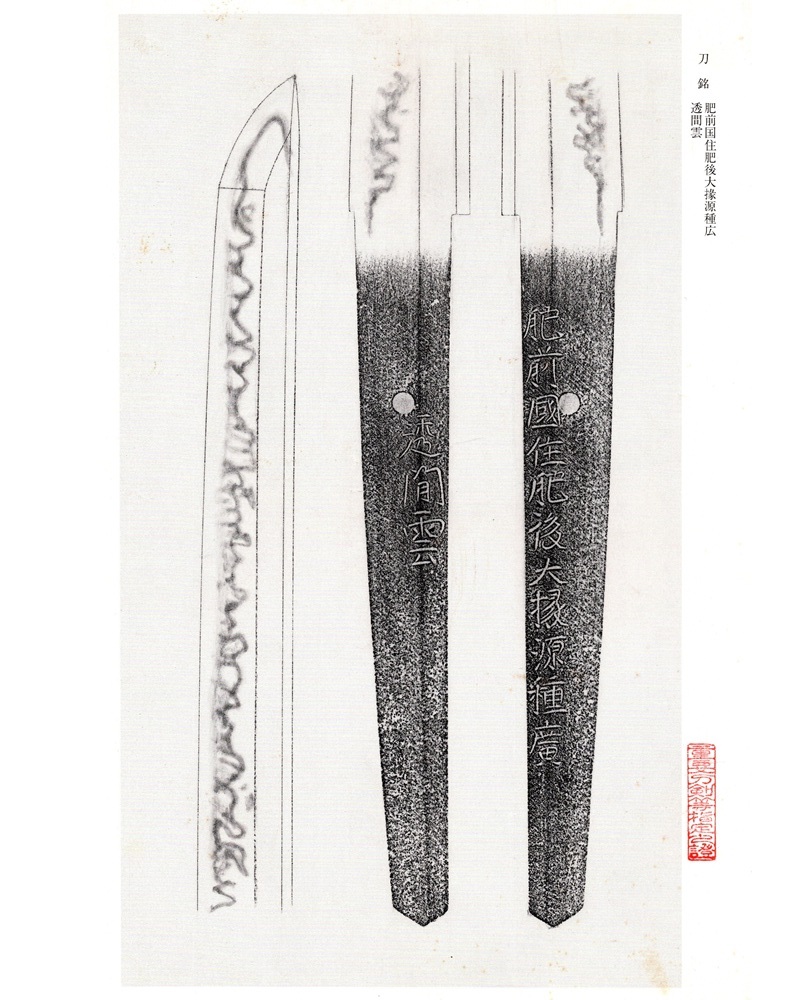
| Hamon (Temper line) | The hamon is primarily choji-midare mixed with gunome, ko-gunome and ko-choji, with a deep and bright nioiguchi, thick nie, sunagashi, and small tobiyaki. |
| Bōshi (Point / Tip) | The boshi is straight, with a ko-maru turn-back and hakikake. |
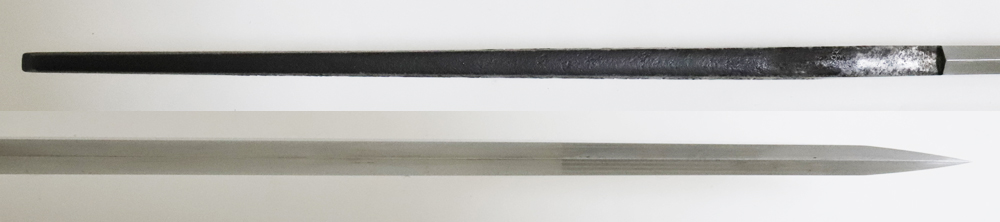
| Nakago (Tang) | The nakago is ubu, with sujikai yasurime and an iriyamagata-jiri |
| Mekugiana (Rivet holes) | 1 |
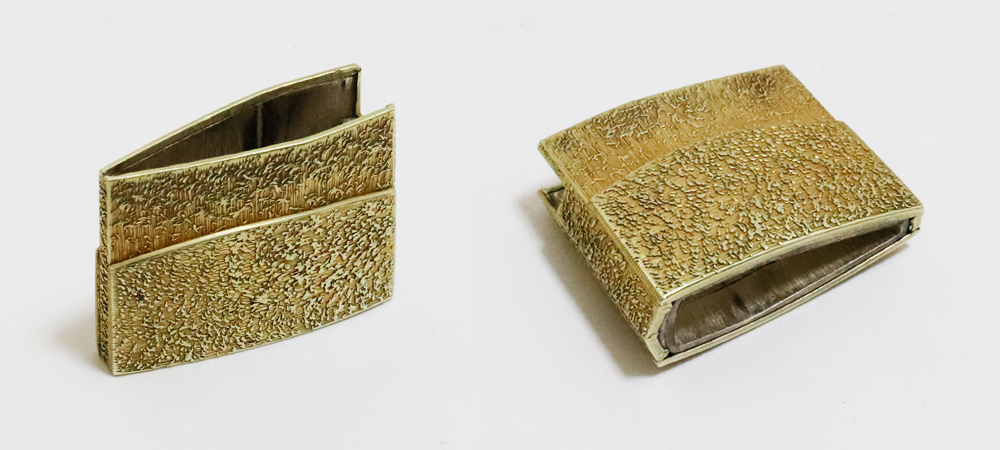
| Habaki | Double habaki, silver base with gold overlay and tsuchime pattern |
Price |
SOLD |
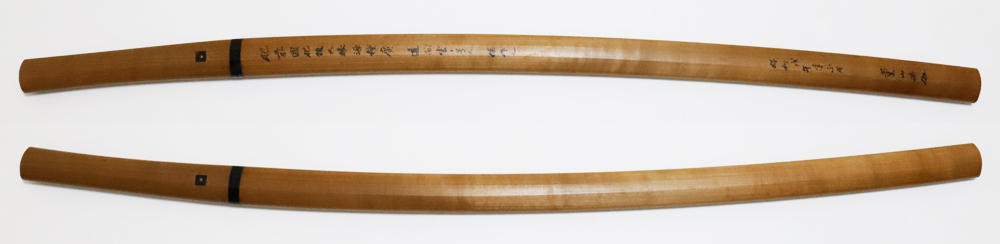
| This sword was designated Jūyō Tōken (Important Sword) at the 39th NBTHK Jūyō Shinsa in Heisei 5 (1993).The smith Tanehiro, whose personal name was Ichitarō, signed such inscriptions as “Higo Daijō Minamoto Tanehiro,” “Hizen no Kuni Ichitarō Minamoto Tanehiro,” and simply “Ichitarō.” A distinctive feature of his signature is seen in the character “Hi” (肥), in which the vertical stroke within the tomoe component extends slightly upward.He lived in Saga and worked in the early Edo period, around the Kan’ei era (1624–1644). Tanehiro is said to have been the grandson of Tanenaga, known as Tōzaemon, who served the Ōtomo family. His lineage differs from the orthodox Tadayoshi school smiths of the Nabeshima domain, as well as from other Hizen-related smiths connected with Tadayoshi such as Masahiro, Yukihiro, Tadakuni, and the Iyo no Jō Munetsugu group. Instead, he is associated with the Ichitarō Tanehiro group, which includes Hizen smiths such as Morihide, who signed “Ichita Minamoto Morihide” or “Ichitarō.”The supplementary designation “Sukima-gumo” refers to an expression likening the blade’s keen cutting ability to sunlight suddenly breaking through a gap in the clouds.Works by Tanehiro are relatively scarce, and this blade represents an excellent example by a Hizen smith distinct from the Tadayoshi lineage.The shirasaya bears a sayagaki by Kunzan-sensei, reading:“Hizen no Kuni Higo Daijō Minamoto Tanehiro. Called ‘Sukima-gumo.’ A fine work. January, Shōwa Tsuchinoe-Uma year (1978). Signed Kunzan (kaō).” |


 Search