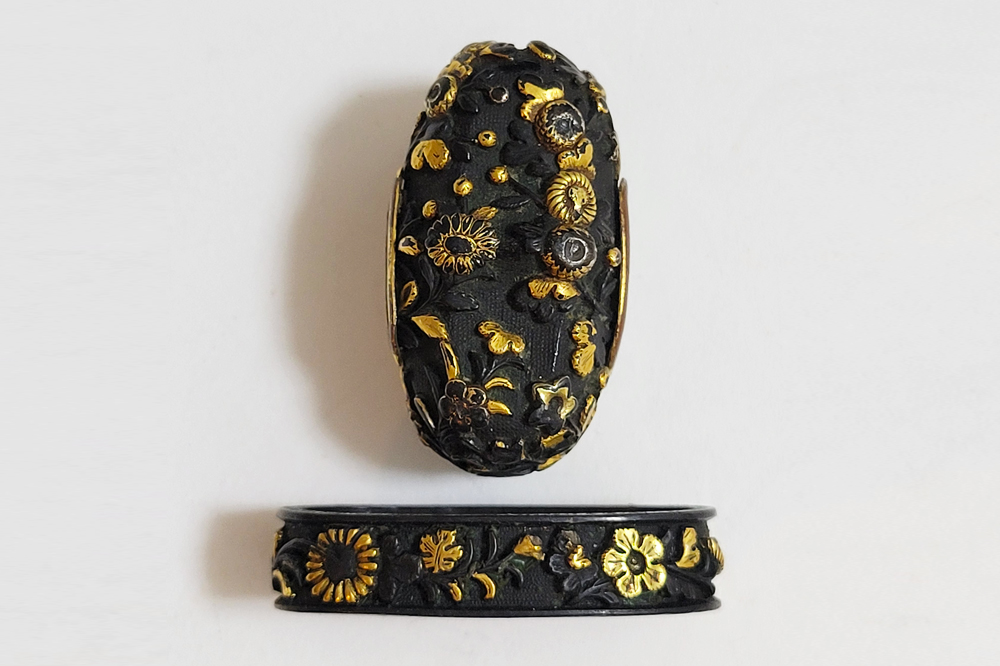
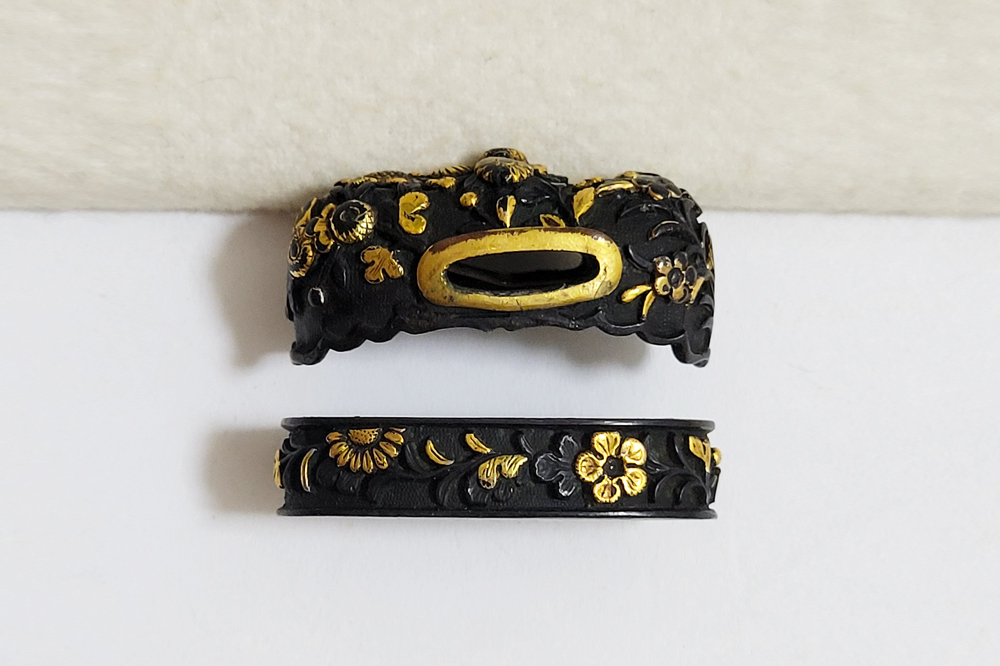
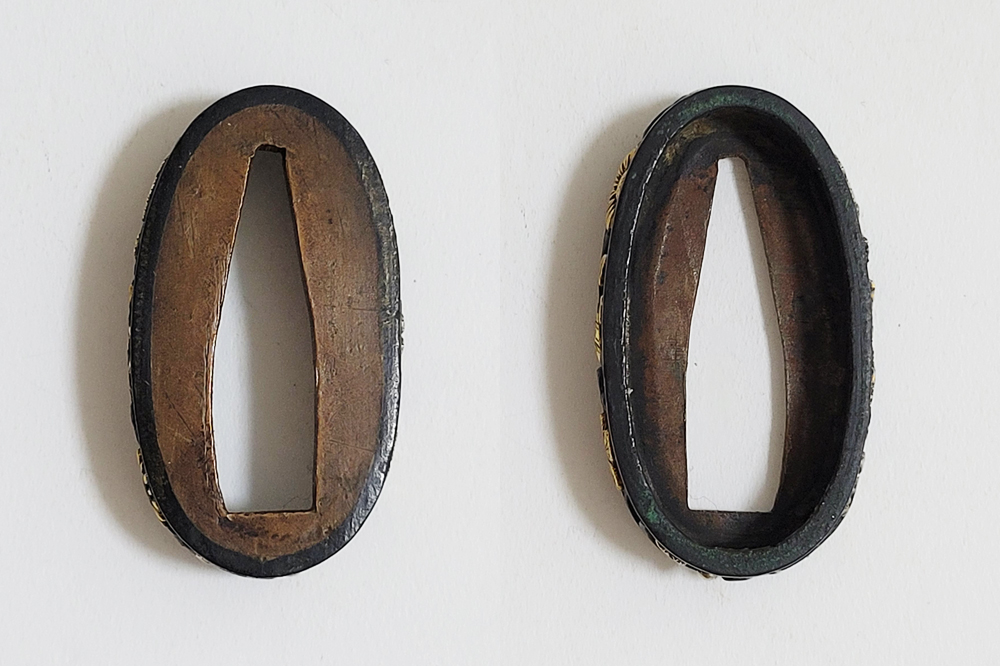
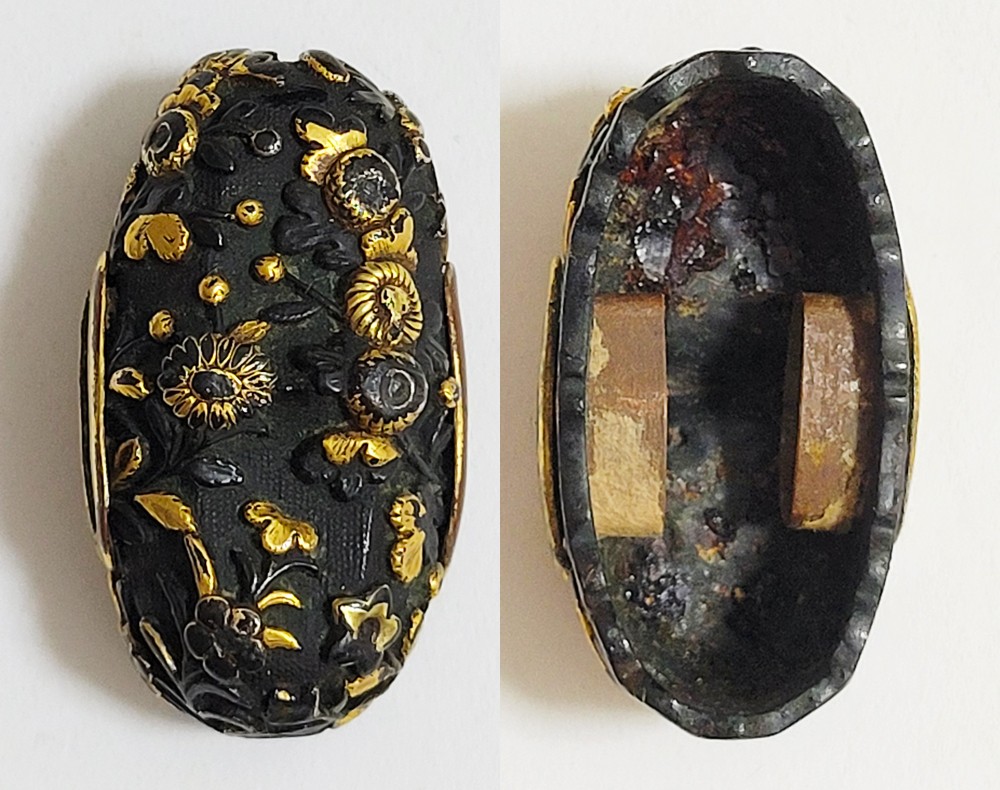
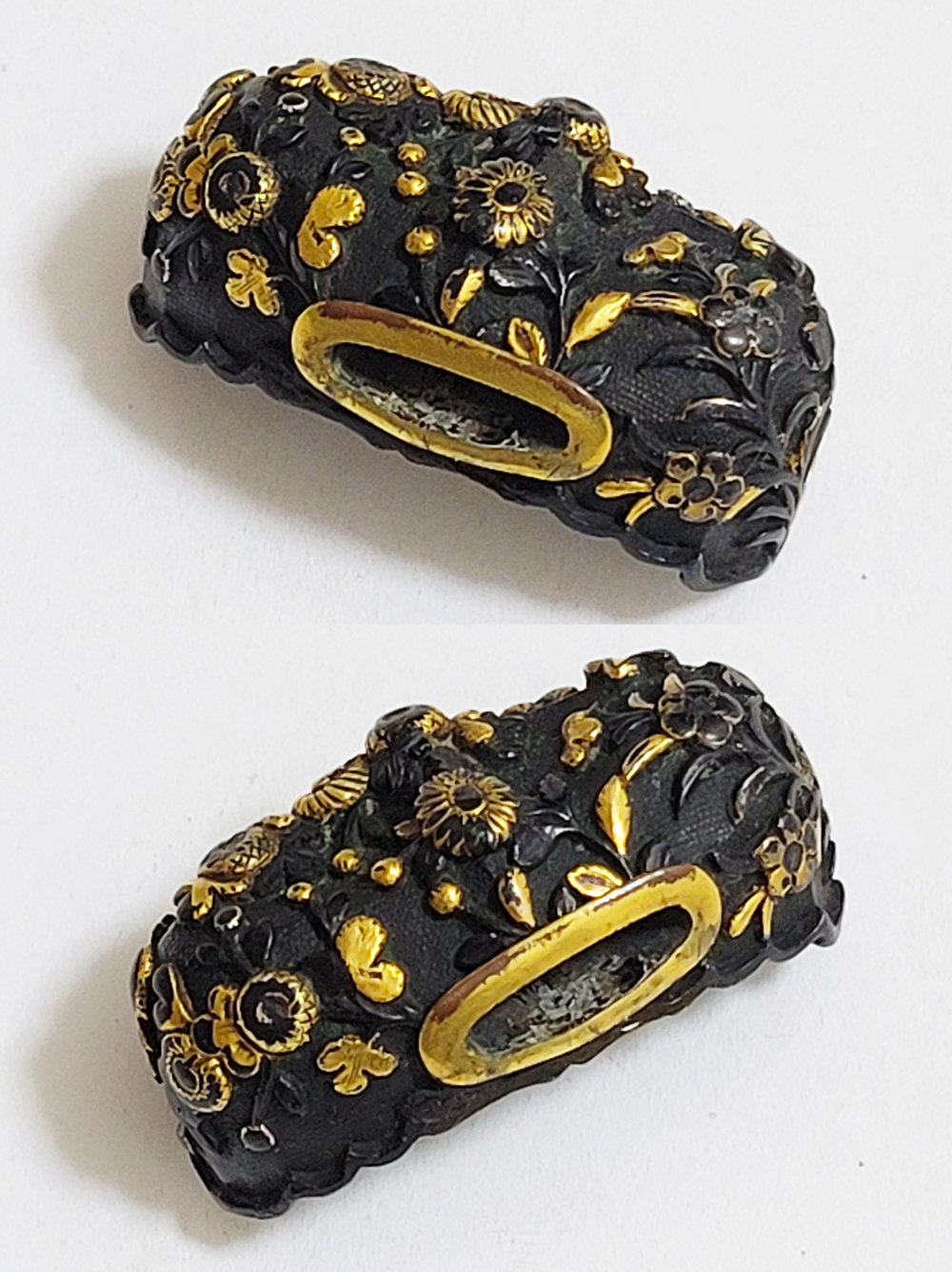
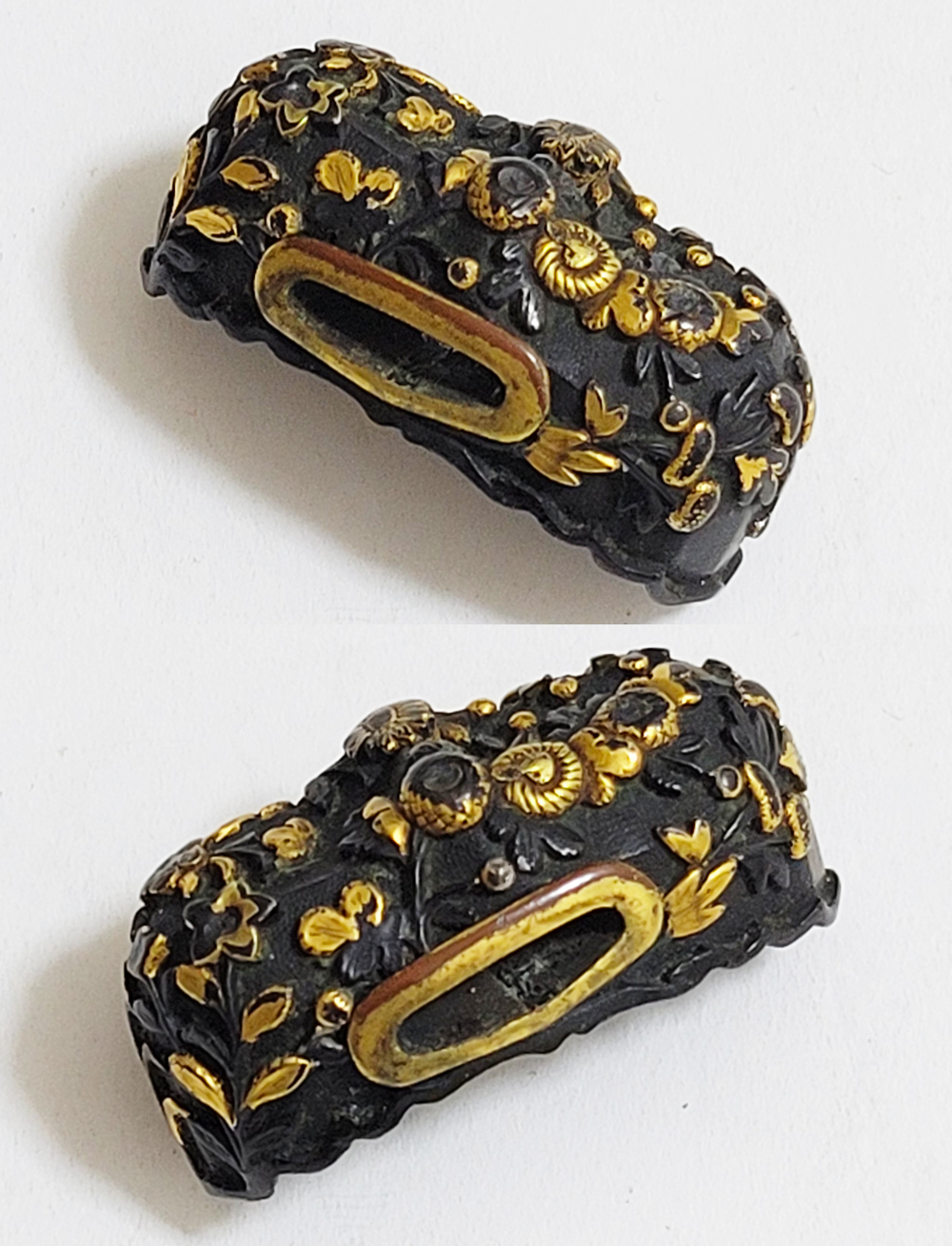
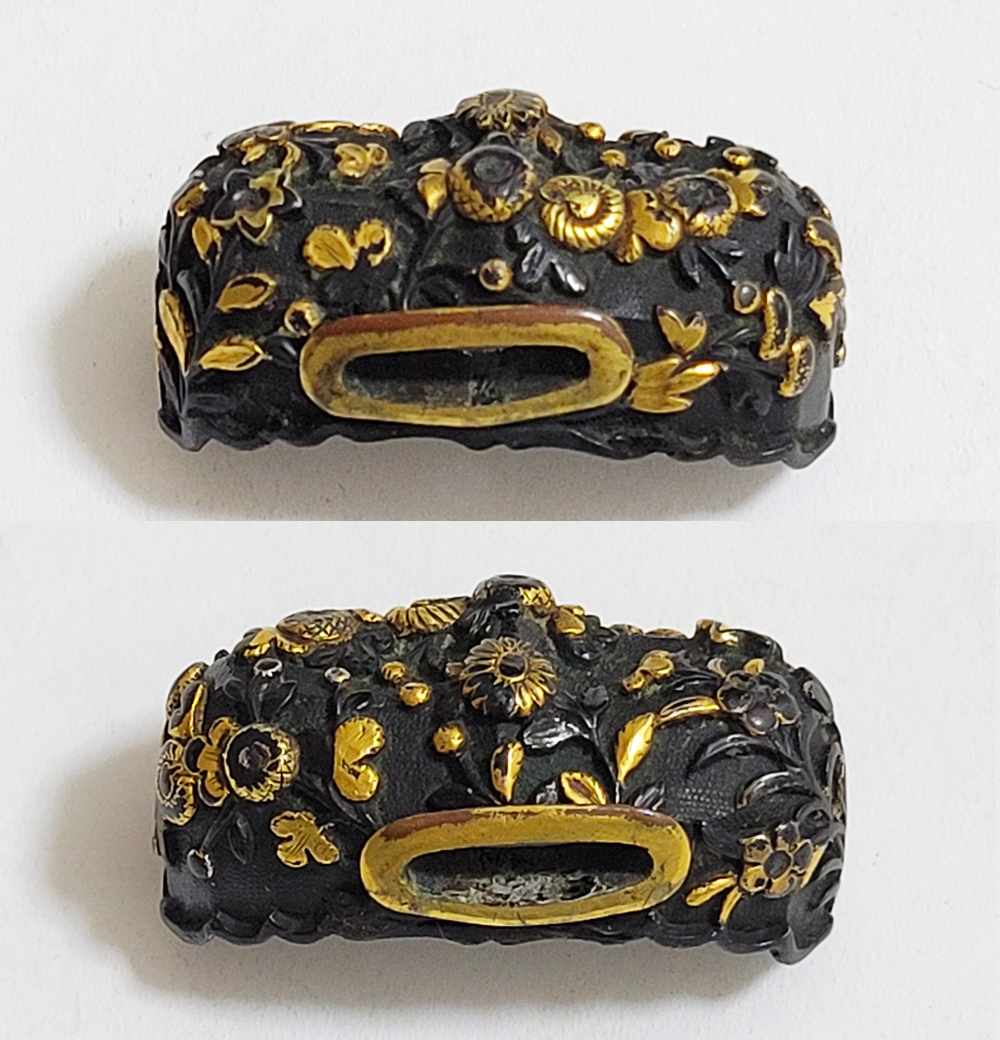
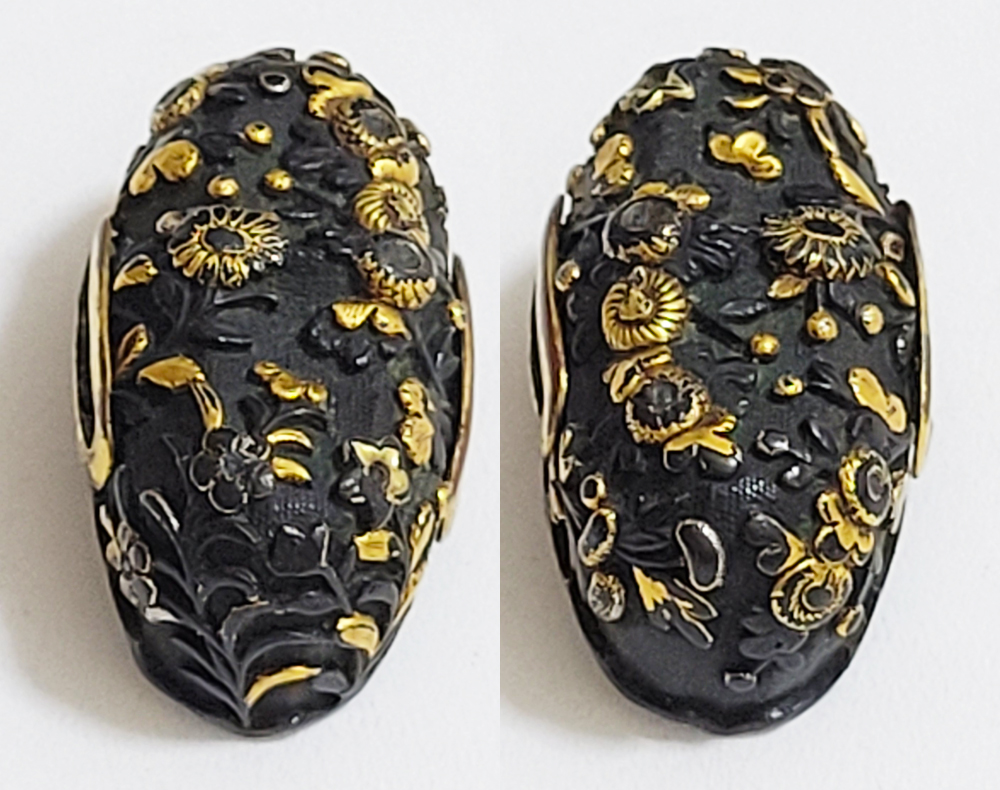
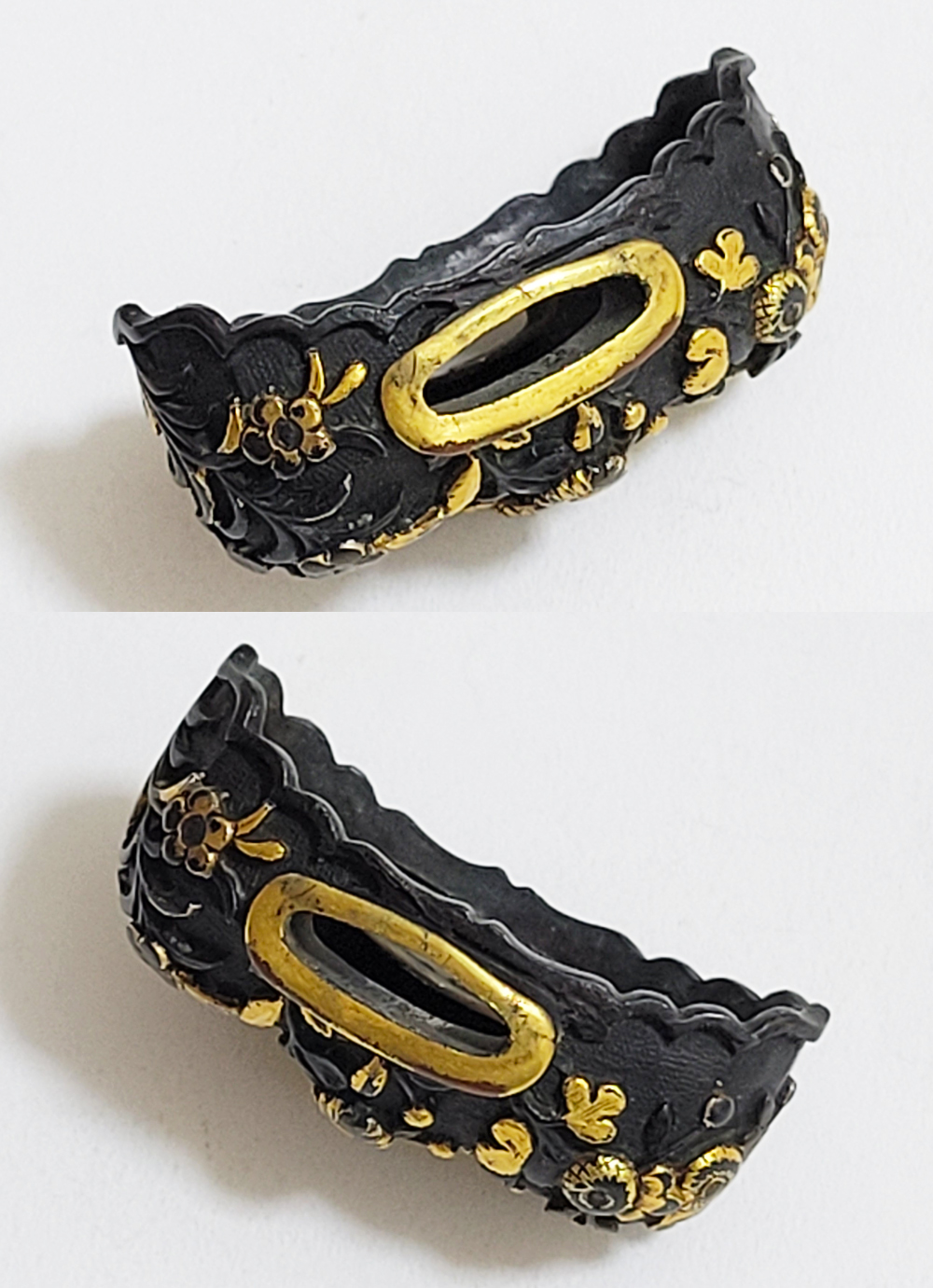
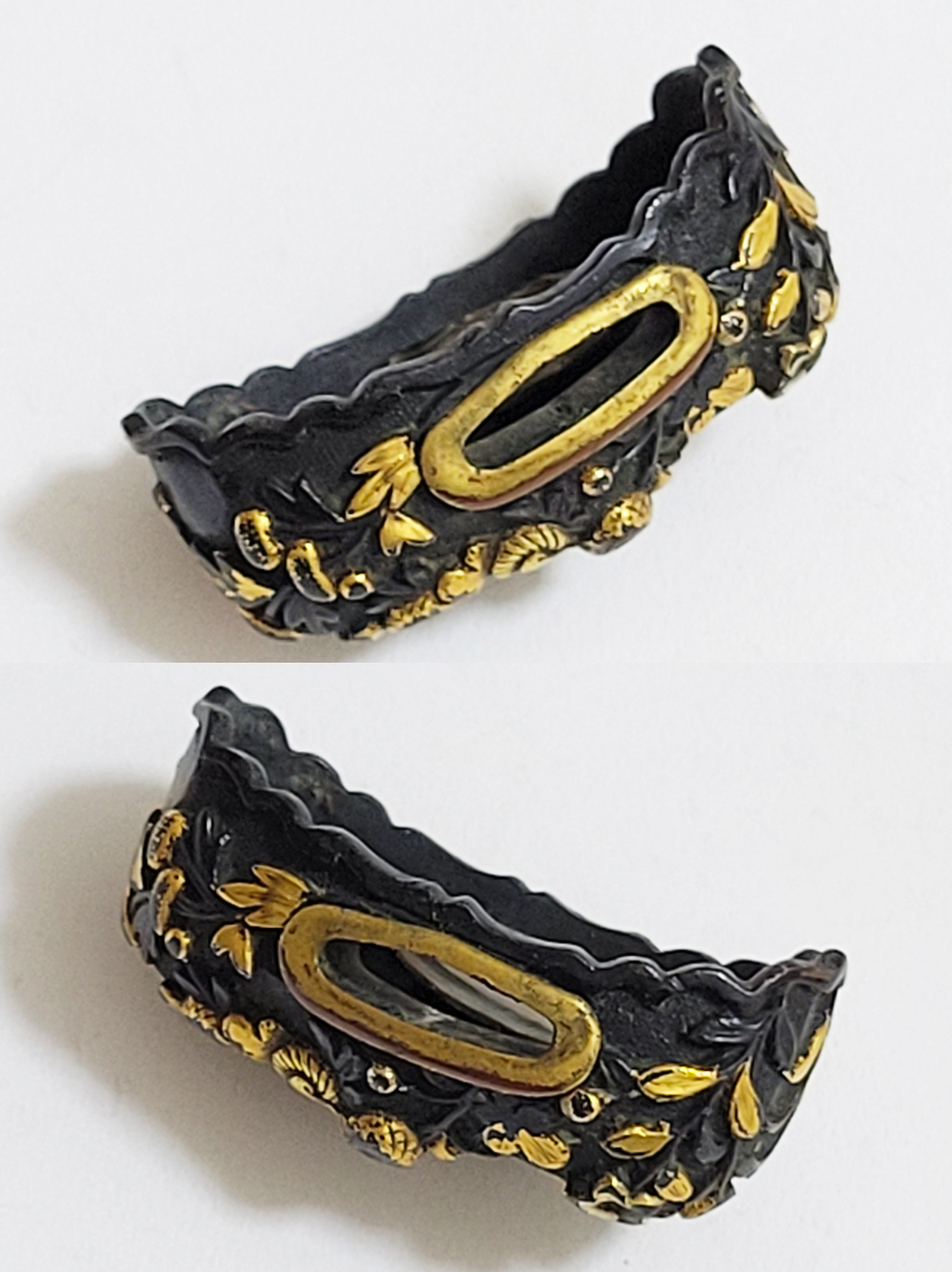
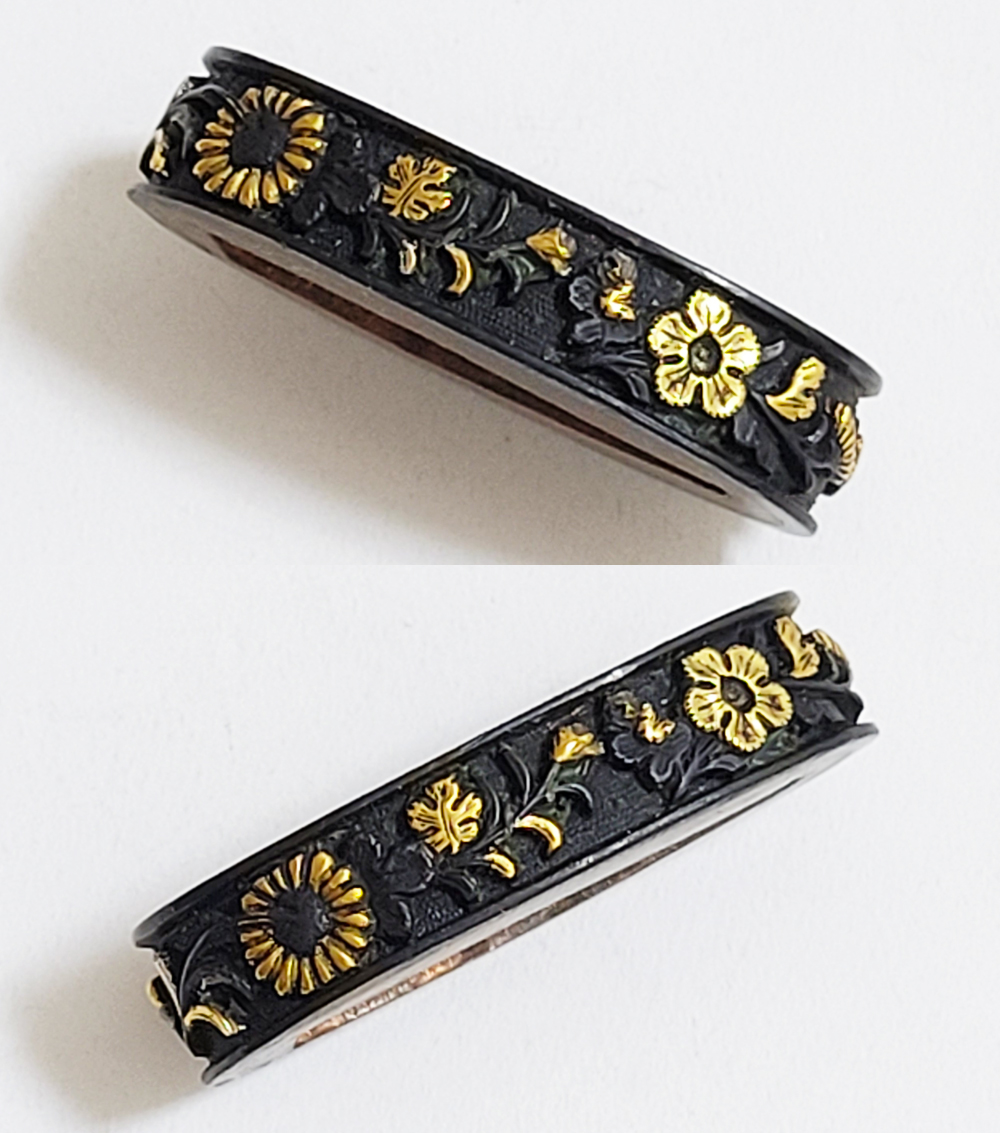
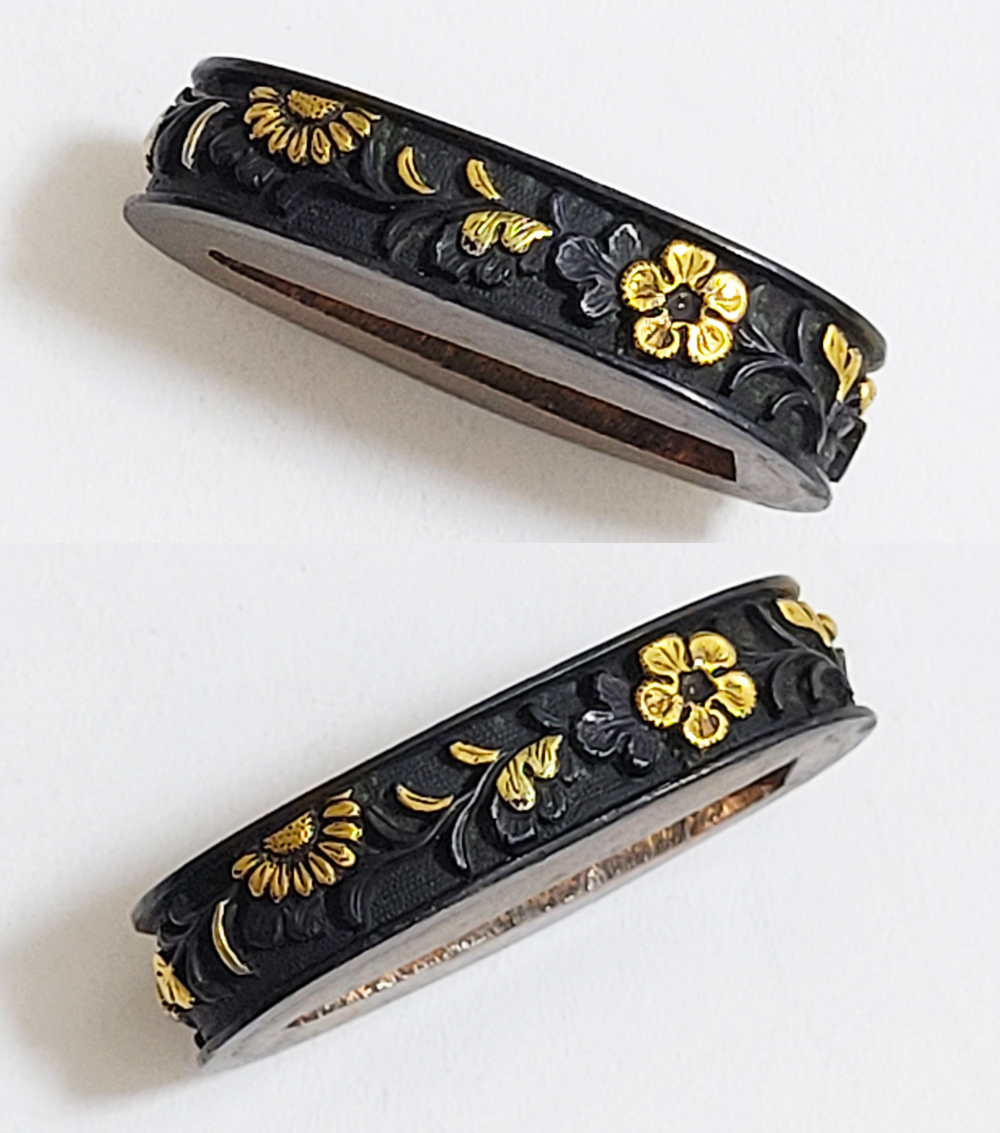
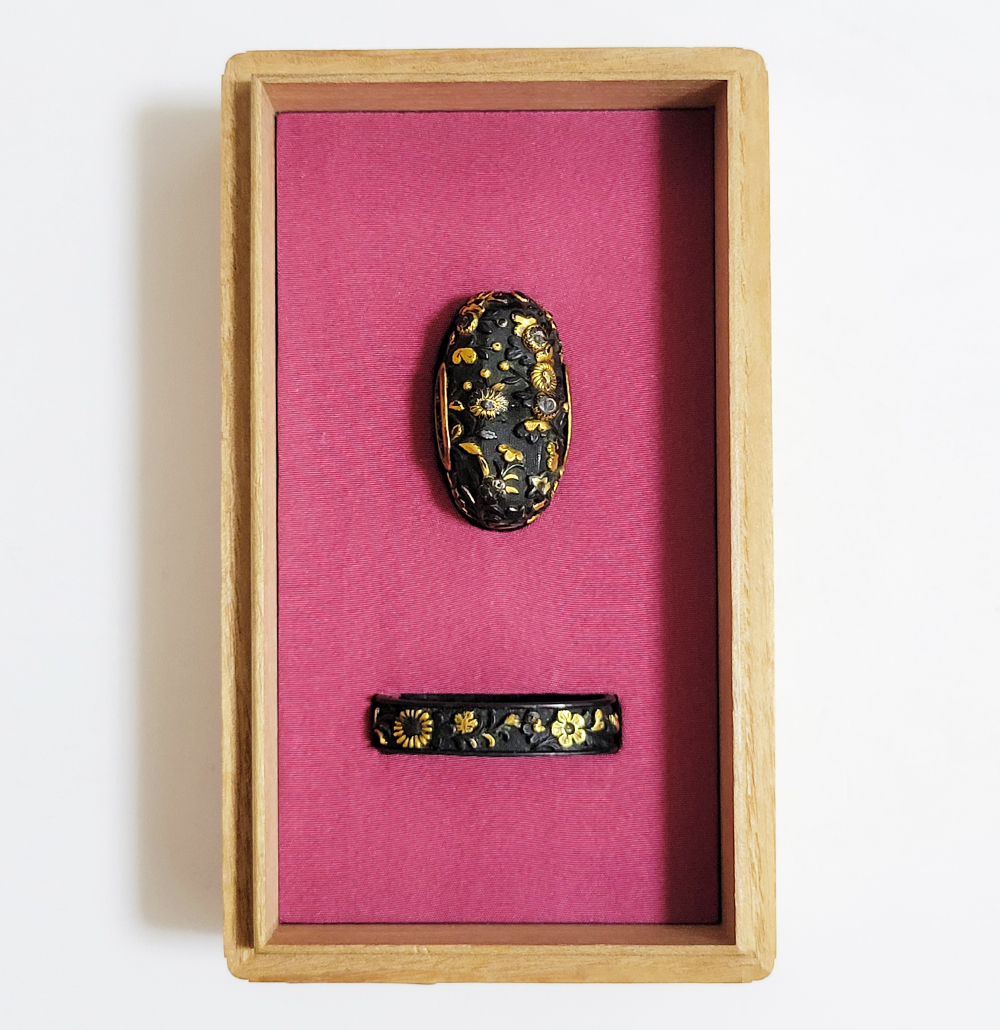
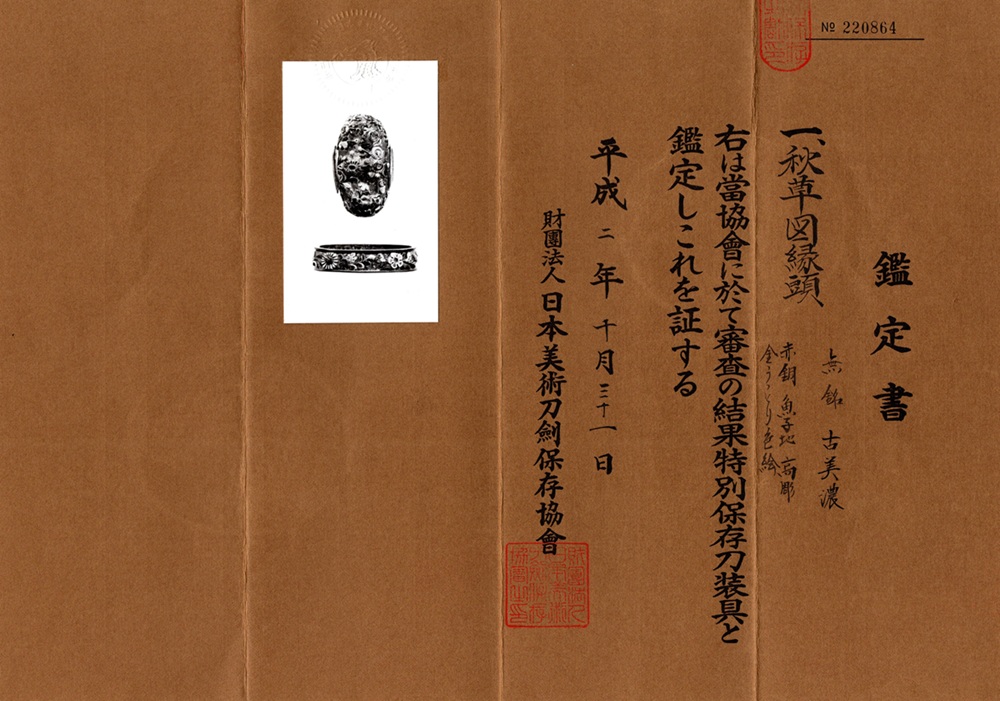
| The Mino school developed a distinctive metalworking technique known as Mino-bori, in which the background is deeply carved away, leaving the design in relief and decorated with thick gold and silver uttori-iroe. This technique was particularly favored for depicting plants and animals such as autumn grasses and insects. Works executed in the Mino-bori style and dating from before the Momoyama period are generally referred to as Ko-Mino, while later works are classified simply as Mino. This fuchi-kashira, attributed to Ko-Mino, depicts autumn grasses rendered in rich gold uttori-iroe. The quality of the carving, the thickness of the gold application, and the overall appearance suggest an early period work of considerable charm and refinement. Passed the NBTHK Tokubetsu Hozon Tosogu shinsa in 1990. |

 Search